
10 th HKG Advanced Firstaid Skills Site control
- Slides: 34
10 th HKG 港島第十旅 Advanced First-aid Skills - Site control, body survey, coma, diagnosis, recovery position By: Lee Yat Sing (SI)
WARNING – THIS IS CRAZY THIS IS A 85 -MINUTE LECTURE, EVERY THING IS IMPORTANT, BUT DO NOT EXPECT TO GET IT ALL!
Learning Objectives • Understand the DRABCDEF of site control • Understand the Patient Assessment Model and perform a body survey • Understand perform a recovery position (復 原卧式) • Know basic diagnostic skills
- Scene - Patients - Priority - Help
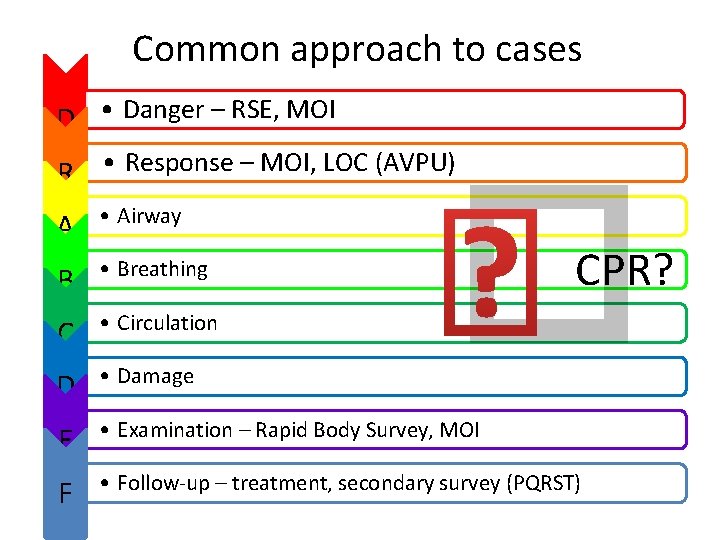
Common approach to cases D • Danger – RSE, MOI R • Response – MOI, LOC (AVPU) � A • Airway B • Breathing C • Circulation D • Damage E • Examination – Rapid Body Survey, MOI F • Follow-up – treatment, secondary survey (PQRST) CPR?
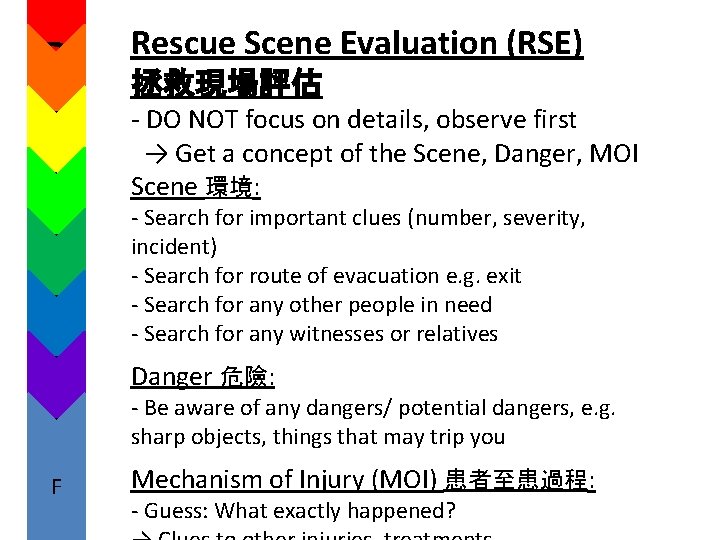
D R A B C D Rescue Scene Evaluation (RSE) 拯救現場評估 - DO NOT focus on details, observe first → Get a concept of the Scene, Danger, MOI Scene 環境: - Search for important clues (number, severity, incident) - Search for route of evacuation e. g. exit - Search for any other people in need - Search for any witnesses or relatives Danger 危險: E - Be aware of any dangers/ potential dangers, e. g. sharp objects, things that may trip you F Mechanism of Injury (MOI) 患者至患過程: - Guess: What exactly happened?
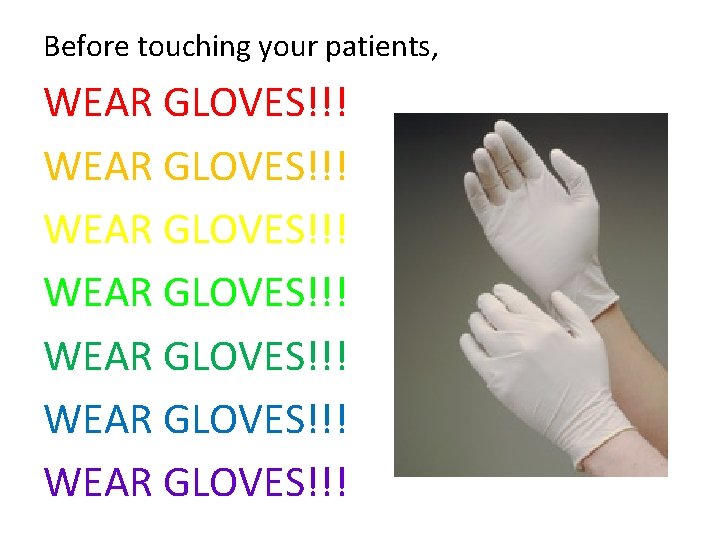
Before touching your patients, WEAR GLOVES!!! WEAR GLOVES!!!
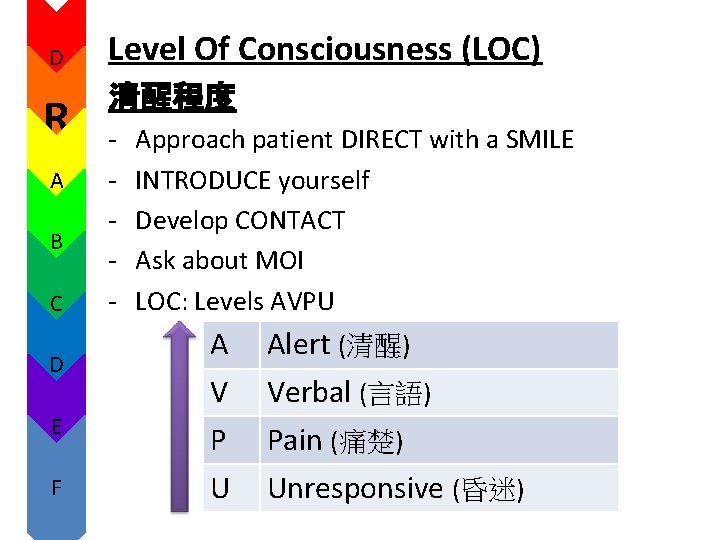
D R A B C D E F Level Of Consciousness (LOC) 清醒程度 - Approach patient DIRECT with a SMILE INTRODUCE yourself Develop CONTACT Ask about MOI LOC: Levels AVPU A V P U Alert (清醒) Verbal (言語) Pain (痛楚) Unresponsive (昏迷)
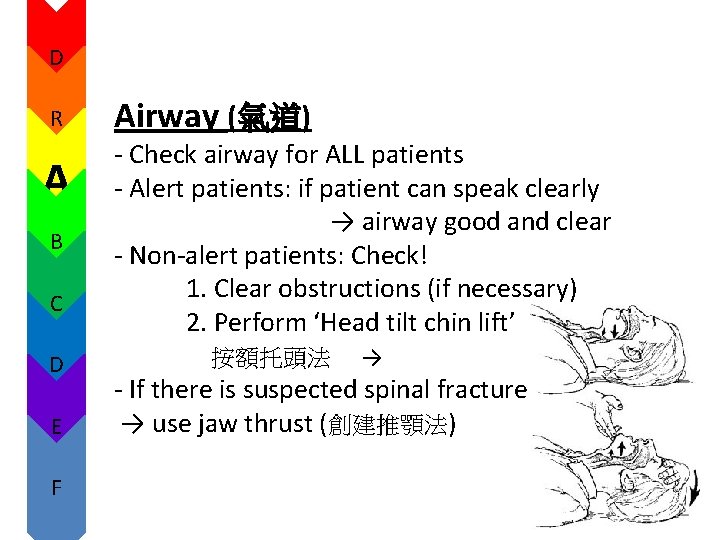
D R A B C D E F Airway (氣道) - Check airway for ALL patients - Alert patients: if patient can speak clearly → airway good and clear - Non-alert patients: Check! 1. Clear obstructions (if necessary) 2. Perform ‘Head tilt chin lift’ 按額托頭法 → - If there is suspected spinal fracture → use jaw thrust (創建推顎法)
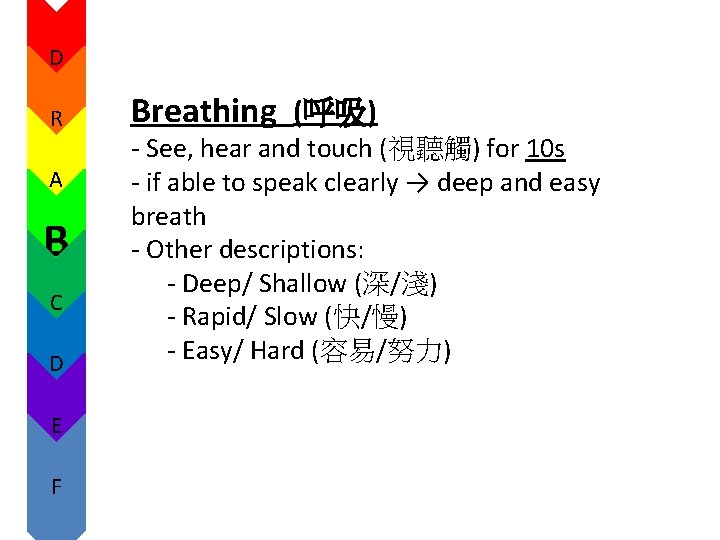
D R A B C D E F Breathing (呼吸) - See, hear and touch (視聽觸) for 10 s - if able to speak clearly → deep and easy breath - Other descriptions: - Deep/ Shallow (深/淺) - Rapid/ Slow (快/慢) - Easy/ Hard (容易/努力)
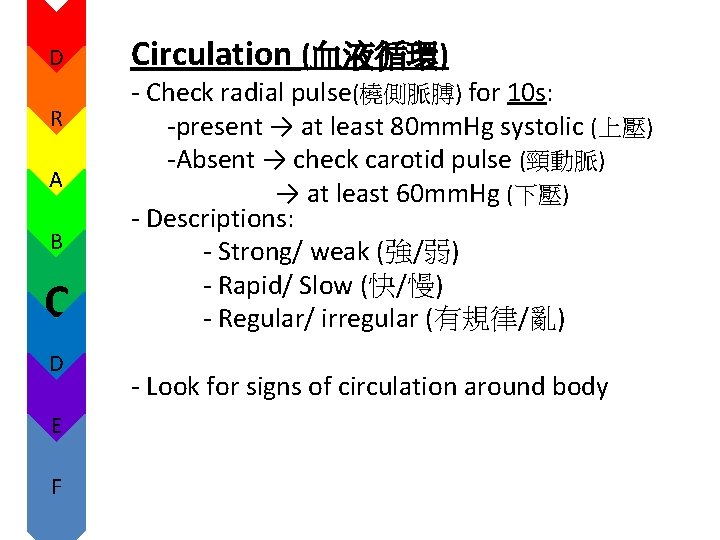
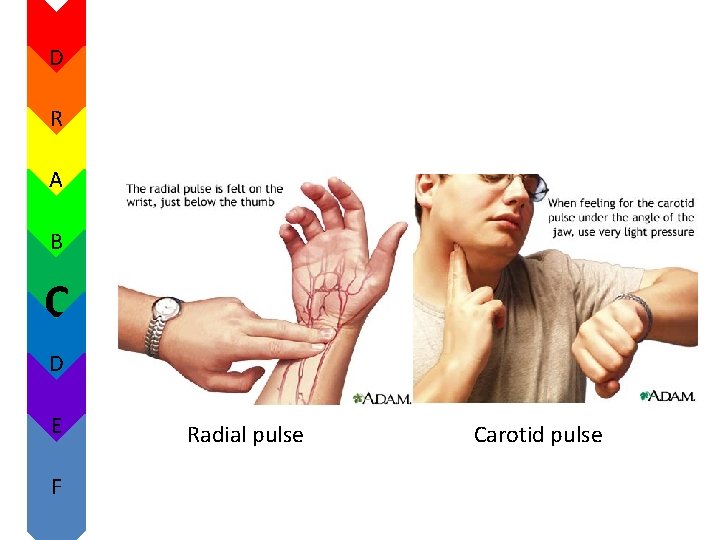
D R A B C D E F Circulation (血液循環) - Check radial pulse(橈側脈膊) for 10 s: -present → at least 80 mm. Hg systolic (上壓) -Absent → check carotid pulse (頸動脈) → at least 60 mm. Hg (下壓) - Descriptions: - Strong/ weak (強/弱) - Rapid/ Slow (快/慢) - Regular/ irregular (有規律/亂) - Look for signs of circulation around body
D R A B C D E F Radial pulse Carotid pulse
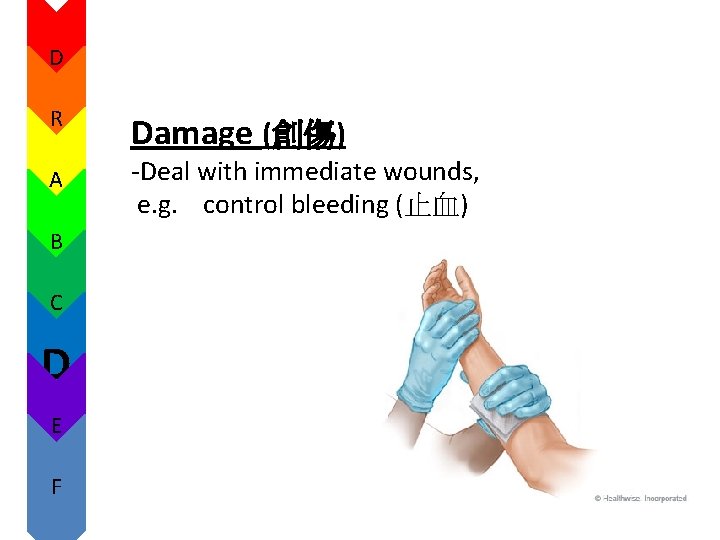
D R A B C D E F Damage (創傷) -Deal with immediate wounds, e. g. control bleeding (止血)
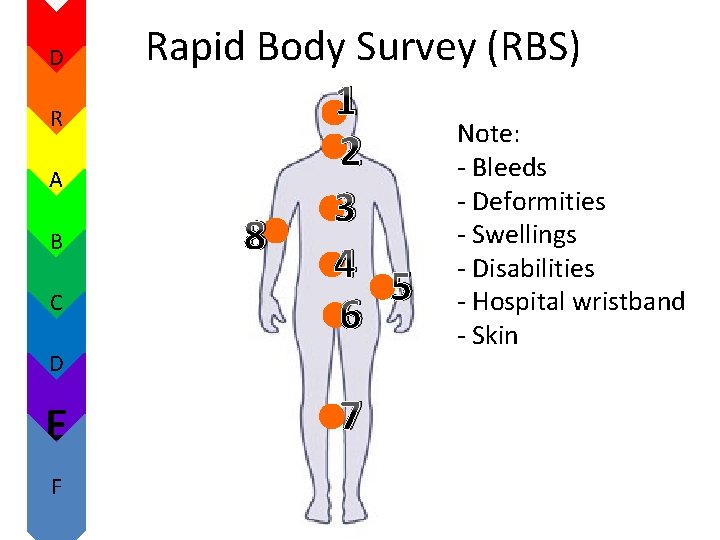
D R A B C D E F Rapid body survey(RBS) 快速身體檢� - Tell your patient that you are going to do a RBS - Pay special attention to bleeds, deformities, swellings, disabilities (出血、變形、腫脹、殘缺) -Within 30 s: - Touch through body (see next slide) - Note for hospital wristband (醫療手帶) - Expose & handle any wound (展露及處理傷處 ), especially heavy bleeds - Note skin colour, with back of hand check warmth and moisture (以手背探皮膚溫度及濕度) → Pale/ red/ purple? warm/ cold? Dry/
D R A B C D E F Rapid Body Survey (RBS) 1 Note: 2 - Bleeds - Deformities 3 - Swellings 8 - Disabilities 4 5 - Hospital wristband 6 - Skin 7
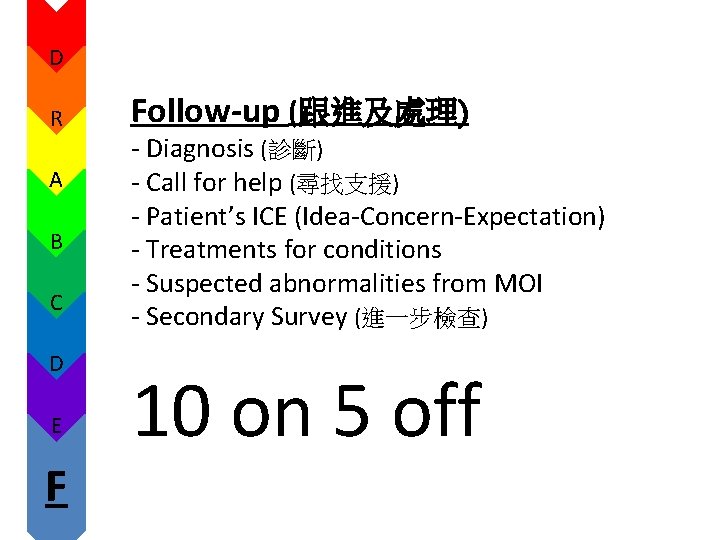
D R A B C D E F Follow-up (跟進及處理) - Diagnosis (診斷) - Call for help (尋找支援) - Patient’s ICE (Idea-Concern-Expectation) - Treatments for conditions - Suspected abnormalities from MOI - Secondary Survey (進一步檢查) 10 on 5 off
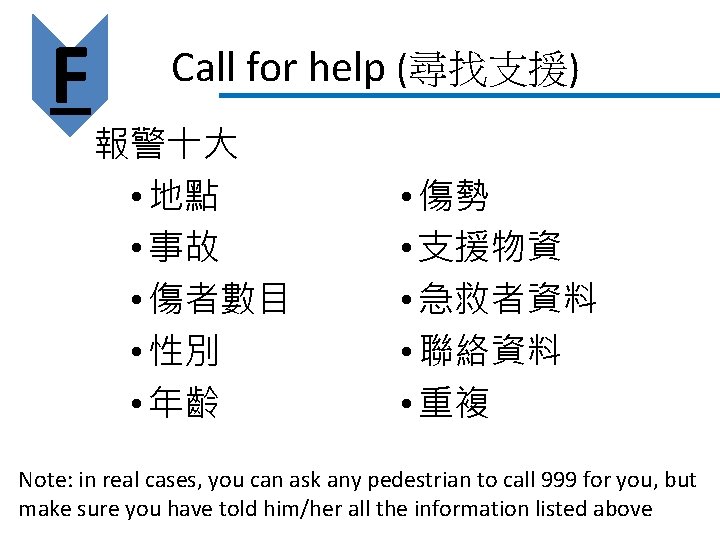
F Call for help (尋找支援) 報警十大 • 地點 • 事故 • 傷者數目 • 性別 • 年齡 • 傷勢 • 支援物資 • 急救者資料 • 聯絡資料 • 重複 Note: in real cases, you can ask any pedestrian to call 999 for you, but make sure you have told him/her all the information listed above
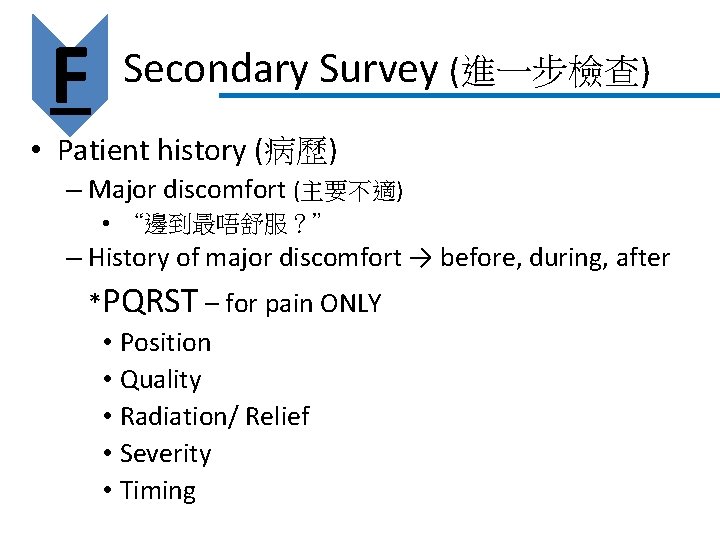
F Secondary Survey (進一步檢查) • Patient history (病歷) – Major discomfort (主要不適) • “邊到最唔舒服?” – History of major discomfort → before, during, after *PQRST – for pain ONLY • Position • Quality • Radiation/ Relief • Severity • Timing
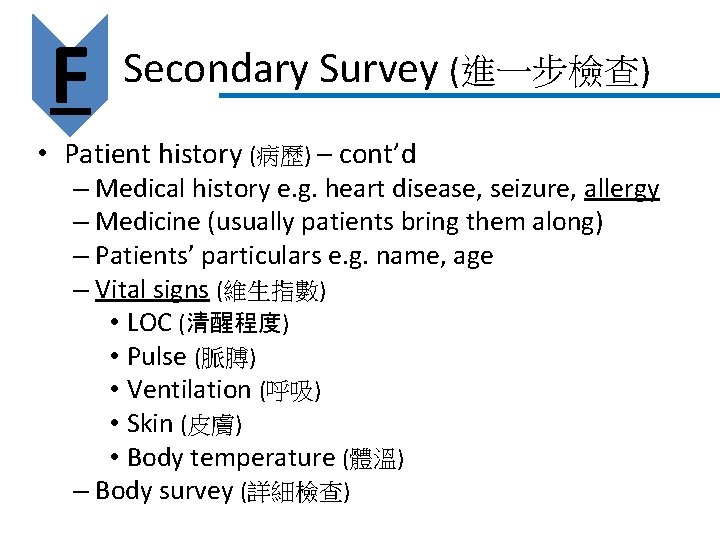
F Secondary Survey (進一步檢查) • Patient history (病歷) – cont’d – Medical history e. g. heart disease, seizure, allergy – Medicine (usually patients bring them along) – Patients’ particulars e. g. name, age – Vital signs (維生指數) • LOC (清醒程度) • Pulse (脈膊) • Ventilation (呼吸) • Skin (皮膚) • Body temperature (體溫) – Body survey (詳細檢查)
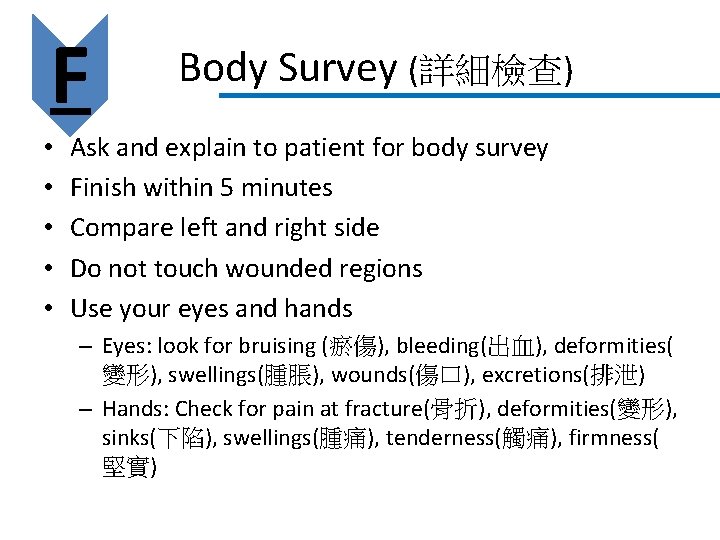
F • • • Body Survey (詳細檢查) Ask and explain to patient for body survey Finish within 5 minutes Compare left and right side Do not touch wounded regions Use your eyes and hands – Eyes: look for bruising (瘀傷), bleeding(出血), deformities( 變形), swellings(腫脹), wounds(傷口), excretions(排泄) – Hands: Check for pain at fracture(骨折), deformities(變形), sinks(下陷), swellings(腫痛), tenderness(觸痛), firmness( 堅實)
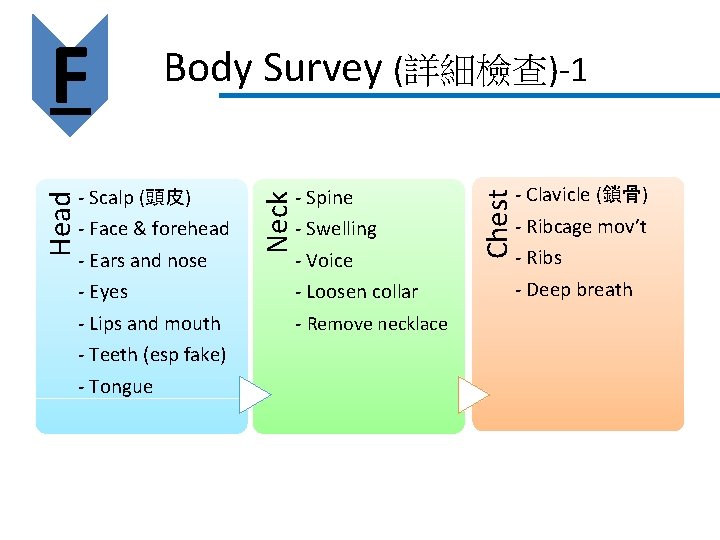
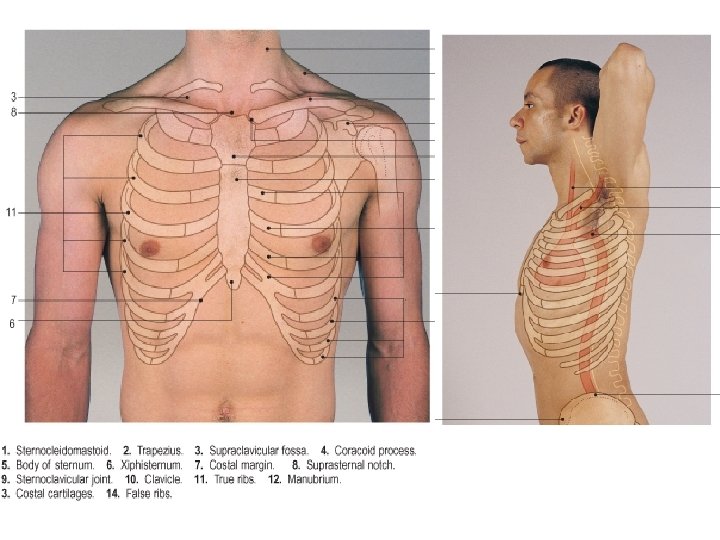
- Spine - Swelling - Voice - Loosen collar - Remove necklace - Clavicle (鎖骨) - Ribcage mov’t - Ribs - Deep breath Chest Head - Scalp (頭皮) - Face & forehead - Ears and nose - Eyes - Lips and mouth - Teeth (esp fake) - Tongue Neck F Body Survey (詳細檢查)-1
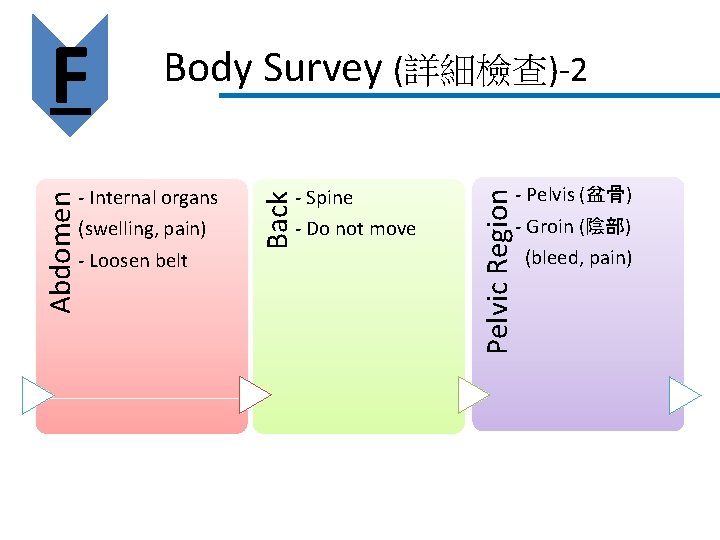
- Spine - Do not move - Pelvis (盆骨) - Groin (陰部) (bleed, pain) Pelvic Region Abdomen - Internal organs (swelling, pain) - Loosen belt Back F Body Survey (詳細檢查)-2
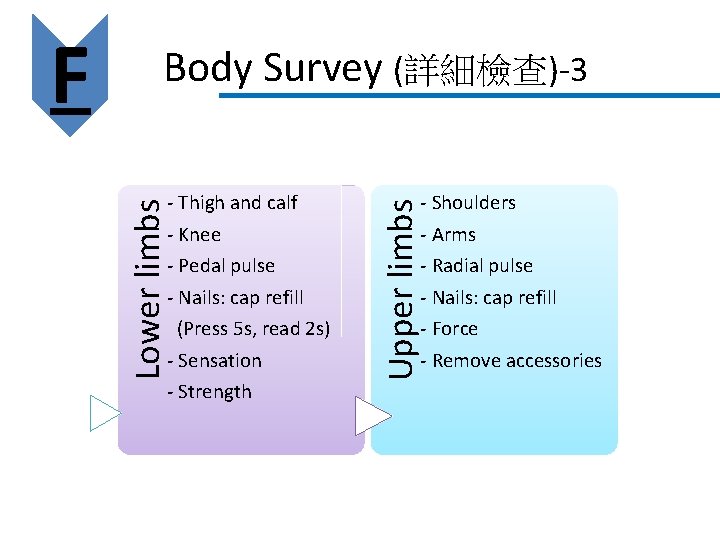
- Shoulders - Arms - Radial pulse - Nails: cap refill - Force - Remove accessories Upper limbs - Thigh and calf - Knee - Pedal pulse - Nails: cap refill (Press 5 s, read 2 s) - Sensation - Strength Lower limbs F Body Survey (詳細檢查)-3
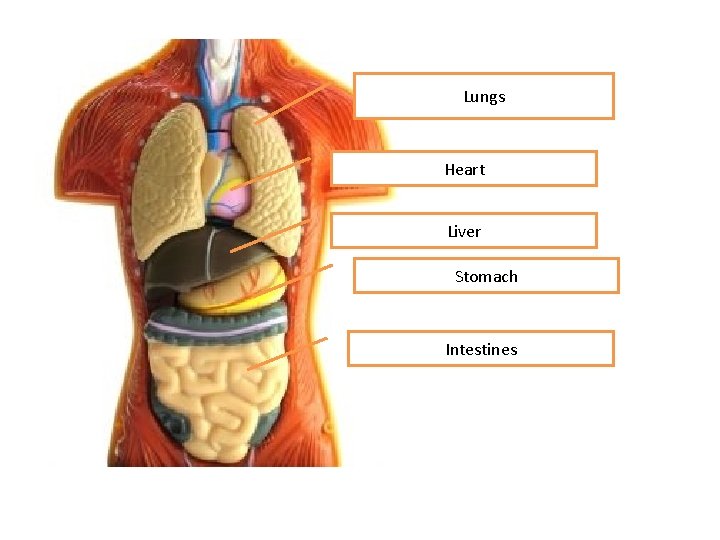
Lungs Heart Liver Stomach Intestines
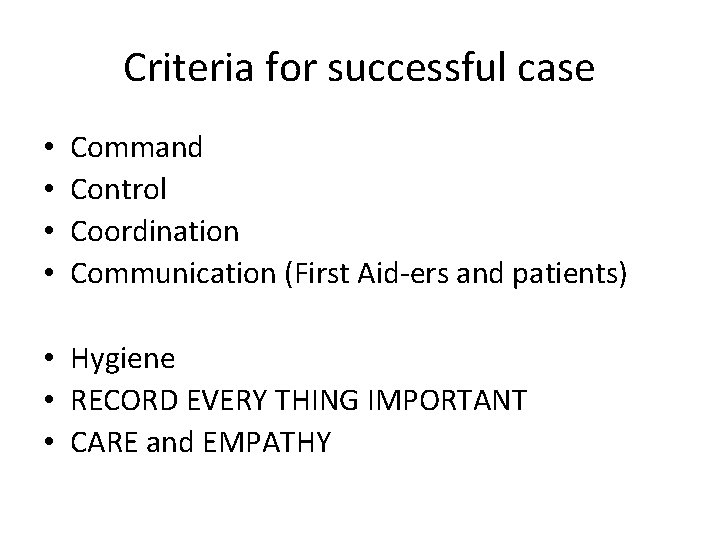
Criteria for successful case • • Command Control Coordination Communication (First Aid-ers and patients) • Hygiene • RECORD EVERY THING IMPORTANT • CARE and EMPATHY
Practice - 1 A 55 year-old man exercised intensely under bright sun without drinking any water for 1 hour. You found him lying on the ground, barely conscious. He feels very dizzy, hot and thirsty. He has a strong, rapid pulse. His skin is damp and cold. What do you think has happened and how would you deal with it?
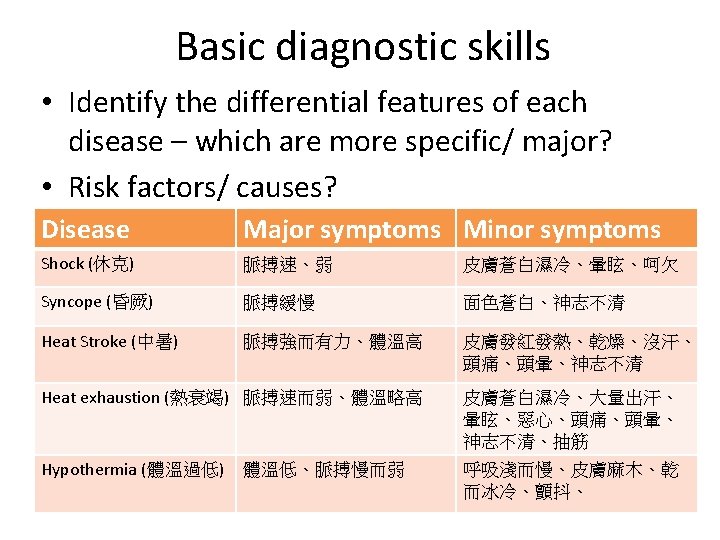
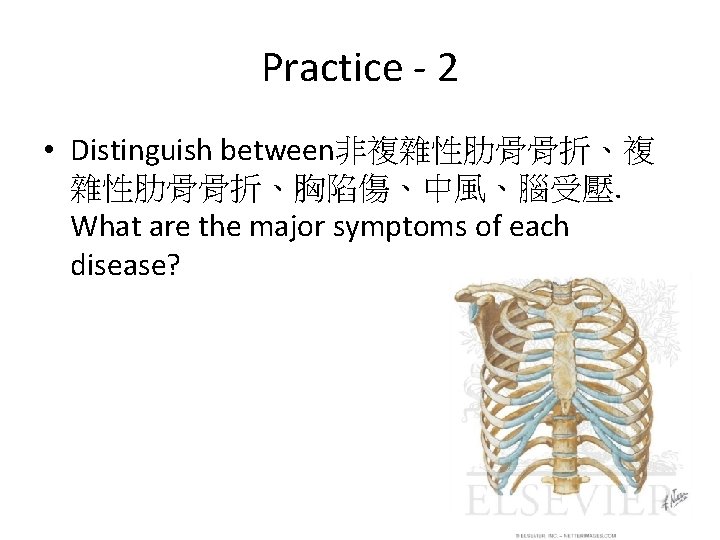
Practice - 2 • Distinguish between非複雜性肋骨骨折、複 雜性肋骨骨折、胸陷傷、中風、腦受壓. What are the major symptoms of each disease?
Coma • Causes: 1. Head injury 2. Blood supply to the brain is disrupted 3. Pressure on brain 4. Chemical/ toxins 5. Others e. g. infections, neurological disorders But……WHY DO WE FAINT?
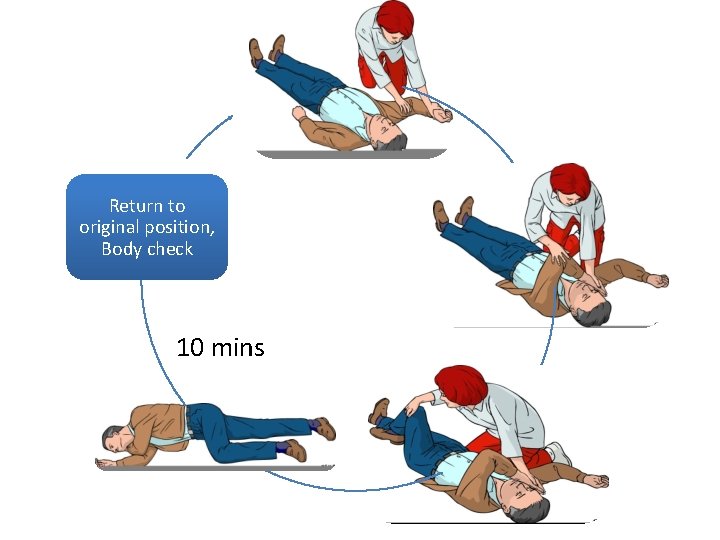
Return to original position, Body check 10 mins