
10 Steps for Designing Education As Part of
- Slides: 26
10 Steps for Designing Education As Part of Guideline Implementation Evidenced-Based Guidelines Education Toolkit VERSION 10/2019
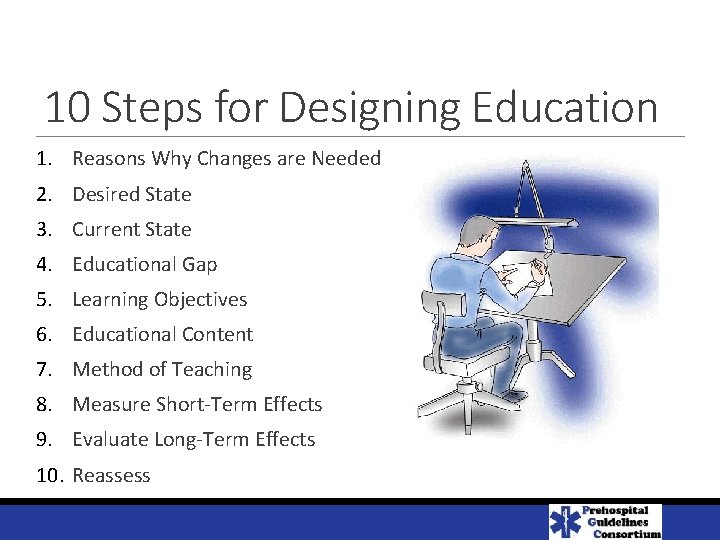
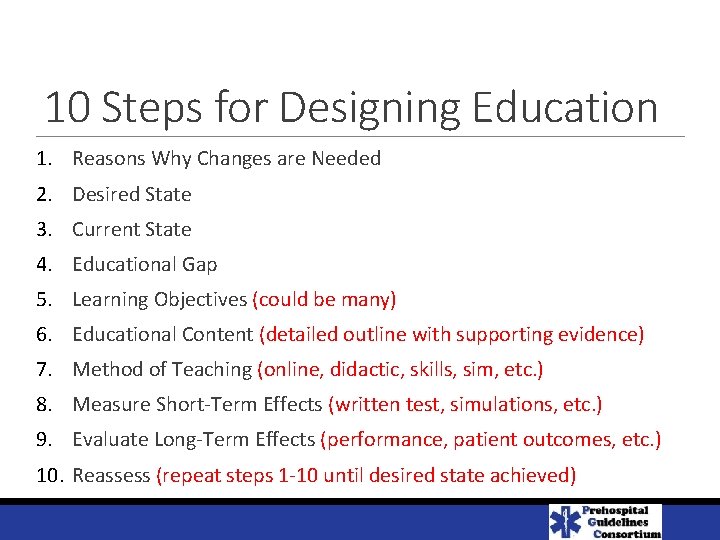
10 Steps for Designing Education 1. Reasons Why Changes are Needed 2. Desired State 3. Current State 4. Educational Gap 5. Learning Objectives 6. Educational Content 7. Method of Teaching 8. Measure Short-Term Effects 9. Evaluate Long-Term Effects 10. Reassess
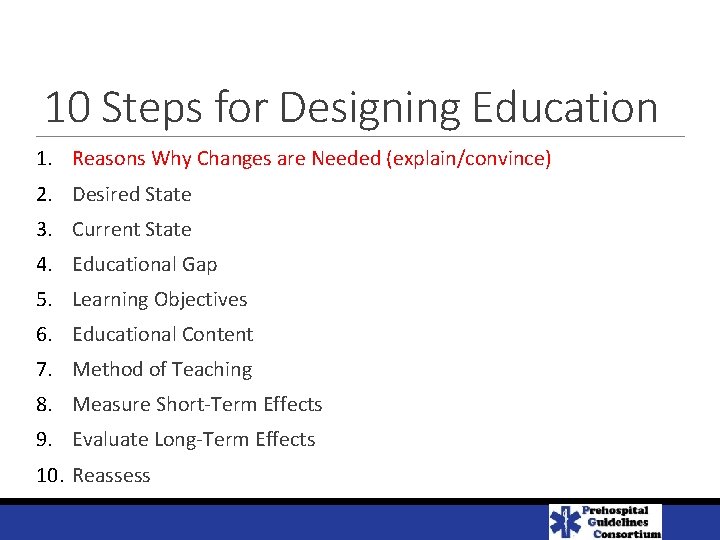
10 Steps for Designing Education 1. Reasons Why Changes are Needed (explain/convince) 2. Desired State 3. Current State 4. Educational Gap 5. Learning Objectives 6. Educational Content 7. Method of Teaching 8. Measure Short-Term Effects 9. Evaluate Long-Term Effects 10. Reassess
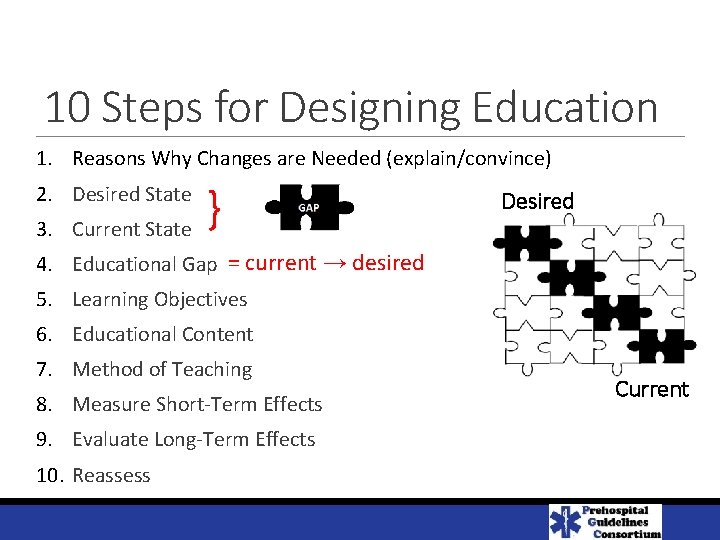
10 Steps for Designing Education 1. Reasons Why Changes are Needed (explain/convince) 2. Desired State 3. Current State } Desired 4. Educational Gap = current → desired 5. Learning Objectives 6. Educational Content 7. Method of Teaching 8. Measure Short-Term Effects 9. Evaluate Long-Term Effects 10. Reassess Current
10 Steps for Designing Education 1. Reasons Why Changes are Needed 2. Desired State 3. Current State 4. Educational Gap 5. Learning Objectives (could be many) 6. Educational Content (detailed outline with supporting evidence) 7. Method of Teaching (online, didactic, skills, sim, etc. ) 8. Measure Short-Term Effects (written test, simulations, etc. ) 9. Evaluate Long-Term Effects (performance, patient outcomes, etc. ) 10. Reassess (repeat steps 1 -10 until desired state achieved)
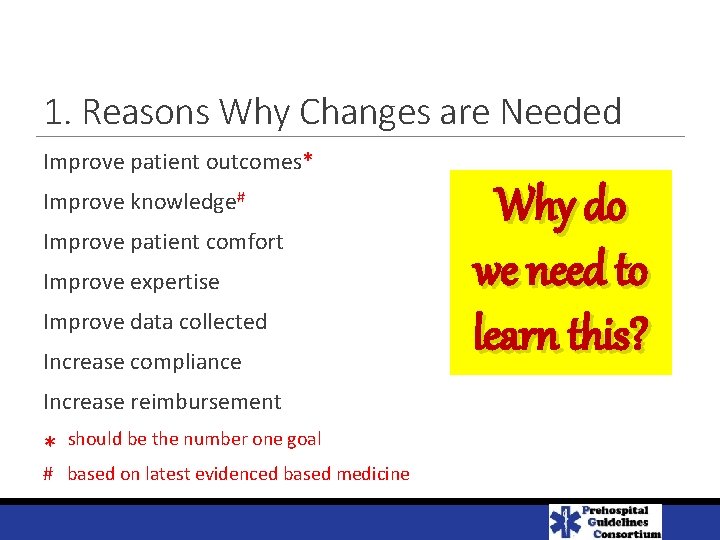
1. Reasons Why Changes are Needed Improve patient outcomes* Improve knowledge# Improve patient comfort Improve expertise Improve data collected Increase compliance Increase reimbursement * should be the number one goal # based on latest evidenced based medicine Why do we need to learn this?
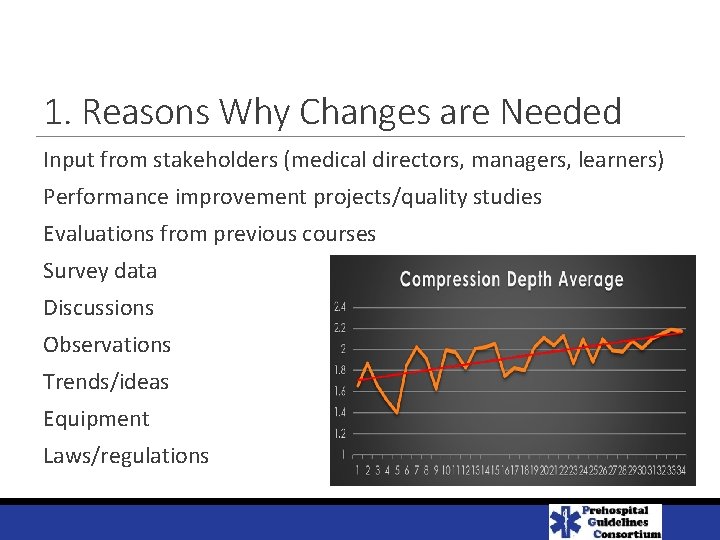
1. Reasons Why Changes are Needed Input from stakeholders (medical directors, managers, learners) Performance improvement projects/quality studies Evaluations from previous courses Survey data Discussions Observations Trends/ideas Equipment Laws/regulations
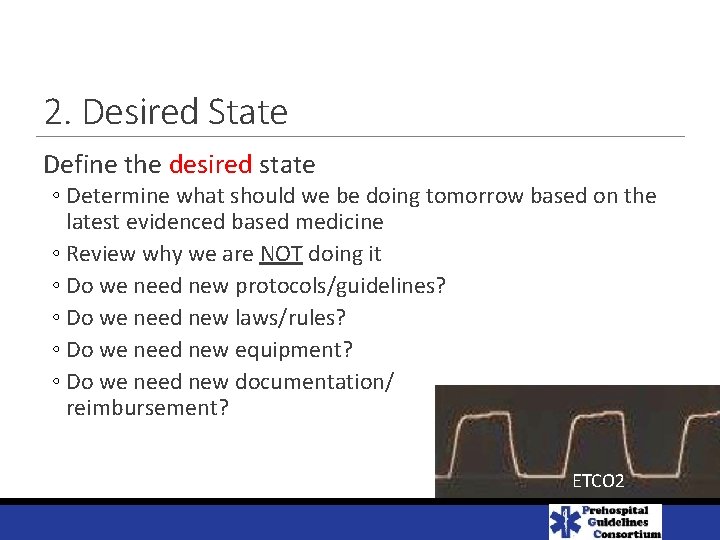
2. Desired State Define the desired state ◦ Determine what should we be doing tomorrow based on the latest evidenced based medicine ◦ Review why we are NOT doing it ◦ Do we need new protocols/guidelines? ◦ Do we need new laws/rules? ◦ Do we need new equipment? ◦ Do we need new documentation/ reimbursement? ETCO 2
3. Current State Define the current state ◦ Determine what we are doing today ◦ Review why we are doing it that way ◦ Review current protocols/guidelines ◦ Review old laws/rules ◦ Examine old equipment ◦ Review current reimbursement ◦ Review current documentation/methods of recording ◦ Review old science that had been published
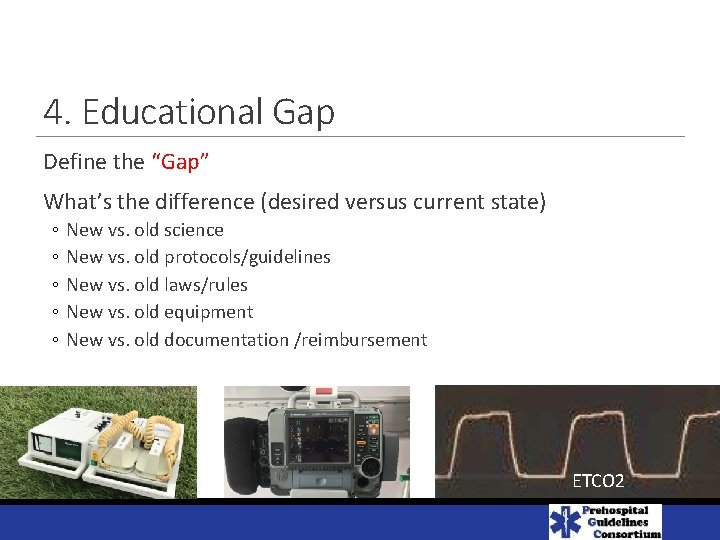
4. Educational Gap Define the “Gap” What’s the difference (desired versus current state) ◦ ◦ ◦ New vs. old science New vs. old protocols/guidelines New vs. old laws/rules New vs. old equipment New vs. old documentation /reimbursement ETCO 2
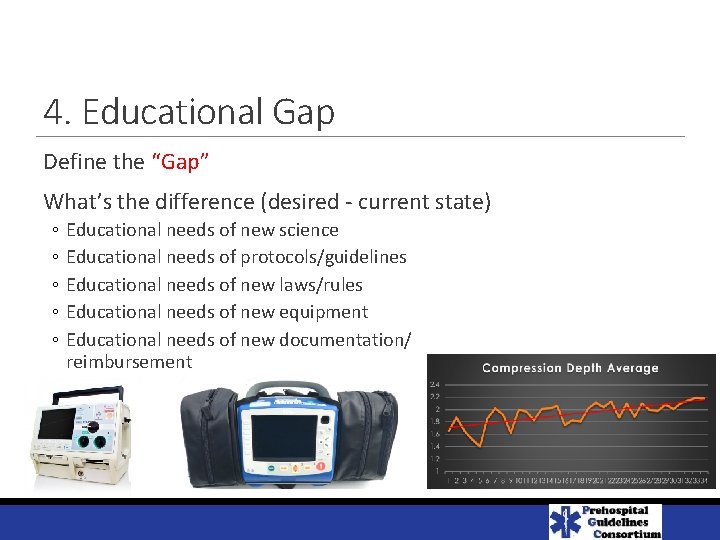
4. Educational Gap Define the “Gap” What’s the difference (desired - current state) ◦ ◦ ◦ Educational needs of new science Educational needs of protocols/guidelines Educational needs of new laws/rules Educational needs of new equipment Educational needs of new documentation/ reimbursement
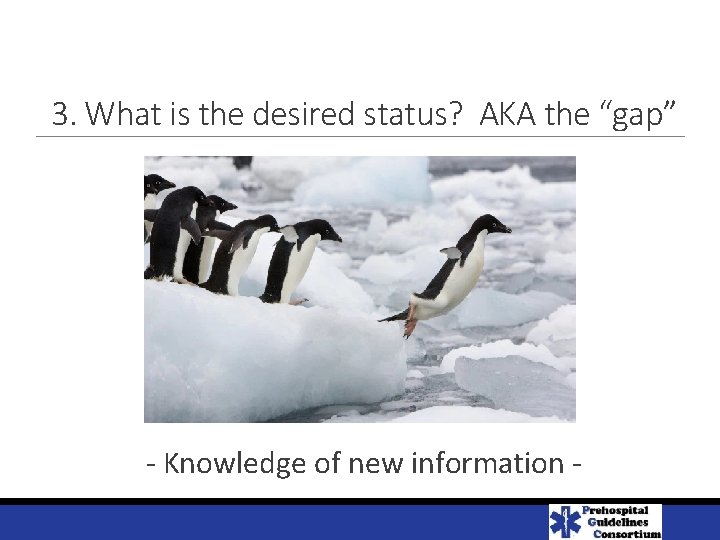
3. What is the desired status? AKA the “gap” - Knowledge of new information -
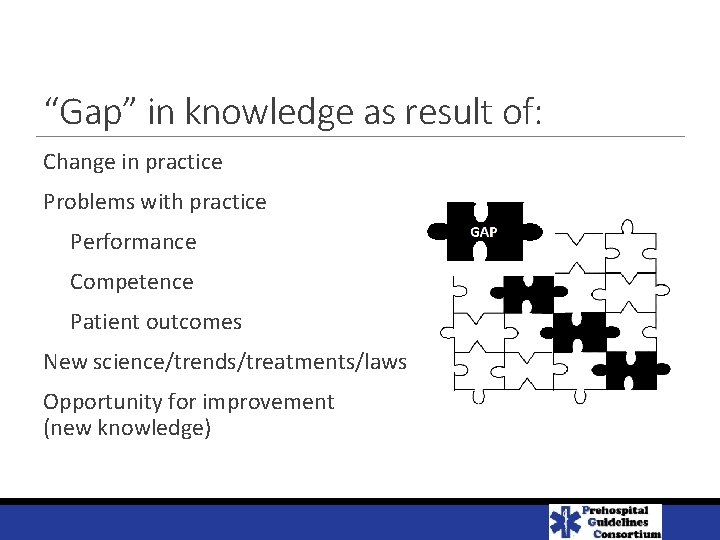
“Gap” in knowledge as result of: Change in practice Problems with practice Performance Competence Patient outcomes New science/trends/treatments/laws Opportunity for improvement (new knowledge)
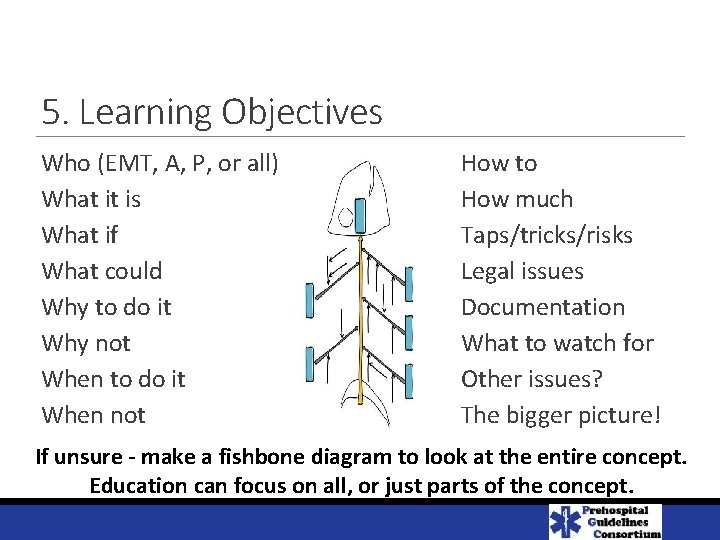
5. Learning Objectives Who (EMT, A, P, or all) What it is What if What could Why to do it Why not When to do it When not How to How much Taps/tricks/risks Legal issues Documentation What to watch for Other issues? The bigger picture! If unsure - make a fishbone diagram to look at the entire concept. Education can focus on all, or just parts of the concept.
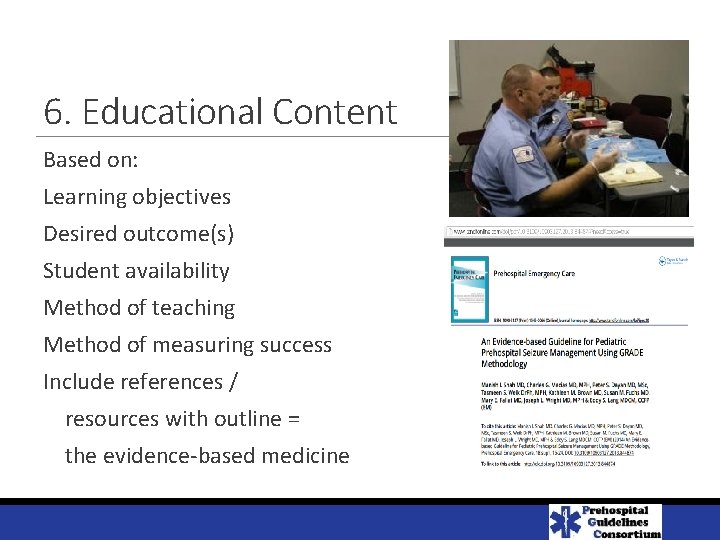
6. Educational Content Based on: Learning objectives Desired outcome(s) Student availability Method of teaching Method of measuring success Include references / resources with outline = the evidence-based medicine
7. Method of Teaching Who & what methods are best in order to optimize education Time allowed Who teaches-MD or medic Necessity On-line and/or live Resources Flipped classroom Newness Didactic and/or skills Complexity Combo = lecture & skills Unlearning/relearning Scenario and/or sim-based Frequency of doing it Testing Retention issues Curriculum matching Best practices, etc
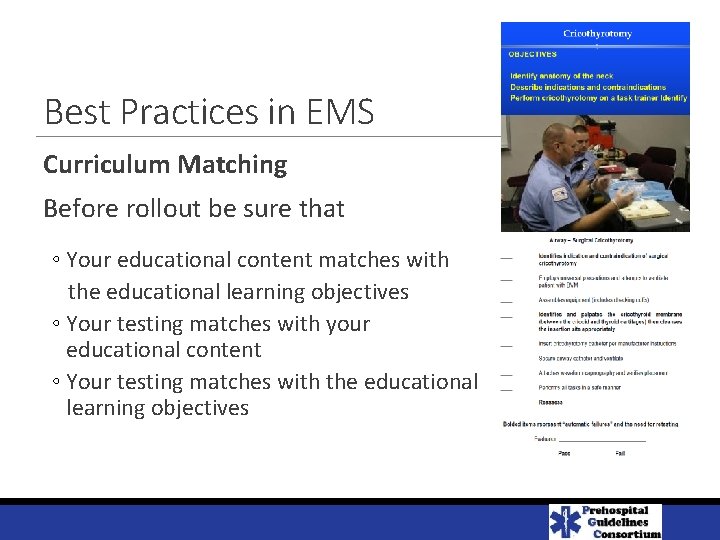
Best Practices in EMS Curriculum Matching Before rollout be sure that ◦ Your educational content matches with the educational learning objectives ◦ Your testing matches with your educational content ◦ Your testing matches with the educational learning objectives
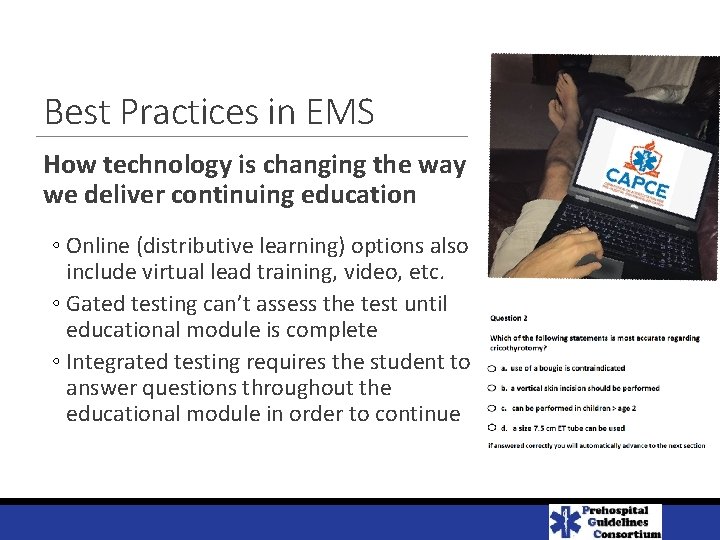
Best Practices in EMS How technology is changing the way we deliver continuing education ◦ Online (distributive learning) options also include virtual lead training, video, etc. ◦ Gated testing can’t assess the test until educational module is complete ◦ Integrated testing requires the student to answer questions throughout the educational module in order to continue
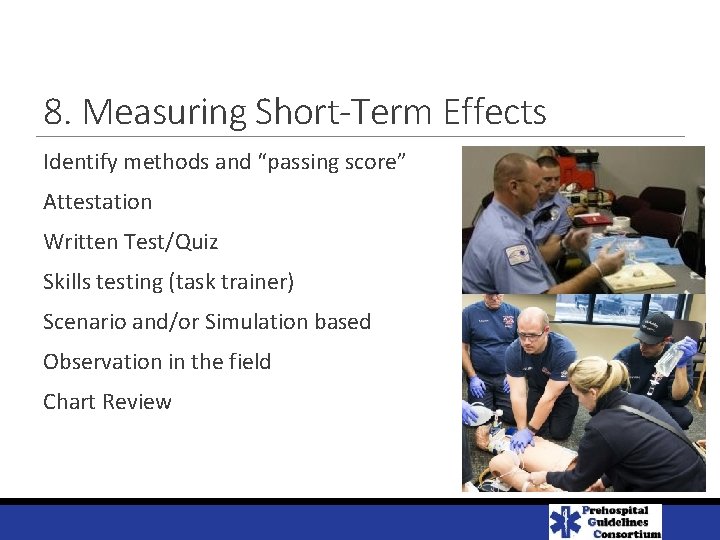
8. Measuring Short-Term Effects Identify methods and “passing score” Attestation Written Test/Quiz Skills testing (task trainer) Scenario and/or Simulation based Observation in the field Chart Review
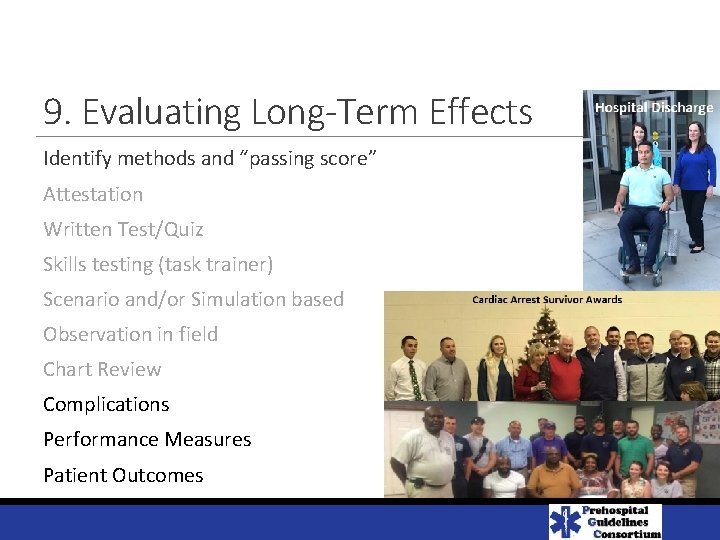
9. Evaluating Long-Term Effects Identify methods and “passing score” Attestation Written Test/Quiz Skills testing (task trainer) Scenario and/or Simulation based Observation in field Chart Review Complications Performance Measures Patient Outcomes
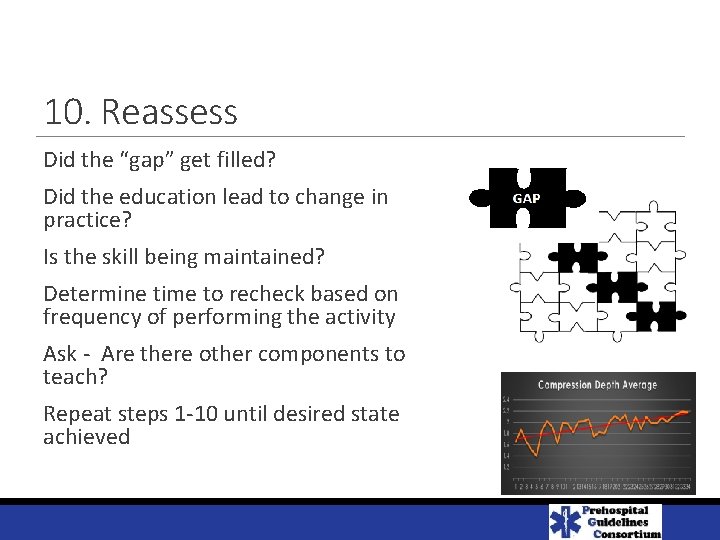
10. Reassess Did the “gap” get filled? Did the education lead to change in practice? Is the skill being maintained? Determine time to recheck based on frequency of performing the activity Ask - Are there other components to teach? Repeat steps 1 -10 until desired state achieved
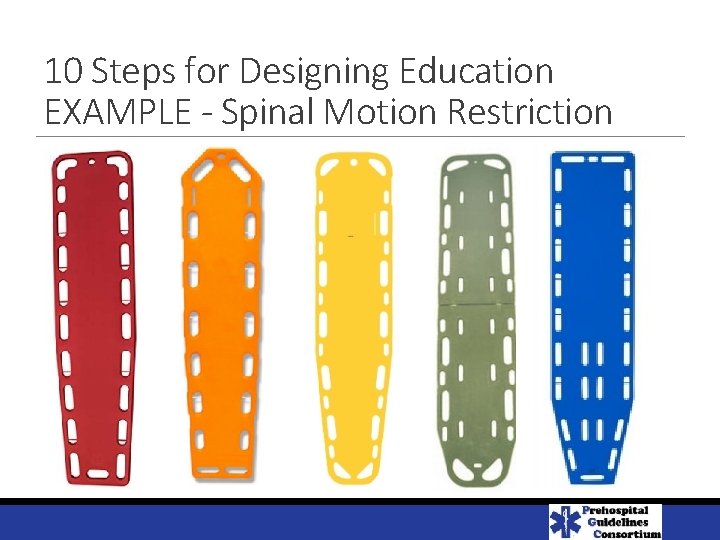
10 Steps for Designing Education EXAMPLE - Spinal Motion Restriction
10 Steps for Designing Education EXAMPLE - Spinal Motion Restriction 1. Reasons Why Changes are Needed Research does not support spinal immobilization, harm > good 2. Desired State Use backboard to facilitate transport, not spinal immobilization 3. Current State Using backboard for spinal immobilization on every MVC / fall 4. Educational Gap Not knowing harm; not knowing there is a lack of benefit 5. Learning Objectives Describe harm associated with use of backboards, limit their use
10 Steps for Designing Education EXAMPLE - Spinal Motion Restriction 6. Educational Content Research (decubitus ulcers, sepsis, pain, unnecessary x-rays) 7. Method of Teaching Online and didactic (no need for skills) 8. Measure Short-term Effects Written test, complaints from ED staff, documentation issues 9. Evaluate Long-term Effects Decreased use backboards, decubitus, x-rays, complaints from ED 10. Reassess Repeat steps 1 -10 until EMS stops routine use of backboards
References Curriculum Matching. EMS World 2017; 46(5): 44 -45. Best Practices in CE. EMS World 2015; 44(6): 28 -31. Spinal Motion Restriction in the Trauma Patient. Prehospital Emergency Care 2018; 22(6): 659 -661 Resources https: //www. cecbems. org/docs/CAPCE%20 Best%20 Practices%20 Model%203% 20[433]. pdf