
10 RESPIRATORY PROTECTION Physiological Basis of Respiration has
10 – RESPIRATORY PROTECTION • Physiological Basis of Respiration has vital prognosis as it provides oxygen to the blood. Oxygen exchange is carried out by approximately 300 million alveoli (pores in lungs), and the surface area of these pores is around 80 -100 m 2. The frequency of breathing is adjusted depending on the concentration of CO 2. It is necessary to breathe twice as often when the CO 2 concentration in the vicinity increases by 0. 2%. A person has a rest breathes 16 times in a minute and again uses 10 liters of air per minute. Breathing frequency increases according to the effort spent during work. Heavy duty person can use air at 100 l / min. 21% oxygen, 0. 04% CO 2, 17% oxygen, 4% CO 2 are present in air drawn to the lungs in respiration. If the amount of oxygen in the air is below 15%, significant loss of power and loss of consciousness may result.
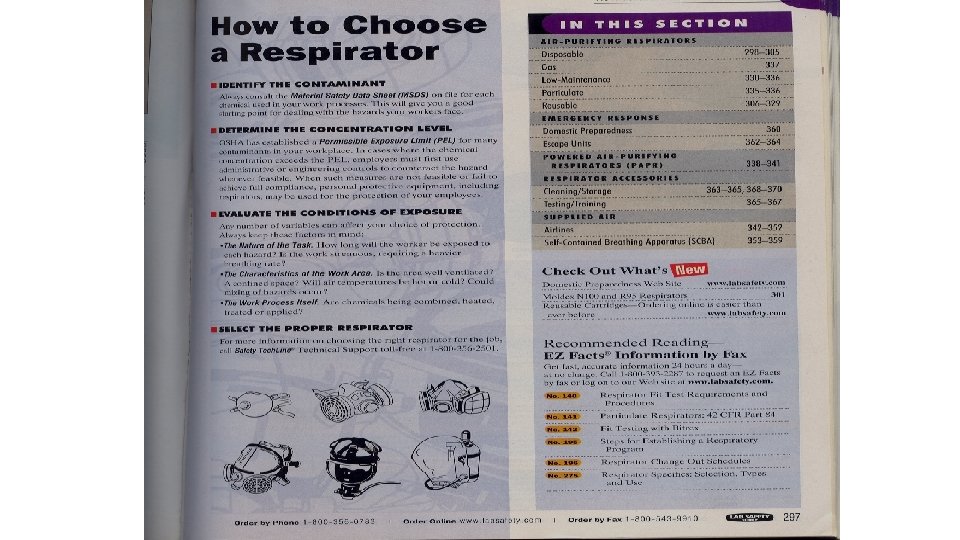
Filtered Devices (Masks) They are used to protect from harmful vapors or gases in inhaled air. Half masks do not prevent irritation of the eyes only when closing the mouth and nose. Full masks cover the entire face and provide full protection. The following considerations should be observed when choosing the appropriate filter. A- The oxygen concentration should be at least 17% by volume. B- The nature and composition of the harmful substance must be known and the filter type should be selected accordingly. C- The concentration of harmful substances in gaseous or solid state should not exceed the maximum values given in the charts. There are three types of filters: 1 - Pure gas filters 2 Pure particle filters 3 - Combined filters (used in the
• Combined Filters • Particulate and gas filters are in the same cover. It protects against harmful gas, vapor and particle mixture in the breathing air. • First, airborne particles are trapped, then harmful gases are adsorbed on special coal or chemically reacted. • In the laboratory, a combined filter marked A 2 B 2 E 2 K 2 P 3 can be used for general protection. • The usage time of a filter depends on its size and usage conditions. Air temperature, air humidity and concentration of harmful substances affect the duration of use. If the smell is felt in the air passing through the filter or difficult breathing is taking place, the life of the filter is over.
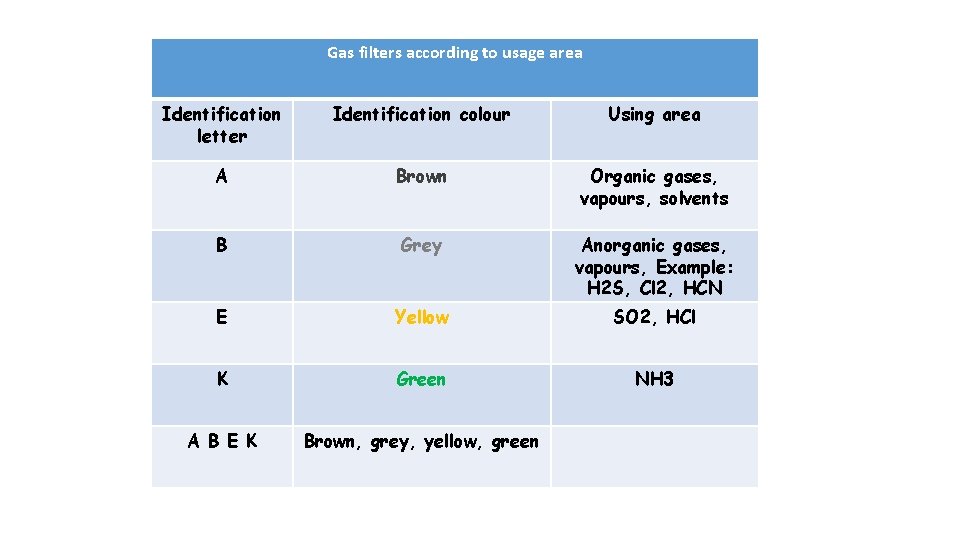
Gas filters according to usage area Identification letter Identification colour Using area A Brown Organic gases, vapours, solvents B Grey Anorganic gases, vapours, Example: H 2 S, Cl 2, HCN E Yellow SO 2, HCl K Green NH 3 A B E K Brown, grey, yellow, green
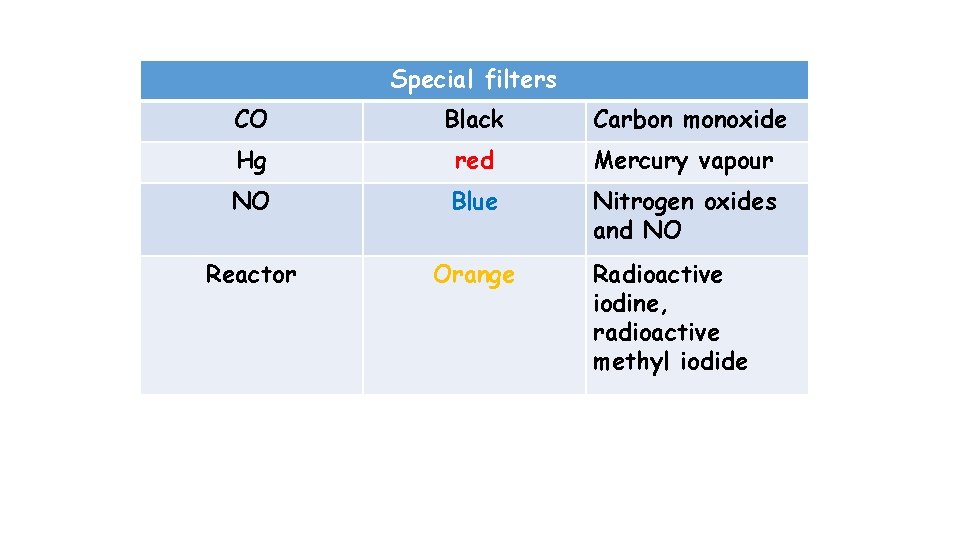
Special filters CO Black Carbon monoxide Hg red Mercury vapour NO Blue Nitrogen oxides and NO Reactor Orange Radioactive iodine, radioactive methyl iodide
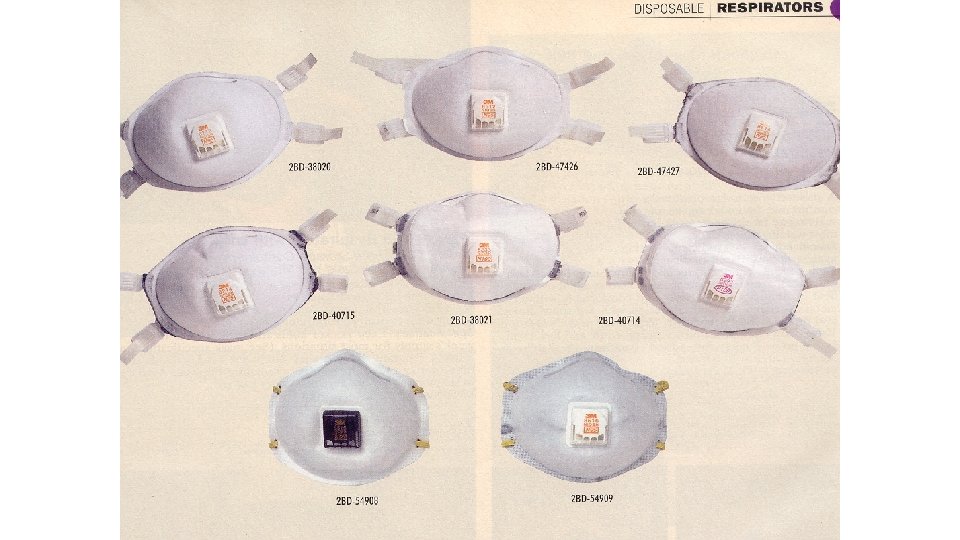
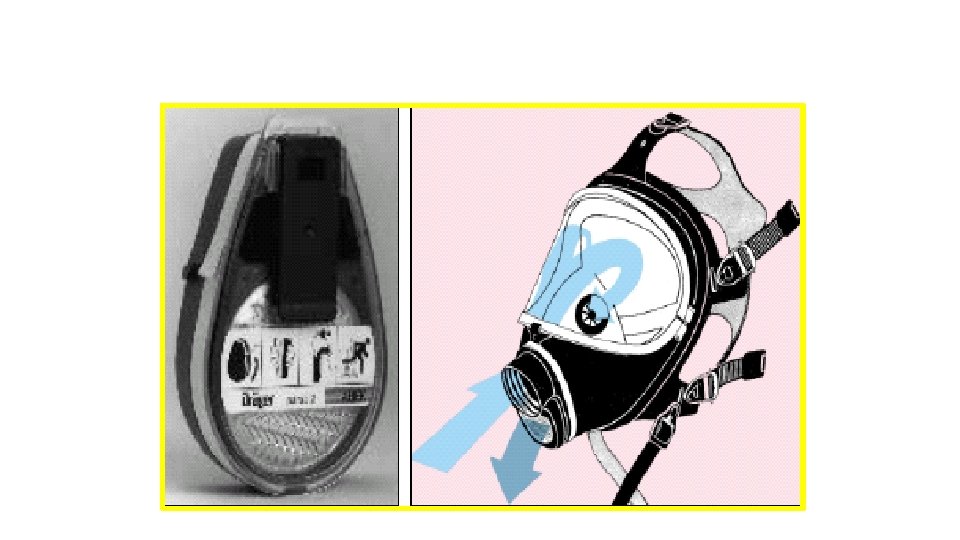

Mask and filter
- Slides: 10