
10 MISTAKES MADE IN DISASTER PLANNING AND RESPONSE


- Slides: 12
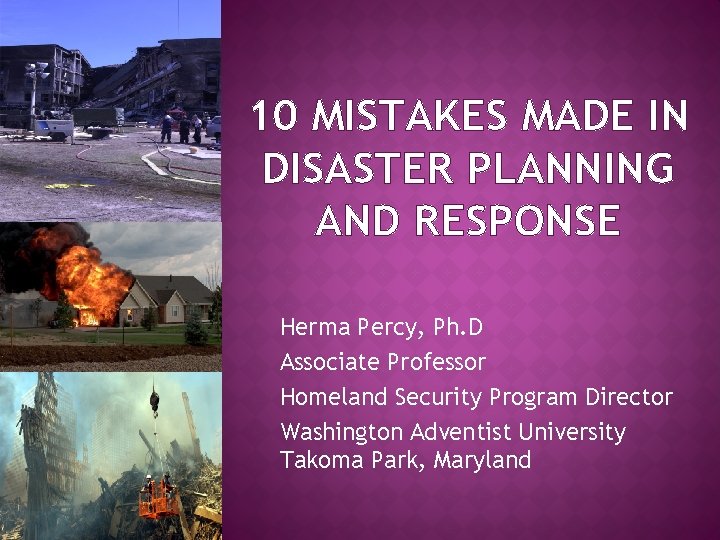
10 MISTAKES MADE IN DISASTER PLANNING AND RESPONSE Herma Percy, Ph. D Associate Professor Homeland Security Program Director Washington Adventist University Takoma Park, Maryland
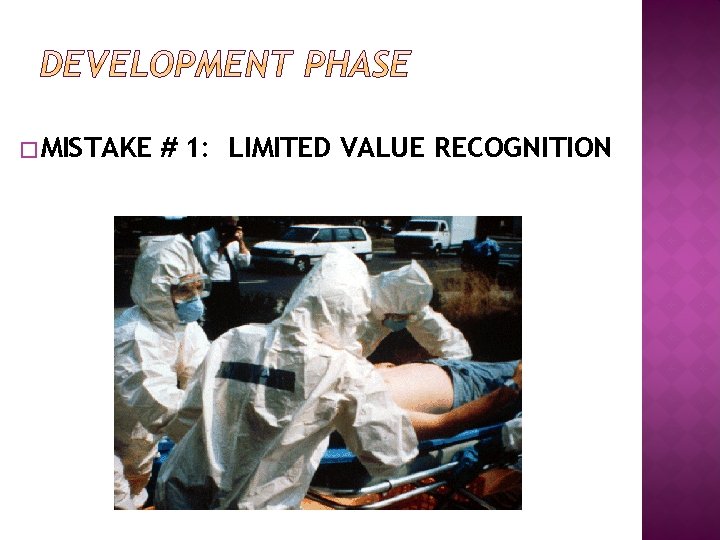
� MISTAKE # 1: LIMITED VALUE RECOGNITION
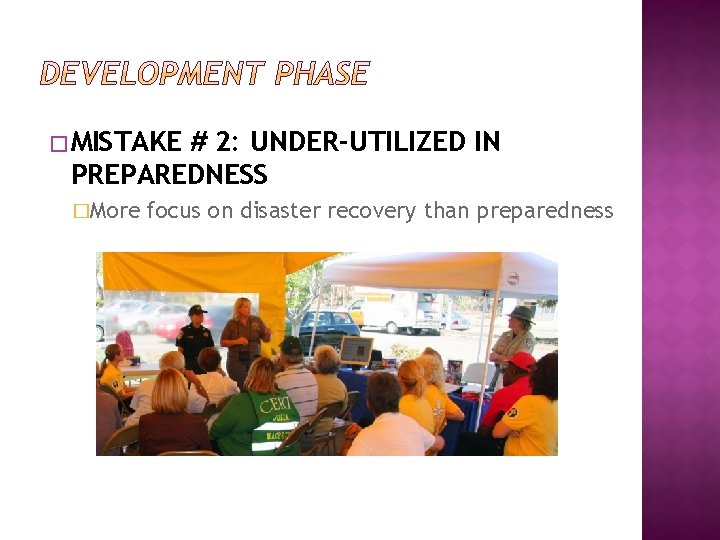
� MISTAKE # 2: UNDER-UTILIZED IN PREPAREDNESS �More focus on disaster recovery than preparedness
� Provide training and skill-building assistance to improve the ability of churches to serve as emergency responders and recovery agents
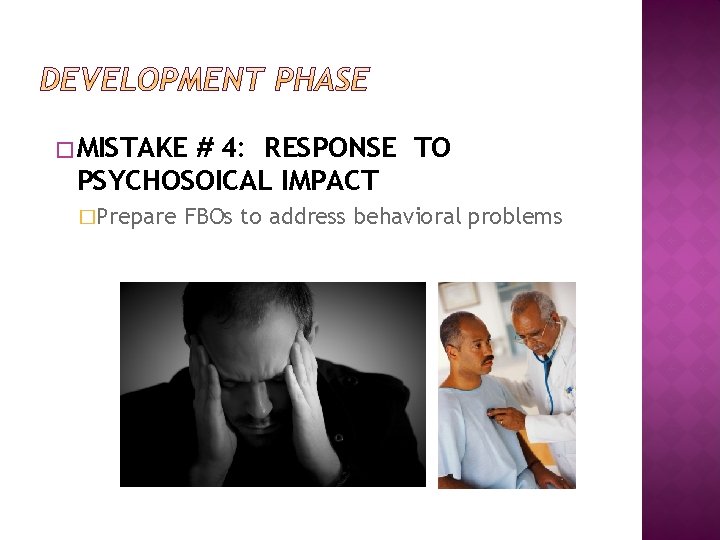
� MISTAKE # 4: RESPONSE TO PSYCHOSOICAL IMPACT �Prepare FBOs to address behavioral problems
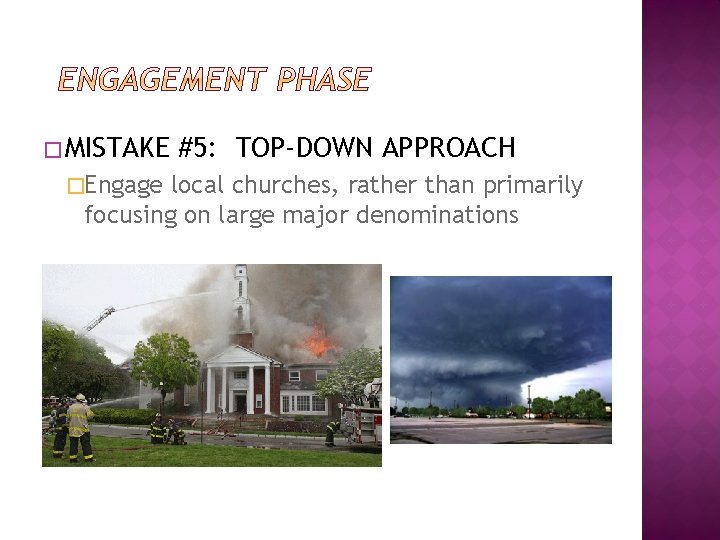
� MISTAKE �Engage #5: TOP-DOWN APPROACH local churches, rather than primarily focusing on large major denominations
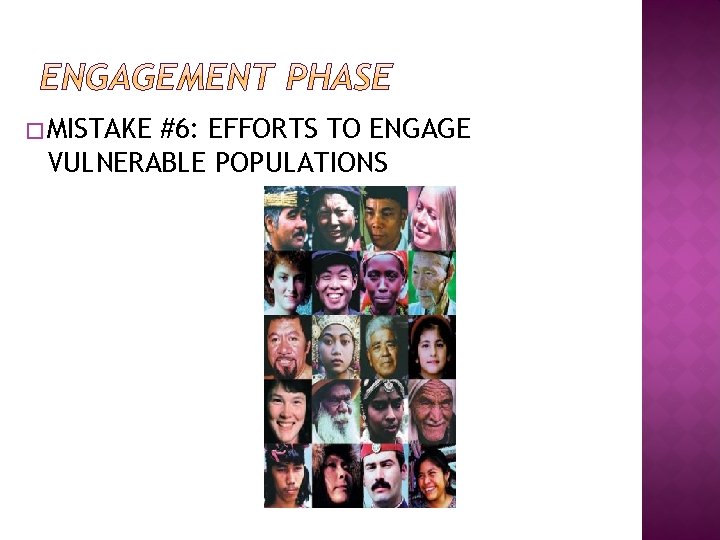
� MISTAKE #6: EFFORTS TO ENGAGE VULNERABLE POPULATIONS
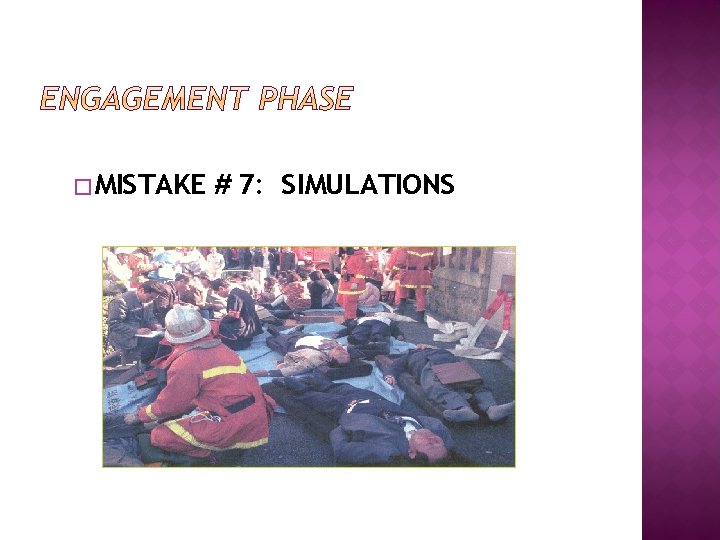
� MISTAKE # 7: SIMULATIONS
� MISTAKE # 8: RESOURCES TO FBOs �Strengthen the capacity of churches to serve
� MISTAKE # 9: SEAT AT THE TABLE
� MISTAKE �Utilizing # 10 : UNTAPPED RESOURCE faith-based leaders as Agents of Safety
Development � Recognize value � Focus more on preparedness rather than just recovery � Provide training and promote certifications in communities � Prepare FBOs to address psychosocial impact Engagement � Engage local churches rather than just major denominations � Engage vulnerable populations � Conduct simulations with FBOs Sustainability � Provide resources for FBOs to provide services � Seat at the table at all stages � Utilize pastors as public safety agents