
10 http www authorstream comPresentationsandamichaela2196876 mucha 10 Alphonse
- Slides: 41
10 http: //www. authorstream. com/Presentation/sandamichaela-2196876 -mucha 10/
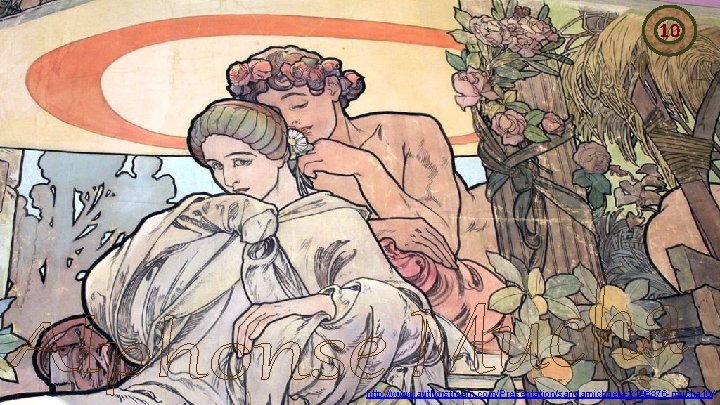
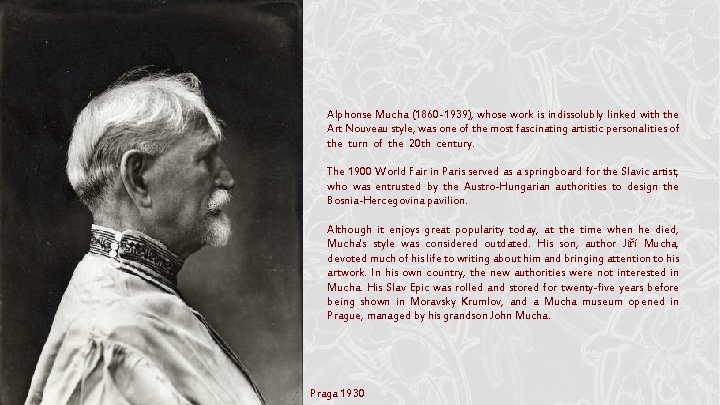
Alphonse Mucha (1860 -1939), whose work is indissolubly linked with the Art Nouveau style, was one of the most fascinating artistic personalities of the turn of the 20 th century. The 1900 World Fair in Paris served as a springboard for the Slavic artist, who was entrusted by the Austro-Hungarian authorities to design the Bosnia-Hercegovina pavilion. Although it enjoys great popularity today, at the time when he died, Mucha's style was considered outdated. His son, author Jiří Mucha, devoted much of his life to writing about him and bringing attention to his artwork. In his own country, the new authorities were not interested in Mucha. His Slav Epic was rolled and stored for twenty-five years before being shown in Moravsky Krumlov, and a Mucha museum opened in Prague, managed by his grandson John Mucha. Galeria Bratislava Praga 1930
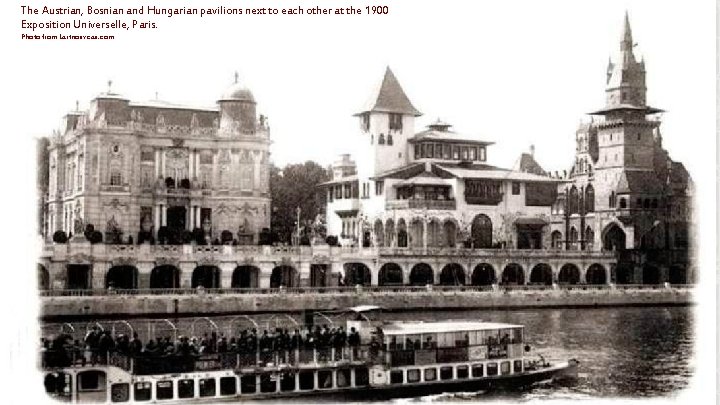
The Austrian, Bosnian and Hungarian pavilions next to each other at the 1900 Exposition Universelle, Paris. Photo from Lartnouveau. com
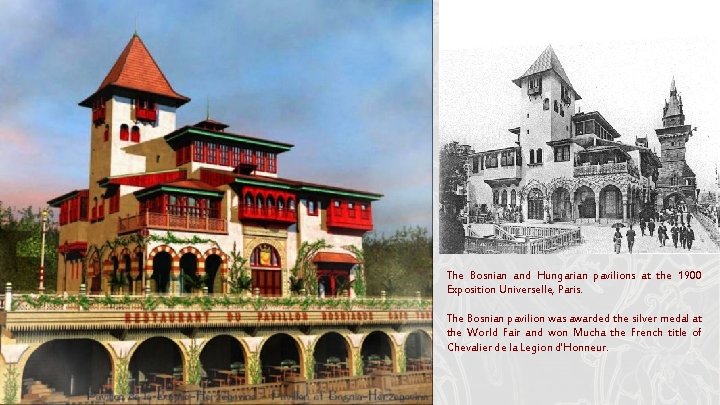
The Bosnian and Hungarian pavilions at the 1900 Exposition Universelle, Paris. The Bosnian pavilion was awarded the silver medal at the World Fair and won Mucha the French title of Chevalier de la Legion d'Honneur.
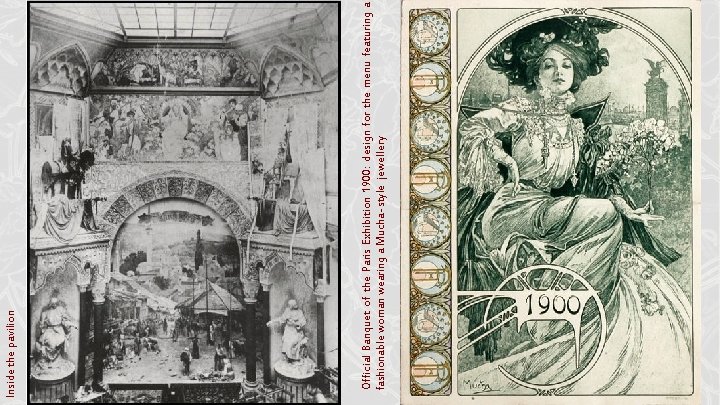
Official Banquet of the Paris Exhibition 1900: design for the menu featuring a fashionable woman wearing a Mucha- style jewellery Inside the pavilion
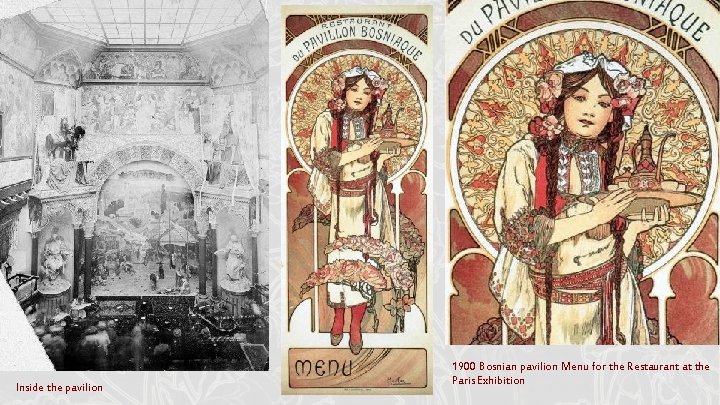
Inside the pavilion 1900 Bosnian pavilion Menu for the Restaurant at the Paris Exhibition
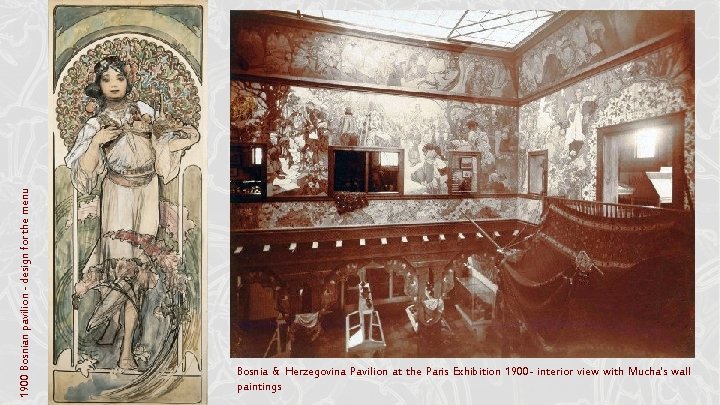
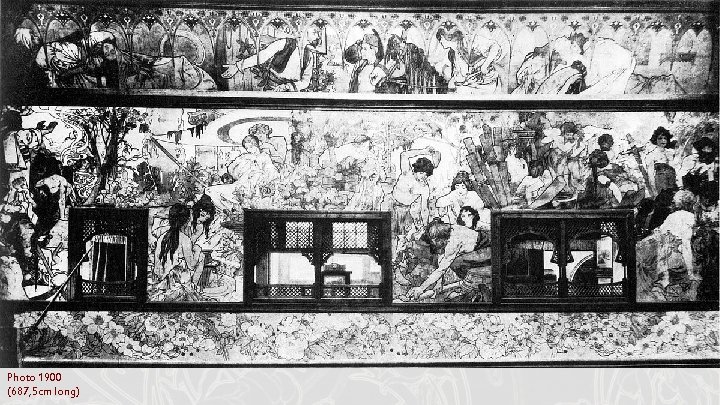
1900 Bosnian pavilion - design for the menu Bosnia & Herzegovina Pavilion at the Paris Exhibition 1900 - interior view with Mucha's wall paintings
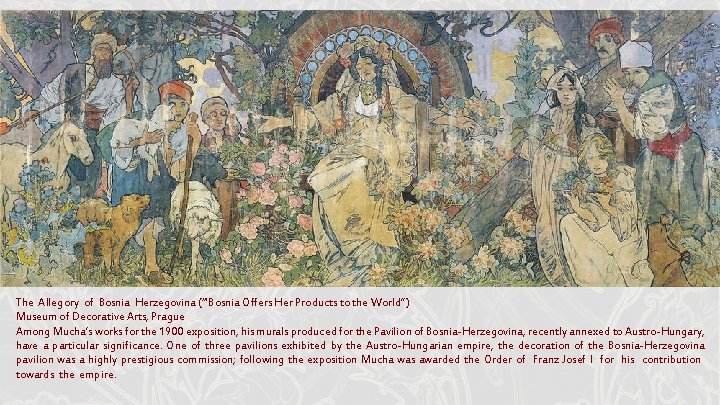
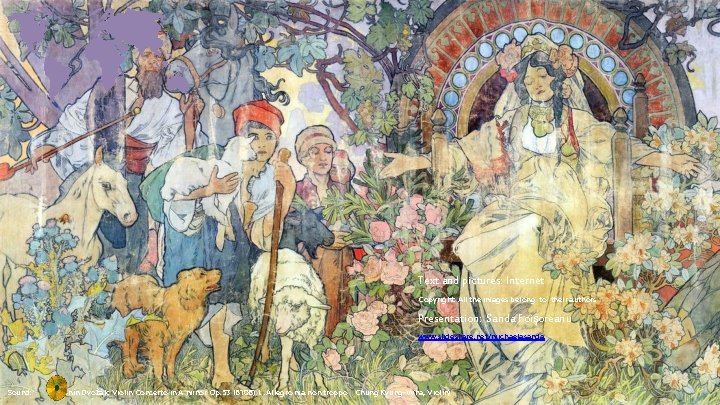
The Allegory of Bosnia Herzegovina (“'Bosnia Offers Her Products to the World”) Museum of Decorative Arts, Prague Among Mucha’s works for the 1900 exposition, his murals produced for the Pavilion of Bosnia-Herzegovina, recently annexed to Austro-Hungary, have a particular significance. One of three pavilions exhibited by the Austro-Hungarian empire, the decoration of the Bosnia-Herzegovina pavilion was a highly prestigious commission; following the exposition Mucha was awarded the Order of Franz Josef I for his contribution towards the empire.
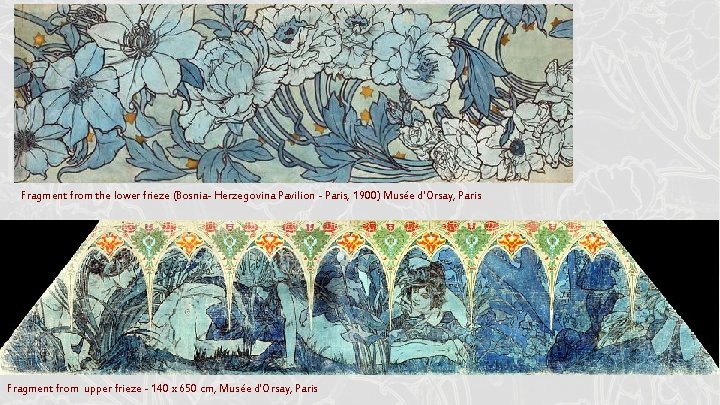
Fragment from the lower frieze (Bosnia- Herzegovina Pavilion - Paris, 1900) Musée d'Orsay, Paris Fragment from upper frieze - 140 x 650 cm, Musée d'Orsay, Paris
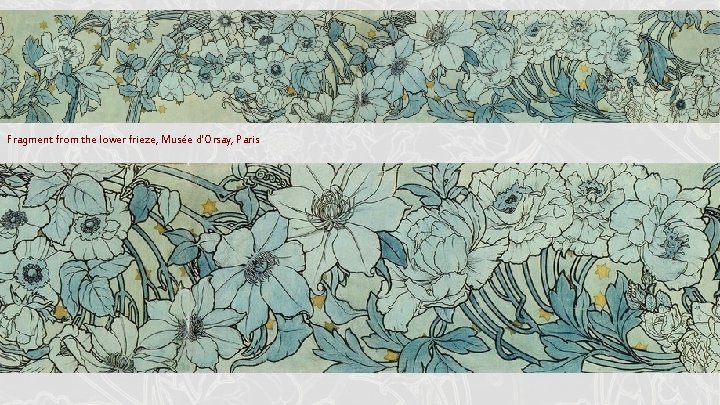
Fragment from the lower frieze, Musée d'Orsay, Paris
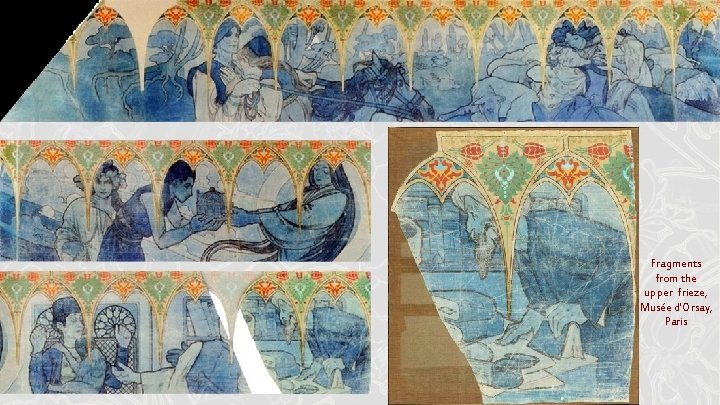
Fragments from the upper frieze, Musée d'Orsay, Paris
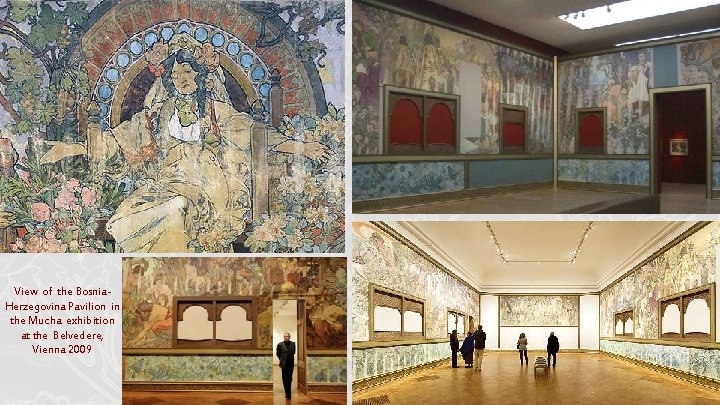
View of the Bosnia. Herzegovina Pavilion in the Mucha exhibition at the Belvedere, Vienna 2009
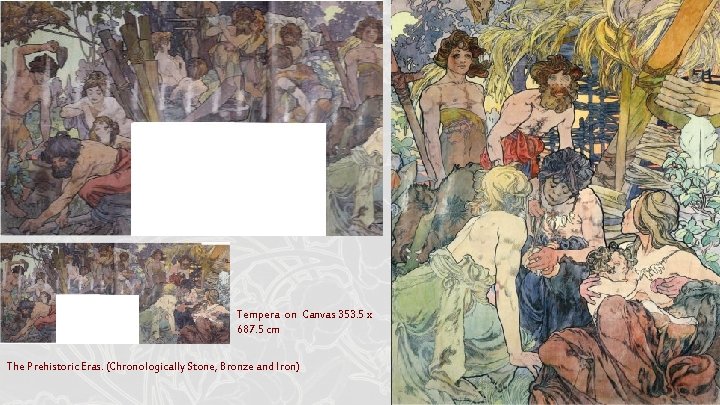
Tempera on Canvas 353. 5 x 687. 5 cm The Prehistoric Eras. (Chronologically Stone, Bronze and Iron)
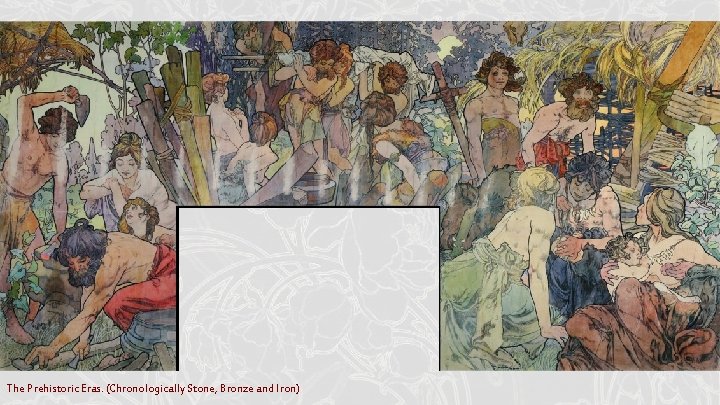
The Prehistoric Eras. (Chronologically Stone, Bronze and Iron)
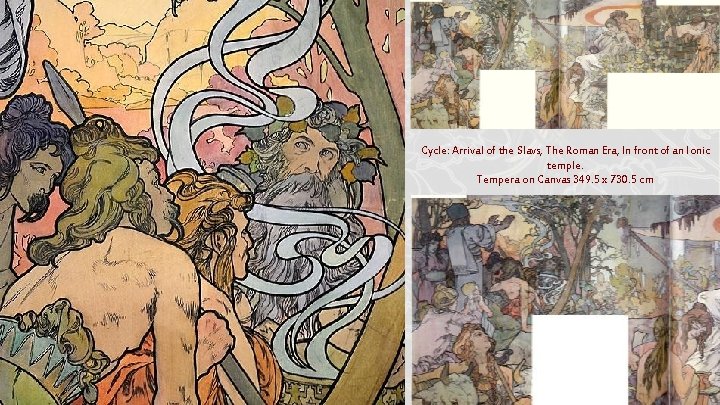
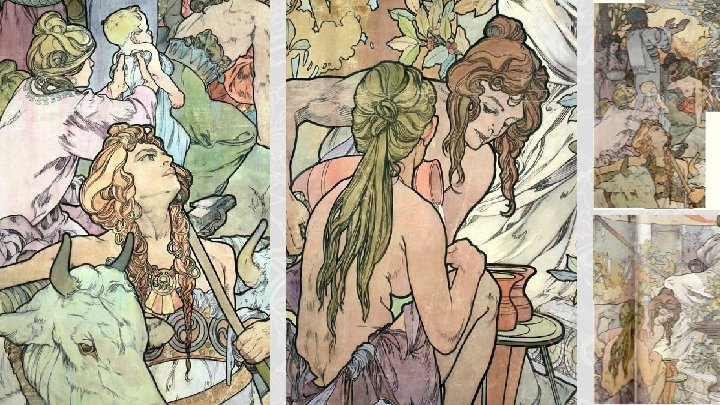
Cycle: Arrival of the Slavs, The Roman Era, In front of an Ionic temple. Tempera on Canvas 349. 5 x 730. 5 cm
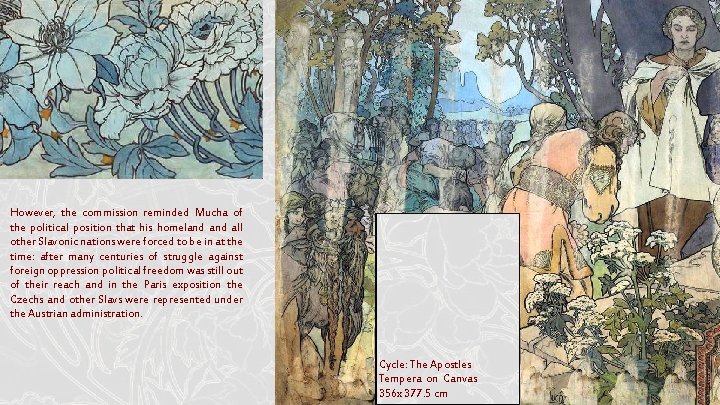
However, the commission reminded Mucha of the political position that his homeland all other Slavonic nations were forced to be in at the time: after many centuries of struggle against foreign oppression political freedom was still out of their reach and in the Paris exposition the Czechs and other Slavs were represented under the Austrian administration. Cycle: The Apostles Tempera on Canvas 356 x 377. 5 cm
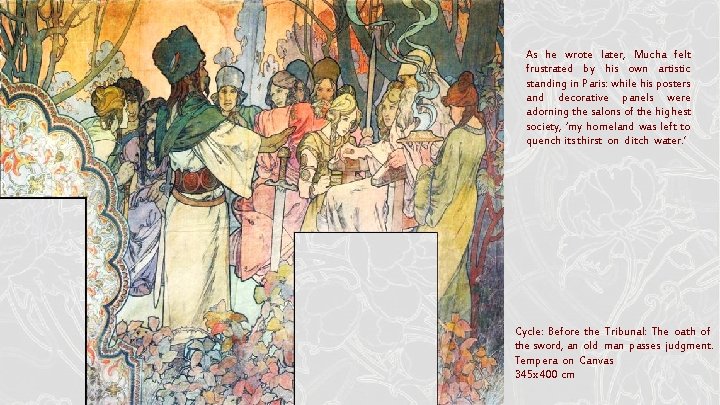
As he wrote later, Mucha felt frustrated by his own artistic standing in Paris: while his posters and decorative panels were adorning the salons of the highest society, ‘my homeland was left to quench its thirst on ditch water. ’ Cycle: Before the Tribunal: The oath of the sword, an old man passes judgment. Tempera on Canvas 345 x 400 cm
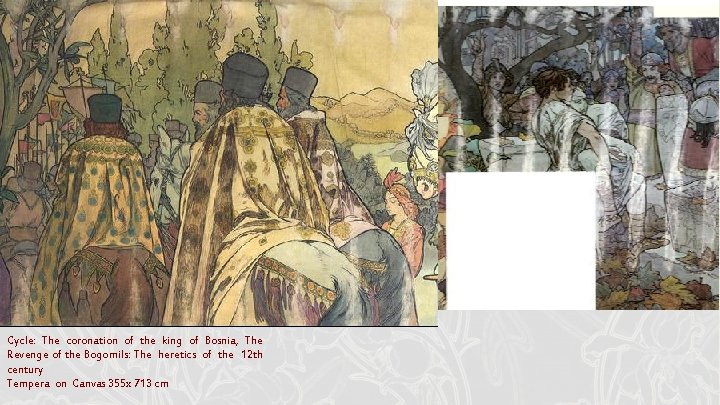
Cycle: The coronation of the king of Bosnia, The Revenge of the Bogomils: The heretics of the 12 th century Tempera on Canvas 355 x 713 cm
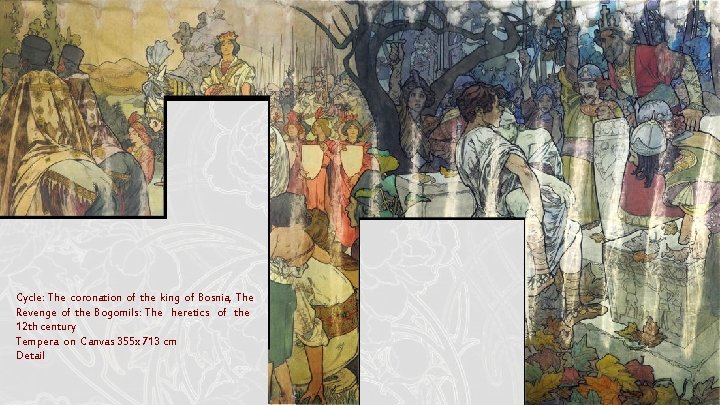
Cycle: The coronation of the king of Bosnia, The Revenge of the Bogomils: The heretics of the 12 th century Tempera on Canvas 355 x 713 cm Detail
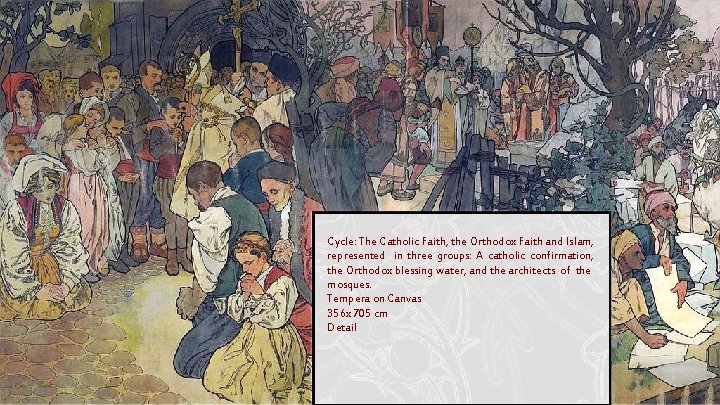
Cycle: The Catholic Faith, the Orthodox Faith and Islam, represented in three groups: A catholic confirmation, the Orthodox blessing water, and the architects of the mosques. Tempera on Canvas 356 x 705 cm Detail
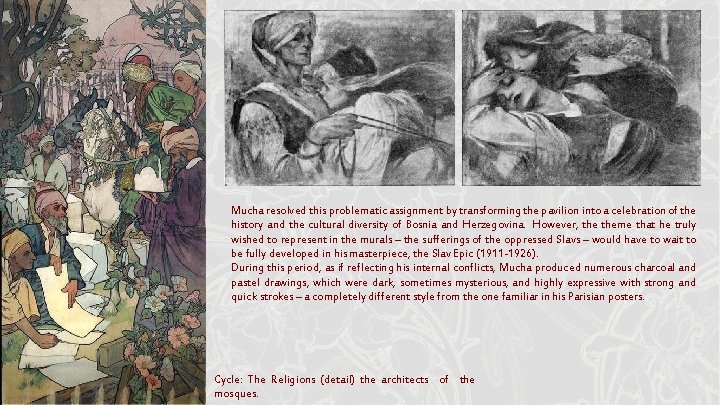
Mucha resolved this problematic assignment by transforming the pavilion into a celebration of the history and the cultural diversity of Bosnia and Herzegovina. However, theme that he truly wished to represent in the murals – the sufferings of the oppressed Slavs – would have to wait to be fully developed in his masterpiece, the Slav Epic (1911 -1926). During this period, as if reflecting his internal conflicts, Mucha produced numerous charcoal and pastel drawings, which were dark, sometimes mysterious, and highly expressive with strong and quick strokes – a completely different style from the one familiar in his Parisian posters. Cycle: The Religions (detail) the architects of the mosques.
Photo 1900 (687, 5 cm long)
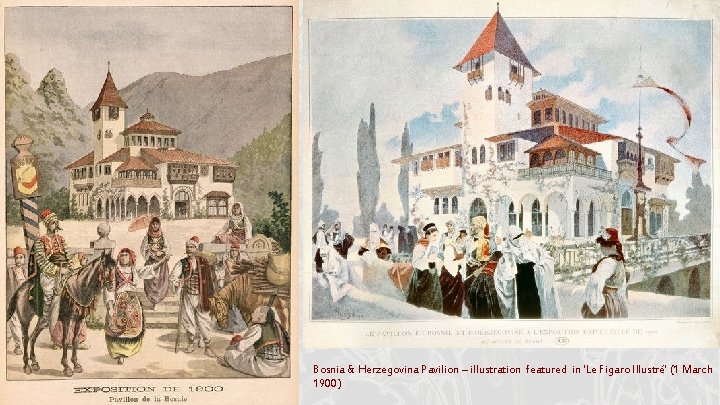
Bosnia & Herzegovina Pavilion – illustration featured in 'Le Figaro Illustré' (1 March 1900)
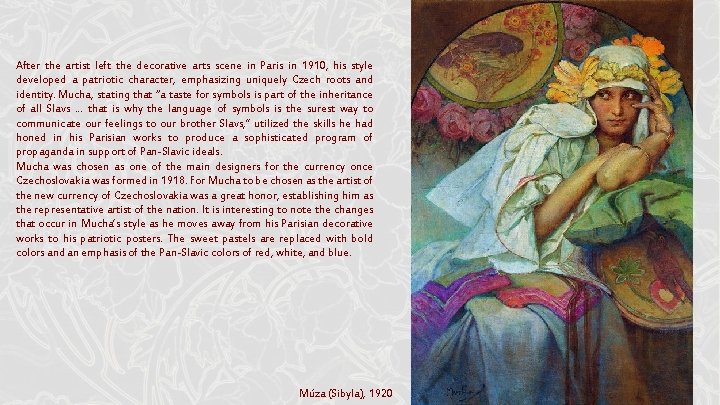
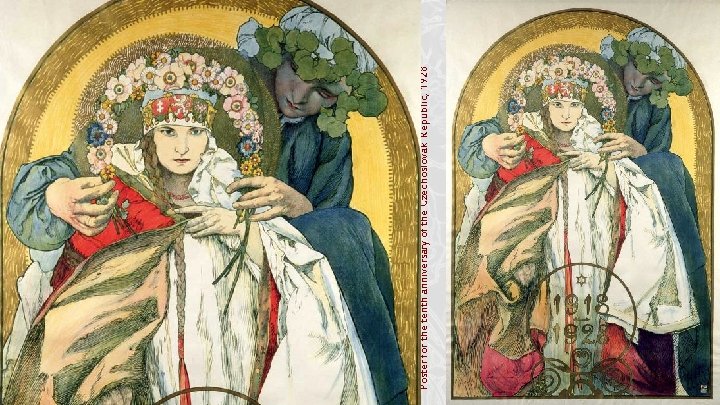
After the artist left the decorative arts scene in Paris in 1910, his style developed a patriotic character, emphasizing uniquely Czech roots and identity. Mucha, stating that “a taste for symbols is part of the inheritance of all Slavs … that is why the language of symbols is the surest way to communicate our feelings to our brother Slavs, ” utilized the skills he had honed in his Parisian works to produce a sophisticated program of propaganda in support of Pan-Slavic ideals. Mucha was chosen as one of the main designers for the currency once Czechoslovakia was formed in 1918. For Mucha to be chosen as the artist of the new currency of Czechoslovakia was a great honor, establishing him as the representative artist of the nation. It is interesting to note the changes that occur in Mucha’s style as he moves away from his Parisian decorative works to his patriotic posters. The sweet pastels are replaced with bold colors and an emphasis of the Pan-Slavic colors of red, white, and blue. Múza (Sibyla), 1920
Poster for the tenth anniversary of the Czechoslovak Republic, 1928
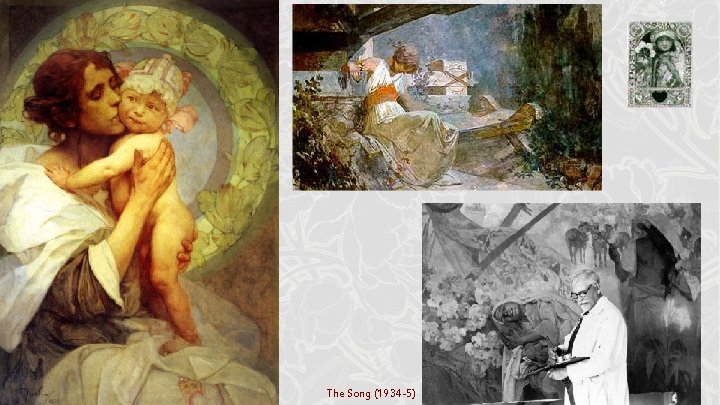
The Song (1934 -5)
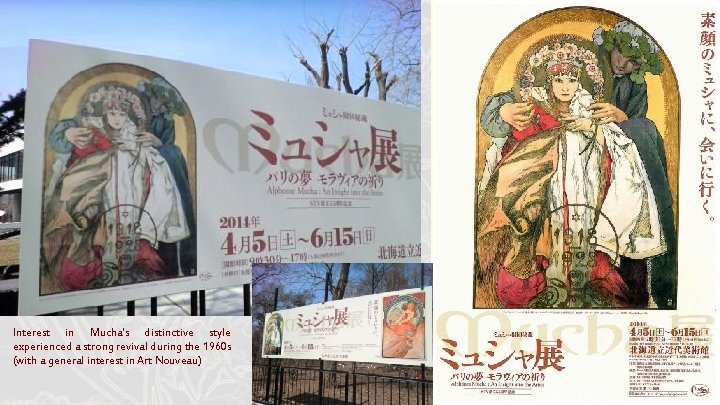
Interest in Mucha's distinctive style experienced a strong revival during the 1960 s (with a general interest in Art Nouveau)
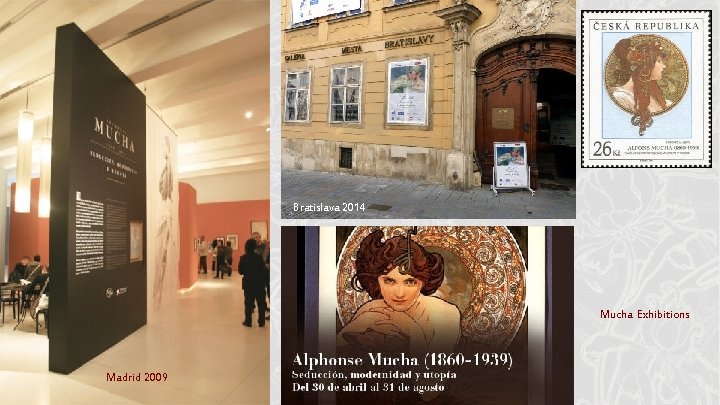
Bratislava 2014 Mucha Exhibitions Madrid 2009
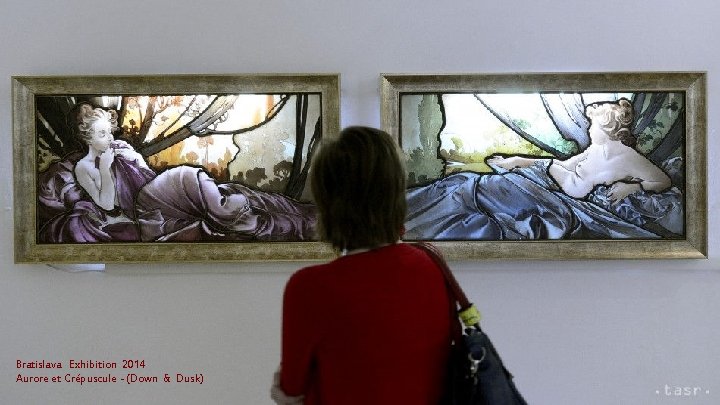
Bratislava Exhibition 2014 Aurore et Crépuscule - (Down & Dusk)
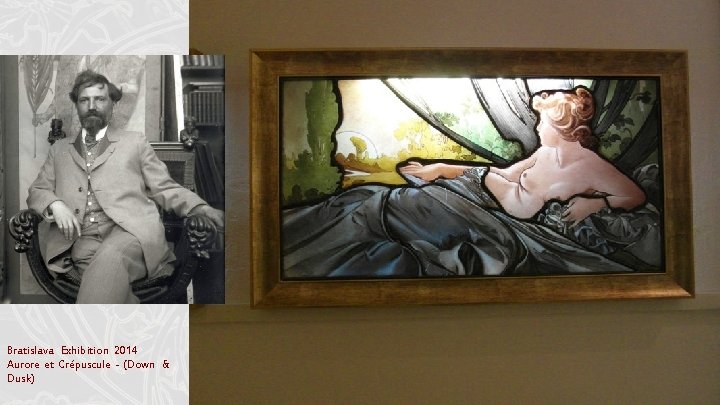
Bratislava Exhibition 2014 Aurore et Crépuscule - (Down & Dusk)
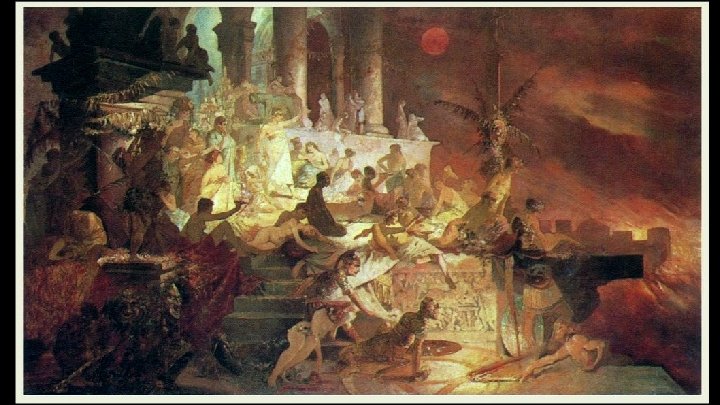
Bratislava Exhibition 2014 Nero Watching The Burning of Rome — 1887
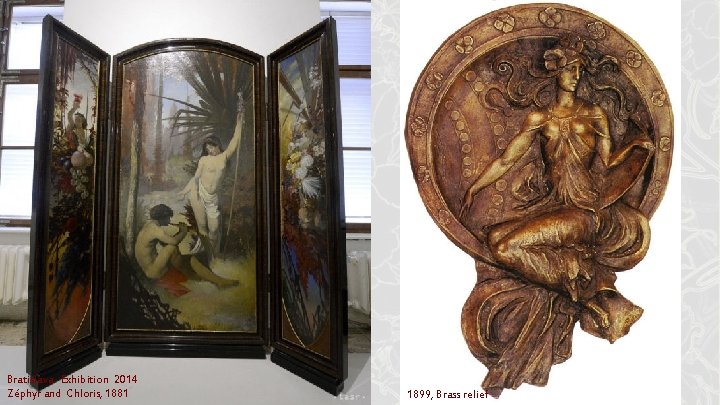
Bratislava Exhibition 2014 Zéphyr and Chloris, 1881 1899, Brass relief
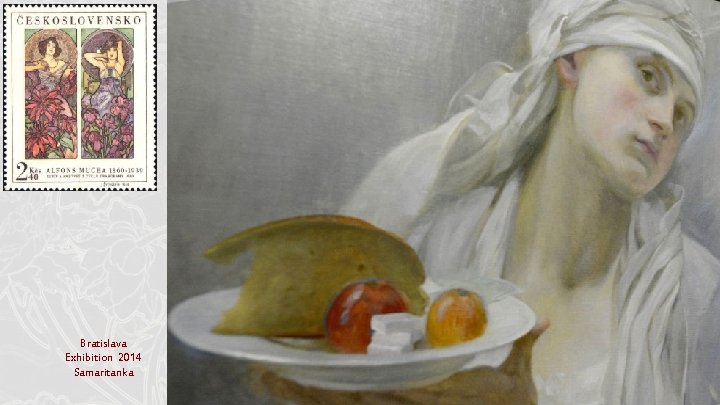
Bratislava Exhibition 2014 Samaritanka
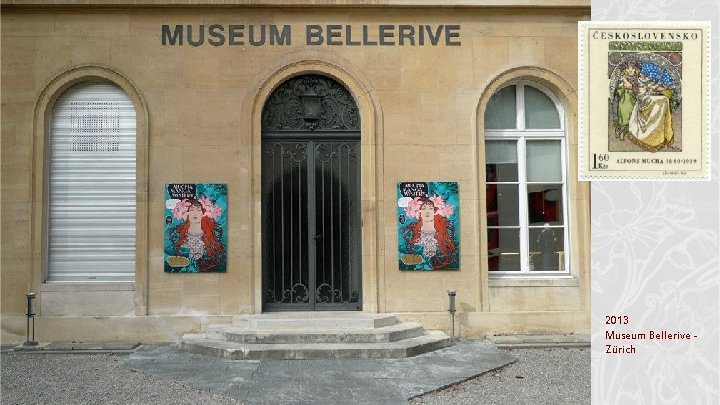
2013 Museum Bellerive - Zürich
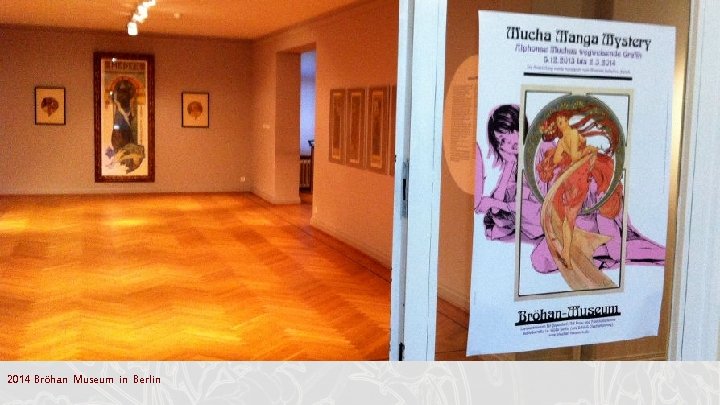
2014 Bröhan Museum in Berlin
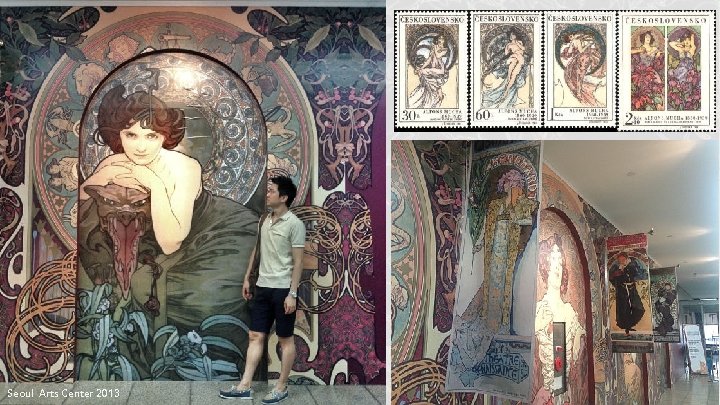
Seoul Arts Center 2013
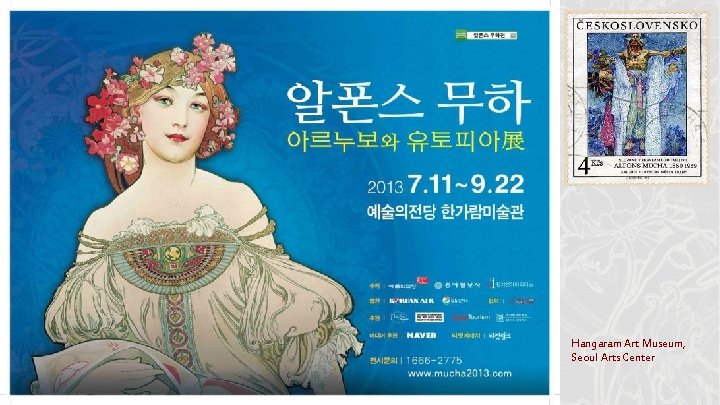
Hangaram Art Museum, Seoul Arts Center
Text and pictures: Internet Copyright: All the images belong to their authors Presentation: Sanda Foişoreanu www. slideshare. net/michaelasanda Sound: Antonín Dvořák: Violin Concerto in A minor Op. 53 (B 108) I. . Allegro ma non troppo Chung Kyung-Wha, Violin)