
10 Conflict and Negotiation 1 Chapter Learning Objectives
10 Conflict and Negotiation 1
Chapter Learning Objectives p After studying this chapter, you should be able to: n Define conflict. Differentiate between the traditional, human relations, and interactionist views of conflict. Outline the conflict process. Define negotiation. Contrast distributive and integrative bargaining. Apply the five steps in the negotiation process. Show individual differences influence negotiations. Assess the roles and functions of third-party negotiations. n Describe cultural differences in negotiations. n n n n 15 -2
Conflict Defined p A process that begins when one party perceives that another party has negatively affected, or is about to negatively affect, something that the first party cares about p Encompasses a wide range of conflicts that people experience in organizations n n n Incompatibility of goals Differences over interpretations of facts Disagreements based on behavioral expectations 15 -3
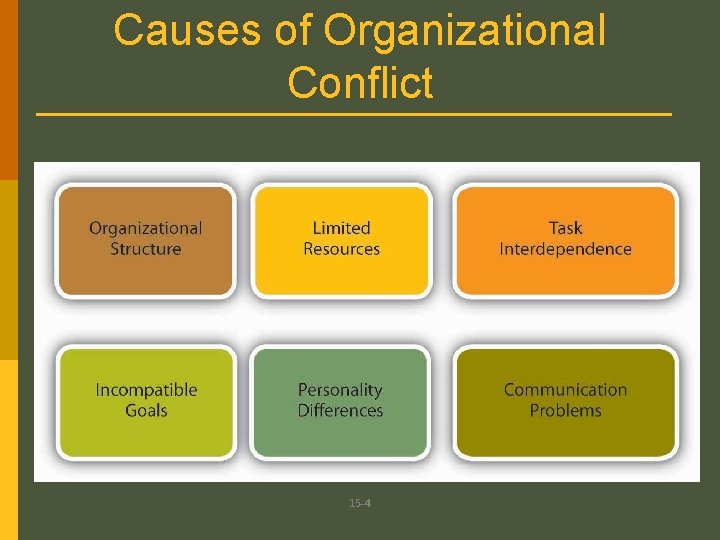
Causes of Organizational Conflict 15 -4
Types of Conflict p Substantive Conflict n Involves a fundamental disagreement over goals or proposed plans. p p People normally disagree on issue such as tam formation, organizational goals, allocation of resources, distribution of rewards, policies, procedures and task assignments. Emotional Conflict n Involves interpersonal difficulties that arise over feelings of anger, mistrust, dislike, fear etc. p Difference of opinion leads to clash of personalities. 15 -5
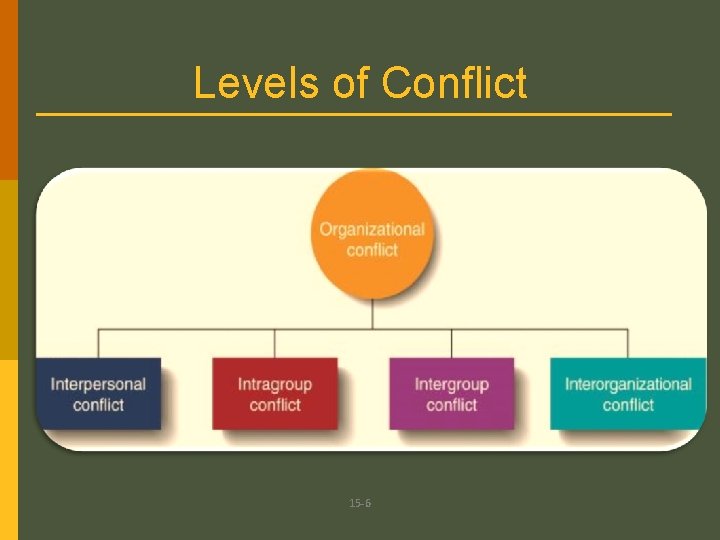
Levels of Conflict 15 -6
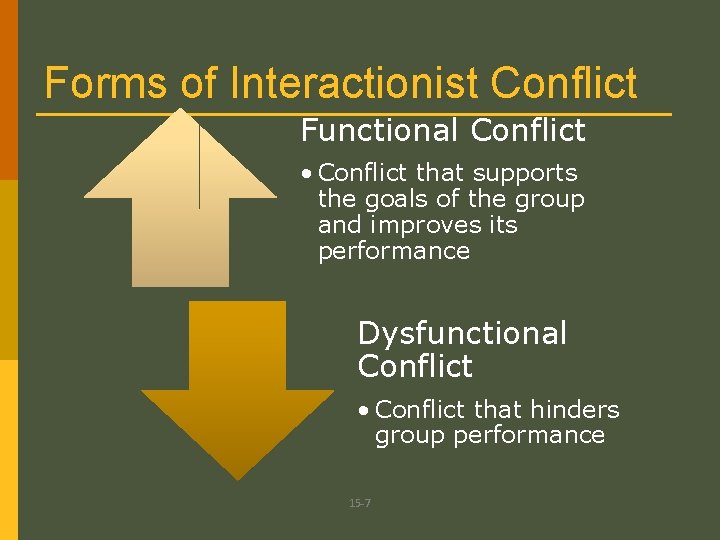
Forms of Interactionist Conflict Functional Conflict • Conflict that supports the goals of the group and improves its performance Dysfunctional Conflict • Conflict that hinders group performance 15 -7
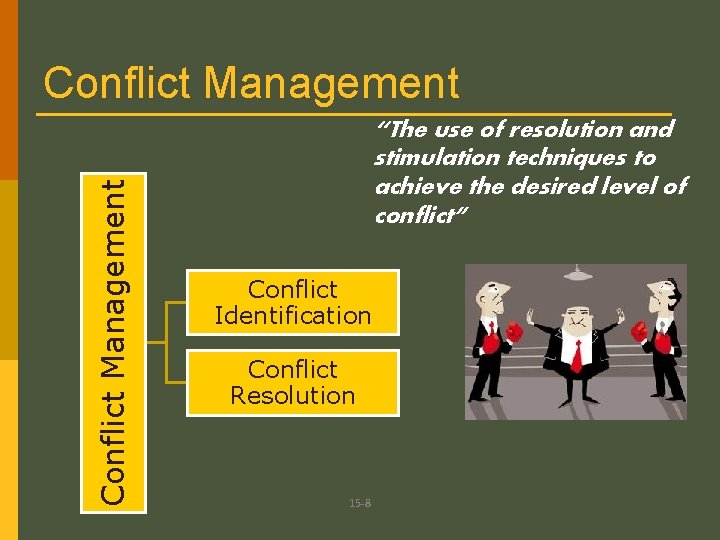
Conflict Management “The use of resolution and stimulation techniques to achieve the desired level of conflict” Conflict Identification Conflict Resolution 15 -8
Understanding the Conflict p Perceived Conflict § Awareness by one or more parties of the existence of conditions that create opportunities for conflict to arise p Felt Conflict § Emotional involvement in a conflict creating anxiety, tenseness, frustration, or hostility 15 -9
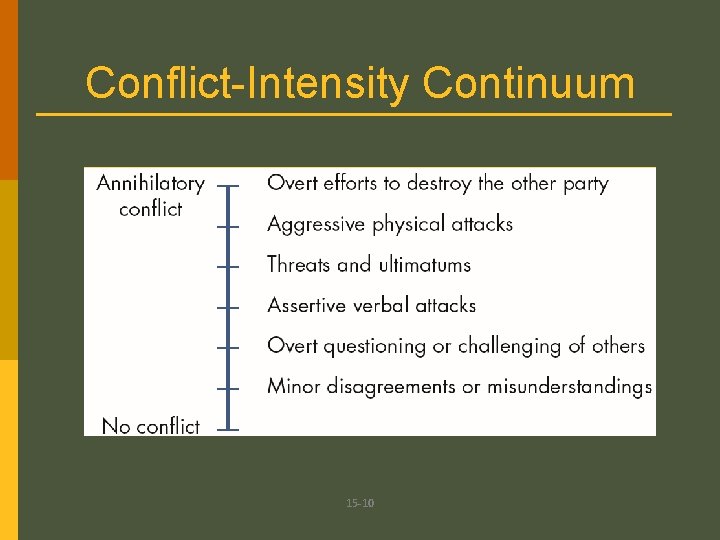
Conflict-Intensity Continuum 15 -10
Conflict Resolution Techniques p Indirect Techniques p Direct Techniques n n n Reduced Interdependence Appeals to Common Goals Hierarchical Referral Altering Scripts & Myths n n 15 -11 Lose-Lose conflict Win-win Conflict
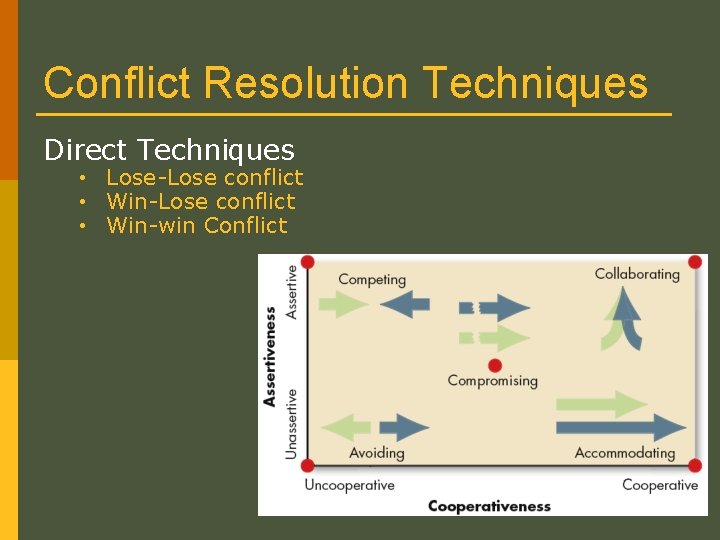
Conflict Resolution Techniques Direct Techniques • Lose-Lose conflict • Win-win Conflict 12
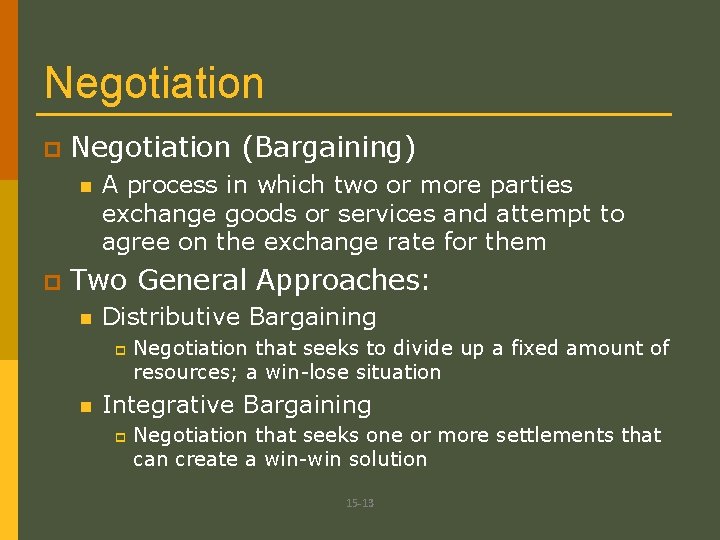
Negotiation p Negotiation (Bargaining) n p A process in which two or more parties exchange goods or services and attempt to agree on the exchange rate for them Two General Approaches: n Distributive Bargaining p n Negotiation that seeks to divide up a fixed amount of resources; a win-lose situation Integrative Bargaining p Negotiation that seeks one or more settlements that can create a win-win solution 15 -13
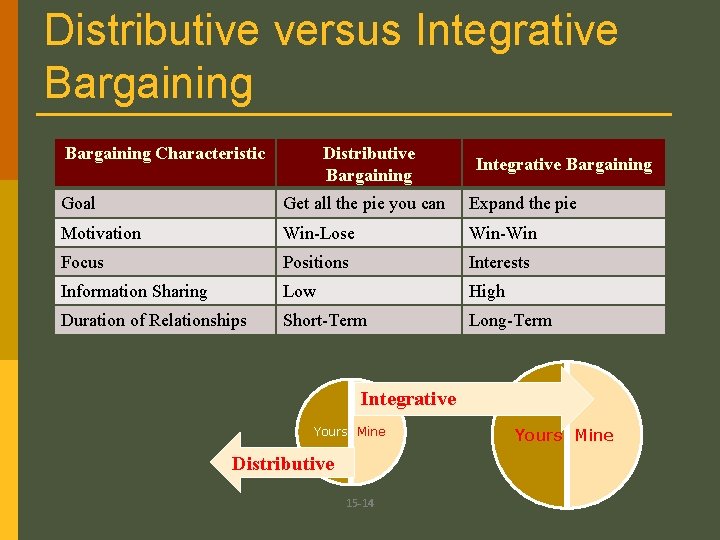
Distributive versus Integrative Bargaining Characteristic Distributive Bargaining Integrative Bargaining Goal Get all the pie you can Expand the pie Motivation Win-Lose Win-Win Focus Positions Interests Information Sharing Low High Duration of Relationships Short-Term Long-Term Integrative Yours Mine Distributive 15 -14 Yours Mine
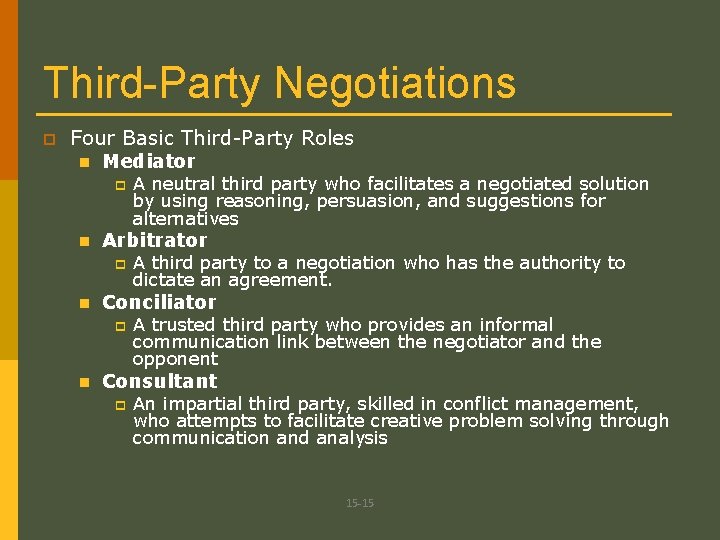
Third-Party Negotiations p Four Basic Third-Party Roles n Mediator p n Arbitrator p n A third party to a negotiation who has the authority to dictate an agreement. Conciliator p n A neutral third party who facilitates a negotiated solution by using reasoning, persuasion, and suggestions for alternatives A trusted third party who provides an informal communication link between the negotiator and the opponent Consultant p An impartial third party, skilled in conflict management, who attempts to facilitate creative problem solving through communication and analysis 15 -15
- Slides: 15