
10 Chapter Ten Alternative Marketing Alternative Marketing Programs
- Slides: 48
10 Chapter Ten Alternative Marketing
Alternative Marketing Programs • Requires creativity and imagination • Identify intersect paths • Alternative media programs • • • Buzz marketing Guerilla marketing Lifestyle marketing Experiential marketing Product placement Branded entertainment The goal is to reach consumers in unexpected ways or in everyday life situations that resonate with consumers and where there is less competition for attention. 10 -2
Buzz Marketing • Word-of-mouth marketing • Higher credibility • Fast growth – now $1 billion annually • Methods of generating buzz • Consumers who like a brand • Sponsored consumers • Company or agency generated buzz 10 -3
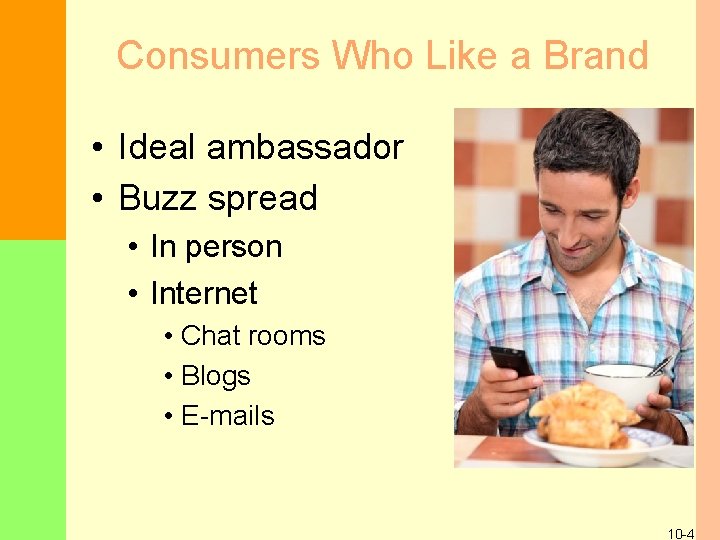
Consumers Who Like a Brand • Ideal ambassador • Buzz spread • In person • Internet • Chat rooms • Blogs • E-mails 10 -4
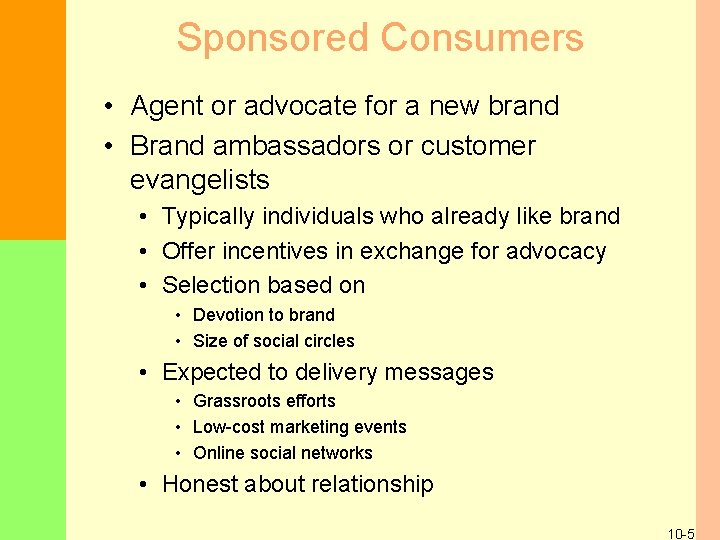
Sponsored Consumers • Agent or advocate for a new brand • Brand ambassadors or customer evangelists • Typically individuals who already like brand • Offer incentives in exchange for advocacy • Selection based on • Devotion to brand • Size of social circles • Expected to delivery messages • Grassroots efforts • Low-cost marketing events • Online social networks • Honest about relationship 10 -5
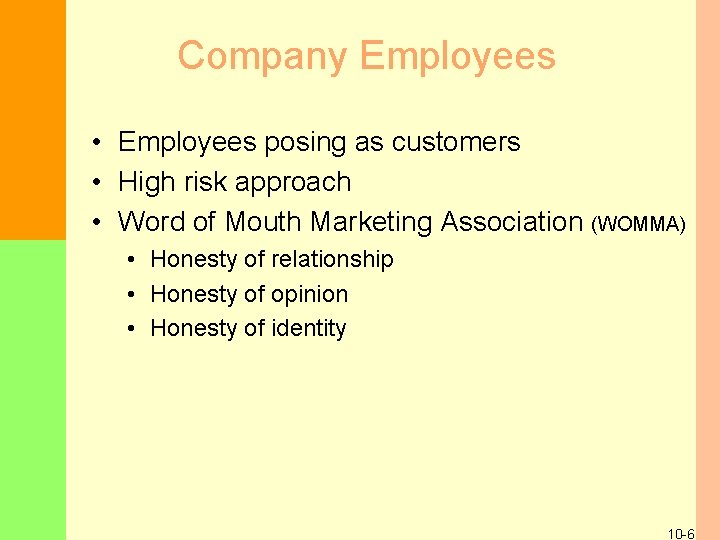
Company Employees • Employees posing as customers • High risk approach • Word of Mouth Marketing Association (WOMMA) • Honesty of relationship • Honesty of opinion • Honesty of identity 10 -6
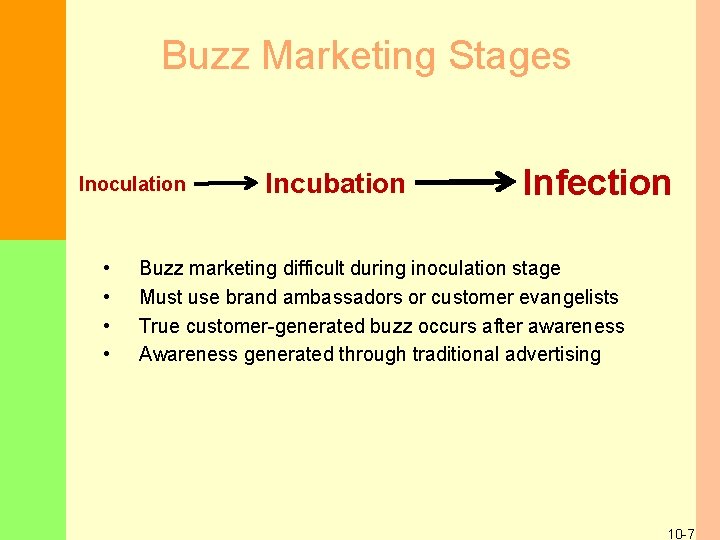
Buzz Marketing Stages Inoculation • • Incubation Infection Buzz marketing difficult during inoculation stage Must use brand ambassadors or customer evangelists True customer-generated buzz occurs after awareness Awareness generated through traditional advertising 10 -7
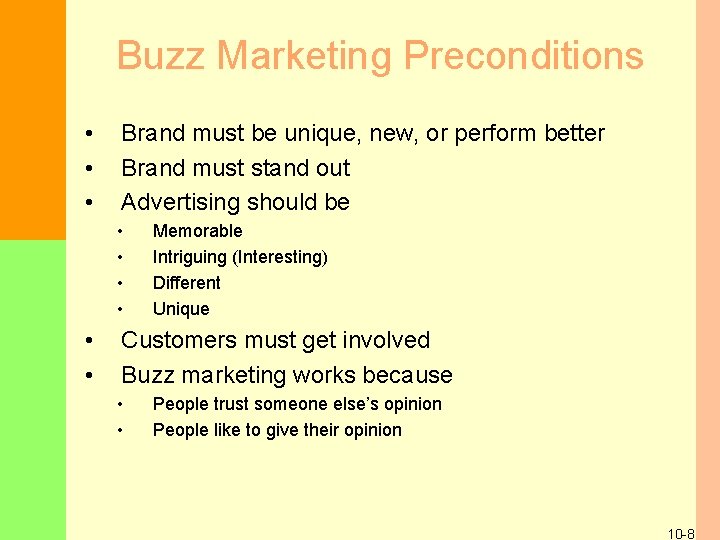
Buzz Marketing Preconditions • • • Brand must be unique, new, or perform better Brand must stand out Advertising should be • • • Memorable Intriguing (Interesting) Different Unique Customers must get involved Buzz marketing works because • • People trust someone else’s opinion People like to give their opinion 10 -8
Guerilla Marketing • • Developed by Jay Conrad Levinson Instant results with unique, low-cost approaches Focus on region or area Involve interacting with consumers Create excitement Goal is to generate buzz Grassroots efforts Alternative media 10 -9
FIGURE 10. 5 Reasons for Using Guerilla Marketing • • • To find new ways to communicate with customers To interact with customers To make advertising accessible to consumers To impact a spot market To create buzz To build relationships with consumers Source: Adapted from Lin Zuo and Shari Veil, “Guerilla Marketing and the Aqua Teen Hunger Force Fiasco, ” Public Relations Quarterly, Vol. 51, No. 4 (Winter 2006/. 2007), pp. 8 -11 10 -10
Lifestyle Marketing • • Associated with hobbies and entertainment Contacting consumers where they go for • Relaxation • Excitement • Socialization • Enjoyment 10 -11
Experiential Marketing Direct marketing + Field Marketing + Sales Promotions • Direct marketing through interactive connection • Engage consumers Steps to create positive experience 1. Clear, concise target segment 2. Identify right time, right place • • Engage emotionally Engage logically 3. Clearly reveal brand’s promise 10 -12
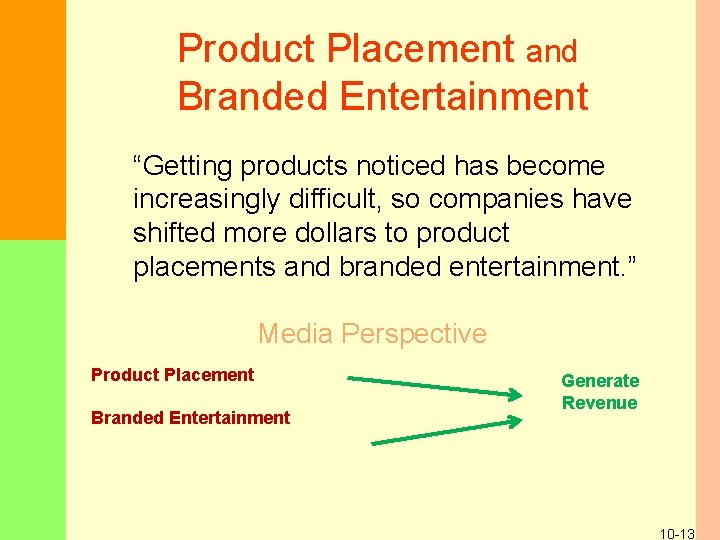
Product Placement and Branded Entertainment “Getting products noticed has become increasingly difficult, so companies have shifted more dollars to product placements and branded entertainment. ” Media Perspective Product Placement Branded Entertainment Generate Revenue 10 -13
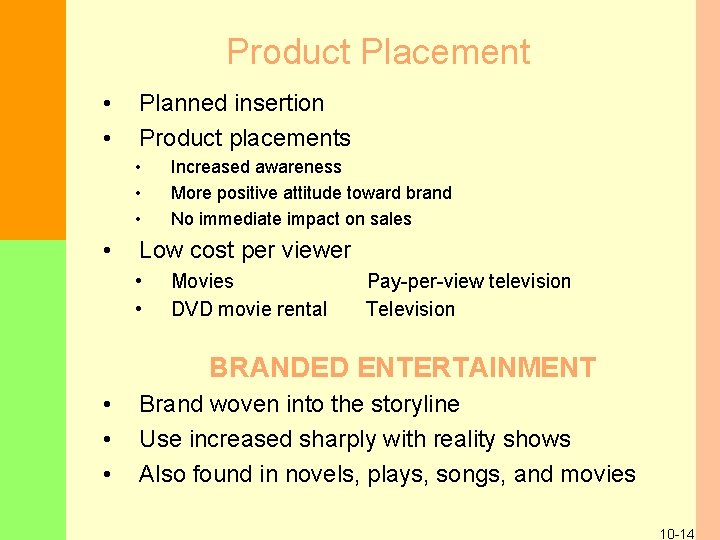
Product Placement • • Planned insertion Product placements • • Increased awareness More positive attitude toward brand No immediate impact on sales Low cost per viewer • • Movies DVD movie rental Pay-per-view television Television BRANDED ENTERTAINMENT • • • Brand woven into the storyline Use increased sharply with reality shows Also found in novels, plays, songs, and movies 10 -14
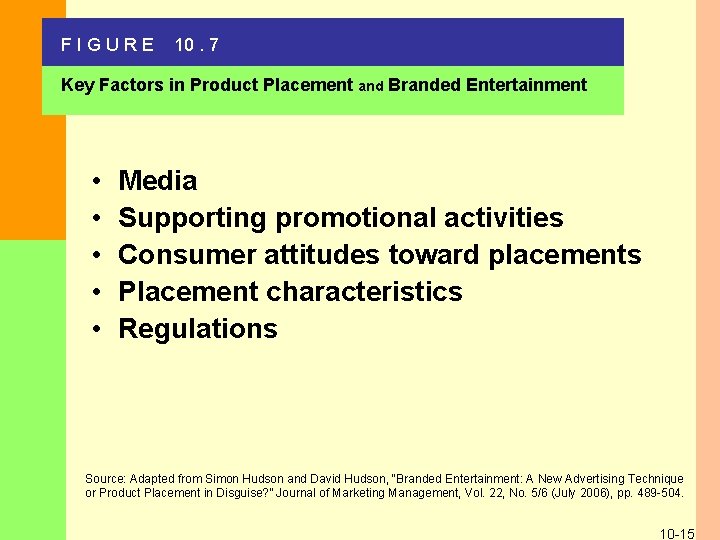
FIGURE 10. 7 Key Factors in Product Placement and Branded Entertainment • • • Media Supporting promotional activities Consumer attitudes toward placements Placement characteristics Regulations Source: Adapted from Simon Hudson and David Hudson, “Branded Entertainment: A New Advertising Technique or Product Placement in Disguise? ” Journal of Marketing Management, Vol. 22, No. 5/6 (July 2006), pp. 489 -504. 10 -15
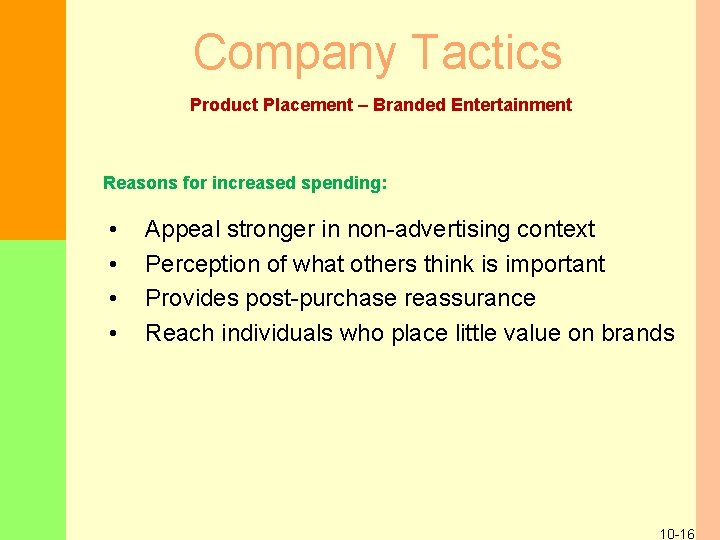
Company Tactics Product Placement – Branded Entertainment Reasons for increased spending: • • Appeal stronger in non-advertising context Perception of what others think is important Provides post-purchase reassurance Reach individuals who place little value on brands 10 -16
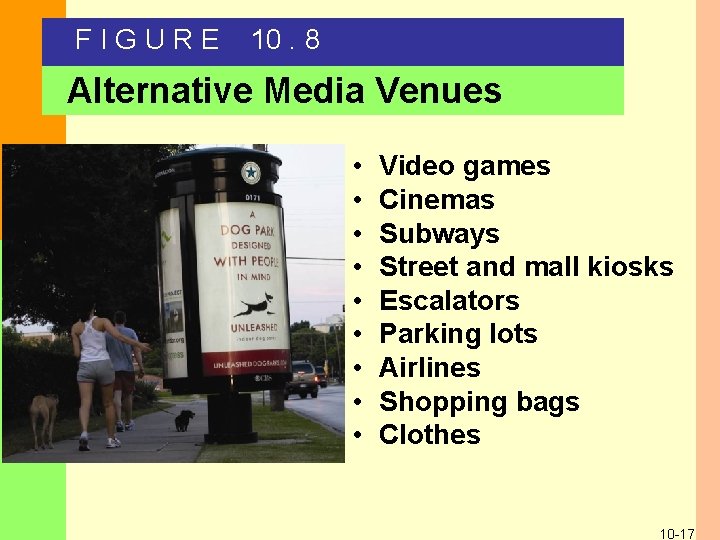
FIGURE 10. 8 Alternative Media Venues • • • Video games Cinemas Subways Street and mall kiosks Escalators Parking lots Airlines Shopping bags Clothes 10 -17
In-Store Marketing Tactics • • In-store “make or break” time Engage customers • Most engaging • • • Lease engaging • • End-aisle displays Merchandise displays Ceiling banners Overhead mobiles Use color, light, sound, taste, and smell Motion • • • Video screens Television monitors Digital signage 10 -18
Point-of-Purchase Tactics • Location is key • Last chance to reach buyer • Effective for increasing sales because • 60% of decisions are in store • 50% of money spent at mass-merchandisers and supermarkets is unplanned • 50% of Coca-Cola products from displays • Average increase in sales is 9% • Half of POP displays not effective • Half that are effective – 20% increase in sales 10 -19
Brand Communities • • • Ultimate demonstration of • Brand loyalty • Brand devotion Symbolic meaning Interactions between brand consumer Shared values and experiences Cannot be created by brands itself Marketing can enhance community experience 10 -20
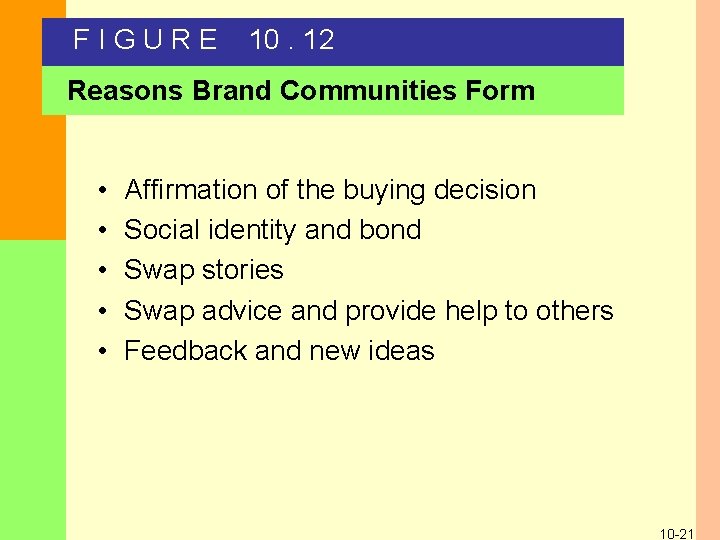
FIGURE 10. 12 Reasons Brand Communities Form • • • Affirmation of the buying decision Social identity and bond Swap stories Swap advice and provide help to others Feedback and new ideas 10 -21
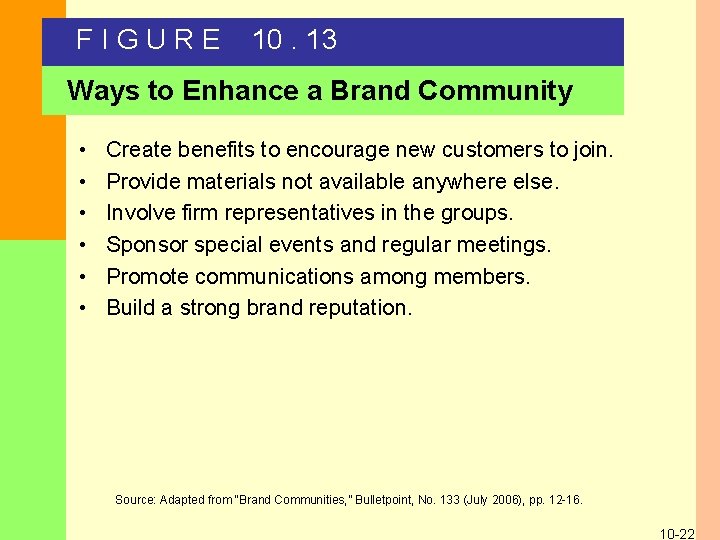
FIGURE 10. 13 Ways to Enhance a Brand Community • • • Create benefits to encourage new customers to join. Provide materials not available anywhere else. Involve firm representatives in the groups. Sponsor special events and regular meetings. Promote communications among members. Build a strong brand reputation. Source: Adapted from “Brand Communities, ” Bulletpoint, No. 133 (July 2006), pp. 12 -16. 10 -22
12 Chapter Twelve Sales Promotions Copyright © 2014 by Pearson Education, Inc. All rights reserved. 12 -23
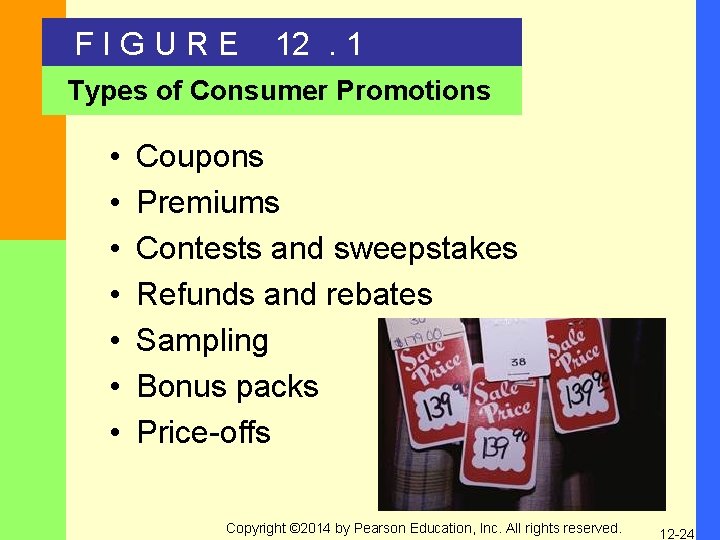
FIGURE 12. 1 Types of Consumer Promotions • • Coupons Premiums Contests and sweepstakes Refunds and rebates Sampling Bonus packs Price-offs Copyright © 2014 by Pearson Education, Inc. All rights reserved. 12 -24
Coupons • • • 300 billion printed 2. 5 billion redeemed (0. 85%) Average value was $1. 55 Savings of $3. 87 billion Coupon usage • 80% of households use • 2/3 willing to switch brands Copyright © 2014 by Pearson Education, Inc. All rights reserved. 12 -25
Coupon Distribution • Manufacturers issue about 80% • Freestanding inserts – 90% • Freestanding and print most popular • Consumer makes conscious effort to clip • Create brand awareness • Encourage purchase next trip to store • Digital coupons growing in popularity • Users more affluent, better educated Copyright © 2014 by Pearson Education, Inc. All rights reserved. 12 -26
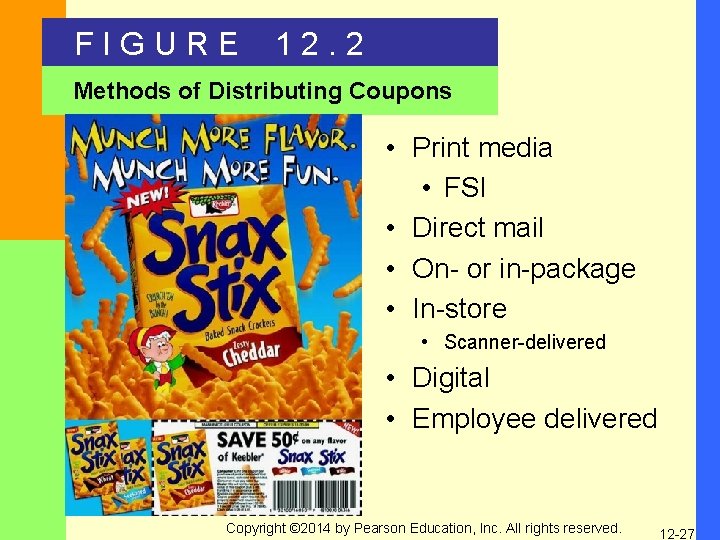
FIGURE 12. 2 Methods of Distributing Coupons • Print media • FSI • Direct mail • On- or in-package • In-store • Scanner-delivered • Digital • Employee delivered Copyright © 2014 by Pearson Education, Inc. All rights reserved. 12 -27
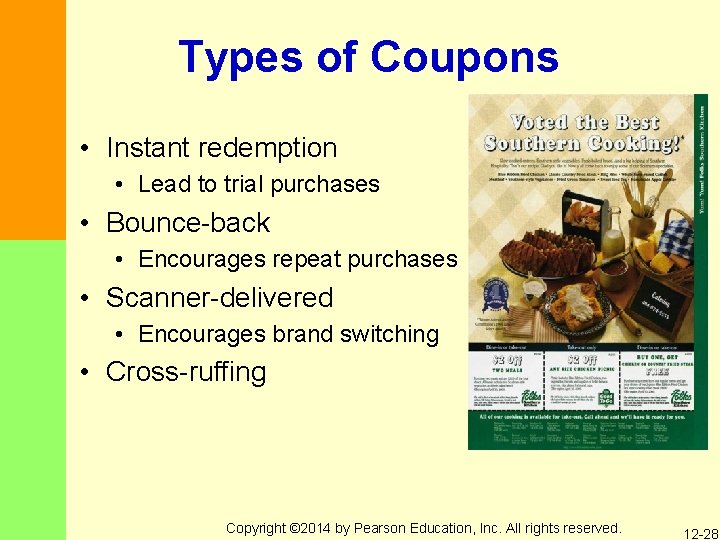
Types of Coupons • Instant redemption • Lead to trial purchases • Bounce-back • Encourages repeat purchases • Scanner-delivered • Encourages brand switching • Cross-ruffing Copyright © 2014 by Pearson Education, Inc. All rights reserved. 12 -28
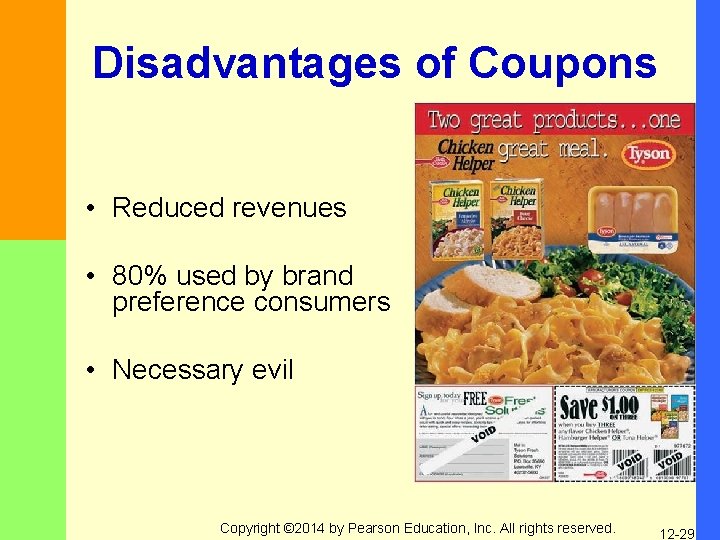
Disadvantages of Coupons • Reduced revenues • 80% used by brand preference consumers • Necessary evil Copyright © 2014 by Pearson Education, Inc. All rights reserved. 12 -29
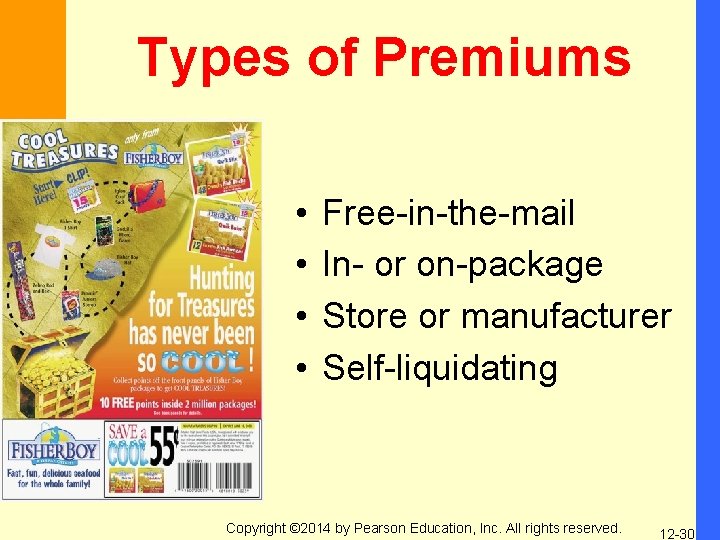
Types of Premiums • • Free-in-the-mail In- or on-package Store or manufacturer Self-liquidating Copyright © 2014 by Pearson Education, Inc. All rights reserved. 12 -30
FIGURE 12. 4 Keys to Successful Premium Programs • Match the premium to the target market • Carefully select the premium • Avoid fads, try for exclusivity • Premium reinforce the firm’s product and image • Integrate the premium with other IMC tools • Especially advertising and POP displays • Don’t expect premiums to increase short-term profits Copyright © 2014 by Pearson Education, Inc. All rights reserved. 12 -31
Contests and Sweepstakes • Contests • Require activity, skill • Can require purchase to enter • Some states illegal • Sweepstakes – random chance • Must publish odds of winning • Cannot require purchase • Can enter as many times as desired Copyright © 2014 by Pearson Education, Inc. All rights reserved. 12 -32
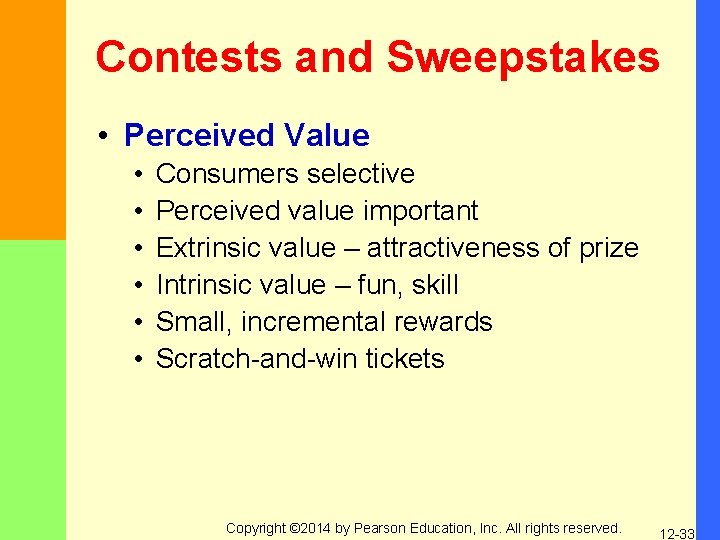
Contests and Sweepstakes • Perceived Value • • • Consumers selective Perceived value important Extrinsic value – attractiveness of prize Intrinsic value – fun, skill Small, incremental rewards Scratch-and-win tickets Copyright © 2014 by Pearson Education, Inc. All rights reserved. 12 -33
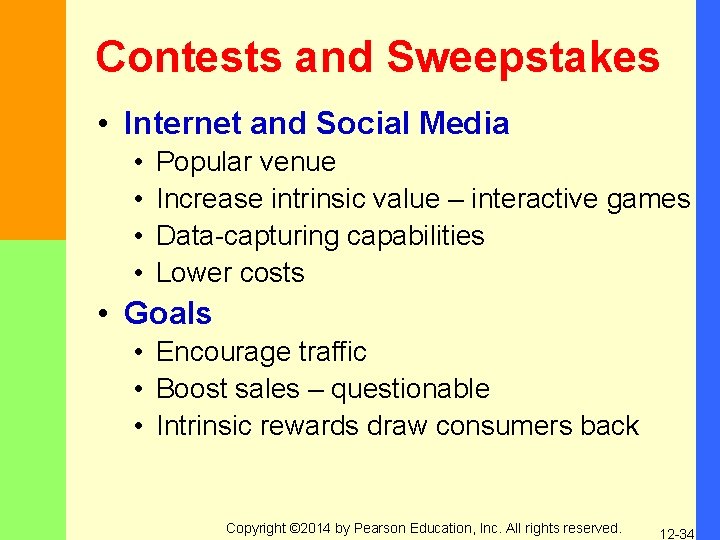
Contests and Sweepstakes • Internet and Social Media • • Popular venue Increase intrinsic value – interactive games Data-capturing capabilities Lower costs • Goals • Encourage traffic • Boost sales – questionable • Intrinsic rewards draw consumers back Copyright © 2014 by Pearson Education, Inc. All rights reserved. 12 -34
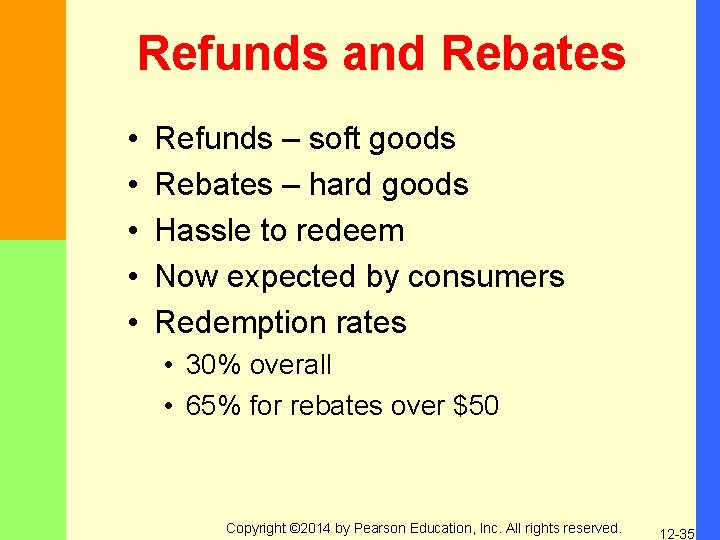
Refunds and Rebates • • • Refunds – soft goods Rebates – hard goods Hassle to redeem Now expected by consumers Redemption rates • 30% overall • 65% for rebates over $50 Copyright © 2014 by Pearson Education, Inc. All rights reserved. 12 -35
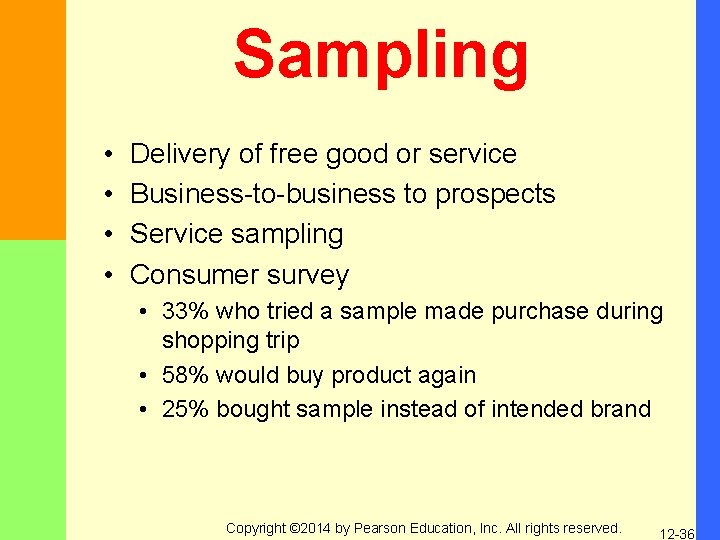
Sampling • • Delivery of free good or service Business-to-business to prospects Service sampling Consumer survey • 33% who tried a sample made purchase during shopping trip • 58% would buy product again • 25% bought sample instead of intended brand Copyright © 2014 by Pearson Education, Inc. All rights reserved. 12 -36
FIGURE 12. 5 Methods of Distributing Sampling • • In-store distribution Direct sampling Response sampling Cross-ruff sampling Media sampling Professional sampling Selective sampling Copyright © 2014 by Pearson Education, Inc. All rights reserved. 12 -37
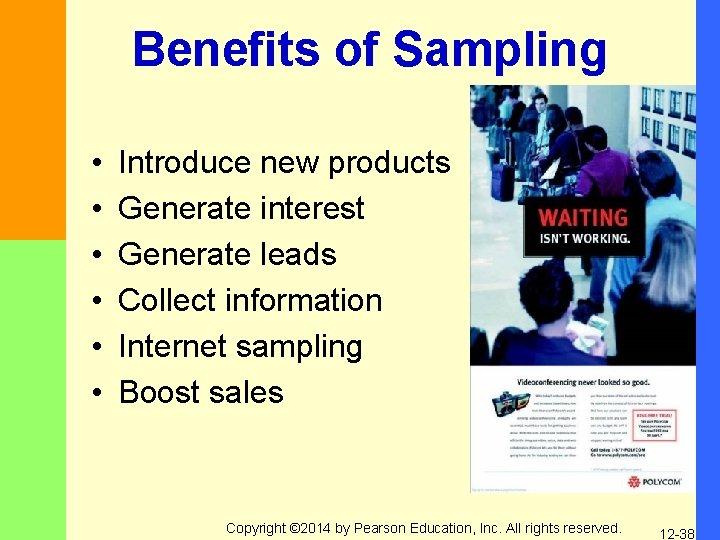
Benefits of Sampling • • • Introduce new products Generate interest Generate leads Collect information Internet sampling Boost sales Copyright © 2014 by Pearson Education, Inc. All rights reserved. 12 -38
Successful Sampling Programs • Central part of IMC plan • Encourage trial purchases • Most effective for • New products • New versions of current products • Current products to new markets • Target right audience at right venue • Mass sampling not cost effective Copyright © 2014 by Pearson Education, Inc. All rights reserved. 12 -39
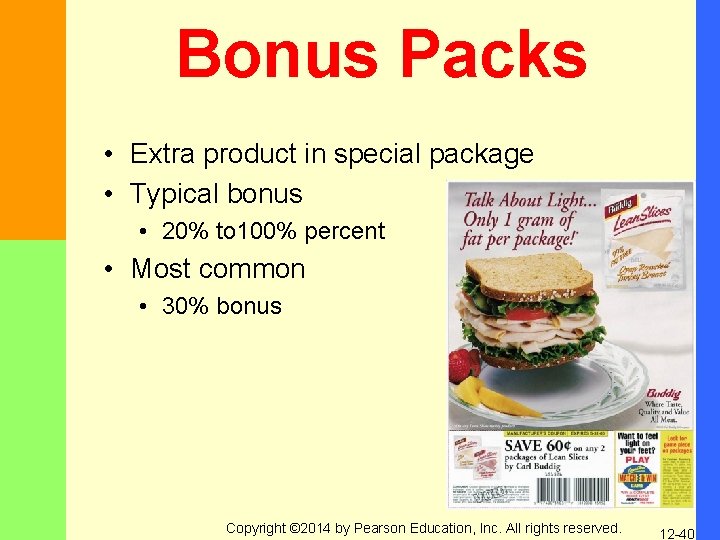
Bonus Packs • Extra product in special package • Typical bonus • 20% to 100% percent • Most common • 30% bonus Copyright © 2014 by Pearson Education, Inc. All rights reserved. 12 -40
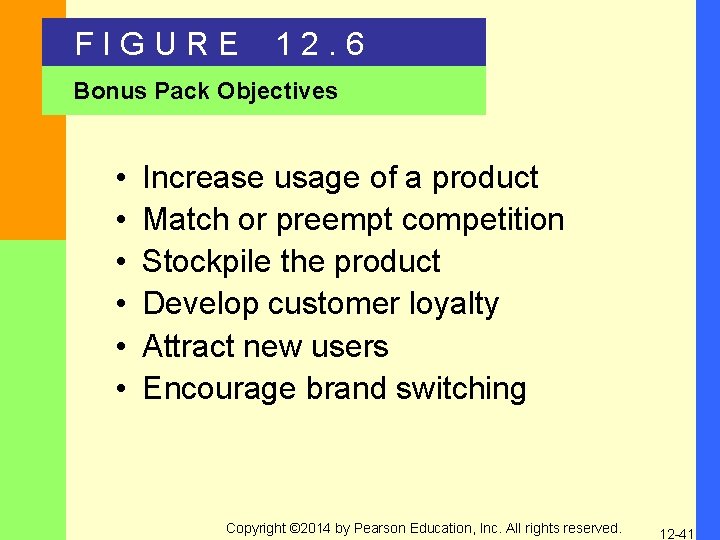
FIGURE 12. 6 Bonus Pack Objectives • • • Increase usage of a product Match or preempt competition Stockpile the product Develop customer loyalty Attract new users Encourage brand switching Copyright © 2014 by Pearson Education, Inc. All rights reserved. 12 -41
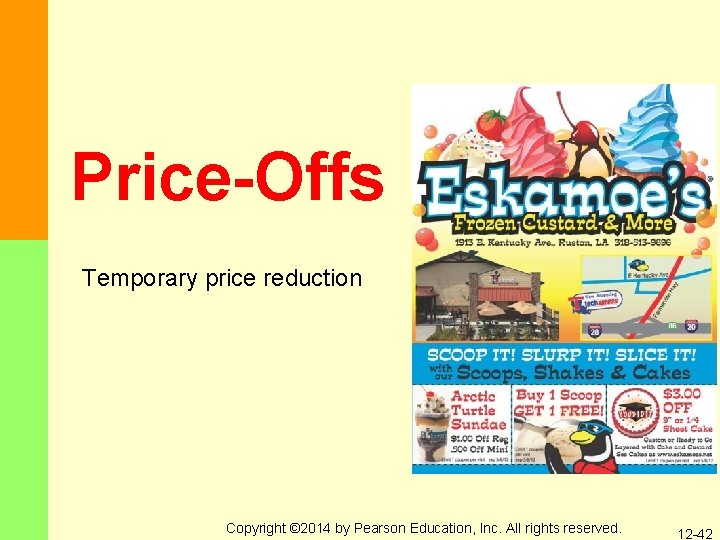
Price-Offs Temporary price reduction Copyright © 2014 by Pearson Education, Inc. All rights reserved. 12 -42
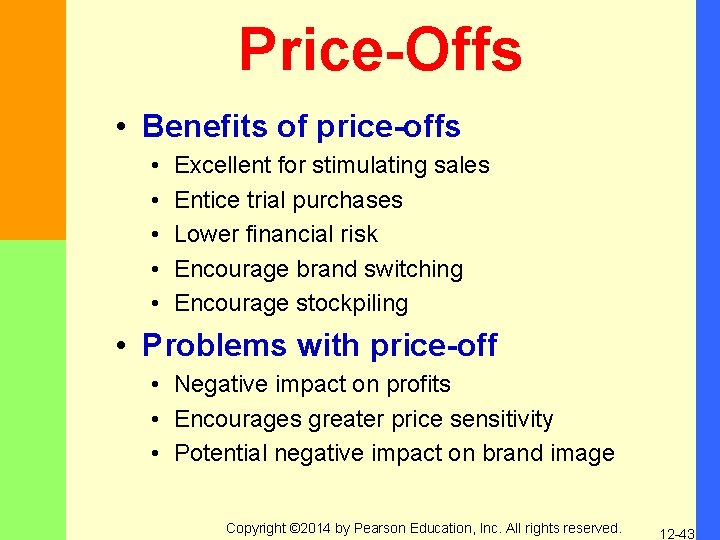
Price-Offs • Benefits of price-offs • • • Excellent for stimulating sales Entice trial purchases Lower financial risk Encourage brand switching Encourage stockpiling • Problems with price-off • Negative impact on profits • Encourages greater price sensitivity • Potential negative impact on brand image Copyright © 2014 by Pearson Education, Inc. All rights reserved. 12 -43
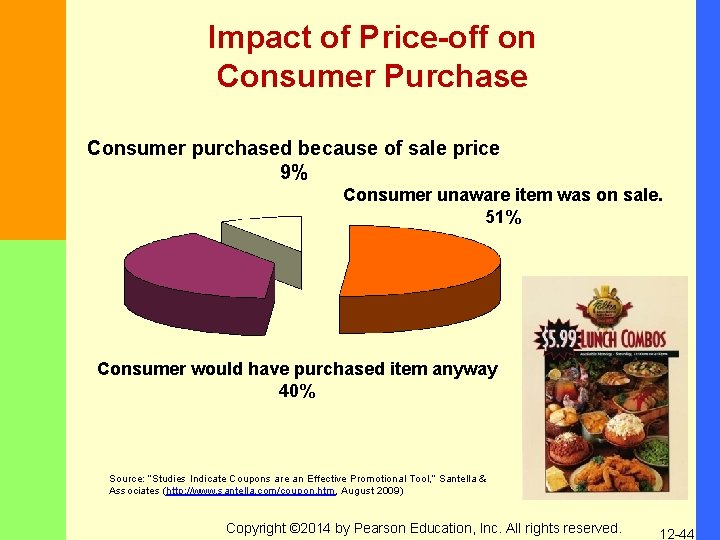
Impact of Price-off on Consumer Purchase Consumer purchased because of sale price 9% Consumer unaware item was on sale. 51% Consumer would have purchased item anyway 40% Source: “Studies Indicate Coupons are an Effective Promotional Tool, ” Santella & Associates (http: //www. santella. com/coupon. htm, August 2009) Copyright © 2014 by Pearson Education, Inc. All rights reserved. 12 -44
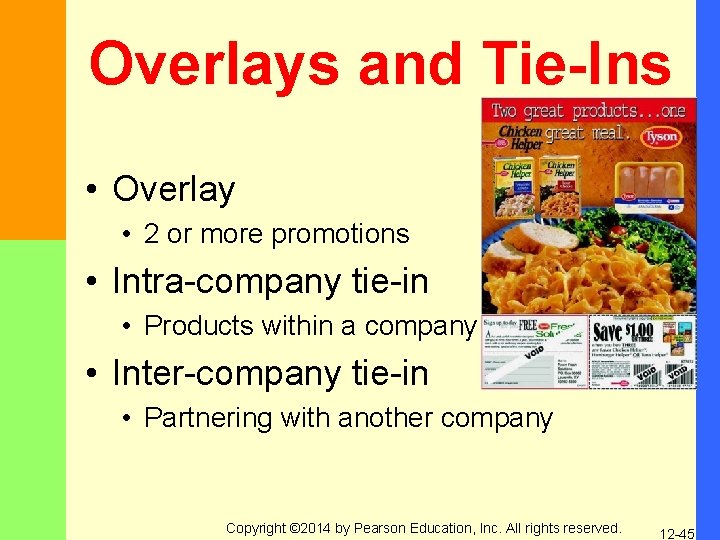
Overlays and Tie-Ins • Overlay • 2 or more promotions • Intra-company tie-in • Products within a company • Inter-company tie-in • Partnering with another company Copyright © 2014 by Pearson Education, Inc. All rights reserved. 12 -45
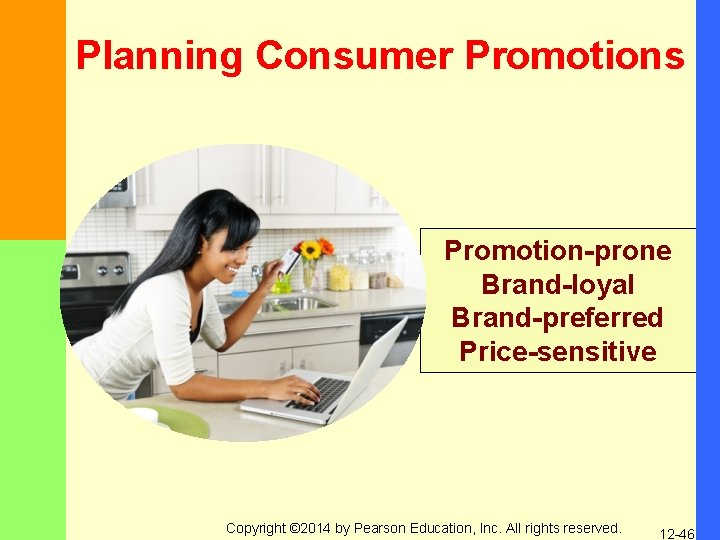
Planning Consumer Promotions Promotion-prone Brand-loyal Brand-preferred Price-sensitive Copyright © 2014 by Pearson Education, Inc. All rights reserved. 12 -46
Planning Consumer Promotions • Support brand image and position strategy • Consider target audience • Promotion-prone consumers • Respond to deals • Price-sensitive consumers • Price primary factor in purchases • Deals that reduce price Copyright © 2014 by Pearson Education, Inc. All rights reserved. 12 -47
Planning Consumer Promotions • Brand-loyal consumers • Purchase only preferred brand • Brand-preference consumers • Small set of preferred brands • Deals for one of preferred brands • Varies by product • Tendency towards one type • Brand-preference consumers best target Copyright © 2014 by Pearson Education, Inc. All rights reserved. 12 -48