
10 b Know the role of antibodies in
10 b. Know the role of antibodies in the body’s response to infection.
40— 2 Specific Defenses • If a pathogen gets past the nonspecific defenses, the immune system reacts with a series of specific defenses. • These defenses are called the ______________. • Any substance, such as a virus or bacterium, that triggers this response is known as an ________.

Specific Defenses • The cells of the immune system that recognize specific antigens are: • B lymphocytes (B cells) • T lymphocytes (T cells) • B cells defend the body against antigens and pathogens in body fluids. This process is called __________ immunity. • T cells defend the body against abnormal cells and pathogens inside living cells. This process is called __________ immunity.
Specific Defenses – Humoral Immunity • Humoral immunity produces antibodies. • An ____________ is a protein that recognizes and binds to an antigen. • An antibody is shaped like the letter “Y” and has two identical antigen-binding sites.

• Antibody Structure Antigen-binding sites Antigen Antibody
Specific Defenses • Small differences in amino acids affect shapes of binding sites. • Different shapes allow antibodies to recognize a variety of antigens with complementary shapes. • ___________ release antibodies. • Antibodies are carried in the bloodstream to attack the pathogen. • As the antibodies overcome the infection, the plasma cells die out and stop producing antibodies.
Specific Defenses • Once the body has been exposed to a pathogen, millions of _____________ remain capable of producing antibodies specific to that pathogen. • These memory B cells greatly reduce the chance that the disease could develop a second time. • If the same antigen enters the body a second time, a secondary response occurs. • The memory B cells divide rapidly, forming new ________ cells. • The plasma cells produce the specific antibodies needed to destroy the pathogen
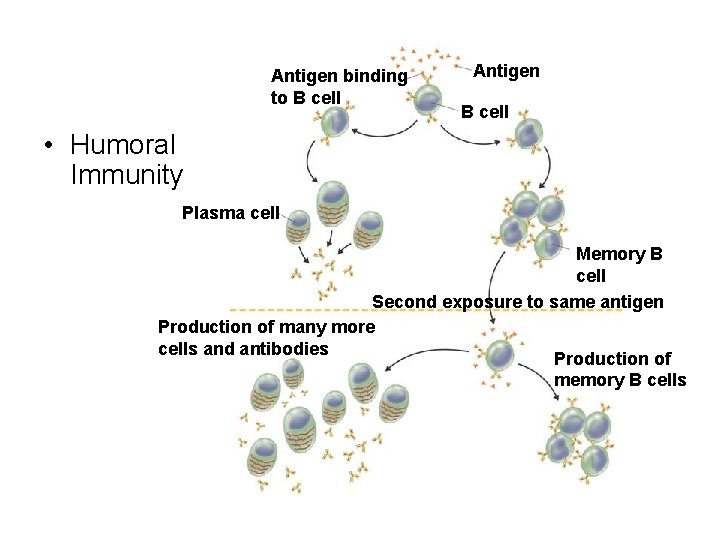
Antigen binding to B cell Antigen B cell • Humoral Immunity Plasma cell Memory B cell Second exposure to same antigen Production of many more cells and antibodies Production of memory B cells
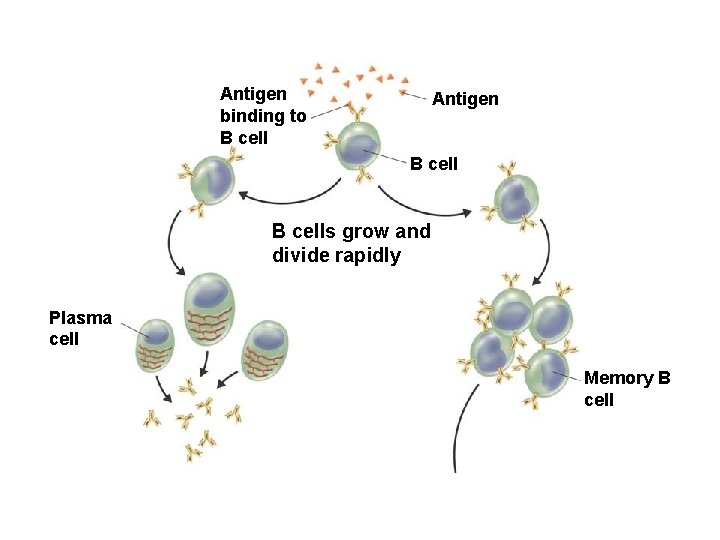
Antigen binding to B cell Antigen B cells grow and divide rapidly Plasma cell Memory B cell
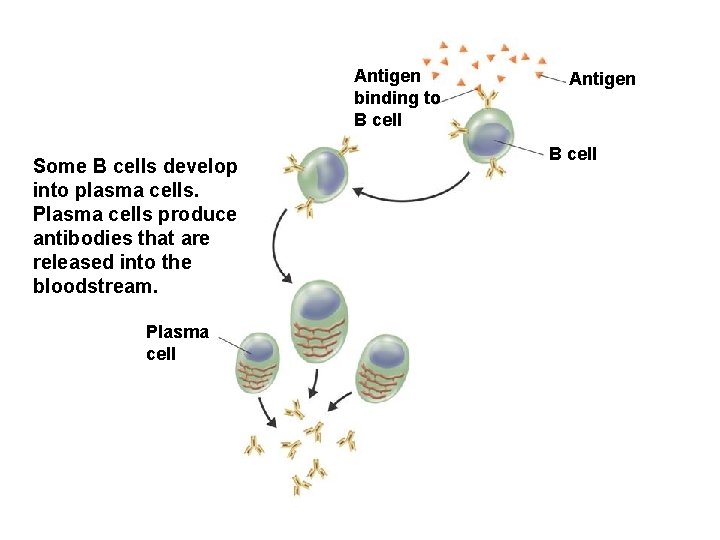
Antigen binding to B cell Some B cells develop into plasma cells. Plasma cells produce antibodies that are released into the bloodstream. Plasma cell Antigen B cell
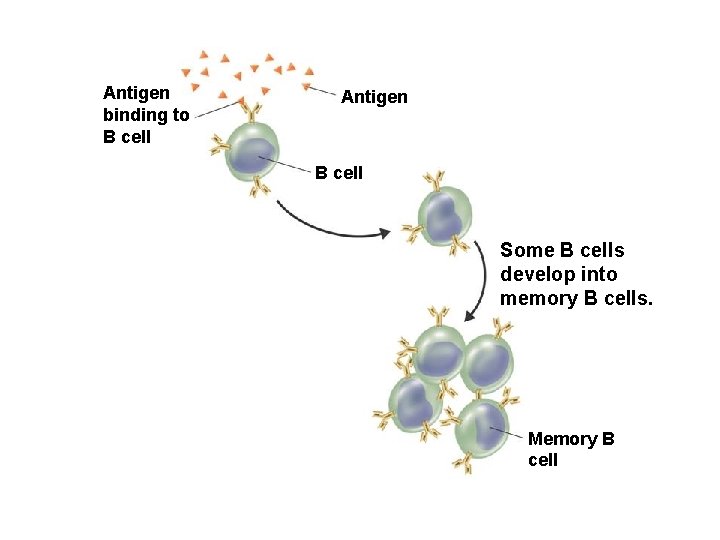
Specific Antigen Defenses Antigen binding to B cell Some B cells develop into memory B cells. Memory B cell

Specific Defenses Production of many more cells and antibodies Second exposure to same antigen Production of memory B cells
Specific Defenses • Cell-Mediated Immunity – Cell-mediated immunity is the response against __________ cells and ___________. – When viruses or other pathogens get inside living cells, antibodies alone cannot destroy them. • In cell-mediated immunity, T cells divide and differentiate into different types: • _______ cells destroy foreign tissue containing the antigen. • ________ cells produce memory T cells. • Suppressor T cells shut down killer T cells when done. • ________ cells cause secondary response.
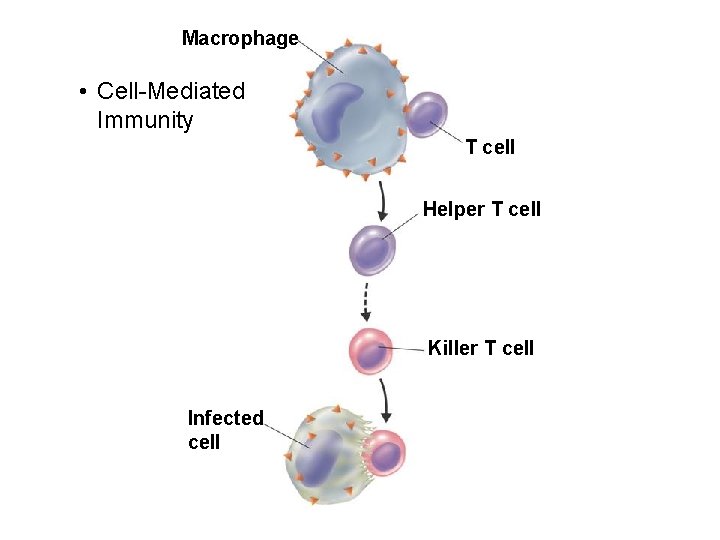
Macrophage • Cell-Mediated Immunity T cell Helper T cell Killer T cell Infected cell
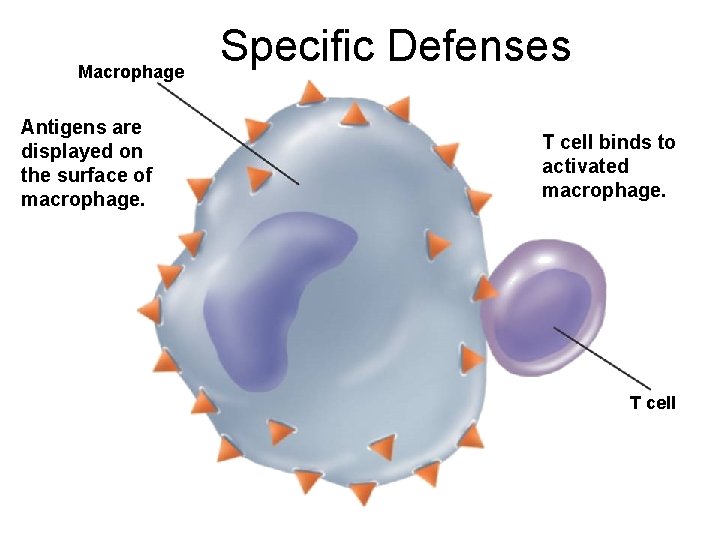
Macrophage Antigens are displayed on the surface of macrophage. Specific Defenses T cell binds to activated macrophage. T cell
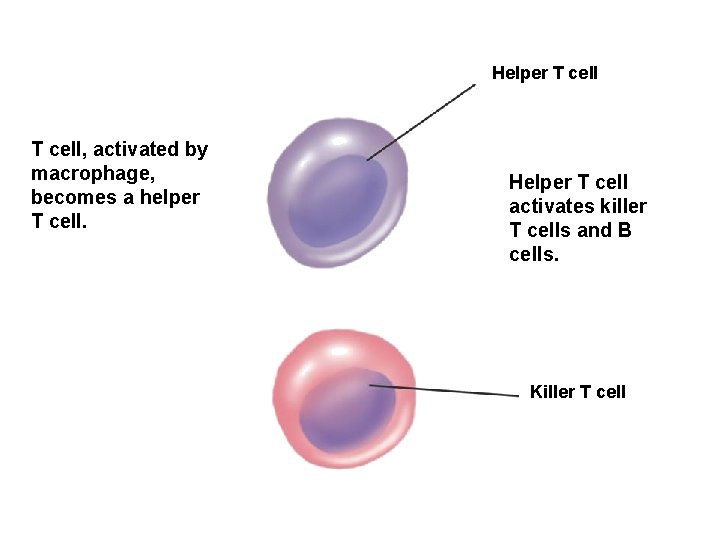
Helper T cell, activated by macrophage, becomes a helper T cell. Helper T cell activates killer T cells and B cells. Killer T cell
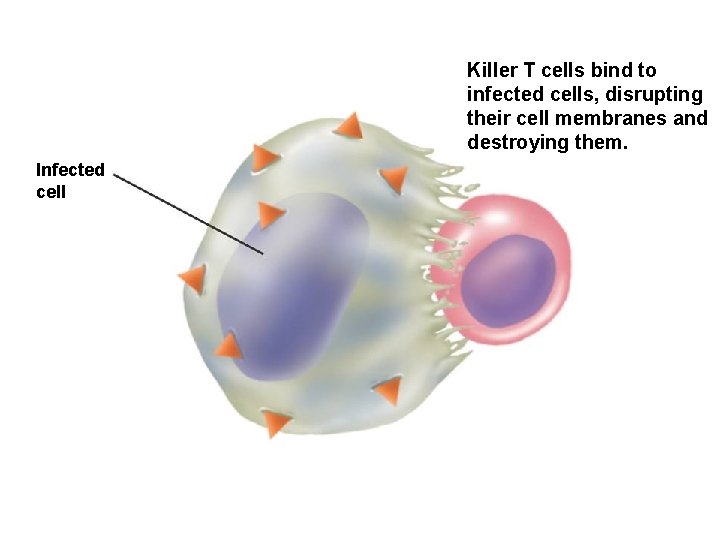
Killer T cells bind to infected cells, disrupting their cell membranes and destroying them. Infected cell
Specific Defenses • Transplants – Killer T cells make acceptance of organ transplants difficult. – Cells have marker proteins on their surfaces that allow the immune system to recognize them. – The immune system would recognize a transported organ as foreign and attack it. This is known as rejection. • To prevent organ rejection, doctors find a donor whose cell markers are nearly identical to cell markers of the recipient. • Recipients must take drugs to suppress the cellmediated immune response.
Acquired Immunity • Passive Immunity – The body can also be temporarily protected against disease. – If antibodies produced by other animals are injected into the bloodstream, the antibodies produce a __________________. – Passive immunity is temporary because eventually the body destroys the foreign antibodies. – Passive immunity can develop naturally or by deliberate exposure. – Natural immunity occurs when antibodies produced by the mother are passed to the fetus during development or in early infancy through breast milk. – Passive immunity also occurs when antibodies are administered to fight infection or prevent disease.
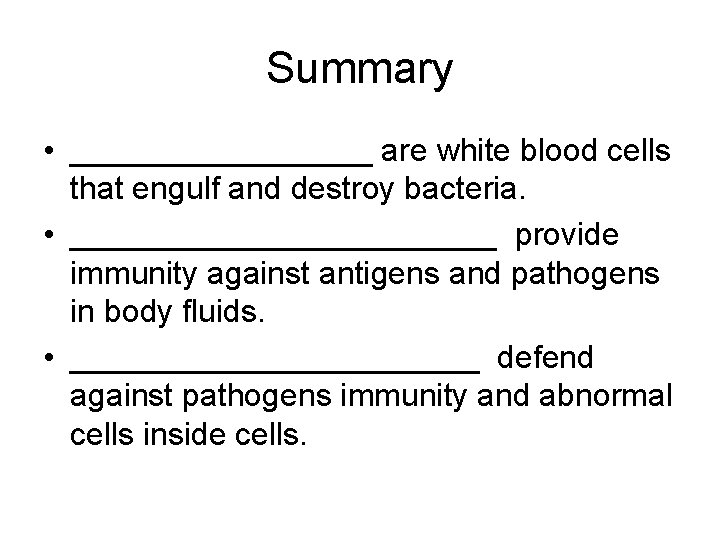
Summary • _________ are white blood cells that engulf and destroy bacteria. • ____________ provide immunity against antigens and pathogens in body fluids. • ____________ defend against pathogens immunity and abnormal cells inside cells.
- Slides: 20