
10 9 Preparation of Dienes 1 3 Butadiene

10. 9 Preparation of Dienes
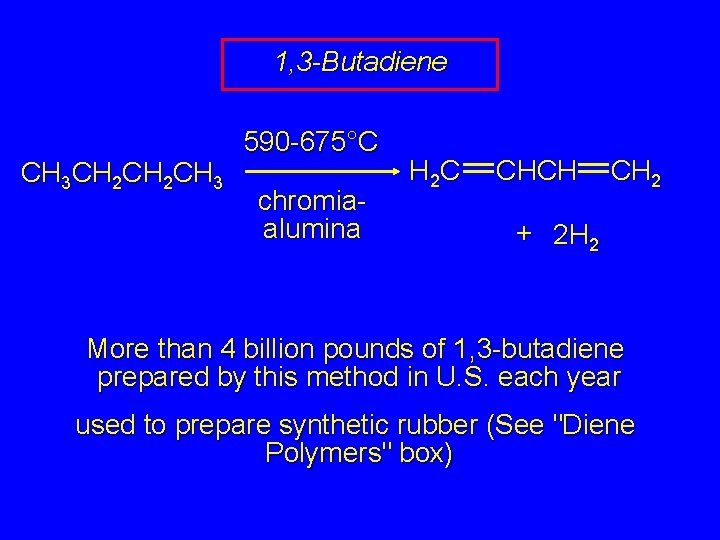
1, 3 -Butadiene CH 3 CH 2 CH 3 590 -675°C chromiaalumina H 2 C CHCH CH 2 + 2 H 2 More than 4 billion pounds of 1, 3 -butadiene prepared by this method in U. S. each year used to prepare synthetic rubber (See "Diene Polymers" box)
Dehydration of Alcohols KHSO 4 OH heat
Dehydration of Alcohols KHSO 4 OH heat major product; 88% yield
Dehydrohalogenation of Alkyl Halides KOH Br heat
Dehydrohalogenation of Alkyl Halides KOH Br heat major product; 78% yield
Reactions of Dienes isolated dienes: double bonds react independently of one another cumulated dienes: specialized topic conjugated dienes: reactivity pattern requires us to think of conjugated diene system as a functional group of its own
10. 10 Addition of Hydrogen Halides to Conjugated Dienes
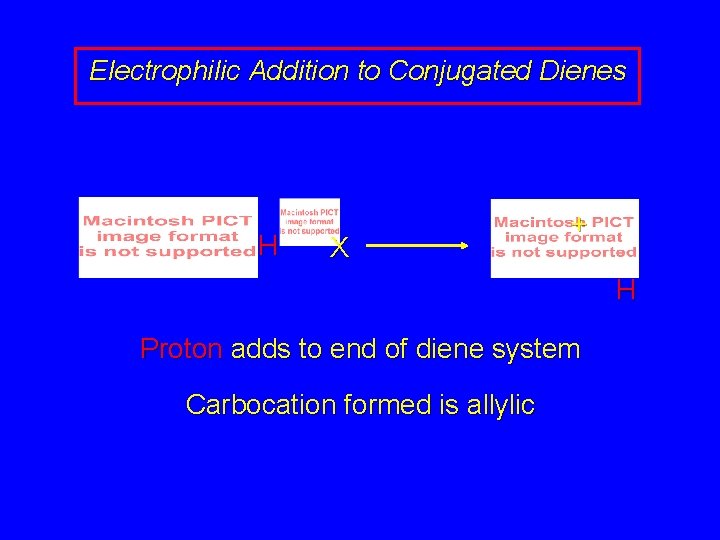
Electrophilic Addition to Conjugated Dienes H X + H Proton adds to end of diene system Carbocation formed is allylic
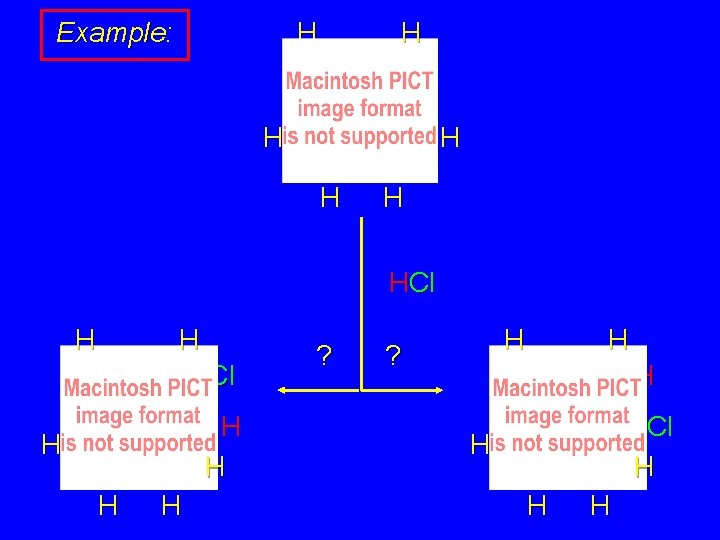
H Example: H H HCl H H H H H ? H H Cl H H
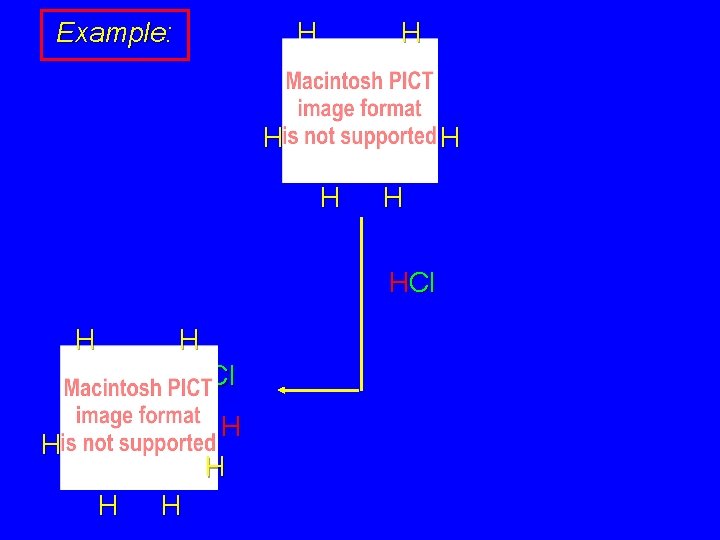
H Example: H H HCl H H H H H
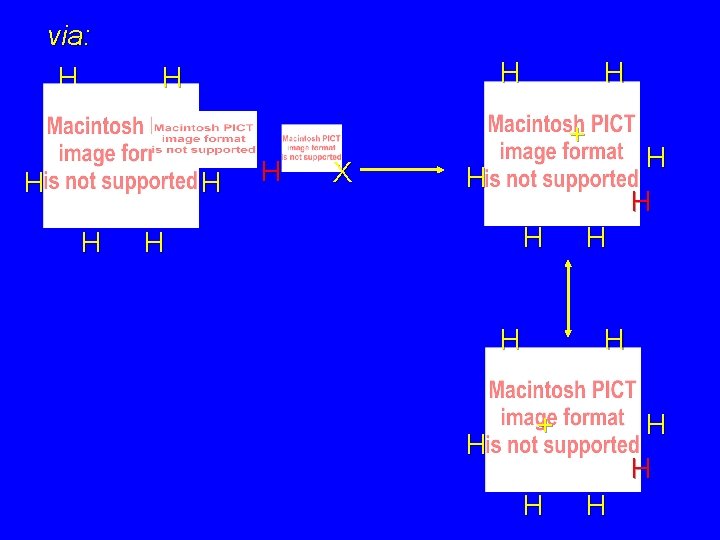
via: H H + H H X H H H H H + H H
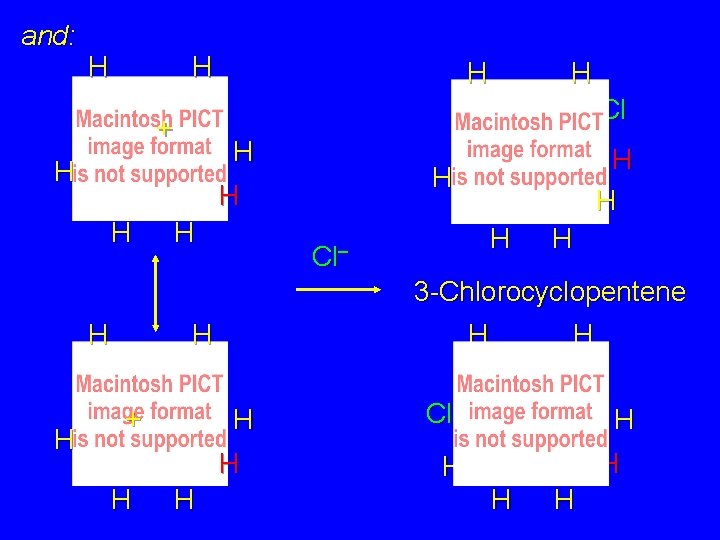
and: H H H H H 3 -Chlorocyclopentene H H H Cl– H + H H H Cl + H H Cl H H H
1, 2 -Addition versus 1, 4 -Addition 1, 2 -addition of XY Y X
1, 2 -Addition versus 1, 4 -Addition 1, 2 -addition of XY 1, 4 -addition of XY Y Y X X
1, 2 -Addition versus 1, 4 -Addition 1, 2 -addition of XY 1, 4 -addition of XY Y Y X via + X X
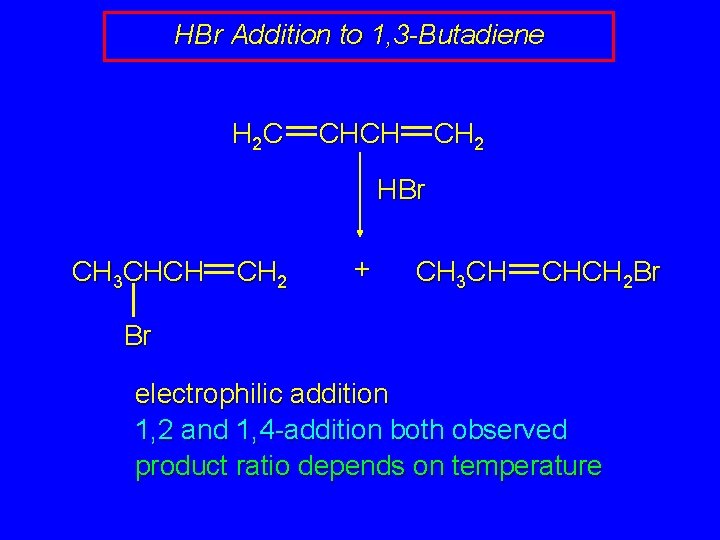
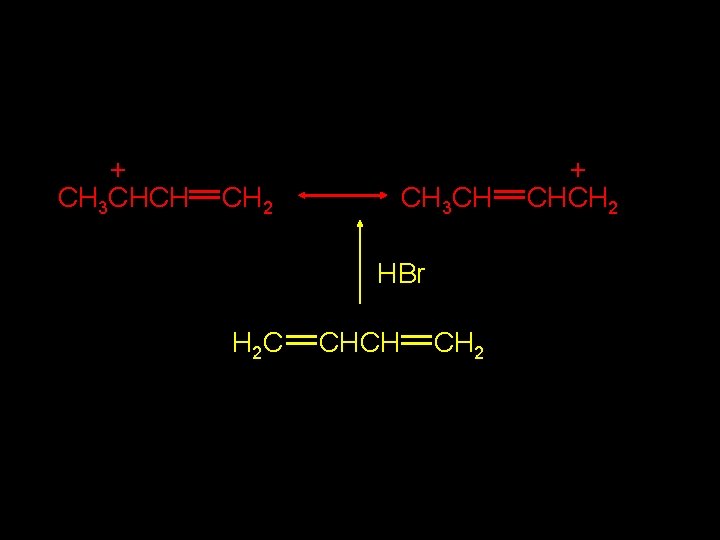
HBr Addition to 1, 3 -Butadiene H 2 C CHCH CH 2 HBr CH 3 CHCH CH 2 + CH 3 CH CHCH 2 Br Br electrophilic addition 1, 2 and 1, 4 -addition both observed product ratio depends on temperature
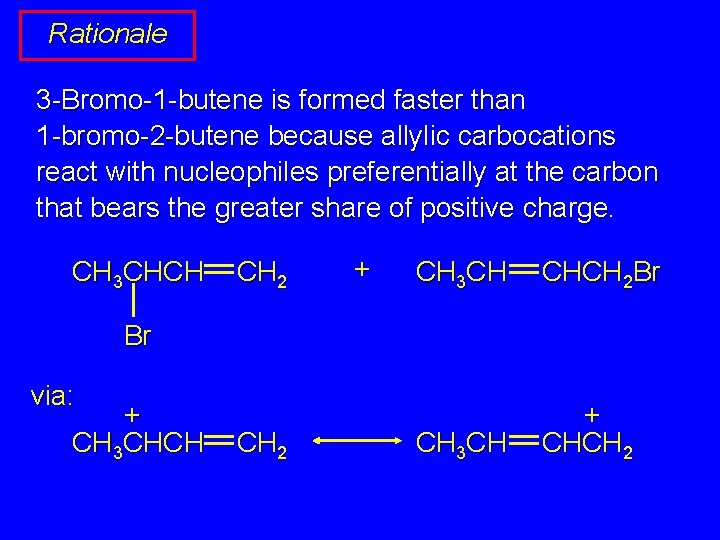
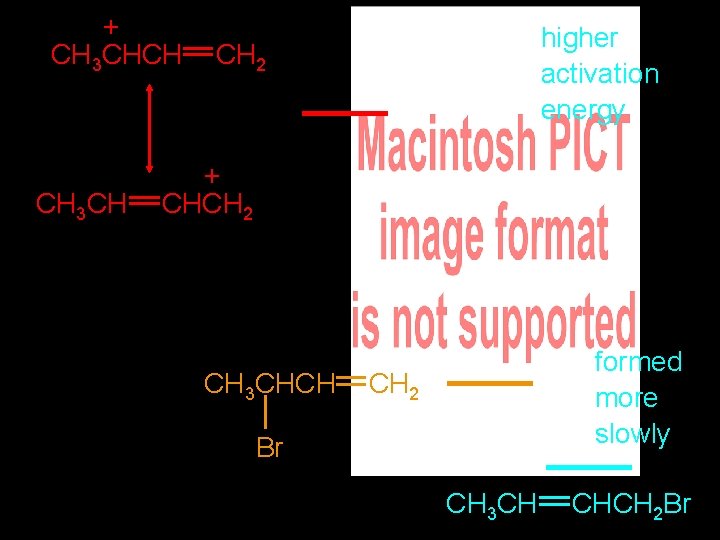
Rationale 3 -Bromo-1 -butene is formed faster than 1 -bromo-2 -butene because allylic carbocations react with nucleophiles preferentially at the carbon that bears the greater share of positive charge. CH 3 CHCH CH 2 + CH 3 CH CHCH 2 Br CH 3 CH + CHCH 2 Br via: + CH 3 CHCH CH 2
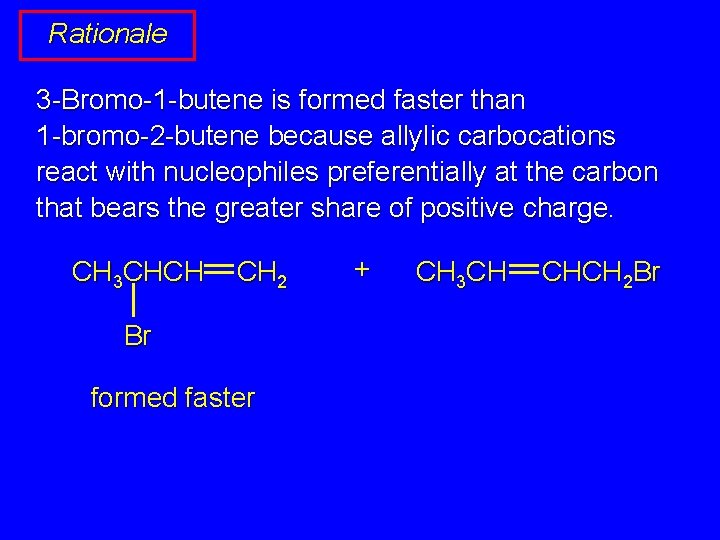
Rationale 3 -Bromo-1 -butene is formed faster than 1 -bromo-2 -butene because allylic carbocations react with nucleophiles preferentially at the carbon that bears the greater share of positive charge. CH 3 CHCH CH 2 Br formed faster + CH 3 CH CHCH 2 Br
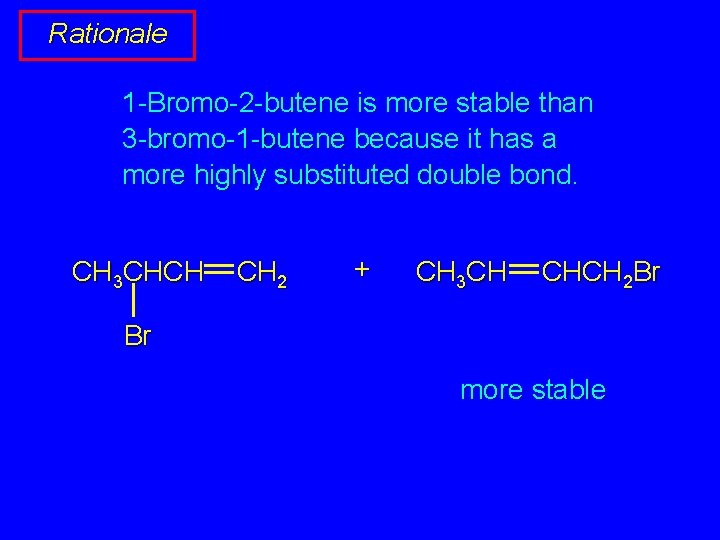
Rationale 1 -Bromo-2 -butene is more stable than 3 -bromo-1 -butene because it has a more highly substituted double bond. CH 3 CHCH CH 2 + CH 3 CH CHCH 2 Br Br more stable
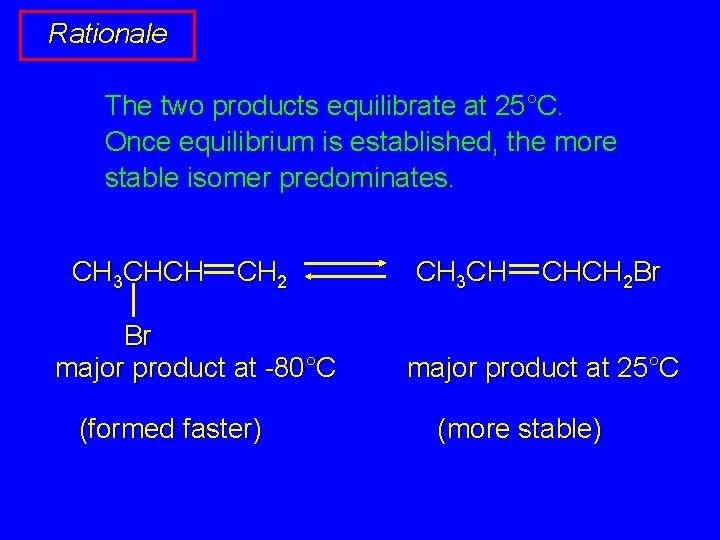
Rationale The two products equilibrate at 25°C. Once equilibrium is established, the more stable isomer predominates. CH 3 CHCH CH 2 Br major product at -80°C (formed faster) CH 3 CH CHCH 2 Br major product at 25°C (more stable)
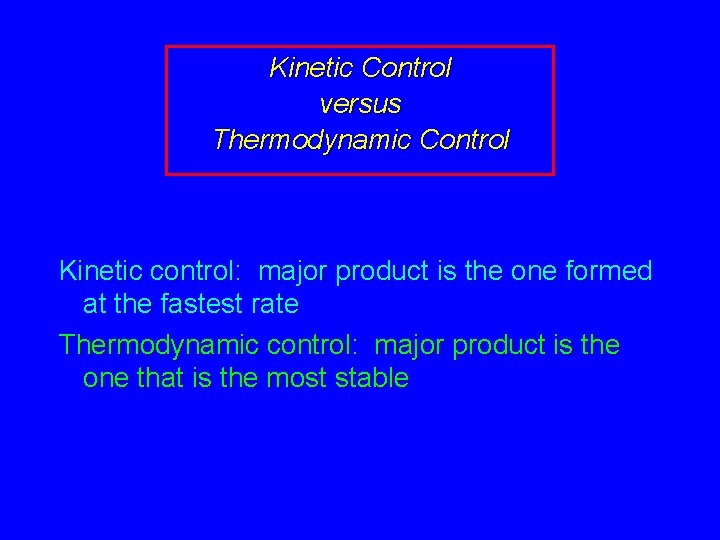
Kinetic Control versus Thermodynamic Control Kinetic control: major product is the one formed at the fastest rate Thermodynamic control: major product is the one that is the most stable
+ CH 3 CHCH CH 2 CH 3 CH HBr H 2 C CHCH CH 2 + CHCH 2
+ CH 3 CHCH CH 3 CH higher activation energy CH 2 + CHCH 2 CH 3 CHCH formed more slowly CH 2 Br CH 3 CH CHCH 2 Br
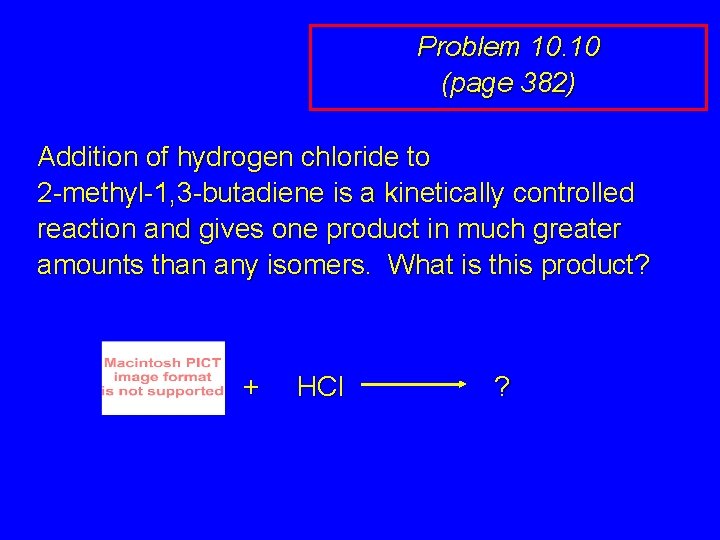
Problem 10. 10 (page 382) Addition of hydrogen chloride to 2 -methyl-1, 3 -butadiene is a kinetically controlled reaction and gives one product in much greater amounts than any isomers. What is this product? + HCl ?
Problem 10. 10 (page 382) Think mechanistically. + HCl Protonation occurs: at end of diene system in direction that gives most stable carbocation Kinetically controlled product corresponds to attack by chloride ion at carbon that has the greatest share of positive charge in the carbocation
Think mechanistically H + Cl + one resonance form is tertiary carbocation; other is primary Problem 10. 10 (page 382)
Think mechanistically H + Cl Problem 10. 10 (page 382) Cl H + + + one resonance form is tertiary carbocation; other is primary one resonance form is secondary carbocation; other is primary
Think mechanistically H Problem 10. 10 (page 382) Cl More stable carbocation + + one resonance form is tertiary carbocation; other is primary Is attacked by chloride ion at carbon that bears greater share of positive charge
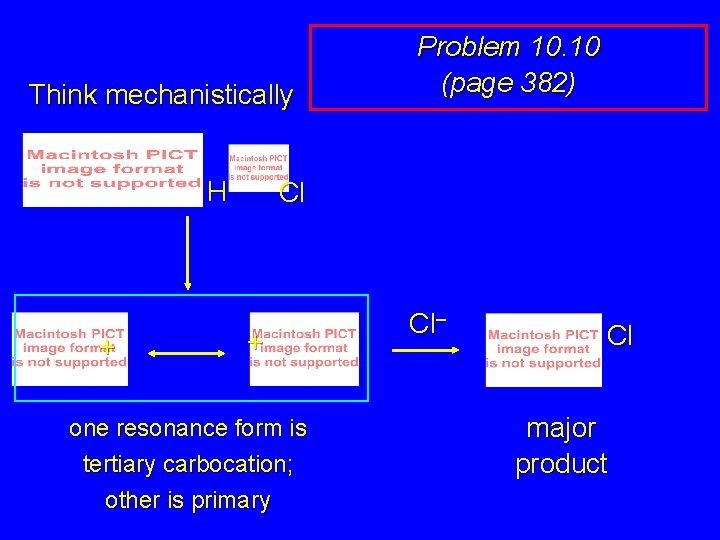
Think mechanistically H + Problem 10. 10 (page 382) Cl + one resonance form is tertiary carbocation; other is primary Cl– Cl major product
10. 11 Halogen Addition to Dienes gives mixtures of 1, 2 and 1, 4 -addition products
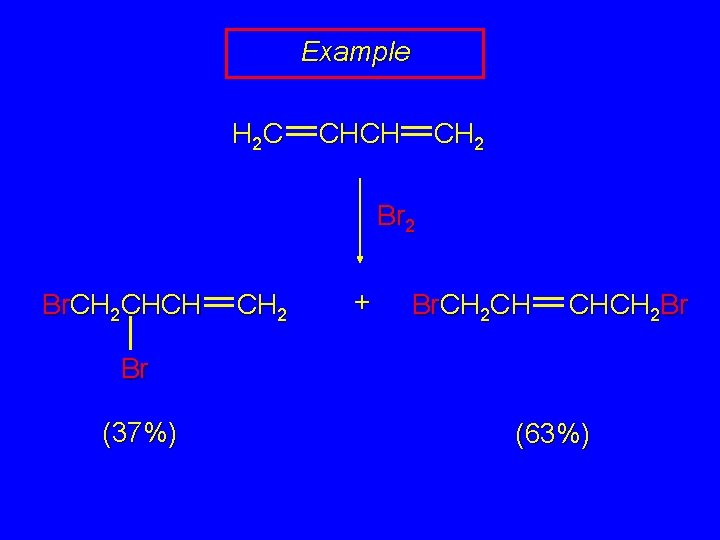
Example H 2 C CHCH CH 2 Br. CH 2 CHCH CH 2 + Br. CH 2 CH CHCH 2 Br Br (37%) (63%)
- Slides: 32