
10 3 Theory of Natural Selection KEY CONCEPT
- Slides: 21
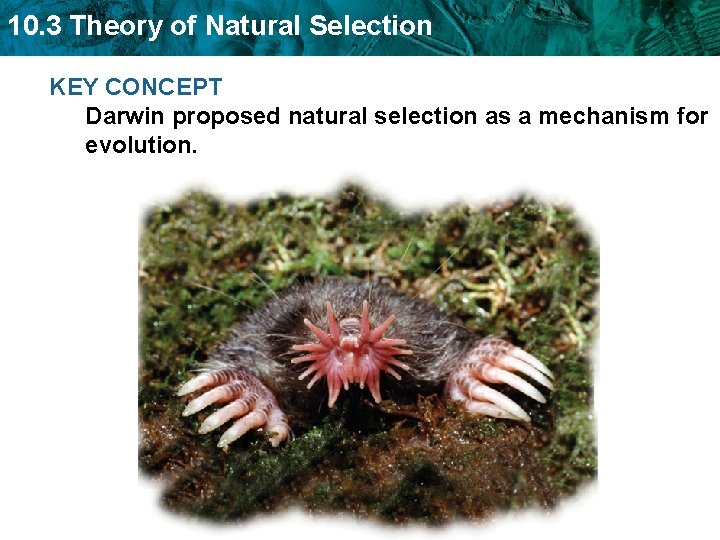
10. 3 Theory of Natural Selection KEY CONCEPT Darwin proposed natural selection as a mechanism for evolution.
10. 3 Theory of Natural Selection NGSSS • SC. 912. L. 15. 13 Describe the conditions required for natural selection, including: overproduction of offspring, inherited variation, and the struggle to survive, which result in differential reproductive success. (MODERATE)
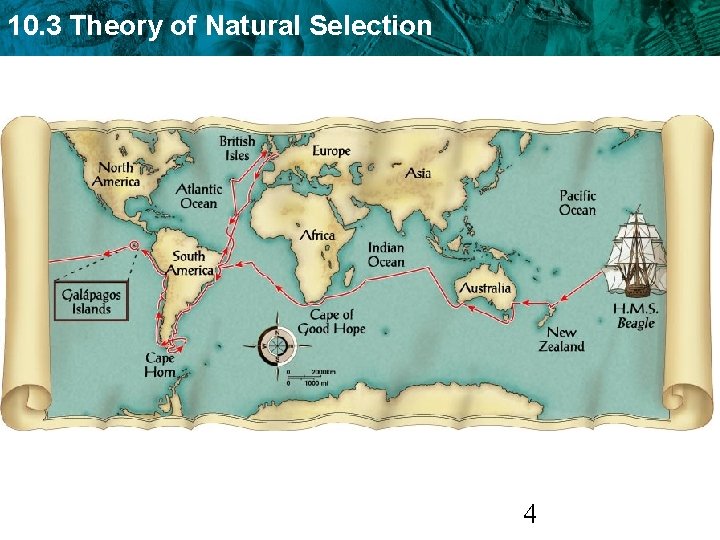
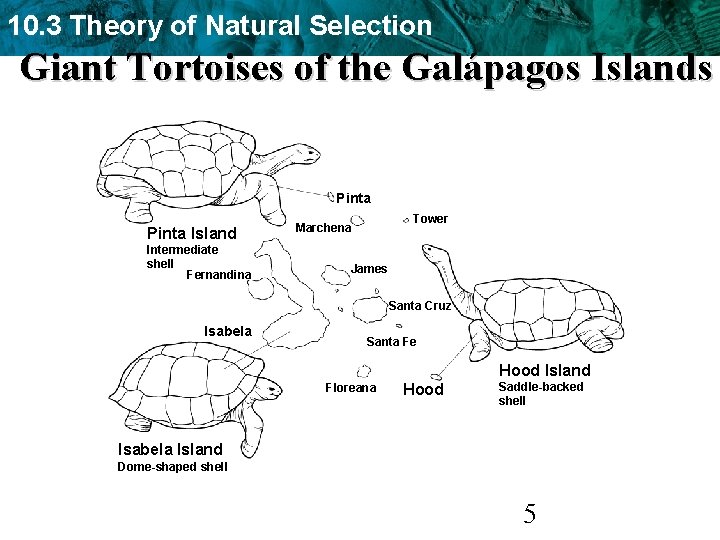
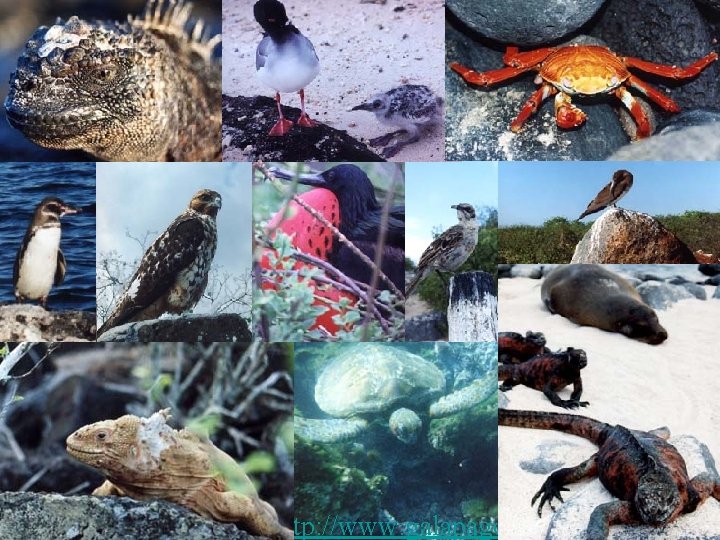
10. 3 Theory of Natural Selection Charles Darwin • Darwin set sail on the H. M. S. Beagle (1831 -1836) to survey the south seas (mainly South America and the Galapagos Islands) to collect plants and animals. • On the Galapagos Islands, Darwin observed species that lived no where else in the world. • These observations led Darwin to write a book 3
10. 3 Theory of Natural Selection 4
10. 3 Theory of Natural Selection Giant Tortoises of the Galápagos Islands Pinta Island Intermediate shell Fernandina Tower Marchena James Santa Cruz Isabela Santa Fe Hood Island Floreana Hood Saddle-backed shell Isabela Island Dome-shaped shell 5
10. 3 Theory of Natural Selection 6 http: //www. galapagosislands. com
10. 3 Theory of Natural Selection Charles Darwin Wrote in 1859: “On the Origin of Species by Means of Natural Selection” Two main conclusions: 1. Species were not created in their present form, but evolved from ancestral species. 2. Proposed a mechanism for evolution: NATURAL SELECTION 7
10. 3 Theory of Natural Selection Darwin’s Observations 1. Most species produce more offspring than can be supported by the environment 2. Environmental resources are limited 3. Most populations are stable in size 4. Individuals vary greatly in their characteristics (phenotypes) 5. Variation is heritable (genotypes) 8
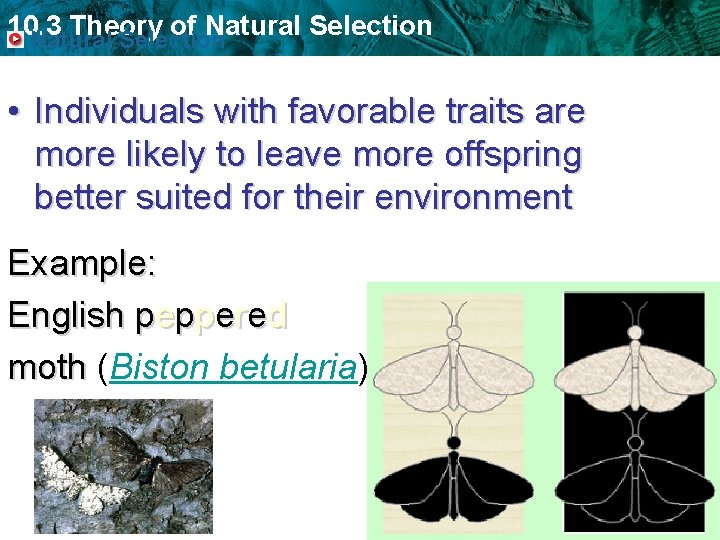
10. 3 Theory of Natural Selection • Individuals with favorable traits are more likely to leave more offspring better suited for their environment Example: English peppered moth (Biston betularia)
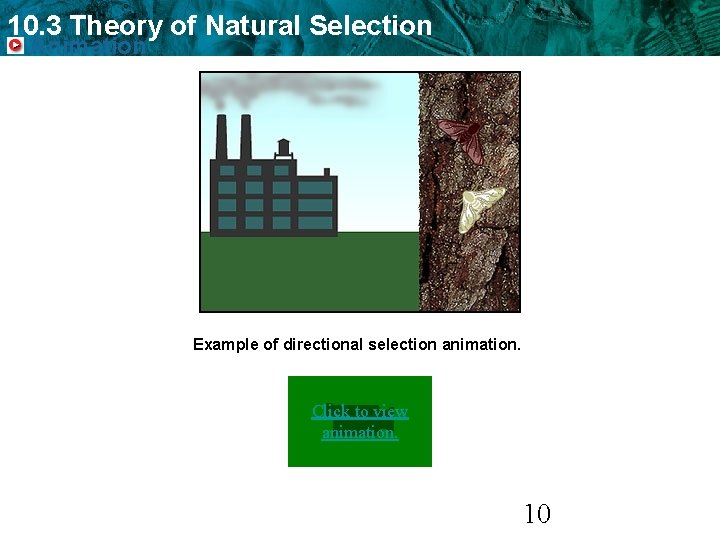
10. 3 Theory of Natural Selection Animation Example of directional selection animation. Click to view animation. 10
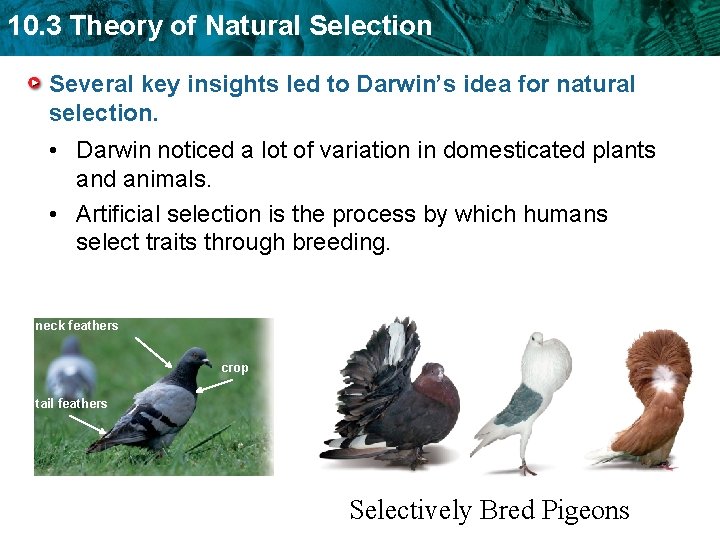
10. 3 Theory of Natural Selection Several key insights led to Darwin’s idea for natural selection. • Darwin noticed a lot of variation in domesticated plants and animals. • Artificial selection is the process by which humans select traits through breeding. neck feathers crop tail feathers Selectively Bred Pigeons
10. 3 Theory of Natural Selection • Heritability is the ability of a trait to be passed down. • There is a struggle for survival due to overpopulation and limited resources. • Darwin proposed that adaptations arose over many generations. • Natural selection is a mechanism by which individuals that have inherited beneficial adaptations produce more offspring on average than do other individuals
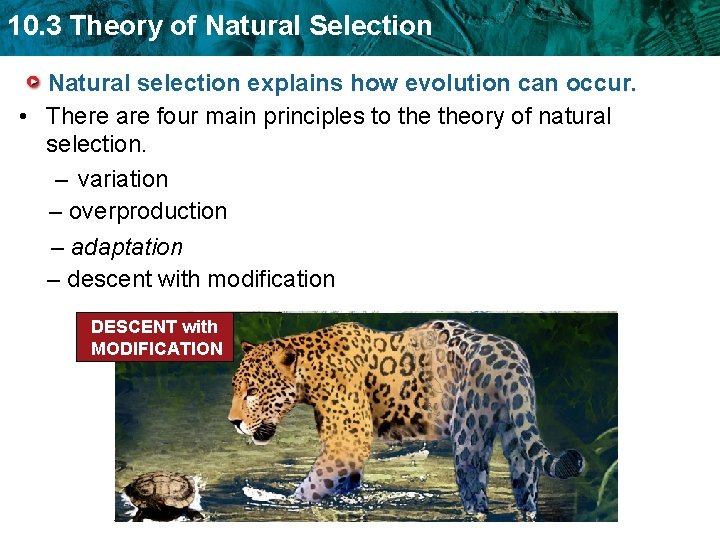
10. 3 Theory of Natural Selection Natural selection explains how evolution can occur. • There are four main principles to theory of natural selection. – variation – overproduction – adaptation – descent with modification ADAPTATION DESCENT VARIATION OVERPRODUCTION with MODIFICATION
10. 3 Theory of Natural Selection Variations: • Differences in traits • Come about by mutations in genes • Random • Occur in sex cells • Passed on to future generations
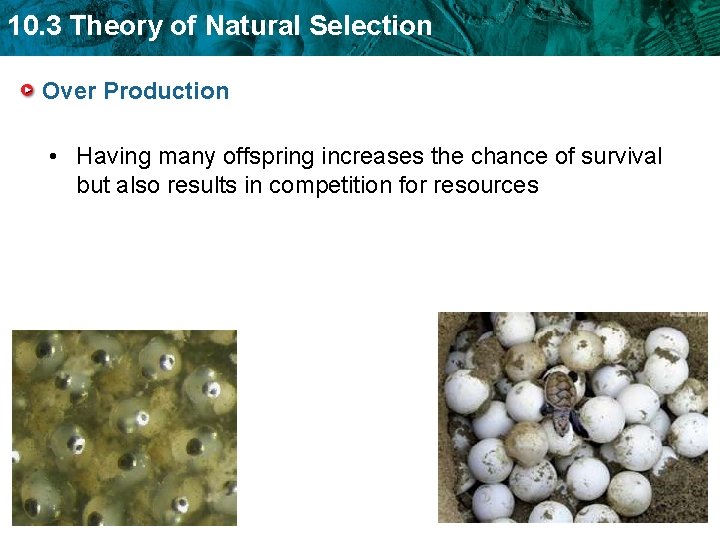
10. 3 Theory of Natural Selection Over Production • Having many offspring increases the chance of survival but also results in competition for resources
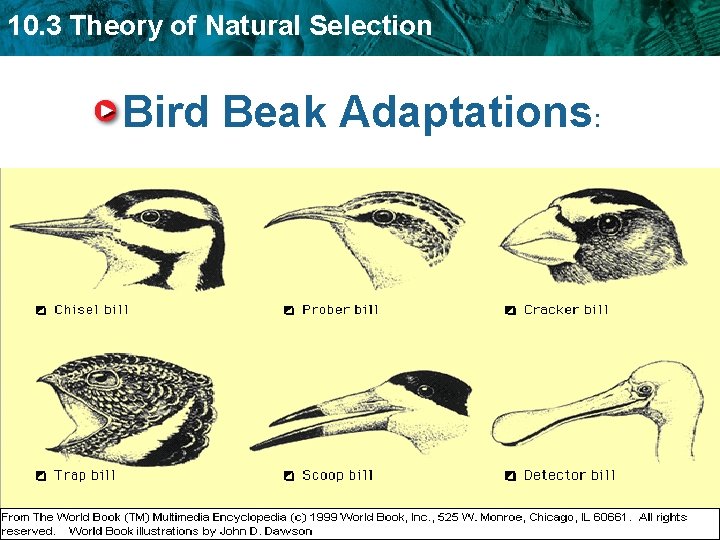
10. 3 Theory of Natural Selection Bird Beak Adaptations:
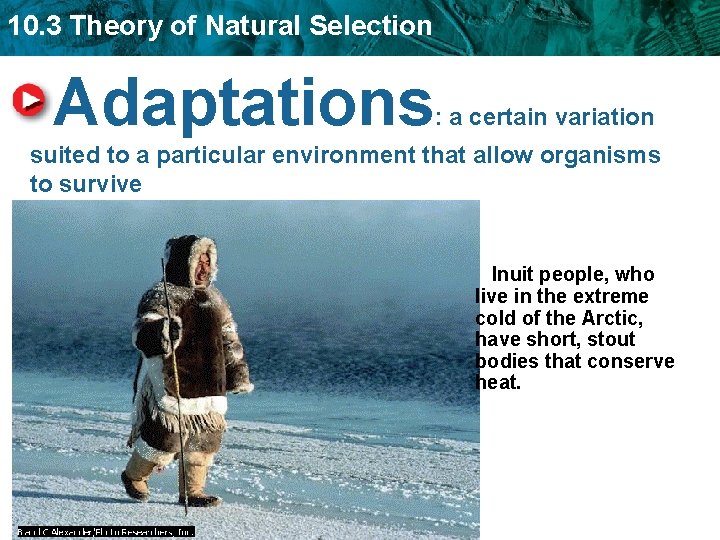
10. 3 Theory of Natural Selection Adaptations : a certain variation suited to a particular environment that allow organisms to survive Inuit people, who live in the extreme cold of the Arctic, have short, stout bodies that conserve heat.
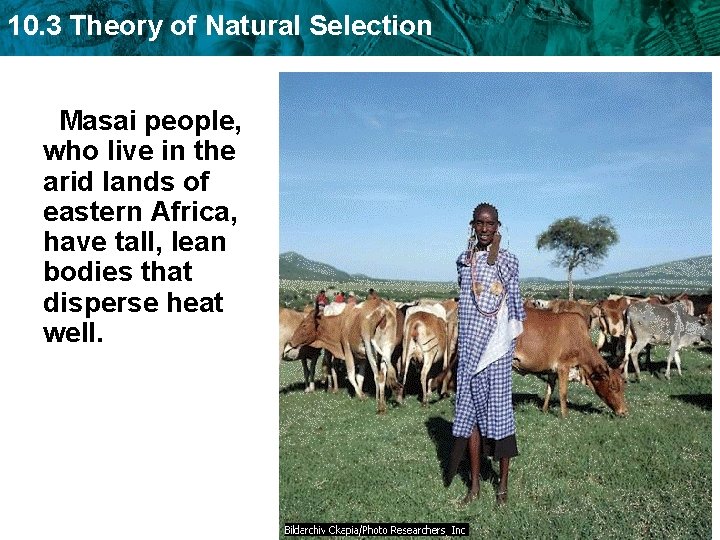
10. 3 Theory of Natural Selection Masai people, who live in the arid lands of eastern Africa, have tall, lean bodies that disperse heat well.
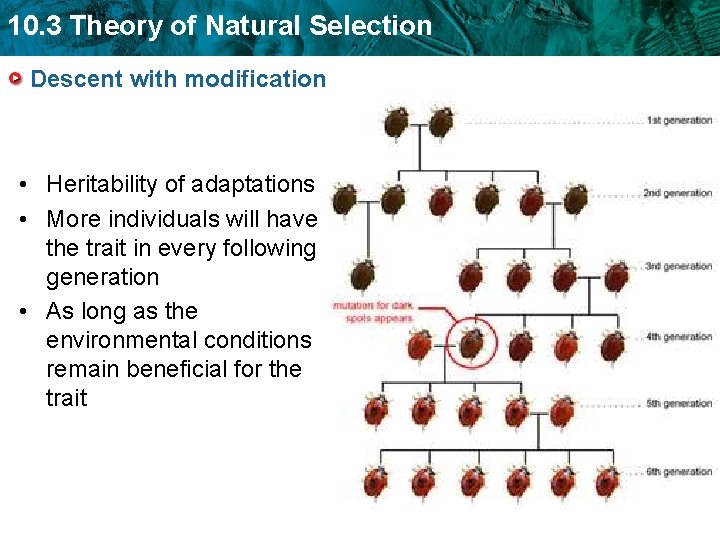
10. 3 Theory of Natural Selection Descent with modification • Heritability of adaptations • More individuals will have the trait in every following generation • As long as the environmental conditions remain beneficial for the trait
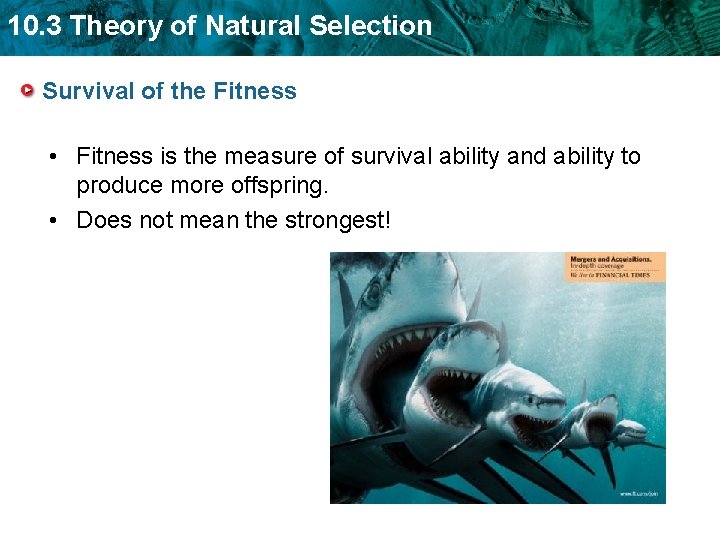
10. 3 Theory of Natural Selection Survival of the Fitness • Fitness is the measure of survival ability and ability to produce more offspring. • Does not mean the strongest!
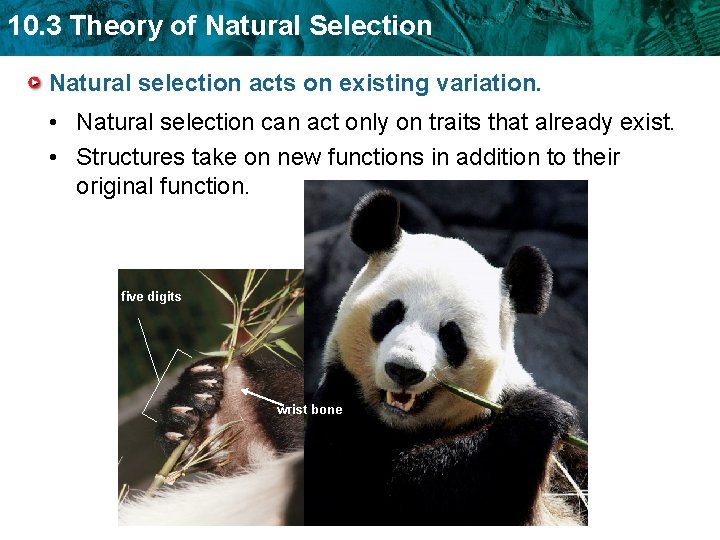
10. 3 Theory of Natural Selection Natural selection acts on existing variation. • Natural selection can act only on traits that already exist. • Structures take on new functions in addition to their original function. five digits wrist bone