
10 2 U 4 The phenotypes of polygenic
- Slides: 15
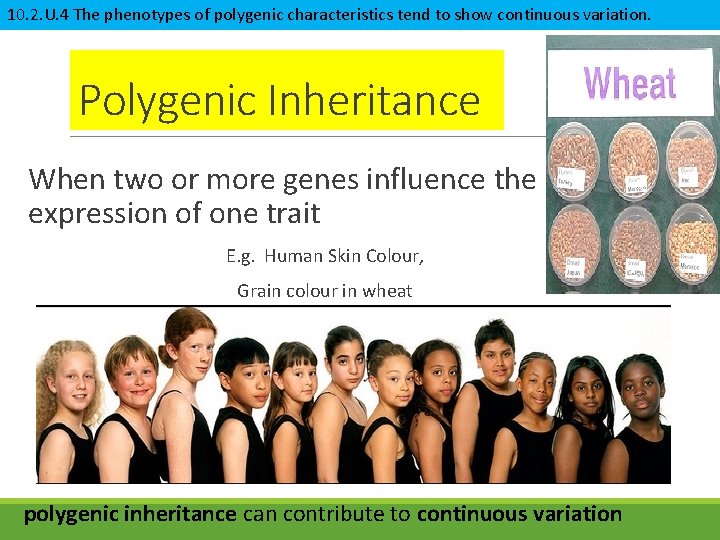
10. 2. U. 4 The phenotypes of polygenic characteristics tend to show continuous variation. Polygenic Inheritance When two or more genes influence the expression of one trait E. g. Human Skin Colour, Grain colour in wheat polygenic inheritance can contribute to continuous variation
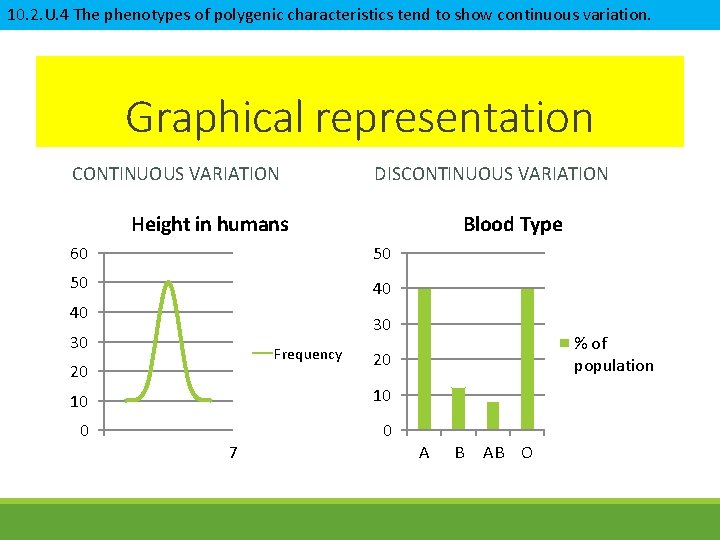
10. 2. U. 4 The phenotypes of polygenic characteristics tend to show continuous variation. Continuous and discontinuous variation When an array of possible phenotypes can be produced, it is called continuous variation ◦ Examples: skin color, height. When only a small number of phenotypes can be produced, it is called discontinuous variation ◦ Examples: earlobe attachment, blood group
10. 2. U. 4 The phenotypes of polygenic characteristics tend to show continuous variation. Graphical representation CONTINUOUS VARIATION DISCONTINUOUS VARIATION Height in humans Blood Type 60 50 50 40 40 30 30 Frequency 20 20 10 10 0 0 7 % of population A B AB O
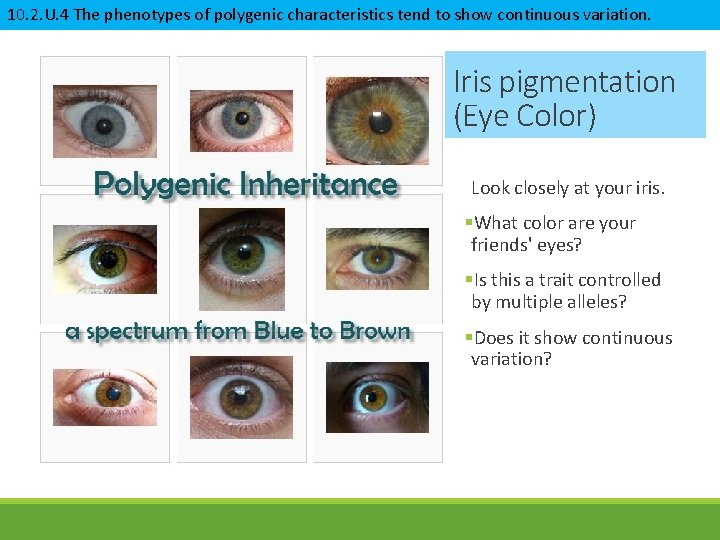
10. 2. U. 4 The phenotypes of polygenic characteristics tend to show continuous variation. Iris pigmentation (Eye Color) Look closely at your iris. §What color are your friends' eyes? §Is this a trait controlled by multiple alleles? §Does it show continuous variation?
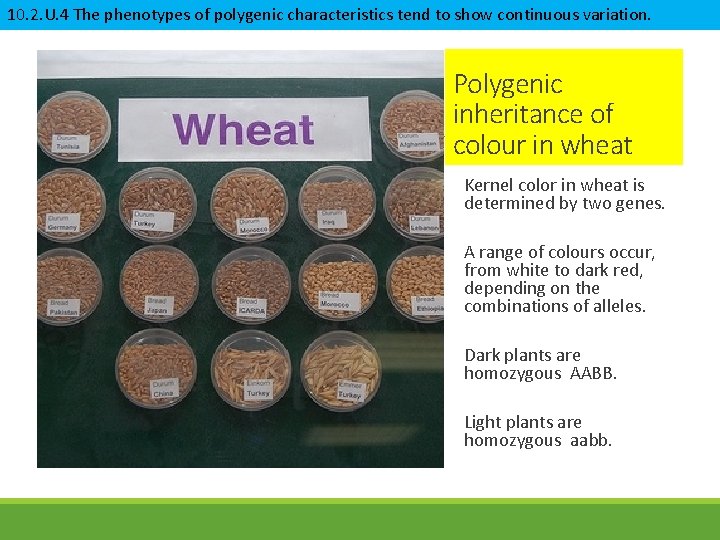
10. 2. U. 4 The phenotypes of polygenic characteristics tend to show continuous variation. Polygenic inheritance of colour in wheat Kernel color in wheat is determined by two genes. A range of colours occur, from white to dark red, depending on the combinations of alleles. Dark plants are homozygous AABB. Light plants are homozygous aabb.
10. 2. U. 4 The phenotypes of polygenic characteristics tend to show continuous variation. Each contributing gene has small and relatively equal effects. The effects of each allele are additive. The genes behave as if they are Assumptions of the Polygenic Model: co-dominant. There is no linkage involved. The value of the trait depends solely on genetics. Environmental influences are ignored.
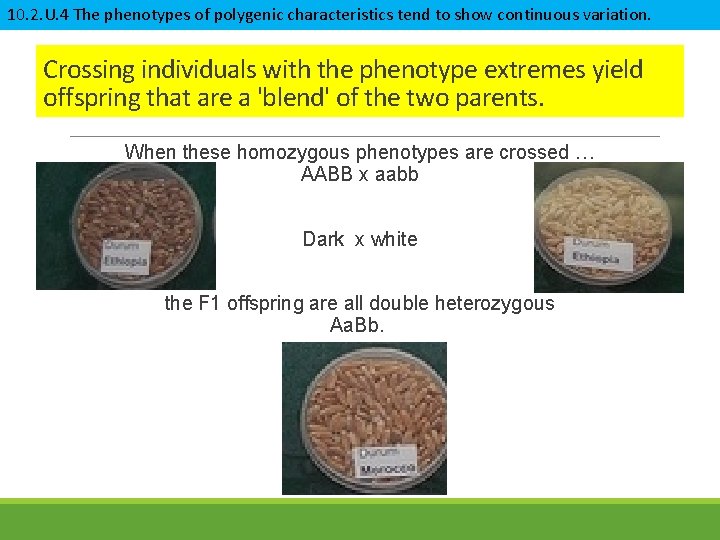
10. 2. U. 4 The phenotypes of polygenic characteristics tend to show continuous variation. Crossing individuals with the phenotype extremes yield offspring that are a 'blend' of the two parents. When these homozygous phenotypes are crossed … AABB x aabb Dark x white the F 1 offspring are all double heterozygous Aa. Bb.
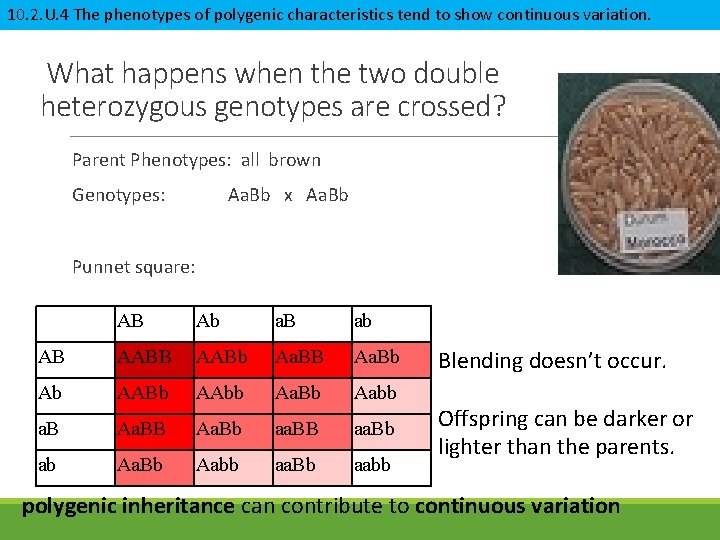
10. 2. U. 4 The phenotypes of polygenic characteristics tend to show continuous variation. What happens when the two double heterozygous genotypes are crossed? Parent Phenotypes: all brown Genotypes: Aa. Bb x Aa. Bb Punnet square: AB Ab a. B ab AB AABb Aa. BB Aa. Bb Ab AABb AAbb Aa. Bb Aabb a. B Aa. Bb aa. BB aa. Bb ab Aa. Bb Aabb aa. Bb aabb Blending doesn’t occur. Offspring can be darker or lighter than the parents. polygenic inheritance can contribute to continuous variation
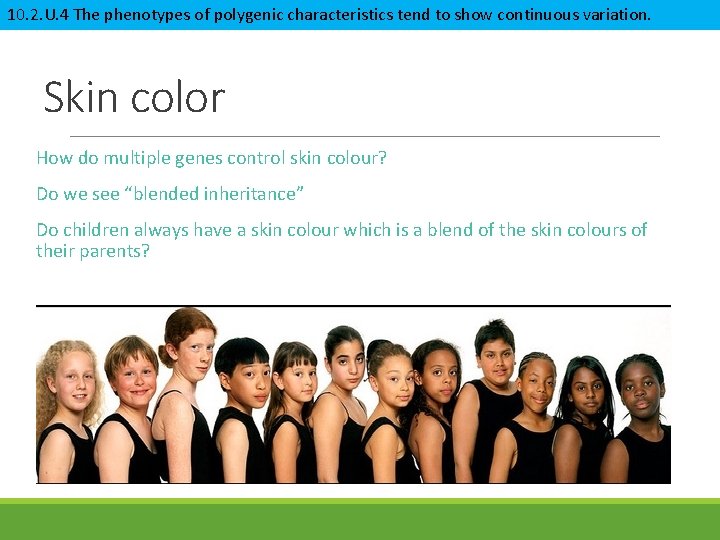
10. 2. U. 4 The phenotypes of polygenic characteristics tend to show continuous variation. Skin color How do multiple genes control skin colour? Do we see “blended inheritance” Do children always have a skin colour which is a blend of the skin colours of their parents?
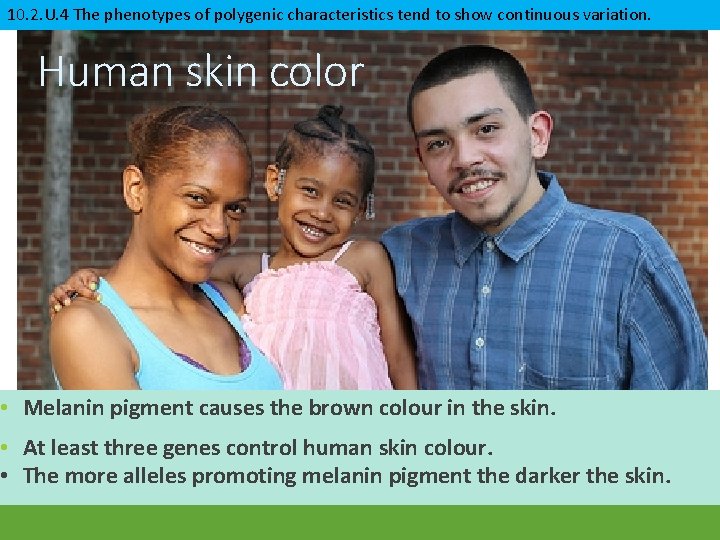
10. 2. U. 4 The phenotypes of polygenic characteristics tend to show continuous variation. Human skin color • Melanin pigment causes the brown colour in the skin. • At least three genes control human skin colour. • The more alleles promoting melanin pigment the darker the skin.
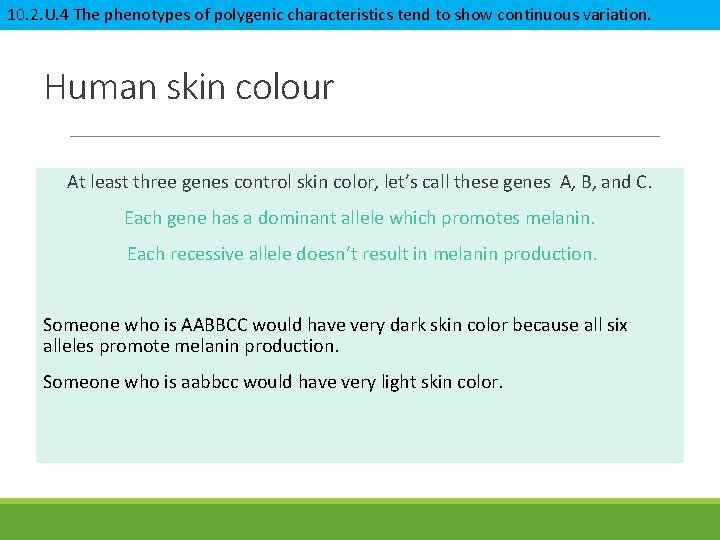
10. 2. U. 4 The phenotypes of polygenic characteristics tend to show continuous variation. Human skin colour At least three genes control skin color, let’s call these genes A, B, and C. Each gene has a dominant allele which promotes melanin. Each recessive allele doesn’t result in melanin production. Someone who is AABBCC would have very dark skin color because all six alleles promote melanin production. Someone who is aabbcc would have very light skin color.
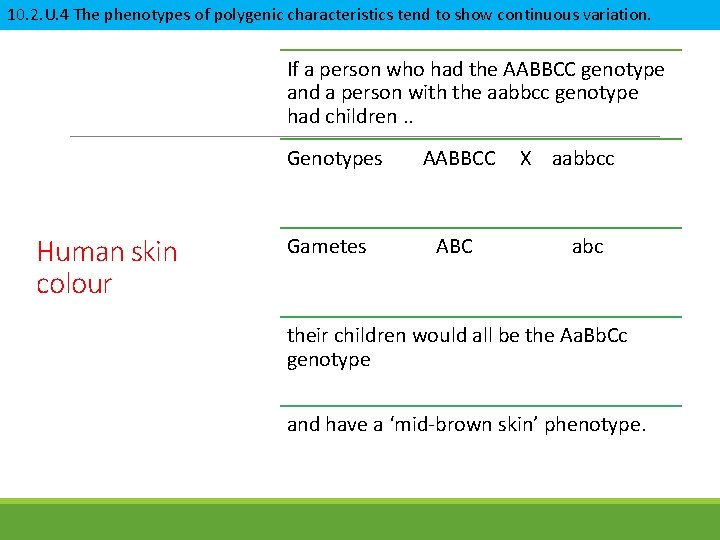
10. 2. U. 4 The phenotypes of polygenic characteristics tend to show continuous variation. If a person who had the AABBCC genotype and a person with the aabbcc genotype had children. . Genotypes Human skin colour Gametes AABBCC ABC X aabbcc abc their children would all be the Aa. Bb. Cc genotype and have a ‘mid-brown skin’ phenotype.
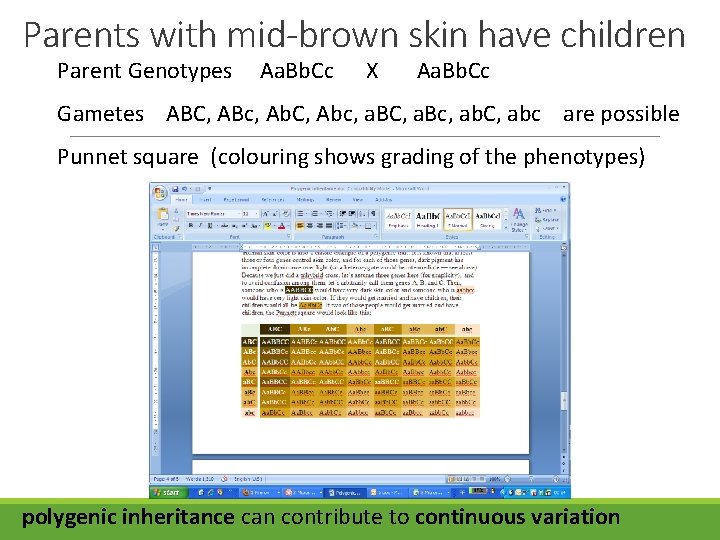
Parents with mid-brown skin have children Parent Genotypes Aa. Bb. Cc X Aa. Bb. Cc Gametes ABC, ABc, Ab. C, Abc, a. BC, a. Bc, ab. C, abc are possible Punnet square (colouring shows grading of the phenotypes) polygenic inheritance can contribute to continuous variation
10. 2. U. 4 The phenotypes of polygenic characteristics tend to show continuous variation. IB-style question (HL) How can the existence of multiple genes controlling skin colour result in the appearance of many different shades of skin colour in humans? 1 ………………………………………. . 2 ………………………………………. . 3 ………………………………………. . 4 ………………………………………. .
10. 2. U. 4 The phenotypes of polygenic characteristics tend to show continuous variation. Model Answer more than one gene controls one characteristic; Don’t say “alleles” There many different possible phenotypes; Polygenic inheritance causes continuous variation The alleles of each gene all contribute a small amount to the phenotype (like co-dominant alleles do) eg skin colour / kernel colour in wheat; A specific detail e. g. “the allele of each gene promotes melanin production or no melanin production”