
10 12 The DielsAlder Reaction Synthetic method for
- Slides: 31
10. 12 The Diels-Alder Reaction Synthetic method for preparing compounds containing a cyclohexene ring
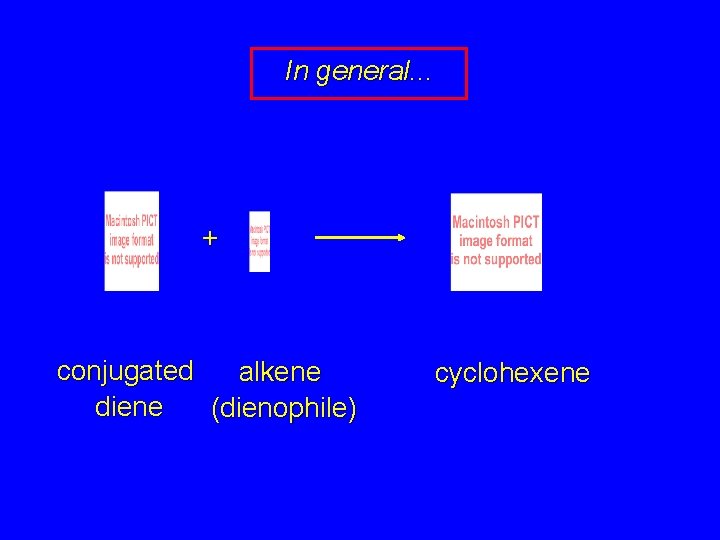
In general. . . + conjugated alkene diene (dienophile) cyclohexene
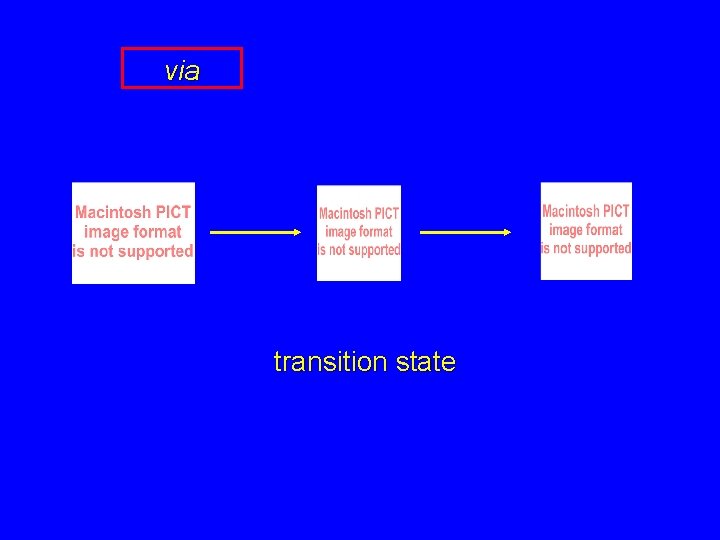
via transition state
Mechanistic features concerted mechanism cycloaddition pericyclic reaction a concerted reaction that proceeds through a cyclic transition state
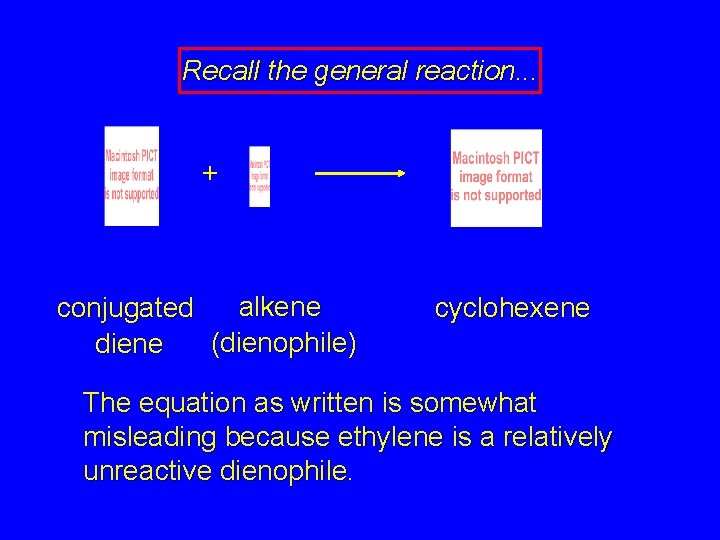
Recall the general reaction. . . + alkene conjugated (dienophile) diene cyclohexene The equation as written is somewhat misleading because ethylene is a relatively unreactive dienophile.
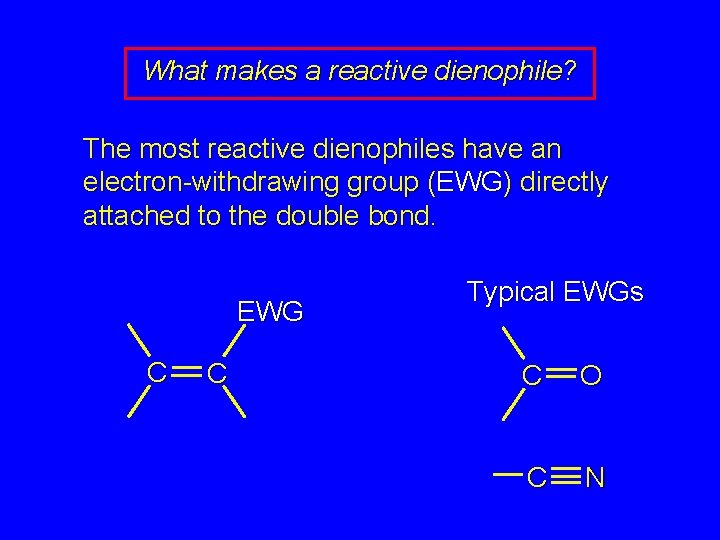
What makes a reactive dienophile? The most reactive dienophiles have an electron-withdrawing group (EWG) directly attached to the double bond. EWG C C Typical EWGs C O C N
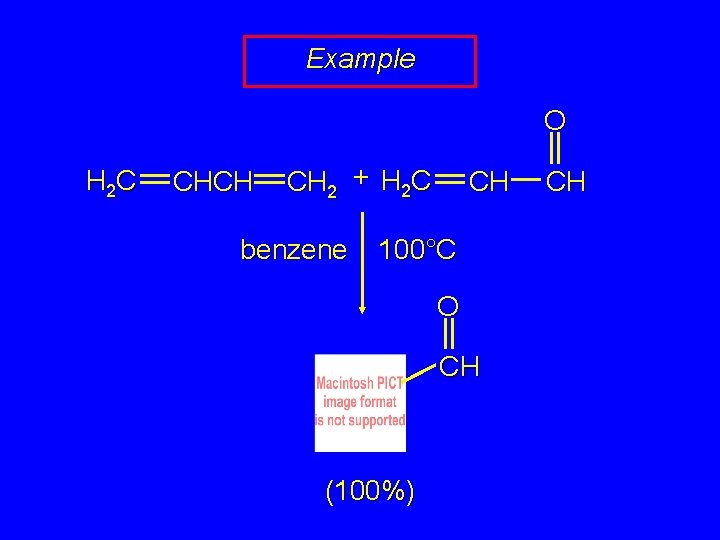
Example O H 2 C CHCH CH 2 + H 2 C benzene CH 100°C O CH (100%) CH
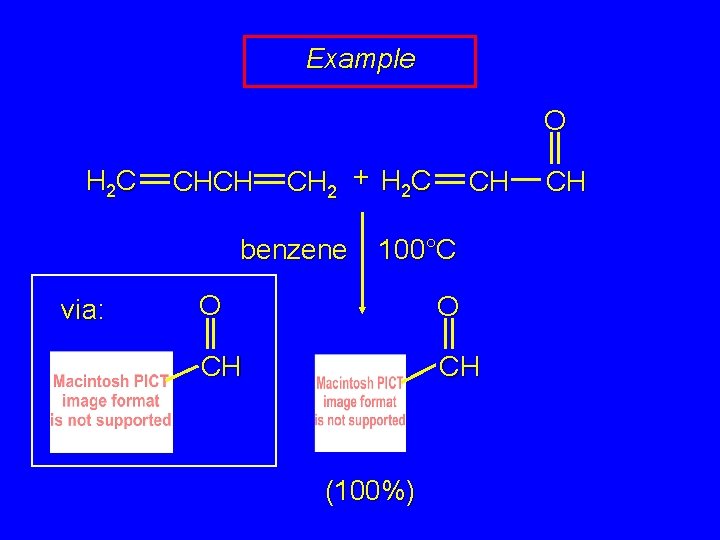
Example O H 2 C CHCH CH 2 + H 2 C benzene via: CH 100°C O O CH CH (100%) CH
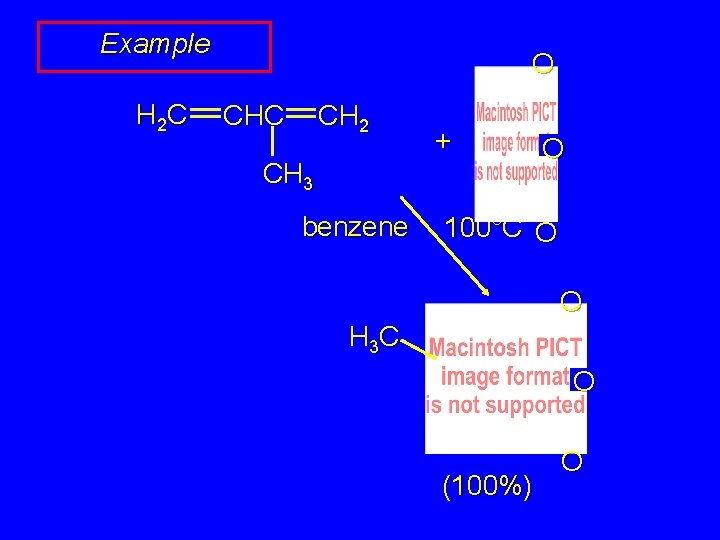
Example H 2 C O CHC CH 2 + CH 3 benzene O 100°C O O H 3 C O (100%) O
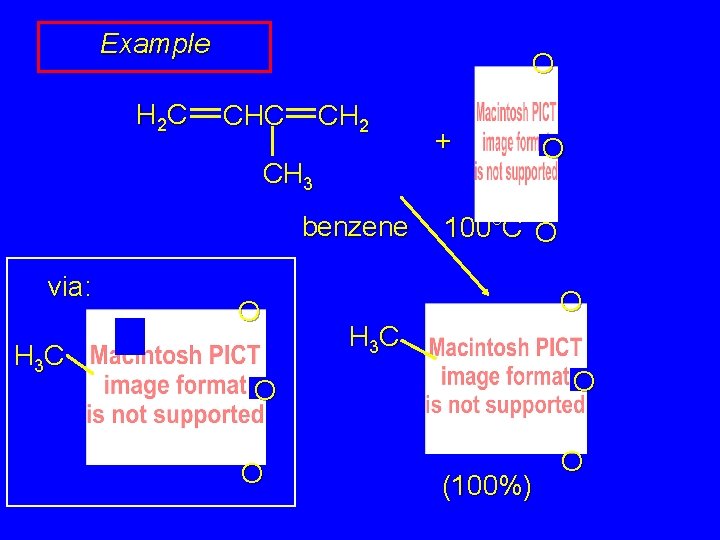
Example H 2 C O CHC CH 2 + CH 3 benzene via: H 3 C O 100°C O O H 3 C O O (100%) O
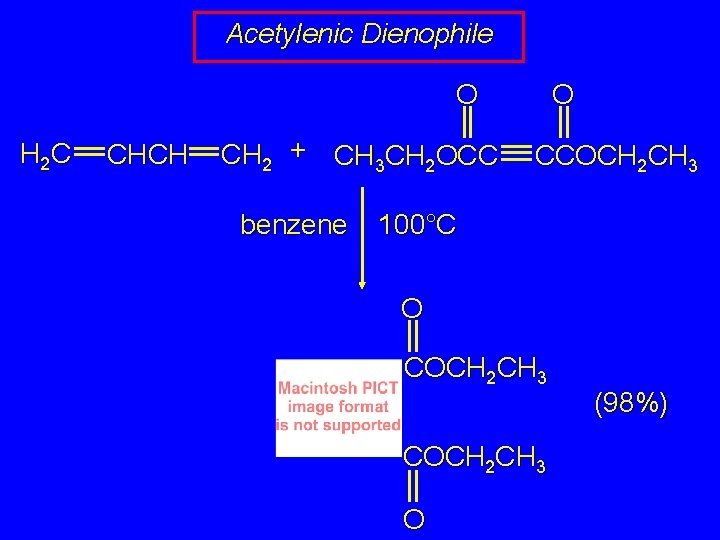
Acetylenic Dienophile O O H 2 C CHCH CH 2 + CH 3 CH 2 OCC benzene CCOCH 2 CH 3 100°C O COCH 2 CH 3 O (98%)
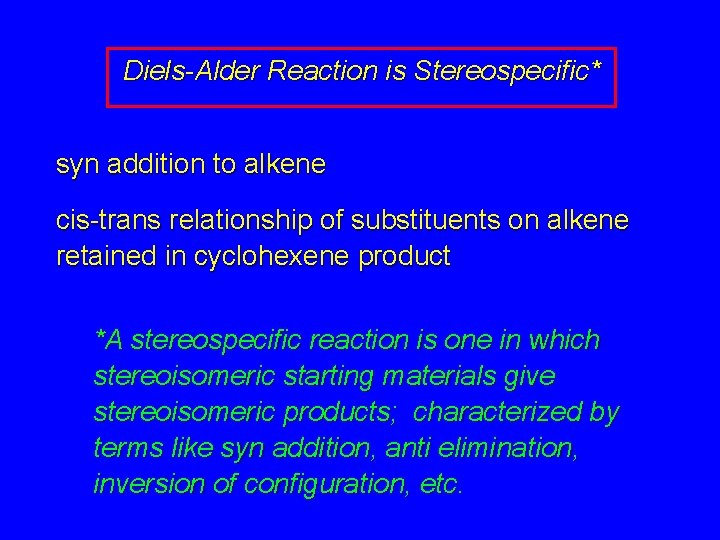
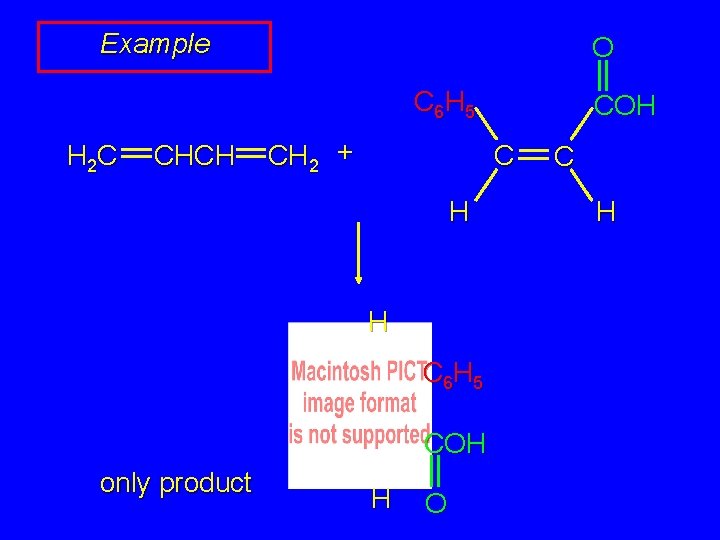
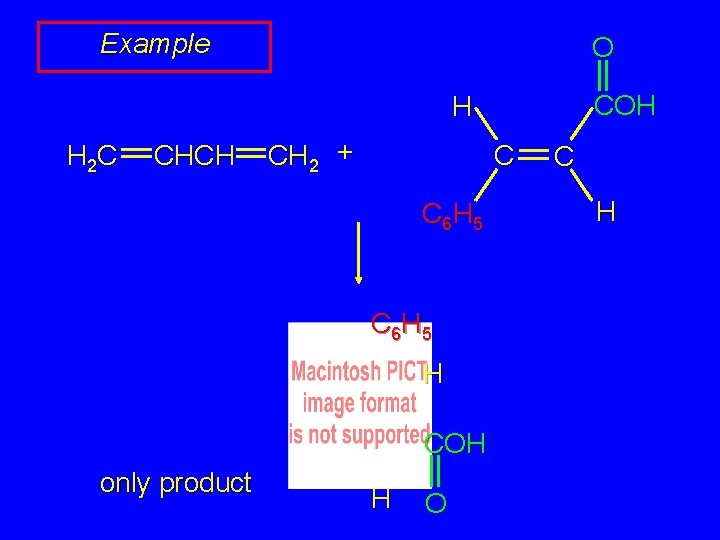
Diels-Alder Reaction is Stereospecific* syn addition to alkene cis-trans relationship of substituents on alkene retained in cyclohexene product *A stereospecific reaction is one in which stereoisomeric starting materials give stereoisomeric products; characterized by terms like syn addition, anti elimination, inversion of configuration, etc.
Example O C 6 H 5 H 2 C CHCH CH 2 + C H H C 6 H 5 COH only product COH H O C H
Example O COH H H 2 C CHCH CH 2 + C C 6 H 5 H COH only product H O C H
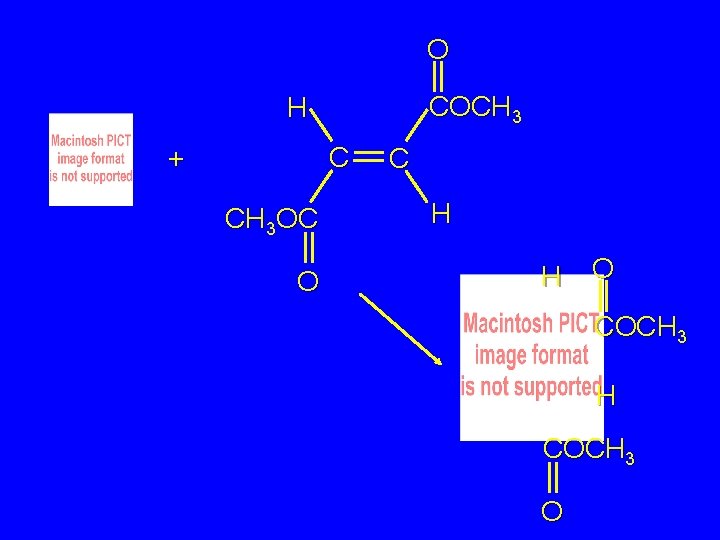
Cyclic dienes yield bridged bicyclic Diels-Alder adducts.
O COCH 3 H C + CH 3 OC O C H H O COCH 3 H COCH 3 O
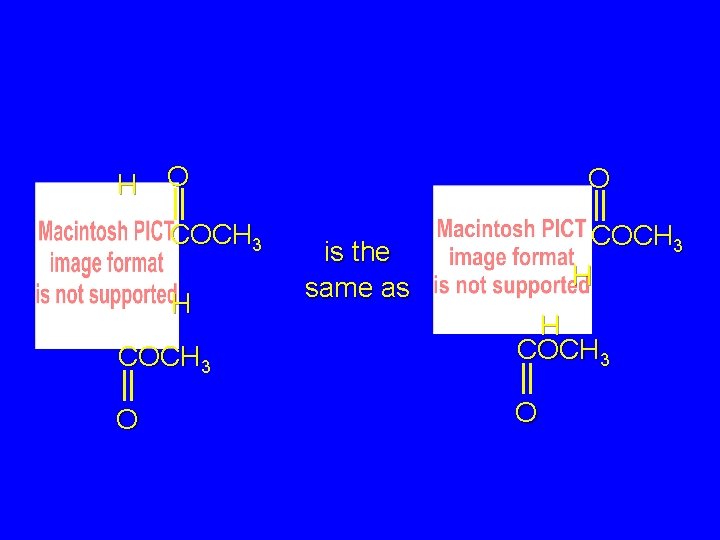
H O COCH 3 H is the same as COCH 3 H COCH 3 O O
10. 13 The p Molecular Orbitals of Ethylene and 1, 3 -Butadiene
Orbitals and Chemical Reactions A deeper understanding of chemical reactivity can be gained by focusing on the frontier orbitals of the reactants. Electrons flow from the highest occupied molecular orbital (HOMO) of one reactant to the lowest unoccupied molecular orbital (LUMO) of the other.
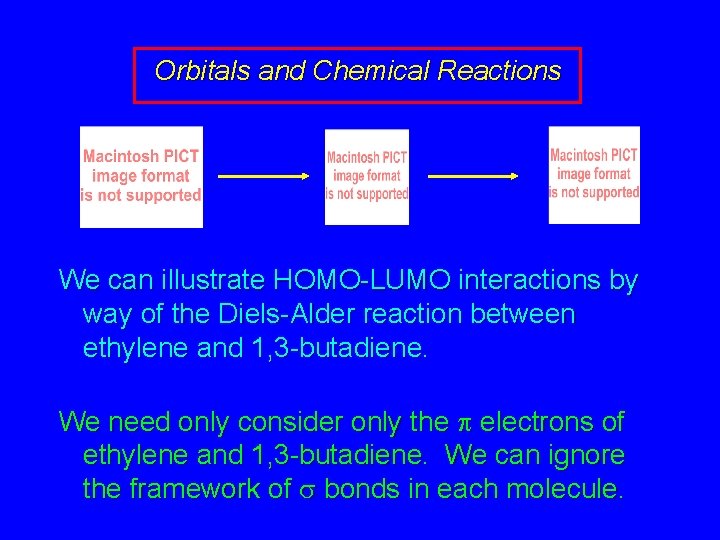
Orbitals and Chemical Reactions We can illustrate HOMO-LUMO interactions by way of the Diels-Alder reaction between ethylene and 1, 3 -butadiene. We need only consider only the p electrons of ethylene and 1, 3 -butadiene. We can ignore the framework of s bonds in each molecule.
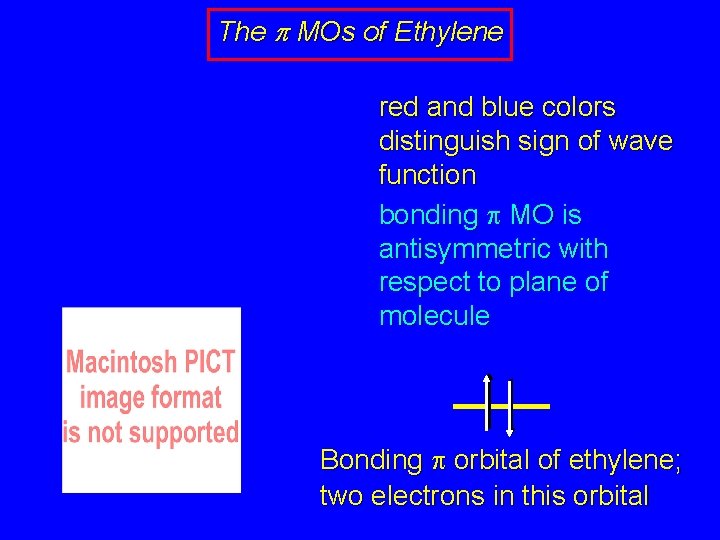
The p MOs of Ethylene red and blue colors distinguish sign of wave function bonding p MO is antisymmetric with respect to plane of molecule Bonding p orbital of ethylene; two electrons in this orbital
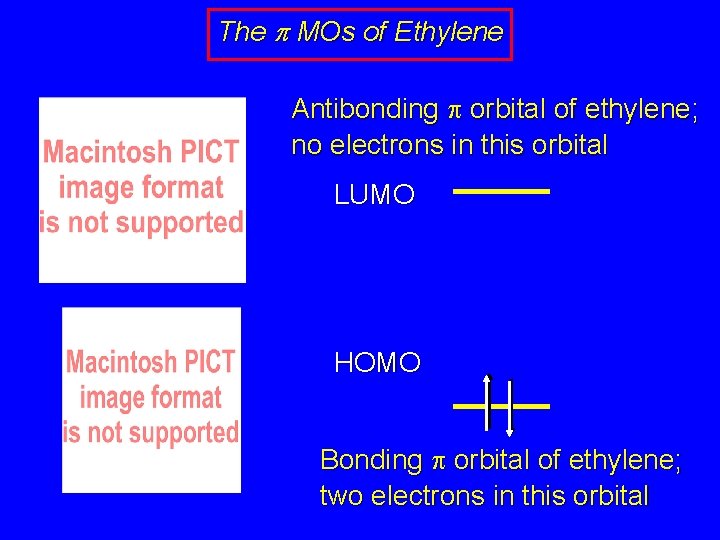
The p MOs of Ethylene Antibonding p orbital of ethylene; no electrons in this orbital LUMO HOMO Bonding p orbital of ethylene; two electrons in this orbital
The p MOs of 1, 3 -Butadiene Four p orbitals contribute to the p system of 1, 3 butadiene; therefore, there are four p molecular orbitals. Two of these orbitals are bonding; two are antibonding.
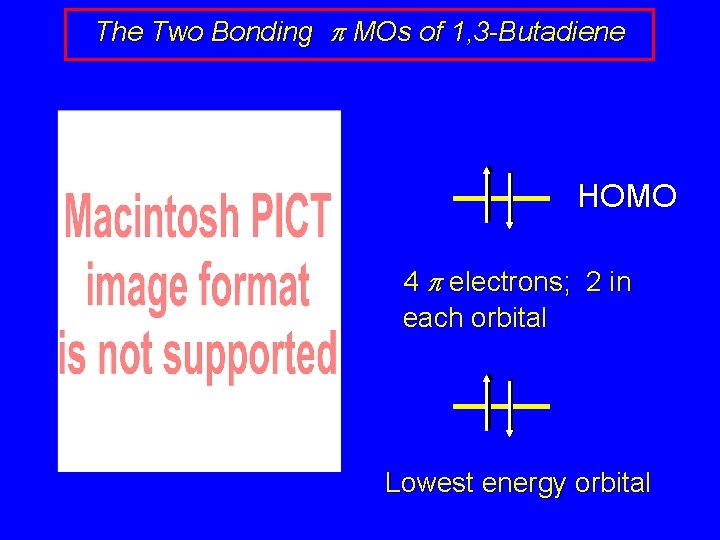
The Two Bonding p MOs of 1, 3 -Butadiene HOMO 4 p electrons; 2 in each orbital Lowest energy orbital
The Two Antibonding p MOs of 1, 3 -Butadiene Highest energy orbital LUMO Both antibonding orbitals are vacant
10. 14 A p Molecular Orbital Analysis of the Diels-Alder Reaction
MO Analysis of Diels-Alder Reaction Inasmuch as electron-withdrawing groups increase the reactivity of a dienophile, we assume electrons flow from the HOMO of the diene to the LUMO of the dienophile.
MO Analysis of Diels-Alder Reaction HOMO of 1, 3 -butadiene and LUMO of ethylene are in phase with one another allows s bond formation between the alkene and the diene LUMO of ethylene (dienophile)
MO Analysis of Diels-Alder Reaction HOMO of 1, 3 -butadiene LUMO of ethylene (dienophile)
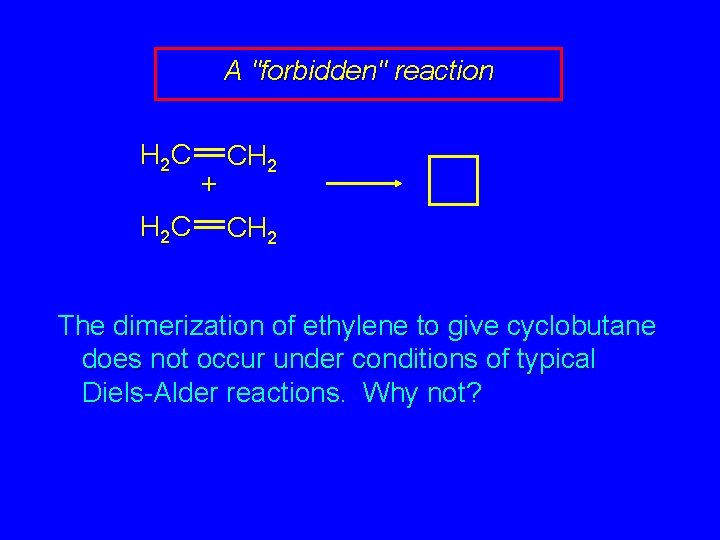
A "forbidden" reaction H 2 C + CH 2 The dimerization of ethylene to give cyclobutane does not occur under conditions of typical Diels-Alder reactions. Why not?
A "forbidden" reaction H 2 C + CH 2 HOMO-LUMO mismatch of two ethylene molecules precludes single-step formation of two new s bonds HOMO of one ethylene molecule LUMO of other ethylene molecule