
10 1 The Solar Neighborhood look at apparent
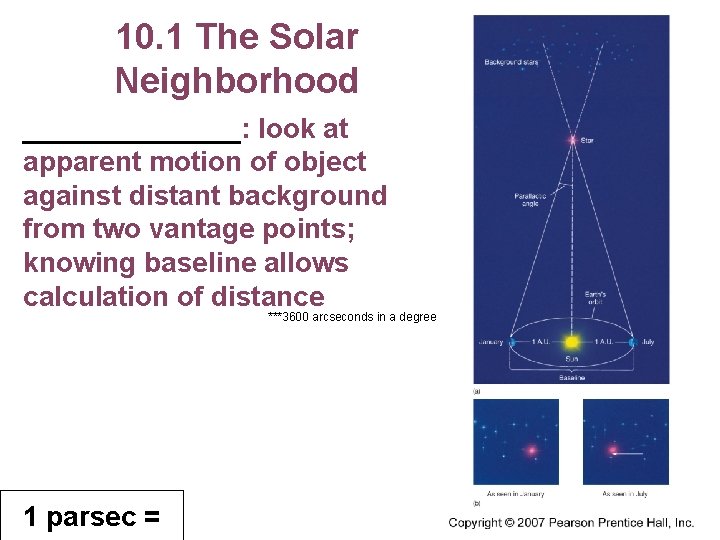
10. 1 The Solar Neighborhood _______: look at apparent motion of object against distant background from two vantage points; knowing baseline allows calculation of distance ***3600 arcseconds in a degree 1 parsec =
10. 1 The Solar Neighborhood Nearest star to the Sun:

10. 1 The Solar Neighborhood proper motion
10. 2 Luminosity and Apparent Brightness _________, or absolute brightness, is a measure of the ______radiated by a star. (We don’t see its luminosity) ___________ is how bright a star appears when viewed from Earth; it depends on the _________but also on the _________of the star:
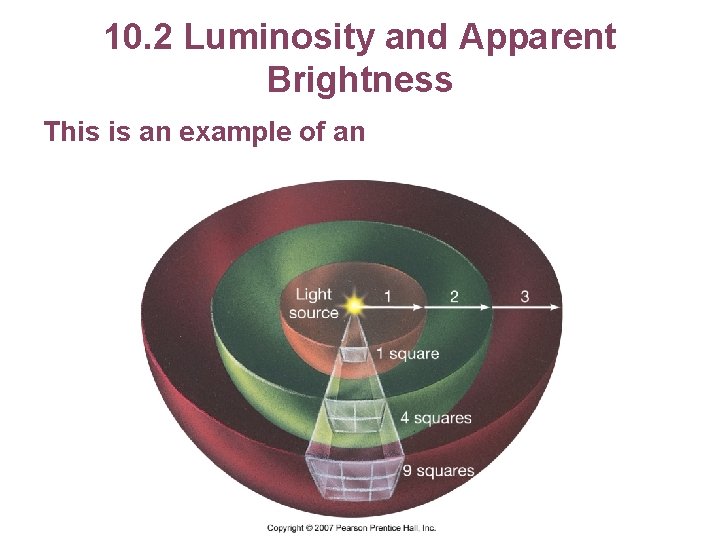
10. 2 Luminosity and Apparent Brightness This is an example of an
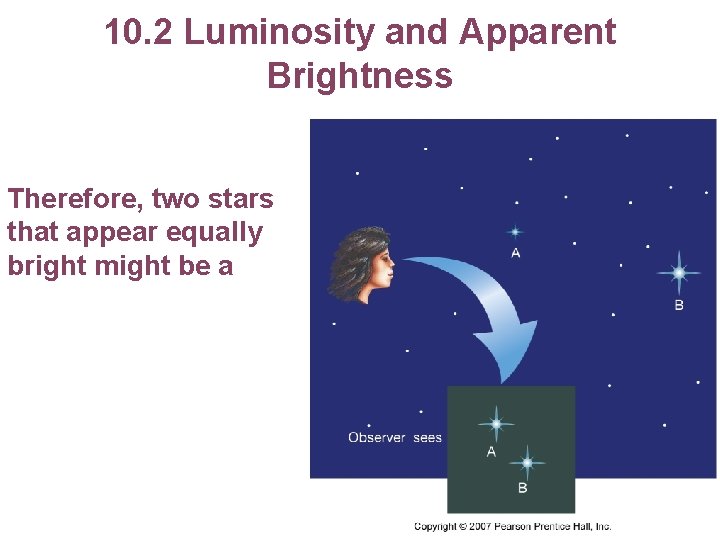
10. 2 Luminosity and Apparent Brightness Therefore, two stars that appear equally bright might be a
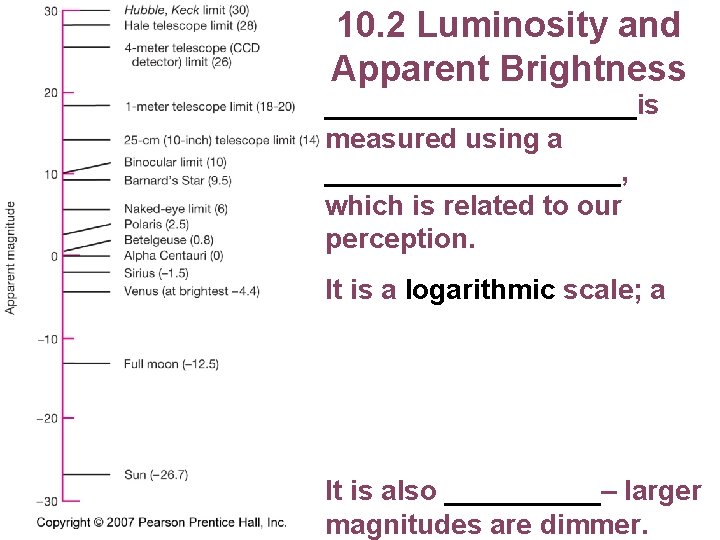
10. 2 Luminosity and Apparent Brightness __________is measured using a __________, which is related to our perception. It is a logarithmic scale; a It is also _____– larger magnitudes are dimmer.
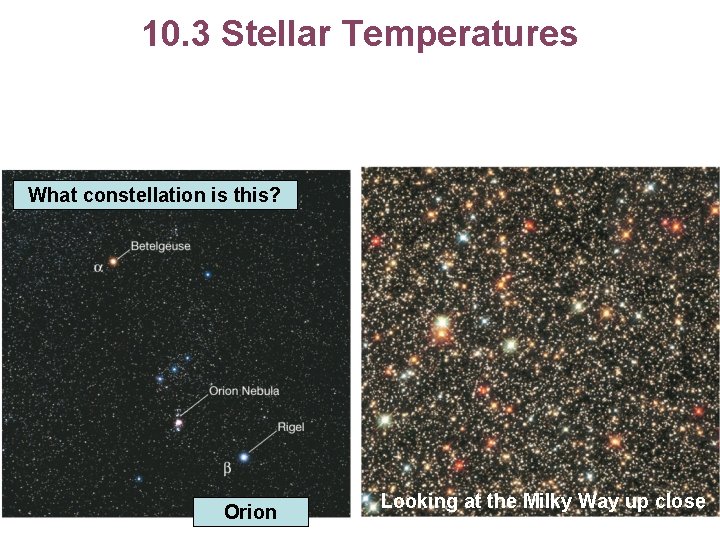
10. 3 Stellar Temperatures What constellation is this? Orion Looking at the Milky Way up close
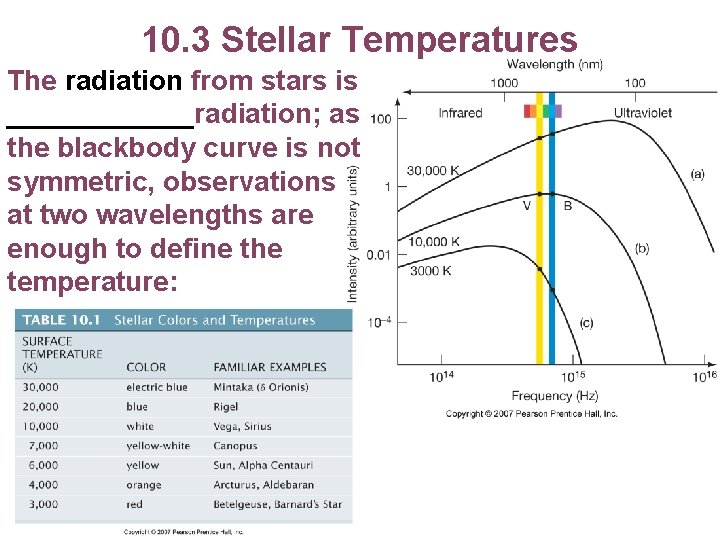
10. 3 Stellar Temperatures The radiation from stars is ______radiation; as the blackbody curve is not symmetric, observations at two wavelengths are enough to define the temperature:
10. 3 Stellar Temperatures _________ are much more informative than the blackbody curves. There are seven general categories of stellar spectra, corresponding to different temperatures. From highest to lowest, those categories are:
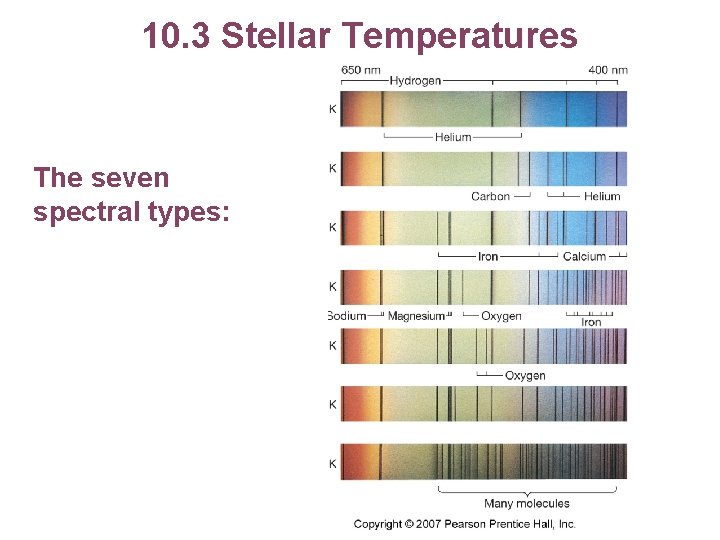
10. 3 Stellar Temperatures The seven spectral types:
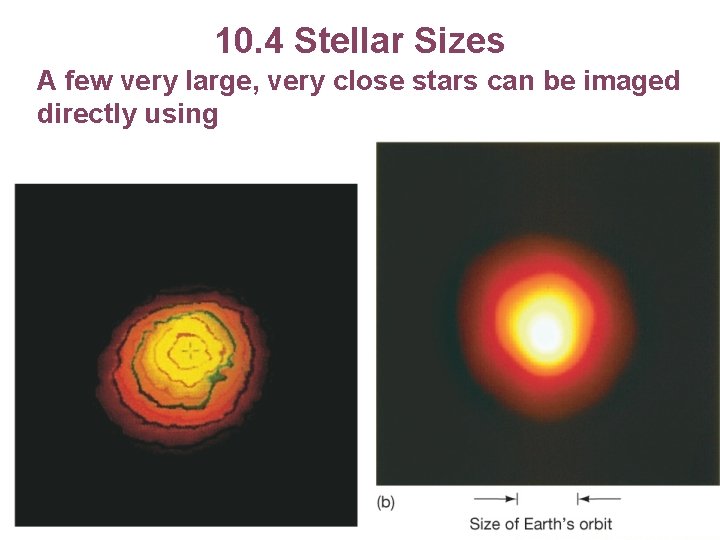
10. 4 Stellar Sizes A few very large, very close stars can be imaged directly using
10. 4 Stellar Sizes For the vast majority of stars that cannot be imaged directly, size must be calculated knowing the Giant stars Dwarf stars Supergiant stars
10. 6 Extending the Cosmic Distance Scale Spectroscopic parallax: Measure the star’s apparent magnitude and spectral class 1. 2.
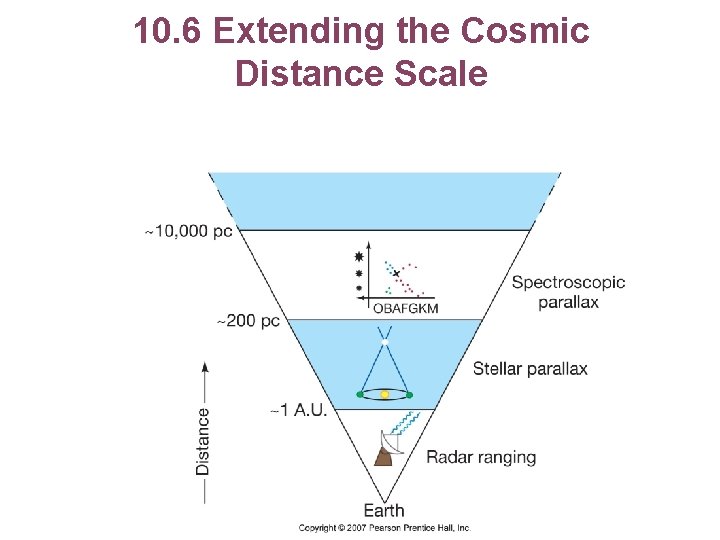
10. 6 Extending the Cosmic Distance Scale
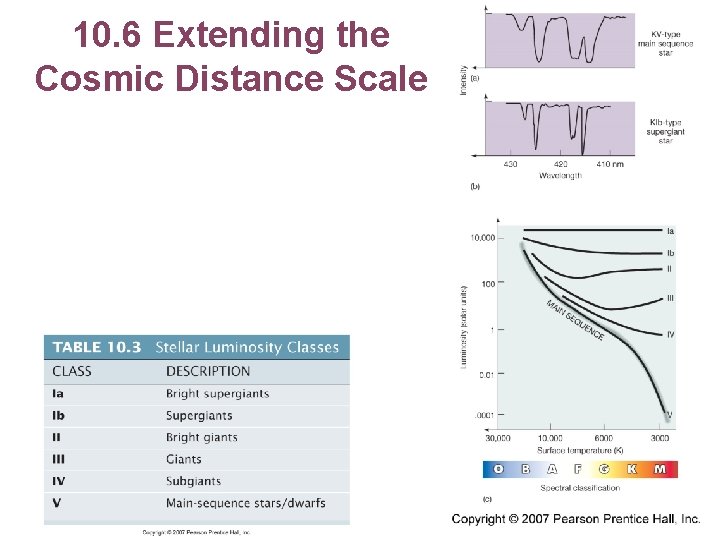
10. 6 Extending the Cosmic Distance Scale
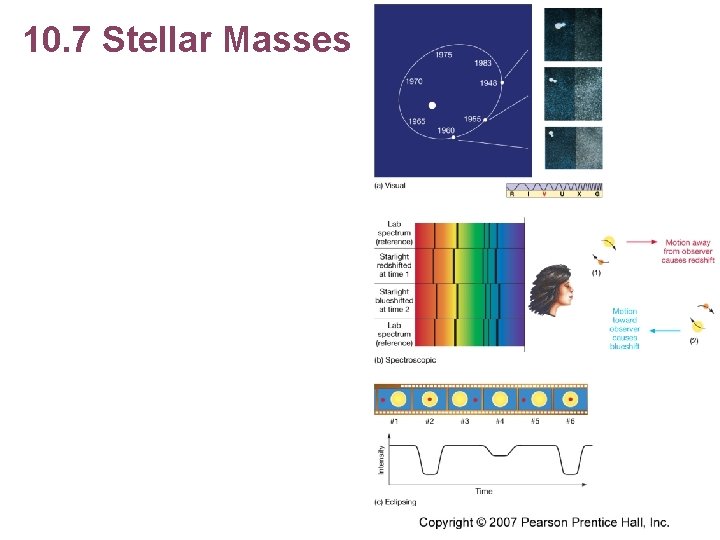
10. 7 Stellar Masses
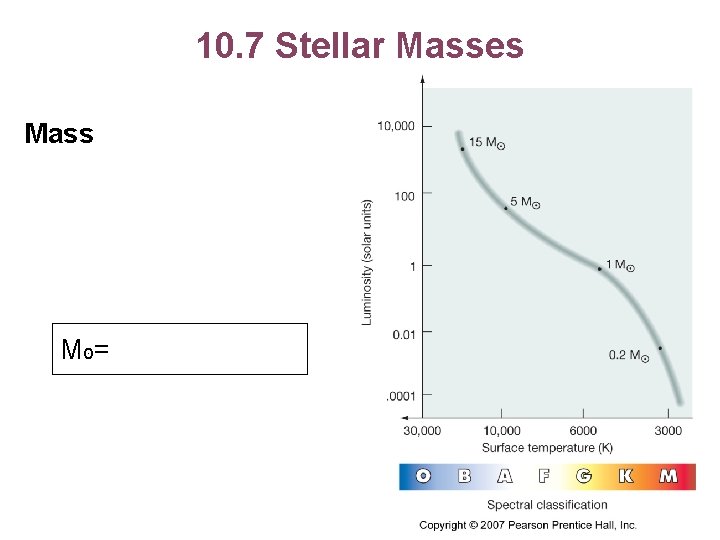
10. 7 Stellar Masses Mass M = סּ
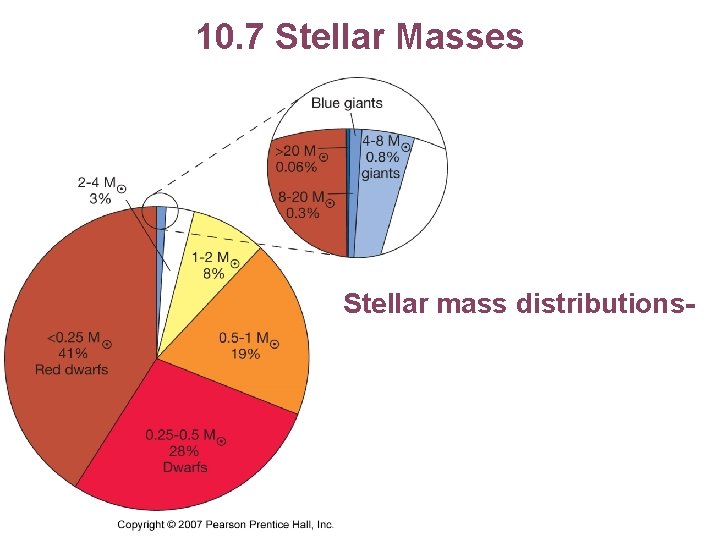
10. 7 Stellar Masses Stellar mass distributions-
Summary of Chapter 10 • •
Summary of Chapter 10 • •
- Slides: 21