
10 1 The History of Voting Rights Voting
![[ 10. 1 ] The History of Voting Rights](https://slidetodoc.com/presentation_image/b8a8f79f22cb5c1897787ec3b21f4350/image-1.jpg "[ 10. 1 ] The History of Voting Rights")
![[ 10. 2 ] Your Right to Vote](https://slidetodoc.com/presentation_image/b8a8f79f22cb5c1897787ec3b21f4350/image-19.jpg "[ 10. 2 ] Your Right to Vote")
- Slides: 28
[ 10. 1 ] The History of Voting Rights
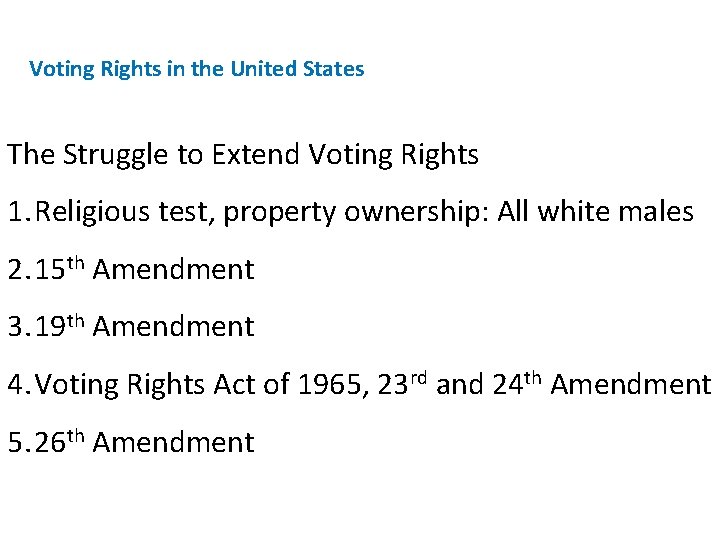
Voting Rights in the United States The Struggle to Extend Voting Rights 1. Religious test, property ownership: All white males 2. 15 th Amendment 3. 19 th Amendment 4. Voting Rights Act of 1965, 23 rd and 24 th Amendment 5. 26 th Amendment
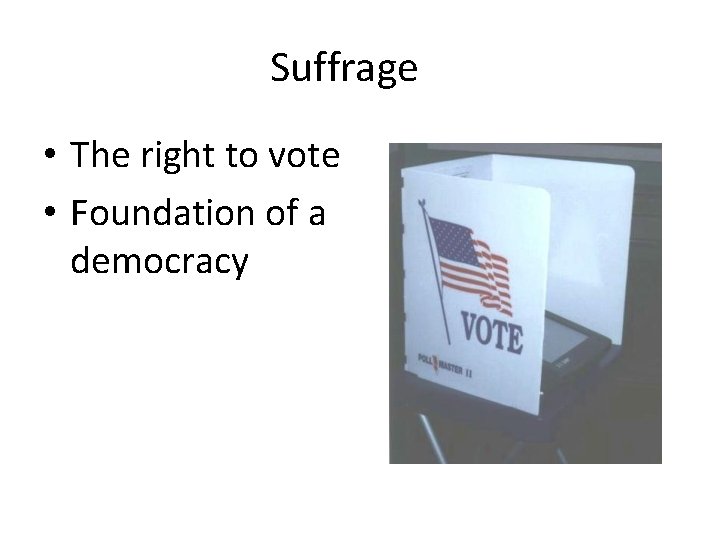
Suffrage • The right to vote • Foundation of a democracy
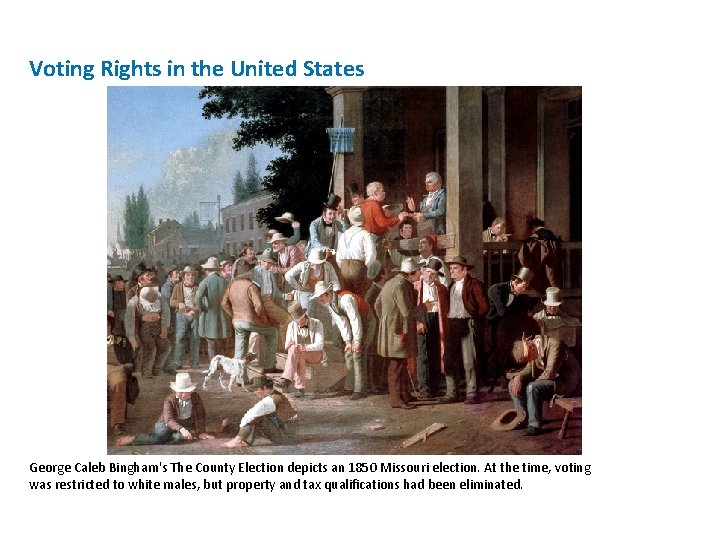
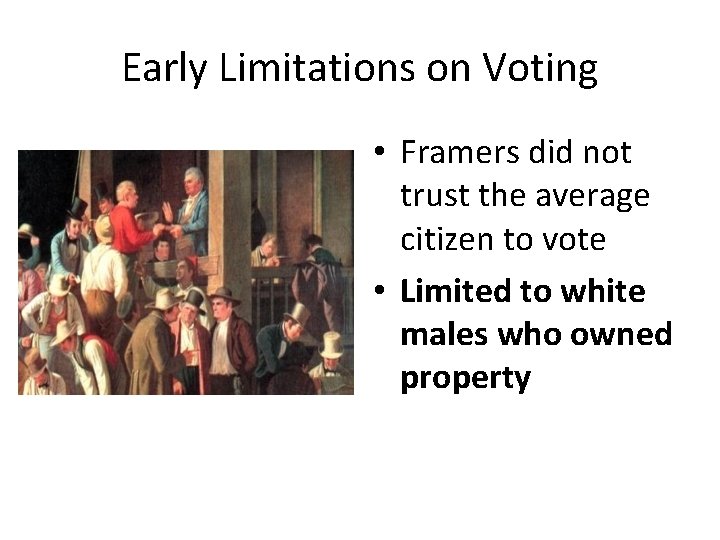
Voting Rights in the United States George Caleb Bingham's The County Election depicts an 1850 Missouri election. At the time, voting was restricted to white males, but property and tax qualifications had been eliminated.
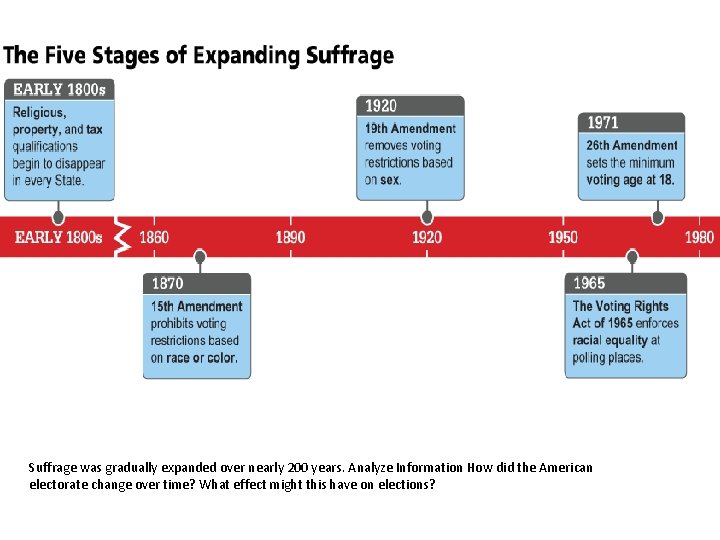
Voting Rights in the United States Suffrage was gradually expanded over nearly 200 years. Analyze Information How did the American electorate change over time? What effect might this have on elections?
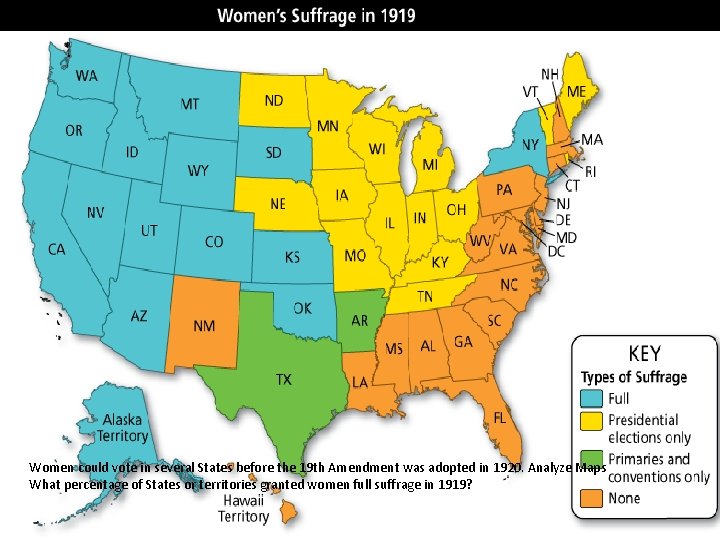
Voting Rights in the United States Women could vote in several States before the 19 th Amendment was adopted in 1920. Analyze Maps What percentage of States or territories granted women full suffrage in 1919?
Early Limitations on Voting • Framers did not trust the average citizen to vote • Limited to white males who owned property
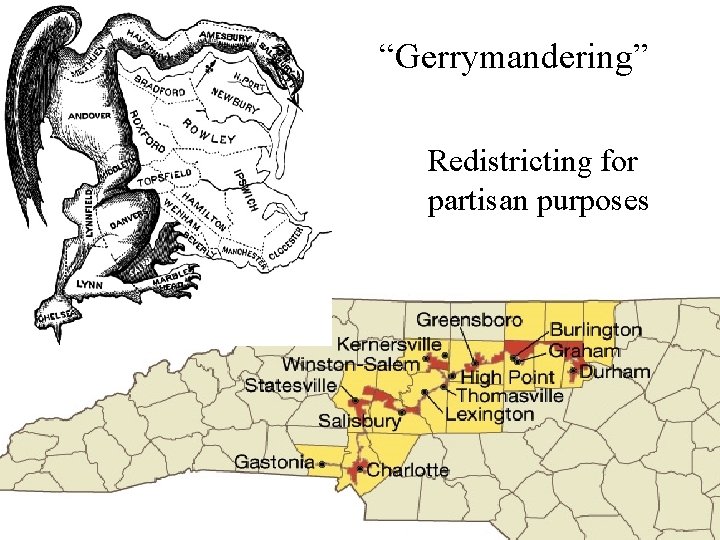
“Gerrymandering” Redistricting for partisan purposes
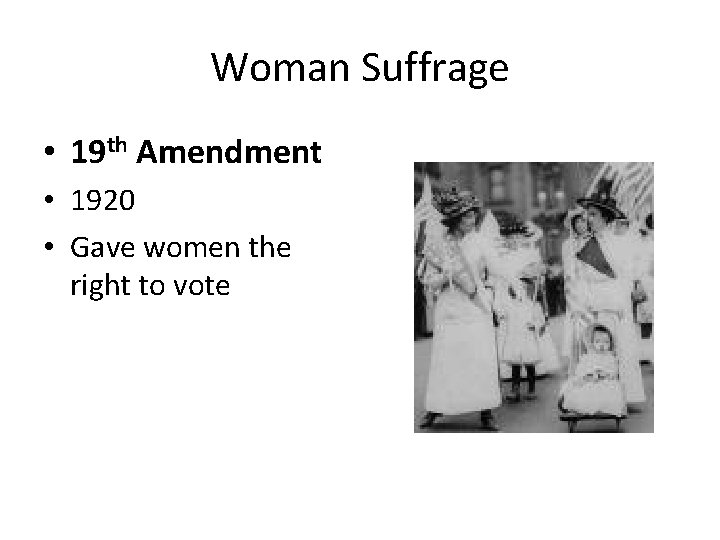
Woman Suffrage • 19 th Amendment • 1920 • Gave women the right to vote
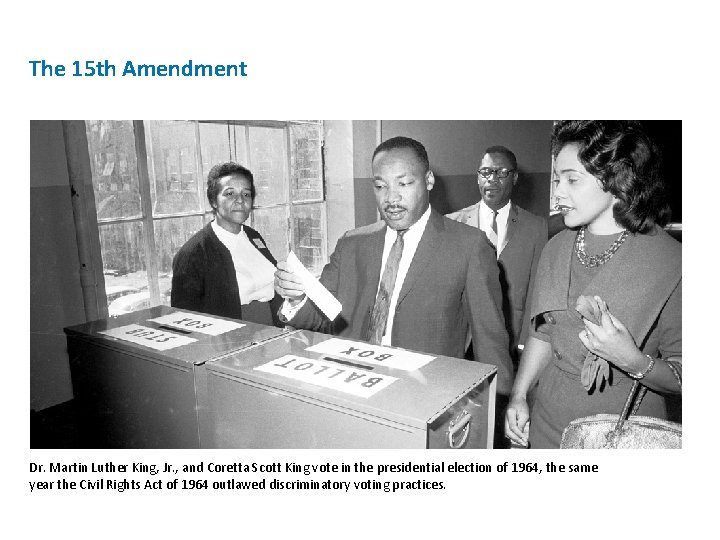
The 15 th Amendment Dr. Martin Luther King, Jr. , and Coretta Scott King vote in the presidential election of 1964, the same year the Civil Rights Act of 1964 outlawed discriminatory voting practices.
African American Suffrage • 15 th Amendment • 1870—Civil War amendment • No person could be denied the right to vote on account of race • First time national govt. set rules for voting, a power once only the states had
Civil Rights Acts of 1957, 1960, and 1964 • 1957 and 1960 • Created US Commission on Civil Rights • Gave Attorney General the right to seek court orders to prevent interference with the right to vote • The Civil Rights Act of 1964 • Outlaws job discrimination • Forbids the use of literacy tests • Injunction- court order that compels/restrain the actions of a private/public individual
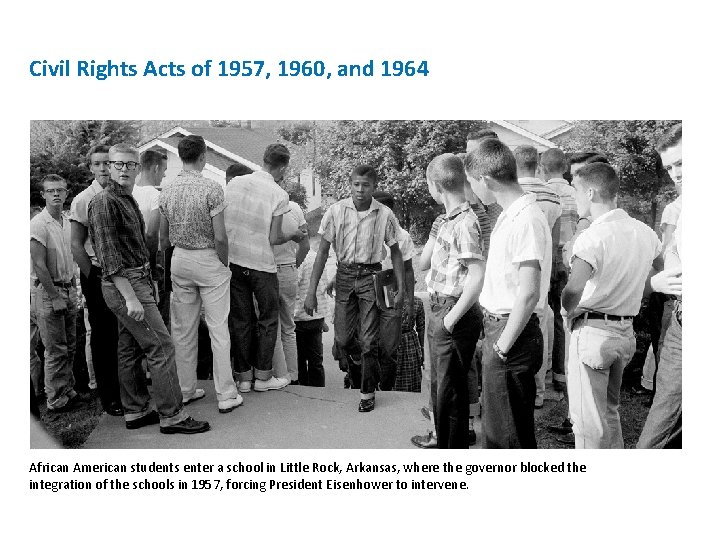
Civil Rights Acts of 1957, 1960, and 1964 African American students enter a school in Little Rock, Arkansas, where the governor blocked the integration of the schools in 1957, forcing President Eisenhower to intervene.
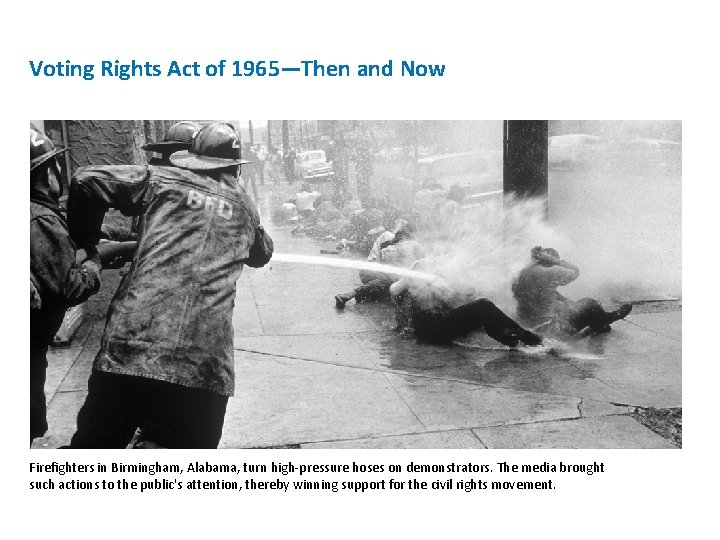
Voting Rights Act of 1965—Then and Now Firefighters in Birmingham, Alabama, turn high-pressure hoses on demonstrators. The media brought such actions to the public's attention, thereby winning support for the civil rights movement.
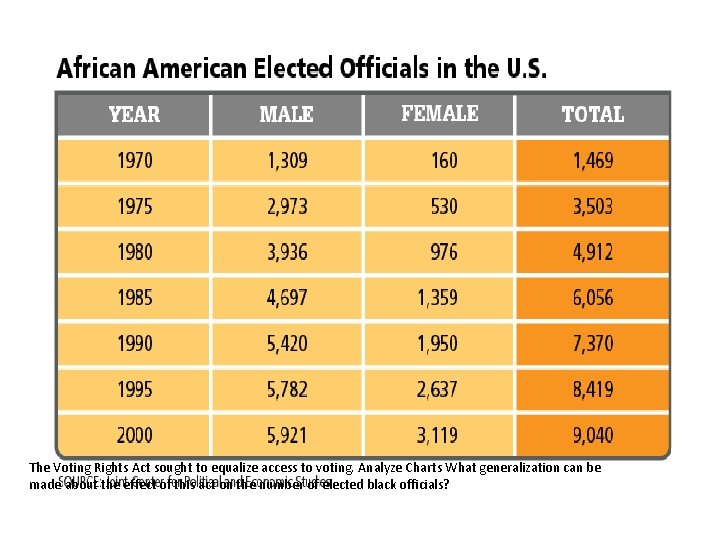
Voting Rights Act of 1965—Then and Now The Voting Rights Act sought to equalize access to voting. Analyze Charts What generalization can be made about the effect of this act on the number of elected black officials?
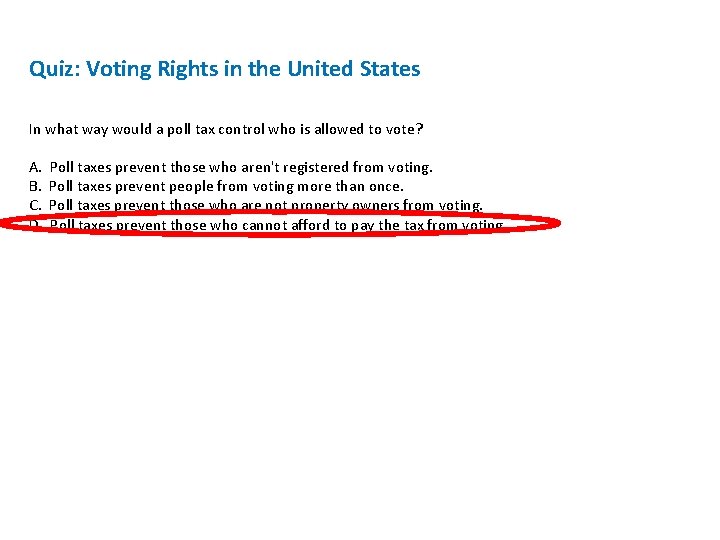
Quiz: Voting Rights in the United States In what way would a poll tax control who is allowed to vote? A. B. C. D. Poll taxes prevent those who aren't registered from voting. Poll taxes prevent people from voting more than once. Poll taxes prevent those who are not property owners from voting. Poll taxes prevent those who cannot afford to pay the tax from voting.
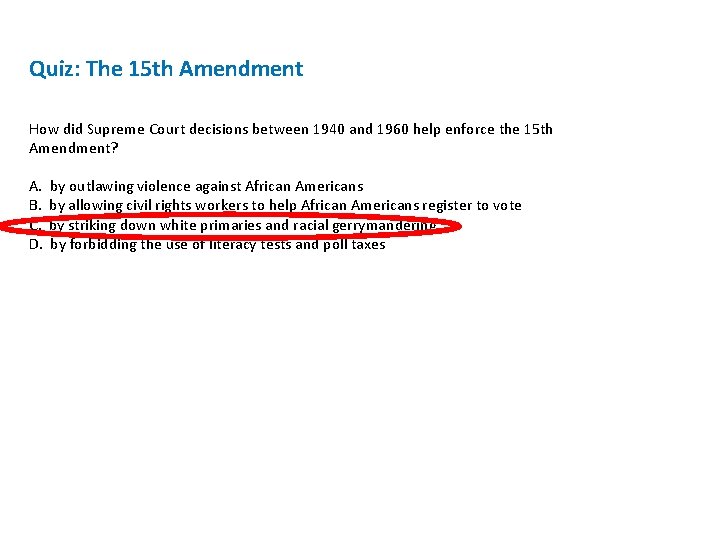
Quiz: The 15 th Amendment How did Supreme Court decisions between 1940 and 1960 help enforce the 15 th Amendment? A. B. C. D. by outlawing violence against African Americans by allowing civil rights workers to help African Americans register to vote by striking down white primaries and racial gerrymandering by forbidding the use of literacy tests and poll taxes
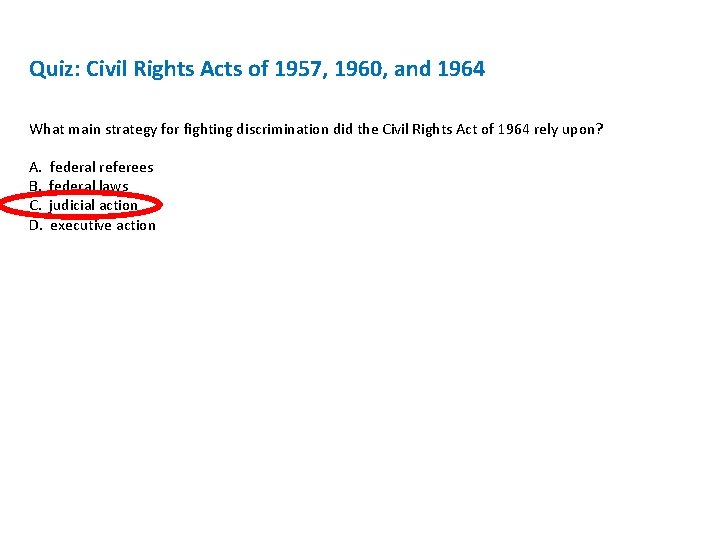
Quiz: Civil Rights Acts of 1957, 1960, and 1964 What main strategy for fighting discrimination did the Civil Rights Act of 1964 rely upon? A. B. C. D. federal referees federal laws judicial action executive action
[ 10. 2 ] Your Right to Vote
Universal Criteria for Voting • Citizenship Criteria • Residence Criteria- prevent “traveling voters” • Laws and Court Actions- 30 days • 26 th Amendment • The Youth Vote- more or less likely?
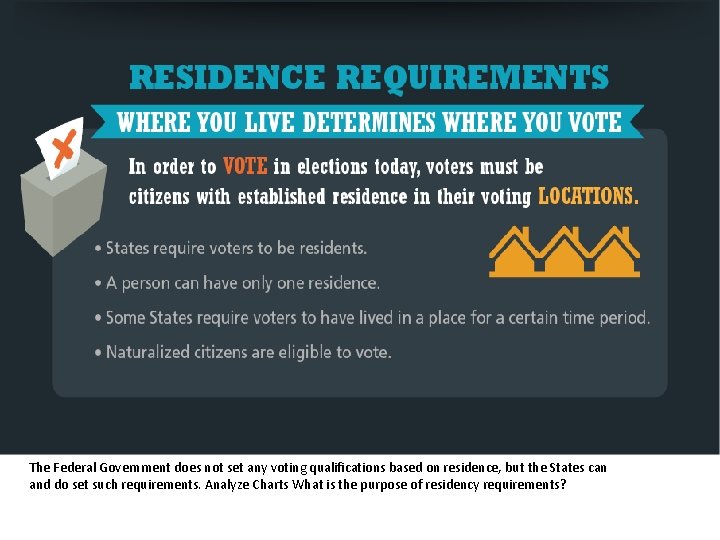
Universal Criteria for Voting The Federal Government does not set any voting qualifications based on residence, but the States can and do set such requirements. Analyze Charts What is the purpose of residency requirements?
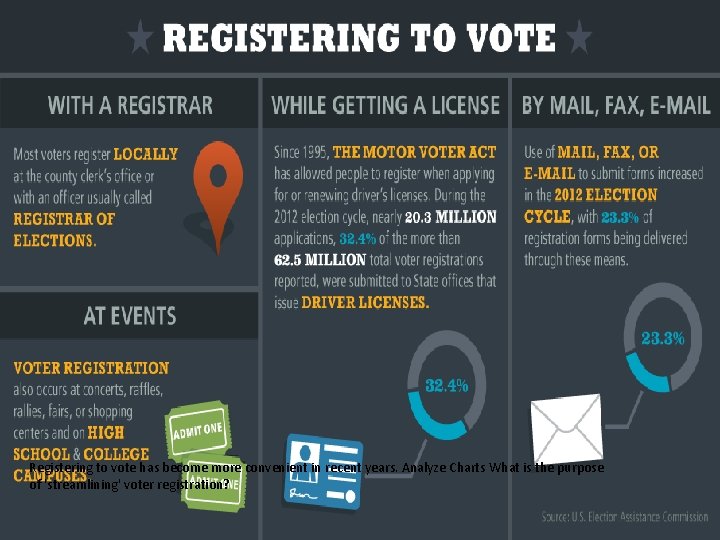
The Voter Registration Process • Registration Requirements- match with residency requirement • Controversies Surrounding Registration- should there be a registration? • Motor Voter law • Not purged for failure to vote • Voter ID Laws
The Voter Registration Process Registering to vote has become more convenient in recent years. Analyze Charts What is the purpose of 'streamlining' voter registration?
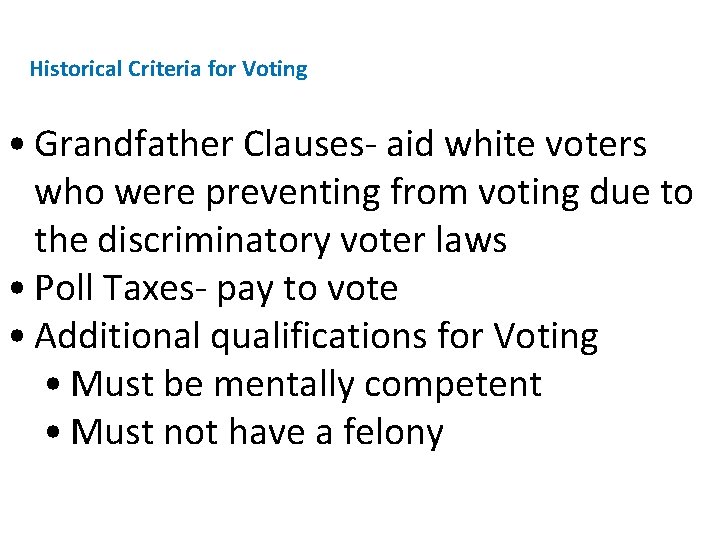
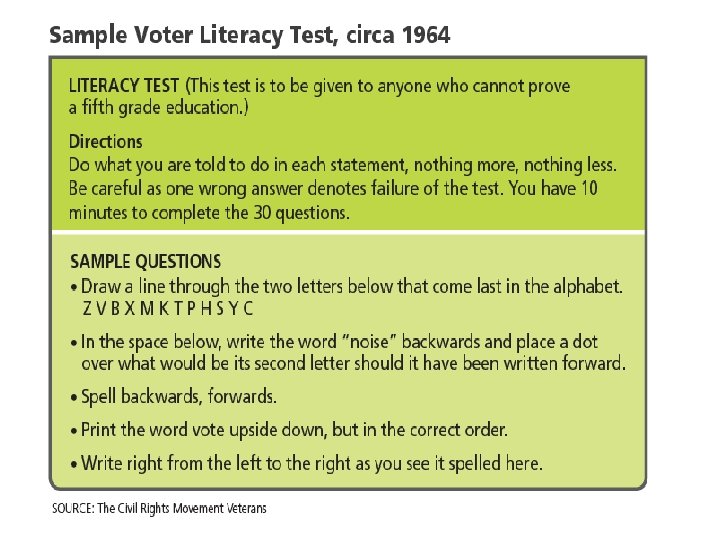
Historical Criteria for Voting • Grandfather Clauses- aid white voters who were preventing from voting due to the discriminatory voter laws • Poll Taxes- pay to vote • Additional qualifications for Voting • Must be mentally competent • Must not have a felony
Historical Criteria for Voting
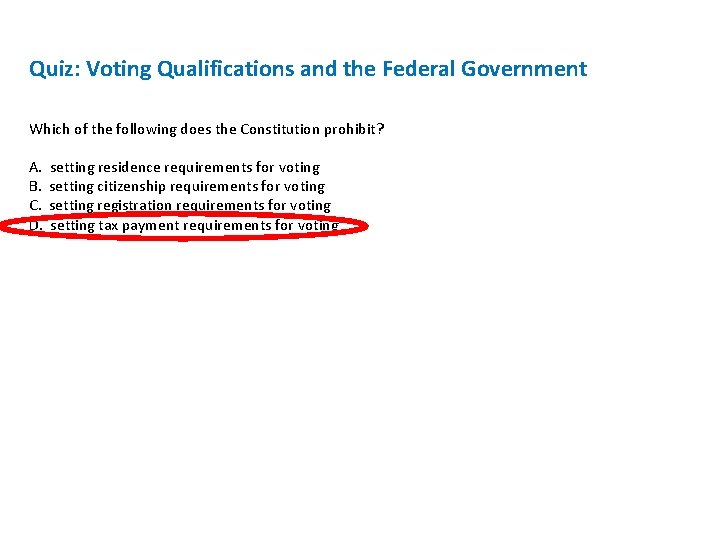
Quiz: Voting Qualifications and the Federal Government Which of the following does the Constitution prohibit? A. B. C. D. setting residence requirements for voting setting citizenship requirements for voting setting registration requirements for voting setting tax payment requirements for voting
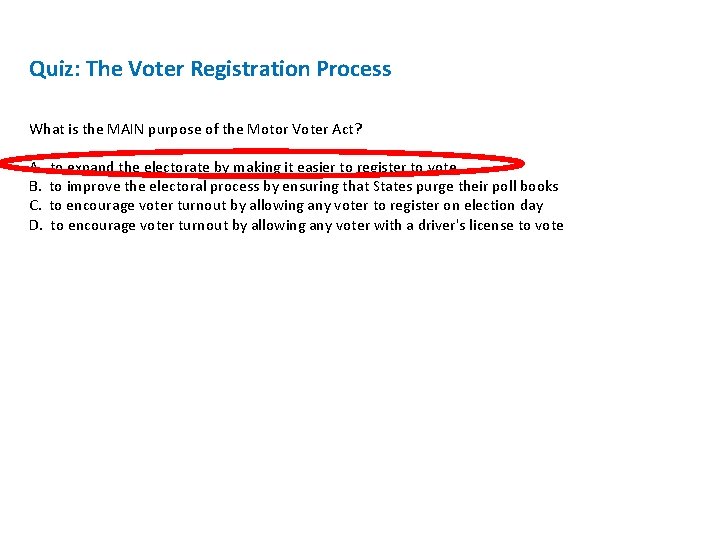
Quiz: The Voter Registration Process What is the MAIN purpose of the Motor Voter Act? A. B. C. D. to expand the electorate by making it easier to register to vote to improve the electoral process by ensuring that States purge their poll books to encourage voter turnout by allowing any voter to register on election day to encourage voter turnout by allowing any voter with a driver's license to vote
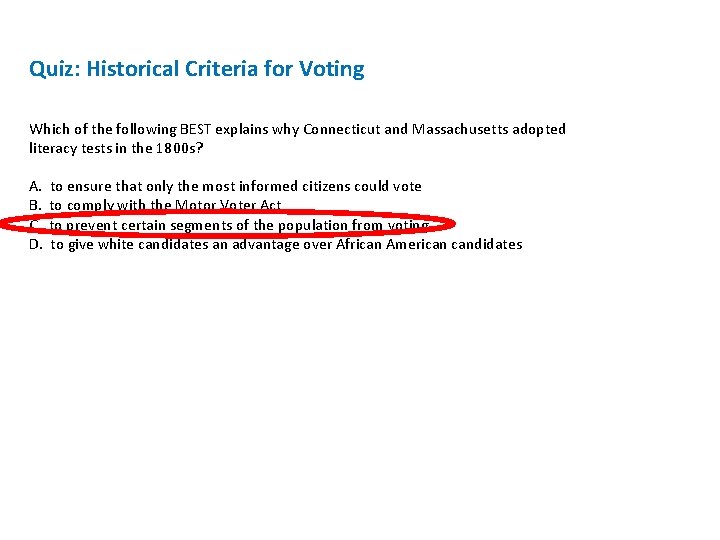
Quiz: Historical Criteria for Voting Which of the following BEST explains why Connecticut and Massachusetts adopted literacy tests in the 1800 s? A. B. C. D. to ensure that only the most informed citizens could vote to comply with the Motor Voter Act to prevent certain segments of the population from voting to give white candidates an advantage over African American candidates