
10 1 Money 3 Uses of Money Medium
- Slides: 10
10. 1 - Money
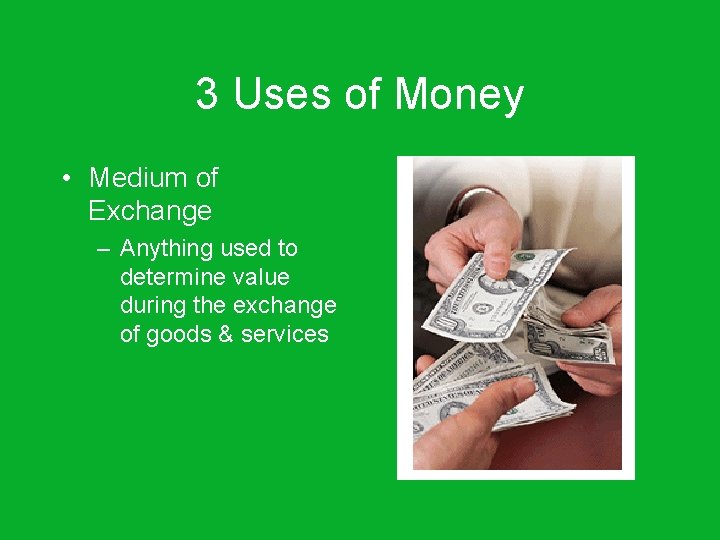
3 Uses of Money • Medium of Exchange – Anything used to determine value during the exchange of goods & services
3 uses cont’d • Unit of Account – Provides a means for comparing the values of different goods & services – Allows for ‘bargain shopping’
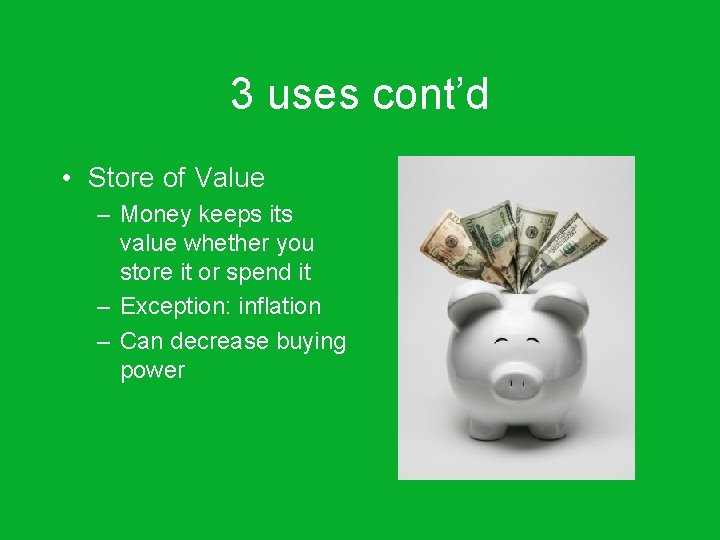
3 uses cont’d • Store of Value – Money keeps its value whether you store it or spend it – Exception: inflation – Can decrease buying power
6 Characteristics of Money (currency) • Durability – Must hold up to wear and tear – Rag content of paper bills can last at least one year • Divisibility – Must be easily divided into smaller denominations – Ex. $1, $5, $10…
6 Characteristics cont’d • Portability – Easy to carry with you – Easy to transfer to others • Uniformity – Must be able to count and measure money accurately – Ex. using dried fish as currency (instead of $1 bill)
6 Characteristics cont’d • Limited Supply – U. S. money supply controlled by Federal Reserve System – Tracks/allows just right amount of currency into circulation • Acceptability – Value lies in acceptance by many people
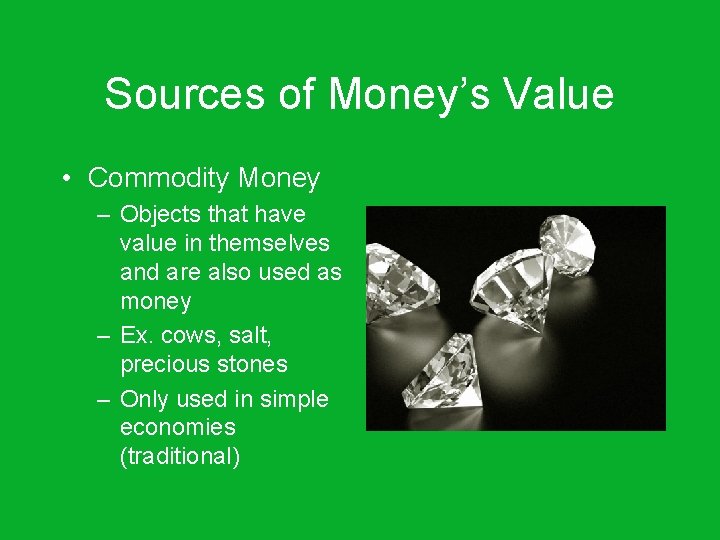
Sources of Money’s Value • Commodity Money – Objects that have value in themselves and are also used as money – Ex. cows, salt, precious stones – Only used in simple economies (traditional)
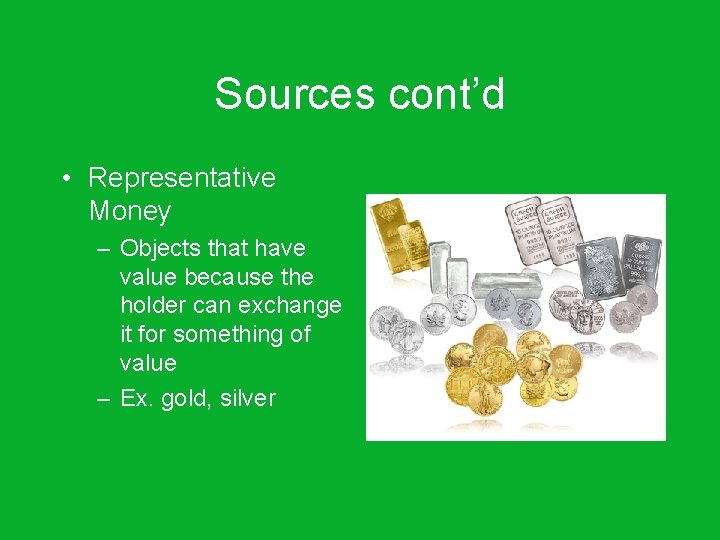
Sources cont’d • Representative Money – Objects that have value because the holder can exchange it for something of value – Ex. gold, silver
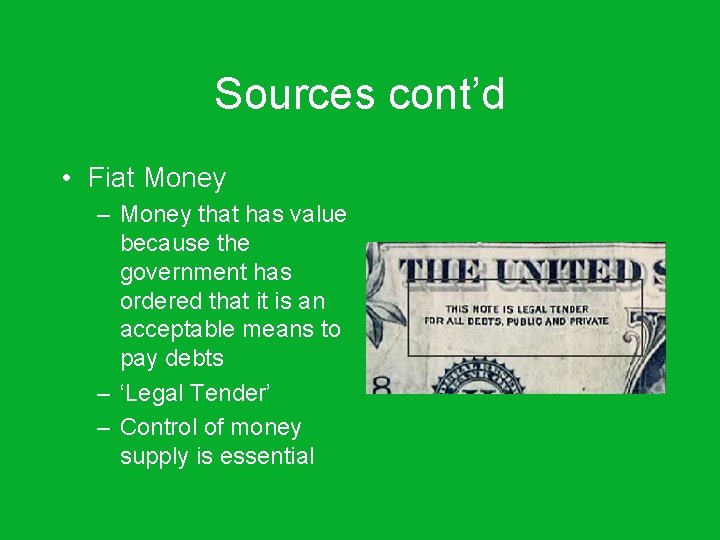
Sources cont’d • Fiat Money – Money that has value because the government has ordered that it is an acceptable means to pay debts – ‘Legal Tender’ – Control of money supply is essential