
10 1 Meiosis How do the daughter cells
- Slides: 27
10 -1 Meiosis
How do the daughter cells formed during meiosis relate to the original parent cell? Journal
§Human body cells have 46 chromosomes § Each parent contributes 23 chromosomes Chromosomes and Chromosome Number
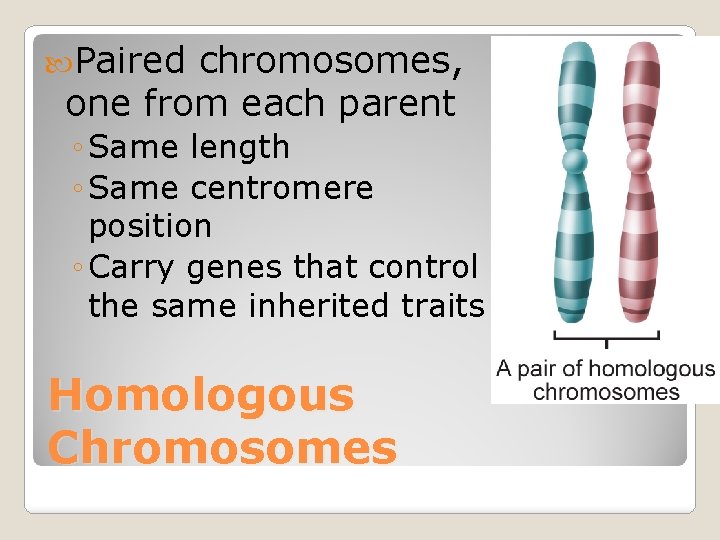
Paired chromosomes, one from each parent ◦ Same length ◦ Same centromere position ◦ Carry genes that control the same inherited traits Homologous Chromosomes
Gametes – sex cells that have half the number of chromosomes Human gametes contain 23 chromosomes. A cell with n chromosomes is called a haploid cell. A cell that contains 2 n chromosomes is called a diploid cell. Haploid and Diploid Cells
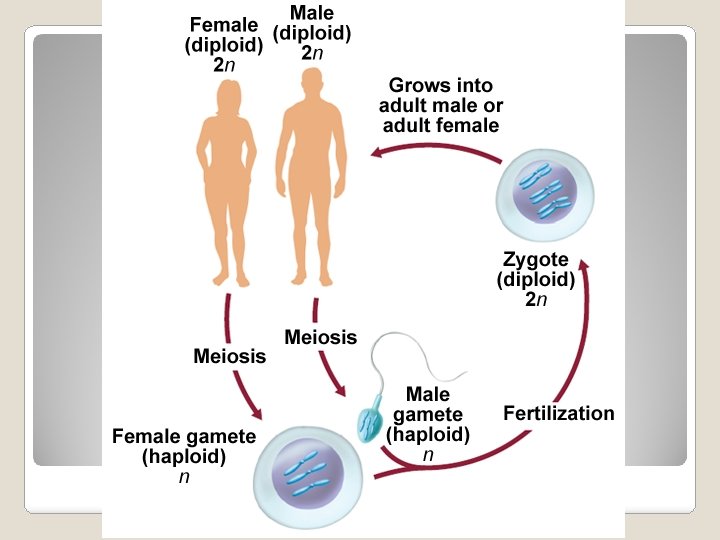
A type of cell division that reduces the number of chromosomes Occurs in reproductive structures of organisms that reproduce sexually Produces gametes. When gametes combine in fertilization, the number of chromosomes is restored. Meiosis
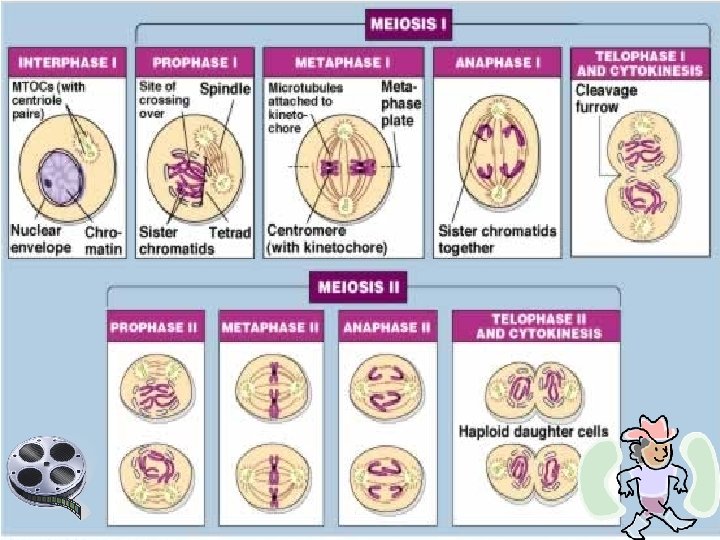
Meiosis consists of two sets of divisions Produces four haploid daughter cells that are not identical Results in genetic variation The Importance of Meiosis
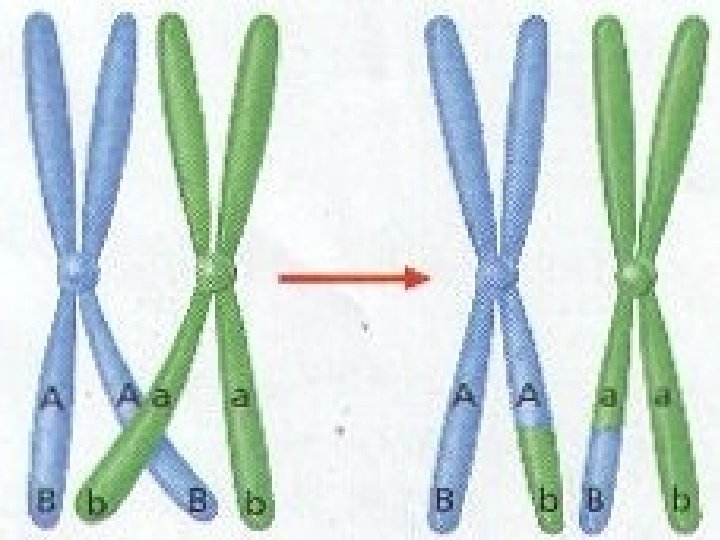
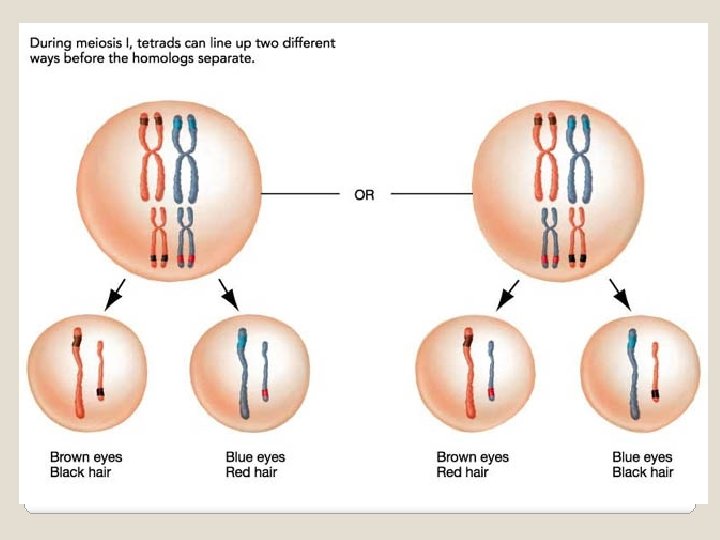
1. Crossing-Over – Portions of a chromatid from one homologous chromosome cross over to one of the chromatids of the corresponding homologous chromosome 2. Independent Assortment – Random distribution of homologous chromosomes 3. Random Fertilization – Random joining of sperm with egg Contributes to Genetic Variation
64 trillion possible outcomes!! What is the result of all this?
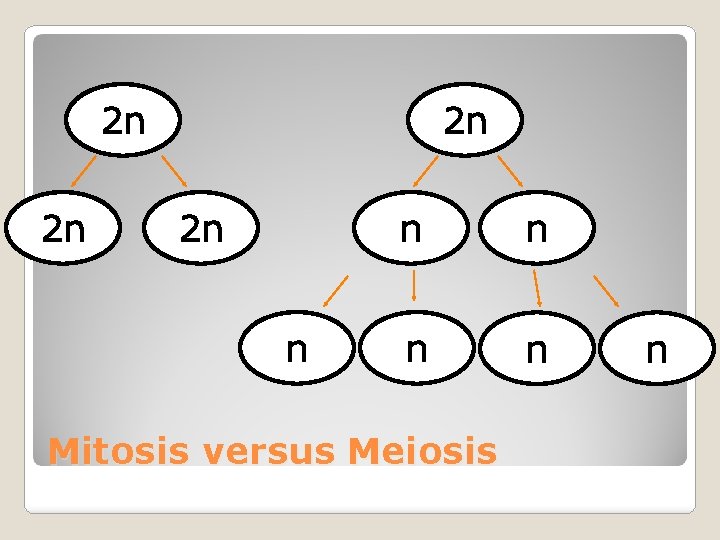
2 n 2 n n n n Mitosis versus Meiosis n
Use Page 275 in your textbook to complete the Mitosis and Meiosis comparison table Mitosis vs. Meiosis
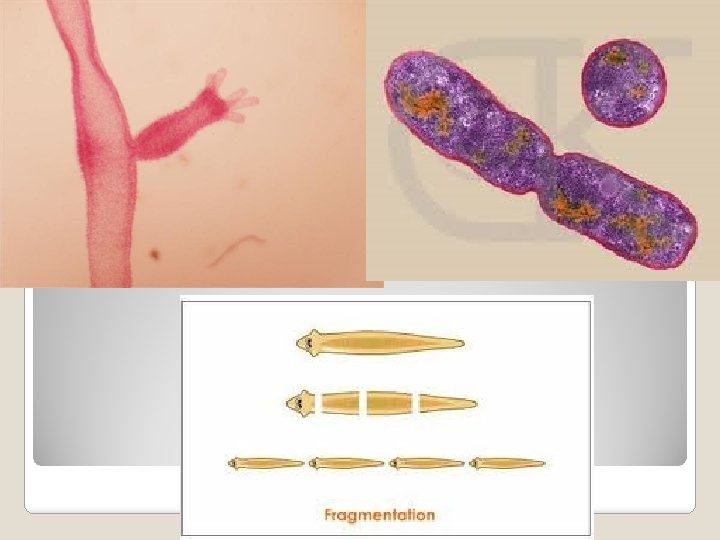
Asexual – single parent passes all of its genes to its offspring; offspring is identical to parent Example) binary fission, fragmentation, budding, mitosis Sexual – two parents each form haploid reproductive cells, which join to form offspring = offspring is similar to, but NOT identical to either parent Types of Reproduction
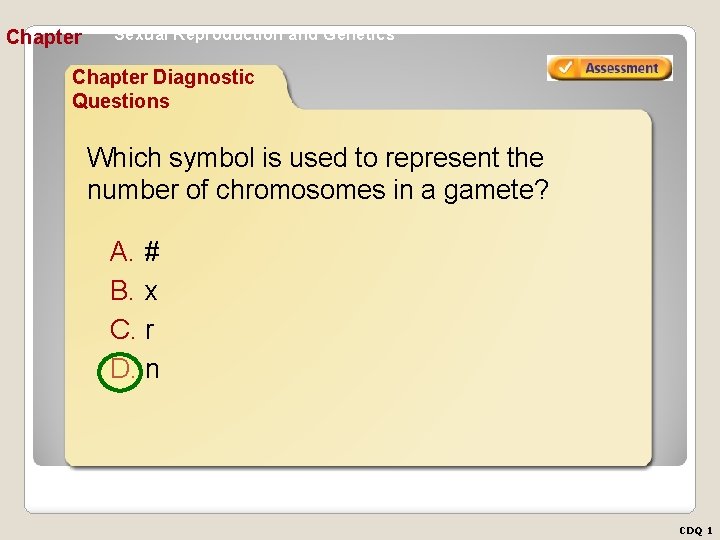
Chapter Sexual Reproduction and Genetics Chapter Diagnostic Questions Which symbol is used to represent the number of chromosomes in a gamete? A. # B. x C. r D. n 1. 2. 3. 4. A B C D CDQ 1
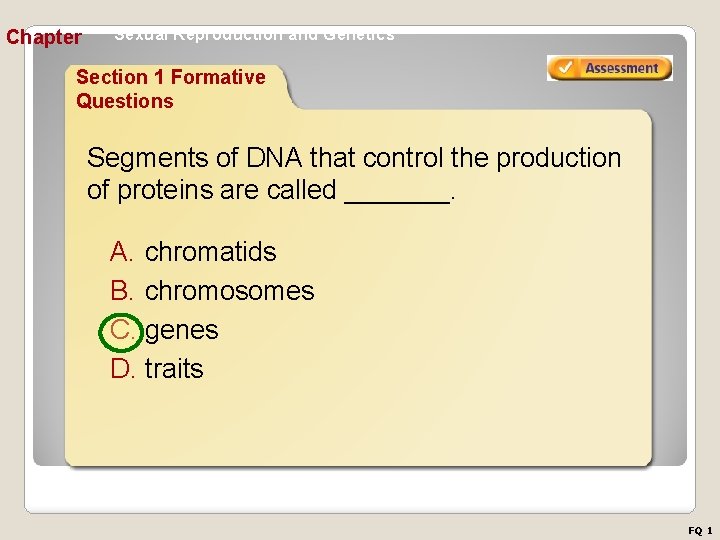
Chapter Sexual Reproduction and Genetics Section 1 Formative Questions Segments of DNA that control the production of proteins are called _______. A. chromatids B. chromosomes C. genes D. traits 1. 2. 3. 4. A B C D FQ 1
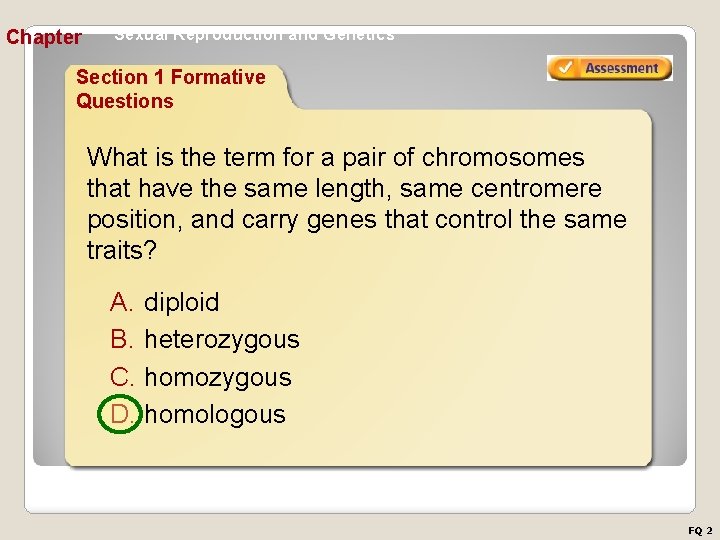
Chapter Sexual Reproduction and Genetics Section 1 Formative Questions What is the term for a pair of chromosomes that have the same length, same centromere position, and carry genes that control the same traits? A. diploid B. heterozygous C. homozygous D. homologous 1. 2. 3. 4. A B C D FQ 2
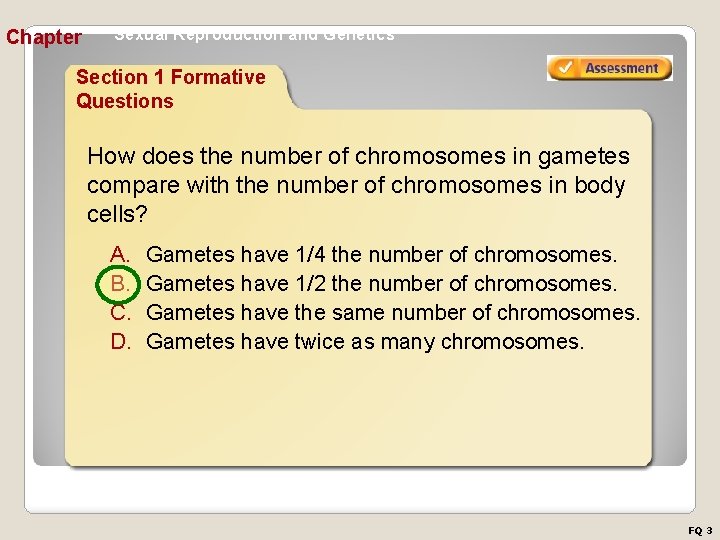
Chapter Sexual Reproduction and Genetics Section 1 Formative Questions How does the number of chromosomes in gametes compare with the number of chromosomes in body cells? A. B. C. D. Gametes have 1/4 the number of chromosomes. Gametes have 1/2 the number of chromosomes. Gametes have the same number of chromosomes. 1. A Gametes have twice as many chromosomes. 2. B 3. 4. C D FQ 3
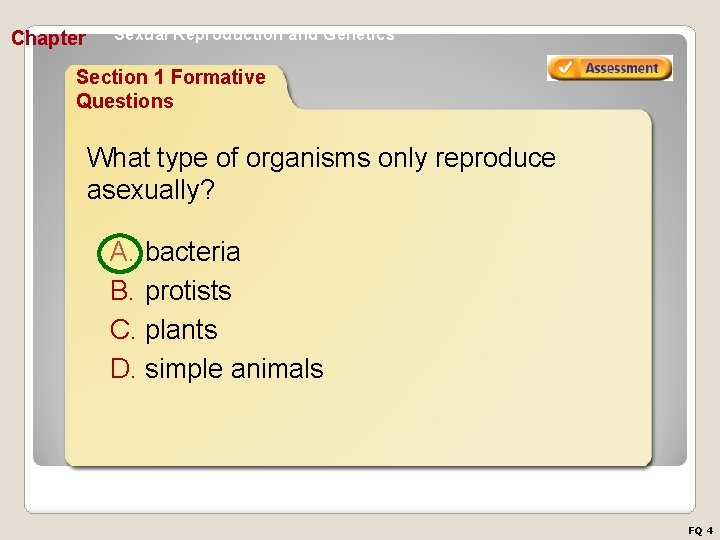
Chapter Sexual Reproduction and Genetics Section 1 Formative Questions What type of organisms only reproduce asexually? A. bacteria B. protists C. plants D. simple animals 1. 2. 3. 4. A B C D FQ 4
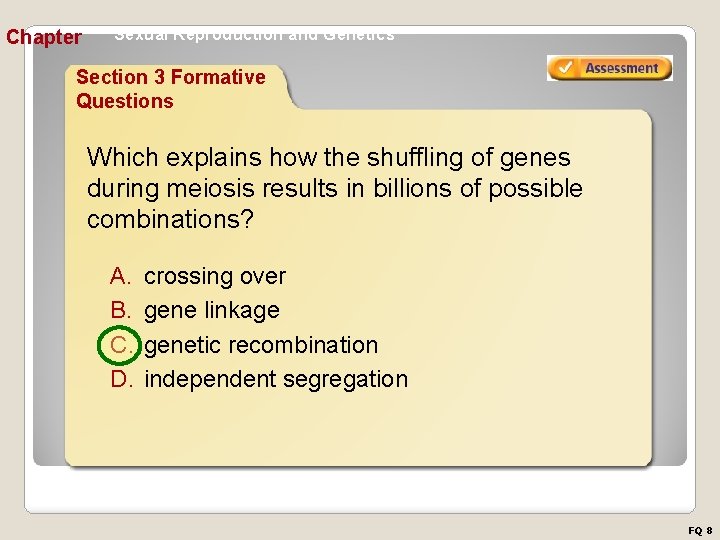
Chapter Sexual Reproduction and Genetics Section 3 Formative Questions Which explains how the shuffling of genes during meiosis results in billions of possible combinations? A. B. C. D. crossing over gene linkage genetic recombination independent segregation 1. 2. 3. 4. A B C D FQ 8
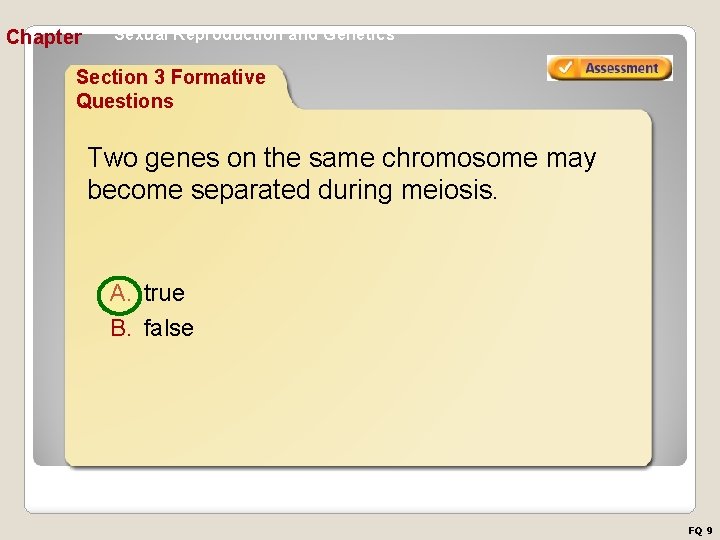
Chapter Sexual Reproduction and Genetics Section 3 Formative Questions Two genes on the same chromosome may become separated during meiosis. A. true B. false 1. 2. A B FQ 9
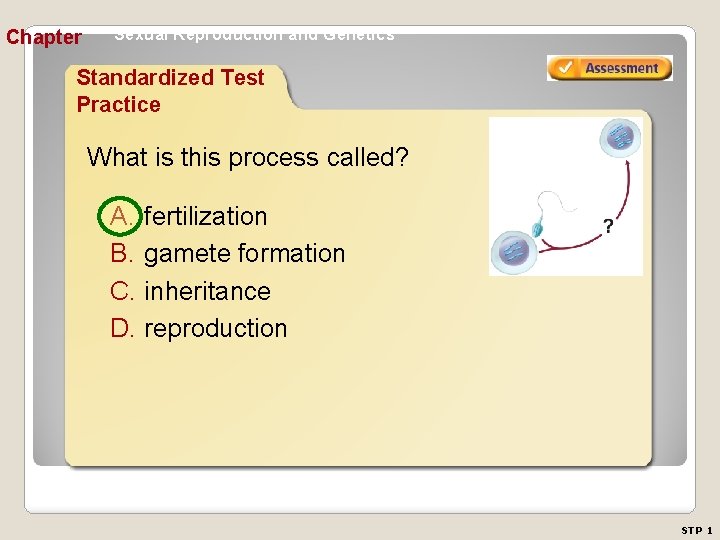
Chapter Sexual Reproduction and Genetics Standardized Test Practice What is this process called? A. fertilization B. gamete formation C. inheritance D. reproduction 1. 2. 3. 4. A B C D STP 1
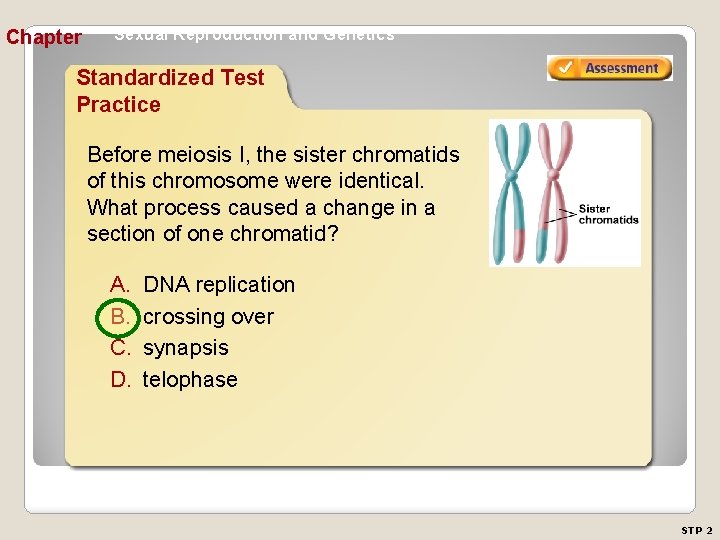
Chapter Sexual Reproduction and Genetics Standardized Test Practice Before meiosis I, the sister chromatids of this chromosome were identical. What process caused a change in a section of one chromatid? A. B. C. D. DNA replication crossing over synapsis telophase 1. 2. 3. 4. A B C D STP 2
Vocabulary Section 1 gene homologous chromosome gamete haploid fertilization diploid meiosis crossing over