
1 World seismic activity British Geological Survey 2
1

World seismic activity British Geological Survey 2
Impact of natural disasters on hospitals (1981 - 1996) • According to the Economic Commission for Latin America and the Caribbean (ECLAC), between 1981 and 1996 • 93 hospitals and 538 health centers were damaged as a result of natural disasters. • Losses amounted to US$3. 1 billion. • This could be compared to an extreme situation in which 20 countries in the region had each suffered the loss of 6 major hospitals and 25 health centers. 3
Hospitals are especially vulnerable to natural disasters • • The occupancy rate is constant, 24 hours a day, year-round. It is almost impossible to evacuate a hospital in the event of an emergency. The survival of some patients depends on the properation of the equipment and the continuity of basic services. In emergencies and disasters, medical facilities are essential and must continue to function after the event has taken place. Hospitals are highly dependent on public utilities (water, electricity, communications, etc. ) which are often interrupted in the event of a disaster. 4
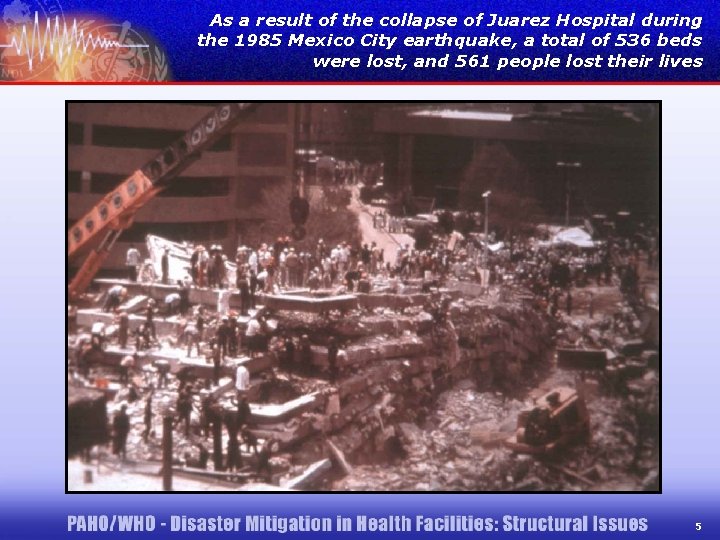
As a result of the collapse of Juarez Hospital during the 1985 Mexico City earthquake, a total of 536 beds were lost, and 561 people lost their lives 5
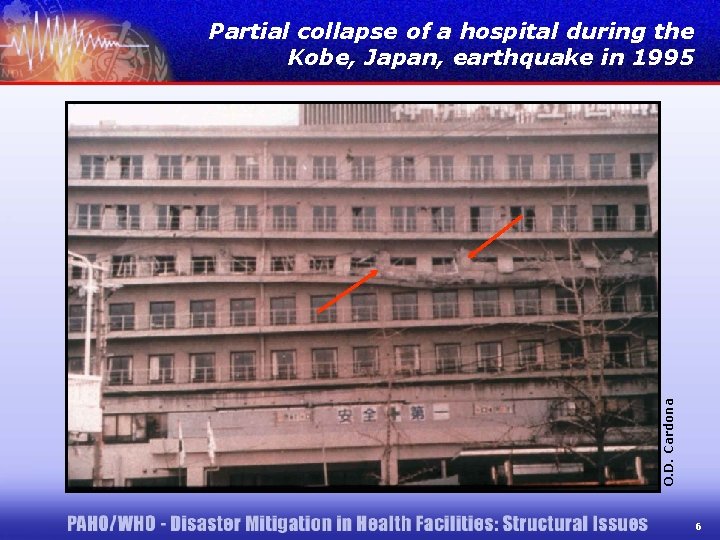
O. D. Cardona Partial collapse of a hospital during the Kobe, Japan, earthquake in 1995 6
Methods for measuring earthquakes Magnitude Scale The magnitude of an earthquake is determined by the energy it releases. Modified Mercalli Intensity Scale The intensity of an earthquake is estimated based on the damage to man-made structures and people’s reactions to the ground motion. 7
Parameters that affect the response of the soil • Stiffness of the soil • Depth of the compressible layer • Liquefaction potential • Potential for landslides 8
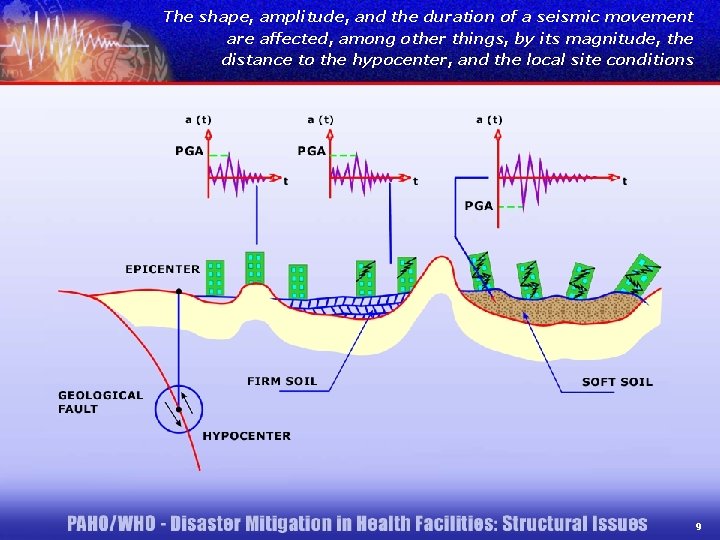
The shape, amplitude, and the duration of a seismic movement are affected, among other things, by its magnitude, the distance to the hypocenter, and the local site conditions 9
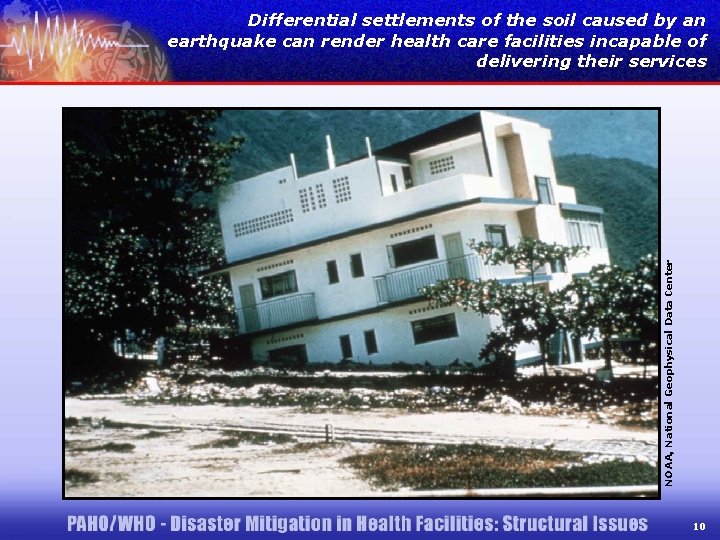
NOAA, National Geophysical Data Center Differential settlements of the soil caused by an earthquake can render health care facilities incapable of delivering their services 10
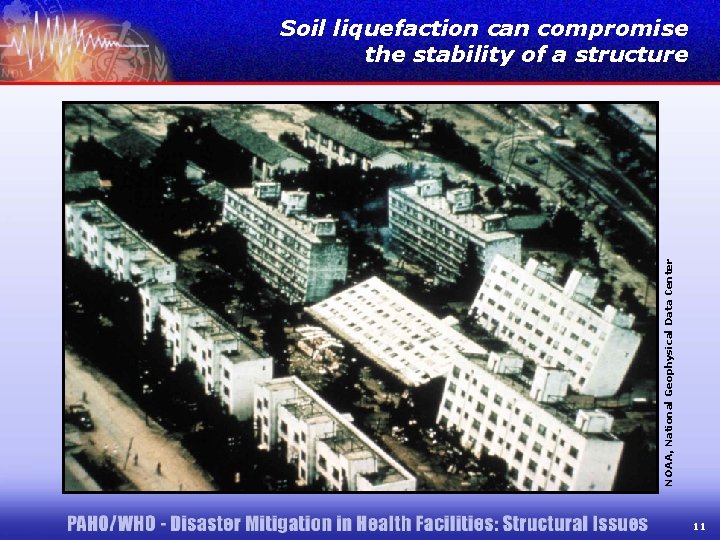
NOAA, National Geophysical Data Center Soil liquefaction can compromise the stability of a structure 11
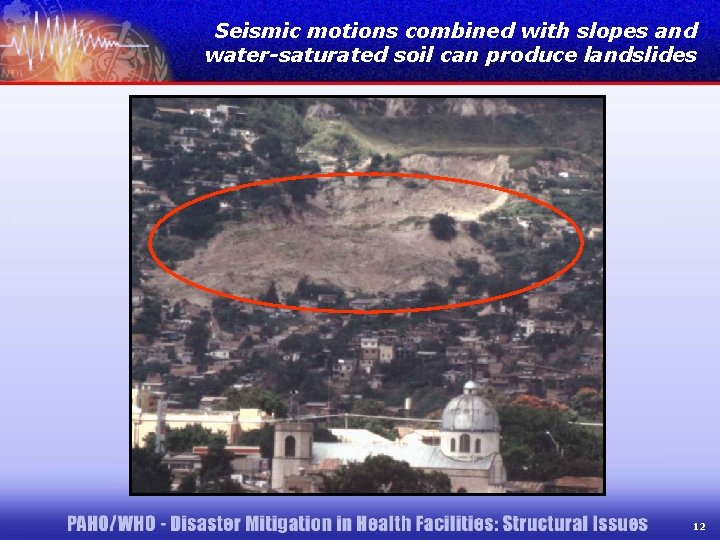
Seismic motions combined with slopes and water-saturated soil can produce landslides 12
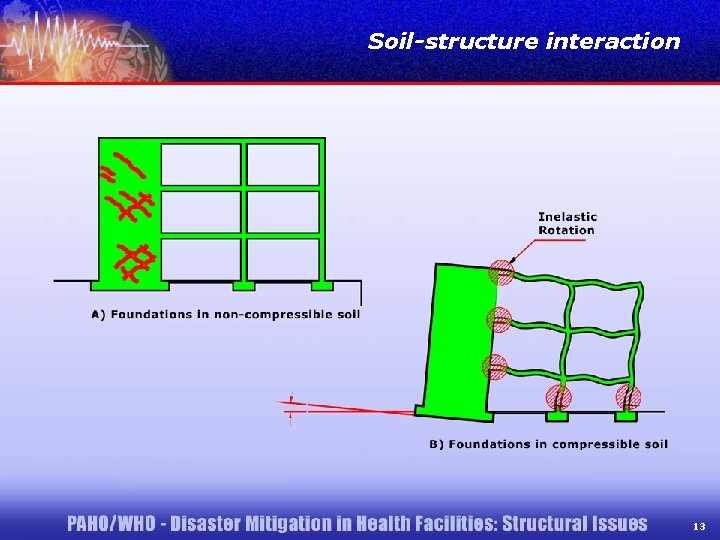
Soil-structure interaction 13
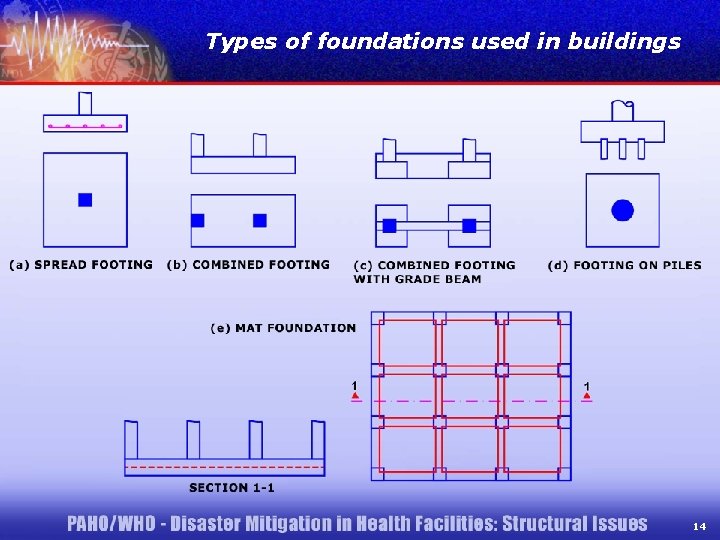
Types of foundations used in buildings 14
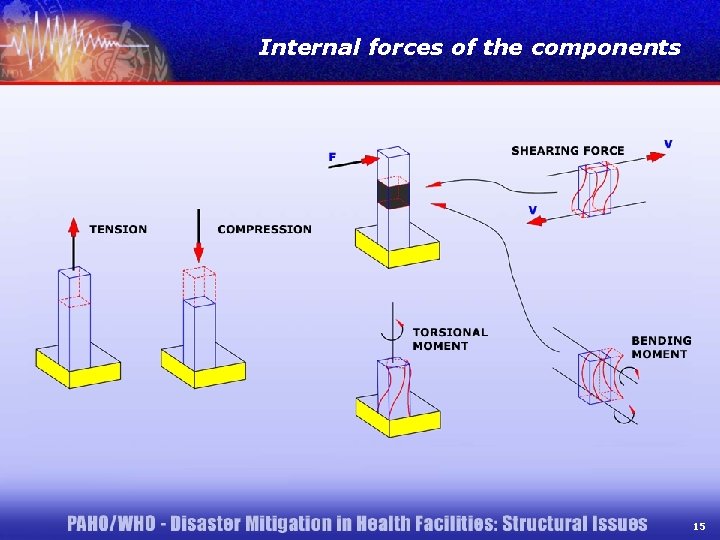
Internal forces of the components 15
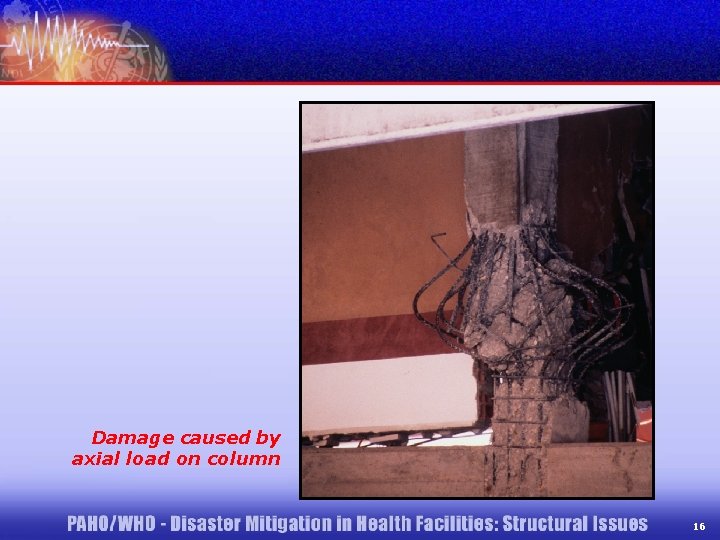
Damage caused by axial load on column 16
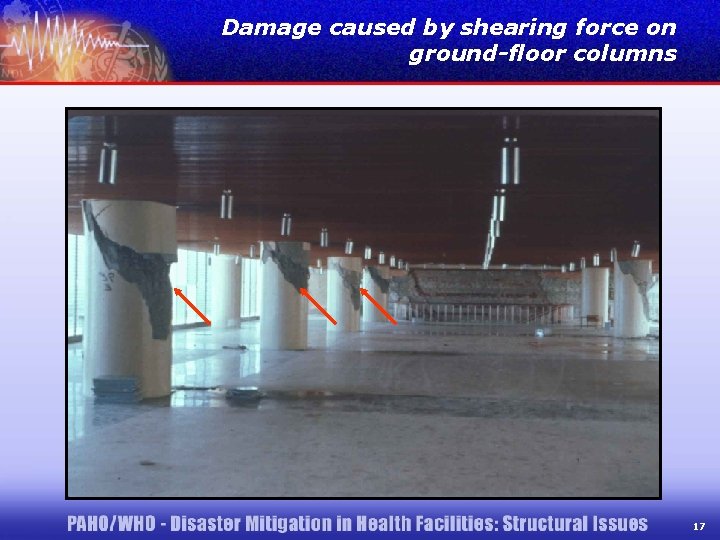
Damage caused by shearing force on ground-floor columns 17
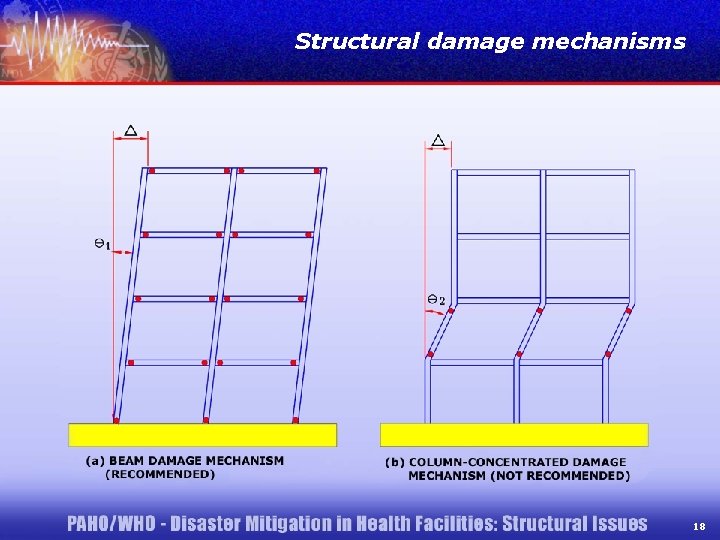
Structural damage mechanisms 18
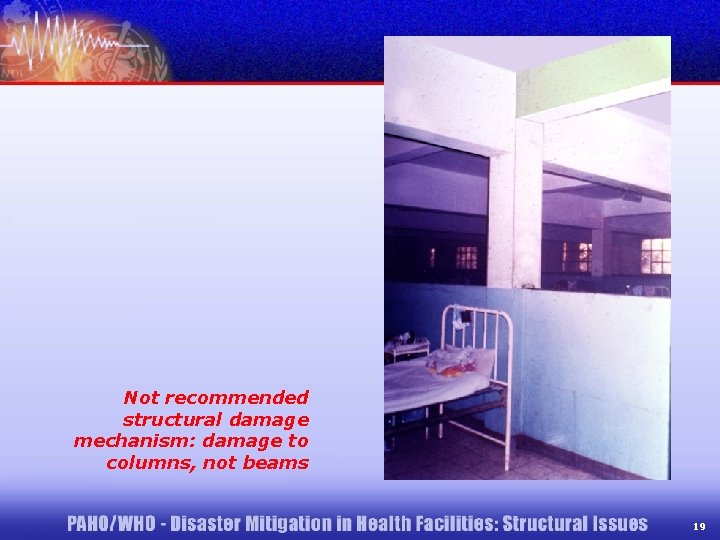
Not recommended structural damage mechanism: damage to columns, not beams 19
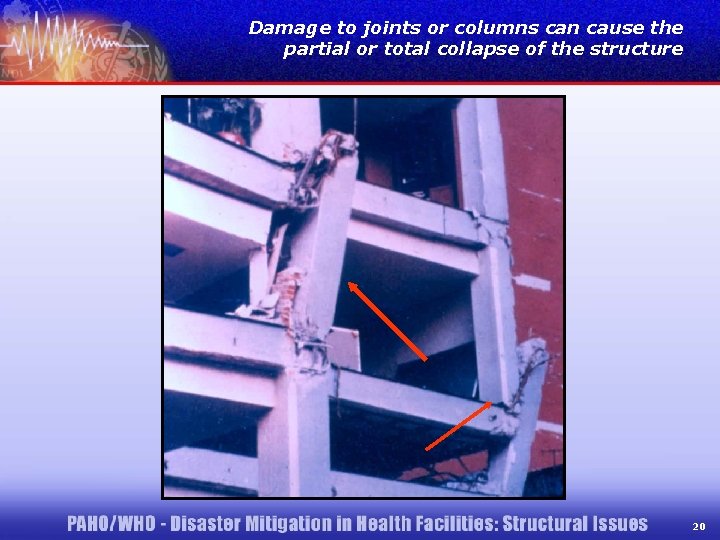
Damage to joints or columns can cause the partial or total collapse of the structure 20
Philosophy behind the seismic design of hospitals The structure must be planned, designed and built in such a way that: • It can withstand moderate earthquakes without any damage. • It can withstand severe earthquakes with minor and easily repaired nonstructural damage. • It can withstand exceptionally severe earthquakes with structural damage that can be repaired, and without interrupting the provision of health services. 21
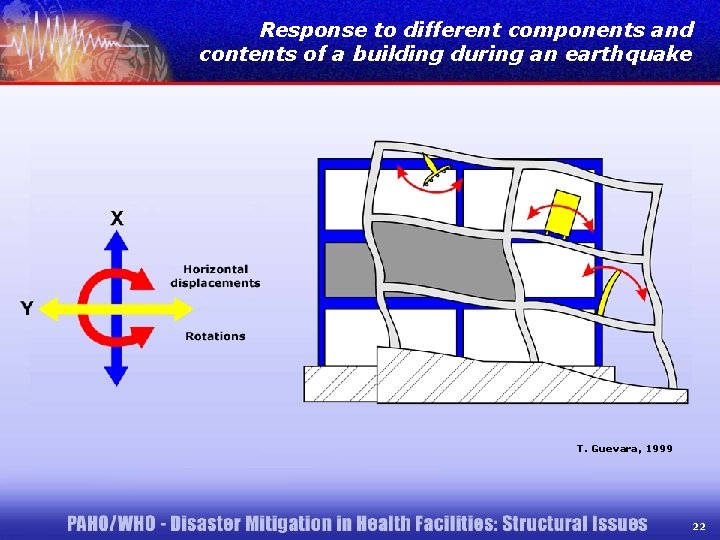
Response to different components and contents of a building during an earthquake T. Guevara, 1999 22
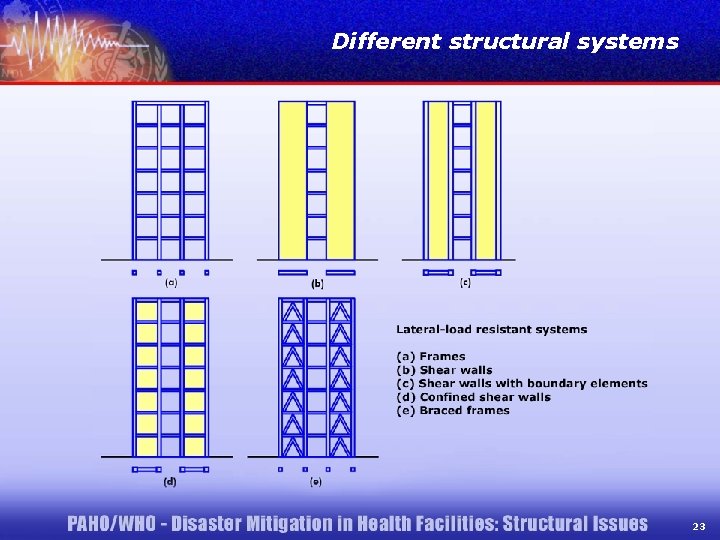
Different structural systems 23
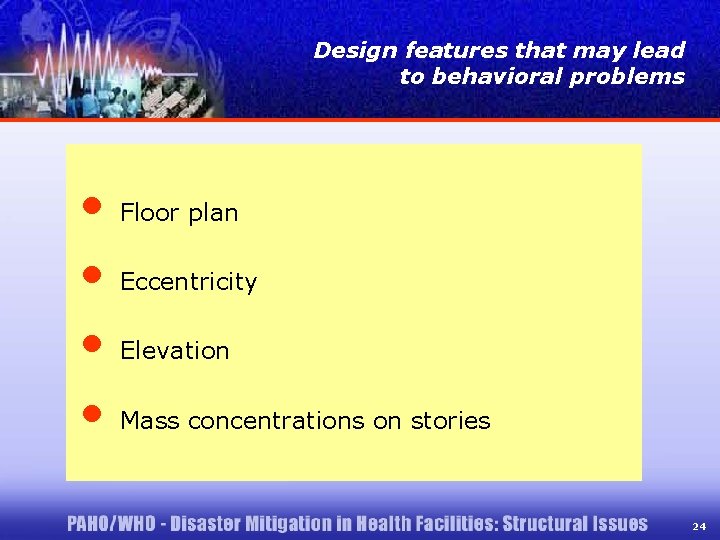
Design features that may lead to behavioral problems • Floor plan • Eccentricity • Elevation • Mass concentrations on stories 24
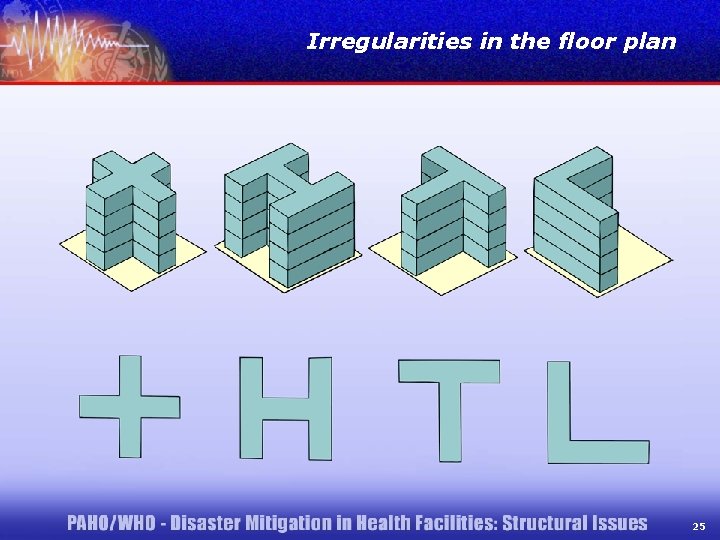
Irregularities in the floor plan 25
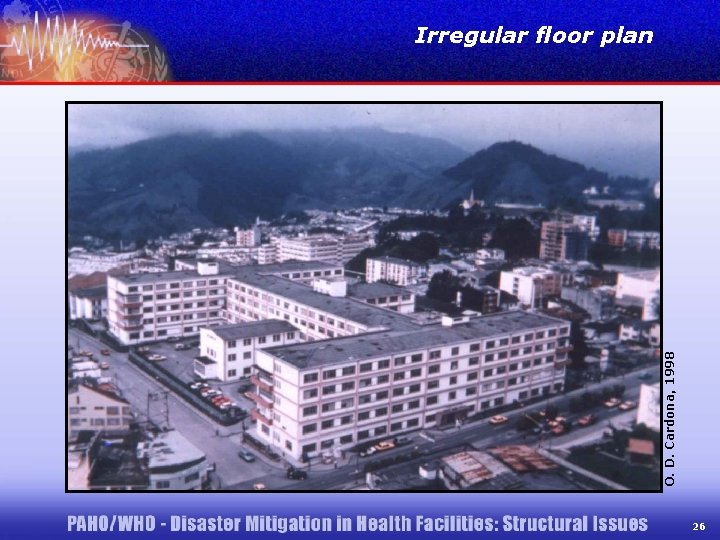
O. D. Cardona, 1998 Irregular floor plan 26
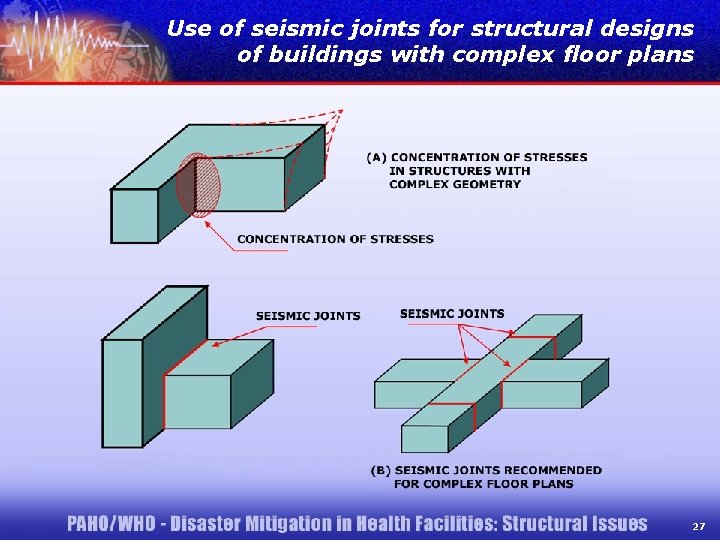
Use of seismic joints for structural designs of buildings with complex floor plans 27
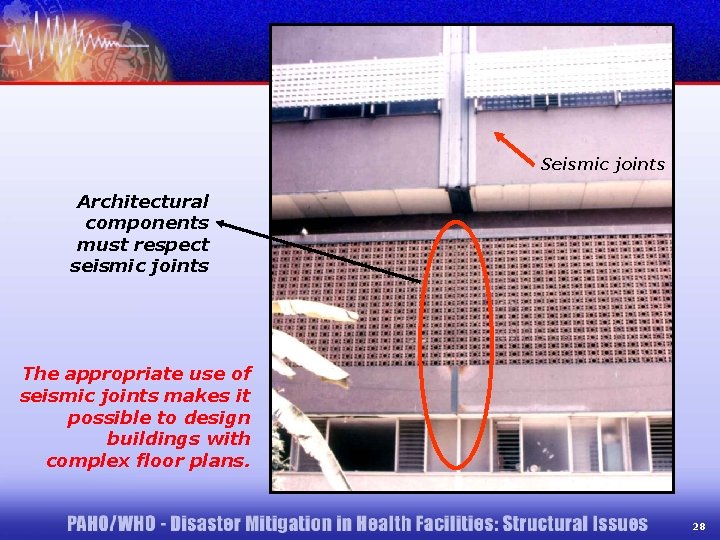
Seismic joints Architectural components must respect seismic joints The appropriate use of seismic joints makes it possible to design buildings with complex floor plans. 28
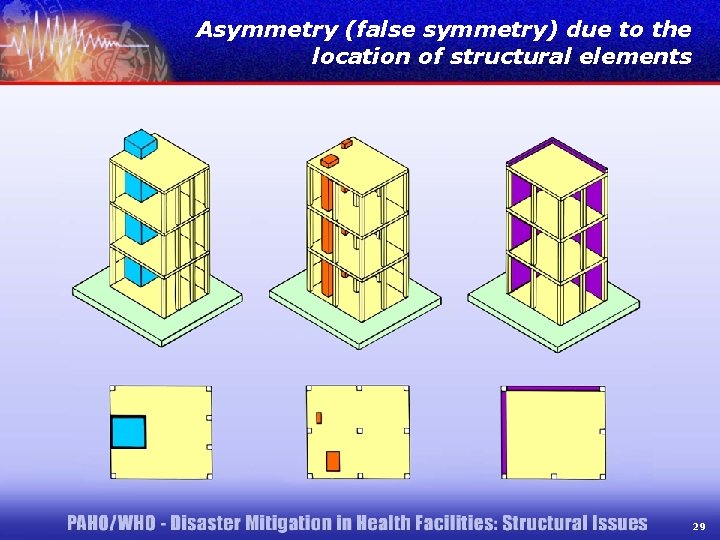
Asymmetry (false symmetry) due to the location of structural elements 29
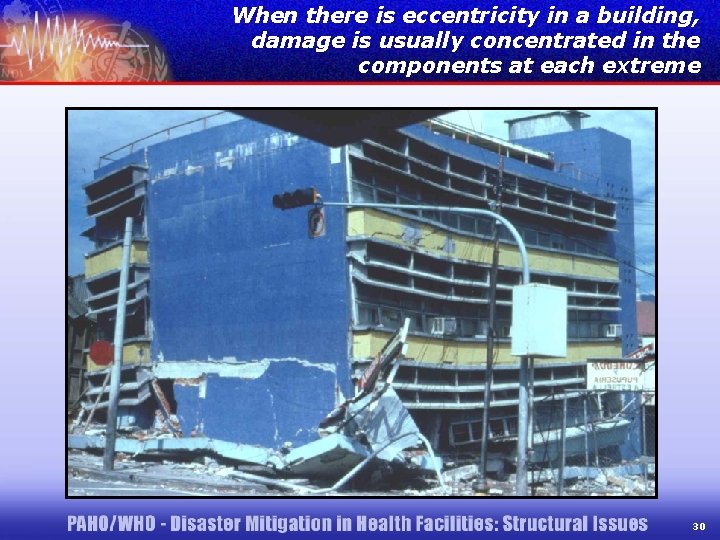
When there is eccentricity in a building, damage is usually concentrated in the components at each extreme 30
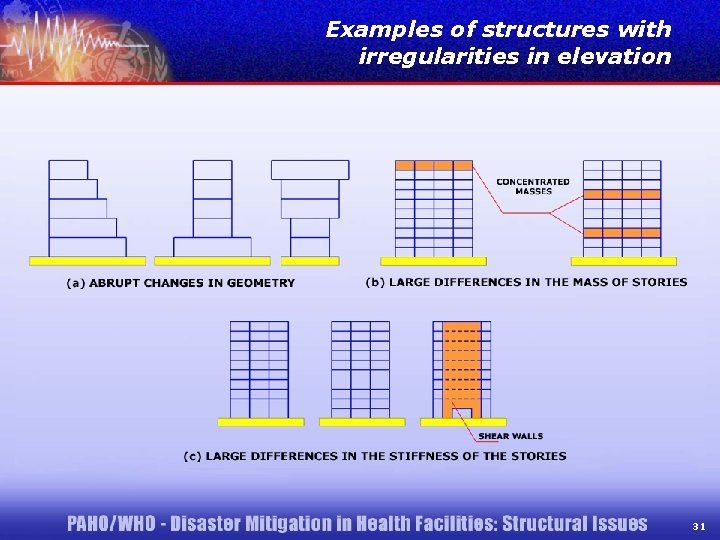
Examples of structures with irregularities in elevation 31
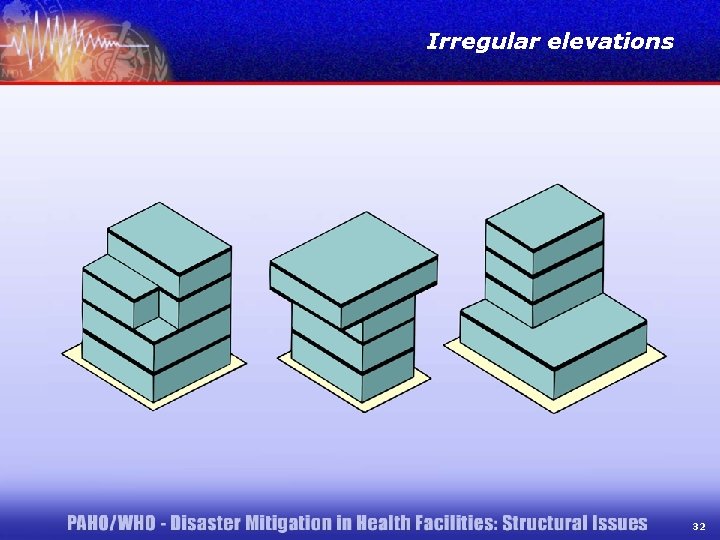
Irregular elevations 32
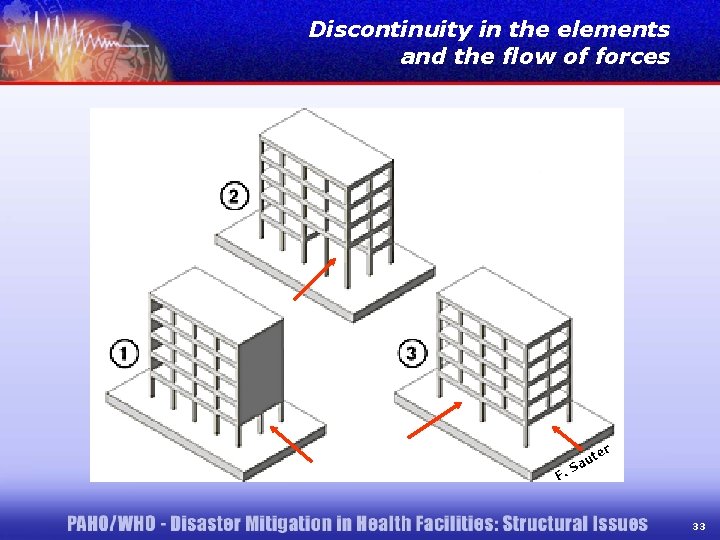
Discontinuity in the elements and the flow of forces er F. ut Sa 33
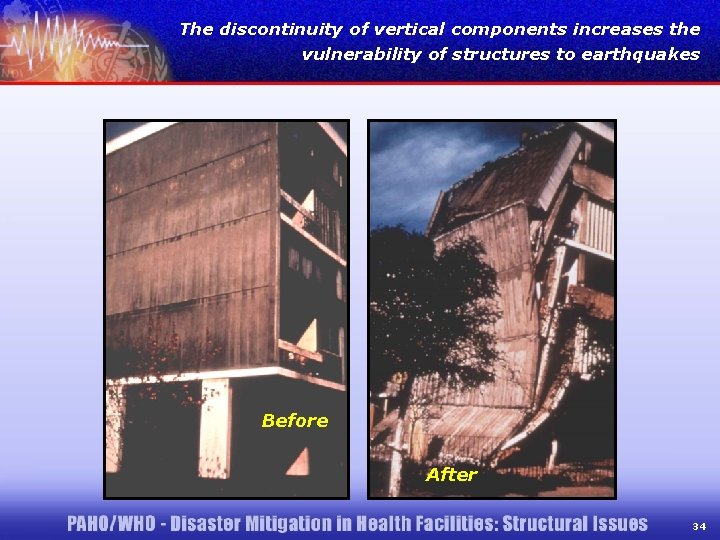
The discontinuity of vertical components increases the vulnerability of structures to earthquakes Before After 34
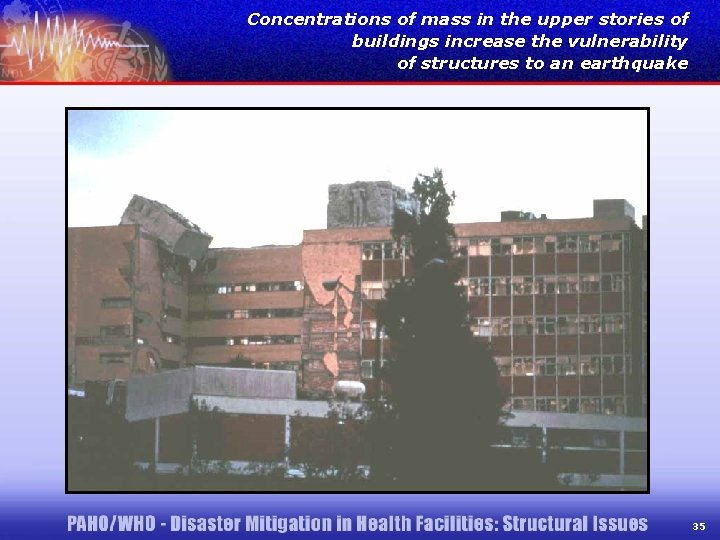
Concentrations of mass in the upper stories of buildings increase the vulnerability of structures to an earthquake 35
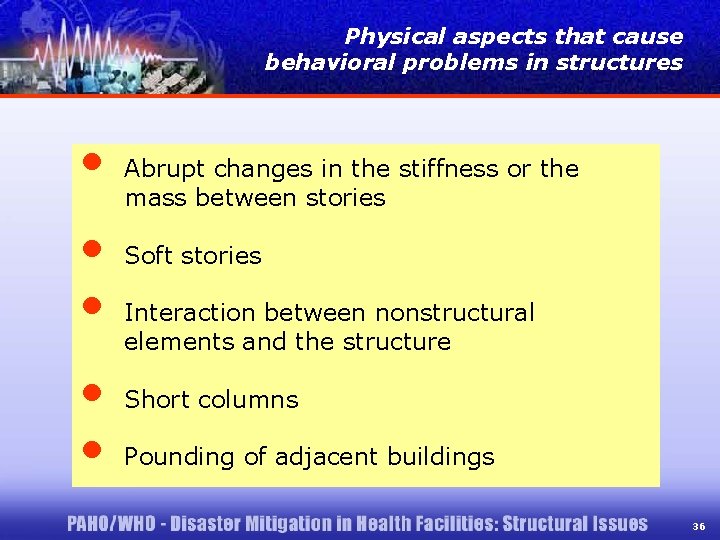
Physical aspects that cause behavioral problems in structures • • • Abrupt changes in the stiffness or the mass between stories Soft stories Interaction between nonstructural elements and the structure Short columns Pounding of adjacent buildings 36
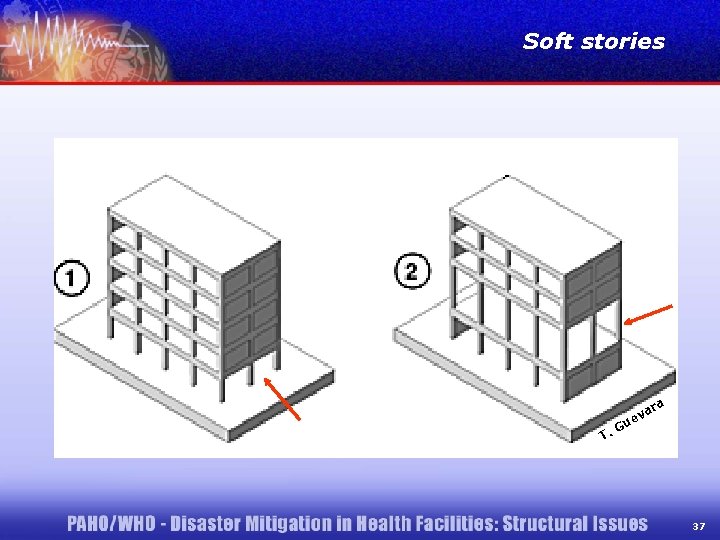
Soft stories ra a ev u. G T 37
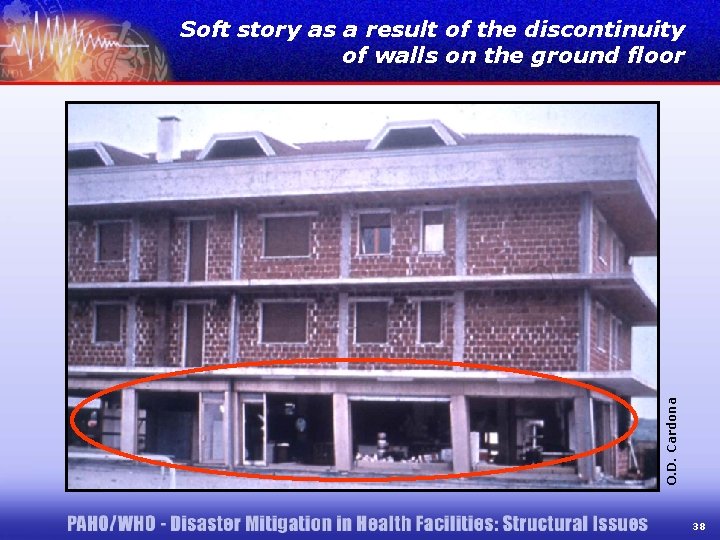
O. D. Cardona Soft story as a result of the discontinuity of walls on the ground floor 38
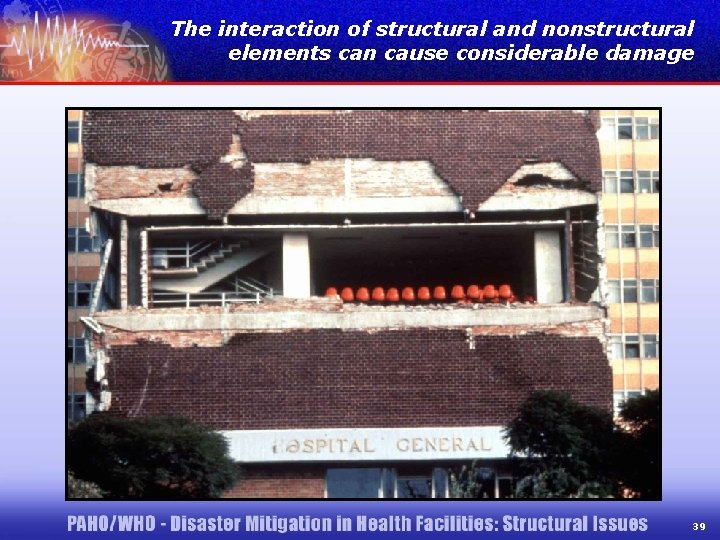
The interaction of structural and nonstructural elements can cause considerable damage 39
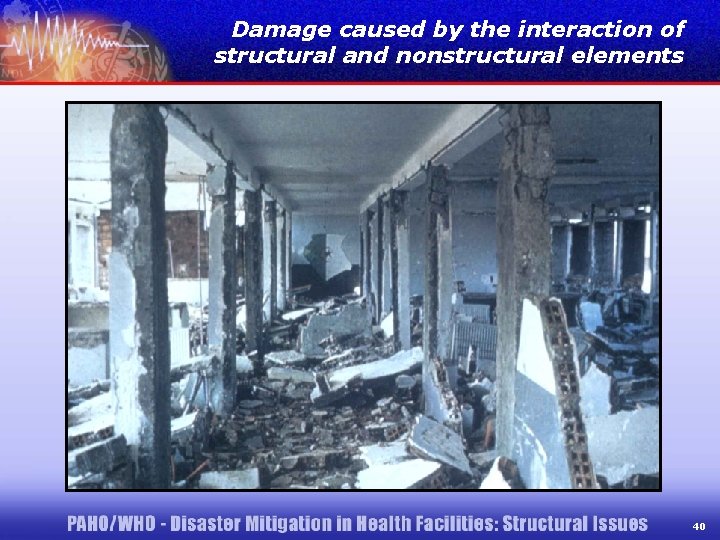
Damage caused by the interaction of structural and nonstructural elements 40
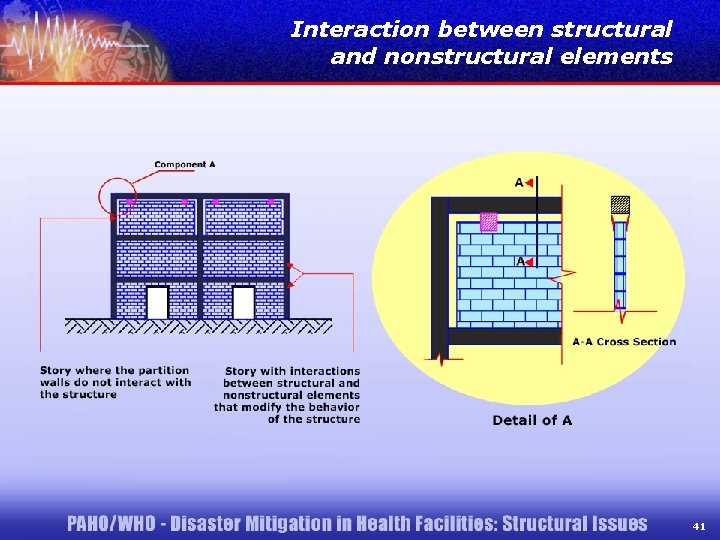
Interaction between structural and nonstructural elements 41
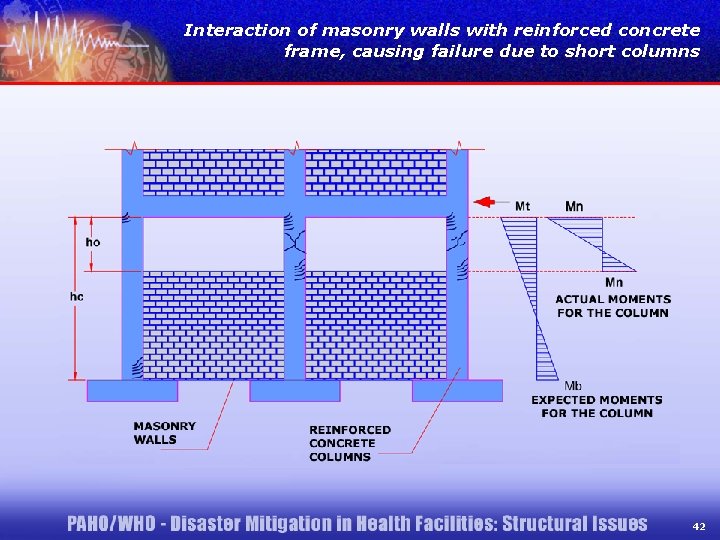
Interaction of masonry walls with reinforced concrete frame, causing failure due to short columns 42
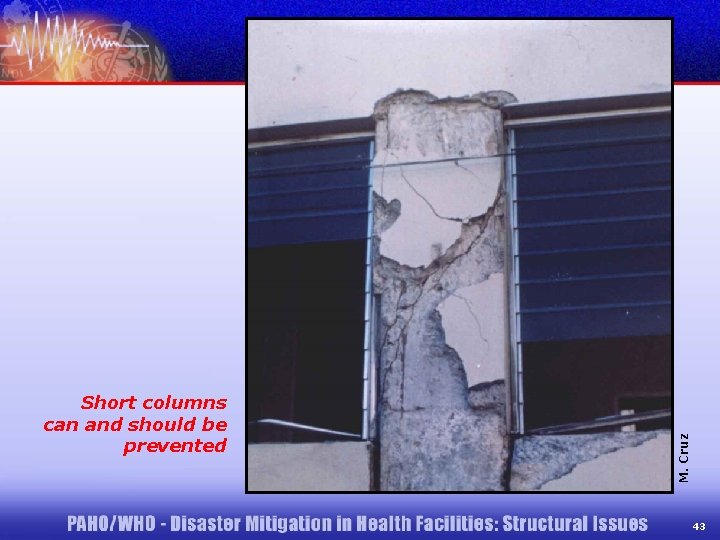
M. Cruz Short columns can and should be prevented 43
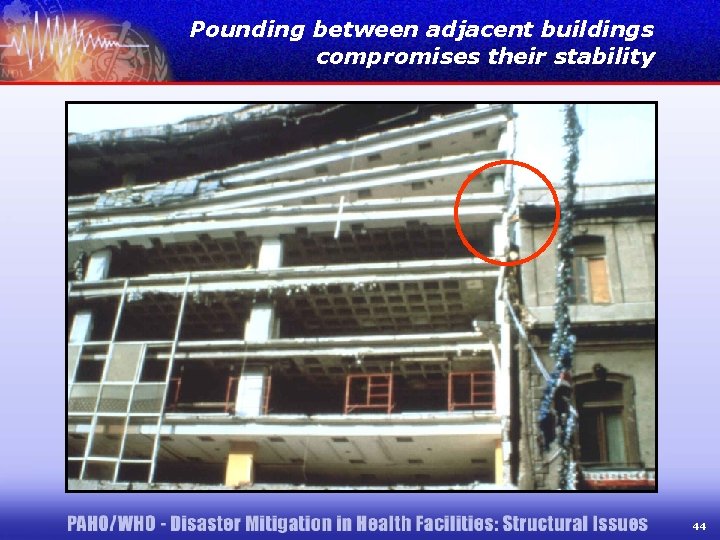
Pounding between adjacent buildings compromises their stability 44
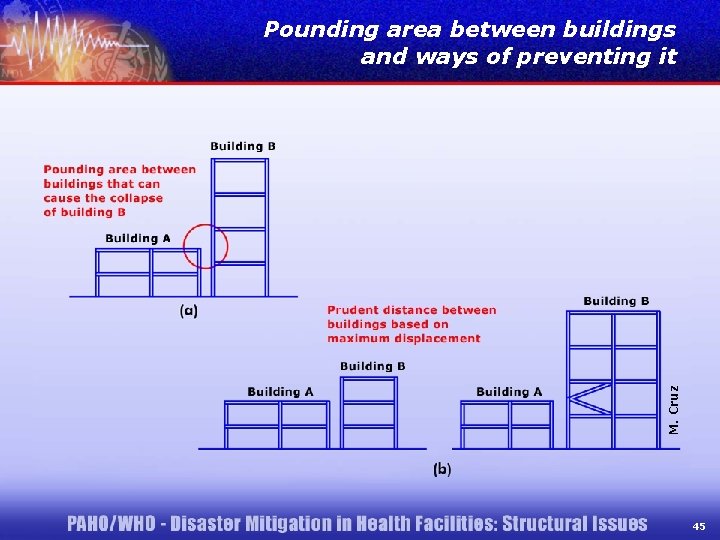
M. Cruz Pounding area between buildings and ways of preventing it 45
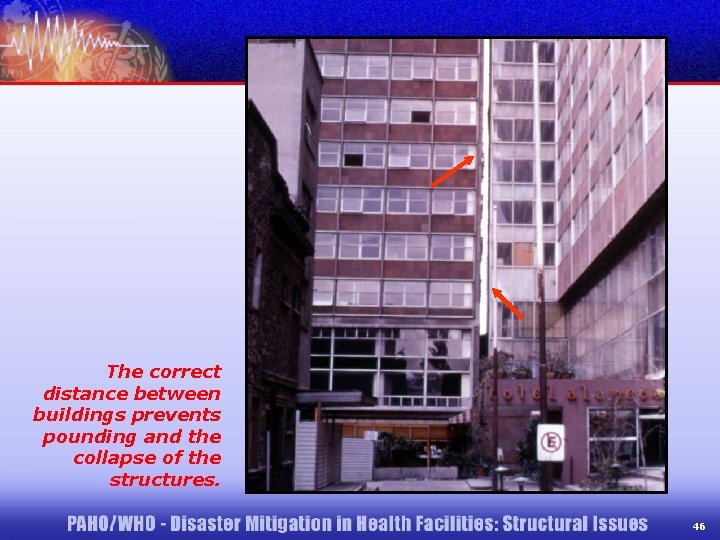
The correct distance between buildings prevents pounding and the collapse of the structures. 46
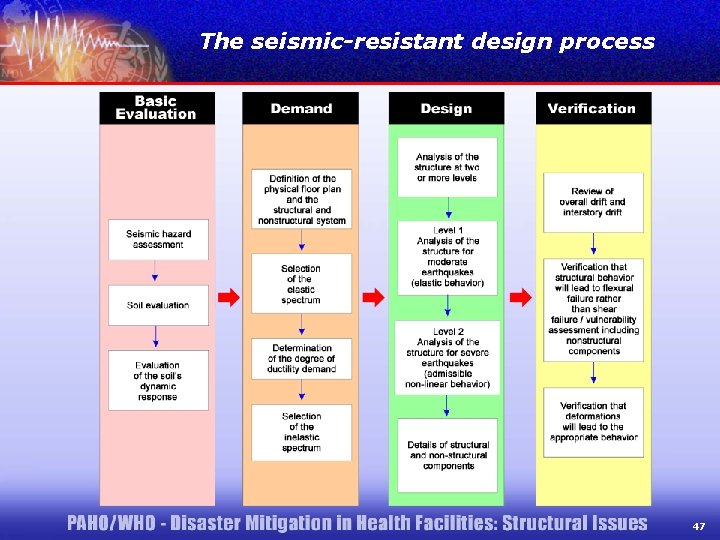
The seismic-resistant design process 47
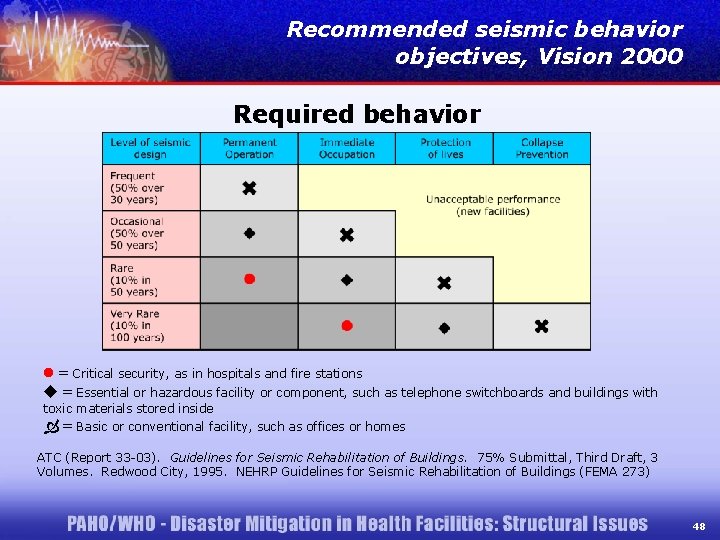
Recommended seismic behavior objectives, Vision 2000 Required behavior = Critical security, as in hospitals and fire stations = Essential or hazardous facility or component, such as telephone switchboards and buildings with toxic materials stored inside = Basic or conventional facility, such as offices or homes ATC (Report 33 -03). Guidelines for Seismic Rehabilitation of Buildings. 75% Submittal, Third Draft, 3 Volumes. Redwood City, 1995. NEHRP Guidelines for Seismic Rehabilitation of Buildings (FEMA 273) 48
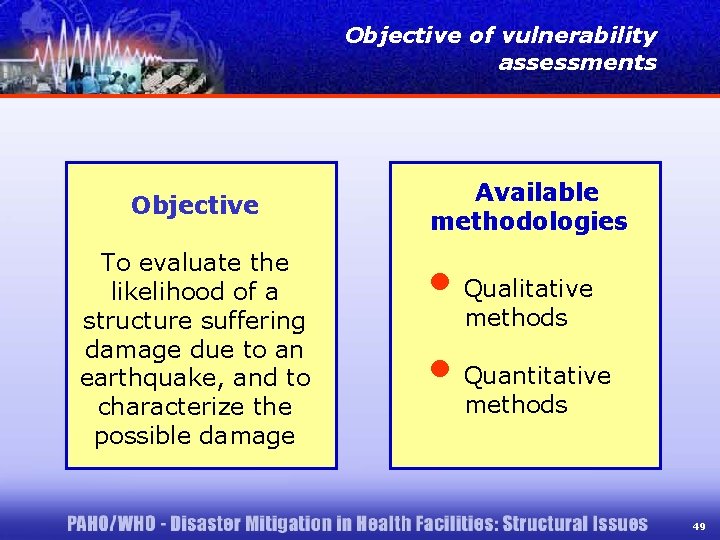
Objective of vulnerability assessments Objective To evaluate the likelihood of a structure suffering damage due to an earthquake, and to characterize the possible damage Available methodologies • Qualitative methods • Quantitative methods 49
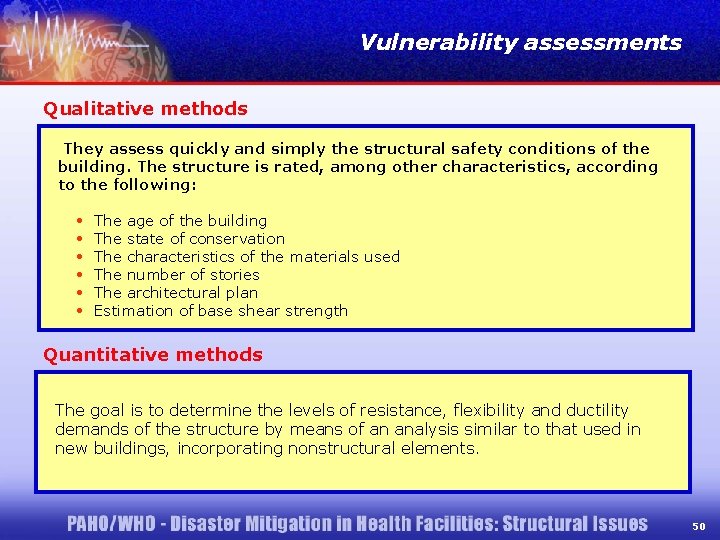
Vulnerability assessments Qualitative methods They assess quickly and simply the structural safety conditions of the building. The structure is rated, among other characteristics, according to the following: • • • The age of the building The state of conservation The characteristics of the materials used The number of stories The architectural plan Estimation of base shear strength Quantitative methods The goal is to determine the levels of resistance, flexibility and ductility demands of the structure by means of an analysis similar to that used in new buildings, incorporating nonstructural elements. 50
Structural reinforcement • The goal is to ensure that the health care facility will continue to function after an earthquake, by reinforcing existing components or incorporating additional structural components to improve the levels of strength, stiffness and ductility capacity. • The type of retrofitting should not interfere with the operations of the hospital during or after its construction. 51
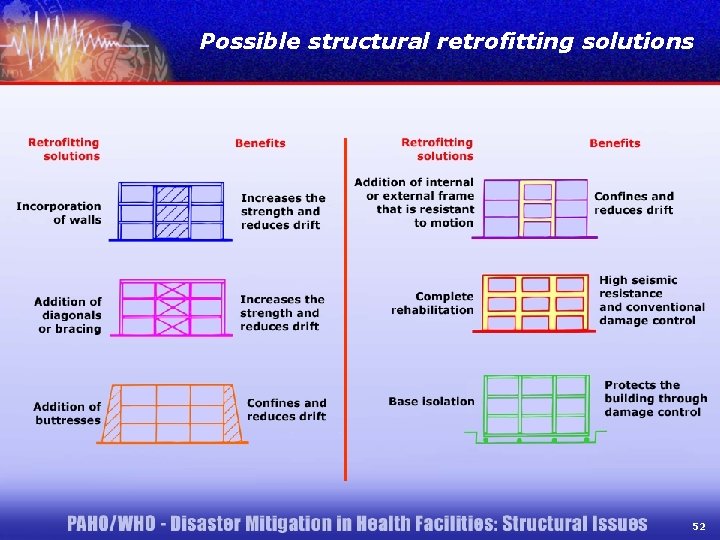
Possible structural retrofitting solutions 52
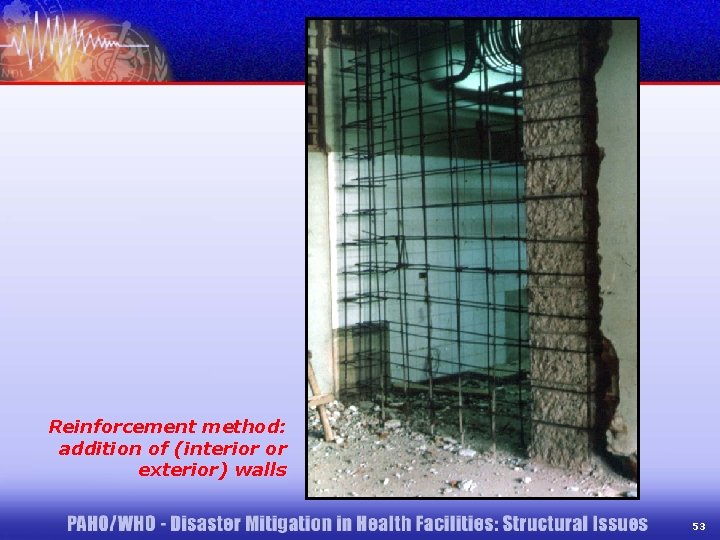
Reinforcement method: addition of (interior or exterior) walls 53
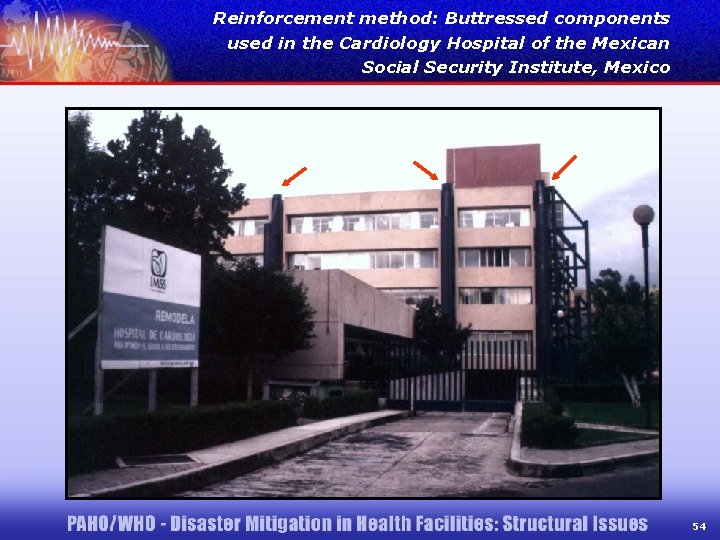
Reinforcement method: Buttressed components used in the Cardiology Hospital of the Mexican Social Security Institute, Mexico 54
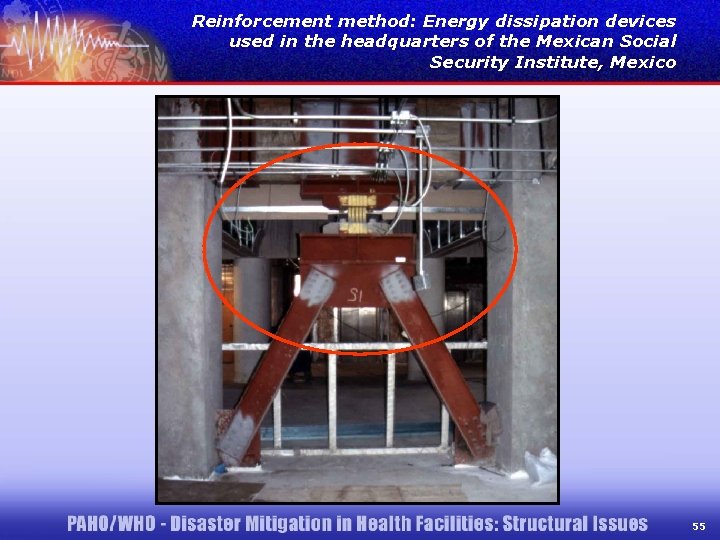
Reinforcement method: Energy dissipation devices used in the headquarters of the Mexican Social Security Institute, Mexico 55
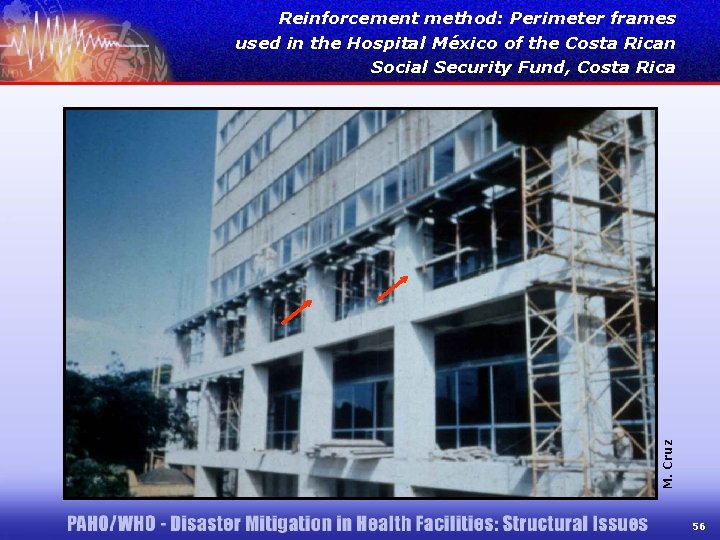
M. Cruz Reinforcement method: Perimeter frames used in the Hospital México of the Costa Rican Social Security Fund, Costa Rica 56
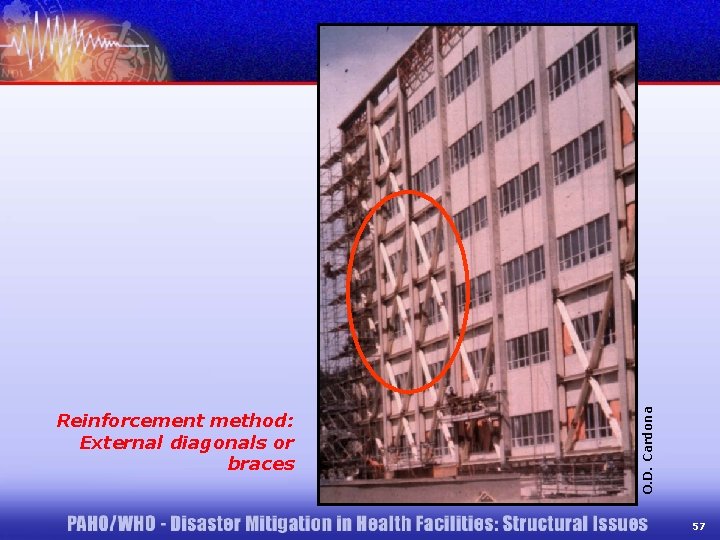
O. D. Cardona Reinforcement method: External diagonals or braces 57
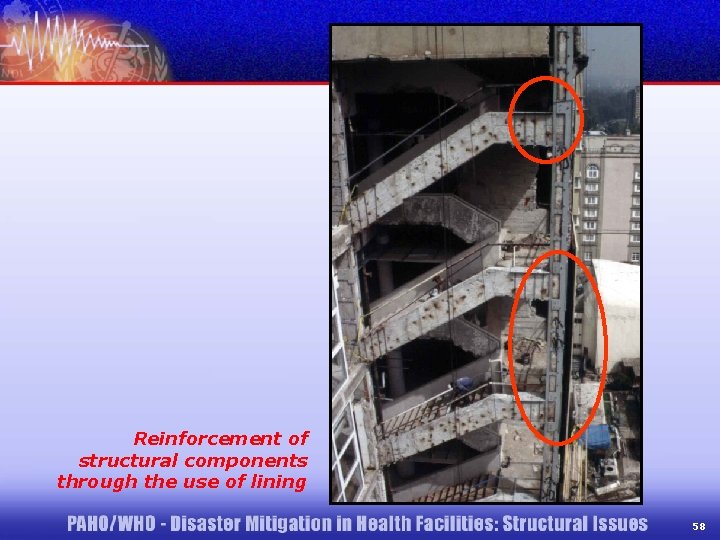
Reinforcement of structural components through the use of lining 58

General information about the reinforcement of the hospitals of the Costa Rican Social Security Fund 59

60
- Slides: 60