
1 Why do we use a classification system



- Slides: 22
1. Why do we use a classification system? Organize living things into groups Give organisms names Trees Maples – Acer Fir – Abies Pine - Pinus
2. Taxonomy A discipline used by scientists to classify organisms Give organisms a universally accepted name Classification of organisms into groups based on similarities of structure or origin KEY TERMS: Universally – accepted around the world Structure – how something is made or what something is made of Origin – where something came from
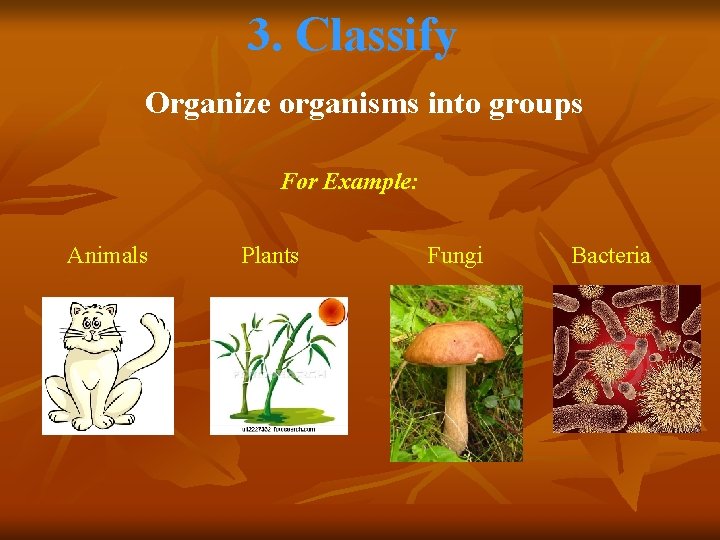
3. Classify Organize organisms into groups For Example: Animals Plants Fungi Bacteria
4. Why use Latin and Greek names for scientific classification? Common names vary between countries – confusing Latin and Greek languages were understood by early scientists A universally accepted scientific language Still used today
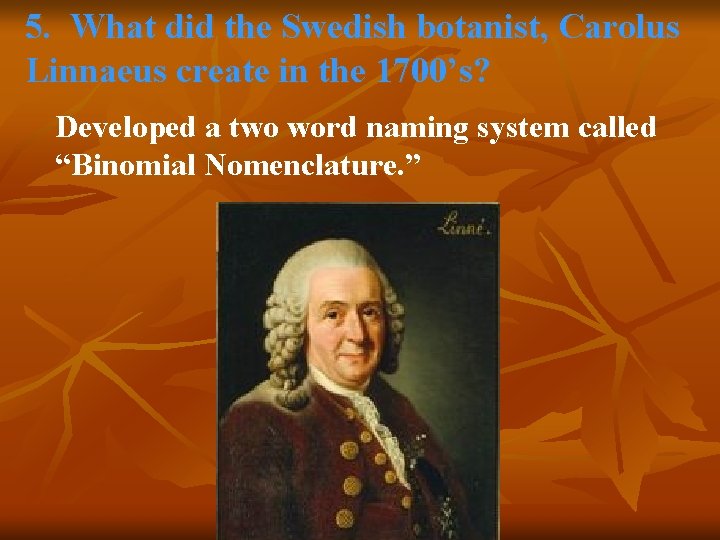
5. What did the Swedish botanist, Carolus Linnaeus create in the 1700’s? Developed a two word naming system called “Binomial Nomenclature. ”
6. Binomial Nomenclature Each organism is given a two part scientific name – Genus species Bi meaning “two” Nomen meaning “name”
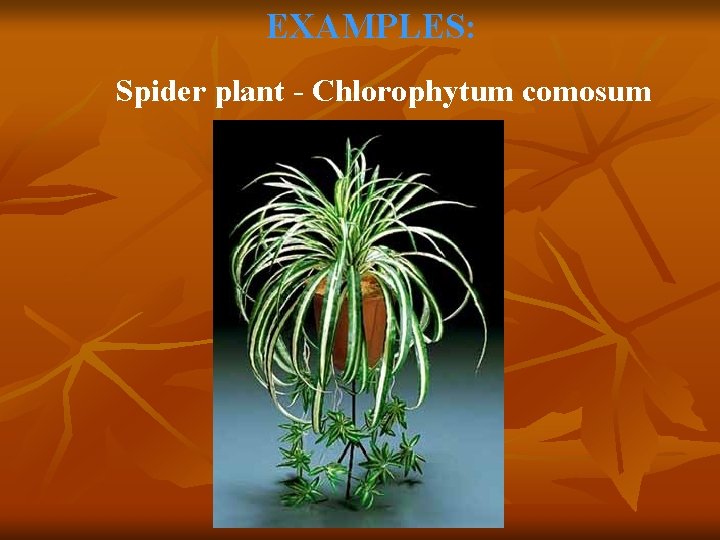
EXAMPLES: Spider plant - Chlorophytum comosum
Pansy – Viola tricolor
7. Genus Generic name A group of closely related species EXAMPLES: Apple – Malus Squash – Cucurbita Plum - Prunus
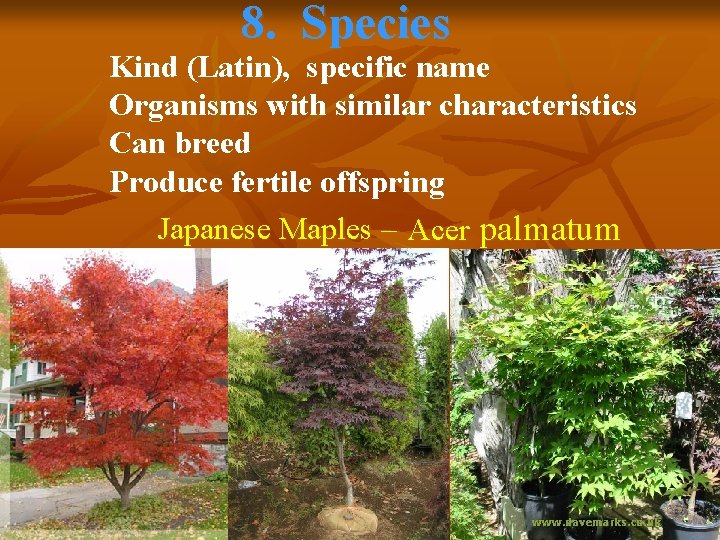
8. Species Kind (Latin), specific name Organisms with similar characteristics Can breed Produce fertile offspring Japanese Maples – Acer palmatum
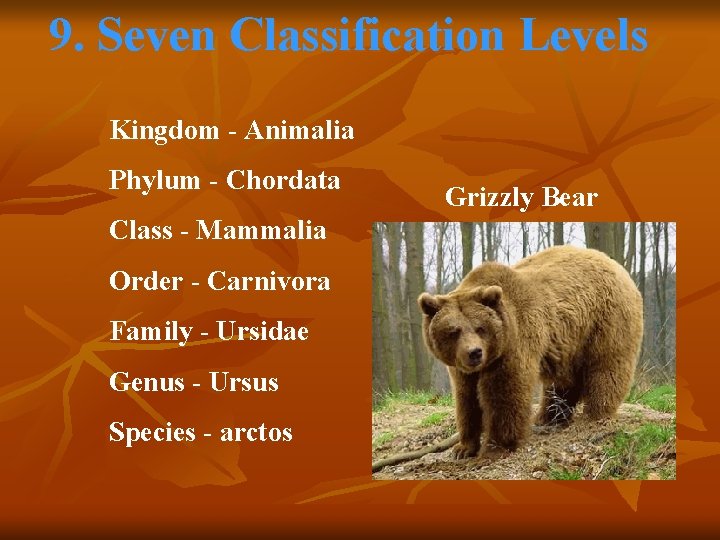
9. Seven Classification Levels Kingdom - Animalia Phylum - Chordata Class - Mammalia Order - Carnivora Family - Ursidae Genus - Ursus Species - arctos Grizzly Bear
10. Taxonomic Nomenclature Naming System
11. Taxon Each of the levels in the classification system is called a taxon Taxa: plural Kingdom Phylum Class Order Family Genus Species
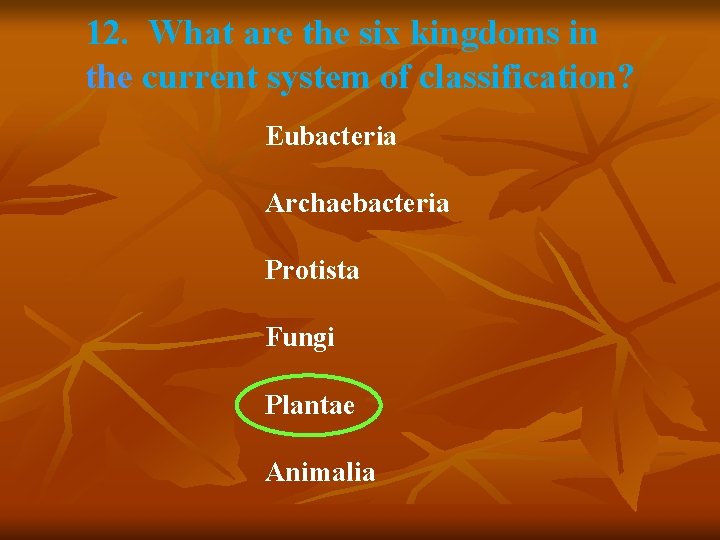
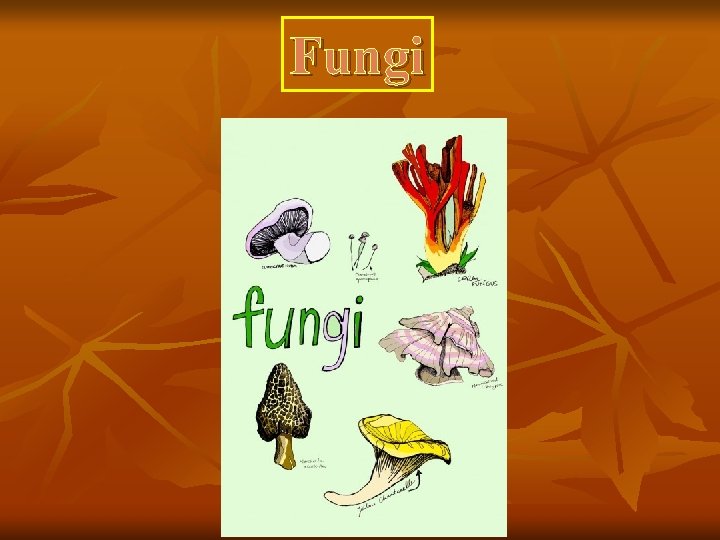
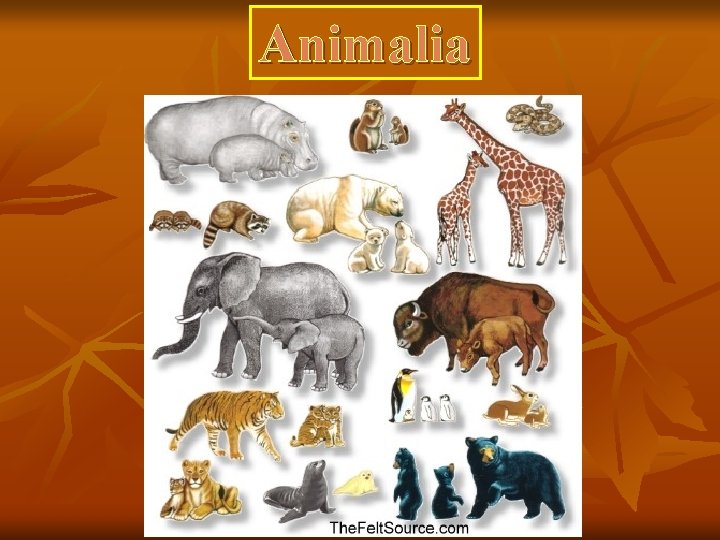
12. What are the six kingdoms in the current system of classification? Eubacteria Archaebacteria Protista Fungi Plantae Animalia
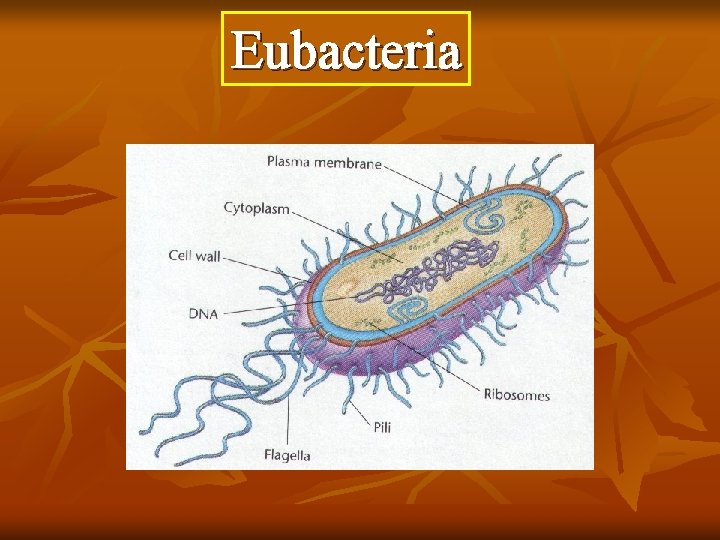
Eubacteria
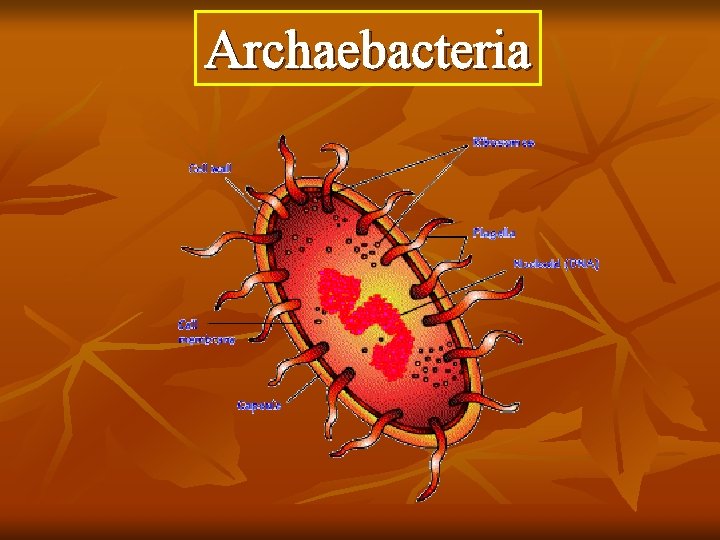
Archaebacteria
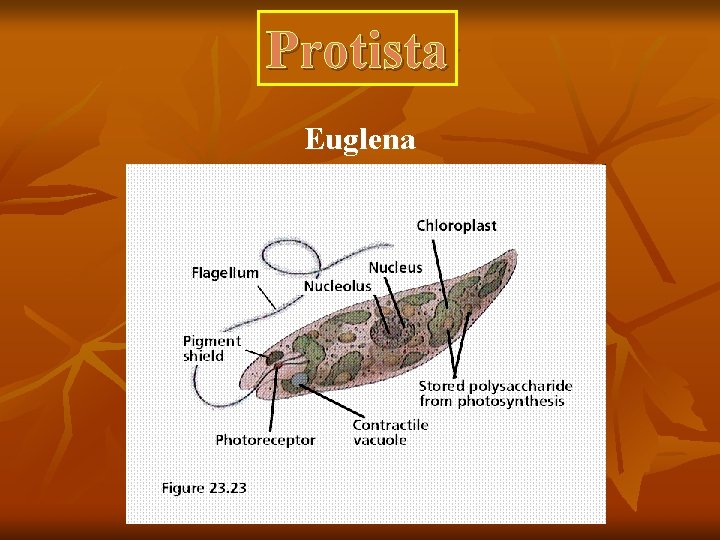
Protista Euglena
Fungi
Plantae
Animalia
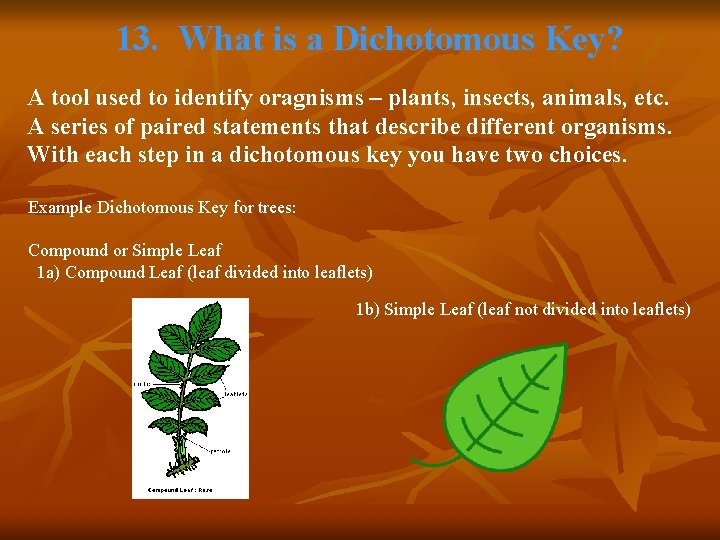
13. What is a Dichotomous Key? A tool used to identify oragnisms – plants, insects, animals, etc. A series of paired statements that describe different organisms. With each step in a dichotomous key you have two choices. Example Dichotomous Key for trees: Compound or Simple Leaf 1 a) Compound Leaf (leaf divided into leaflets) 1 b) Simple Leaf (leaf not divided into leaflets)