
1 Which civilization was located between the Aegean
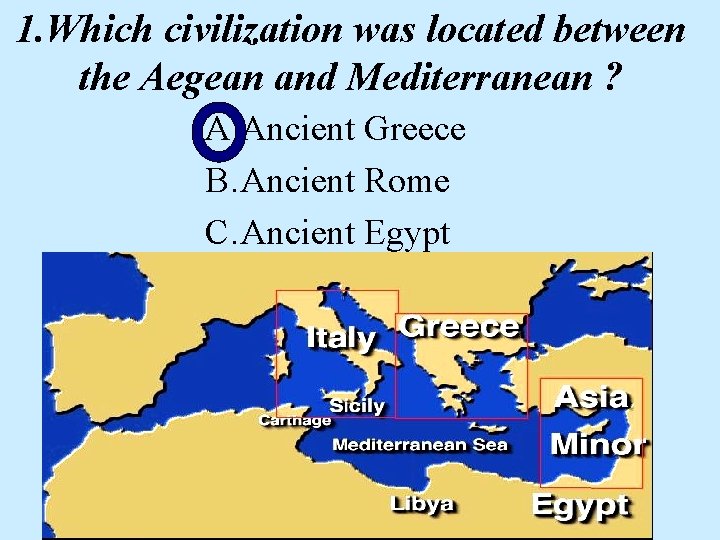
1. Which civilization was located between the Aegean and Mediterranean ? A. Ancient Greece B. Ancient Rome C. Ancient Egypt
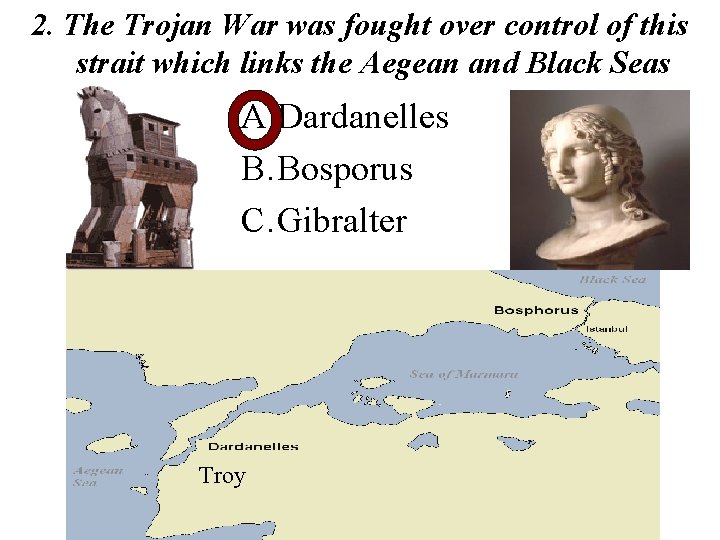
2. The Trojan War was fought over control of this strait which links the Aegean and Black Seas A. Dardanelles B. Bosporus C. Gibralter Troy
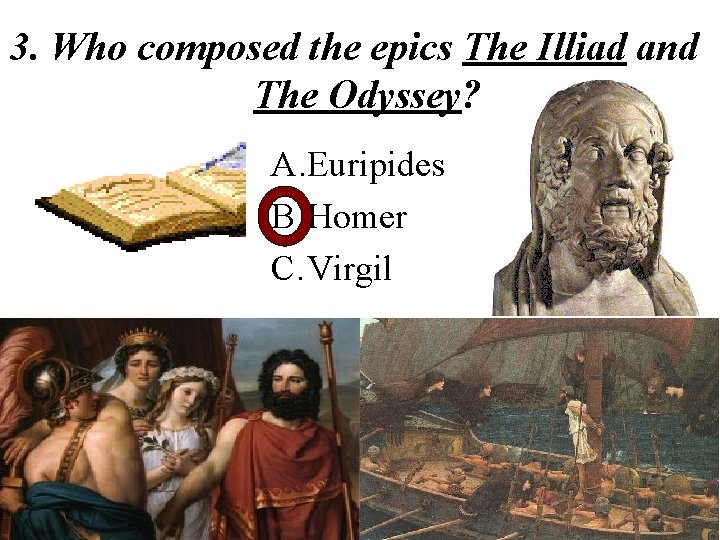
3. Who composed the epics The Illiad and The Odyssey? A. Euripides B. Homer C. Virgil
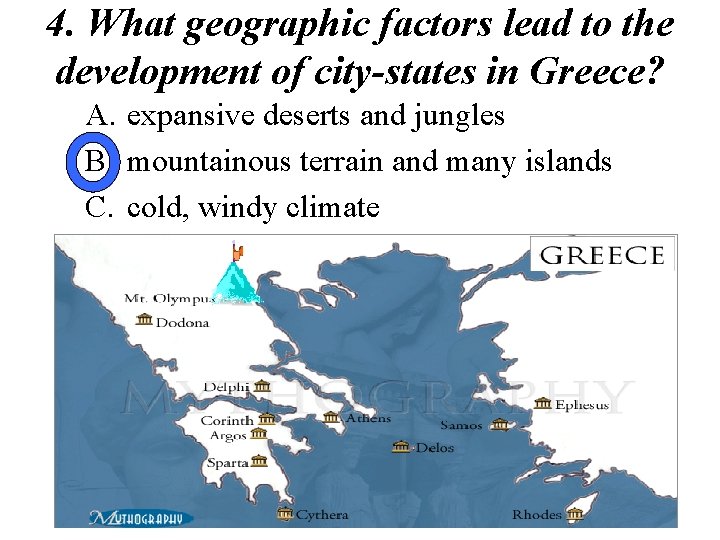
4. What geographic factors lead to the development of city-states in Greece? A. expansive deserts and jungles B. mountainous terrain and many islands C. cold, windy climate
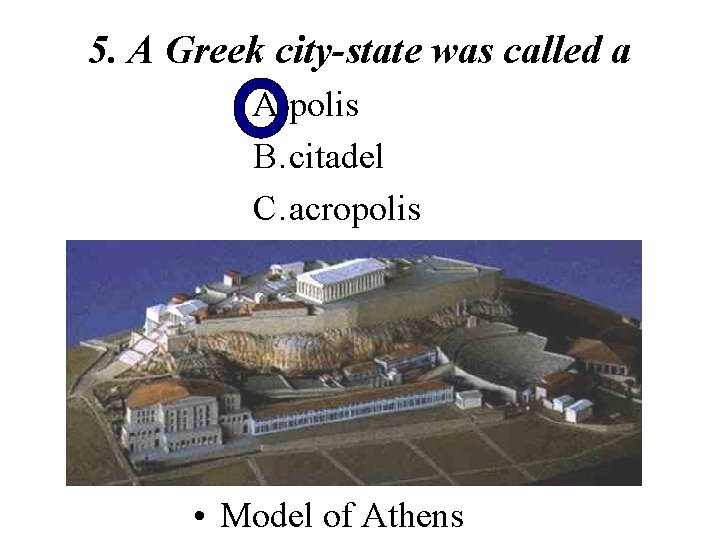
5. A Greek city-state was called a A. polis B. citadel C. acropolis • Model of Athens
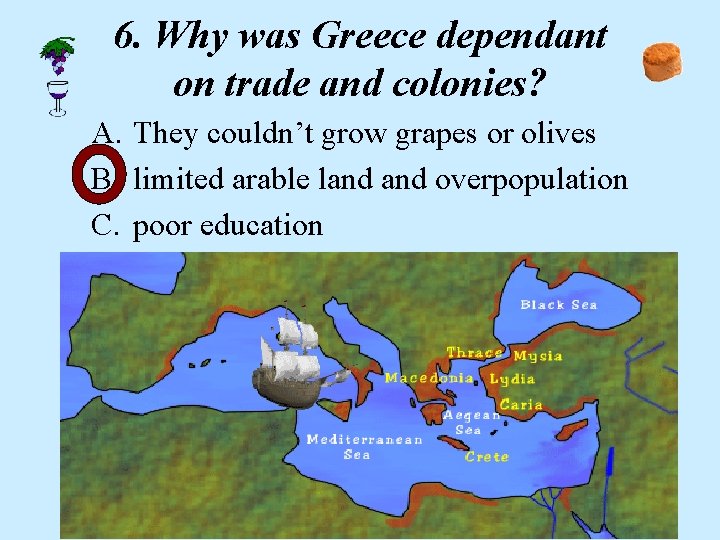
6. Why was Greece dependant on trade and colonies? A. They couldn’t grow grapes or olives B. limited arable land overpopulation C. poor education
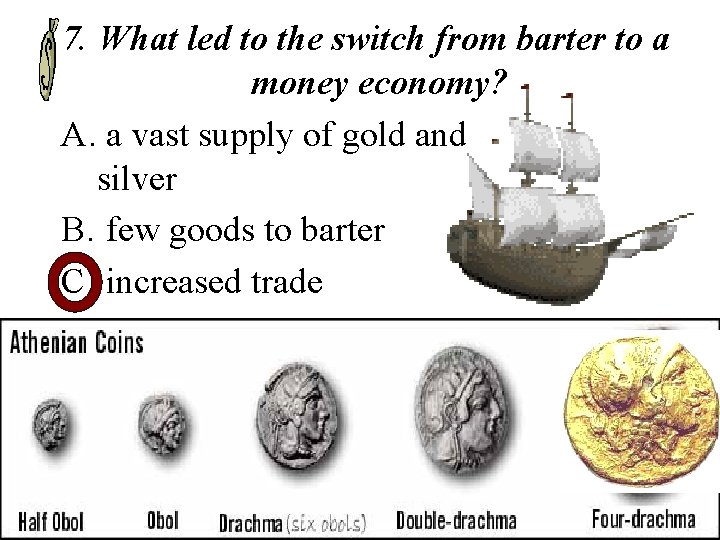
7. What led to the switch from barter to a money economy? A. a vast supply of gold and silver B. few goods to barter C. increased trade
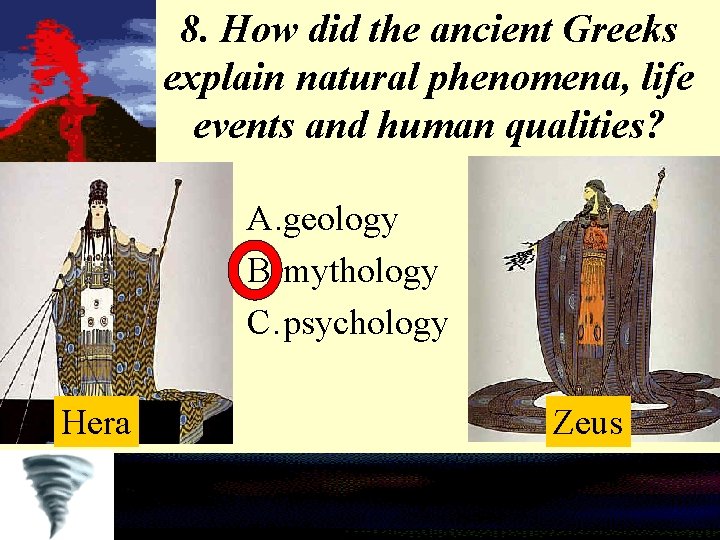
8. How did the ancient Greeks explain natural phenomena, life events and human qualities? A. geology B. mythology C. psychology Hera Zeus
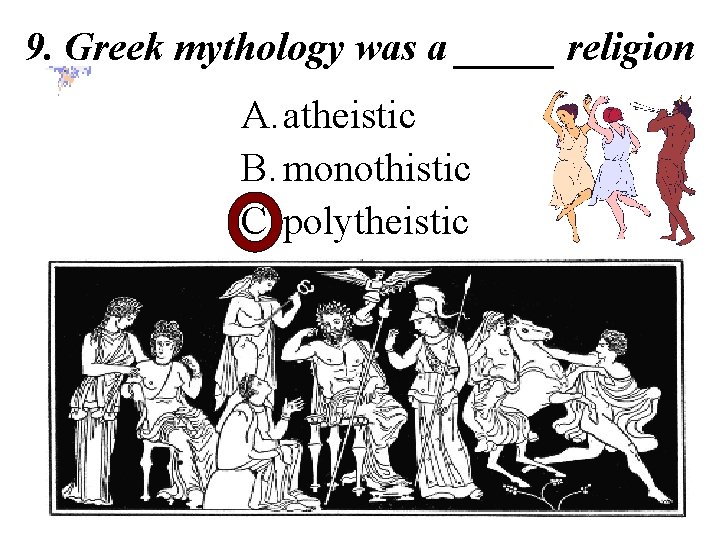
9. Greek mythology was a _____ religion A. atheistic B. monothistic C. polytheistic
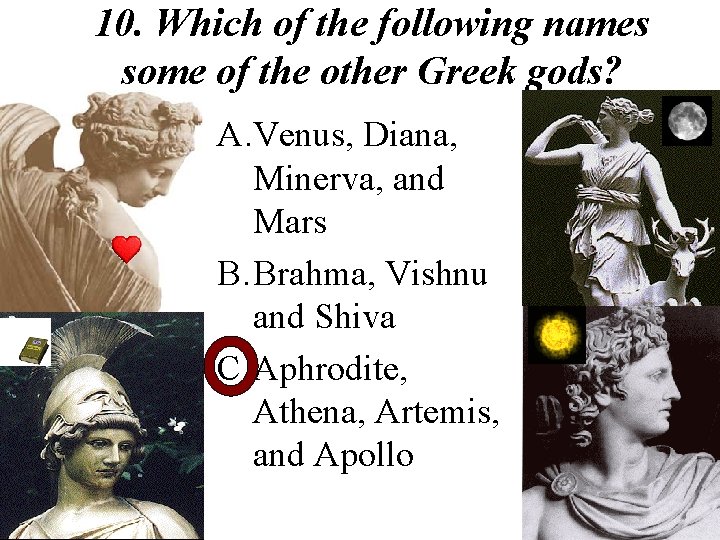
10. Which of the following names some of the other Greek gods? A. Venus, Diana, Minerva, and Mars B. Brahma, Vishnu and Shiva C. Aphrodite, Athena, Artemis, and Apollo
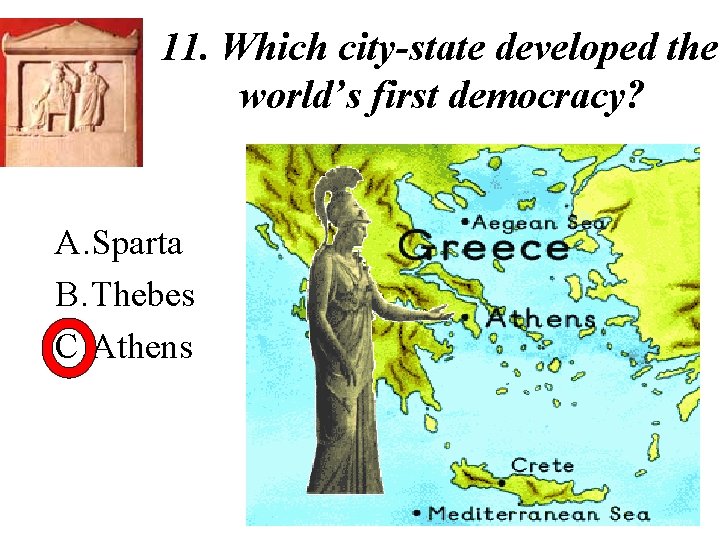
11. Which city-state developed the world’s first democracy? A. Sparta B. Thebes C. Athens
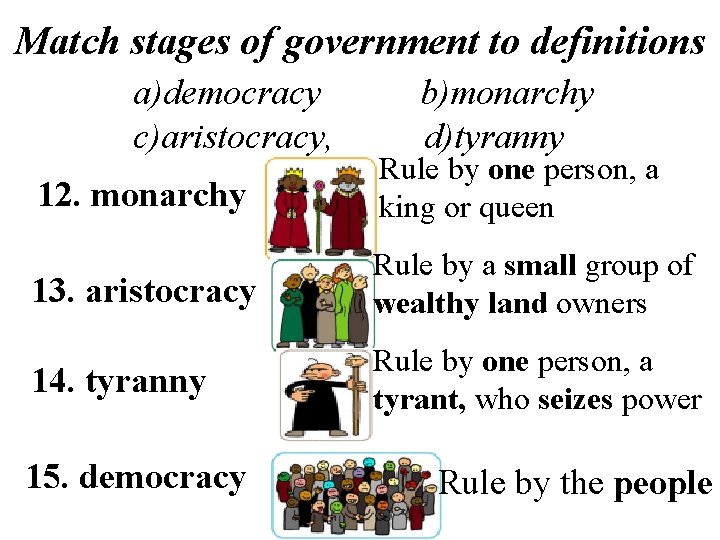
Match stages of government to definitions a)democracy c)aristocracy, b)monarchy d)tyranny 12. monarchy Rule by one person, a king or queen 13. aristocracy Rule by a small group of wealthy land owners 14. tyranny Rule by one person, a tyrant, who seizes power 15. democracy Rule by the people
16. Which of the following were tyrants who made laws and reforms which led to democracy? A. Socrates and Plato B. Aeschylus and Sophocles C. Draco and Solon
17. • He wrote the first Greek legal code. It had harsh laws – including debt slavery. • Most crimes were punishable by death • He began the jury system Who is being described above? A. Solon B. Draco C. Pericles
18. Who allowed all citizens to debate in the assembly, gave all citizens access to the court system and outlawed debt slavery? A. Solon B. Phidias C. Augustus
19. How was democracy in Athens limited? A. Only large landowners could be citizens B. Women, foreigners, and slaves had no political rights C. Only those of noble birth could run for office
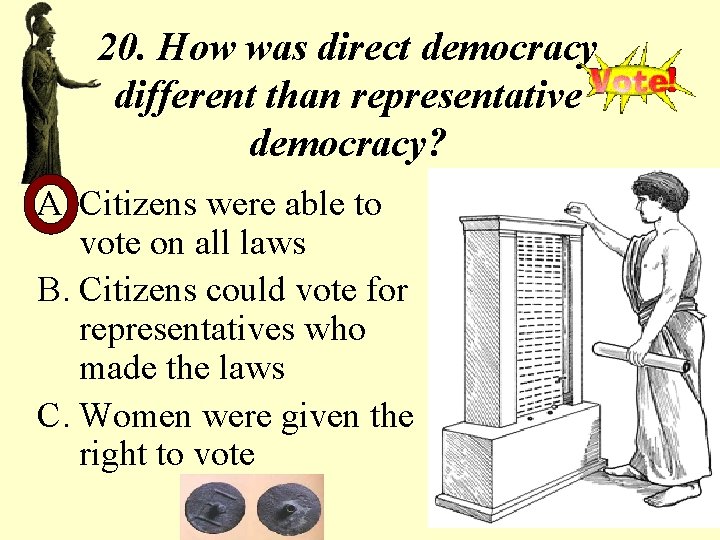
20. How was direct democracy different than representative democracy? A. Citizens were able to vote on all laws B. Citizens could vote for representatives who made the laws C. Women were given the right to vote
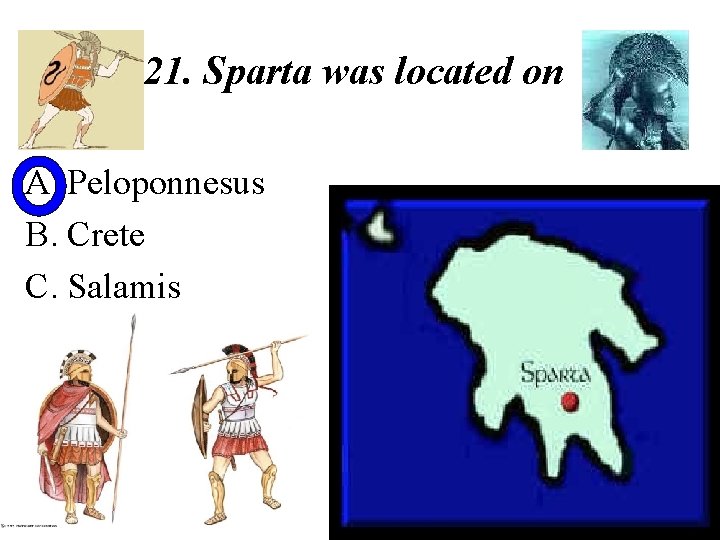
21. Sparta was located on A. Peloponnesus B. Crete C. Salamis
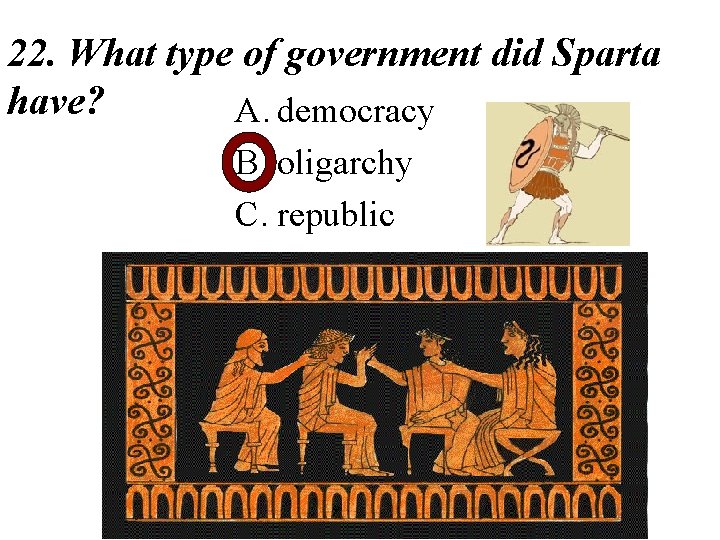
22. What type of government did Sparta have? A. democracy B. oligarchy C. republic
23. What is an oligarchy? A. rule by a few powerful people (business people as well as landowners). B. rule by an emperor and his family C. rule by bicameral legislature
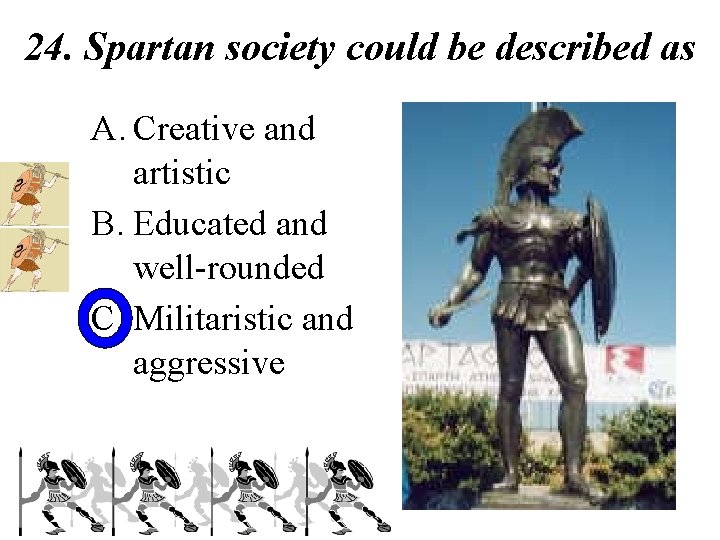
24. Spartan society could be described as A. Creative and artistic B. Educated and well-rounded C. Militaristic and aggressive
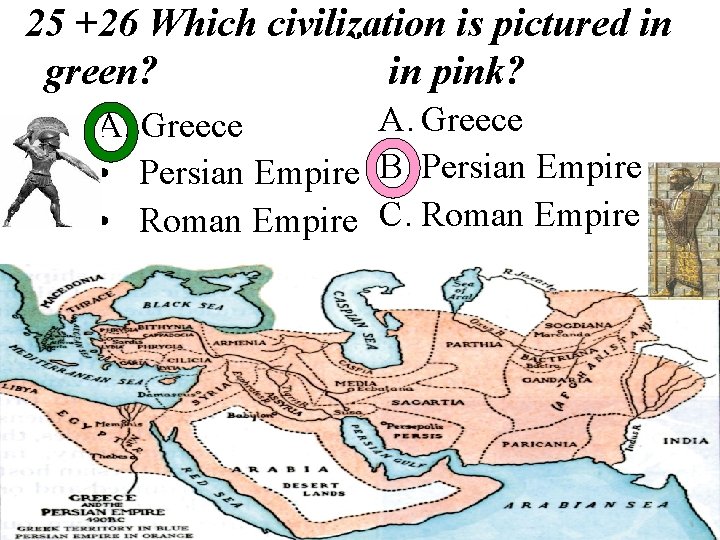
25 +26 Which civilization is pictured in green? in pink? A. Greece • Persian Empire B. Persian Empire • Roman Empire C. Roman Empire
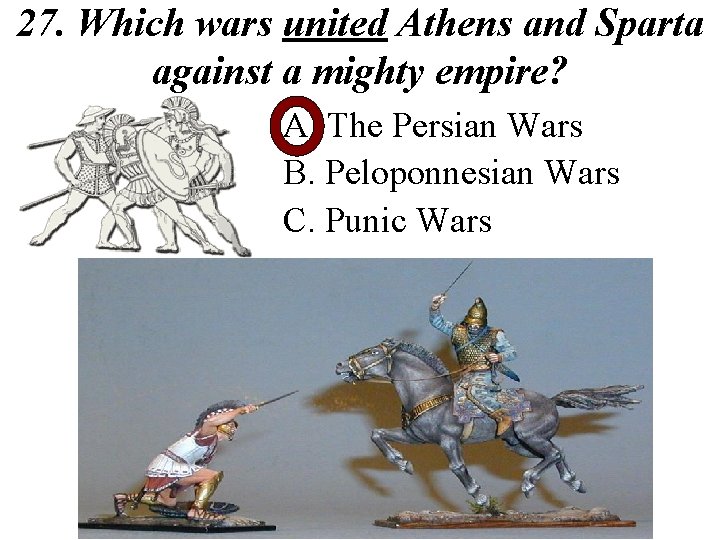
27. Which wars united Athens and Sparta against a mighty empire? A. The Persian Wars B. Peloponnesian Wars C. Punic Wars
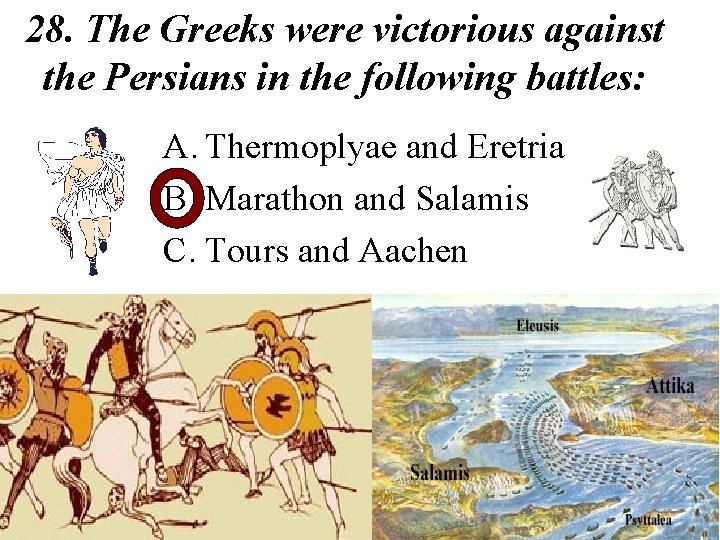
28. The Greeks were victorious against the Persians in the following battles: A. Thermoplyae and Eretria B. Marathon and Salamis C. Tours and Aachen
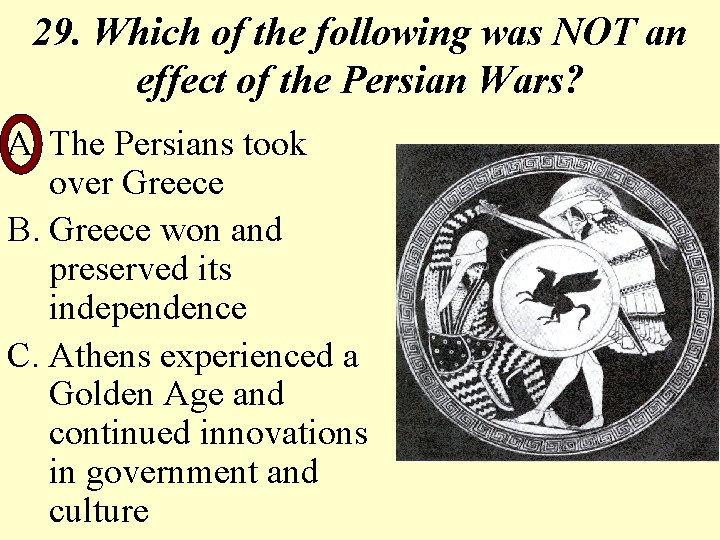
29. Which of the following was NOT an effect of the Persian Wars? A. The Persians took over Greece B. Greece won and preserved its independence C. Athens experienced a Golden Age and continued innovations in government and culture
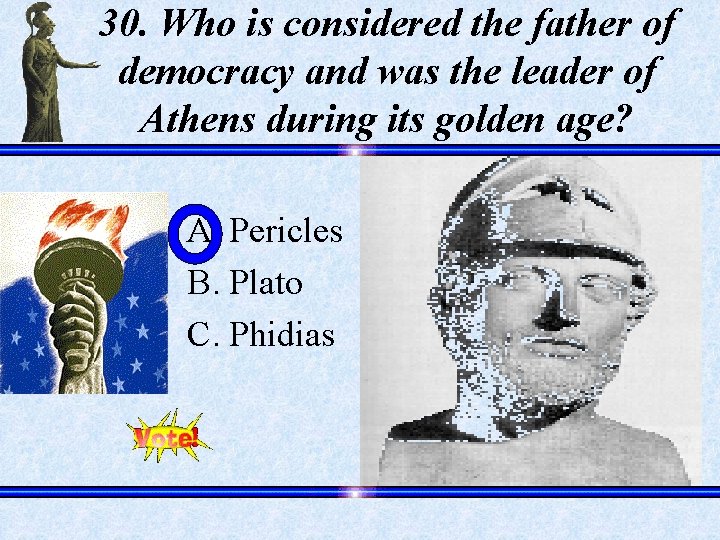
30. Who is considered the father of democracy and was the leader of Athens during its golden age? A. Pericles B. Plato C. Phidias
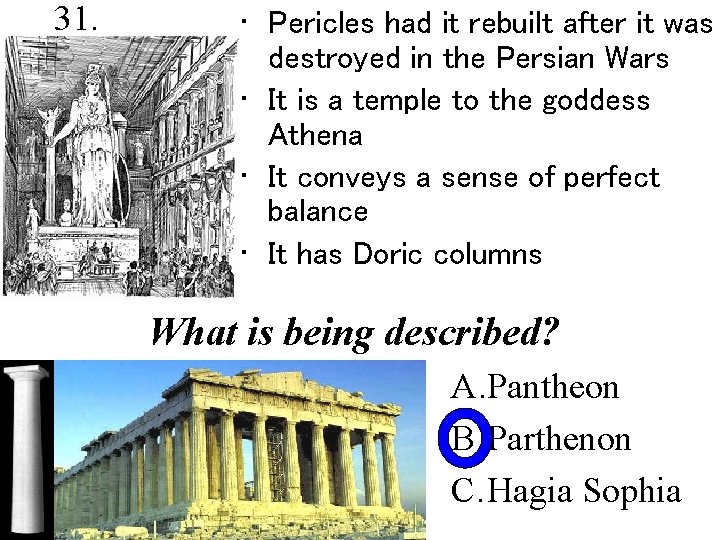
31. • Pericles had it rebuilt after it was destroyed in the Persian Wars • It is a temple to the goddess Athena • It conveys a sense of perfect balance • It has Doric columns What is being described? A. Pantheon B. Parthenon C. Hagia Sophia
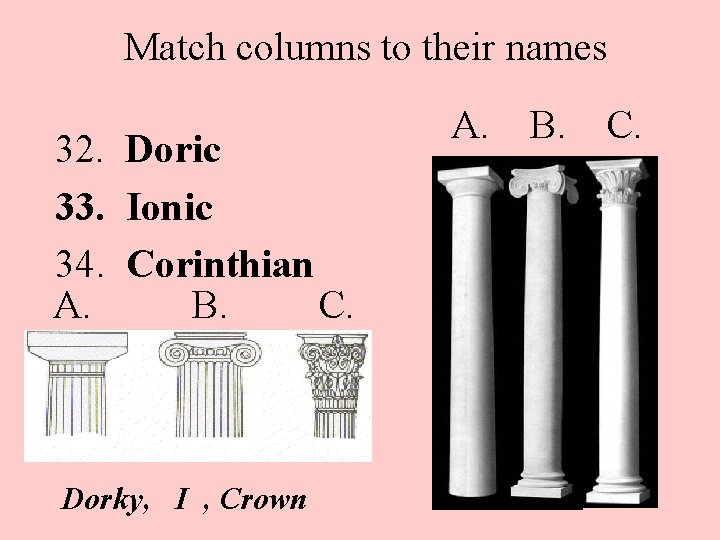
Match columns to their names 32. Doric 33. Ionic 34. Corinthian A. B. C. Dorky, I , Crown A. B. C.
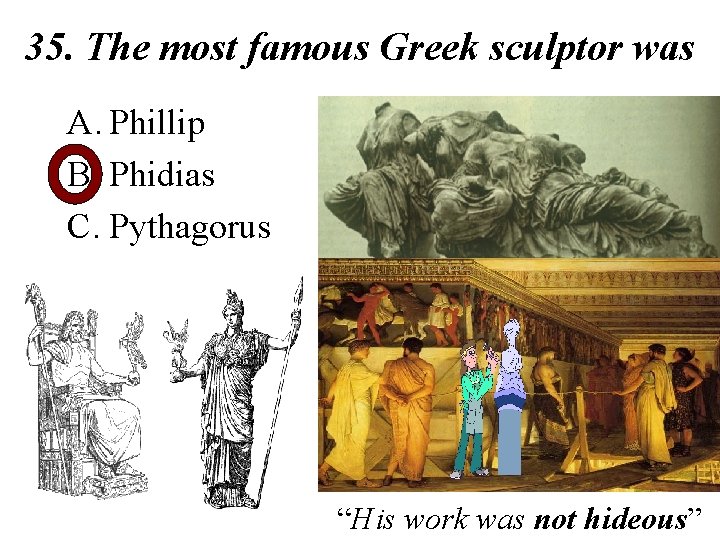
35. The most famous Greek sculptor was A. Phillip B. Phidias C. Pythagorus “His work was not hideous”
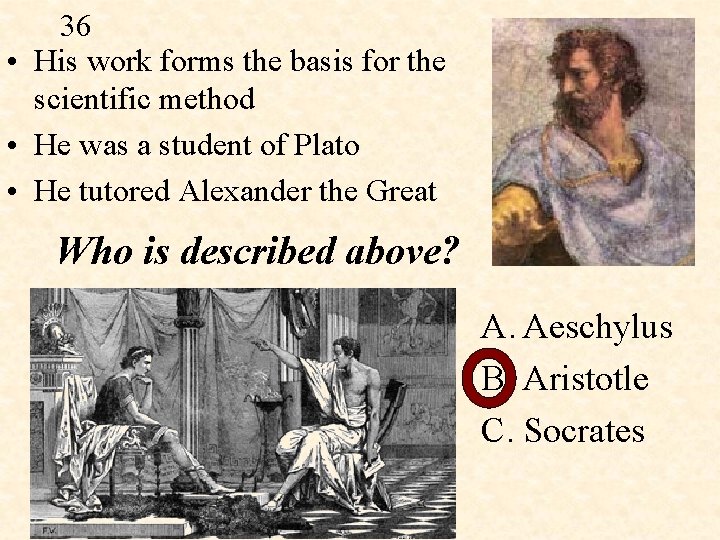
36 • His work forms the basis for the scientific method • He was a student of Plato • He tutored Alexander the Great Who is described above? A. Aeschylus B. Aristotle C. Socrates
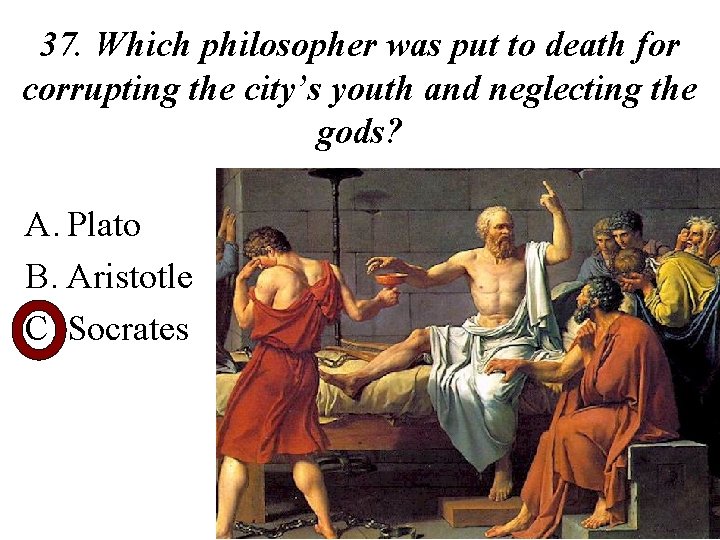
37. Which philosopher was put to death for corrupting the city’s youth and neglecting the gods? A. Plato B. Aristotle C. Socrates
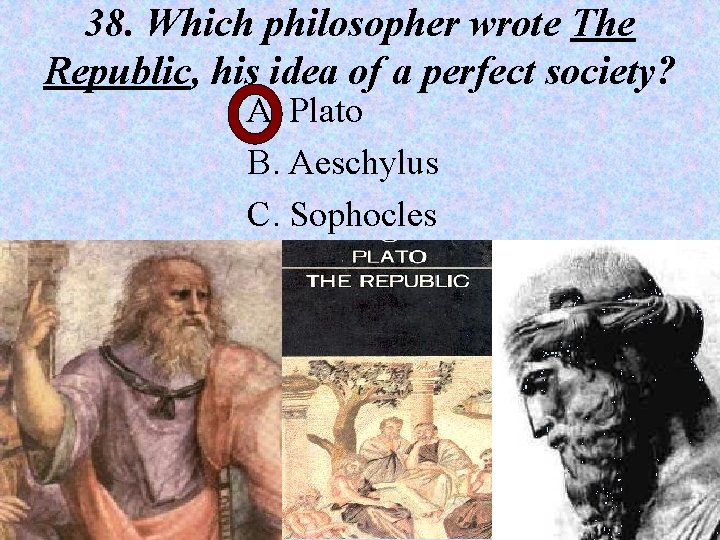
38. Which philosopher wrote The Republic, his idea of a perfect society? A. Plato B. Aeschylus C. Sophocles
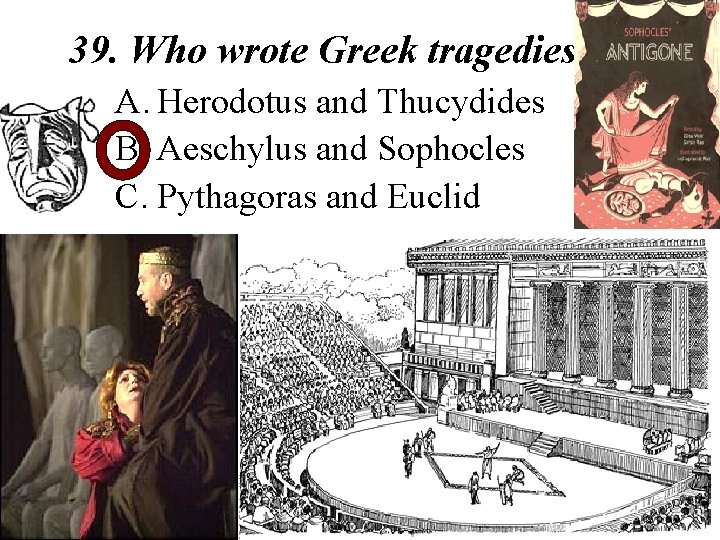
39. Who wrote Greek tragedies? A. Herodotus and Thucydides B. Aeschylus and Sophocles C. Pythagoras and Euclid
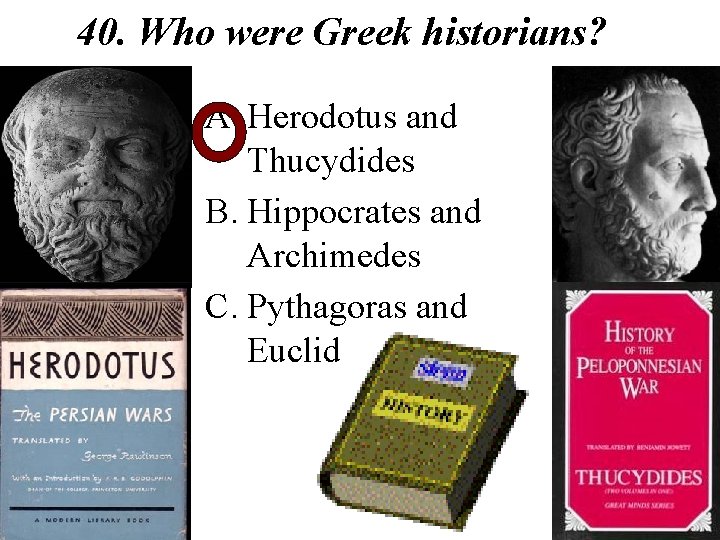
40. Who were Greek historians? A. Herodotus and Thucydides B. Hippocrates and Archimedes C. Pythagoras and Euclid
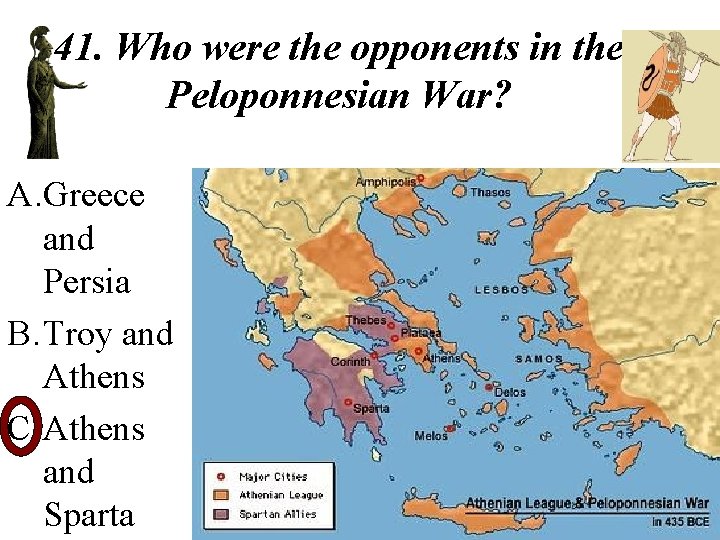
41. Who were the opponents in the Peloponnesian War? A. Greece and Persia B. Troy and Athens C. Athens and Sparta
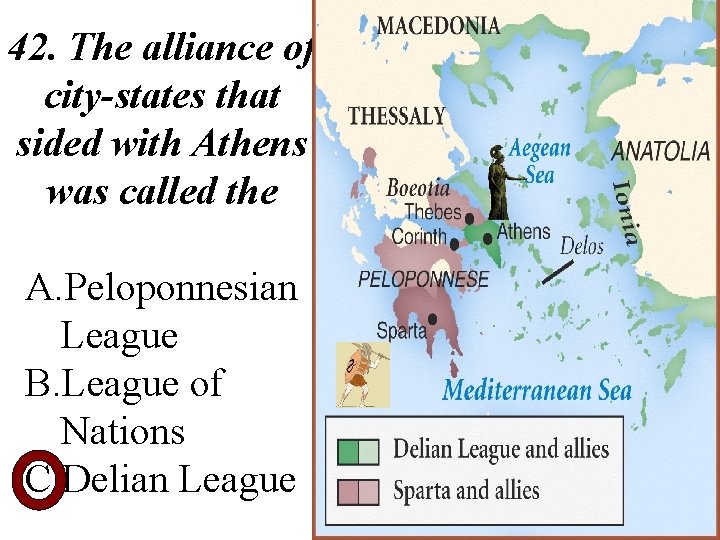
42. The alliance of city-states that sided with Athens was called the A. Peloponnesian League B. League of Nations C. Delian League
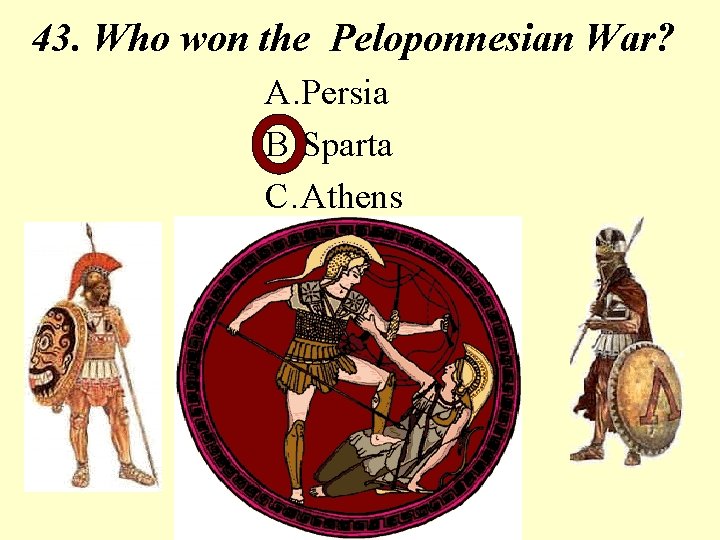
43. Who won the Peloponnesian War? A. Persia B. Sparta C. Athens
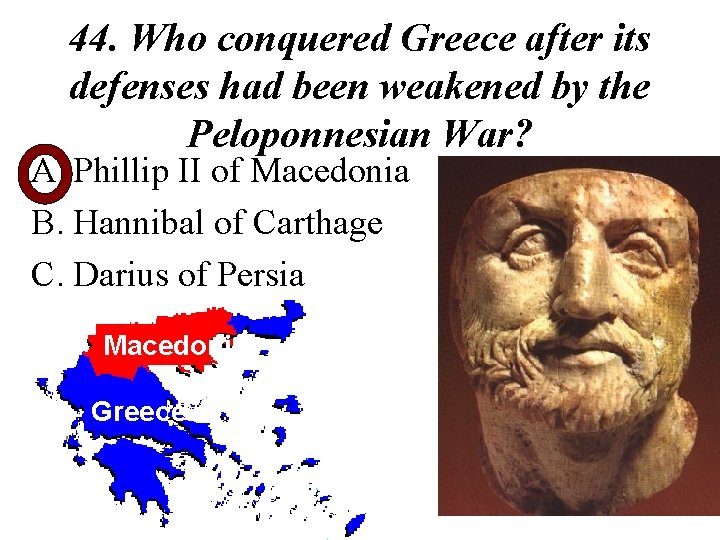
44. Who conquered Greece after its defenses had been weakened by the Peloponnesian War? A. Phillip II of Macedonia B. Hannibal of Carthage C. Darius of Persia Macedonia Greece
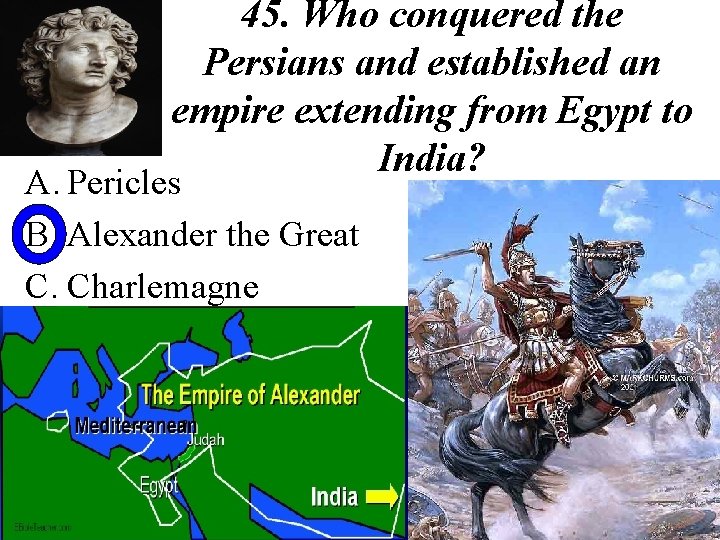
45. Who conquered the Persians and established an empire extending from Egypt to India? A. Pericles B. Alexander the Great C. Charlemagne
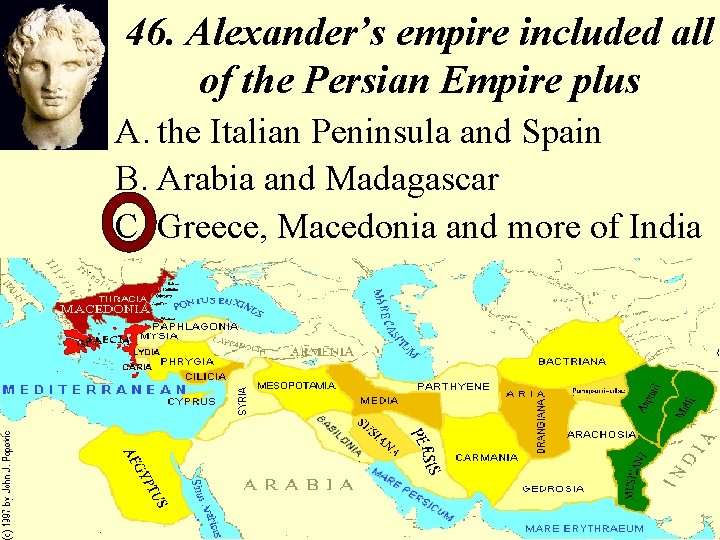
46. Alexander’s empire included all of the Persian Empire plus A. the Italian Peninsula and Spain B. Arabia and Madagascar C. Greece, Macedonia and more of India
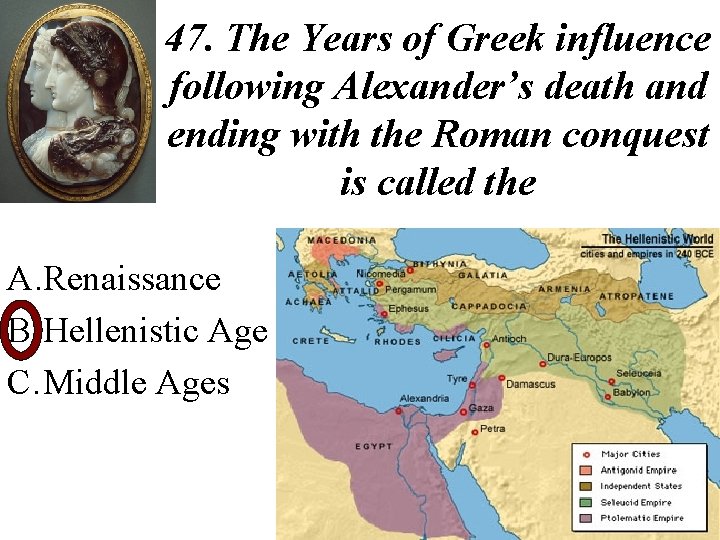
47. The Years of Greek influence following Alexander’s death and ending with the Roman conquest is called the A. Renaissance B. Hellenistic Age C. Middle Ages
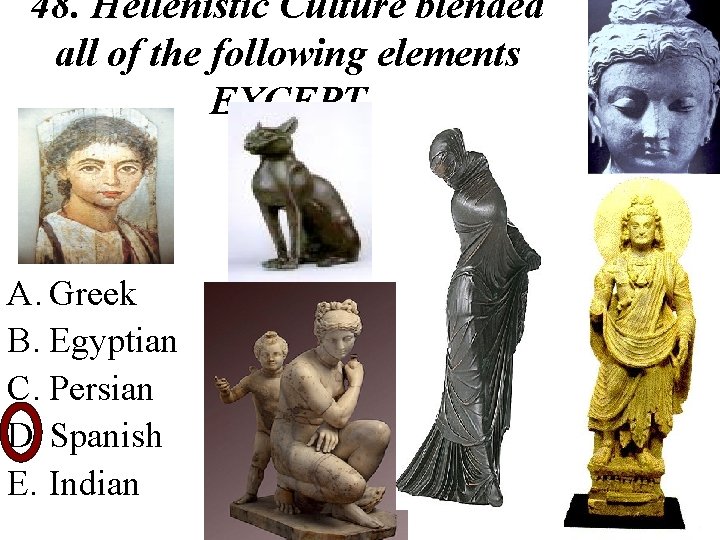
48. Hellenistic Culture blended all of the following elements EXCEPT A. Greek B. Egyptian C. Persian D. Spanish E. Indian
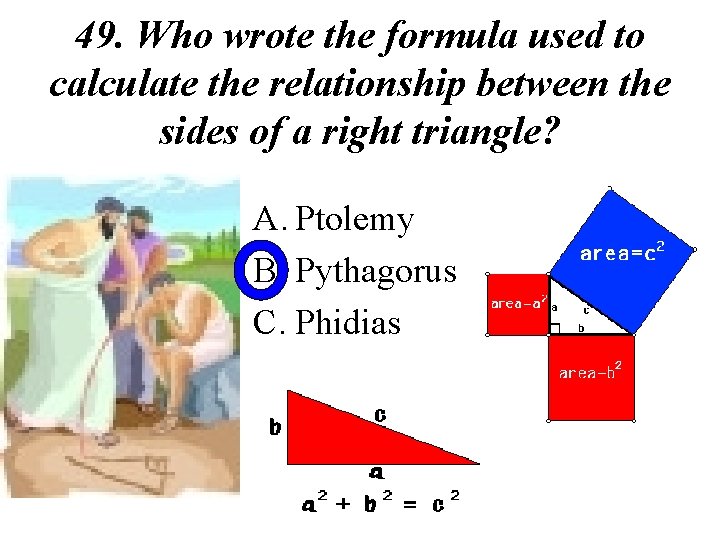
49. Who wrote the formula used to calculate the relationship between the sides of a right triangle? A. Ptolemy B. Pythagorus C. Phidias
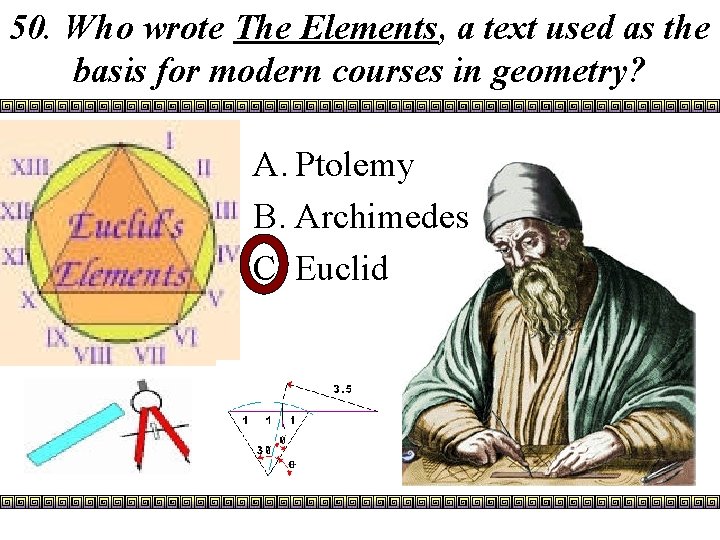
50. Who wrote The Elements, a text used as the basis for modern courses in geometry? A. Ptolemy B. Archimedes C. Euclid
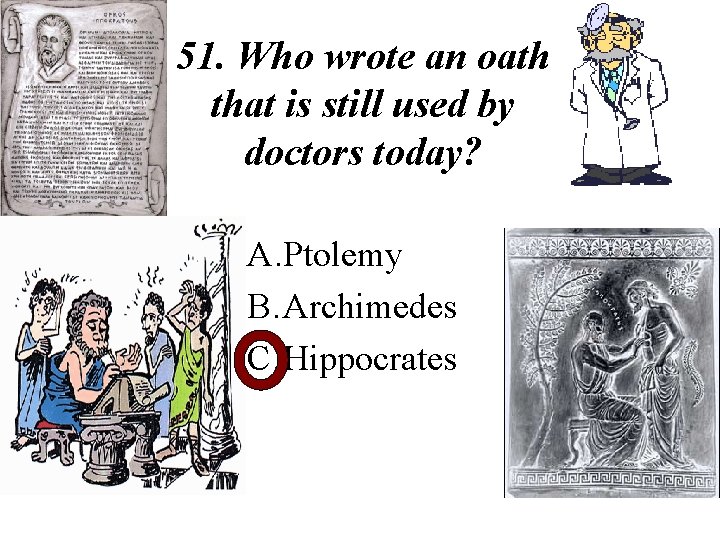
51. Who wrote an oath that is still used by doctors today? A. Ptolemy B. Archimedes C. Hippocrates
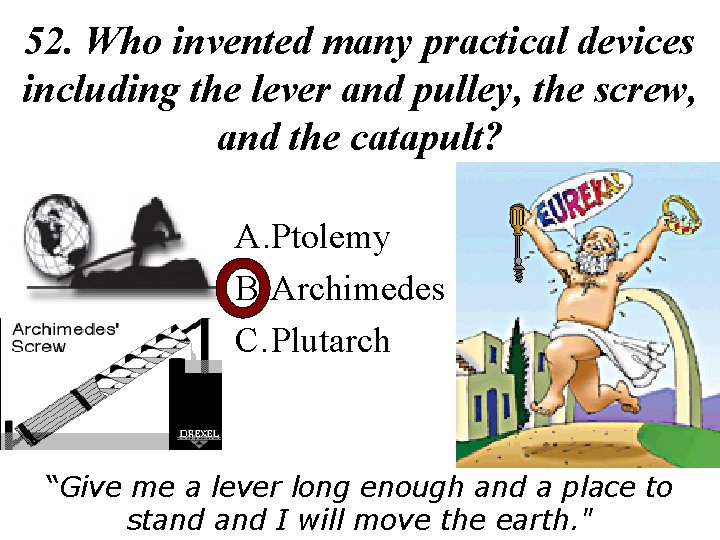
52. Who invented many practical devices including the lever and pulley, the screw, and the catapult? A. Ptolemy B. Archimedes C. Plutarch “Give me a lever long enough and a place to stand I will move the earth. "
- Slides: 46