
1 When a battery no longer works it
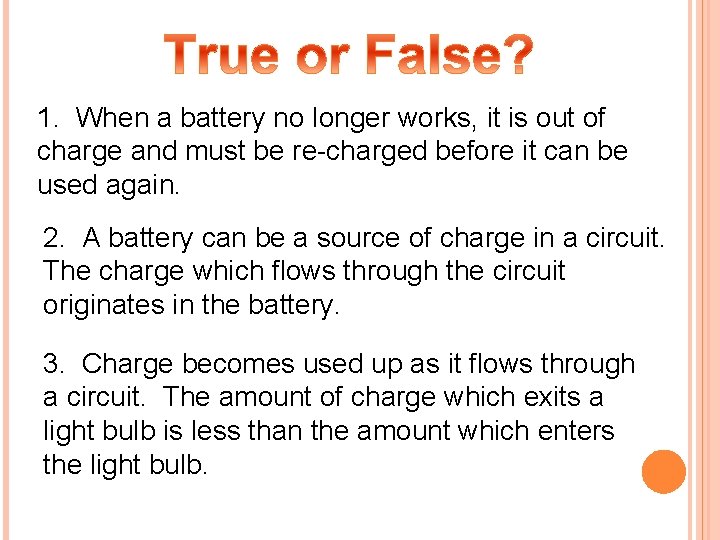
1. When a battery no longer works, it is out of charge and must be re-charged before it can be used again. 2. A battery can be a source of charge in a circuit. The charge which flows through the circuit originates in the battery. 3. Charge becomes used up as it flows through a circuit. The amount of charge which exits a light bulb is less than the amount which enters the light bulb.
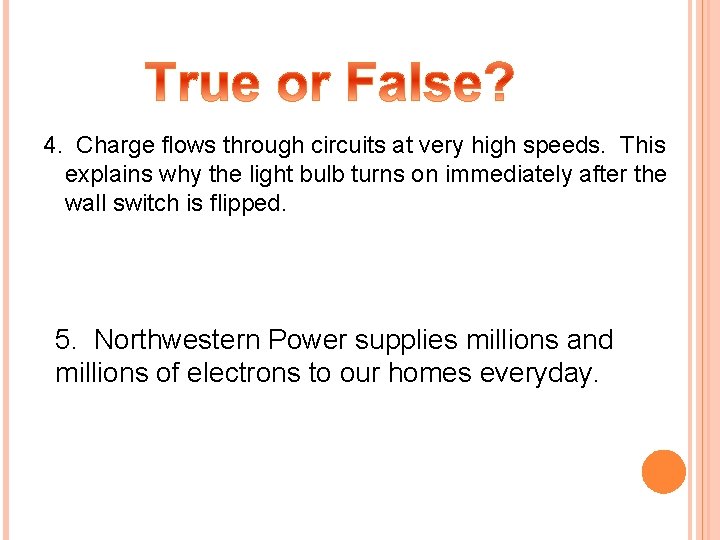
4. Charge flows through circuits at very high speeds. This explains why the light bulb turns on immediately after the wall switch is flipped. 5. Northwestern Power supplies millions and millions of electrons to our homes everyday.
Electricity …when charge is no longer static….
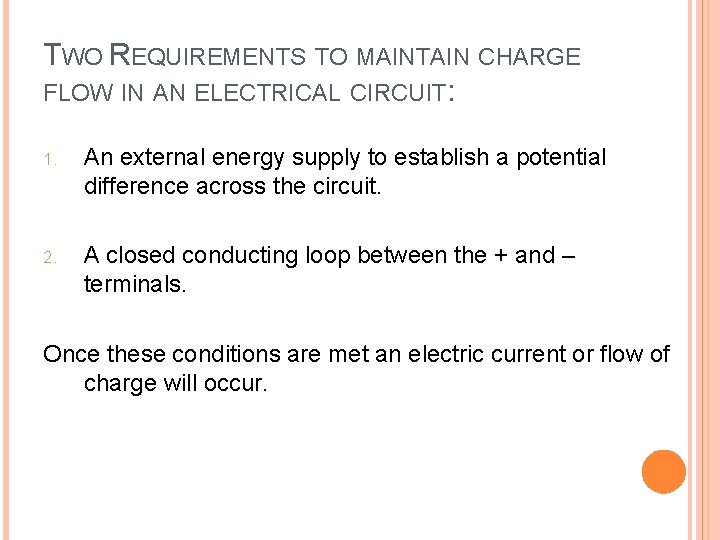
TWO REQUIREMENTS TO MAINTAIN CHARGE FLOW IN AN ELECTRICAL CIRCUIT: 1. An external energy supply to establish a potential difference across the circuit. 2. A closed conducting loop between the + and – terminals. Once these conditions are met an electric current or flow of charge will occur.
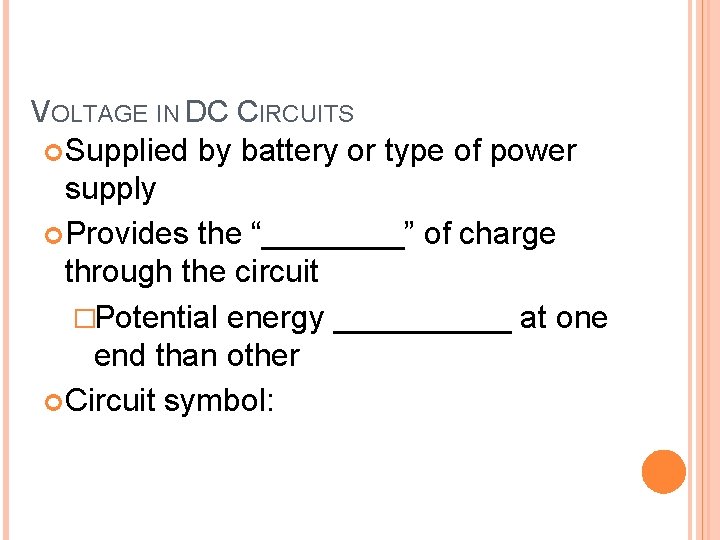
VOLTAGE IN DC CIRCUITS Supplied by battery or type of power supply Provides the “____” of charge through the circuit �Potential energy _____ at one end than other Circuit symbol:
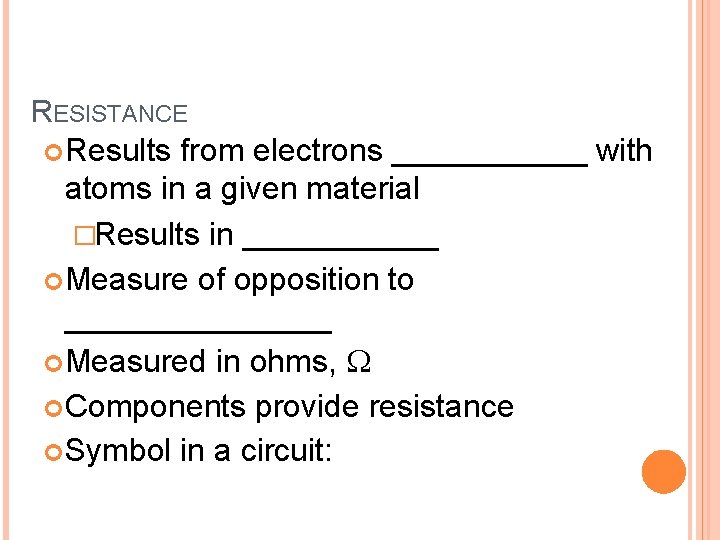
RESISTANCE Results from electrons ______ with atoms in a given material �Results in ______ Measure of opposition to ________ Measured in ohms, Components provide resistance Symbol in a circuit:
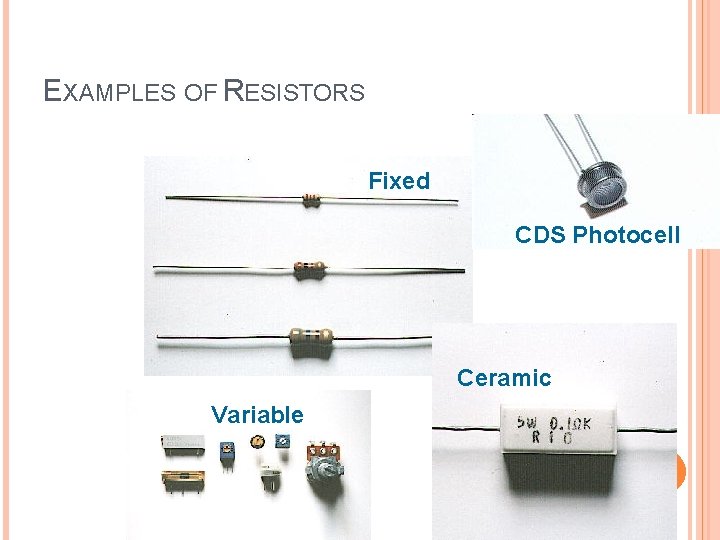
EXAMPLES OF RESISTORS Fixed CDS Photocell Ceramic Variable
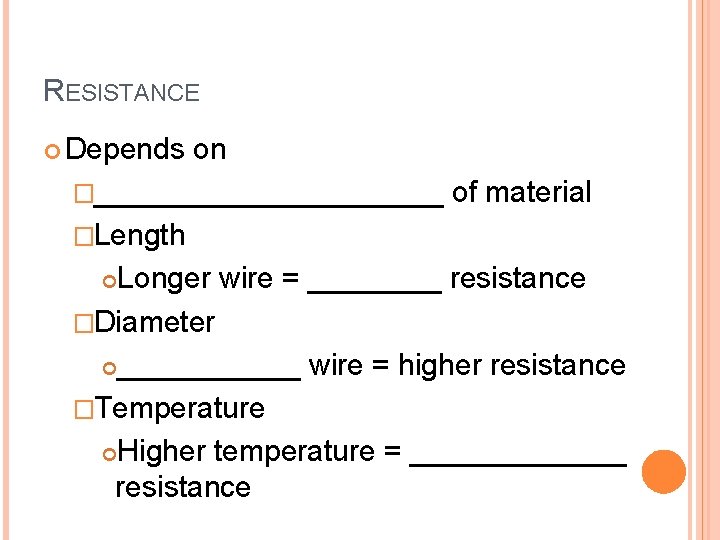
RESISTANCE Depends on �___________ of material �Length Longer wire = ____ resistance �Diameter ______ wire = higher resistance �Temperature Higher temperature = _______ resistance
Electric potential (V) difference between the two terminals ________the movement of charge, it is resistance (Ω) that ___________ it. The rate at which charge flows from terminal to terminal is the result of the combined affect of these two quantities.
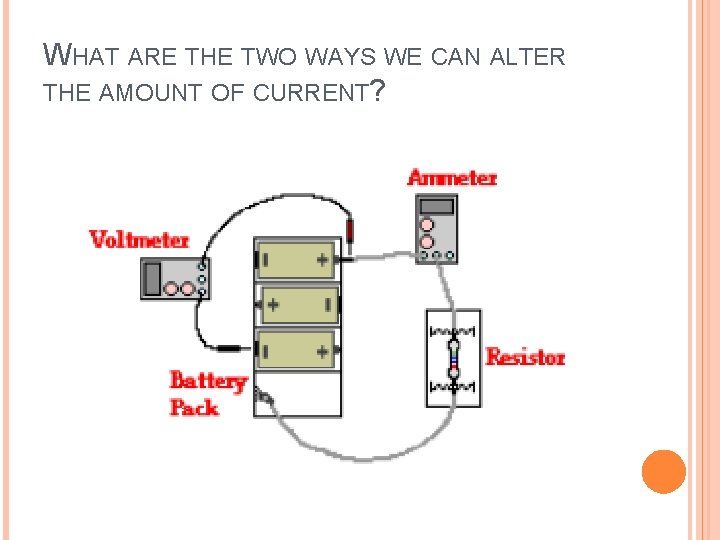
WHAT ARE THE TWO WAYS WE CAN ALTER THE AMOUNT OF CURRENT?
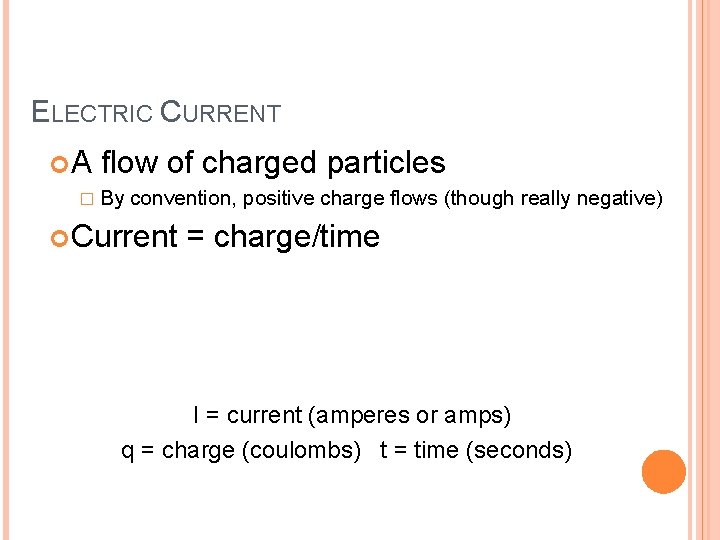
ELECTRIC CURRENT A flow of charged particles � By convention, positive charge flows (though really negative) Current = charge/time I = current (amperes or amps) q = charge (coulombs) t = time (seconds)
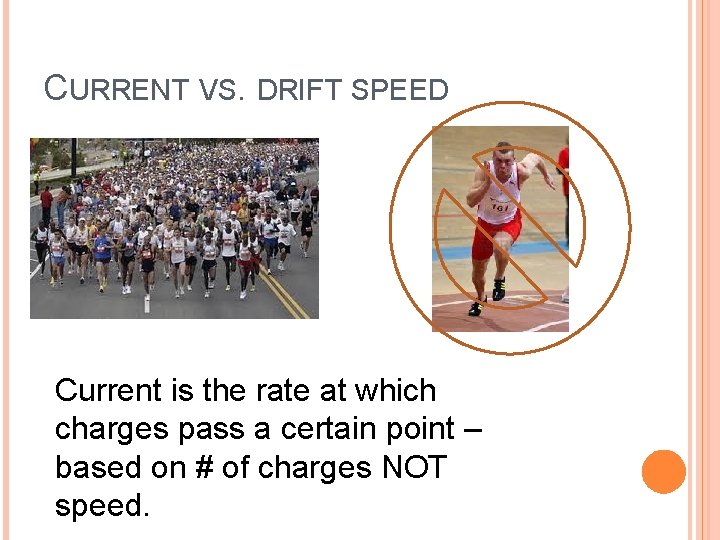
CURRENT VS. DRIFT SPEED Current is the rate at which charges pass a certain point – based on # of charges NOT speed.
OHM’S LAW ΔV =Ix. R Relationships…When one variable is kept constant then… V & I – _______ V & R – _______ I & R - _______
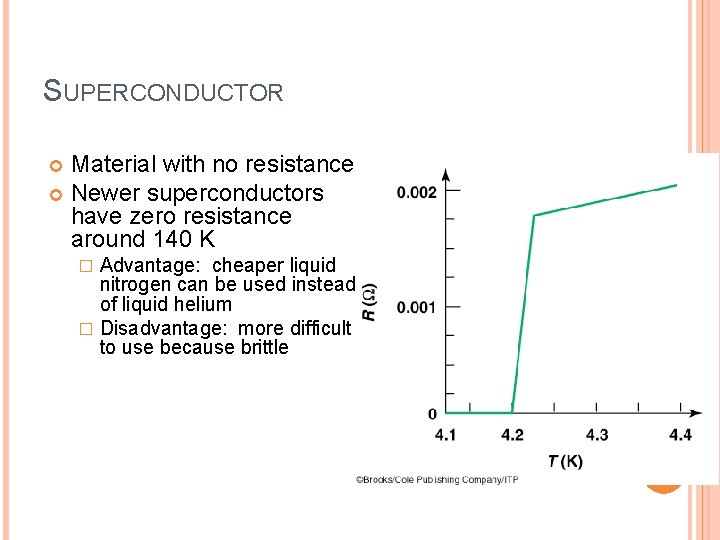
SUPERCONDUCTOR Material with no resistance Newer superconductors have zero resistance around 140 K Advantage: cheaper liquid nitrogen can be used instead of liquid helium � Disadvantage: more difficult to use because brittle �
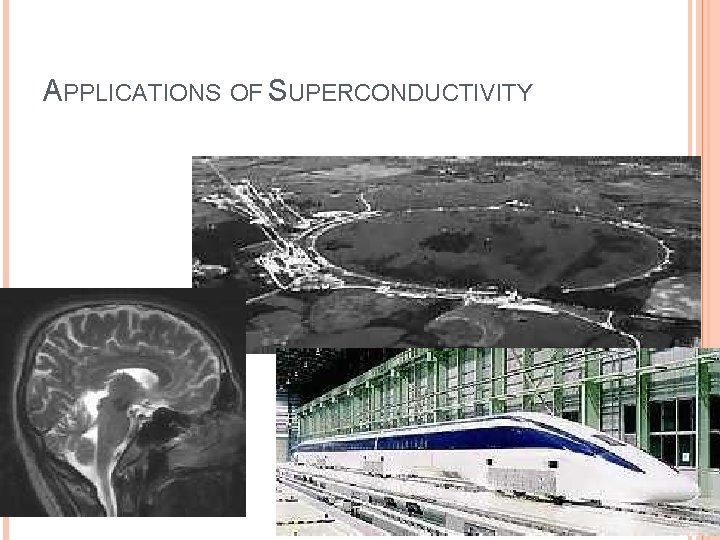
APPLICATIONS OF SUPERCONDUCTIVITY
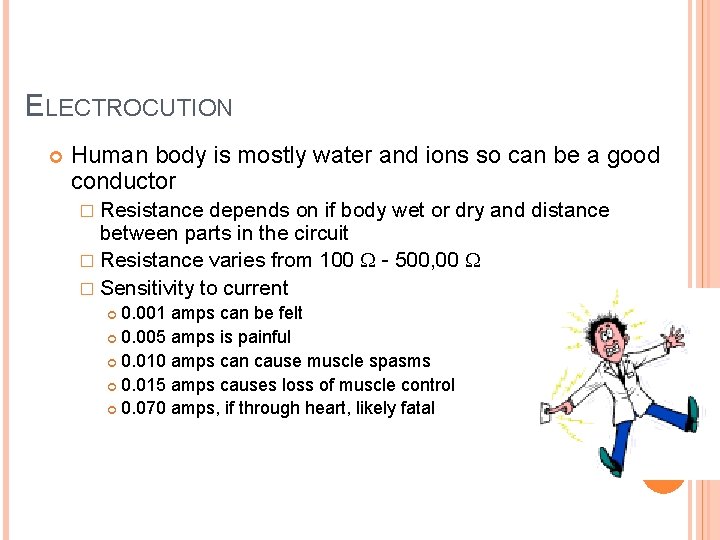
ELECTROCUTION Human body is mostly water and ions so can be a good conductor � Resistance depends on if body wet or dry and distance between parts in the circuit � Resistance varies from 100 - 500, 00 � Sensitivity to current 0. 001 amps can be felt 0. 005 amps is painful 0. 010 amps can cause muscle spasms 0. 015 amps causes loss of muscle control 0. 070 amps, if through heart, likely fatal
- Slides: 16