
1 What structure carries genetic information from generation

![THE BASE PAIRING RULE: Adenine [A] always pairs with Thymine [T] Guanine [G] always](https://slidetodoc.com/presentation_image_h2/290c0b30531d25ef4134b6aa08408f79/image-17.jpg "THE BASE PAIRING RULE: Adenine [A] always pairs with Thymine [T] Guanine [G] always")
- Slides: 44
1. What structure carries genetic information from generation to generation? 2. Which organelle is this structure located in? 3. How long do you think it has taken to discover DNA and its structure? Do you think one person is responsible for the discovery?
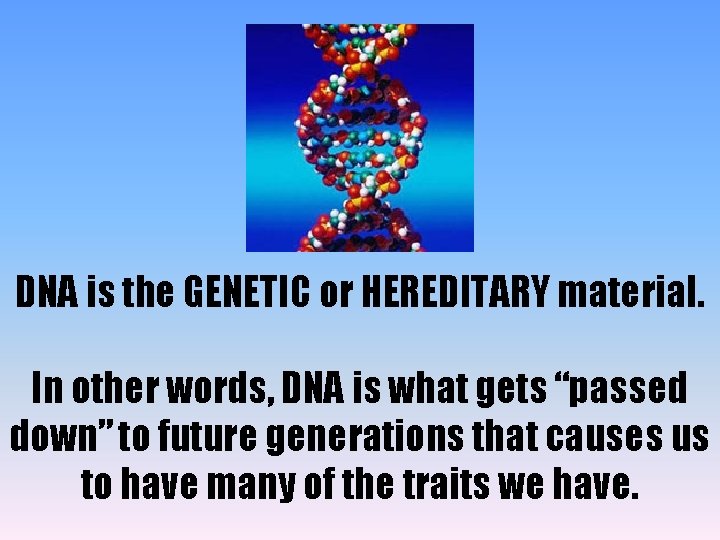
DNA is the GENETIC or HEREDITARY material. In other words, DNA is what gets “passed down” to future generations that causes us to have many of the traits we have.
Many important scientists contributed to the discoveries:
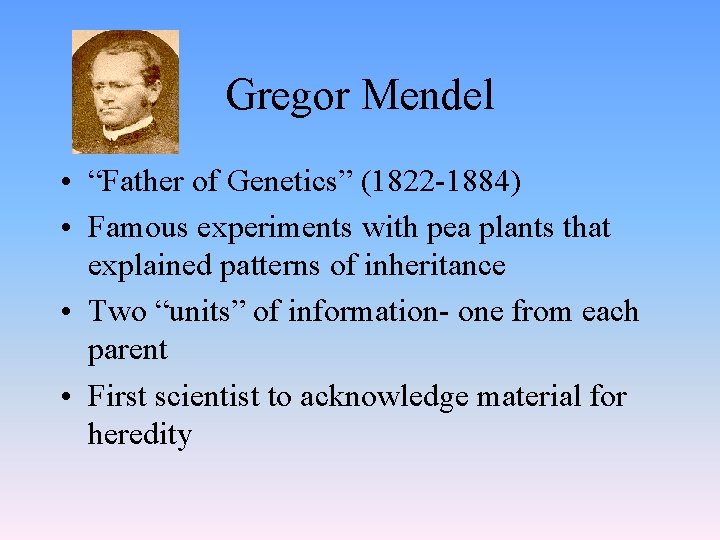
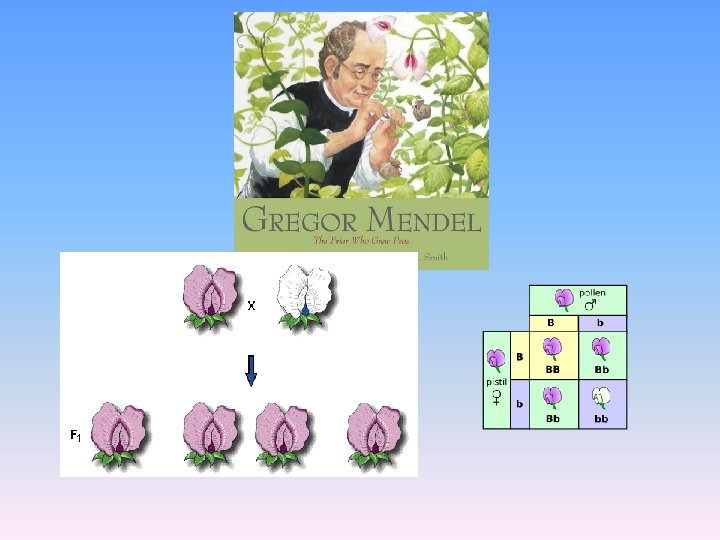
Gregor Mendel • “Father of Genetics” (1822 -1884) • Famous experiments with pea plants that explained patterns of inheritance • Two “units” of information- one from each parent • First scientist to acknowledge material for heredity
Frederick Griffith 1928 Fred was trying to find a vaccine against pneumonia, but instead made a breakthrough in world of heredity. Frederick experimented with pneumonia in mice and found that a hereditary material caused pneumonia.
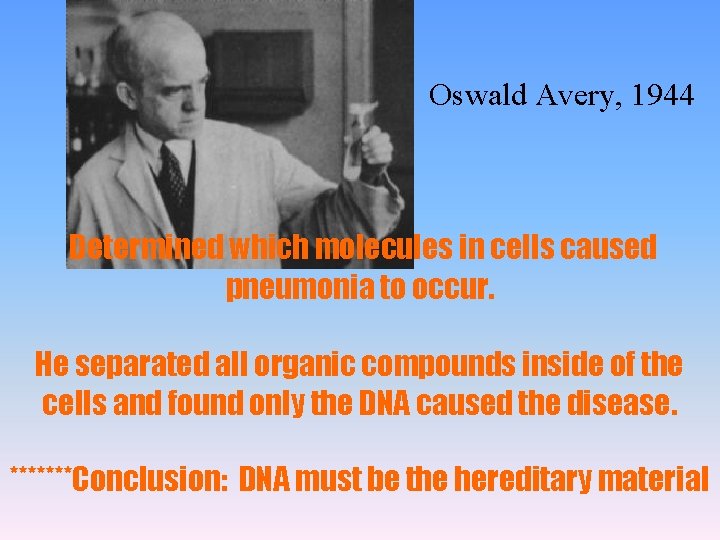
Oswald Avery, 1944 Determined which molecules in cells caused pneumonia to occur. He separated all organic compounds inside of the cells and found only the DNA caused the disease. *******Conclusion: DNA must be the hereditary material
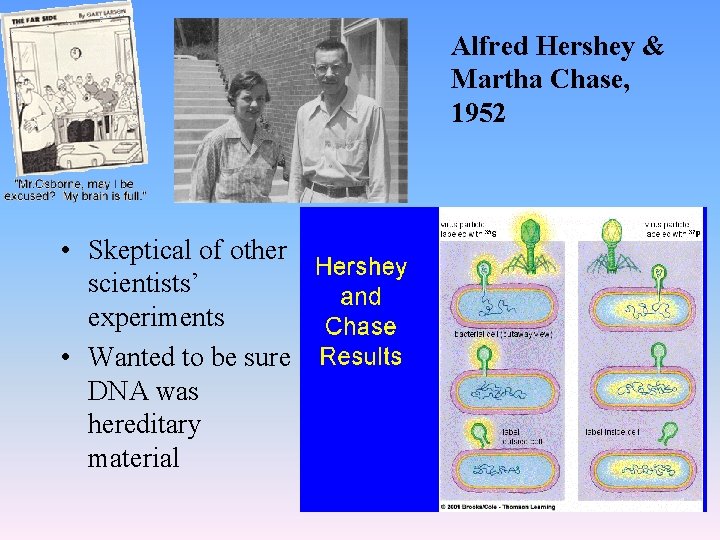
Alfred Hershey & Martha Chase, 1952 • Skeptical of other scientists’ experiments • Wanted to be sure DNA was hereditary material
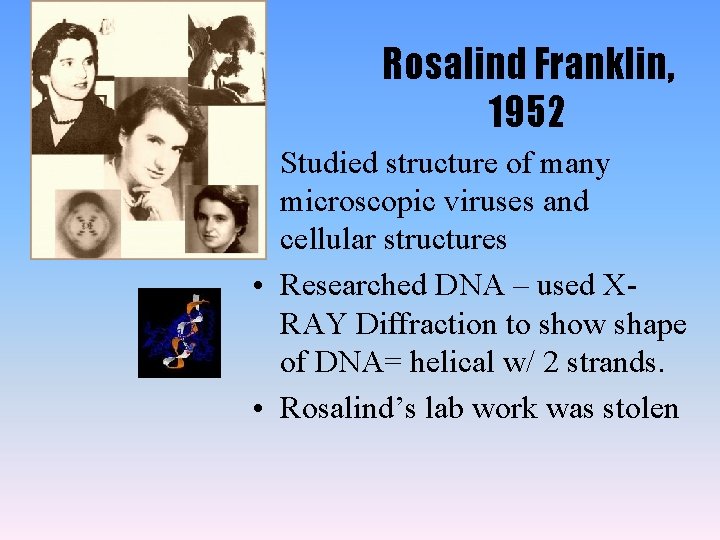
Rosalind Franklin, 1952 • Studied structure of many microscopic viruses and cellular structures • Researched DNA – used XRAY Diffraction to show shape of DNA= helical w/ 2 strands. • Rosalind’s lab work was stolen
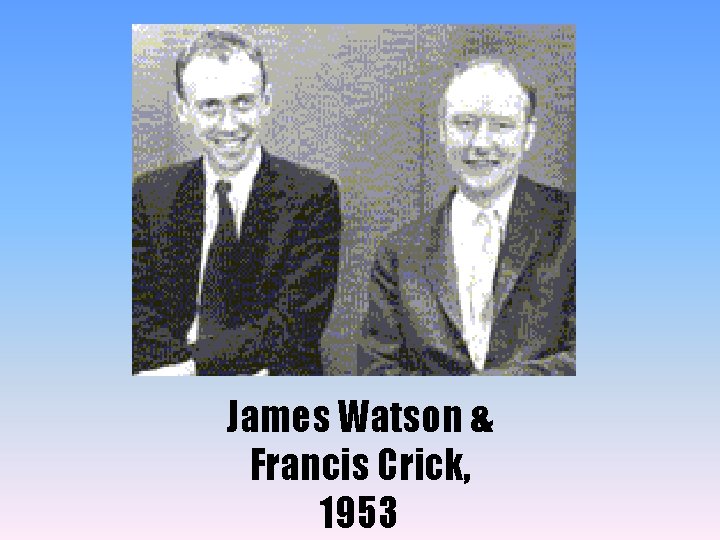
James Watson & Francis Crick, 1953
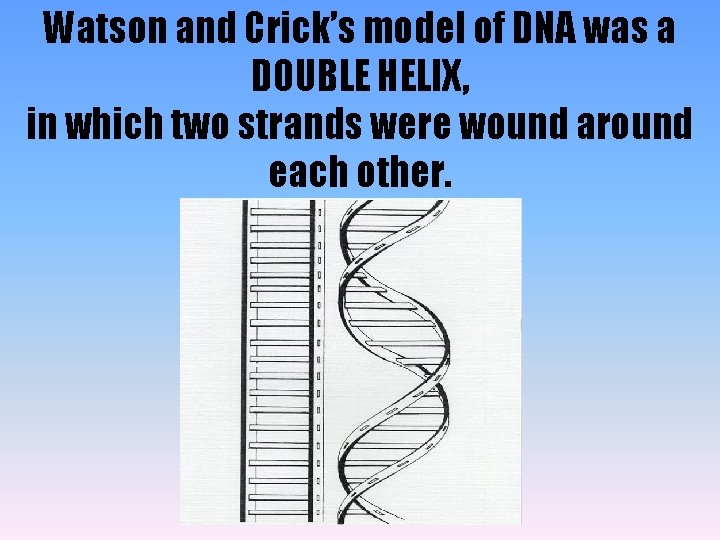
Watson and Crick’s model of DNA was a DOUBLE HELIX, in which two strands were wound around each other.
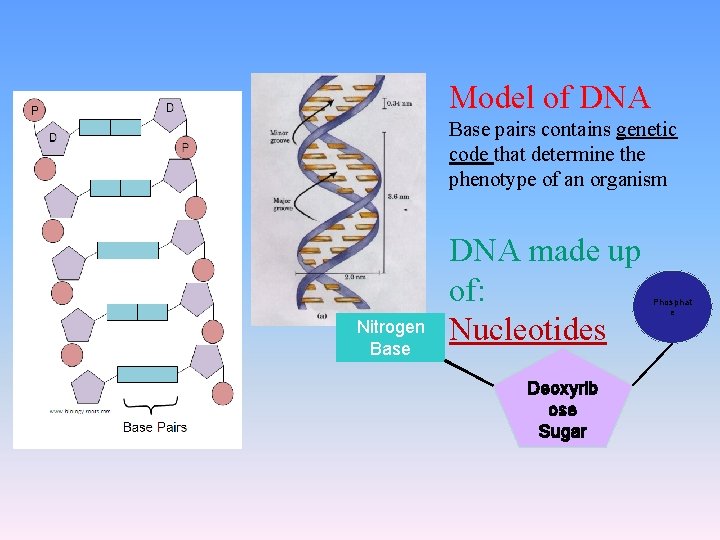
Model of DNA Base pairs contains genetic code that determine the phenotype of an organism Nitrogen Base DNA made up of: Nucleotides Deoxyrib ose Sugar Phosphat e
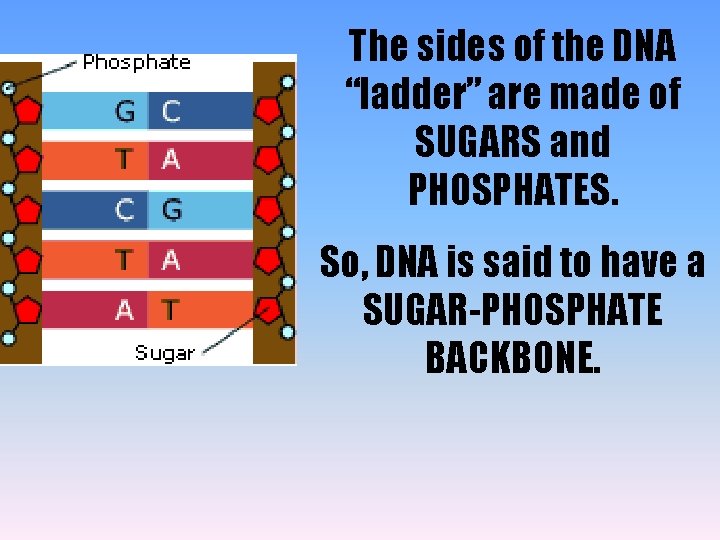
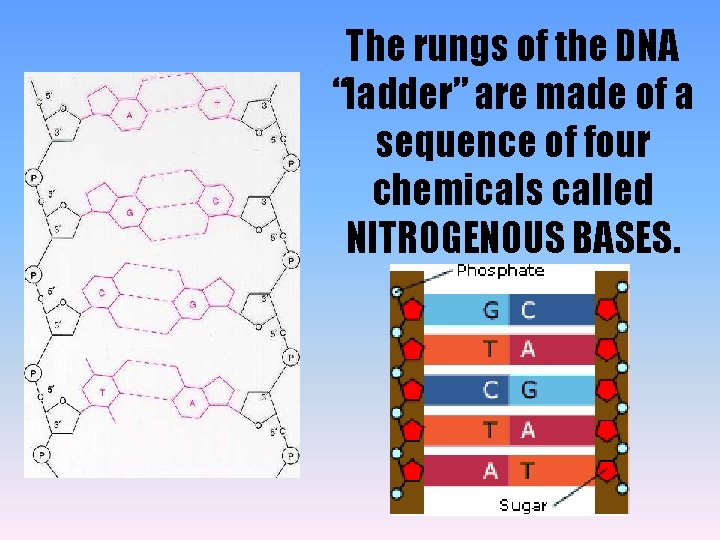
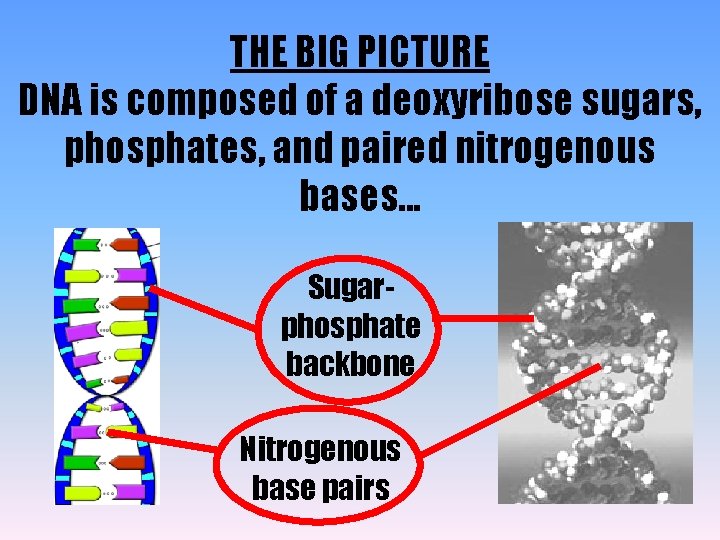
The sides of the DNA “ladder” are made of SUGARS and PHOSPHATES. So, DNA is said to have a SUGAR-PHOSPHATE BACKBONE.
The rungs of the DNA “ladder” are made of a sequence of four chemicals called NITROGENOUS BASES.
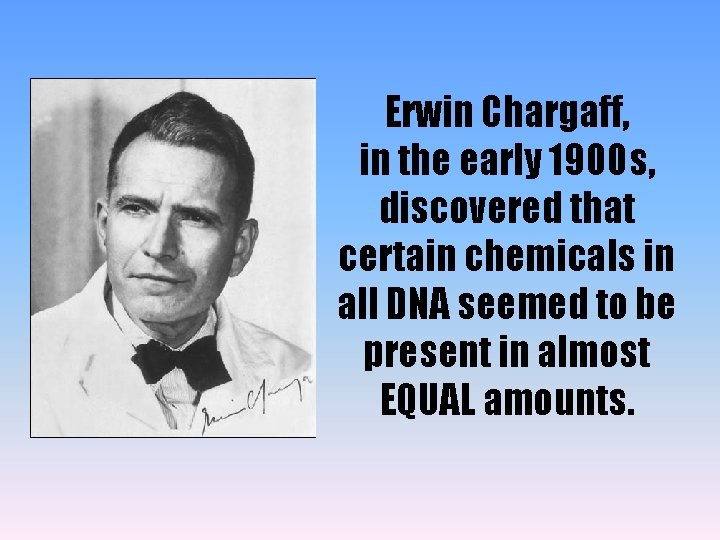
Erwin Chargaff, in the early 1900 s, discovered that certain chemicals in all DNA seemed to be present in almost EQUAL amounts.
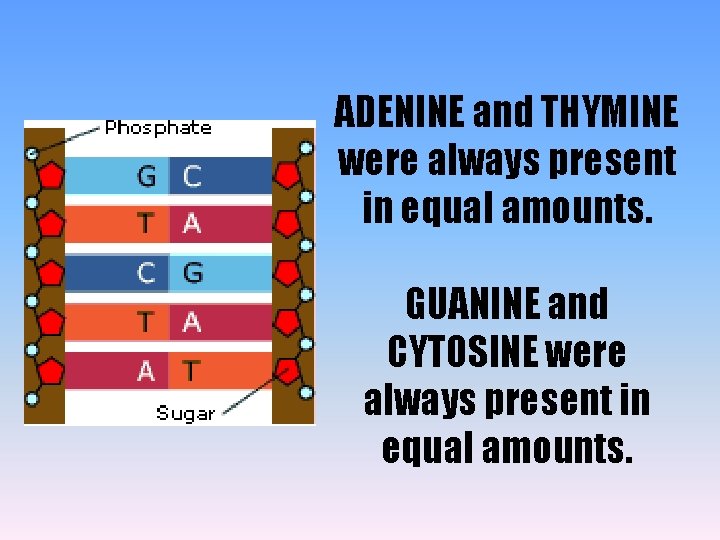
ADENINE and THYMINE were always present in equal amounts. GUANINE and CYTOSINE were always present in equal amounts.
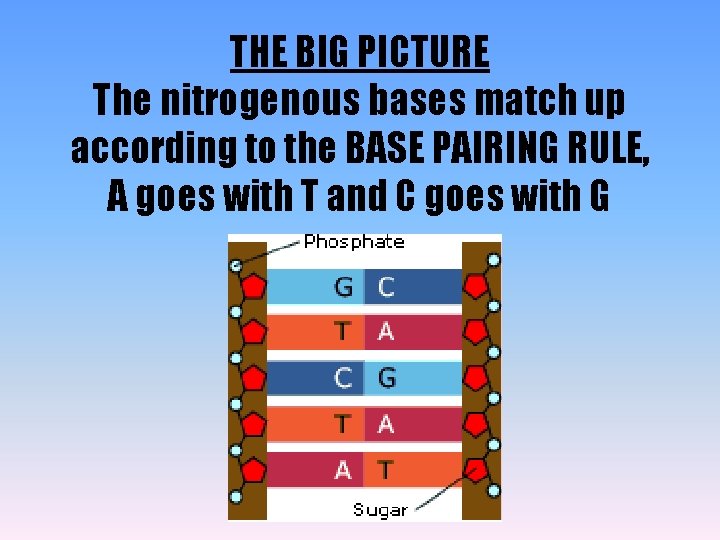
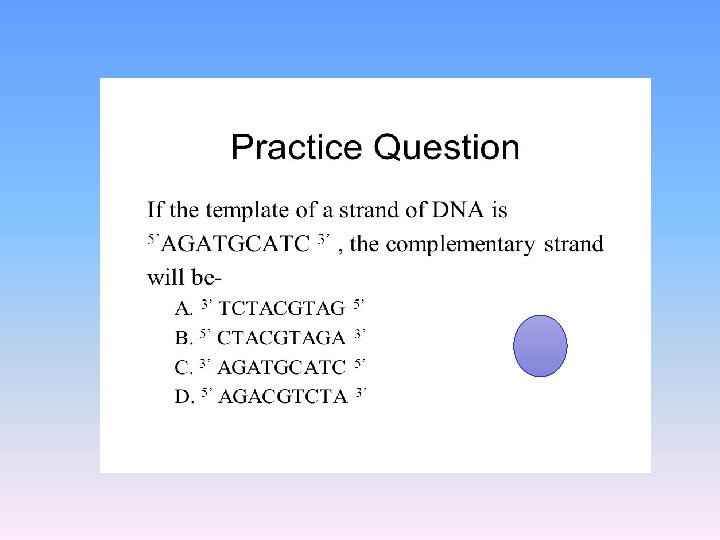
THE BASE PAIRING RULE: Adenine [A] always pairs with Thymine [T] Guanine [G] always pairs with Cytosine [C]
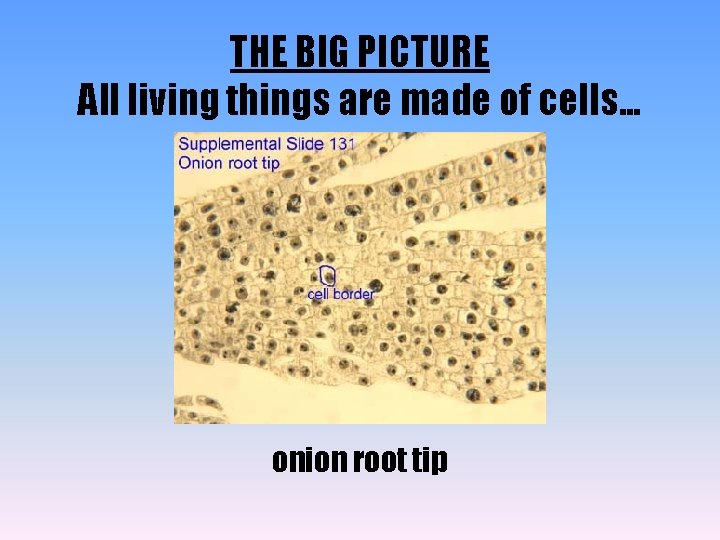
THE BIG PICTURE All living things are made of cells. . . onion root tip
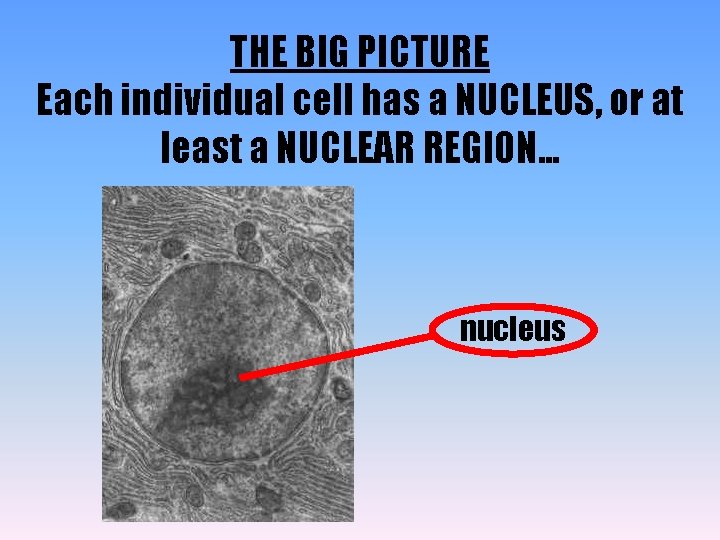
THE BIG PICTURE Each individual cell has a NUCLEUS, or at least a NUCLEAR REGION. . . nucleus
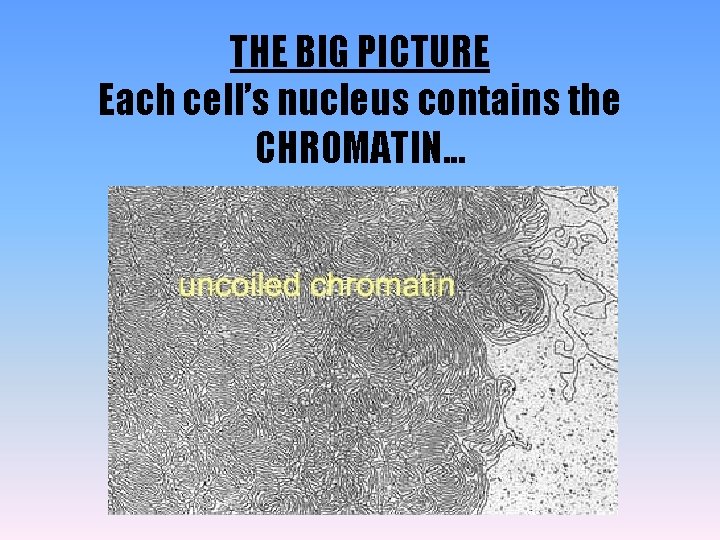
THE BIG PICTURE Each cell’s nucleus contains the CHROMATIN. . .
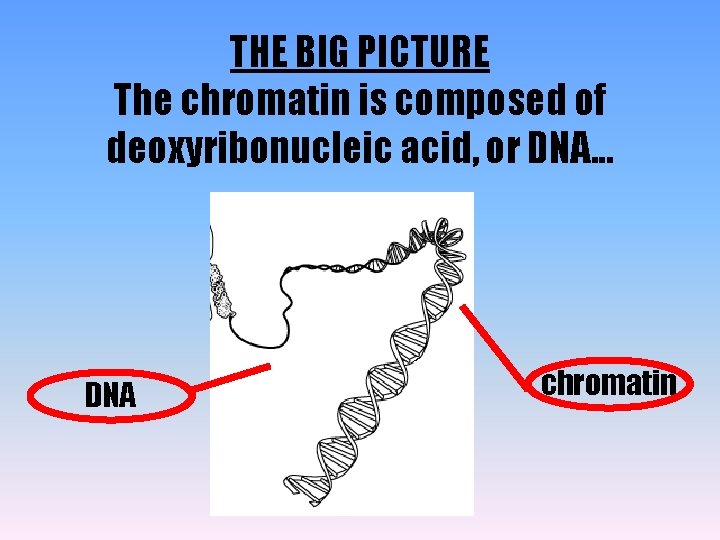
THE BIG PICTURE The chromatin is composed of deoxyribonucleic acid, or DNA. . . DNA chromatin
THE BIG PICTURE DNA is composed of a deoxyribose sugars, phosphates, and paired nitrogenous bases. . . Sugarphosphate backbone Nitrogenous base pairs
THE BIG PICTURE The nitrogenous bases match up according to the BASE PAIRING RULE, A goes with T and C goes with G
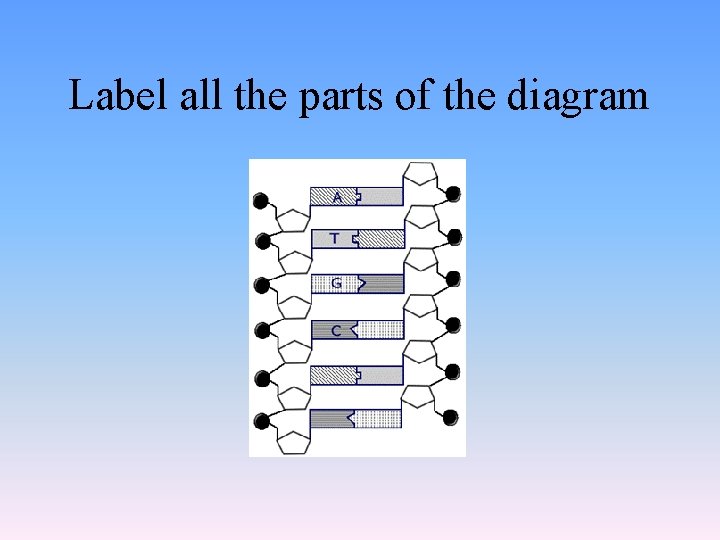
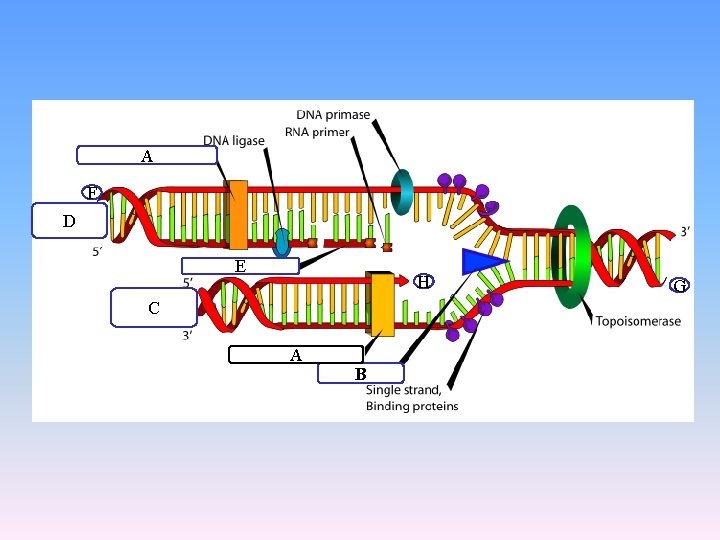
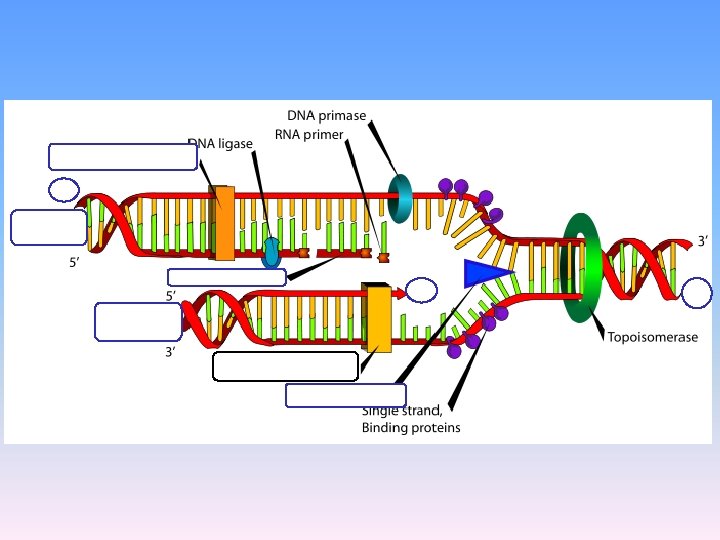
Label all the parts of the diagram
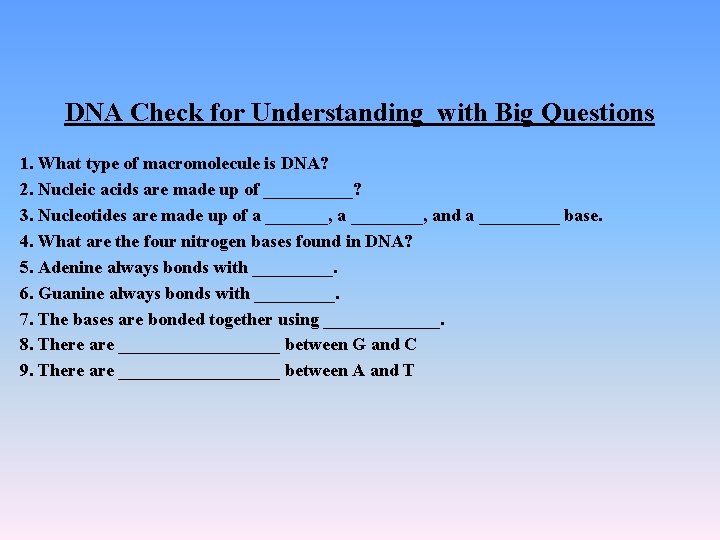
DNA Check for Understanding with Big Questions 1. What type of macromolecule is DNA? 2. Nucleic acids are made up of _____? 3. Nucleotides are made up of a _______, and a _____ base. 4. What are the four nitrogen bases found in DNA? 5. Adenine always bonds with _____. 6. Guanine always bonds with _____. 7. The bases are bonded together using _______. 8. There are _________ between G and C 9. There are _________ between A and T
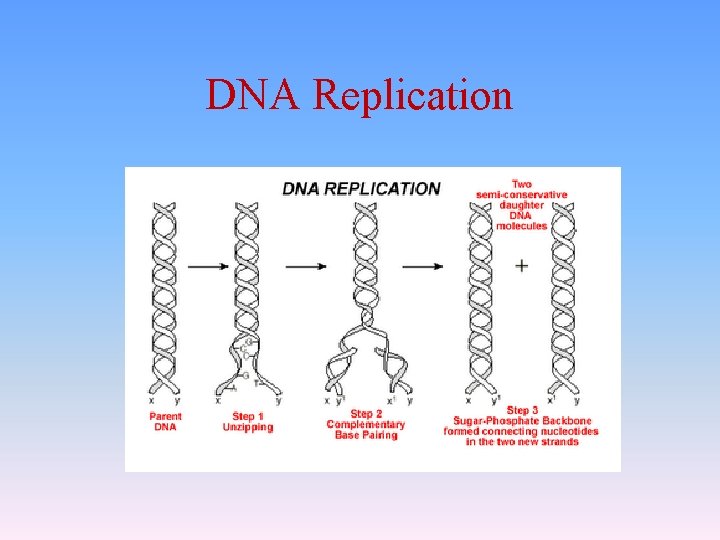
Use DNA Replicaion Annotated Notes instead of REST of PPT!! • What is DNA Replication? • When does DNA replication take place? • Where does DNA replication take place? What is DNA Replication? DNA replication is the process by which DNA is copied. When does DNA replication take place? DNA Replication occurs during the synthesis (S) phase of Interphase (before the cell actually divides). Where does DNA replication take place? Replication occurs inside the nucleus.
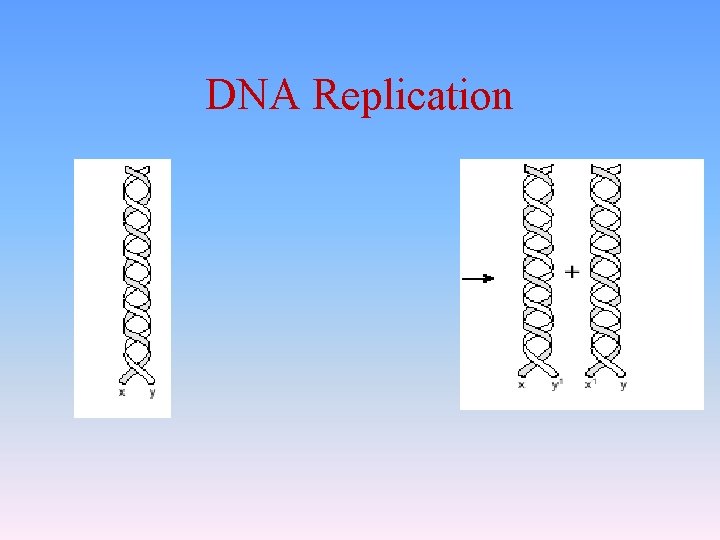
DNA Replication
DNA Replication
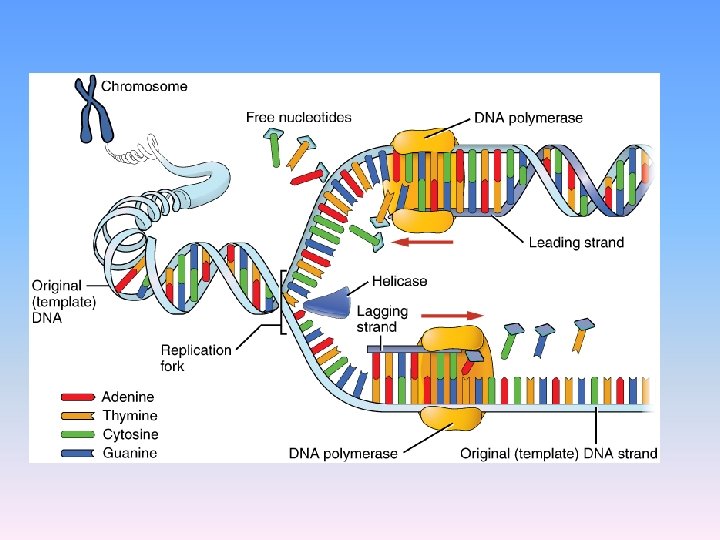
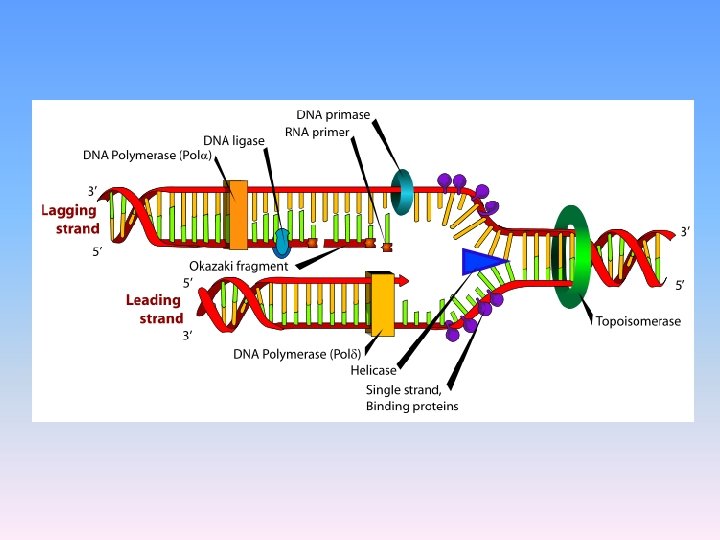
Enzymes in Replication • ENZYMES ARE USED IN REPLICATION! • DNA Helicase: They are used to break the hydrogen bonds that hold the bases together. • DNA Polymerase: They add new nucleotides to the parent strand aids in “proofreading”
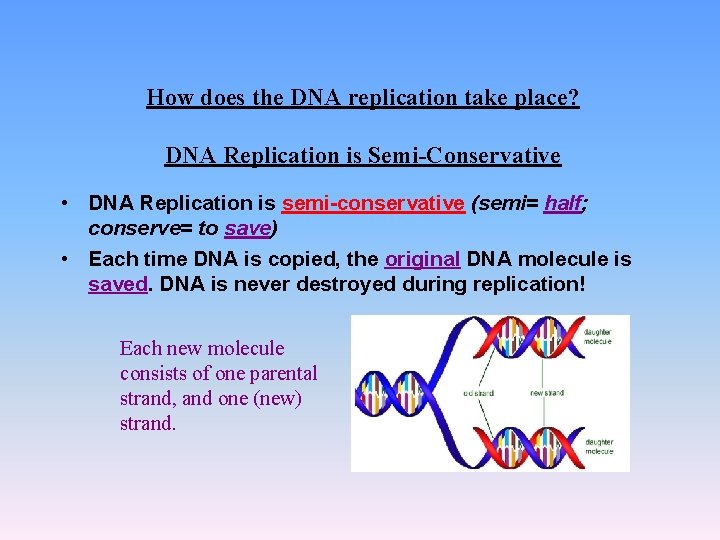
How does the DNA replication take place? DNA Replication is Semi-Conservative • DNA Replication is semi-conservative (semi= half; conserve= to save) • Each time DNA is copied, the original DNA molecule is saved. DNA is never destroyed during replication! Each new molecule consists of one parental strand, and one (new) strand.
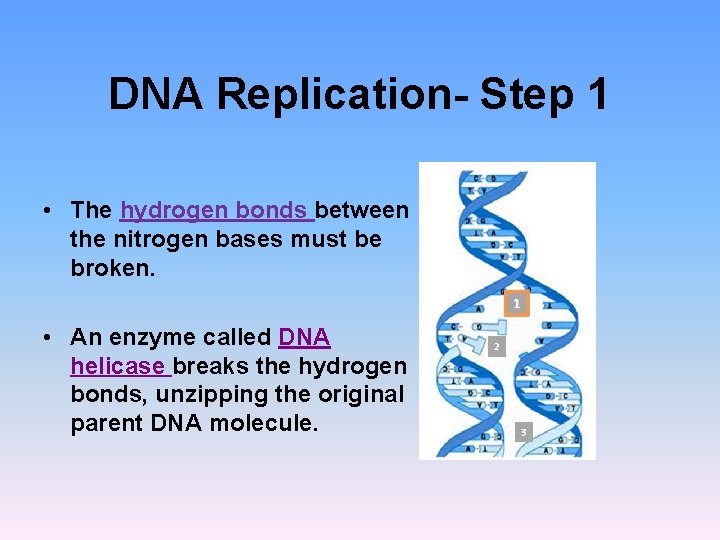
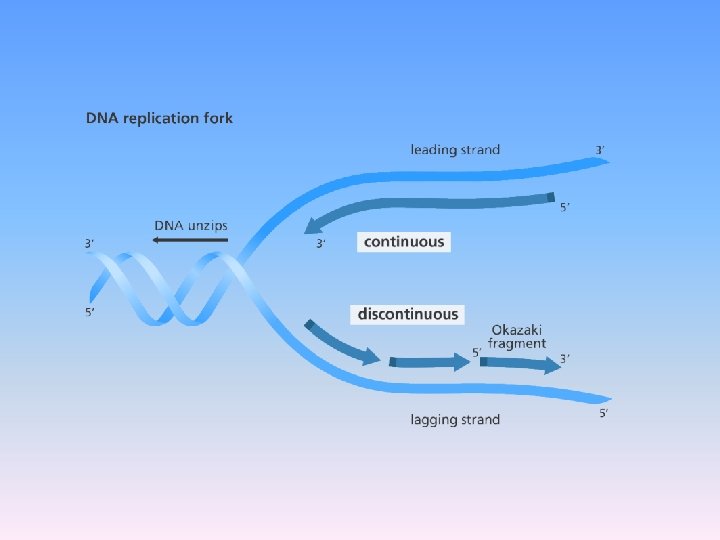
DNA Replication- Step 1 • The hydrogen bonds between the nitrogen bases must be broken. • An enzyme called DNA helicase breaks the hydrogen bonds, unzipping the original parent DNA molecule.
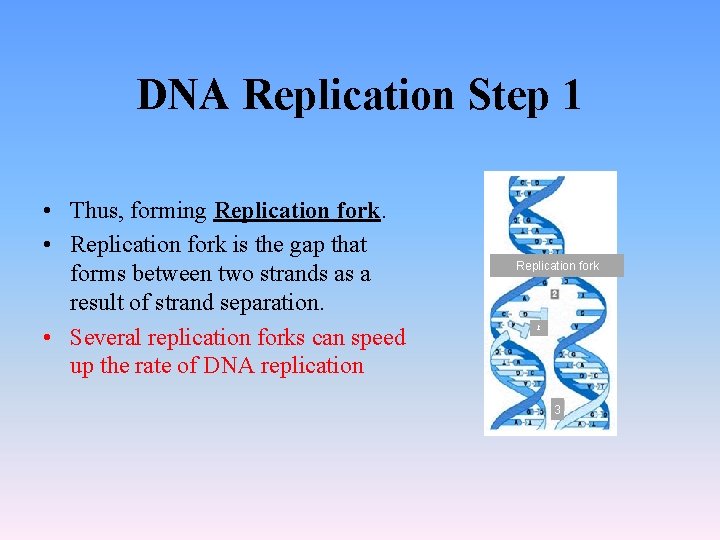
DNA Replication Step 1 • Thus, forming Replication fork. • Replication fork is the gap that forms between two strands as a result of strand separation. • Several replication forks can speed up the rate of DNA replication Replication fork 2 3
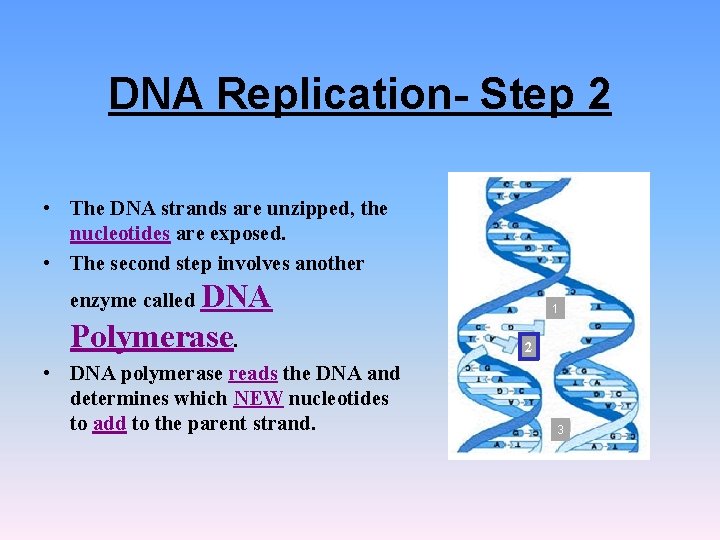
DNA Replication- Step 2 • The DNA strands are unzipped, the nucleotides are exposed. • The second step involves another 1 enzyme called DNA Polymerase. • DNA polymerase reads the DNA and determines which NEW nucleotides to add to the parent strand. 1 2 3
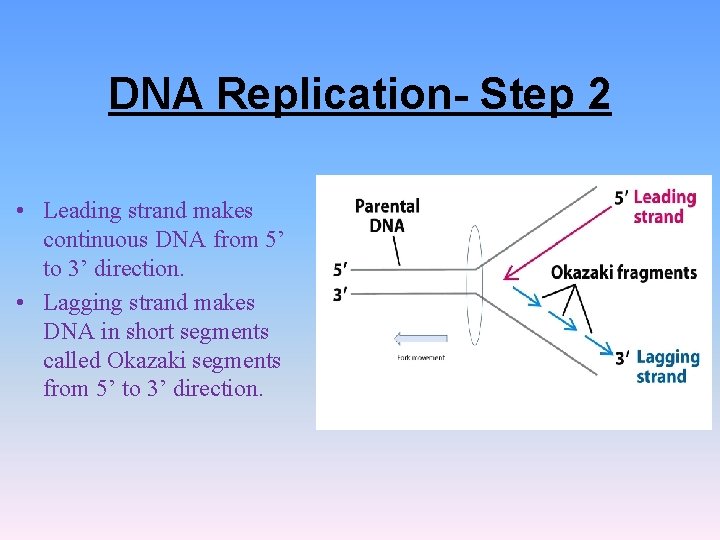
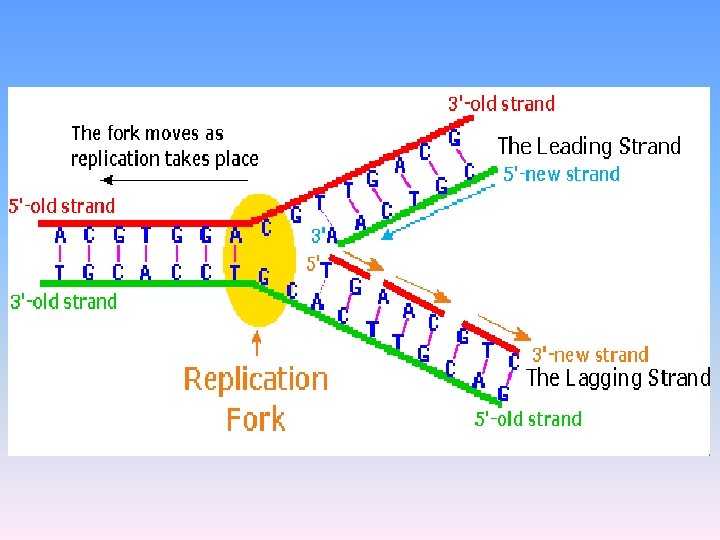
DNA Replication- Step 2 • Leading strand makes continuous DNA from 5’ to 3’ direction. • Lagging strand makes DNA in short segments called Okazaki segments from 5’ to 3’ direction.
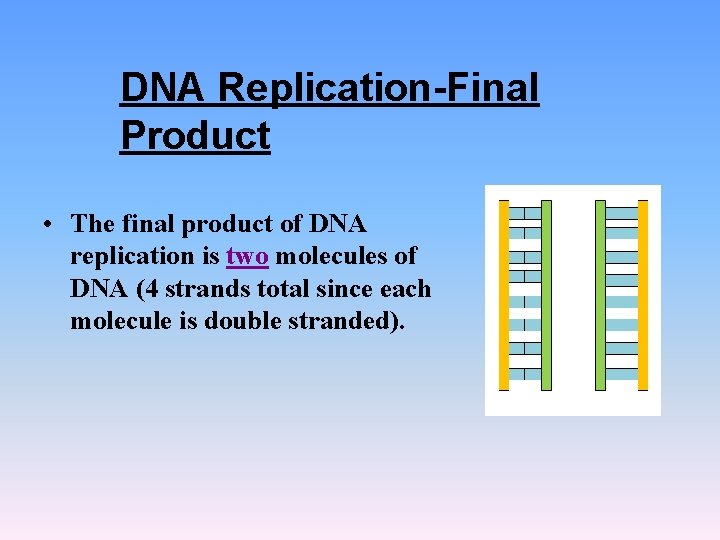
DNA Replication-Final Product • The final product of DNA replication is two molecules of DNA (4 strands total since each molecule is double stranded).
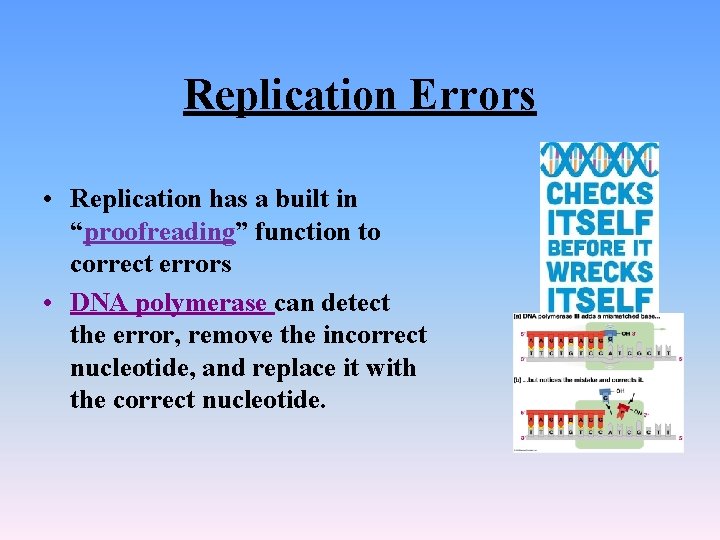
Replication Errors • Replication has a built in “proofreading” function to correct errors • DNA polymerase can detect the error, remove the incorrect nucleotide, and replace it with the correct nucleotide.
A F D E H C A B G
Lets watch this!!! • https: //www. youtube. com/watch? v=Cw 8 GAPuh. Ak 4 • https: //www. ted. com/talks/drew_berry_a nimations_of_unseeable_biology