
1 Wavefield continuation theory Born approximation imaging principles
1 Wavefield continuation theory, Born approximation, imaging principles Migration methods: WEM, RTM, Kirchhoff High-resolution acquisition, including: broadband sources and receivers, dense time and space sampling, source and receiver designature, deghosting, and examples of how shear waves may and may not improve resolution Practical problems in imaging, including: angle control, anisotropy, land, and many more Velocity estimation, shallow and deep OBN hardware, acquisition geometries, operations, and processing Towards high-resolution imaging: least-squares migration, imaging multiples, broadband imaging Towards unconventional high-resolution imaging: magical thinking? (Sparsity, diffraction imaging, superresolution)
Seismic imaging Principles and practice Sam Gray – modified and expanded from CGG training Includes RTM synthetic example from James Sun
3 Wavefield Extrapolation
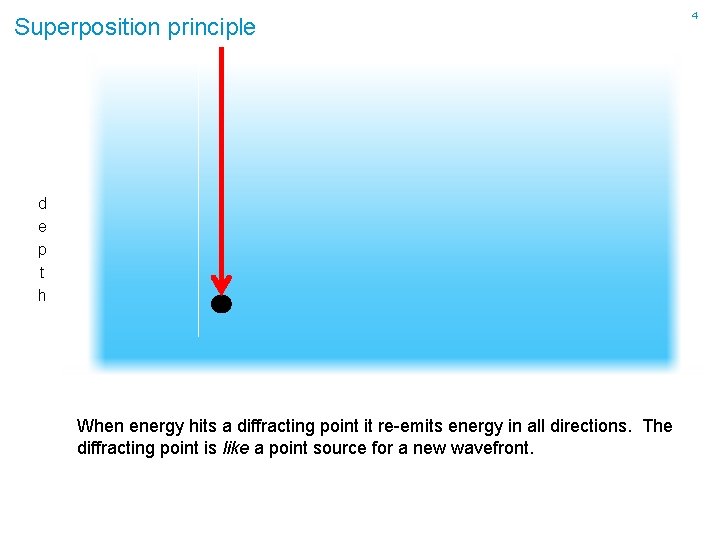
Superposition principle d e p t h When energy hits a diffracting point it re-emits energy in all directions. The diffracting point is like a point source for a new wavefront. 4
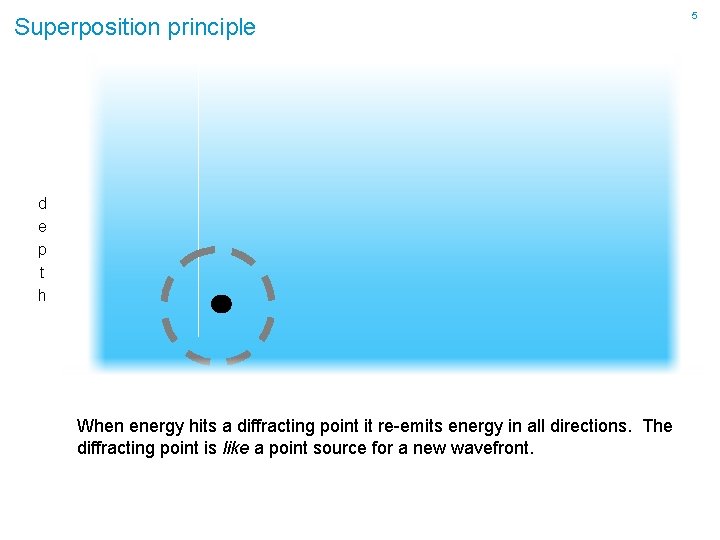
Superposition principle d e p t h When energy hits a diffracting point it re-emits energy in all directions. The diffracting point is like a point source for a new wavefront. 5
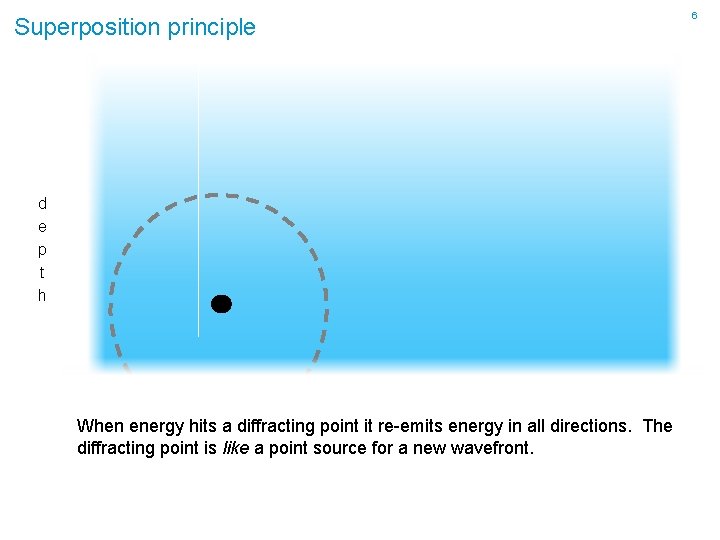
Superposition principle d e p t h When energy hits a diffracting point it re-emits energy in all directions. The diffracting point is like a point source for a new wavefront. 6
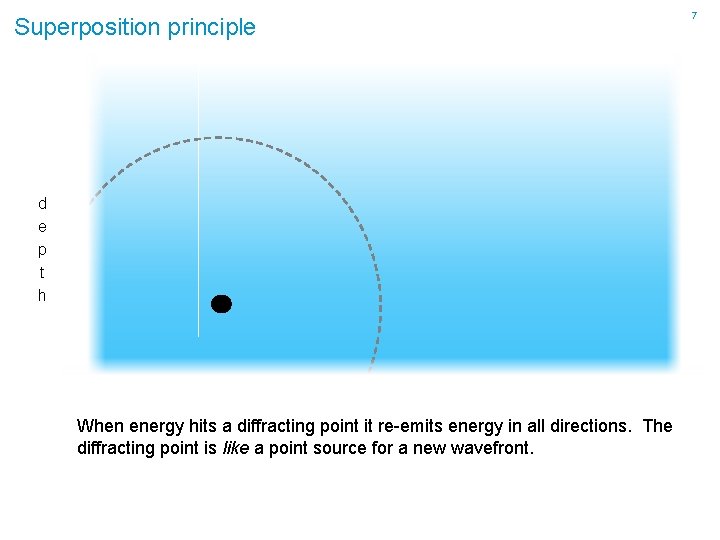
Superposition principle d e p t h When energy hits a diffracting point it re-emits energy in all directions. The diffracting point is like a point source for a new wavefront. 7
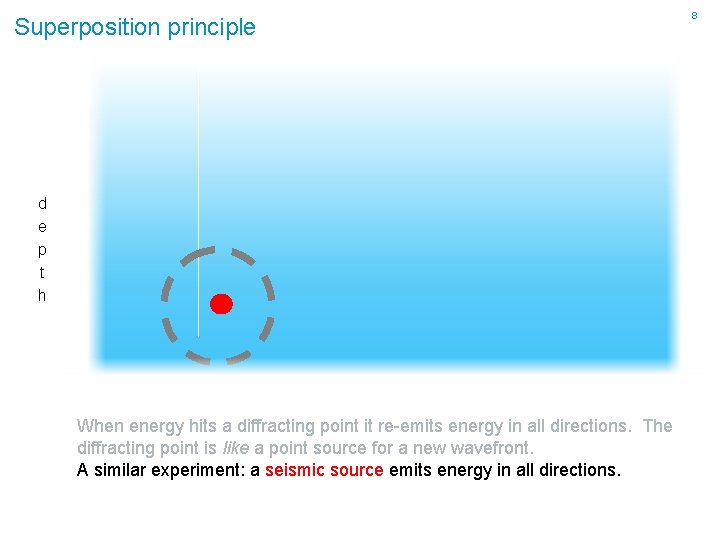
Superposition principle d e p t h When energy hits a diffracting point it re-emits energy in all directions. The diffracting point is like a point source for a new wavefront. A similar experiment: a seismic source emits energy in all directions. 8
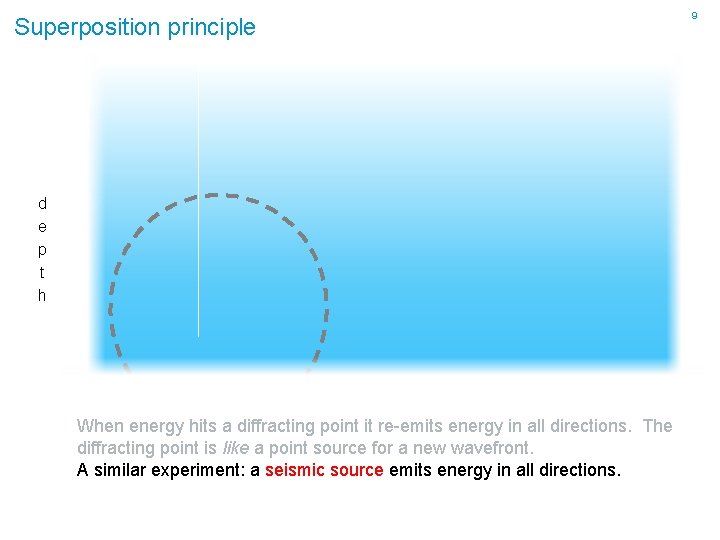
Superposition principle d e p t h When energy hits a diffracting point it re-emits energy in all directions. The diffracting point is like a point source for a new wavefront. A similar experiment: a seismic source emits energy in all directions. 9
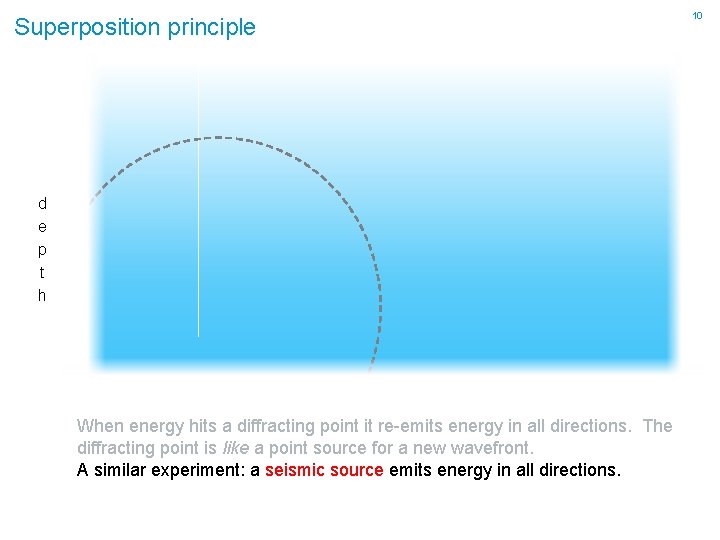
Superposition principle d e p t h When energy hits a diffracting point it re-emits energy in all directions. The diffracting point is like a point source for a new wavefront. A similar experiment: a seismic source emits energy in all directions. 10
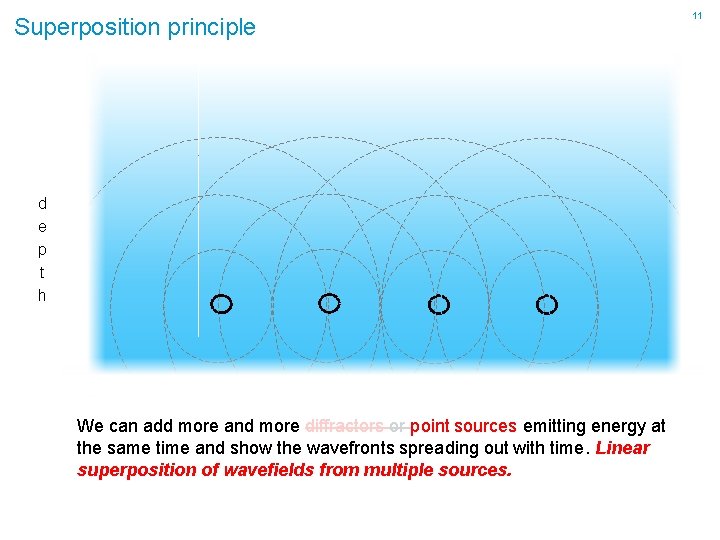
Superposition principle d e p t h We can add more and more diffractors or point sources emitting energy at the same time and show the wavefronts spreading out with time. Linear superposition of wavefields from multiple sources. 11
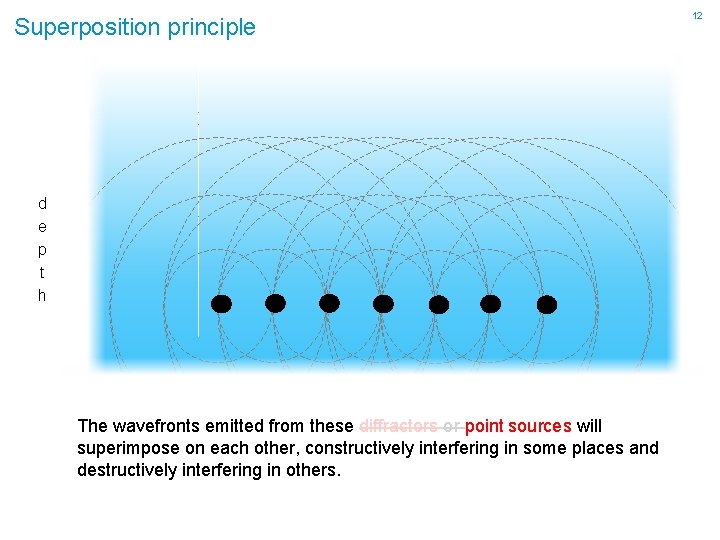
Superposition principle d e p t h The wavefronts emitted from these diffractors or point sources will superimpose on each other, constructively interfering in some places and destructively interfering in others. 12
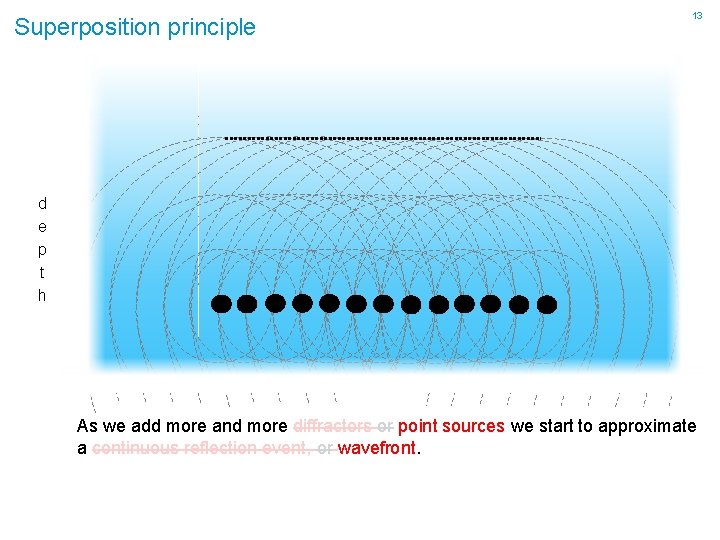
Superposition principle 13 d e p t h As we add more and more diffractors or point sources we start to approximate a continuous reflection event, or wavefront.
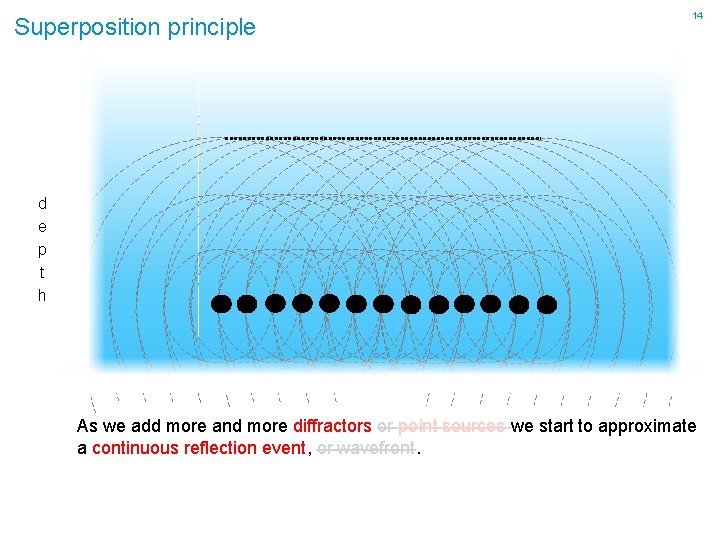
Superposition principle 14 d e p t h As we add more and more diffractors or point sources we start to approximate a continuous reflection event, or wavefront.
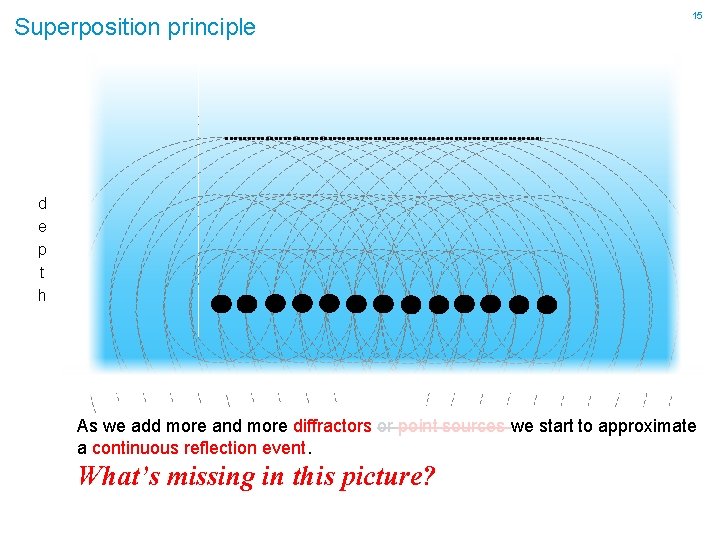
Superposition principle 15 d e p t h As we add more and more diffractors or point sources we start to approximate a continuous reflection event. What’s missing in this picture?
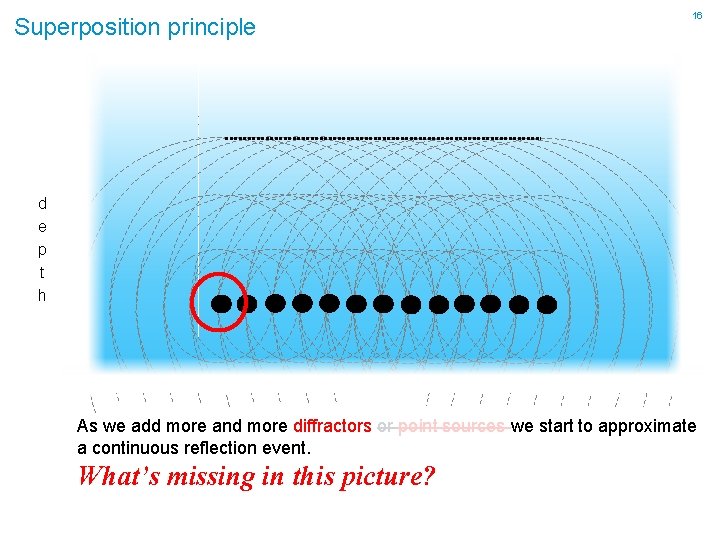
Superposition principle 16 d e p t h As we add more and more diffractors or point sources we start to approximate a continuous reflection event. What’s missing in this picture?
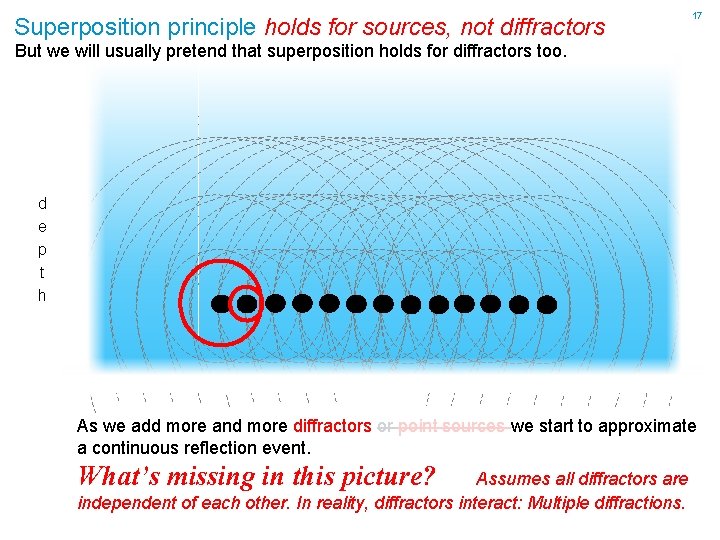
Superposition principle holds for sources, not diffractors 17 But we will usually pretend that superposition holds for diffractors too. d e p t h As we add more and more diffractors or point sources we start to approximate a continuous reflection event. What’s missing in this picture? Assumes all diffractors are independent of each other. In reality, diffractors interact: Multiple diffractions.
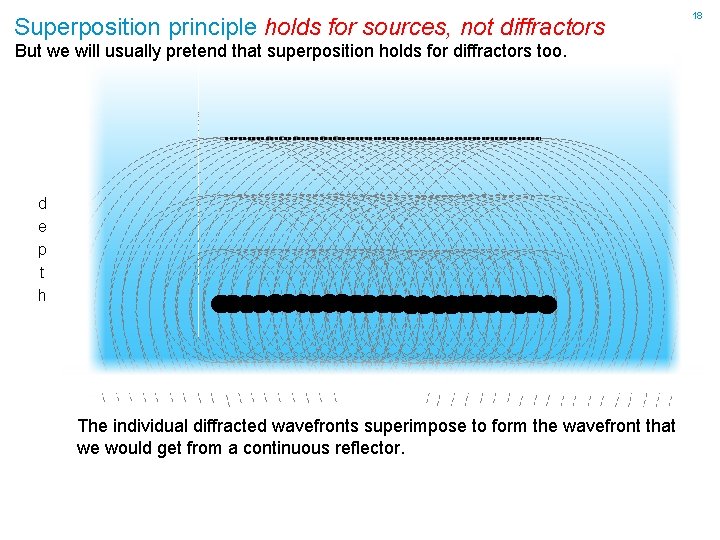
Superposition principle holds for sources, not diffractors But we will usually pretend that superposition holds for diffractors too. d e p t h The individual diffracted wavefronts superimpose to form the wavefront that we would get from a continuous reflector. 18
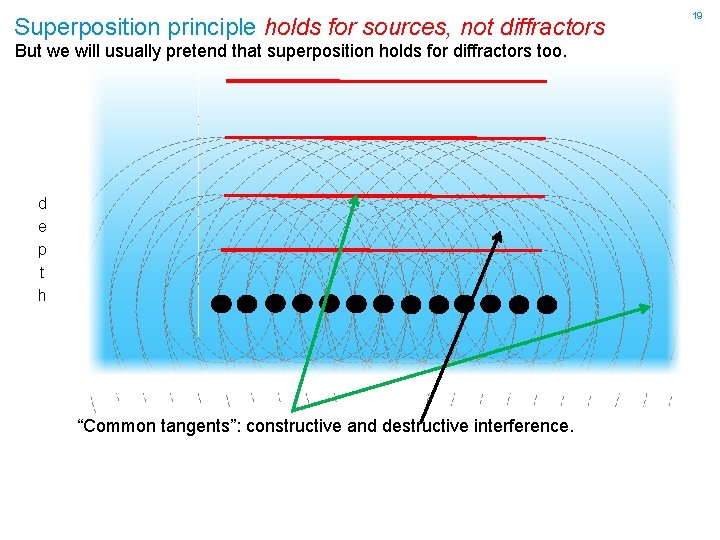
Superposition principle holds for sources, not diffractors But we will usually pretend that superposition holds for diffractors too. d e p t h “Common tangents”: constructive and destructive interference. 19
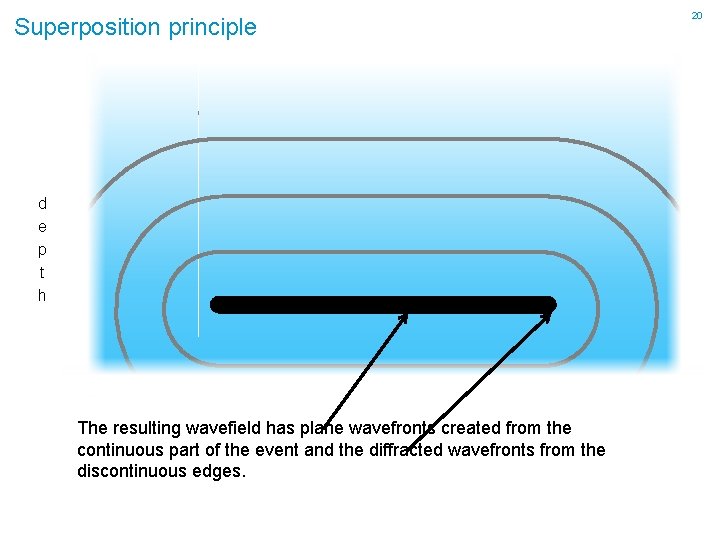
Superposition principle d e p t h The resulting wavefield has plane wavefronts created from the continuous part of the event and the diffracted wavefronts from the discontinuous edges. 20
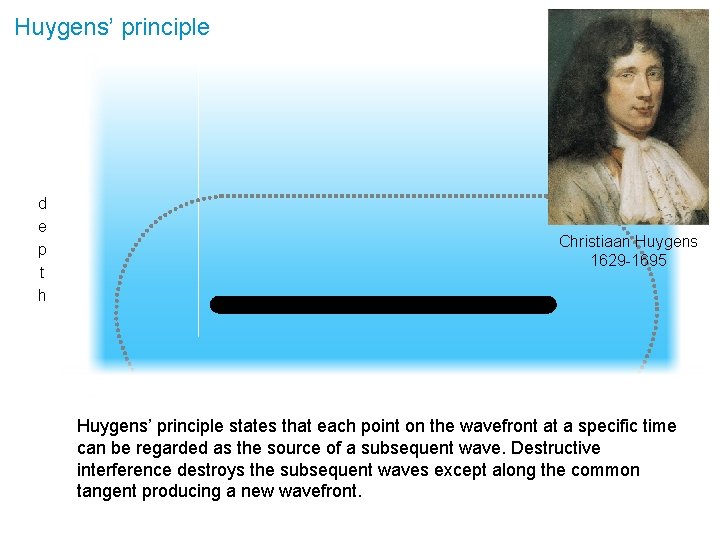
21 Huygens’ principle d e p t h Christiaan Huygens 1629 -1695 Huygens’ principle states that each point on the wavefront at a specific time can be regarded as the source of a subsequent wave. Destructive interference destroys the subsequent waves except along the common tangent producing a new wavefront.
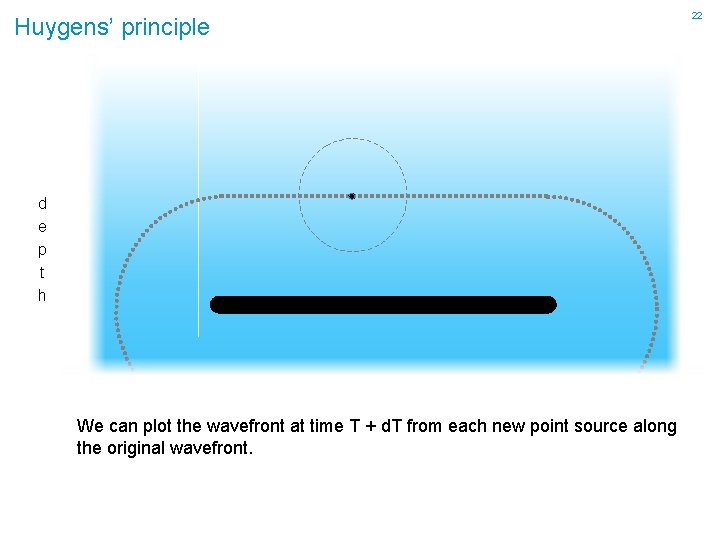
Huygens’ principle d e p t h We can plot the wavefront at time T + d. T from each new point source along the original wavefront. 22
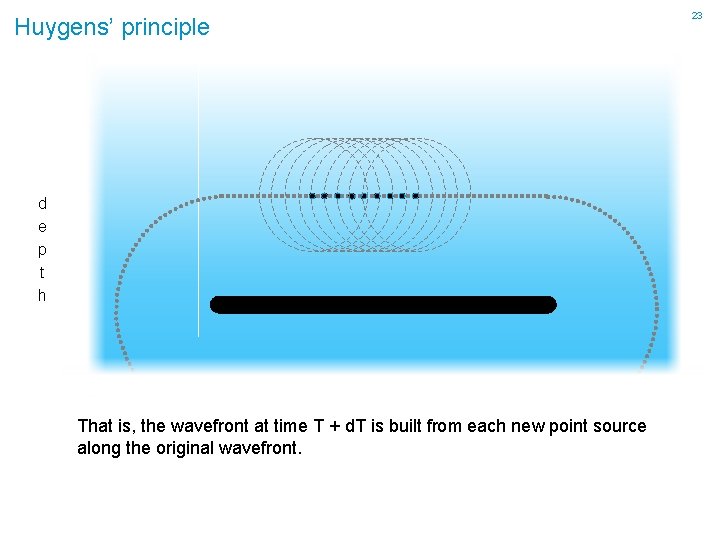
Huygens’ principle d e p t h That is, the wavefront at time T + d. T is built from each new point source along the original wavefront. 23
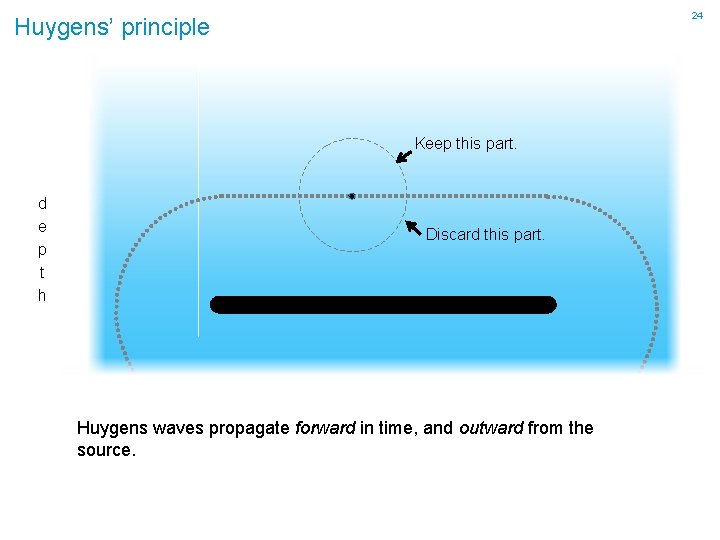
24 Huygens’ principle Keep this part. d e p t h Discard this part. Huygens waves propagate forward in time, and outward from the source.
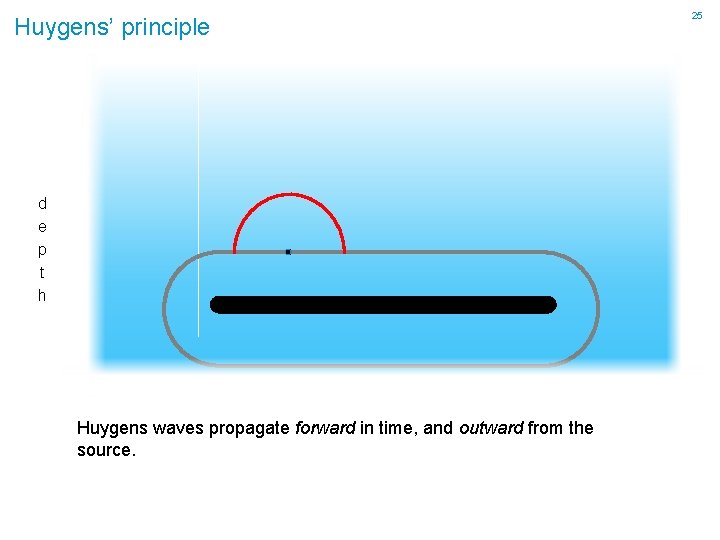
Huygens’ principle d e p t h Huygens waves propagate forward in time, and outward from the source. 25
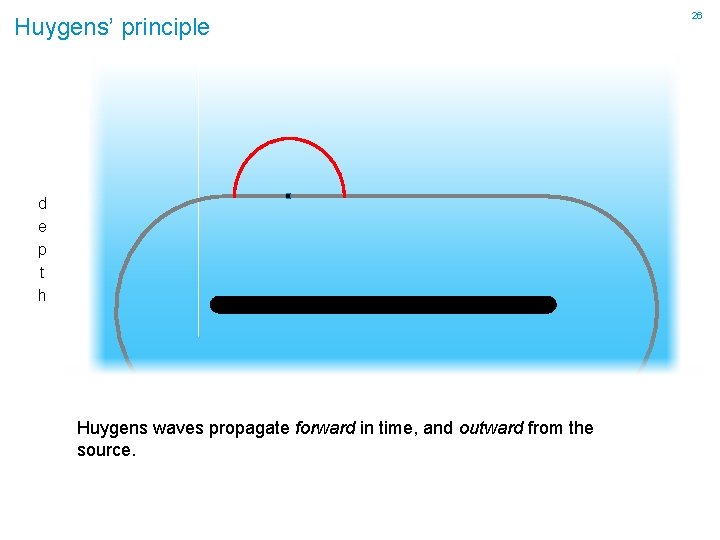
Huygens’ principle d e p t h Huygens waves propagate forward in time, and outward from the source. 26

Huygens’ principle d e p t h Huygens waves propagate forward in time, and outward from the source. 27
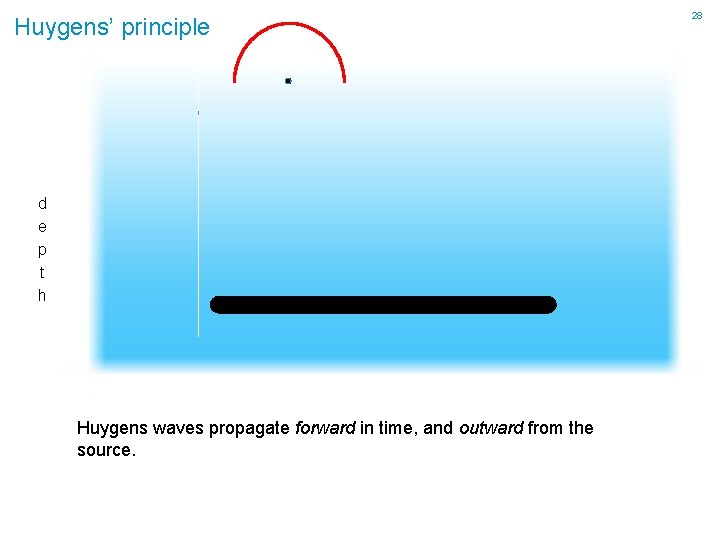
Huygens’ principle d e p t h Huygens waves propagate forward in time, and outward from the source. 28
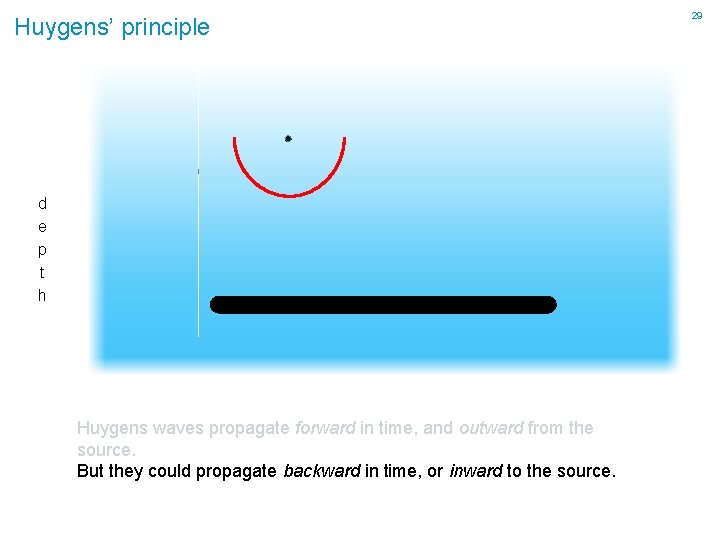
Huygens’ principle d e p t h Huygens waves propagate forward in time, and outward from the source. But they could propagate backward in time, or inward to the source. 29
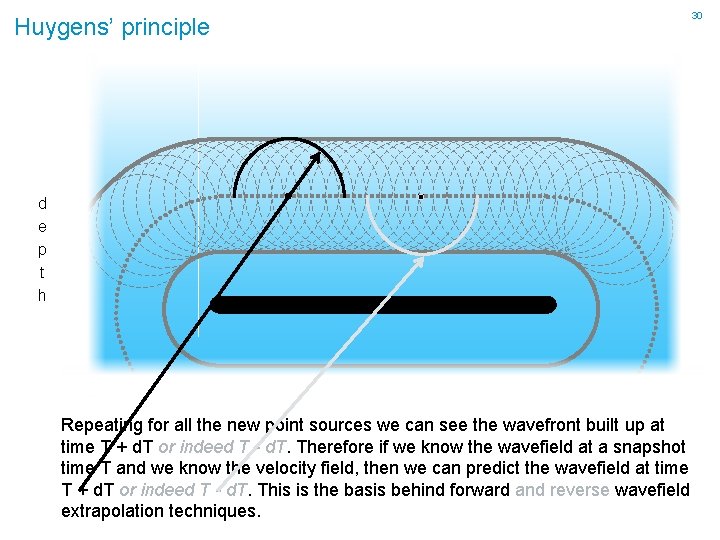
Huygens’ principle d e p t h Repeating for all the new point sources we can see the wavefront built up at time T + d. T or indeed T - d. T. Therefore if we know the wavefield at a snapshot time T and we know the velocity field, then we can predict the wavefield at time T + d. T or indeed T - d. T. This is the basis behind forward and reverse wavefield extrapolation techniques. 30
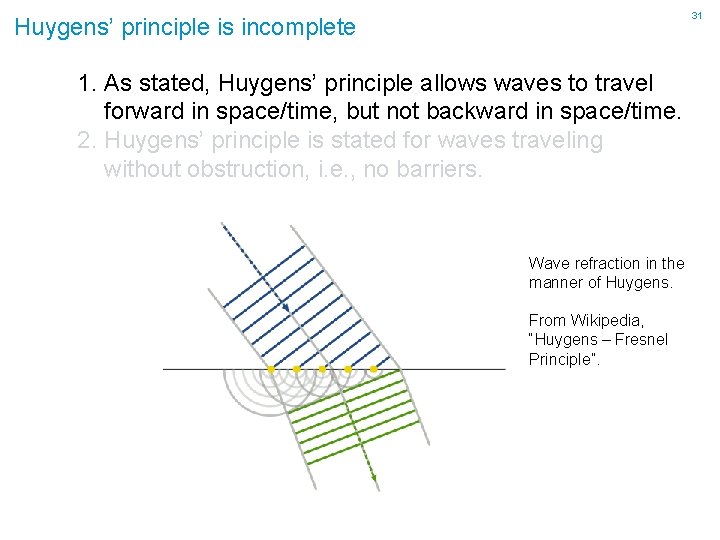
31 Huygens’ principle is incomplete 1. As stated, Huygens’ principle allows waves to travel forward in space/time, but not backward in space/time. 2. Huygens’ principle is stated for waves traveling without obstruction, i. e. , no barriers. Wave refraction in the manner of Huygens. From Wikipedia, “Huygens – Fresnel Principle”.
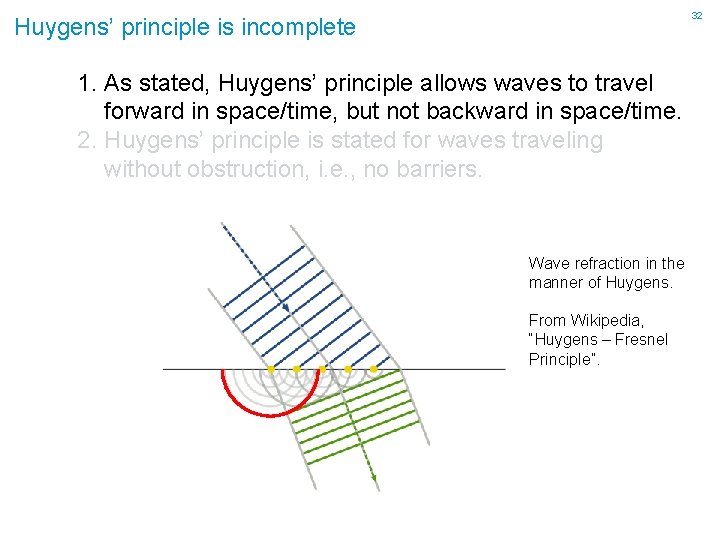
32 Huygens’ principle is incomplete 1. As stated, Huygens’ principle allows waves to travel forward in space/time, but not backward in space/time. 2. Huygens’ principle is stated for waves traveling without obstruction, i. e. , no barriers. Wave refraction in the manner of Huygens. From Wikipedia, “Huygens – Fresnel Principle”.
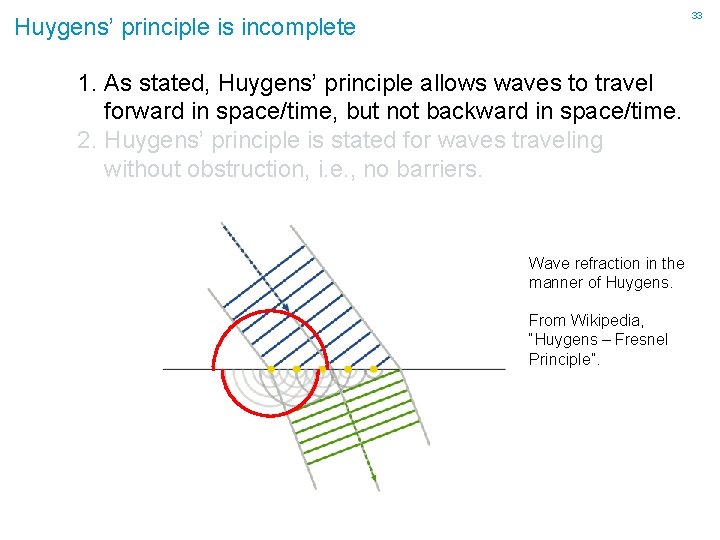
33 Huygens’ principle is incomplete 1. As stated, Huygens’ principle allows waves to travel forward in space/time, but not backward in space/time. 2. Huygens’ principle is stated for waves traveling without obstruction, i. e. , no barriers. Wave refraction in the manner of Huygens. From Wikipedia, “Huygens – Fresnel Principle”.
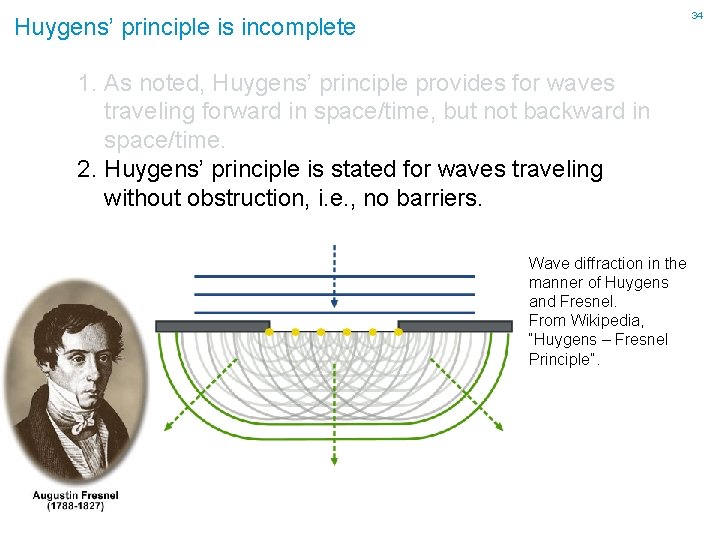
34 Huygens’ principle is incomplete 1. As noted, Huygens’ principle provides for waves traveling forward in space/time, but not backward in space/time. 2. Huygens’ principle is stated for waves traveling without obstruction, i. e. , no barriers. Wave diffraction in the manner of Huygens and Fresnel. From Wikipedia, “Huygens – Fresnel Principle”.
Huygens’ principle applied to migration 1. As stated, Huygens’ principle allows waves to travel forward in space, but not backward in space. Most migration methods use Huygens’ principle, both forward and backward in time. Does RTM use Huygens’ principle? 35
Theory of standard migration* Standard migration is a combination of 1. Superposition 2. Huygens’ principle, forward and backward in time 3. Imaging condition (coming soon) *What is “standard migration”? 36
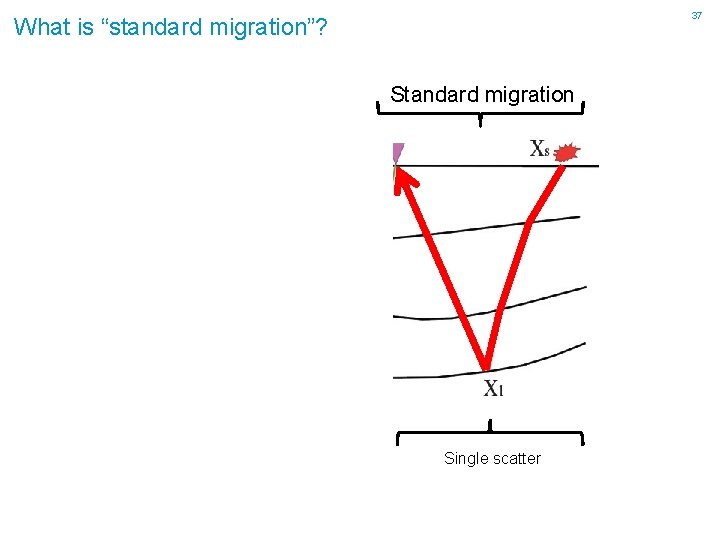
37 What is “standard migration”? Standard migration Single scatter
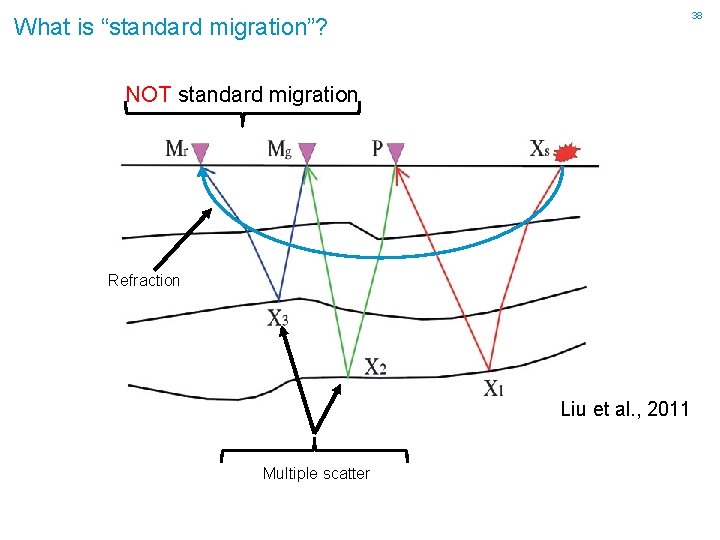
38 What is “standard migration”? NOT standard migration Refraction Liu et al. , 2011 Multiple scatter
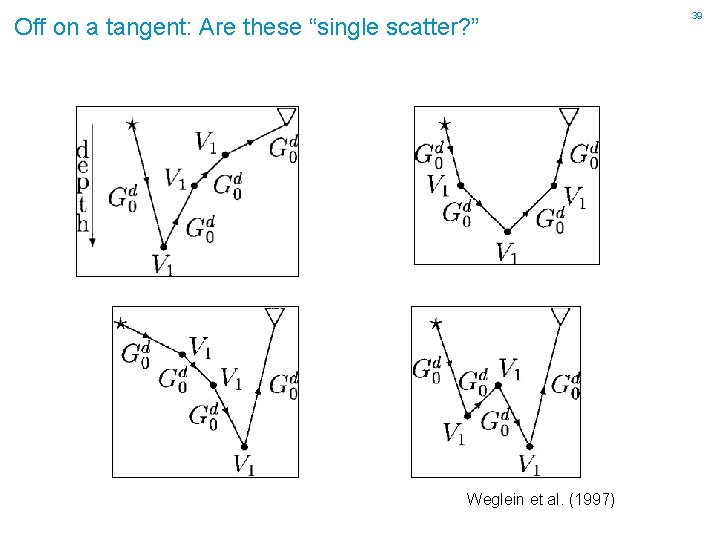
Off on a tangent: Are these “single scatter? ” Weglein et al. (1997) 39
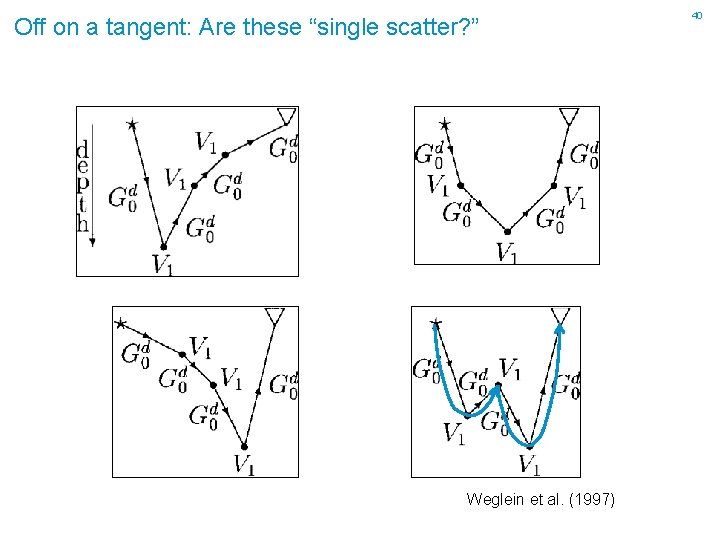
Off on a tangent: Are these “single scatter? ” Weglein et al. (1997) 40
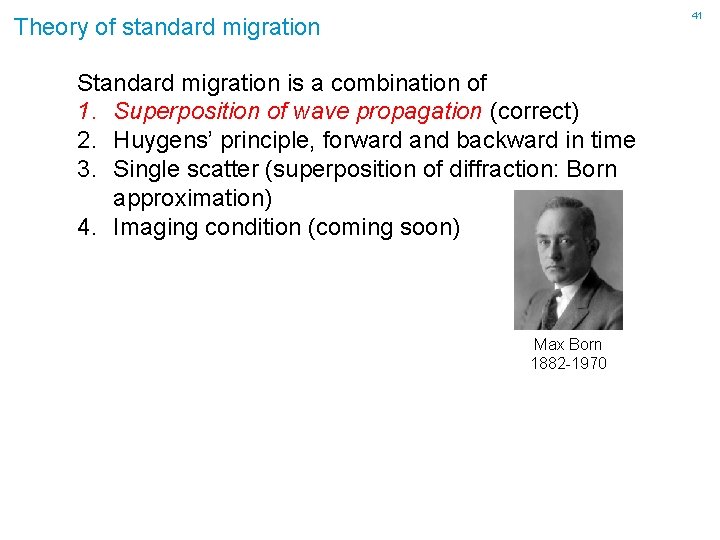
41 Theory of standard migration Standard migration is a combination of 1. Superposition of wave propagation (correct) 2. Huygens’ principle, forward and backward in time 3. Single scatter (superposition of diffraction: Born approximation) 4. Imaging condition (coming soon) Max Born 1882 -1970
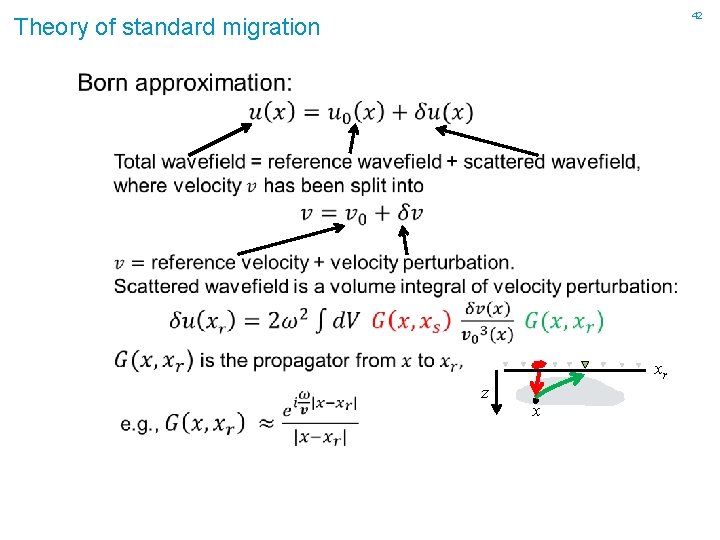
42 Theory of standard migration z xr x
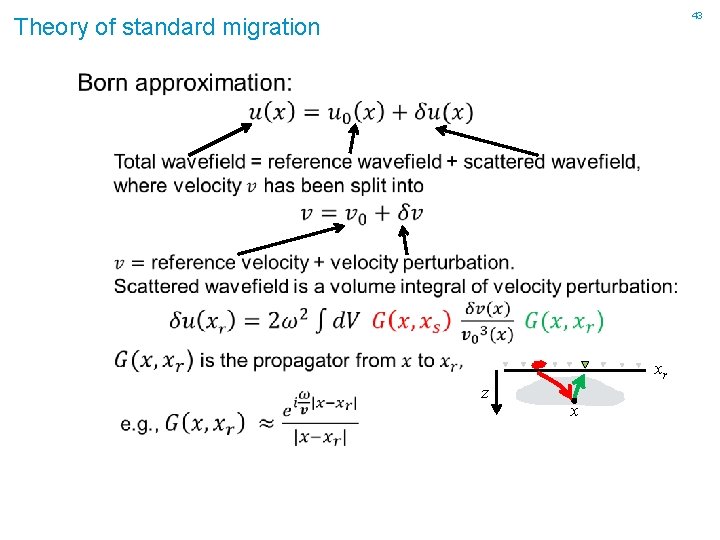
43 Theory of standard migration z xr x
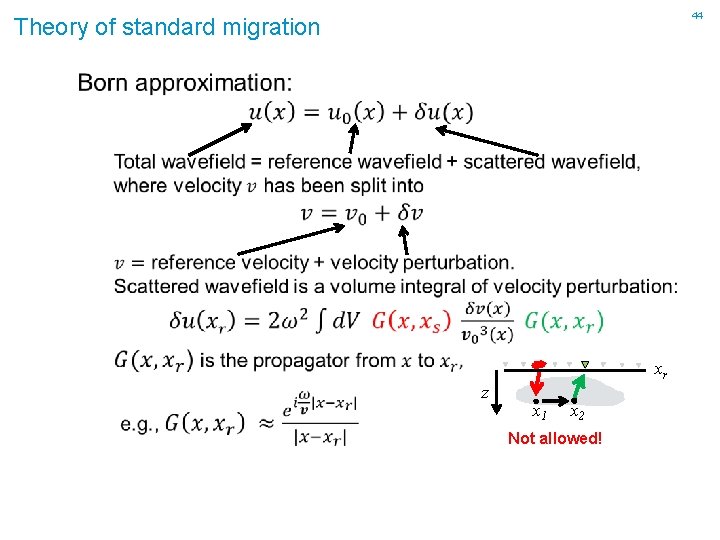
44 Theory of standard migration z xr x 1 x 2 Not allowed!
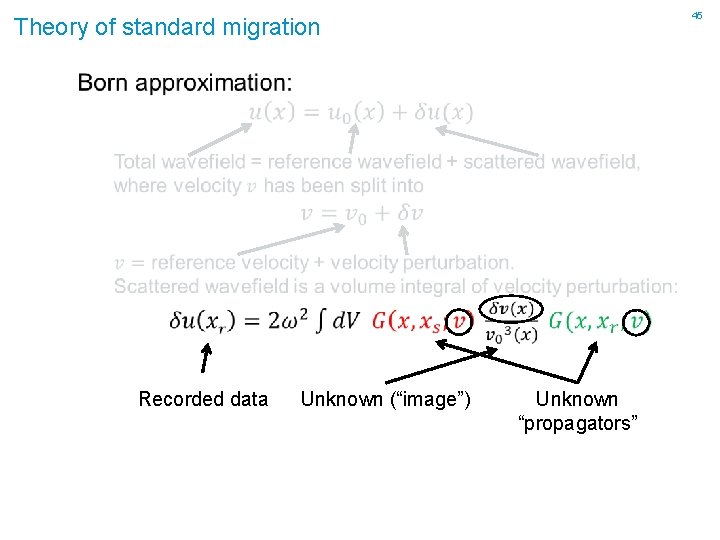
45 Theory of standard migration Recorded data Unknown (“image”) Unknown “propagators”
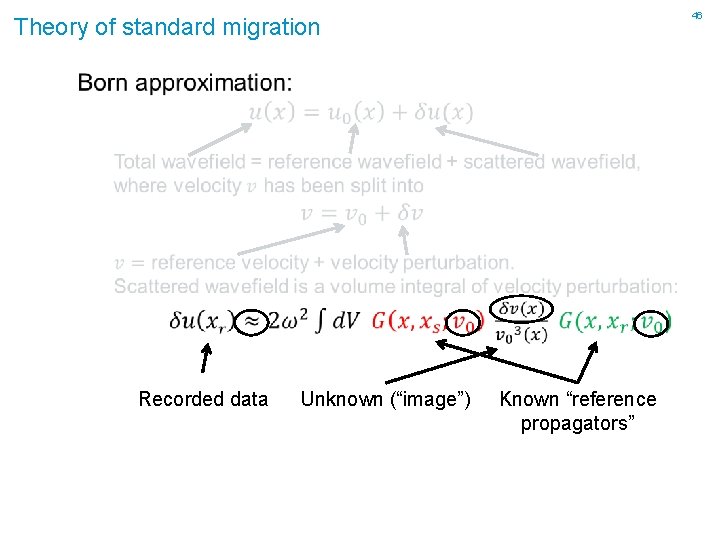
46 Theory of standard migration Recorded data Unknown (“image”) Known “reference propagators”
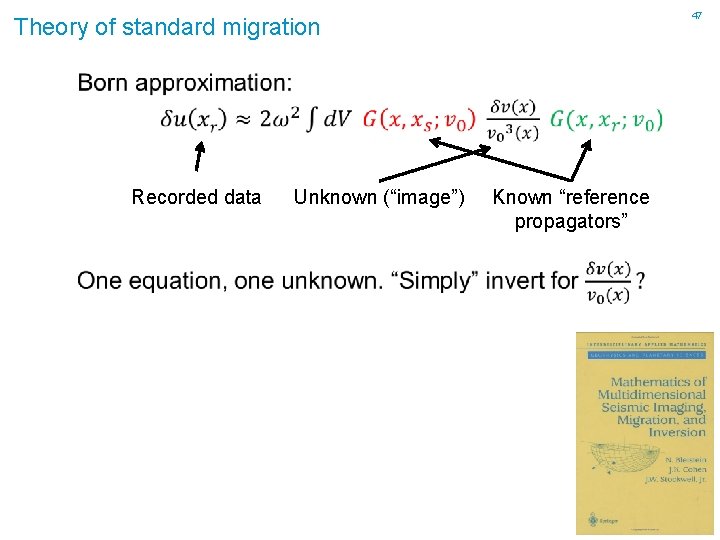
47 Theory of standard migration Recorded data Unknown (“image”) Known “reference propagators”
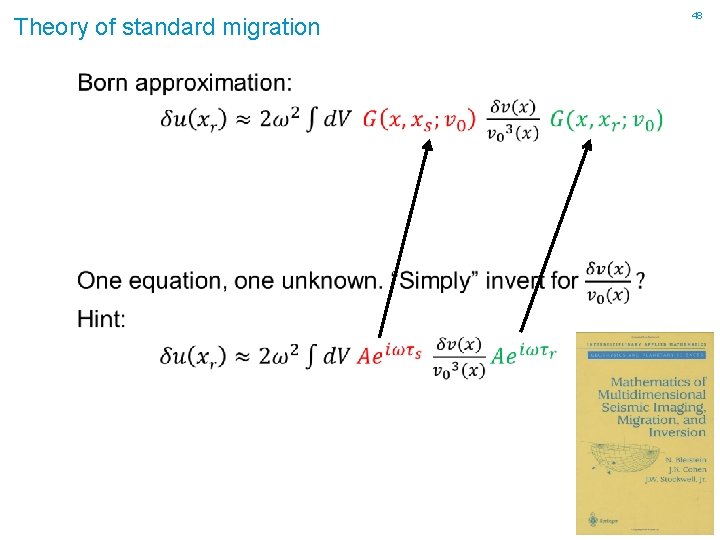
Theory of standard migration 48
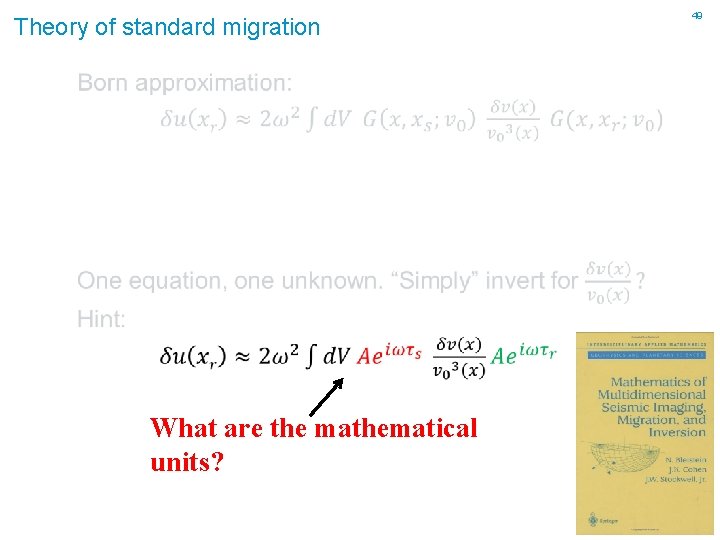
Theory of standard migration What are the mathematical units? 49
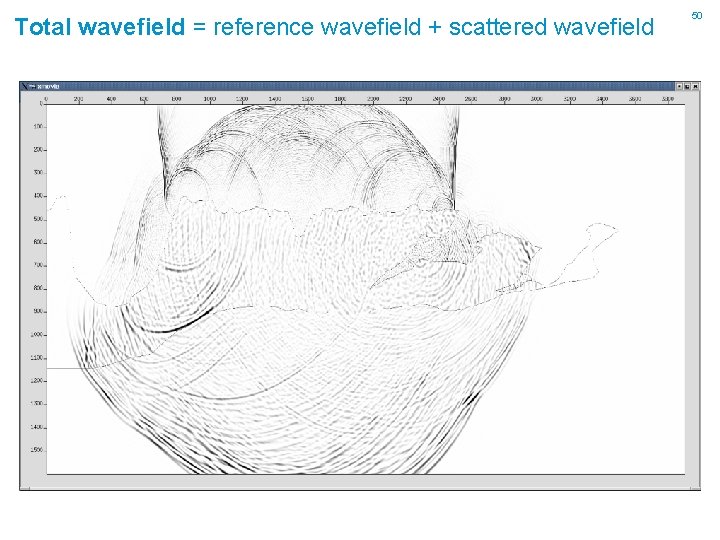
Total wavefield = reference wavefield + scattered wavefield 50
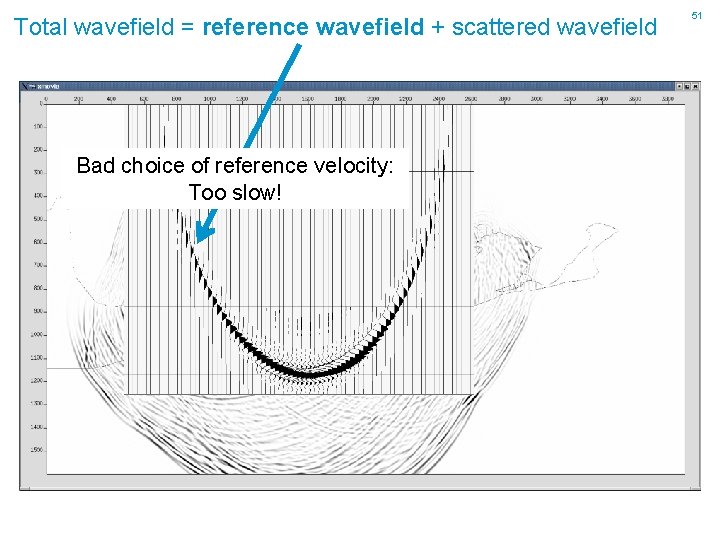
Total wavefield = reference wavefield + scattered wavefield Bad choice of reference velocity: Too slow! 51
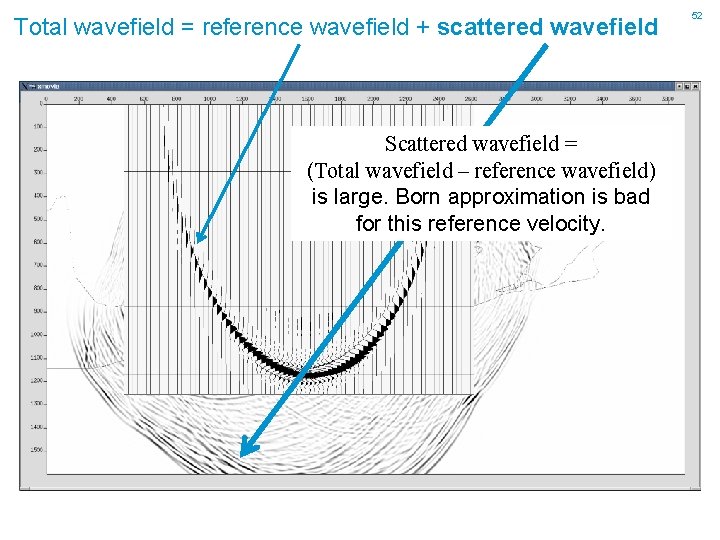
Total wavefield = reference wavefield + scattered wavefield Scattered wavefield = (Total wavefield – reference wavefield) is large. Born approximation is bad for this reference velocity. 52
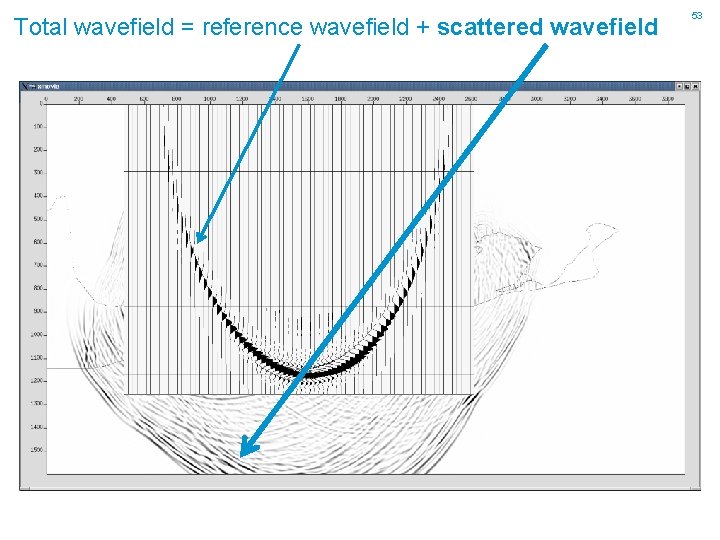
Total wavefield = reference wavefield + scattered wavefield 53
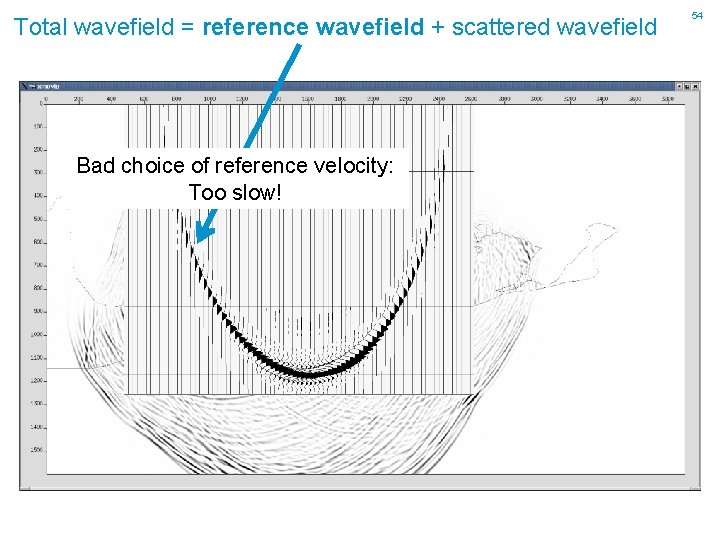
Total wavefield = reference wavefield + scattered wavefield Bad choice of reference velocity: Too slow! 54
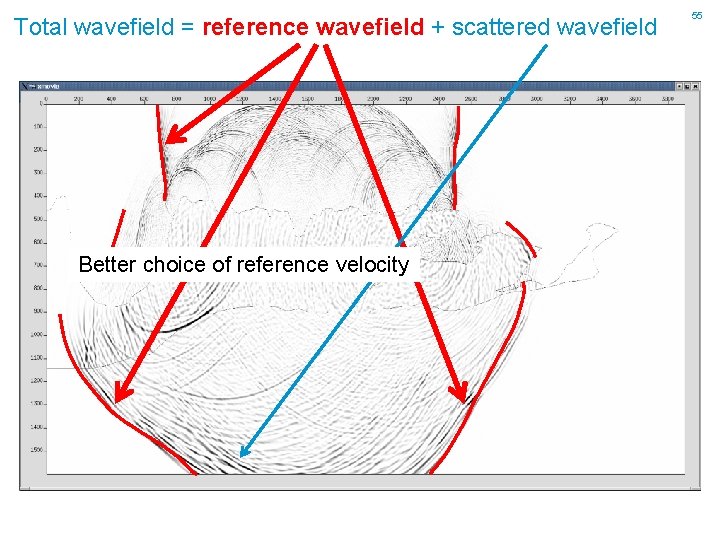
Total wavefield = reference wavefield + scattered wavefield Better choice of reference velocity 55
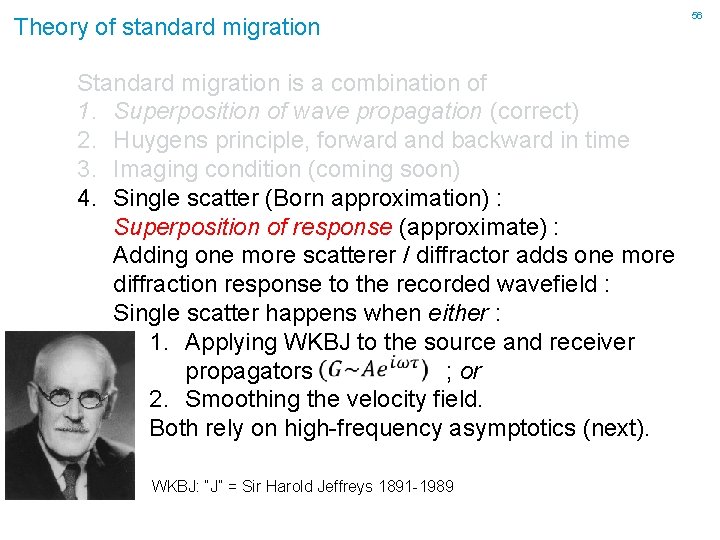
Theory of standard migration Standard migration is a combination of 1. Superposition of wave propagation (correct) 2. Huygens principle, forward and backward in time 3. Imaging condition (coming soon) 4. Single scatter (Born approximation) : Superposition of response (approximate) : Adding one more scatterer / diffractor adds one more diffraction response to the recorded wavefield : Single scatter happens when either : 1. Applying WKBJ to the source and receiver propagators ; or 2. Smoothing the velocity field. Both rely on high-frequency asymptotics (next). WKBJ: “J” = Sir Harold Jeffreys 1891 -1989 56
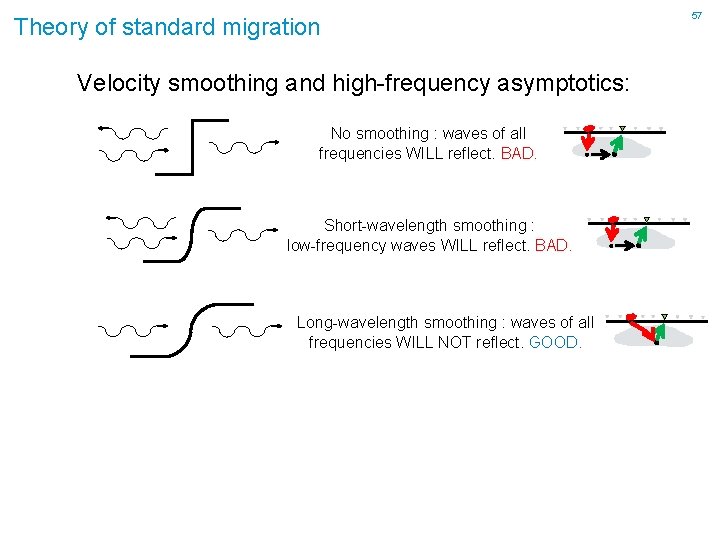
Theory of standard migration Velocity smoothing and high-frequency asymptotics: No smoothing : waves of all frequencies WILL reflect. BAD. Short-wavelength smoothing : low-frequency waves WILL reflect. BAD. Long-wavelength smoothing : waves of all frequencies WILL NOT reflect. GOOD. 57
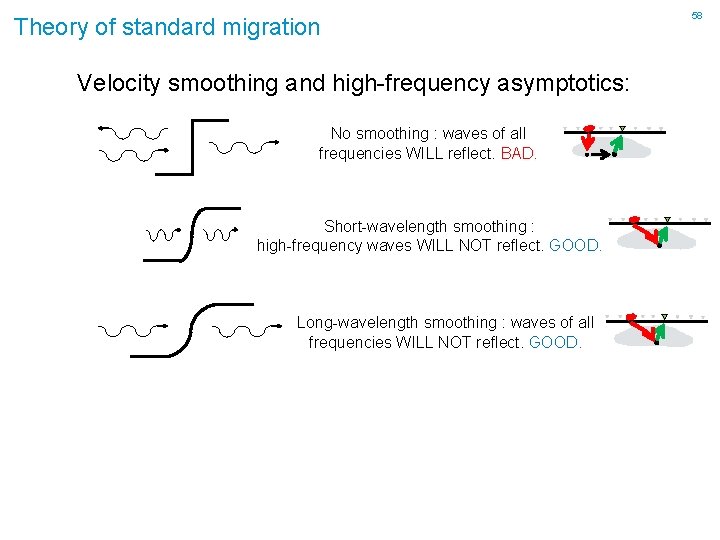
Theory of standard migration Velocity smoothing and high-frequency asymptotics: No smoothing : waves of all frequencies WILL reflect. BAD. Short-wavelength smoothing : high-frequency waves WILL NOT reflect. GOOD. Long-wavelength smoothing : waves of all frequencies WILL NOT reflect. GOOD. 58
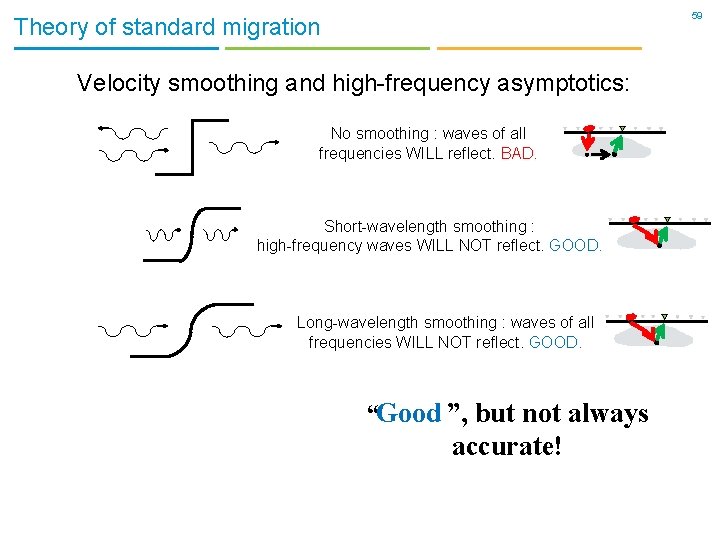
59 Theory of standard migration Velocity smoothing and high-frequency asymptotics: No smoothing : waves of all frequencies WILL reflect. BAD. Short-wavelength smoothing : high-frequency waves WILL NOT reflect. GOOD. Long-wavelength smoothing : waves of all frequencies WILL NOT reflect. GOOD. “Good ”, but not always accurate!
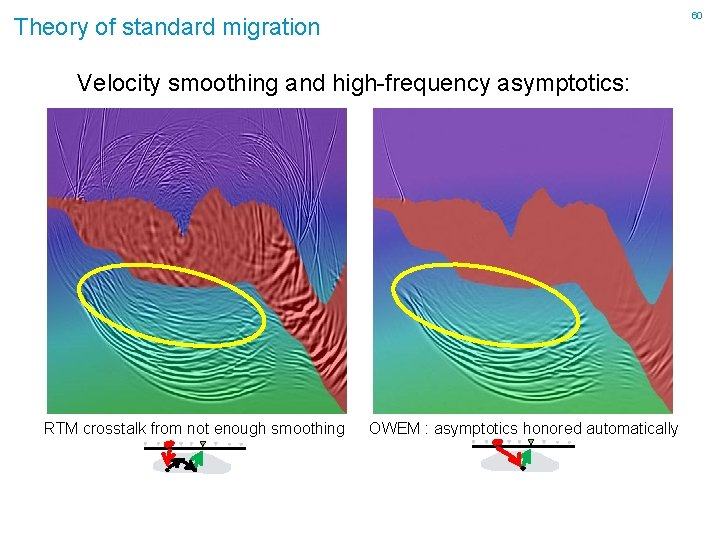
60 Theory of standard migration Velocity smoothing and high-frequency asymptotics: RTM crosstalk from not enough smoothing OWEM : asymptotics honored automatically
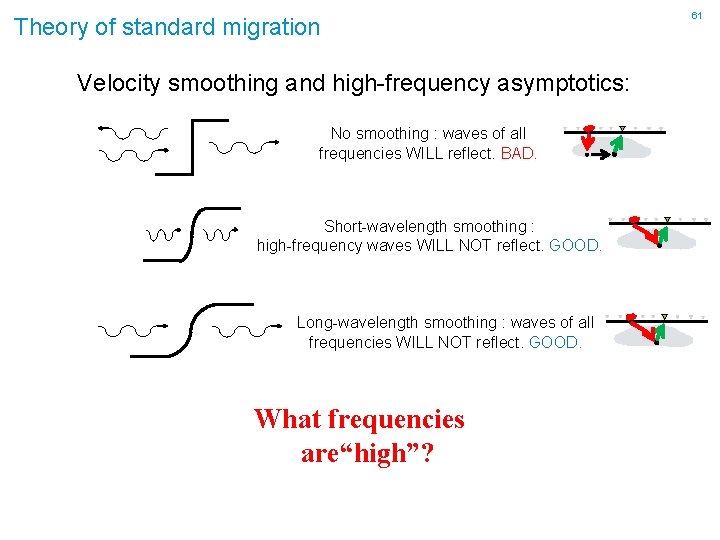
Theory of standard migration Velocity smoothing and high-frequency asymptotics: No smoothing : waves of all frequencies WILL reflect. BAD. Short-wavelength smoothing : high-frequency waves WILL NOT reflect. GOOD. Long-wavelength smoothing : waves of all frequencies WILL NOT reflect. GOOD. What frequencies are“high”? 61
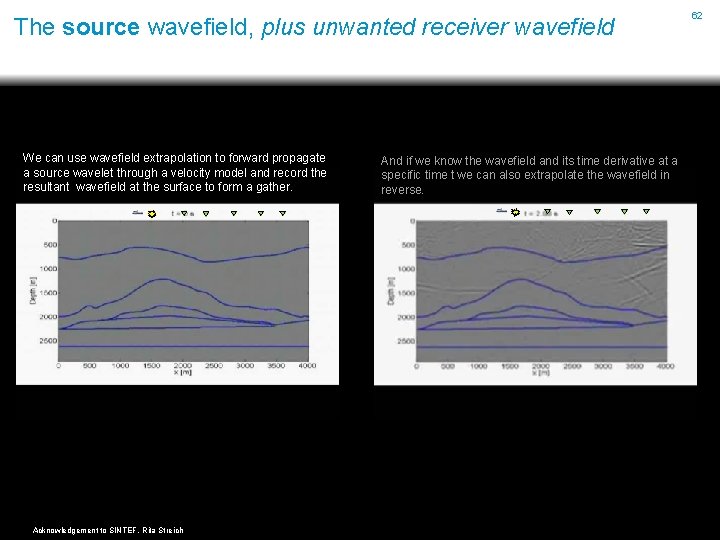
The source wavefield, plus unwanted receiver wavefield We can use wavefield extrapolation to forward propagate a source wavelet through a velocity model and record the resultant wavefield at the surface to form a gather. Acknowledgement to SINTEF, Rita Streich And if we know the wavefield and its time derivative at a specific time t we can also extrapolate the wavefield in reverse. 62
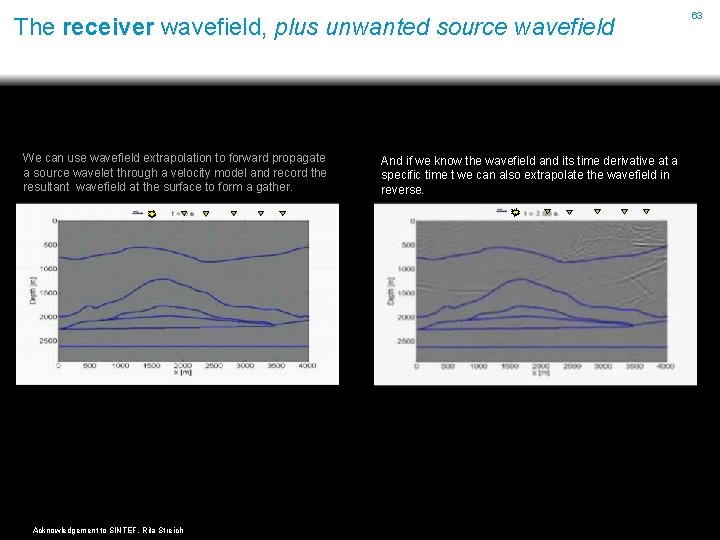
The receiver wavefield, plus unwanted source wavefield We can use wavefield extrapolation to forward propagate a source wavelet through a velocity model and record the resultant wavefield at the surface to form a gather. Acknowledgement to SINTEF, Rita Streich And if we know the wavefield and its time derivative at a specific time t we can also extrapolate the wavefield in reverse. 63
The imaging condition uses source and receiver wavefields We can use wavefield extrapolation to forward propagate a source wavelet through a velocity model and record the resultant wavefield at the surface to form a gather. And if we know the wavefield and its time derivative at a specific time t we can also extrapolate the wavefield in reverse. Is that the same as migration? 64
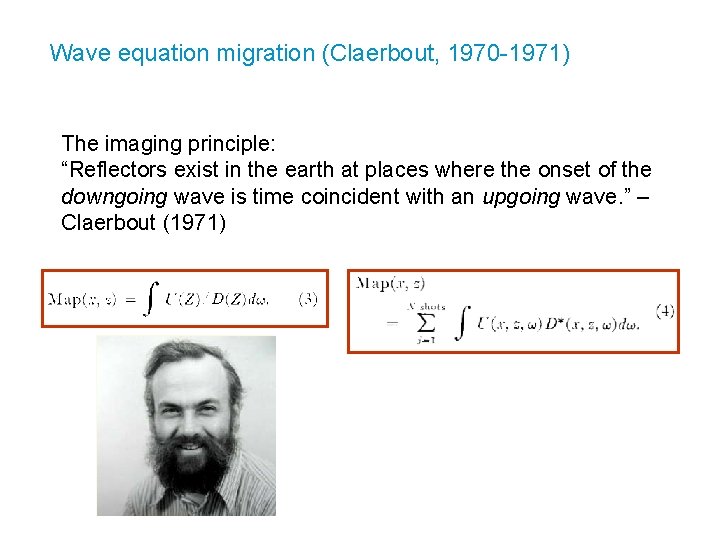
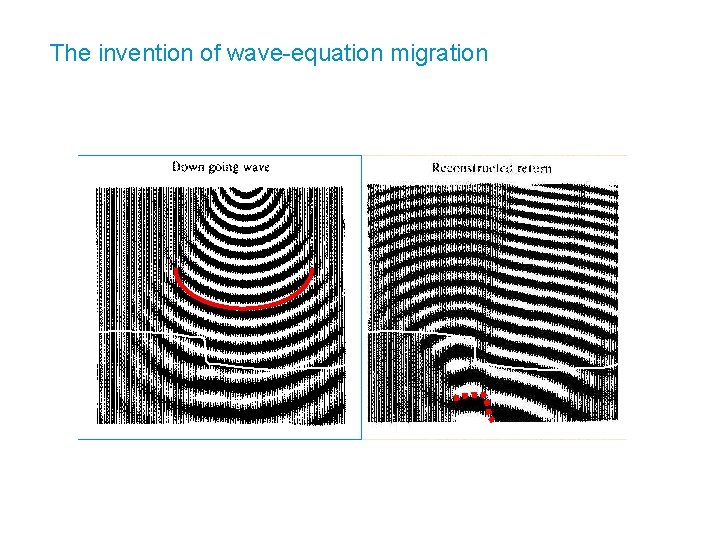
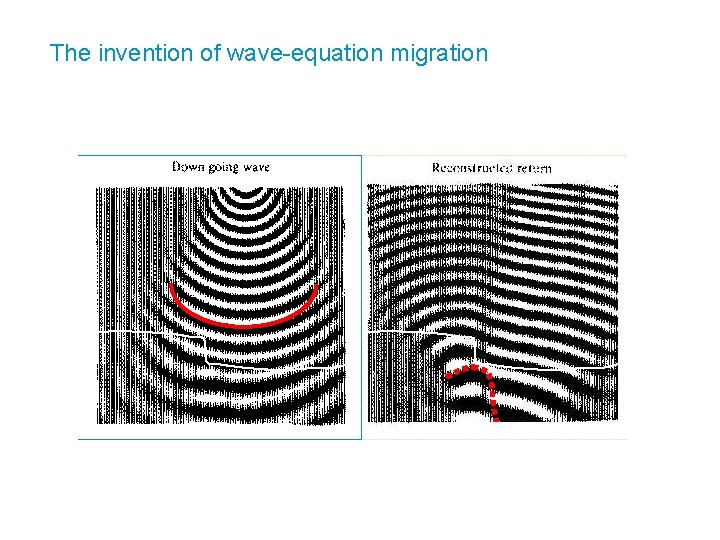
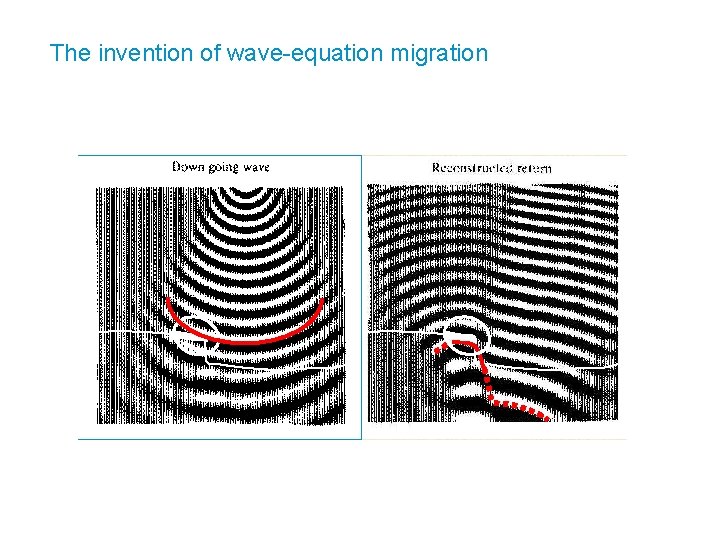
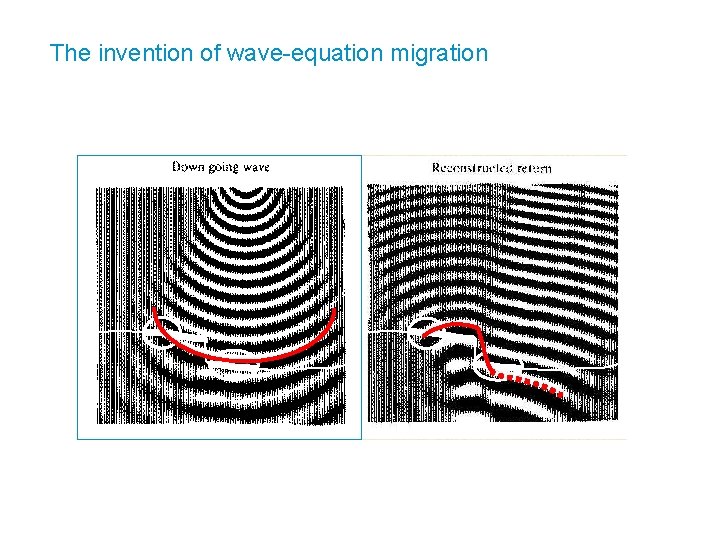
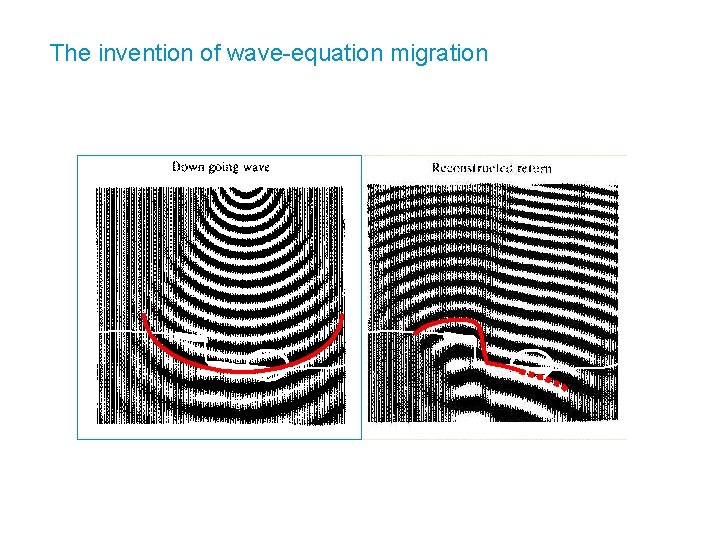
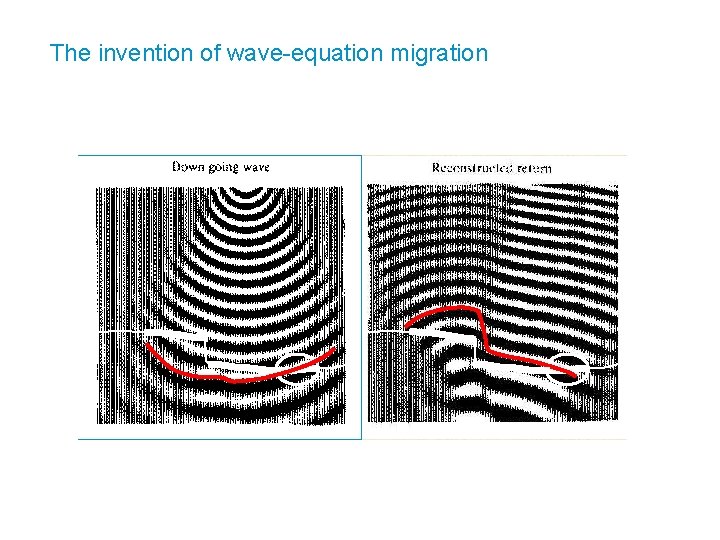
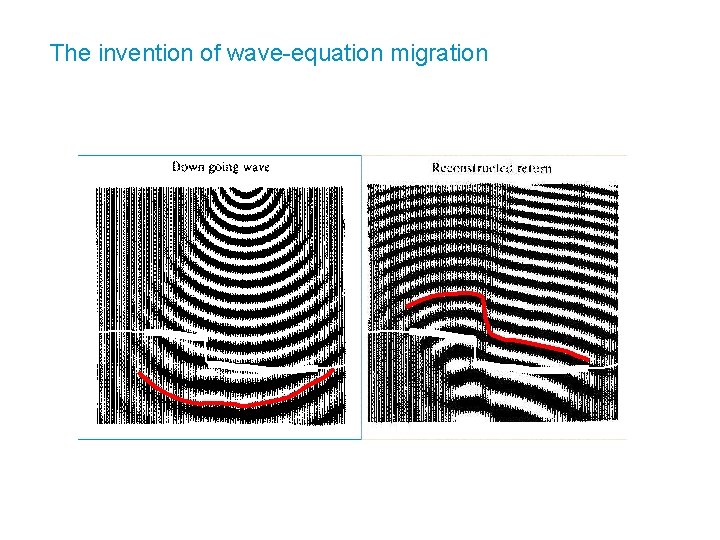
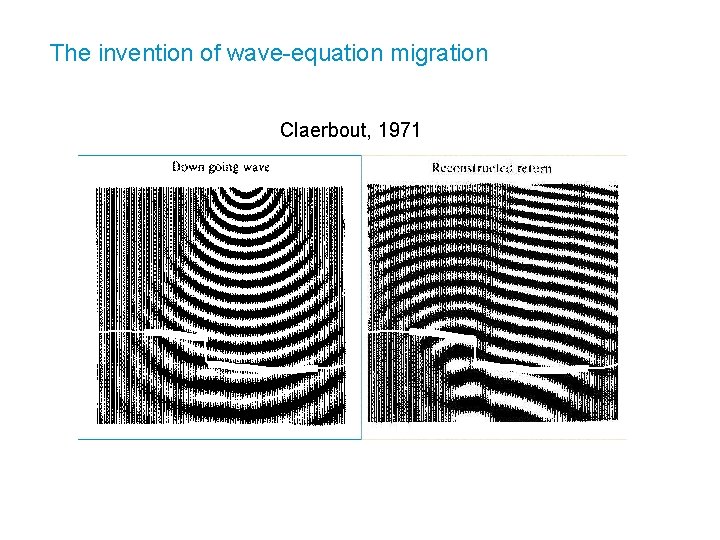
Wave equation migration (Claerbout, 1970 -1971) The imaging principle: “Reflectors exist in the earth at places where the onset of the downgoing wave is time coincident with an upgoing wave. ” – Claerbout (1971)
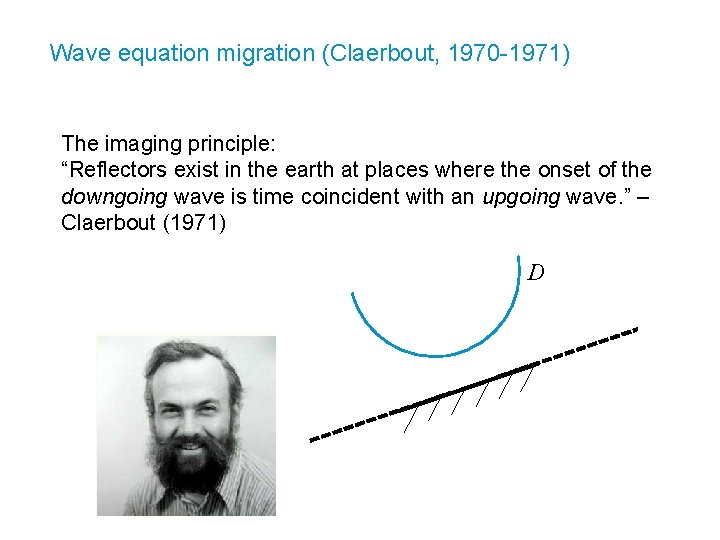
Wave equation migration (Claerbout, 1970 -1971) The imaging principle: “Reflectors exist in the earth at places where the onset of the downgoing wave is time coincident with an upgoing wave. ” – Claerbout (1971) D
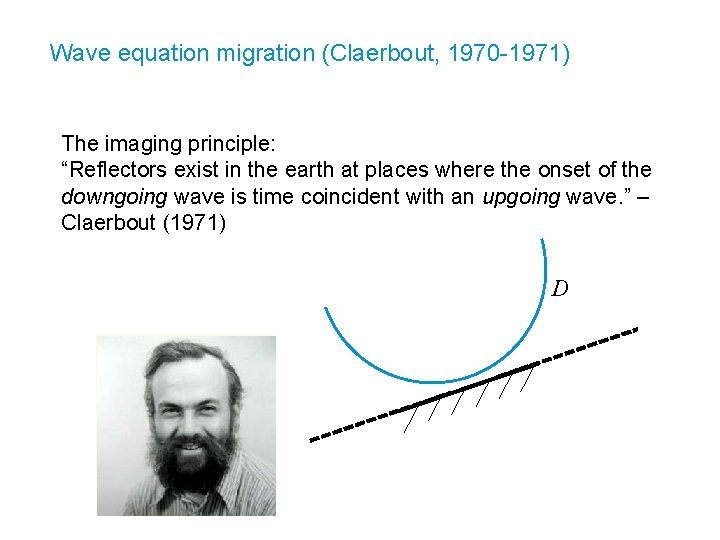
Wave equation migration (Claerbout, 1970 -1971) The imaging principle: “Reflectors exist in the earth at places where the onset of the downgoing wave is time coincident with an upgoing wave. ” – Claerbout (1971) D
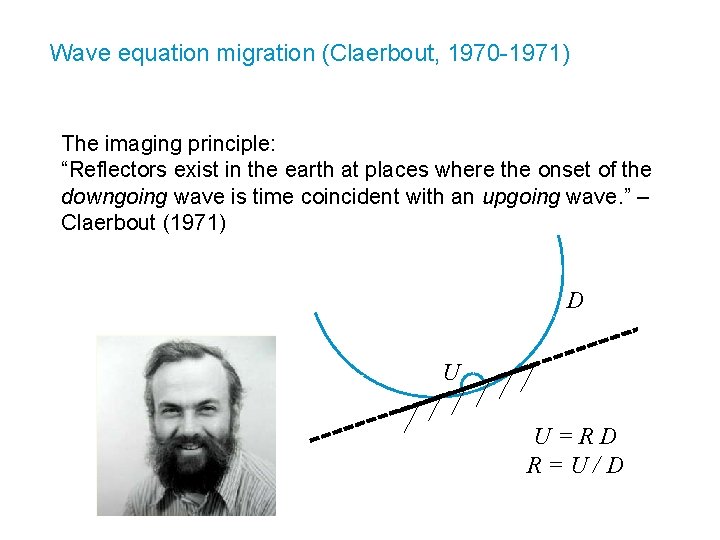
Wave equation migration (Claerbout, 1970 -1971) The imaging principle: “Reflectors exist in the earth at places where the onset of the downgoing wave is time coincident with an upgoing wave. ” – Claerbout (1971) D U U=RD R=U/D
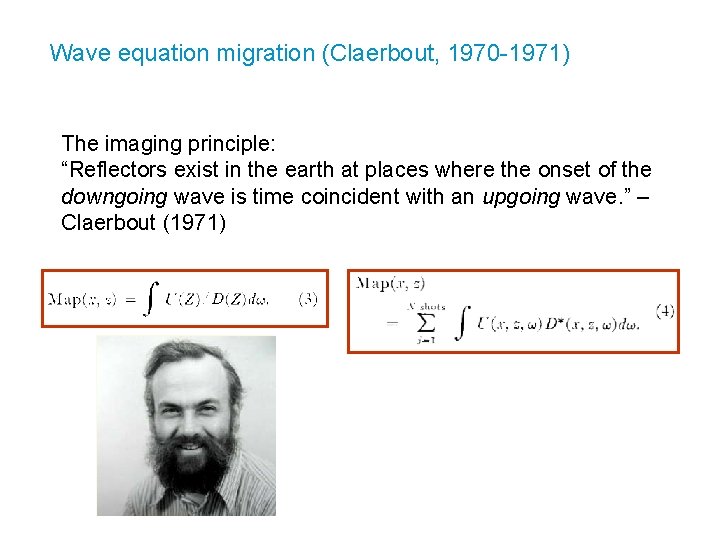
Wave equation migration (Claerbout, 1970 -1971) The imaging principle: “Reflectors exist in the earth at places where the onset of the downgoing wave is time coincident with an upgoing wave. ” – Claerbout (1971)
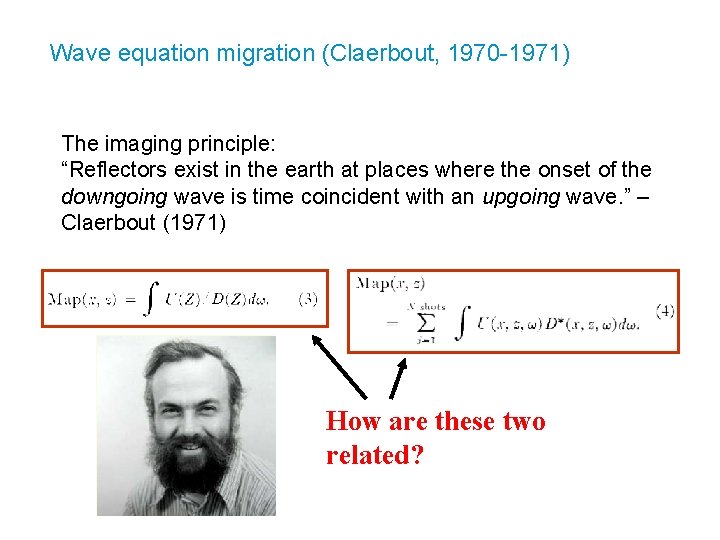
Wave equation migration (Claerbout, 1970 -1971) The imaging principle: “Reflectors exist in the earth at places where the onset of the downgoing wave is time coincident with an upgoing wave. ” – Claerbout (1971) How are these two related?
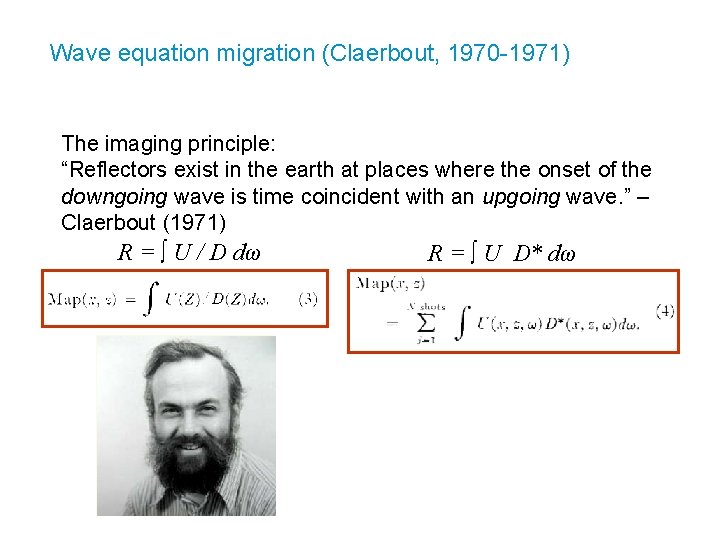
Wave equation migration (Claerbout, 1970 -1971) The imaging principle: “Reflectors exist in the earth at places where the onset of the downgoing wave is time coincident with an upgoing wave. ” – Claerbout (1971) R = ∫ U / D dω R = ∫ U D* dω
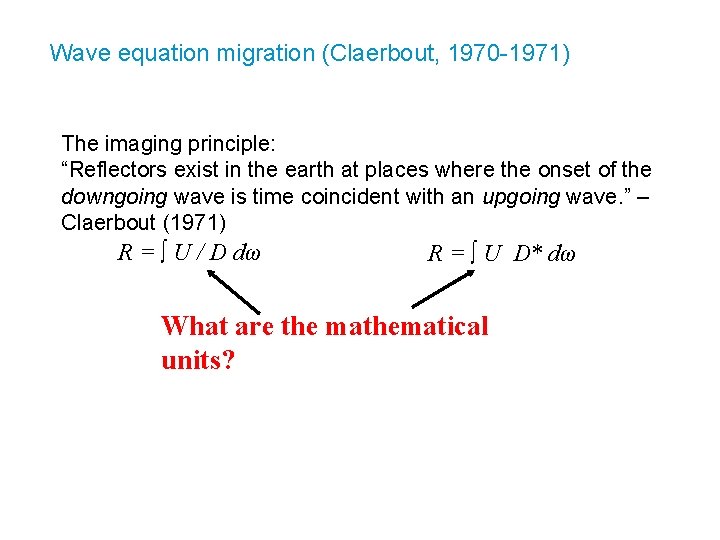
Wave equation migration (Claerbout, 1970 -1971) The imaging principle: “Reflectors exist in the earth at places where the onset of the downgoing wave is time coincident with an upgoing wave. ” – Claerbout (1971) R = ∫ U / D dω R = ∫ U D* dω What are the mathematical units?
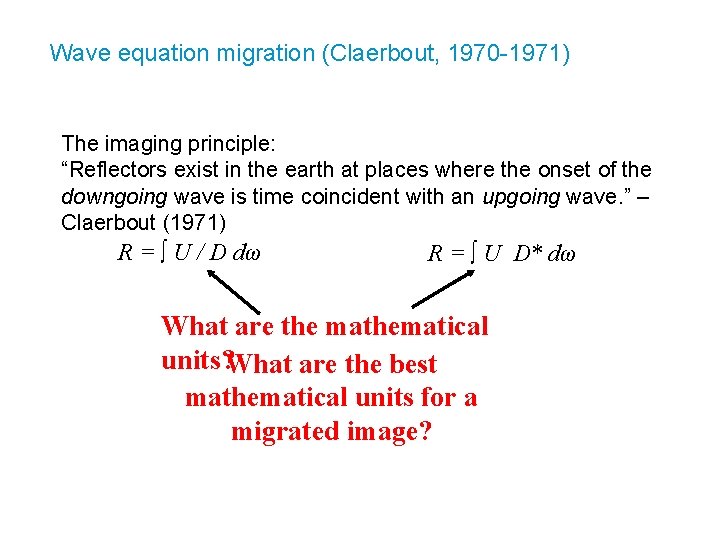
Wave equation migration (Claerbout, 1970 -1971) The imaging principle: “Reflectors exist in the earth at places where the onset of the downgoing wave is time coincident with an upgoing wave. ” – Claerbout (1971) R = ∫ U / D dω R = ∫ U D* dω What are the mathematical units? What are the best mathematical units for a migrated image?
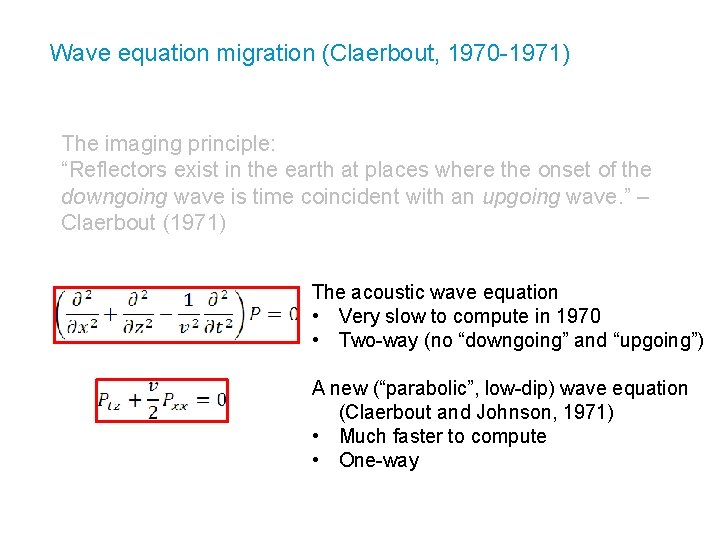
Wave equation migration (Claerbout, 1970 -1971) The imaging principle: “Reflectors exist in the earth at places where the onset of the downgoing wave is time coincident with an upgoing wave. ” – Claerbout (1971) The acoustic wave equation • Very slow to compute in 1970 • Two-way (no “downgoing” and “upgoing”) A new (“parabolic”, low-dip) wave equation (Claerbout and Johnson, 1971) • Much faster to compute • One-way
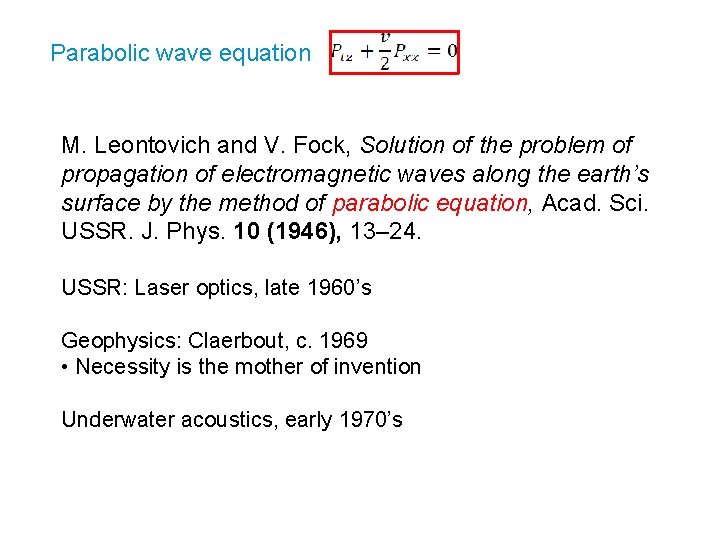
Parabolic wave equation M. Leontovich and V. Fock, Solution of the problem of propagation of electromagnetic waves along the earth’s surface by the method of parabolic equation, Acad. Sci. USSR. J. Phys. 10 (1946), 13– 24. USSR: Laser optics, late 1960’s Geophysics: Claerbout, c. 1969 • Necessity is the mother of invention Underwater acoustics, early 1970’s
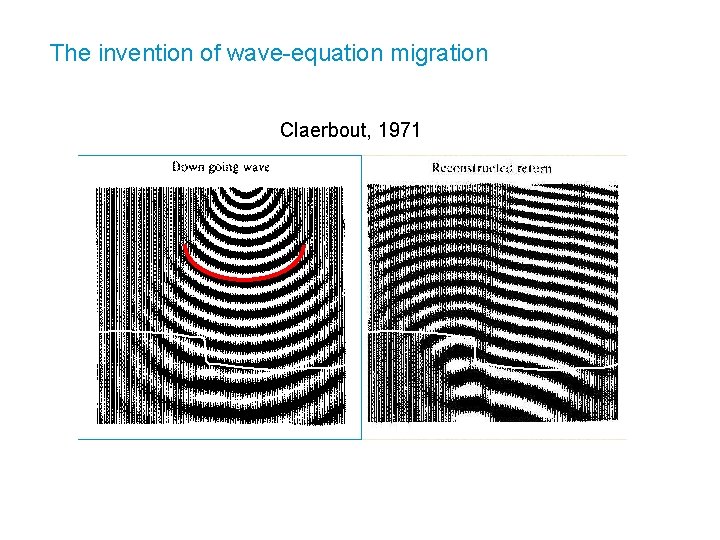
The invention of wave-equation migration Claerbout, 1971
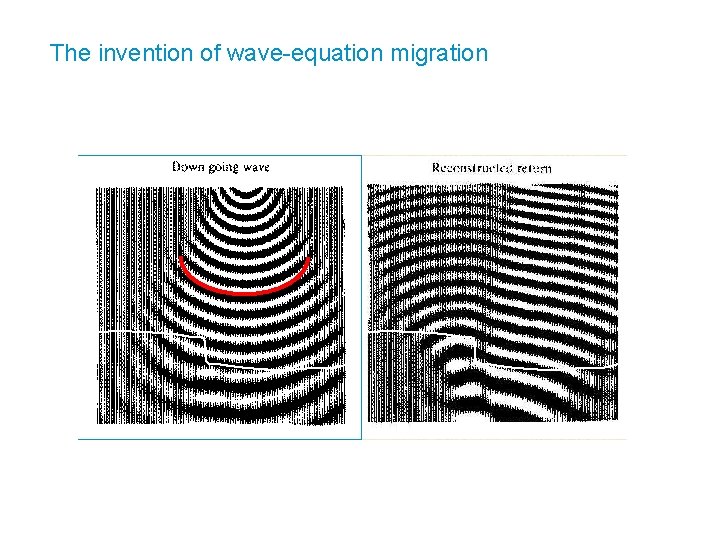
The invention of wave-equation migration
The invention of wave-equation migration
The invention of wave-equation migration
The invention of wave-equation migration
The invention of wave-equation migration
The invention of wave-equation migration
The invention of wave-equation migration
The invention of wave-equation migration
The invention of wave-equation migration Claerbout, 1971
86 Wavefield propagation forwards in time
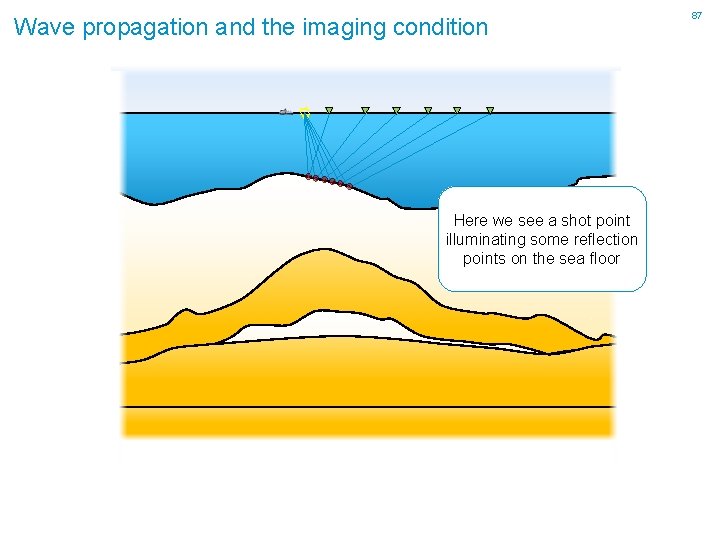
Wave propagation and the imaging condition Here we see a shot point illuminating some reflection points on the sea floor 87
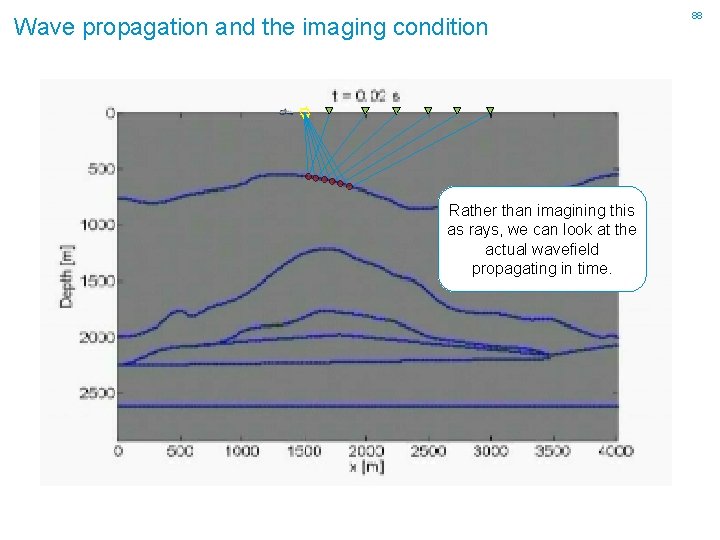
Wave propagation and the imaging condition Rather than imagining this as rays, we can look at the actual wavefield propagating in time. 88
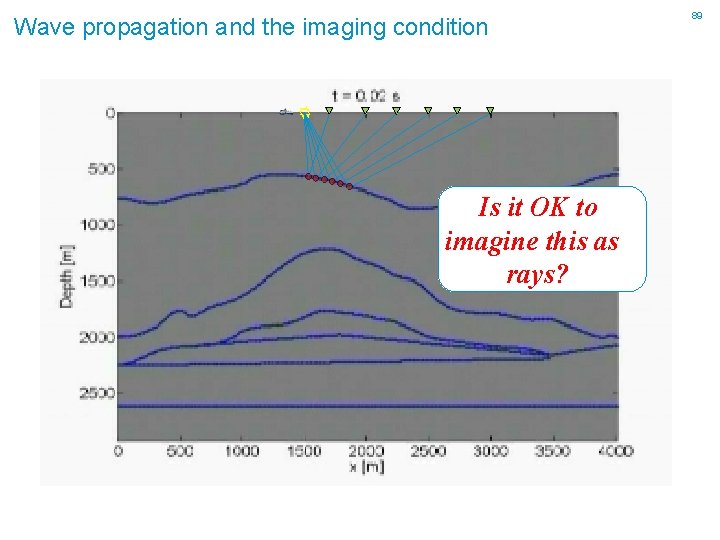
Wave propagation and the imaging condition Is it OK to imagine this as rays? 89
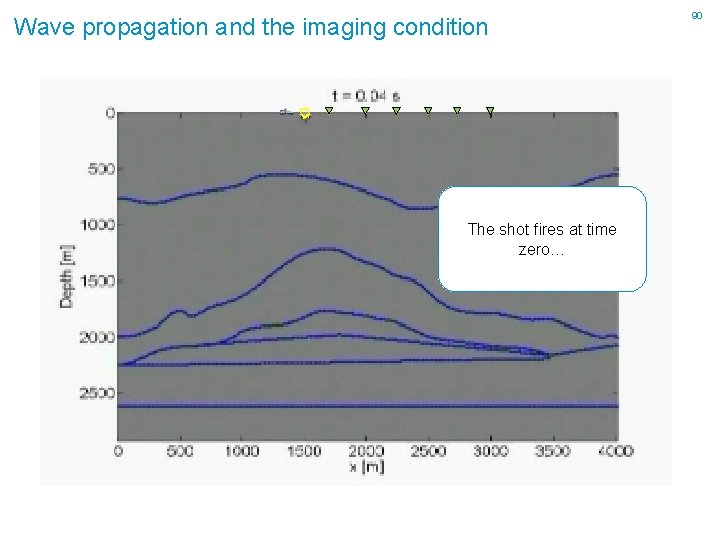
Wave propagation and the imaging condition The shot fires at time zero… 90
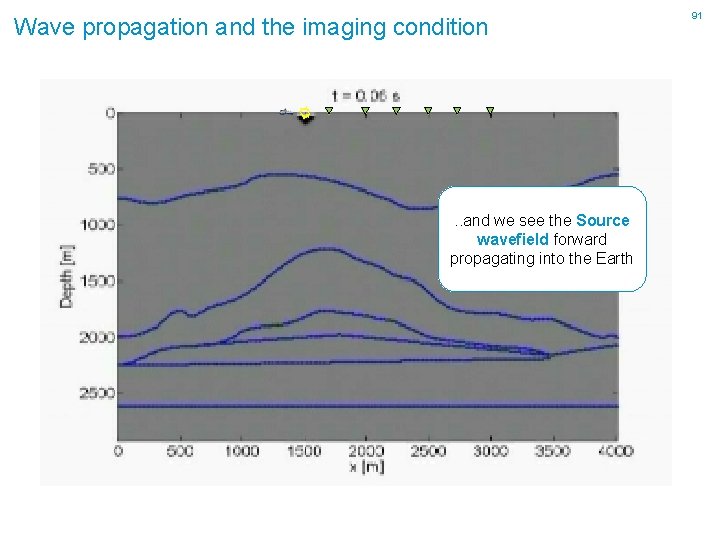
Wave propagation and the imaging condition . . and we see the Source wavefield forward propagating into the Earth 91
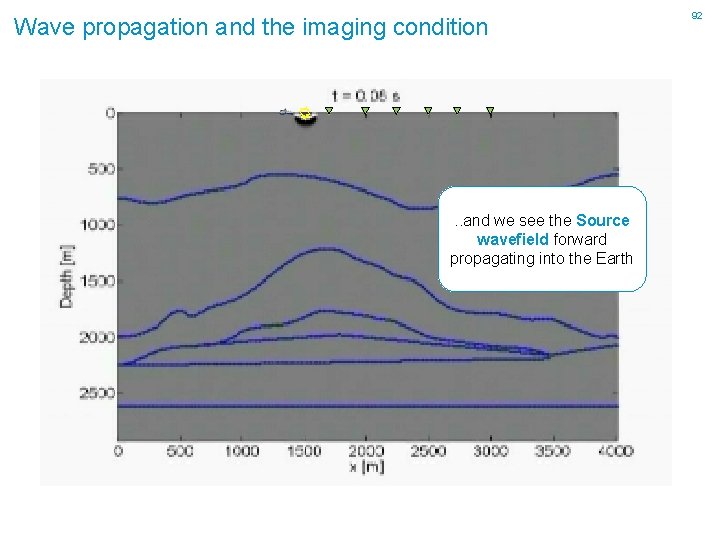
Wave propagation and the imaging condition . . and we see the Source wavefield forward propagating into the Earth 92
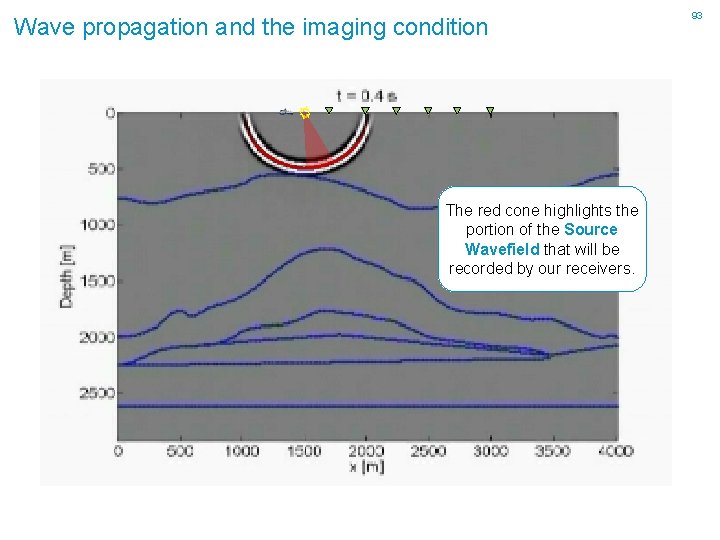
Wave propagation and the imaging condition The red cone highlights the portion of the Source Wavefield that will be recorded by our receivers. 93
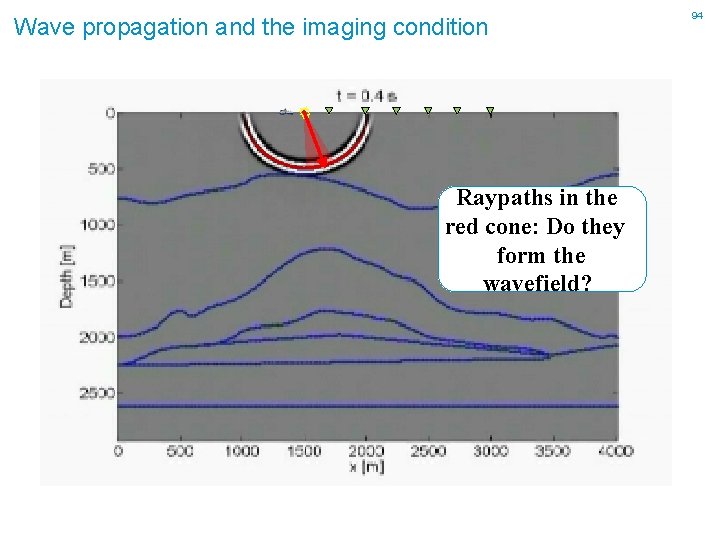
Wave propagation and the imaging condition Raypaths in the red cone: Do they form the wavefield? 94
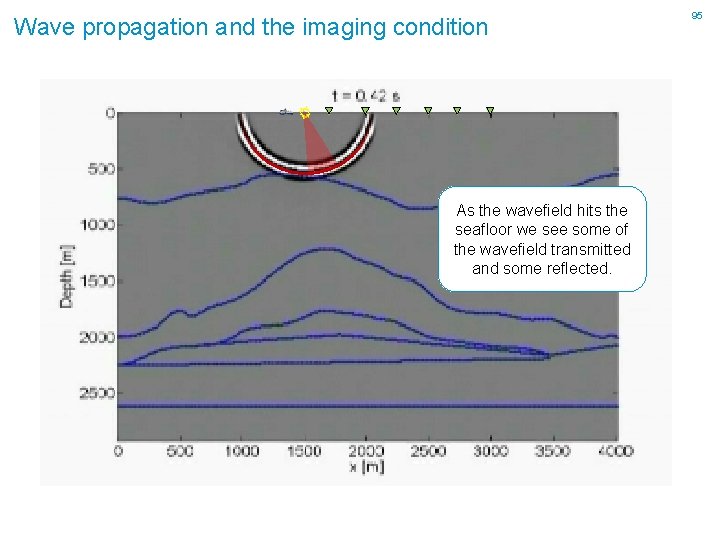
Wave propagation and the imaging condition As the wavefield hits the seafloor we see some of the wavefield transmitted and some reflected. 95
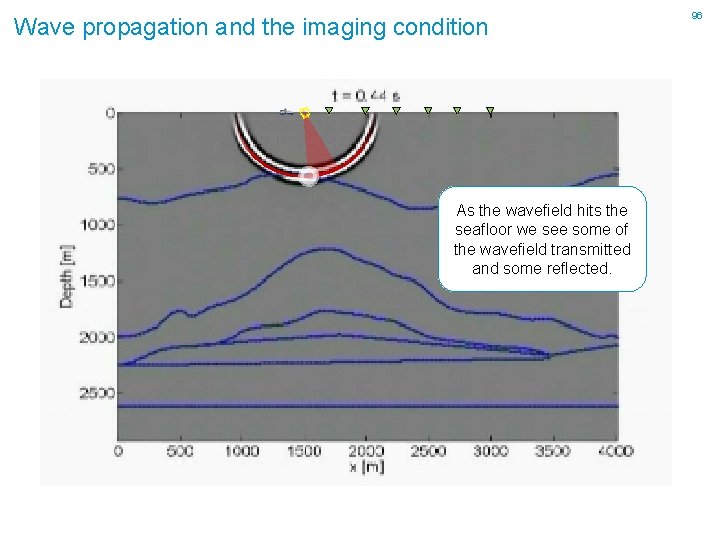
Wave propagation and the imaging condition As the wavefield hits the seafloor we see some of the wavefield transmitted and some reflected. 96
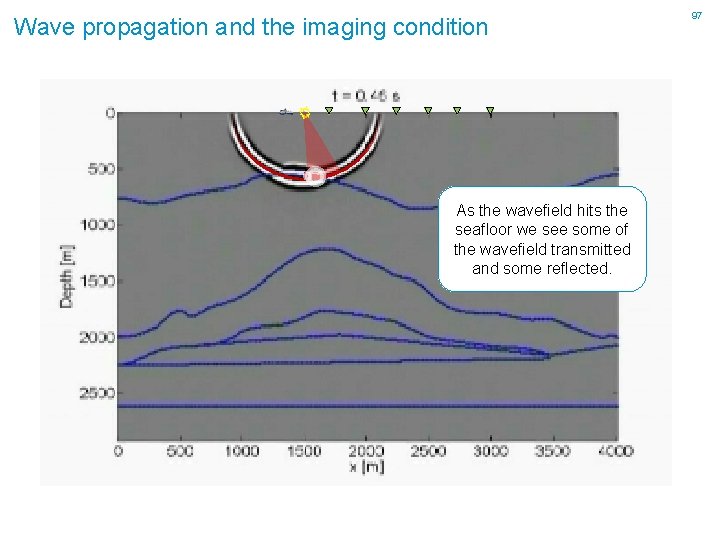
Wave propagation and the imaging condition As the wavefield hits the seafloor we see some of the wavefield transmitted and some reflected. 97
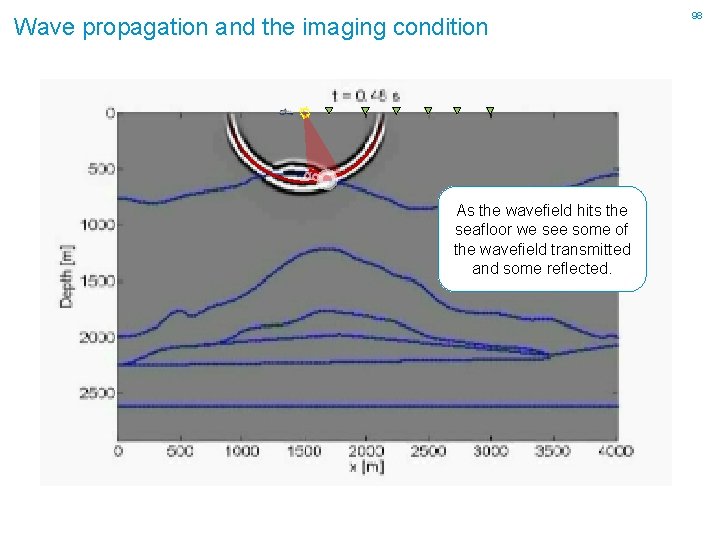
Wave propagation and the imaging condition As the wavefield hits the seafloor we see some of the wavefield transmitted and some reflected. 98
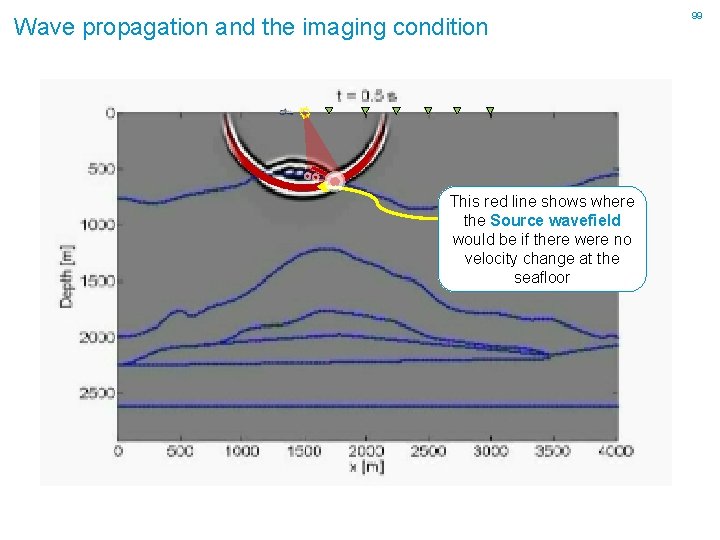
Wave propagation and the imaging condition This red line shows where the Source wavefield would be if there were no velocity change at the seafloor 99
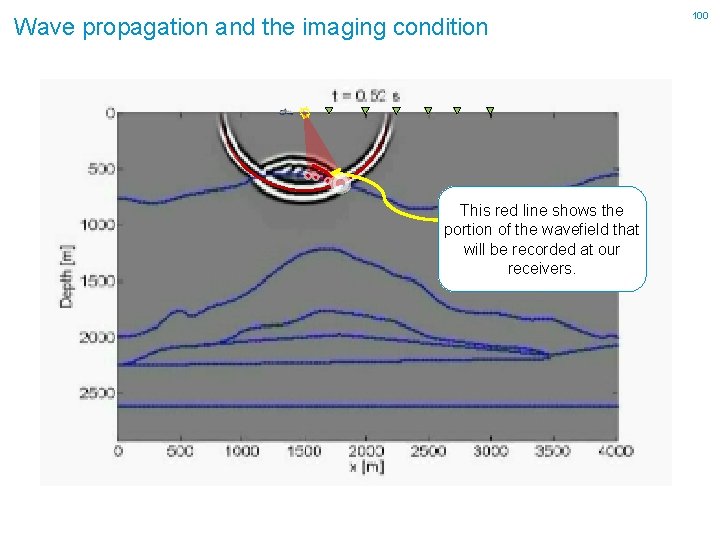
Wave propagation and the imaging condition This red line shows the portion of the wavefield that will be recorded at our receivers. 100
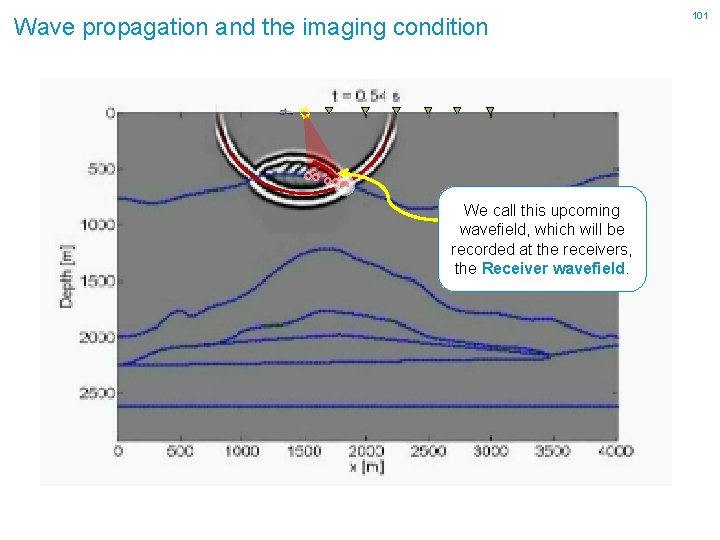
Wave propagation and the imaging condition We call this upcoming wavefield, which will be recorded at the receivers, the Receiver wavefield. 101
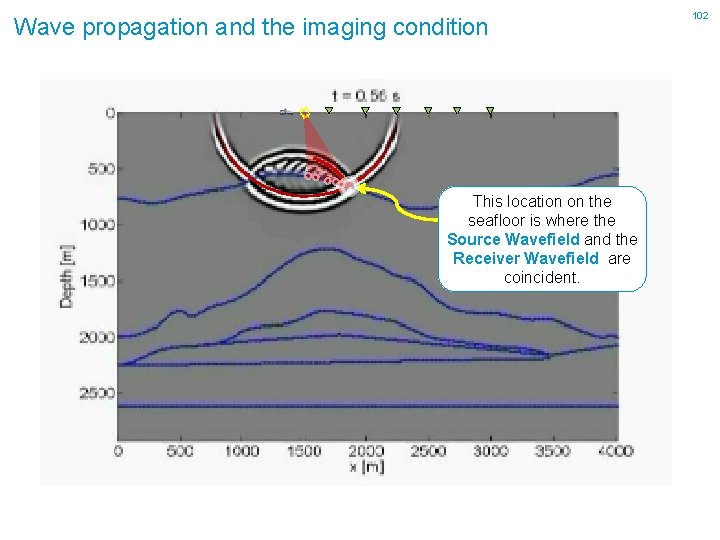
Wave propagation and the imaging condition This location on the seafloor is where the Source Wavefield and the Receiver Wavefield are coincident. 102
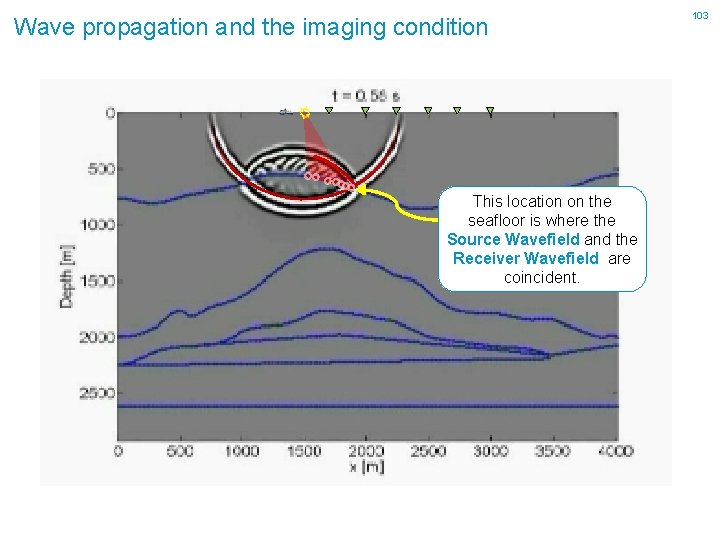
Wave propagation and the imaging condition This location on the seafloor is where the Source Wavefield and the Receiver Wavefield are coincident. 103
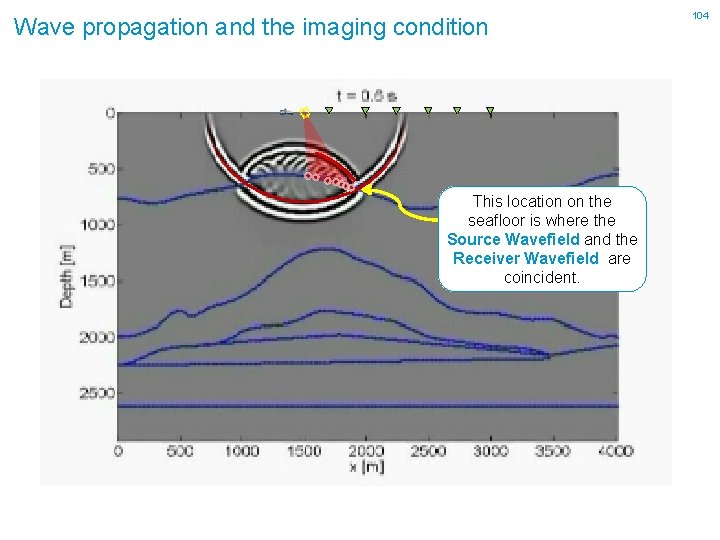
Wave propagation and the imaging condition This location on the seafloor is where the Source Wavefield and the Receiver Wavefield are coincident. 104
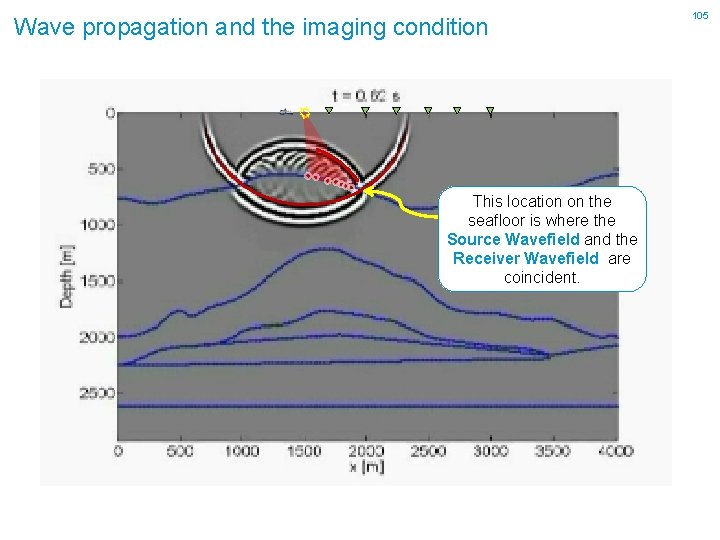
Wave propagation and the imaging condition This location on the seafloor is where the Source Wavefield and the Receiver Wavefield are coincident. 105
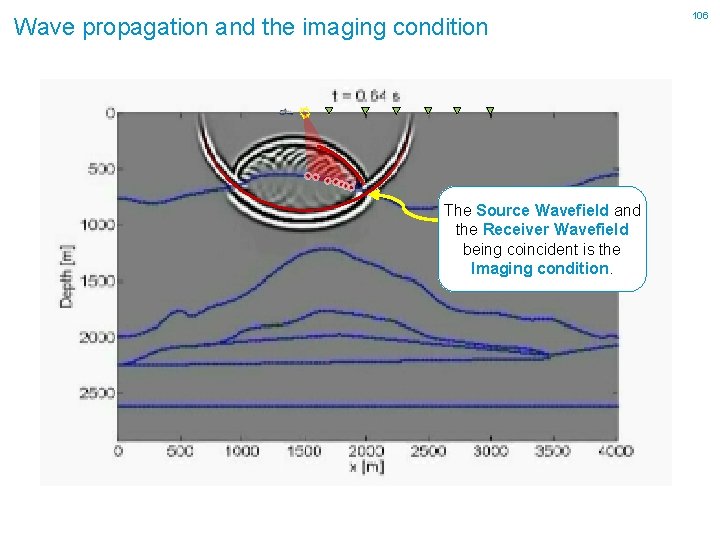
Wave propagation and the imaging condition The Source Wavefield and the Receiver Wavefield being coincident is the Imaging condition. 106
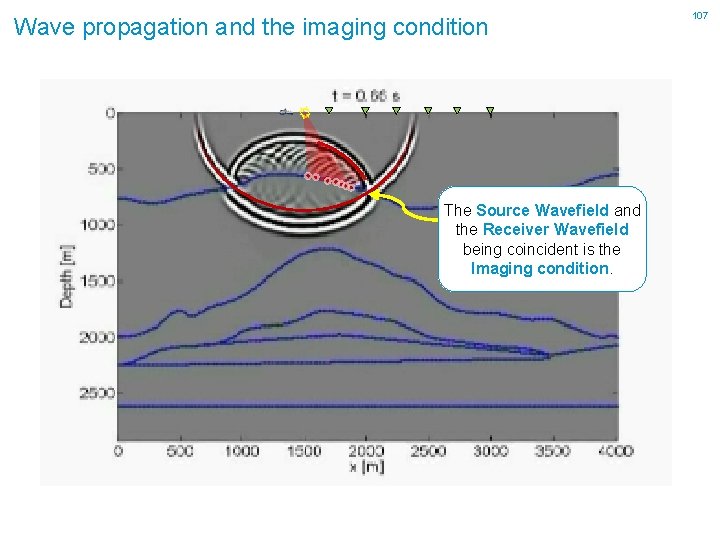
Wave propagation and the imaging condition The Source Wavefield and the Receiver Wavefield being coincident is the Imaging condition. 107
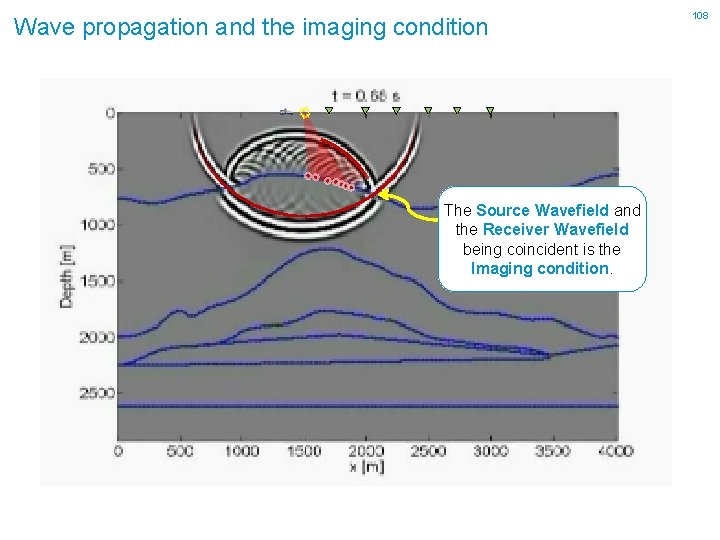
Wave propagation and the imaging condition The Source Wavefield and the Receiver Wavefield being coincident is the Imaging condition. 108
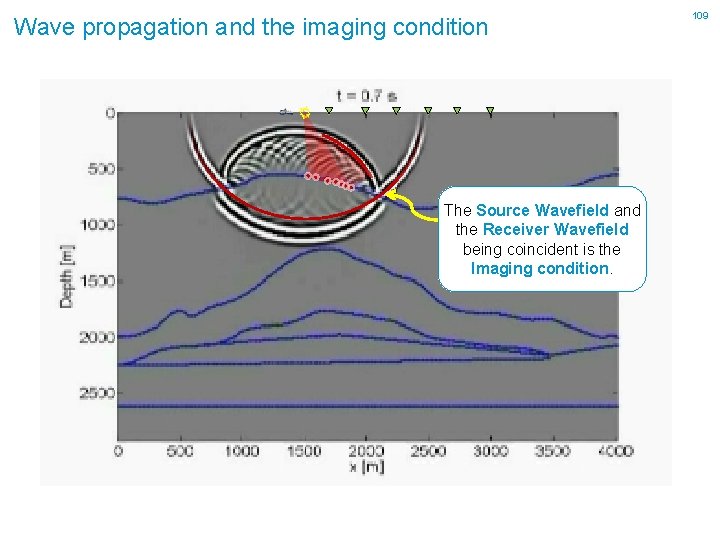
Wave propagation and the imaging condition The Source Wavefield and the Receiver Wavefield being coincident is the Imaging condition. 109
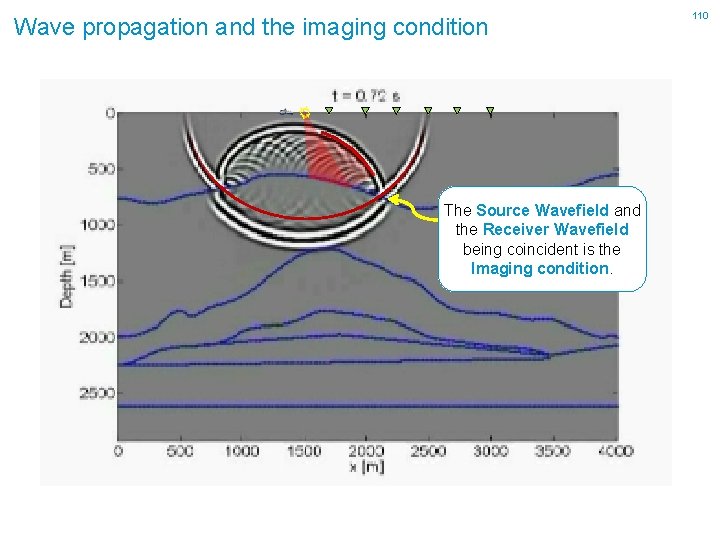
Wave propagation and the imaging condition The Source Wavefield and the Receiver Wavefield being coincident is the Imaging condition. 110
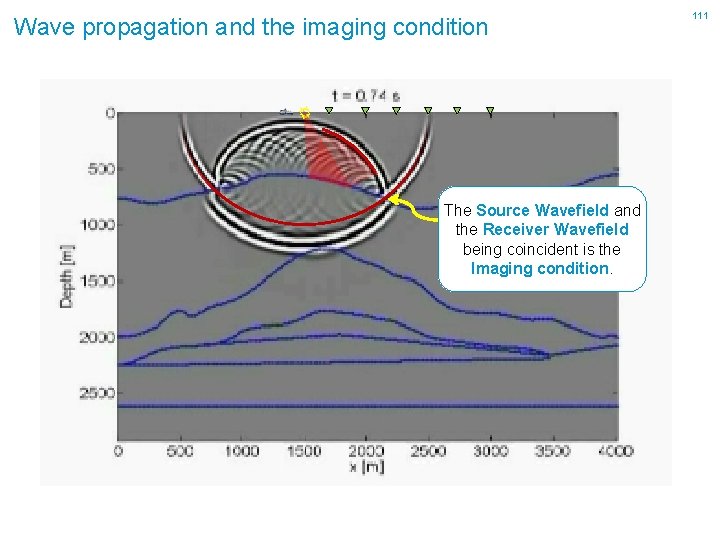
Wave propagation and the imaging condition The Source Wavefield and the Receiver Wavefield being coincident is the Imaging condition. 111
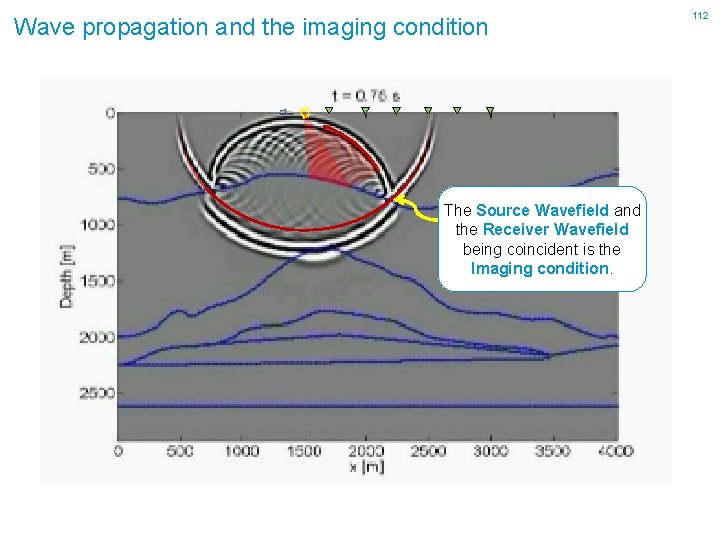
Wave propagation and the imaging condition The Source Wavefield and the Receiver Wavefield being coincident is the Imaging condition. 112
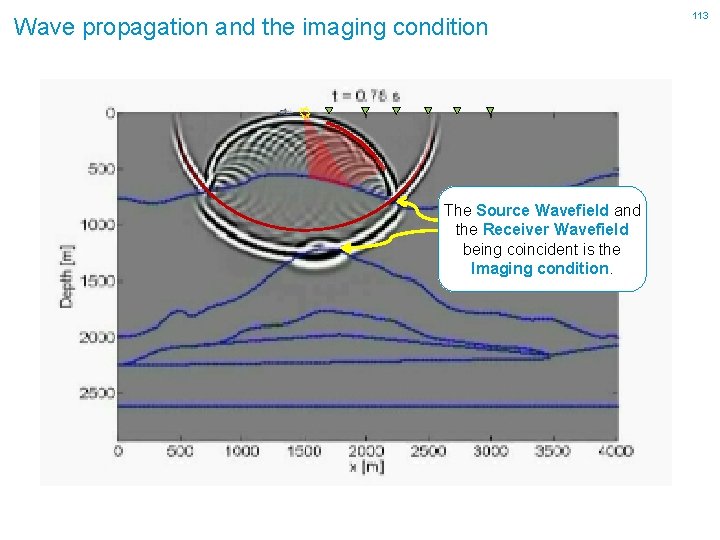
Wave propagation and the imaging condition The Source Wavefield and the Receiver Wavefield being coincident is the Imaging condition. 113
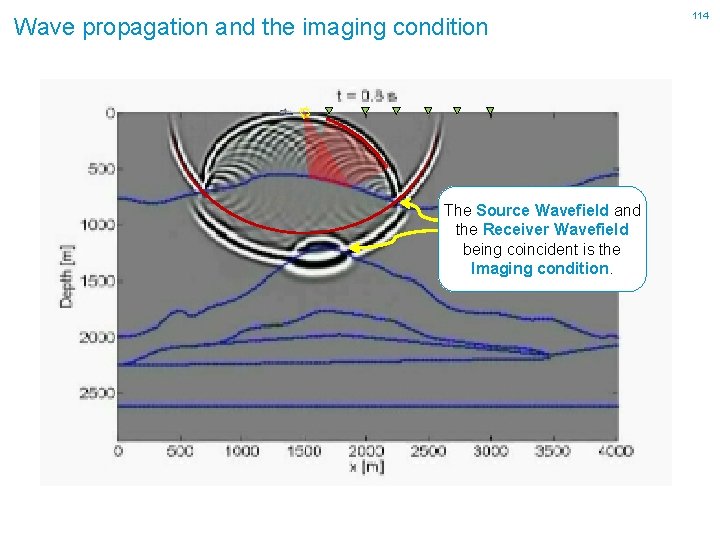
Wave propagation and the imaging condition The Source Wavefield and the Receiver Wavefield being coincident is the Imaging condition. 114
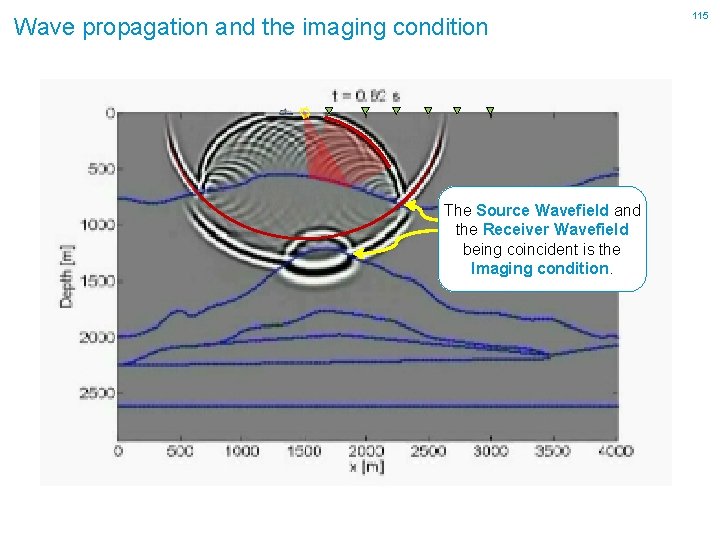
Wave propagation and the imaging condition The Source Wavefield and the Receiver Wavefield being coincident is the Imaging condition. 115
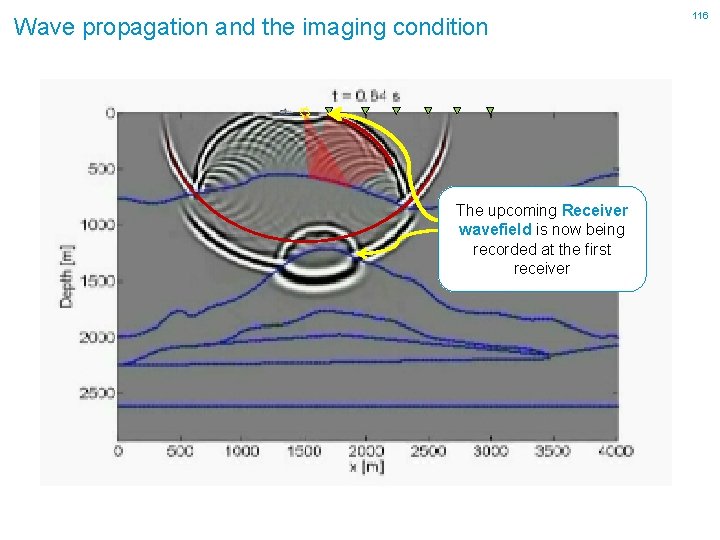
Wave propagation and the imaging condition The upcoming Receiver wavefield is now being recorded at the first receiver 116
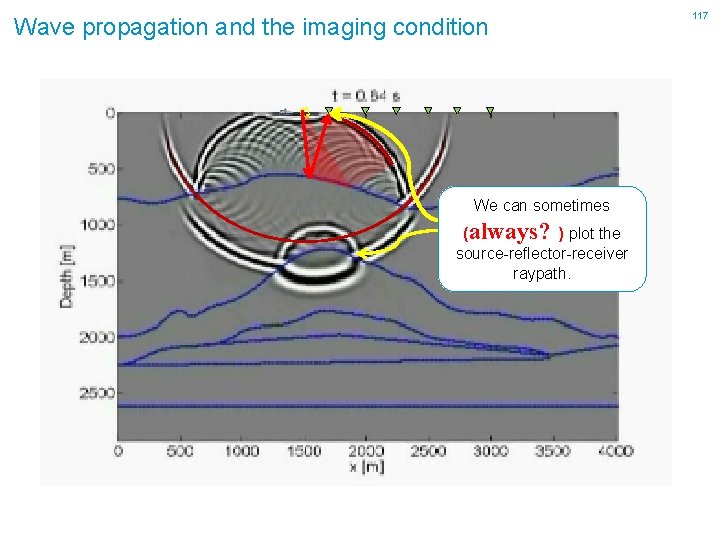
Wave propagation and the imaging condition We can sometimes (always? ) plot the source-reflector-receiver raypath. 117
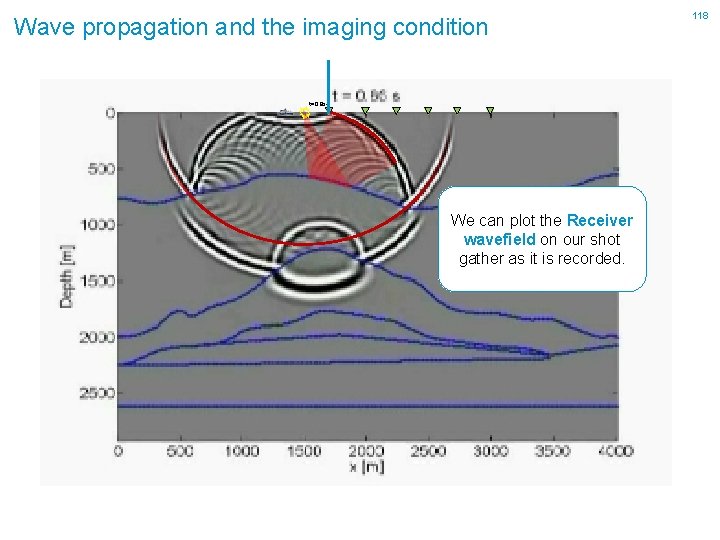
Wave propagation and the imaging condition t=0. 8 s- We can plot the Receiver wavefield on our shot gather as it is recorded. 118
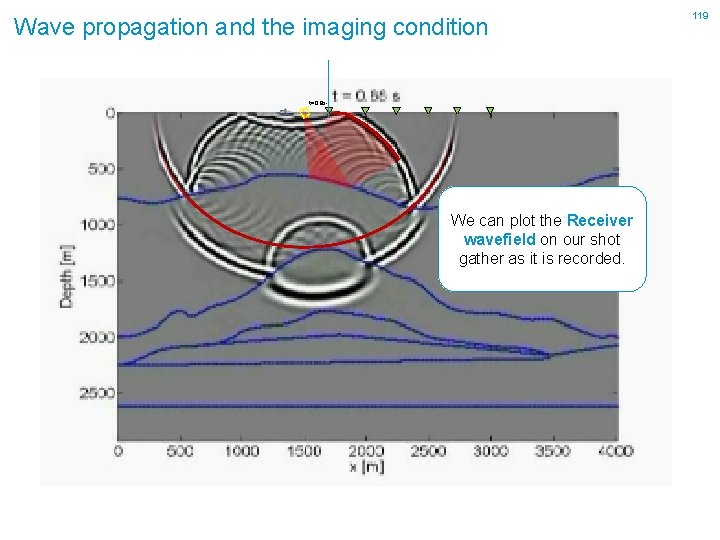
Wave propagation and the imaging condition t=0. 8 s- We can plot the Receiver wavefield on our shot gather as it is recorded. 119
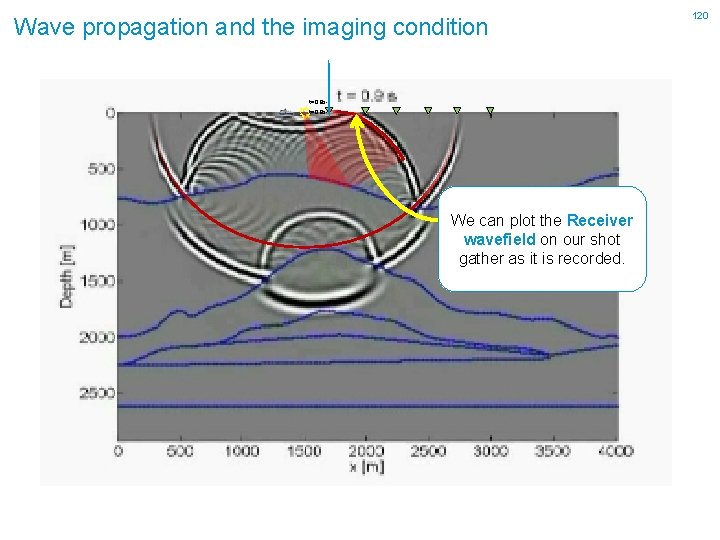
Wave propagation and the imaging condition t=0. 8 st=0. 9 s- We can plot the Receiver wavefield on our shot gather as it is recorded. 120
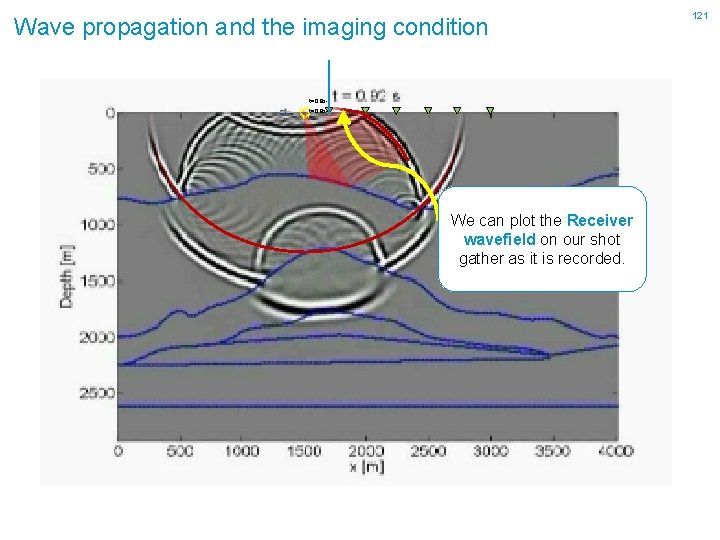
Wave propagation and the imaging condition t=0. 8 st=0. 9 s- We can plot the Receiver wavefield on our shot gather as it is recorded. 121
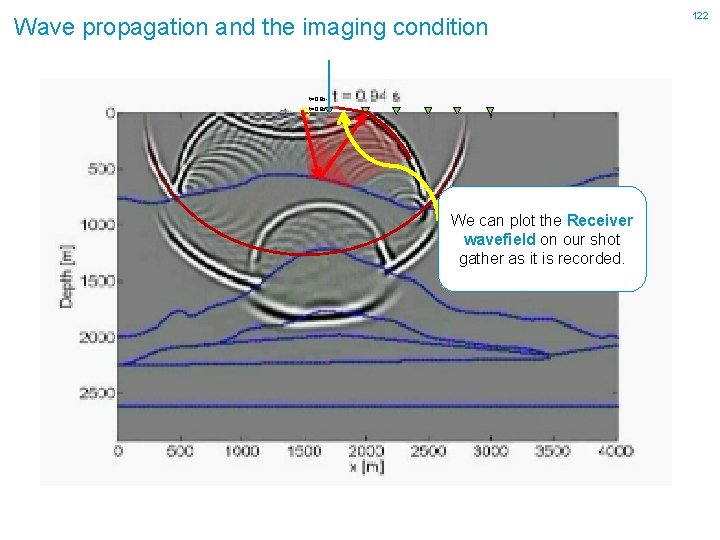
Wave propagation and the imaging condition t=0. 8 st=0. 9 s- We can plot the Receiver wavefield on our shot gather as it is recorded. 122
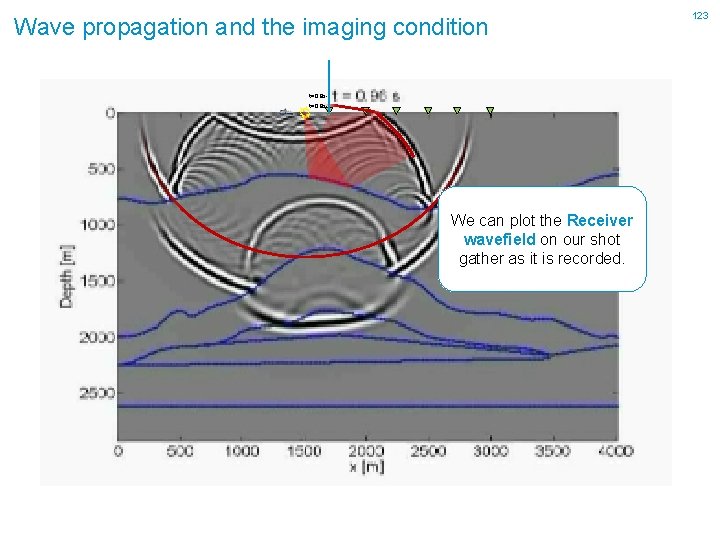
Wave propagation and the imaging condition t=0. 8 st=0. 9 s- We can plot the Receiver wavefield on our shot gather as it is recorded. 123
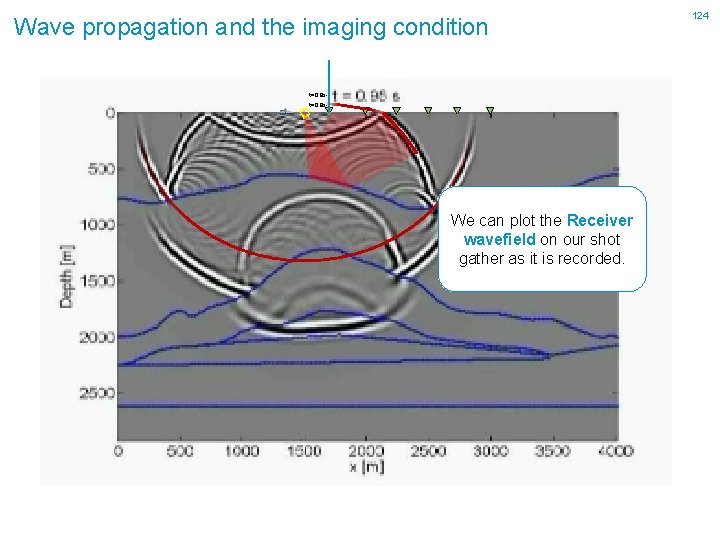
Wave propagation and the imaging condition t=0. 8 st=0. 9 s- We can plot the Receiver wavefield on our shot gather as it is recorded. 124
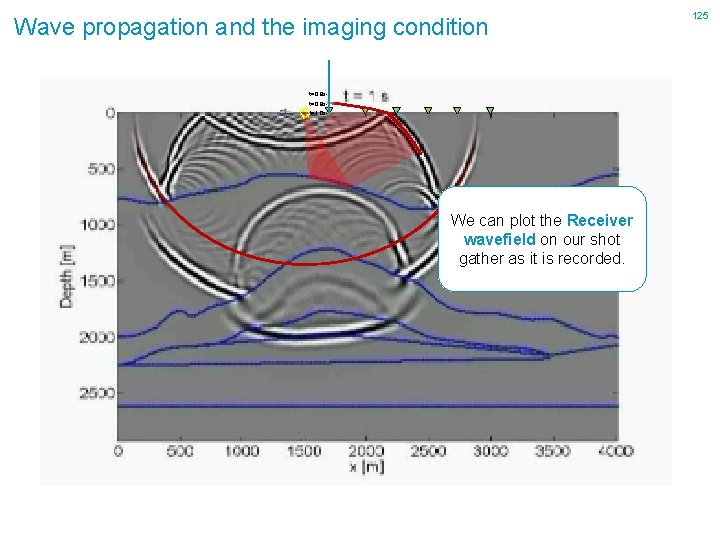
Wave propagation and the imaging condition t=0. 8 st=0. 9 st=1. 0 s- We can plot the Receiver wavefield on our shot gather as it is recorded. 125
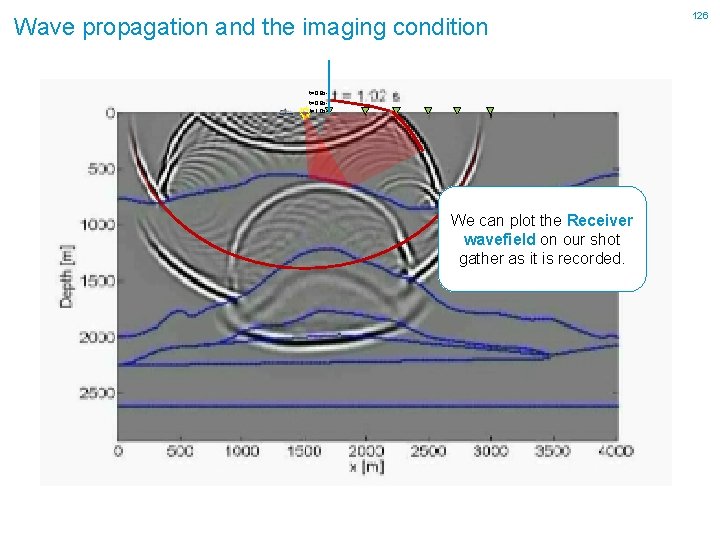
Wave propagation and the imaging condition t=0. 8 st=0. 9 st=1. 0 s- We can plot the Receiver wavefield on our shot gather as it is recorded. 126
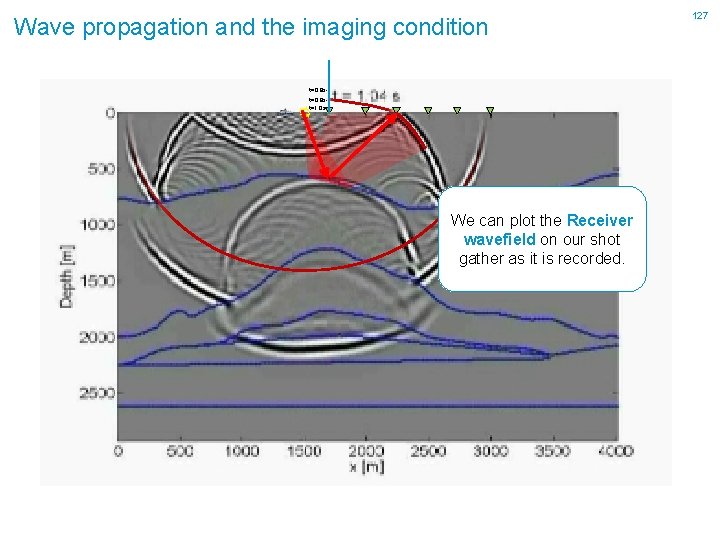
Wave propagation and the imaging condition t=0. 8 st=0. 9 st=1. 0 s- We can plot the Receiver wavefield on our shot gather as it is recorded. 127
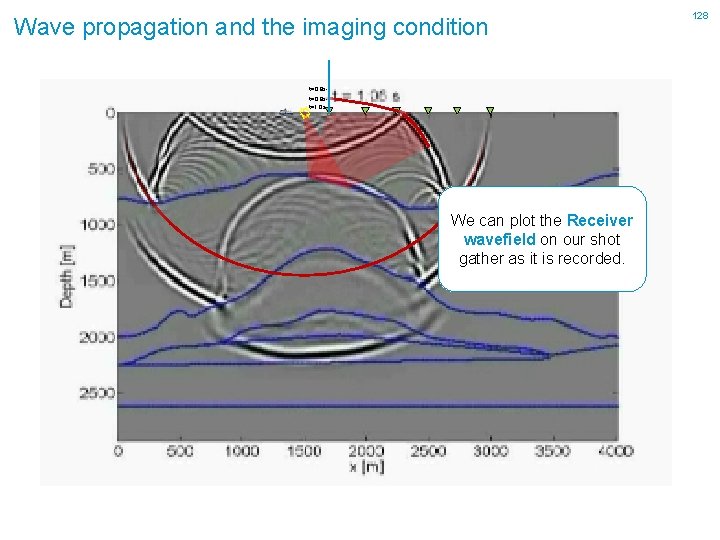
Wave propagation and the imaging condition t=0. 8 st=0. 9 st=1. 0 s- We can plot the Receiver wavefield on our shot gather as it is recorded. 128
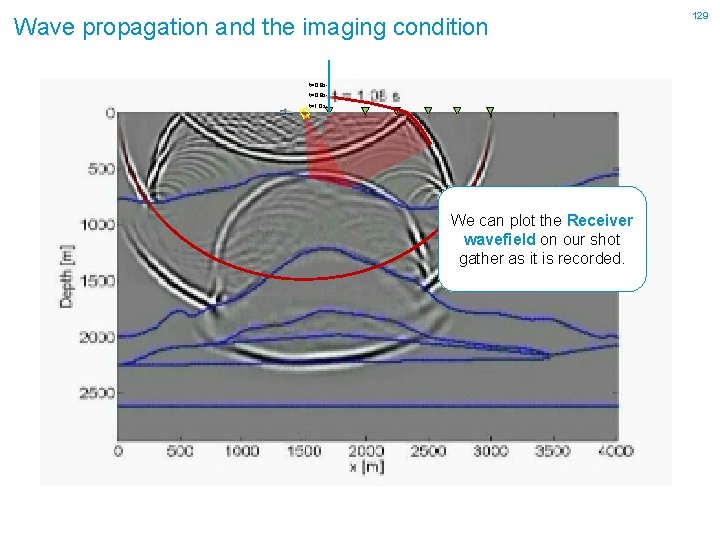
Wave propagation and the imaging condition t=0. 8 st=0. 9 st=1. 0 s- We can plot the Receiver wavefield on our shot gather as it is recorded. 129
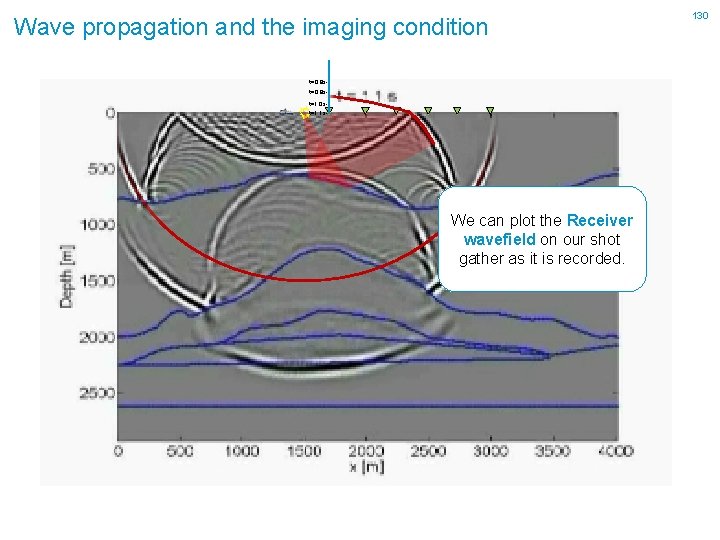
Wave propagation and the imaging condition t=0. 8 st=0. 9 st=1. 0 st=1. 1 s- We can plot the Receiver wavefield on our shot gather as it is recorded. 130
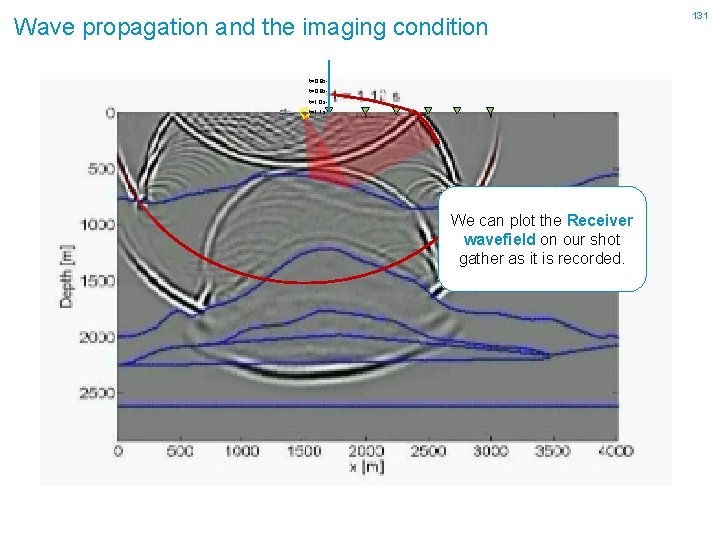
Wave propagation and the imaging condition t=0. 8 st=0. 9 st=1. 0 st=1. 1 s- We can plot the Receiver wavefield on our shot gather as it is recorded. 131
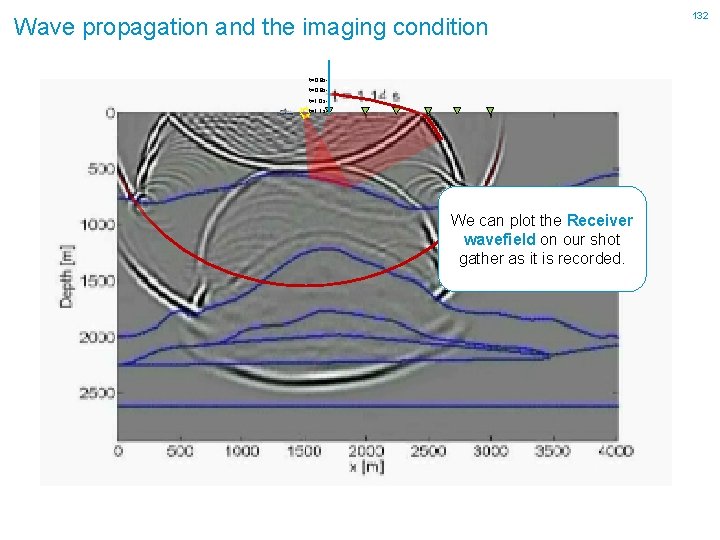
Wave propagation and the imaging condition t=0. 8 st=0. 9 st=1. 0 st=1. 1 s- We can plot the Receiver wavefield on our shot gather as it is recorded. 132
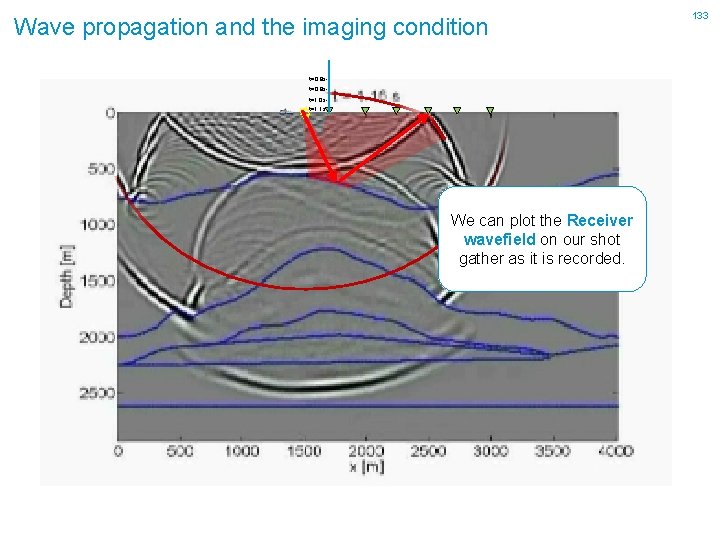
Wave propagation and the imaging condition t=0. 8 st=0. 9 st=1. 0 st=1. 1 s- We can plot the Receiver wavefield on our shot gather as it is recorded. 133
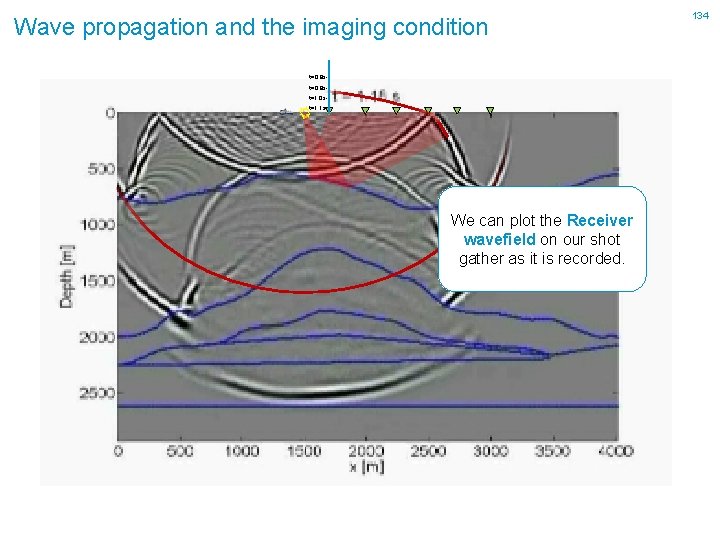
Wave propagation and the imaging condition t=0. 8 st=0. 9 st=1. 0 st=1. 1 s- We can plot the Receiver wavefield on our shot gather as it is recorded. 134
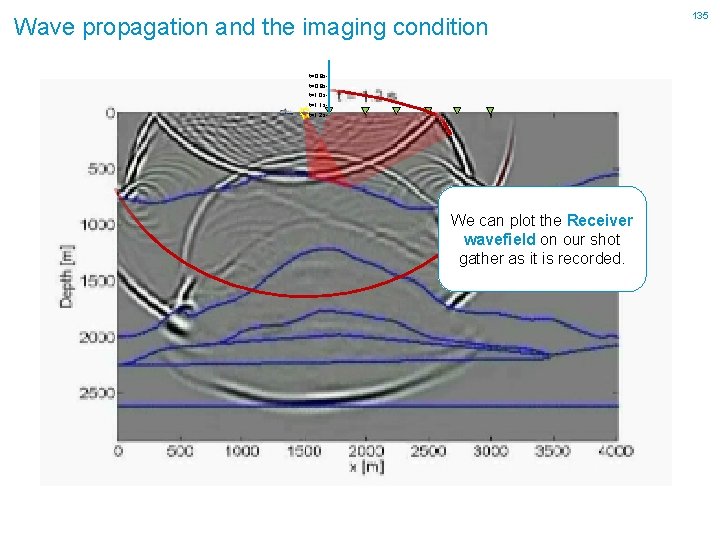
Wave propagation and the imaging condition t=0. 8 st=0. 9 st=1. 0 st=1. 1 st=1. 2 s- We can plot the Receiver wavefield on our shot gather as it is recorded. 135
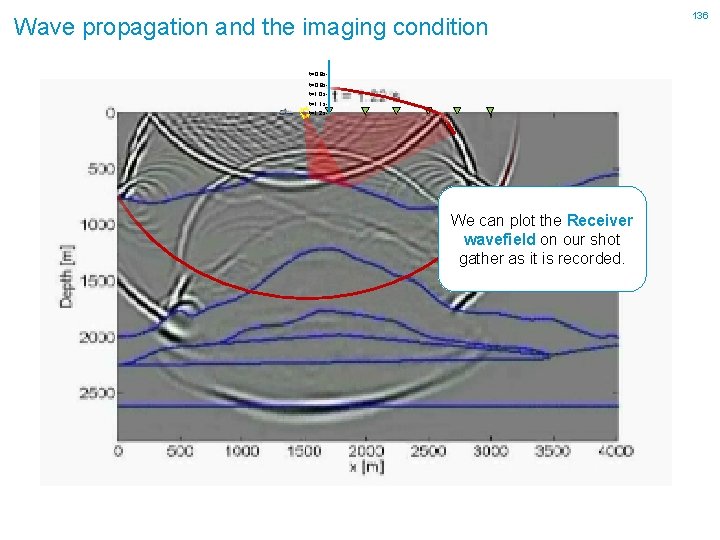
Wave propagation and the imaging condition t=0. 8 st=0. 9 st=1. 0 st=1. 1 st=1. 2 s- We can plot the Receiver wavefield on our shot gather as it is recorded. 136
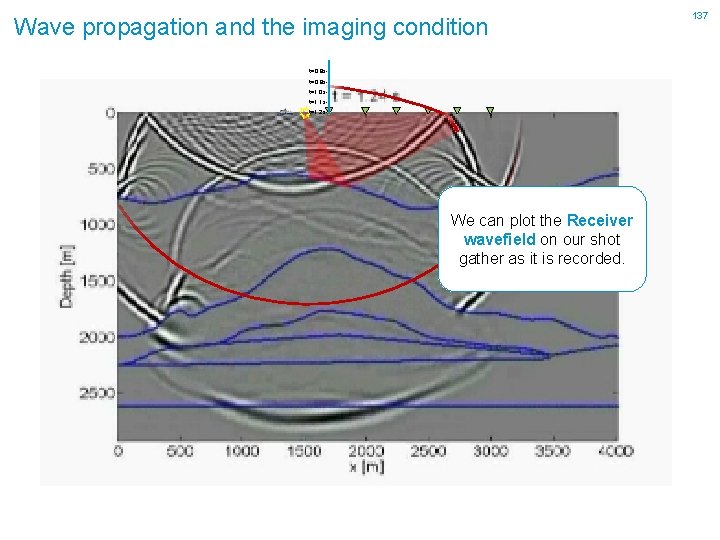
Wave propagation and the imaging condition t=0. 8 st=0. 9 st=1. 0 st=1. 1 st=1. 2 s- We can plot the Receiver wavefield on our shot gather as it is recorded. 137
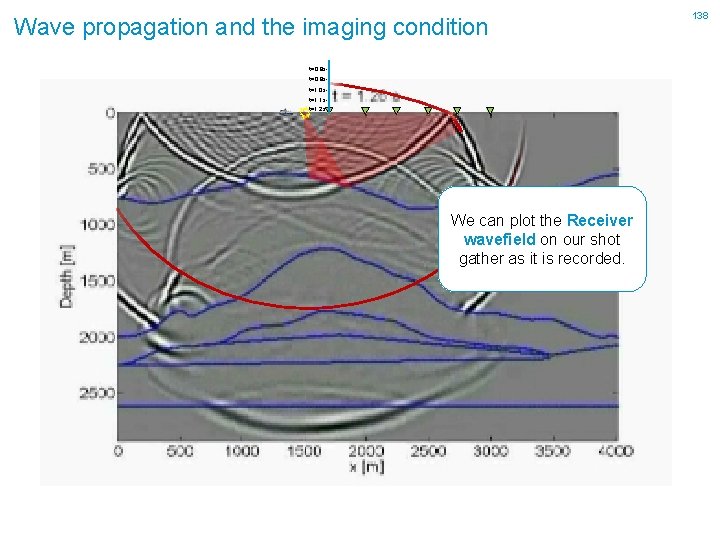
Wave propagation and the imaging condition t=0. 8 st=0. 9 st=1. 0 st=1. 1 st=1. 2 s- We can plot the Receiver wavefield on our shot gather as it is recorded. 138
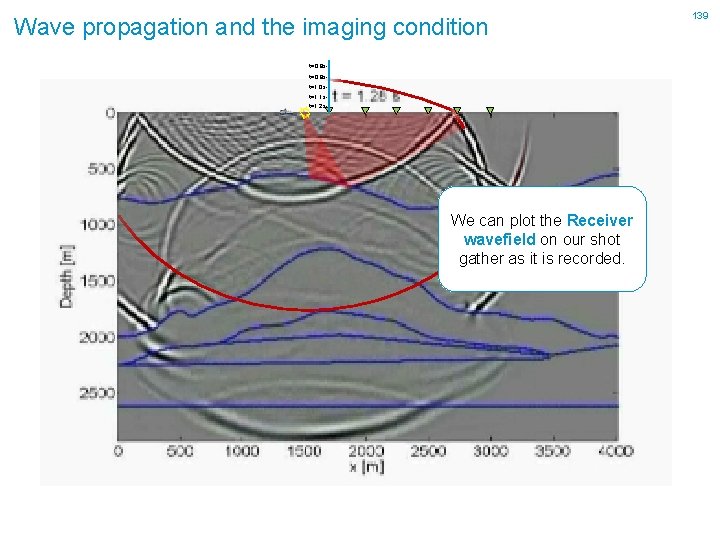
Wave propagation and the imaging condition t=0. 8 st=0. 9 st=1. 0 st=1. 1 st=1. 2 s- We can plot the Receiver wavefield on our shot gather as it is recorded. 139
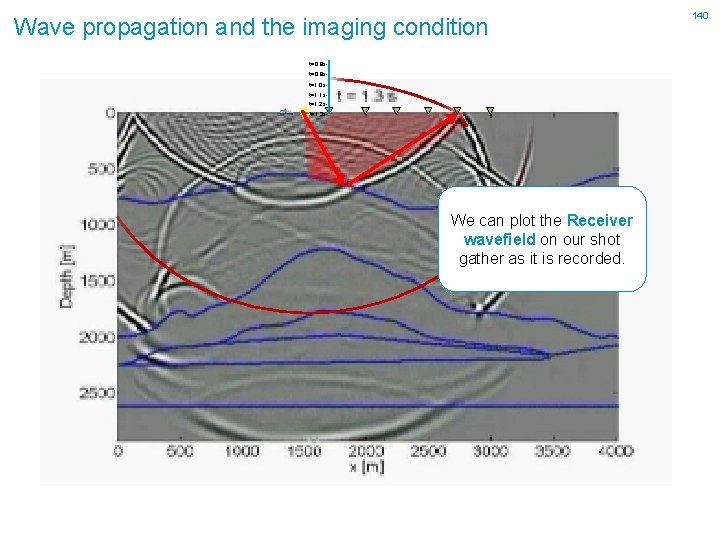
Wave propagation and the imaging condition t=0. 8 st=0. 9 st=1. 0 st=1. 1 st=1. 2 st=1. 3 s- We can plot the Receiver wavefield on our shot gather as it is recorded. 140
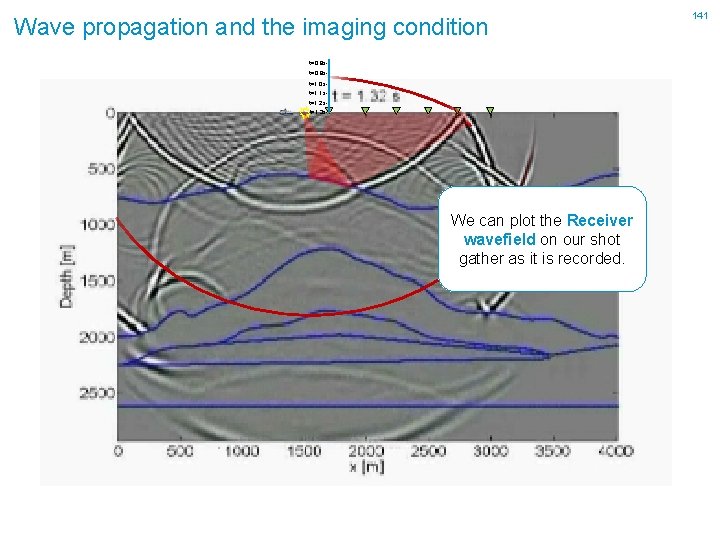
Wave propagation and the imaging condition t=0. 8 st=0. 9 st=1. 0 st=1. 1 st=1. 2 st=1. 3 s- We can plot the Receiver wavefield on our shot gather as it is recorded. 141
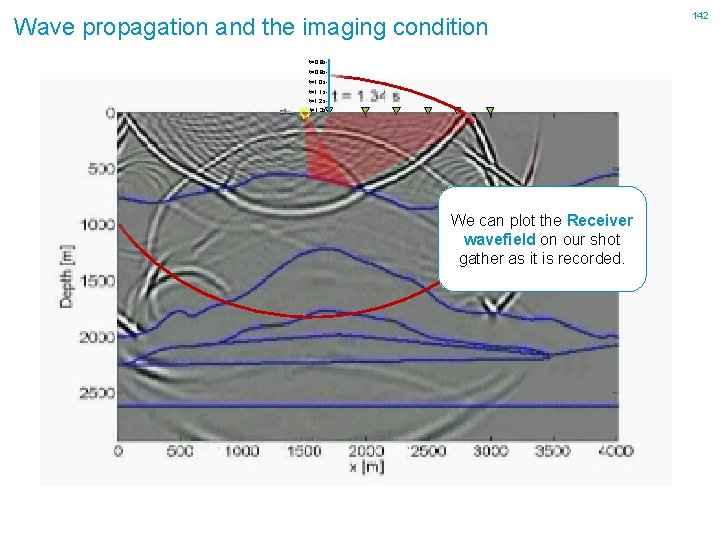
Wave propagation and the imaging condition t=0. 8 st=0. 9 st=1. 0 st=1. 1 st=1. 2 st=1. 3 s- We can plot the Receiver wavefield on our shot gather as it is recorded. 142
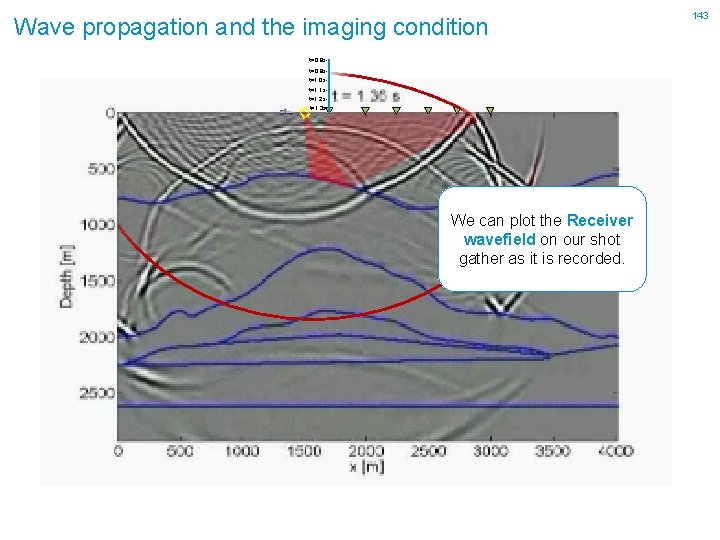
Wave propagation and the imaging condition t=0. 8 st=0. 9 st=1. 0 st=1. 1 st=1. 2 st=1. 3 s- We can plot the Receiver wavefield on our shot gather as it is recorded. 143
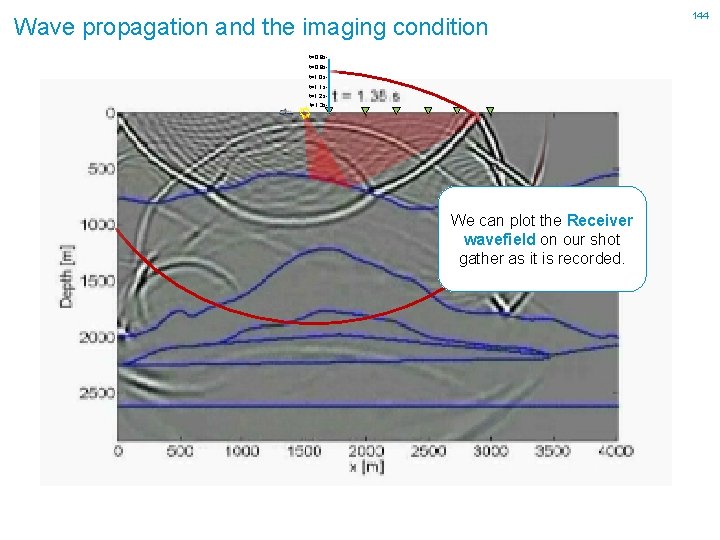
Wave propagation and the imaging condition t=0. 8 st=0. 9 st=1. 0 st=1. 1 st=1. 2 st=1. 3 s- We can plot the Receiver wavefield on our shot gather as it is recorded. 144
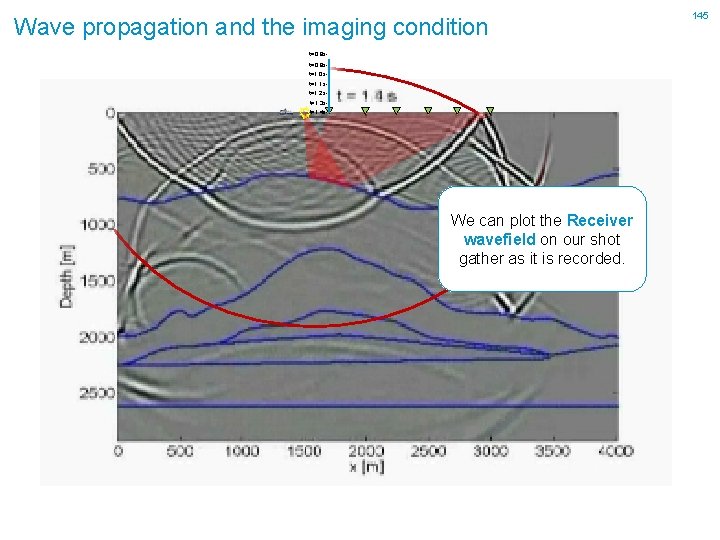
Wave propagation and the imaging condition t=0. 8 st=0. 9 st=1. 0 st=1. 1 st=1. 2 st=1. 3 st=1. 4 s- We can plot the Receiver wavefield on our shot gather as it is recorded. 145
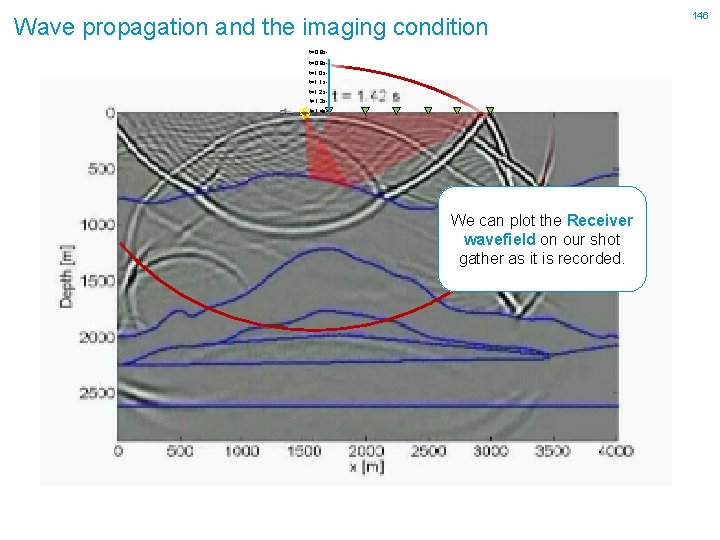
Wave propagation and the imaging condition t=0. 8 st=0. 9 st=1. 0 st=1. 1 st=1. 2 st=1. 3 st=1. 4 s- We can plot the Receiver wavefield on our shot gather as it is recorded. 146
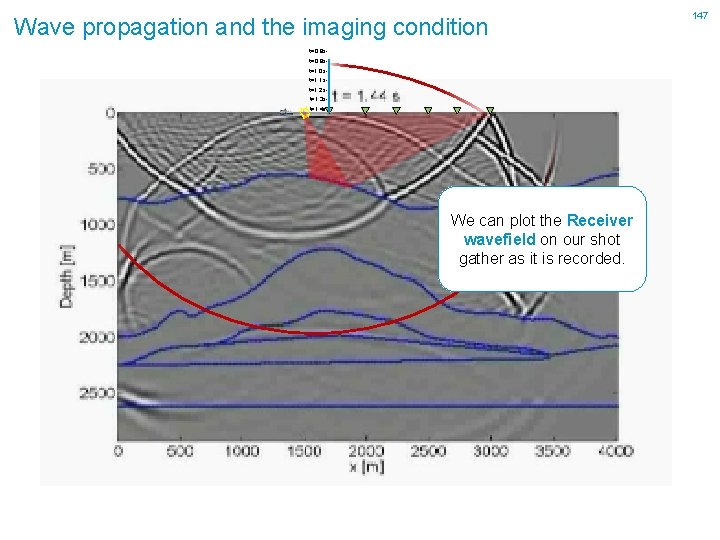
Wave propagation and the imaging condition t=0. 8 st=0. 9 st=1. 0 st=1. 1 st=1. 2 st=1. 3 st=1. 4 s- We can plot the Receiver wavefield on our shot gather as it is recorded. 147
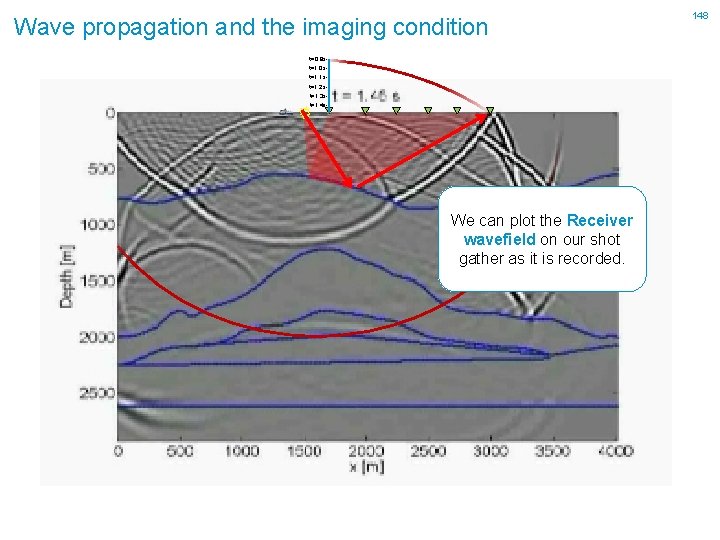
Wave propagation and the imaging condition t=0. 9 st=1. 0 st=1. 1 st=1. 2 st=1. 3 st=1. 4 s- We can plot the Receiver wavefield on our shot gather as it is recorded. 148
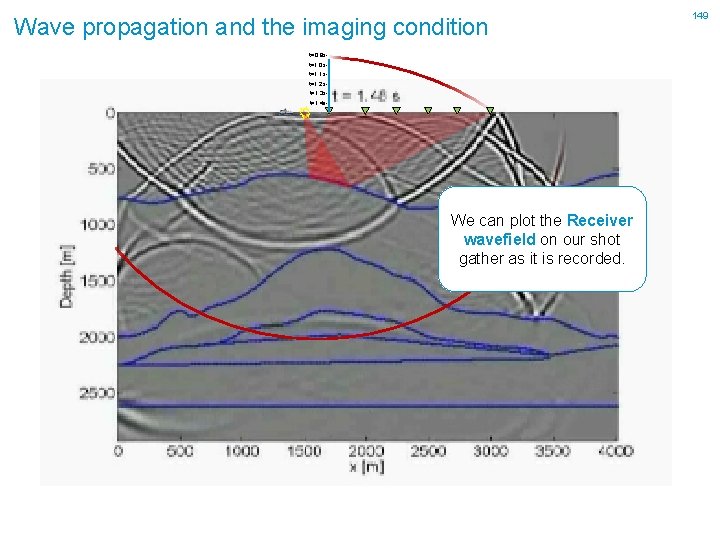
Wave propagation and the imaging condition t=0. 9 st=1. 0 st=1. 1 st=1. 2 st=1. 3 st=1. 4 s- We can plot the Receiver wavefield on our shot gather as it is recorded. 149
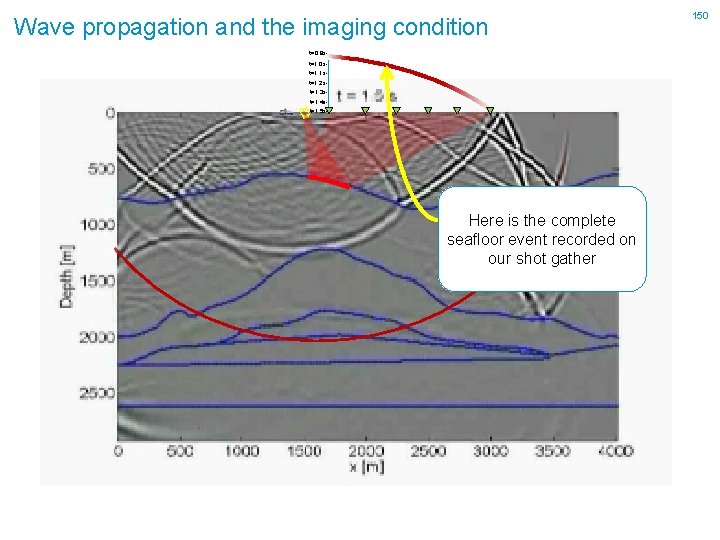
Wave propagation and the imaging condition t=0. 9 st=1. 0 st=1. 1 st=1. 2 st=1. 3 st=1. 4 st=1. 5 s- Here is the complete seafloor event recorded on our shot gather 150

To be continued… 151
- Slides: 151