
1 US EPA Mandatory GHG Reporting Program Update
- Slides: 27
1 US EPA Mandatory GHG Reporting Program Update: Measuring, Reporting and Verifying GHG Data 20 th International Emissions Inventory Conference August 14 th 2012, Tampa, FL Kong Chiu U. S. Environmental Protection Agency
2 Outline • Overview of the Mandatory GHG Reporting Rule – GHGRP vs GHG Inventory – Coverage – Methodologies – Data Flow: Collecting, Verifying, Publishing GHG Data • • • Electronic Reporting Tool (e-GGRT) EPA - State Collaboration Verifying GHG Data Publishing GHG Data RY 2010 Highlights
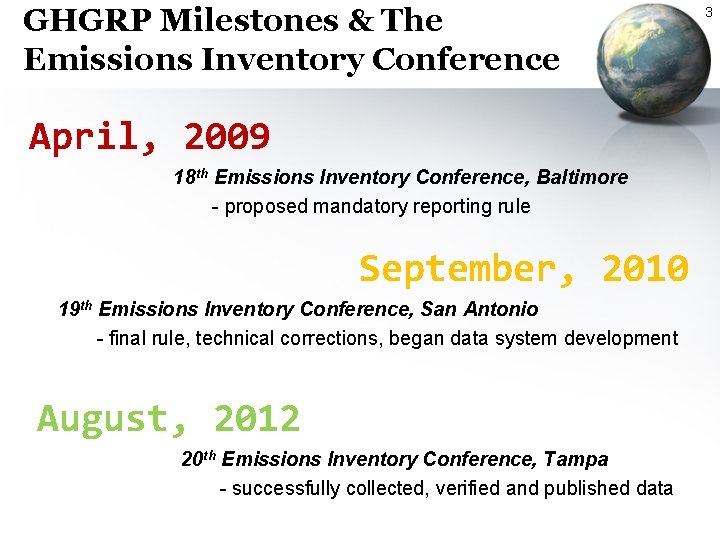
GHGRP Milestones & The Emissions Inventory Conference April, 2009 18 th Emissions Inventory Conference, Baltimore - proposed mandatory reporting rule September, 2010 19 th Emissions Inventory Conference, San Antonio - final rule, technical corrections, began data system development August, 2012 20 th Emissions Inventory Conference, Tampa - successfully collected, verified and published data 3
Overview: U. S. EPA GHG Reporting Rule • Annual reporting of GHG by: – Rule covers 41 source categories for reporting, accounting for 85 -90% of total U. S. GHG emissions: • 33 types of direct emitters • 6 types of suppliers of fuel and industrial GHG – Facilities that inject CO 2 underground for geologic sequestration, enhanced oil recovery, or any other purpose. • Direct reporting to EPA electronically • EPA verification of emissions data • Monitoring began in 2010 for most emission sources with first reports submitted to EPA in September, 2011 4
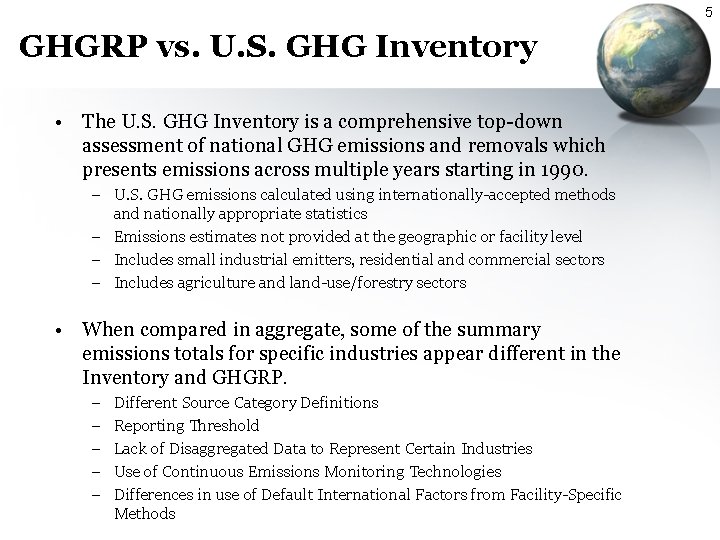
5 GHGRP vs. U. S. GHG Inventory • The U. S. GHG Inventory is a comprehensive top-down assessment of national GHG emissions and removals which presents emissions across multiple years starting in 1990. – U. S. GHG emissions calculated using internationally-accepted methods and nationally appropriate statistics – Emissions estimates not provided at the geographic or facility level – Includes small industrial emitters, residential and commercial sectors – Includes agriculture and land-use/forestry sectors • When compared in aggregate, some of the summary emissions totals for specific industries appear different in the Inventory and GHGRP. – – – Different Source Category Definitions Reporting Threshold Lack of Disaggregated Data to Represent Certain Industries Use of Continuous Emissions Monitoring Technologies Differences in use of Default International Factors from Facility-Specific Methods
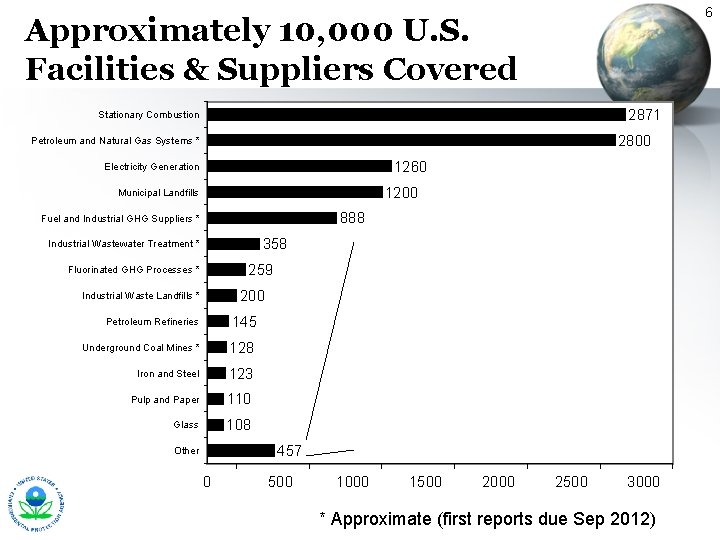
6 Approximately 10, 000 U. S. Facilities & Suppliers Covered 2871 Stationary Combustion 2800 Petroleum and Natural Gas Systems * 1260 Electricity Generation 1200 Municipal Landfills 888 Fuel and Industrial GHG Suppliers * 358 Industrial Wastewater Treatment * 259 Fluorinated GHG Processes * 200 Industrial Waste Landfills * Petroleum Refineries 145 Underground Coal Mines * 128 Iron and Steel 123 Pulp and Paper 110 Glass 108 457 Other 0 500 1000 1500 2000 2500 3000 * Approximate (first reports due Sep 2012)
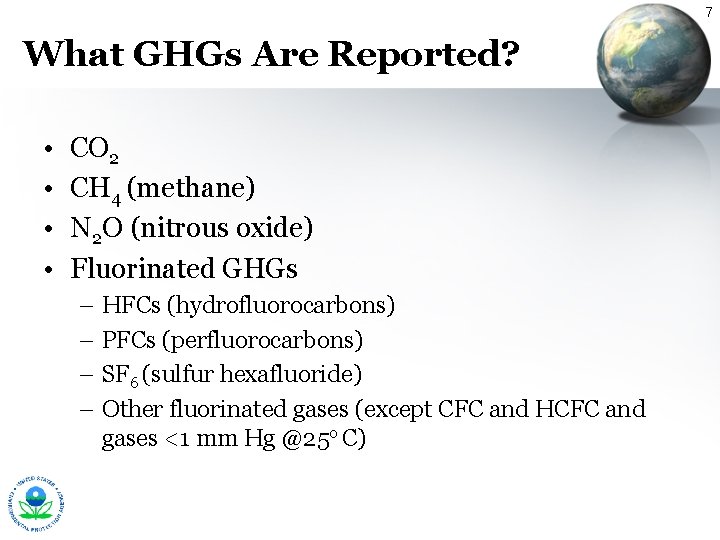
7 What GHGs Are Reported? • • CO 2 CH 4 (methane) N 2 O (nitrous oxide) Fluorinated GHGs – HFCs (hydrofluorocarbons) – PFCs (perfluorocarbons) – SF 6 (sulfur hexafluoride) – Other fluorinated gases (except CFC and HCFC and gases <1 mm Hg @25 o C)
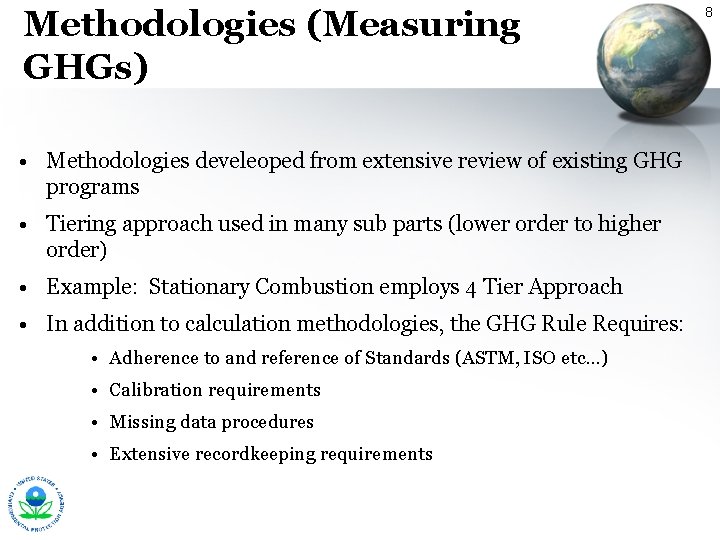
Methodologies (Measuring GHGs) • Methodologies develeoped from extensive review of existing GHG programs • Tiering approach used in many sub parts (lower order to higher order) • Example: Stationary Combustion employs 4 Tier Approach • In addition to calculation methodologies, the GHG Rule Requires: • Adherence to and reference of Standards (ASTM, ISO etc…) • Calibration requirements • Missing data procedures • Extensive recordkeeping requirements 8
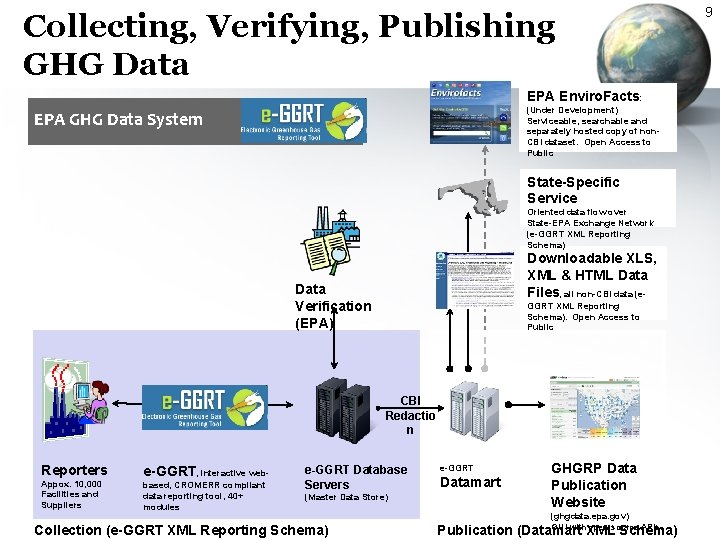
Collecting, Verifying, Publishing GHG Data EPA Enviro. Facts: (Under Development) Serviceable, searchable and separately hosted copy of non. CBI dataset. Open Access to Public EPA GHG Data System State-Specific Service Oriented data flow over State-EPA Exchange Network (e-GGRT XML Reporting Schema) Downloadable XLS, XML & HTML Data Files, all non-CBI data (e- Data Verification (EPA) GGRT XML Reporting Schema). Open Access to Public CBI Redactio n Reporters Appox. 10, 000 Facilities and Suppliers e-GGRT, interactive webbased, CROMERR compliant data reporting tool, 40+ modules e-GGRT Database Servers (Master Data Store) Collection (e-GGRT XML Reporting Schema) e-GGRT Datamart GHGRP Data Publication Website (ghgdata. epa. gov) GUI with open-source APIs. . Publication (Datamart XML Schema) 9
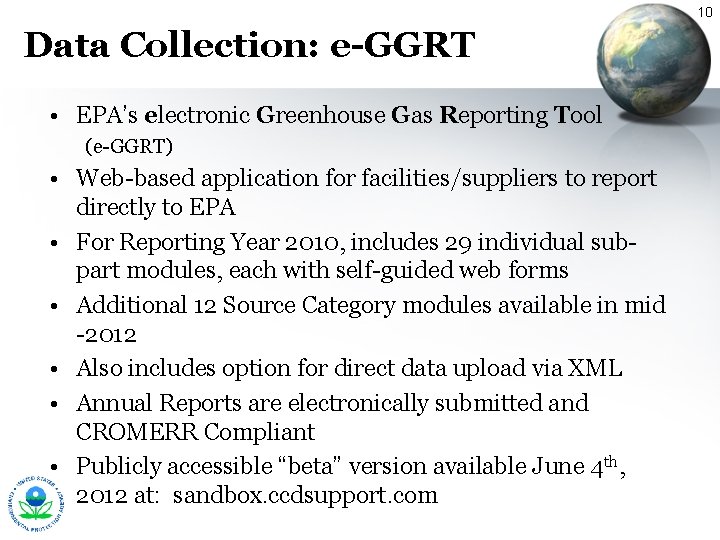
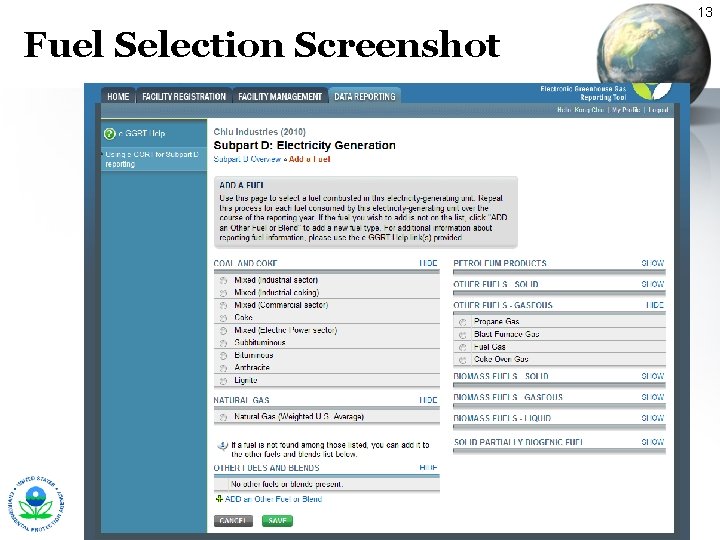
10 Data Collection: e-GGRT • EPA’s electronic Greenhouse Gas Reporting Tool (e-GGRT) • Web-based application for facilities/suppliers to report directly to EPA • For Reporting Year 2010, includes 29 individual subpart modules, each with self-guided web forms • Additional 12 Source Category modules available in mid -2012 • Also includes option for direct data upload via XML • Annual Reports are electronically submitted and CROMERR Compliant • Publicly accessible “beta” version available June 4 th, 2012 at: sandbox. ccdsupport. com
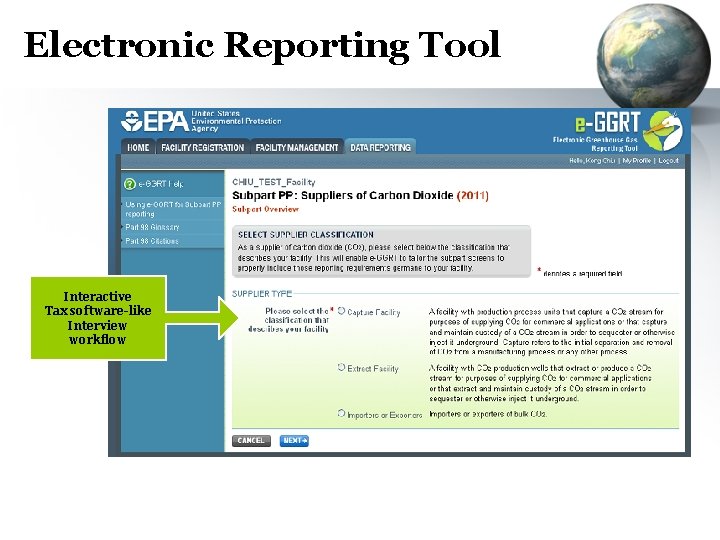
Electronic Reporting Tool Interactive Tax software-like Interview workflow
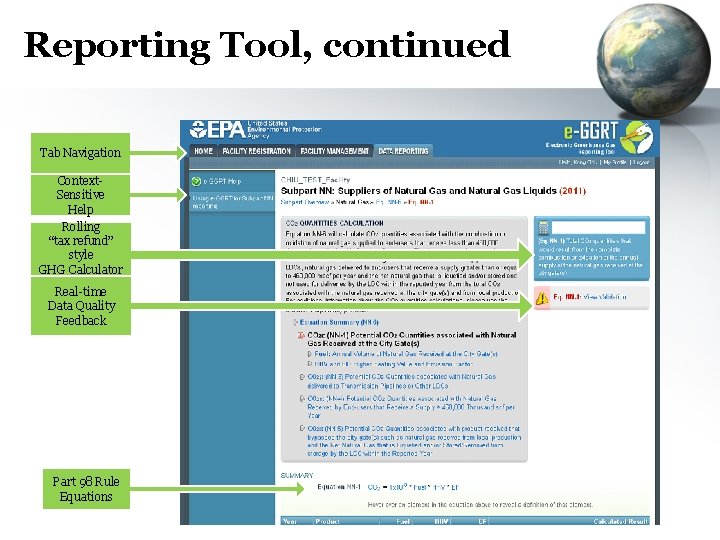
Reporting Tool, continued Tab Navigation Context. Sensitive Help Rolling “tax refund” style GHG Calculator Real-time Data Quality Feedback Part 98 Rule Equations
13 Fuel Selection Screenshot
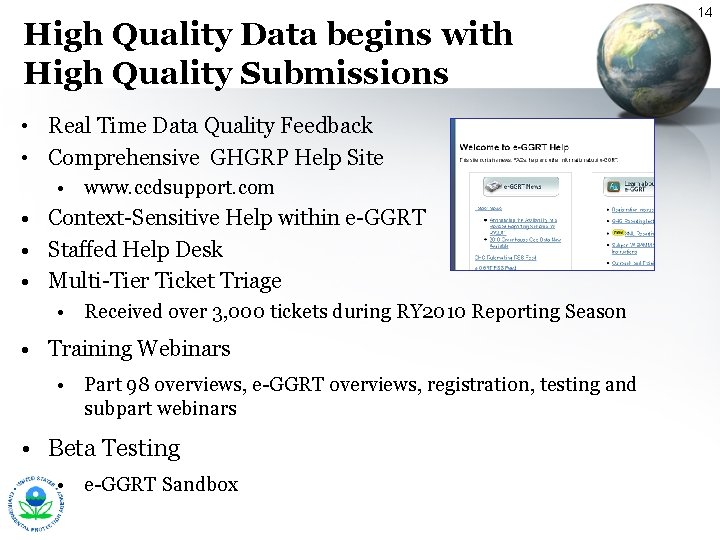
High Quality Data begins with High Quality Submissions • Real Time Data Quality Feedback • Comprehensive GHGRP Help Site • www. ccdsupport. com • Context-Sensitive Help within e-GGRT • Staffed Help Desk • Multi-Tier Ticket Triage • Received over 3, 000 tickets during RY 2010 Reporting Season • Training Webinars • Part 98 overviews, e-GGRT overviews, registration, testing and subpart webinars • Beta Testing • e-GGRT Sandbox 14
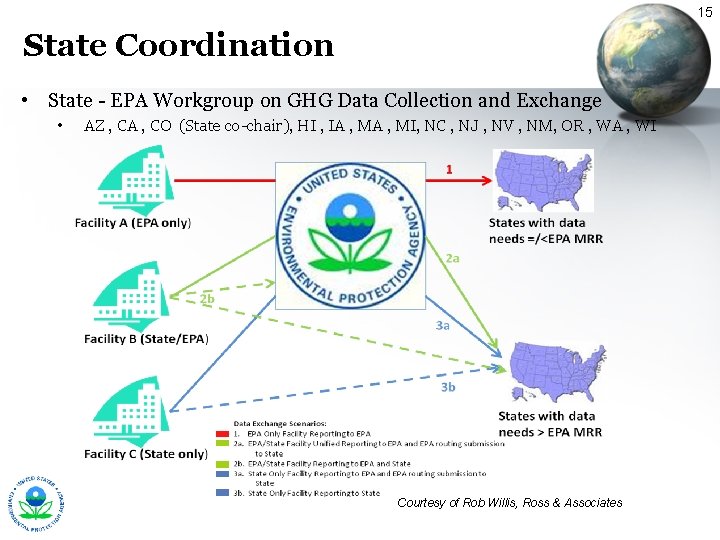
15 State Coordination • State - EPA Workgroup on GHG Data Collection and Exchange • AZ , CA , CO (State co-chair), HI , IA , MI, NC , NJ , NV , NM, OR , WA , WI Courtesy of Rob Willis, Ross & Associates
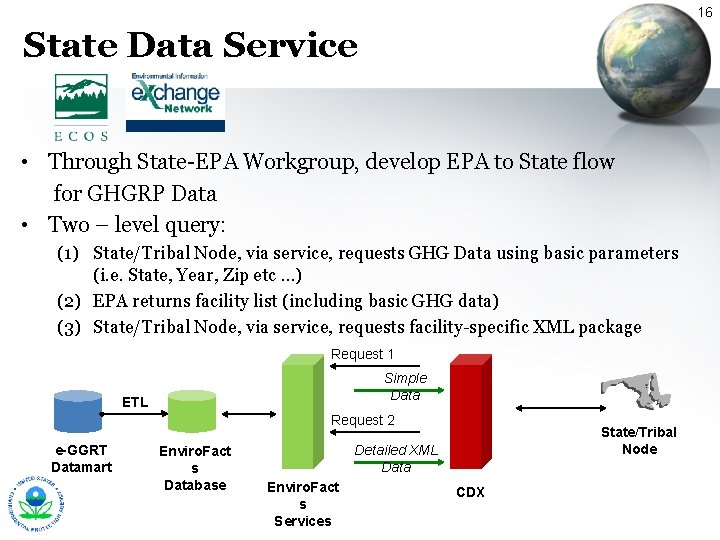
16 State Data Service • Through State-EPA Workgroup, develop EPA to State flow for GHGRP Data • Two – level query: (1) State/Tribal Node, via service, requests GHG Data using basic parameters (i. e. State, Year, Zip etc …) (2) EPA returns facility list (including basic GHG data) (3) State/Tribal Node, via service, requests facility-specific XML package Request 1 Simple Data ETL Request 2 e-GGRT Datamart Enviro. Fact s Database State/Tribal Node Detailed XML Data Enviro. Fact s Services CDX
17 Cal e-GGRT
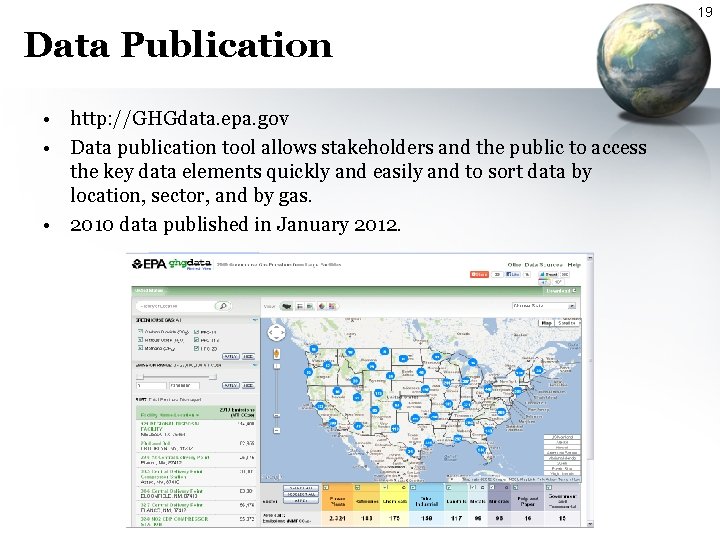
18 Data Verification • Reporter Self-Certifies • Electronic Verification • Pre-submittal warning for reporters entering data outside reasonable ranges or missing data • Post-submittal verification through logic checks, use of outside data sets, and statistical analyses across facilities • Improvements to ranges & algorithms over time with real data • Staff review and direct follow-up • Staff review electronic verification results • Phone/email follow-up- built in secure communications via e. GGRT • Resubmissions, as needed • Targeted site visits as necessary
19 Data Publication • http: //GHGdata. epa. gov • Data publication tool allows stakeholders and the public to access the key data elements quickly and easily and to sort data by location, sector, and by gas. • 2010 data published in January 2012.
20 Goals of GHG Data Publication • Increase understanding of the sources of GHG emissions in the U. S. among the public • Voluntary management (TRI) • Improve quality of reported data • Support regional, state, and local programs • Provide a tool for schools, students, researchers and journalists • Information displayed in a simple, transparent manner – Allows public to use data in creative ways
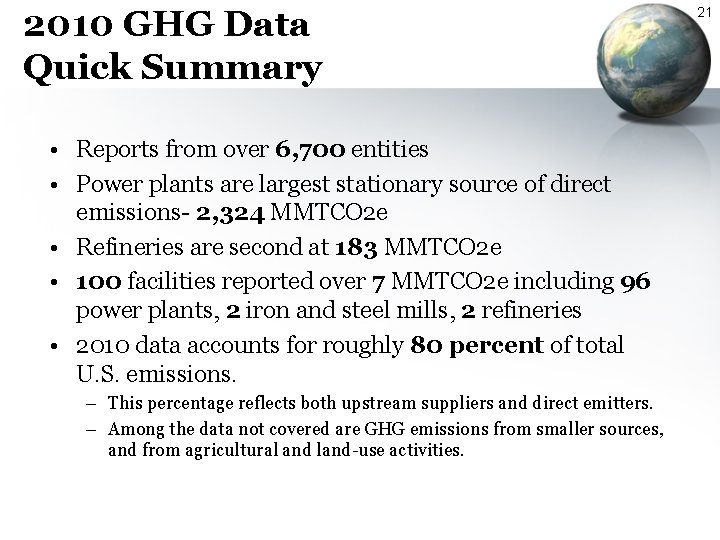
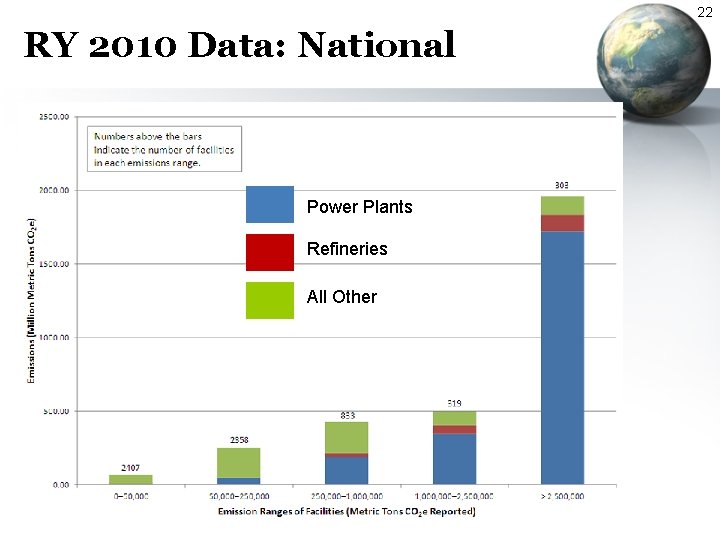
2010 GHG Data Quick Summary • Reports from over 6, 700 entities • Power plants are largest stationary source of direct emissions- 2, 324 MMTCO 2 e • Refineries are second at 183 MMTCO 2 e • 100 facilities reported over 7 MMTCO 2 e including 96 power plants, 2 iron and steel mills, 2 refineries • 2010 data accounts for roughly 80 percent of total U. S. emissions. – This percentage reflects both upstream suppliers and direct emitters. – Among the data not covered are GHG emissions from smaller sources, and from agricultural and land-use activities. 21
22 RY 2010 Data: National Power Plants Refineries All Other
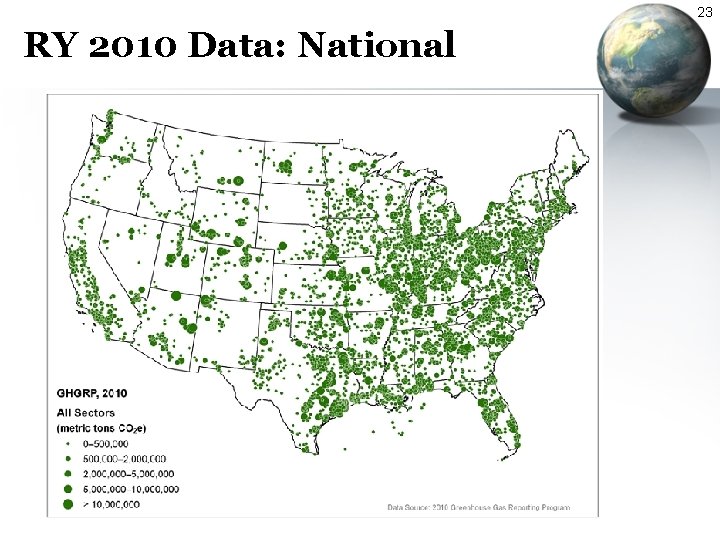
23 RY 2010 Data: National
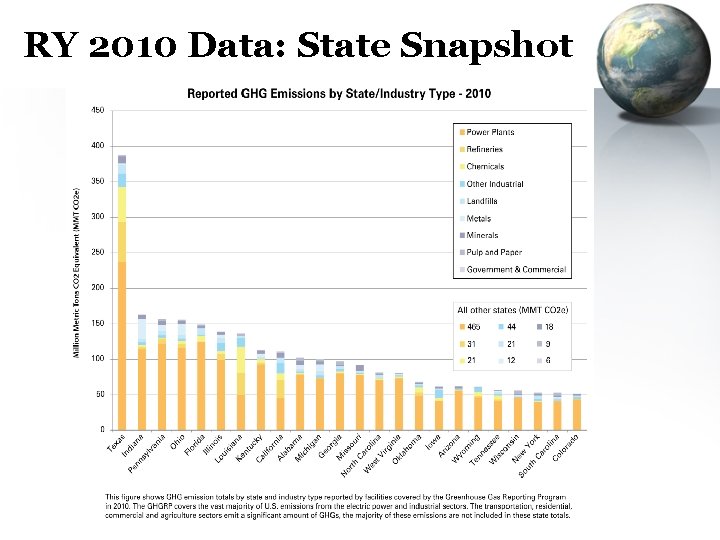
RY 2010 Data: State Snapshot
25 GHG Data Publication: Demo • Time-permitting
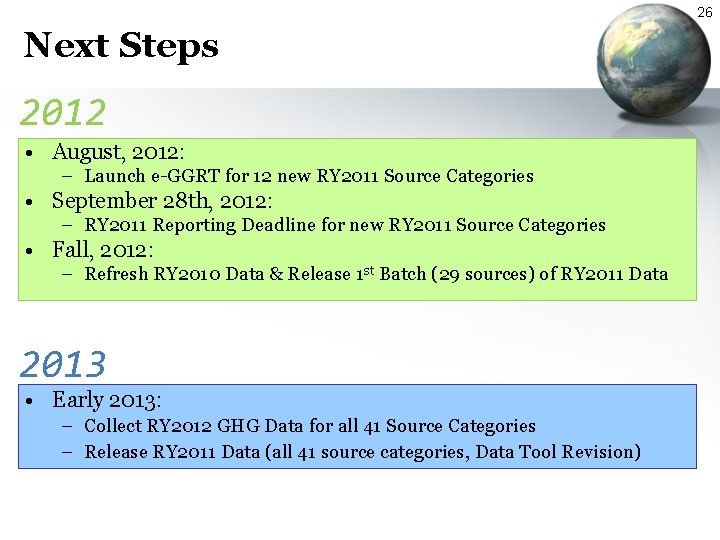
26 Next Steps 2012 • August, 2012: – Launch e-GGRT for 12 new RY 2011 Source Categories • September 28 th, 2012: – RY 2011 Reporting Deadline for new RY 2011 Source Categories • Fall, 2012: – Refresh RY 2010 Data & Release 1 st Batch (29 sources) of RY 2011 Data 2013 • Early 2013: – Collect RY 2012 GHG Data for all 41 Source Categories – Release RY 2011 Data (all 41 source categories, Data Tool Revision)
27 Additional Information • Part 98 Info: – www. epa. gov/climatechange/emissions/ghgrulemaking. html • Electronic Reporting, General GHGRP Help: – www. ccdsupport. com • Published Data: – ghgdata. epa. gov • e-GGRT: – https: //ghgreporting. epa. gov