
1 Unit Levels of Organization Fundamentals of Anatomy
- Slides: 44
1 Unit�� Levels of Organization Fundamentals of Anatomy & Physiology Frederic H. Martini�� Power. Point® Lecture Slides prepared by Professor Albia Dugger, Miami–Dade College, Miami, FL Professor Robert R. Speed, Ph. D. , Wallace Community College, Dothan, AL Copyright © 2005 Pearson Education, Inc. , publishing as Benjamin Cummings
Chapter 1: An Introduction to Anatomy and Physiology
What is anatomy and physiology?
Anatomy • Describes the structures of the body: – what they are made of – where they are located – associated structures
Physiology • Is the study of: – functions of anatomical structures – individual and cooperative functions
KEY CONCEPT • All physiological functions are performed by specific anatomical structures • These functions follow standard physical and mechanical principles
What do anatomists and physiologists do?
Specialties of Anatomy (1 of 3) • Gross anatomy, or macroscopic anatomy examines large, visible structures: – surface anatomy: • exterior features – regional anatomy: • body areas
Specialties of Anatomy (2 of 3) – systemic anatomy: • groups of organs working together – developmental anatomy: • from egg (embryology) to maturity – clinical anatomy: • medical specialties
Specialties of Anatomy (3 of 3) • Microscopic anatomy examines cells and molecules: – cytology: • cells and their structures • cyt = cell – histology: • tissues and their structures
Specialties of Physiology • Cell physiology: – processes within and between cells • Special physiology: – functions of specific organs • Systemic physiology: – functions of an organ system • Pathological physiology: – effects of diseases
How are living things organized?
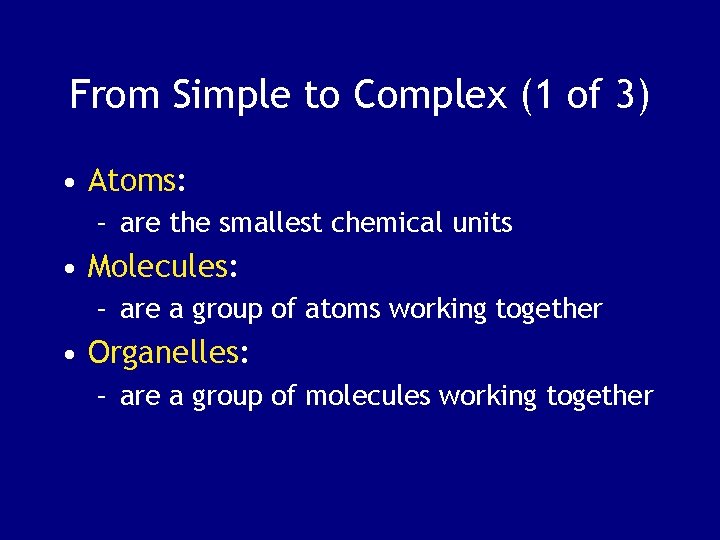
From Simple to Complex (1 of 3) • Atoms: – are the smallest chemical units • Molecules: – are a group of atoms working together • Organelles: – are a group of molecules working together
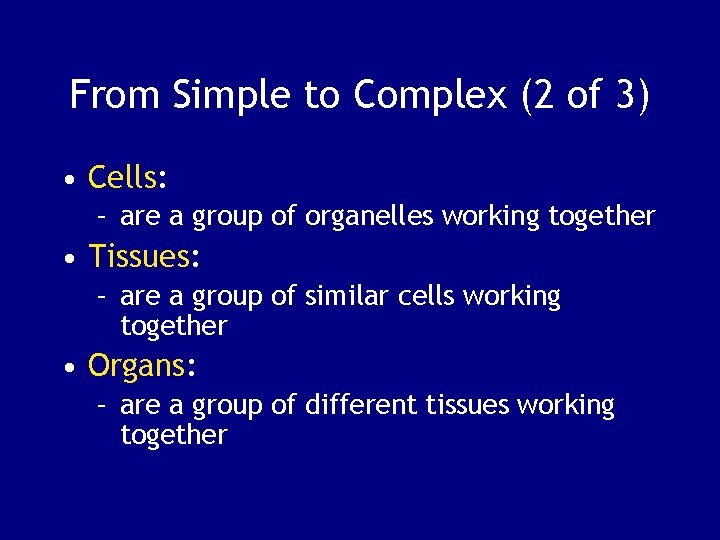
From Simple to Complex (2 of 3) • Cells: – are a group of organelles working together • Tissues: – are a group of similar cells working together • Organs: – are a group of different tissues working together
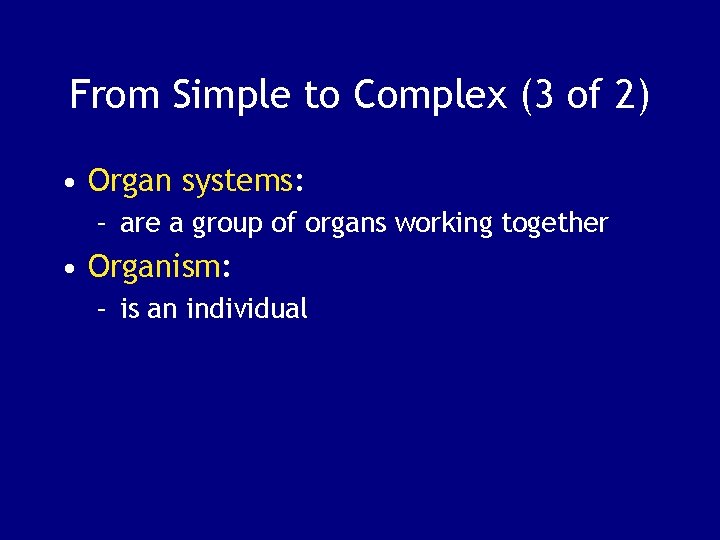
From Simple to Complex (3 of 2) • Organ systems: – are a group of organs working together • Organism: – is an individual
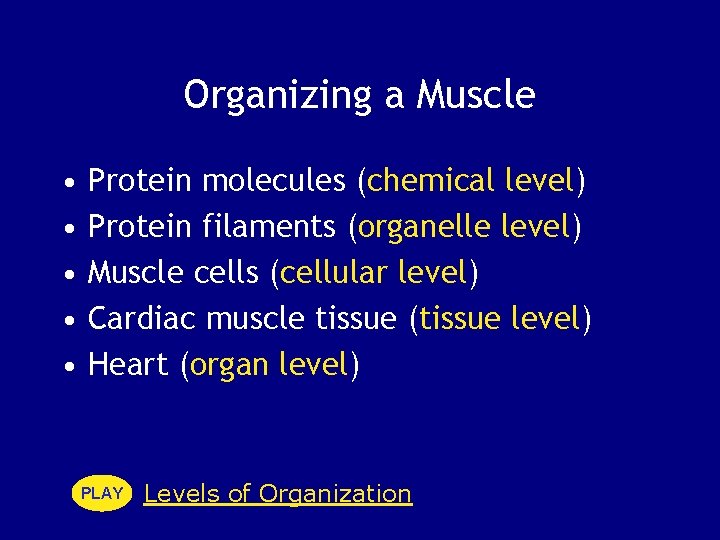
Organizing a Muscle • • • Protein molecules (chemical level) Protein filaments (organelle level) Muscle cells (cellular level) Cardiac muscle tissue (tissue level) Heart (organ level) PLAY Levels of Organization
The 11 Organ Systems PLAY Organ Systems
KEY CONCEPT • The body is divided into 11 organ systems • All organ systems work together • Many organs work in more than 1 organ system
KEY CONCEPT • Homeostasis: All body systems working together to maintain a stable internal environment • Systems respond to external and internal changes to function within a normal range (body temperature, fluid balance)
KEY CONCEPT • Failure to function within a normal range results in disease
Mechanisms of Regulation • Autoregulation (intrinsic): – automatic response in a cell, tissue, or organ • Extrinsic regulation: – responses controlled by nervous and endocrine systems
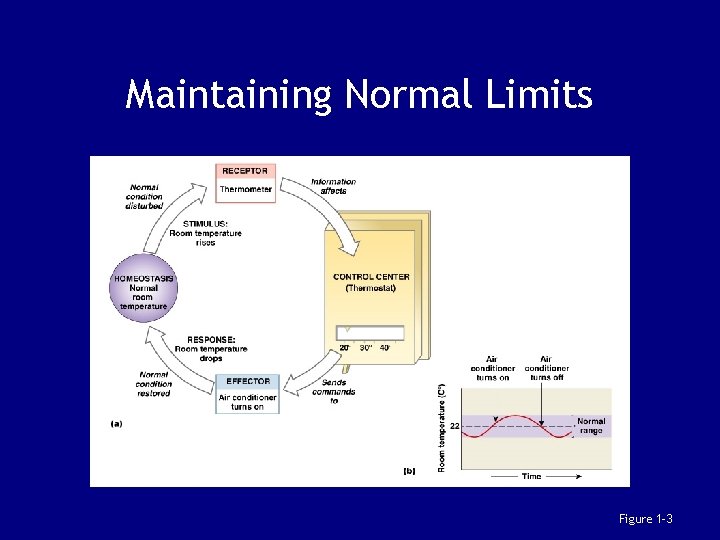
Maintaining Normal Limits Figure 1– 3
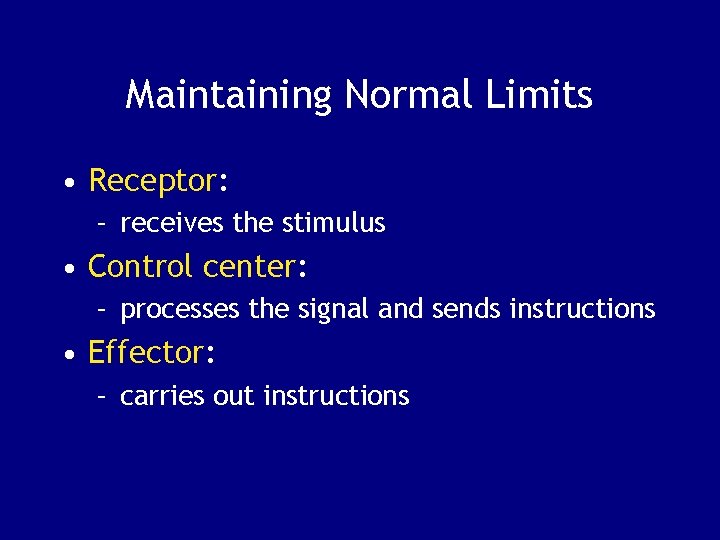
Maintaining Normal Limits • Receptor: – receives the stimulus • Control center: – processes the signal and sends instructions • Effector: – carries out instructions
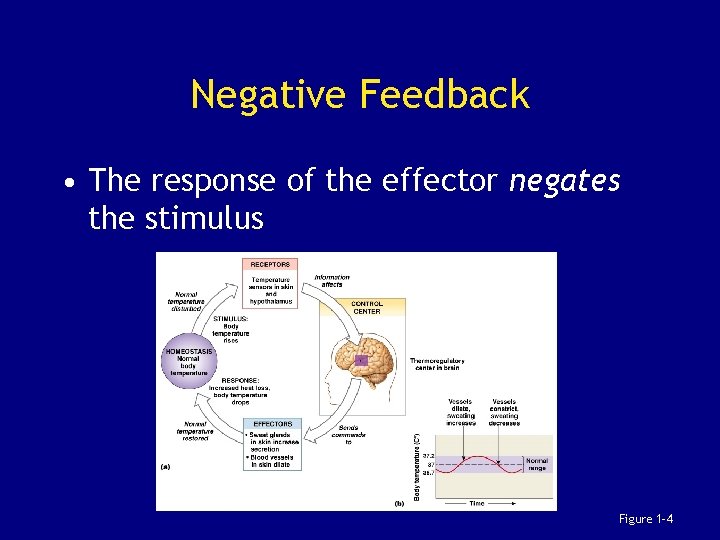
Negative Feedback • The response of the effector negates the stimulus Figure 1– 4
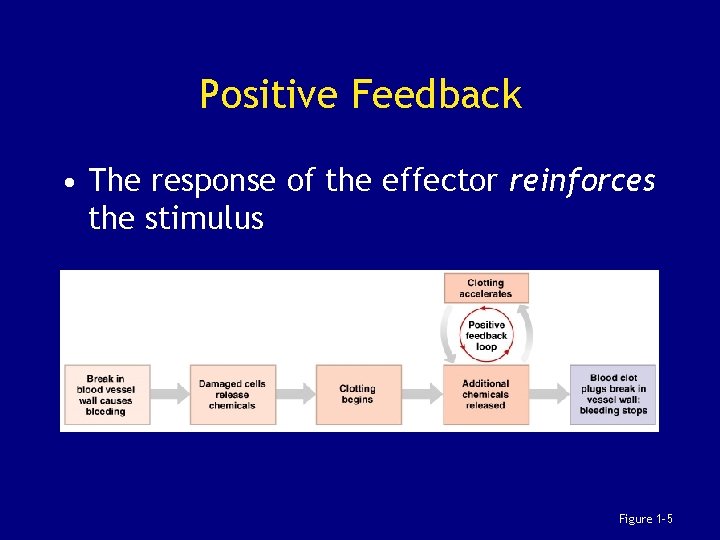
Positive Feedback • The response of the effector reinforces the stimulus Figure 1– 5
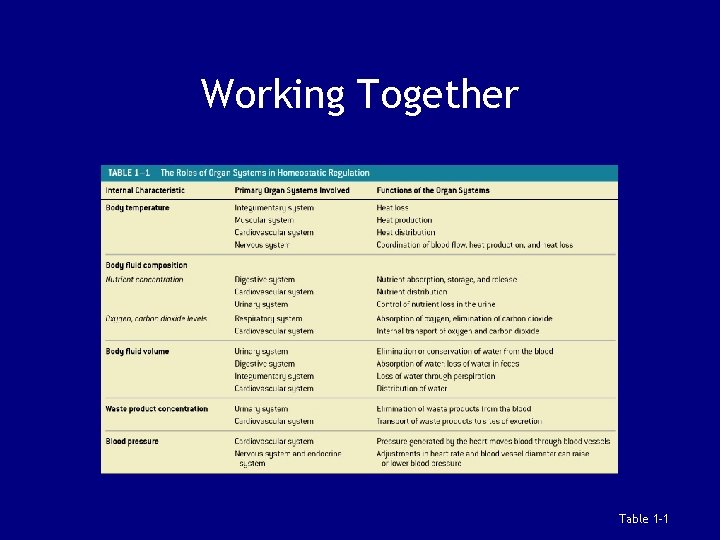
Working Together Table 1– 1
Working Together • Systems integration: – systems work together to maintain homeostasis
KEY CONCEPT • Homeostasis is a state of equilibrium: – opposing forces are in balance • Physiological systems work to restore balance • Failure results in disease or death
What are the anatomical terms used to describe body sections, regions, and relative positions?
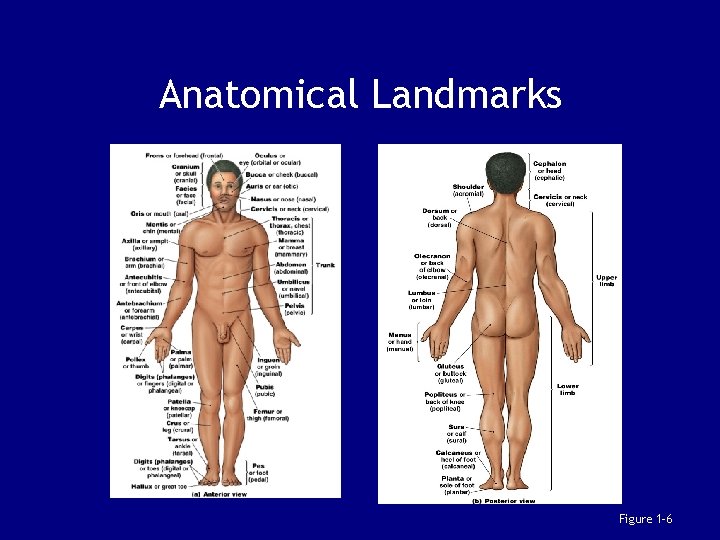
Anatomical Landmarks Figure 1– 6
Anatomical Landmarks • Superficial characteristics: – surface parts: • names • adjectives
KEY CONCEPT • Anatomical position: – hands at sides, palms forward • Supine: – lying down, face up • Prone: – lying down, face down
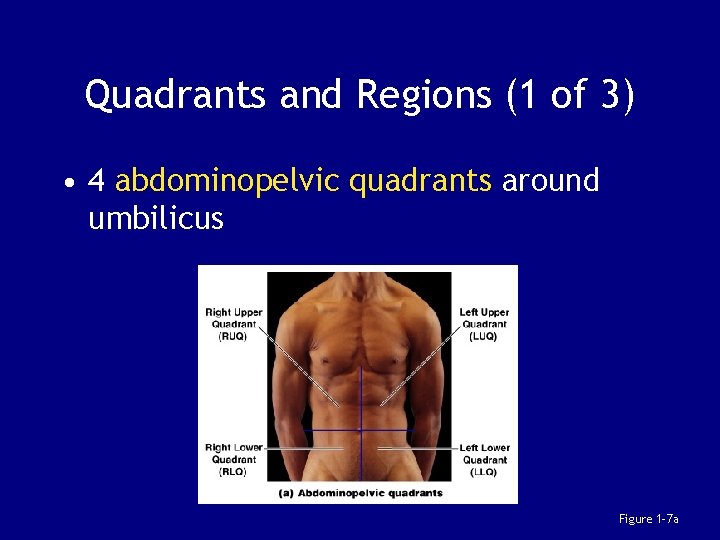
Quadrants and Regions (1 of 3) • 4 abdominopelvic quadrants around umbilicus Figure 1– 7 a
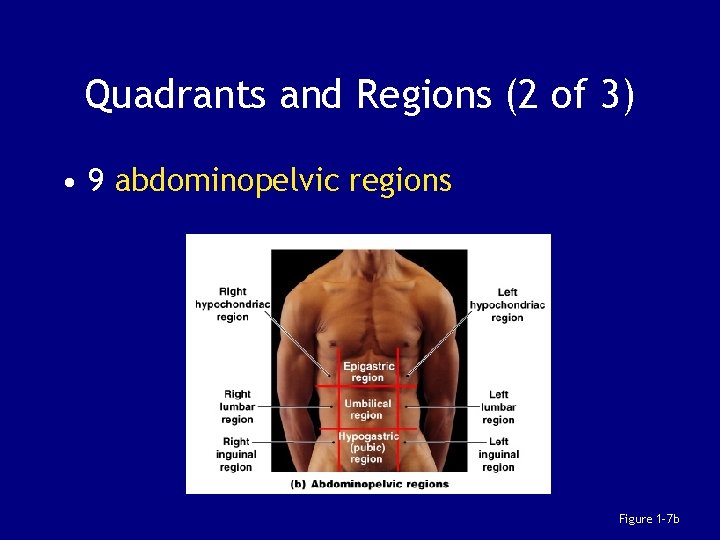
Quadrants and Regions (2 of 3) • 9 abdominopelvic regions Figure 1– 7 b
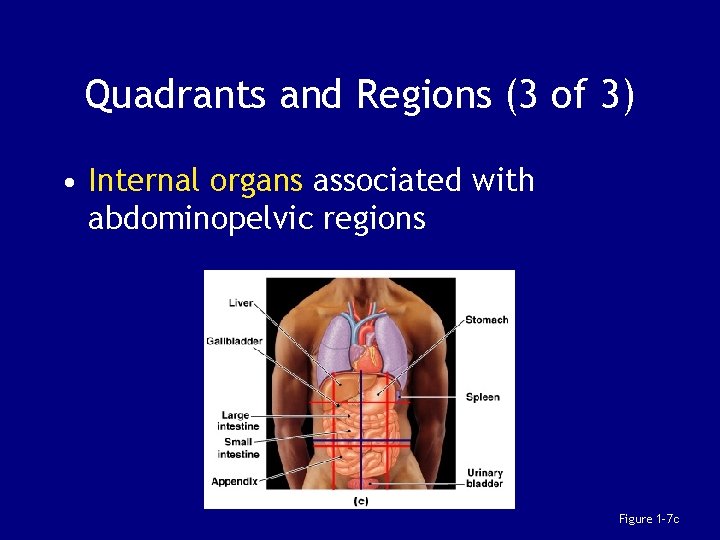
Quadrants and Regions (3 of 3) • Internal organs associated with abdominopelvic regions Figure 1– 7 c
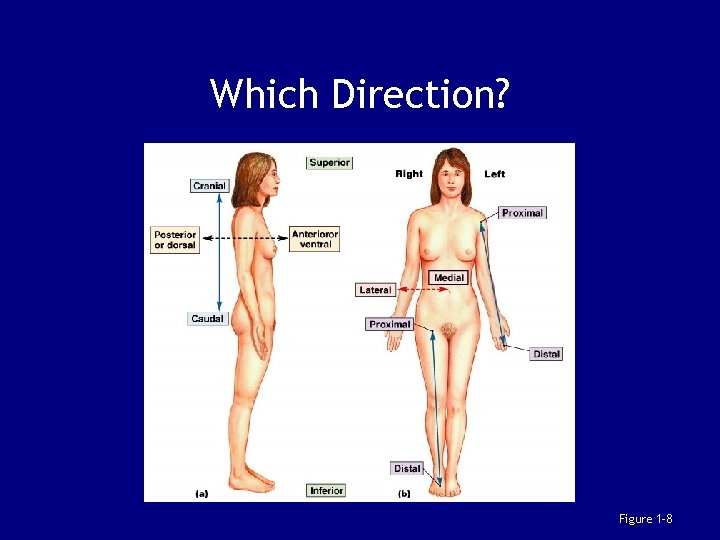
Which Direction? Figure 1– 8
Which Direction? • Lateral: – side view • Frontal: – front view • Anatomical direction: – refers to the patient’s left or right
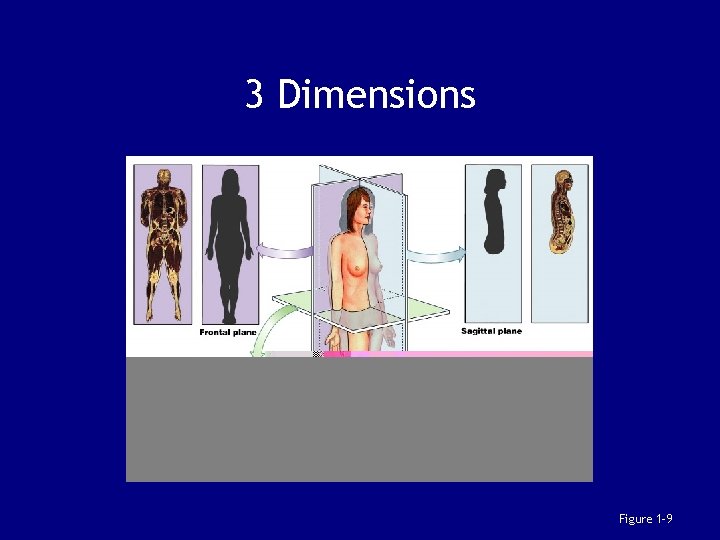
3 Dimensions Figure 1– 9
3 Dimensions • Plane: – a 3 -dimensional axis • Section: – a slice parallel to a plane
What are the major body cavities and their subdivisions?
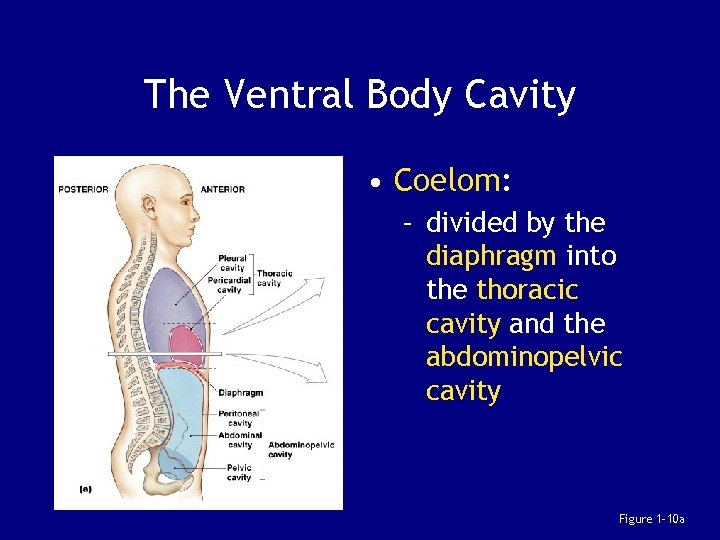
The Ventral Body Cavity • Coelom: – divided by the diaphragm into the thoracic cavity and the abdominopelvic cavity Figure 1– 10 a
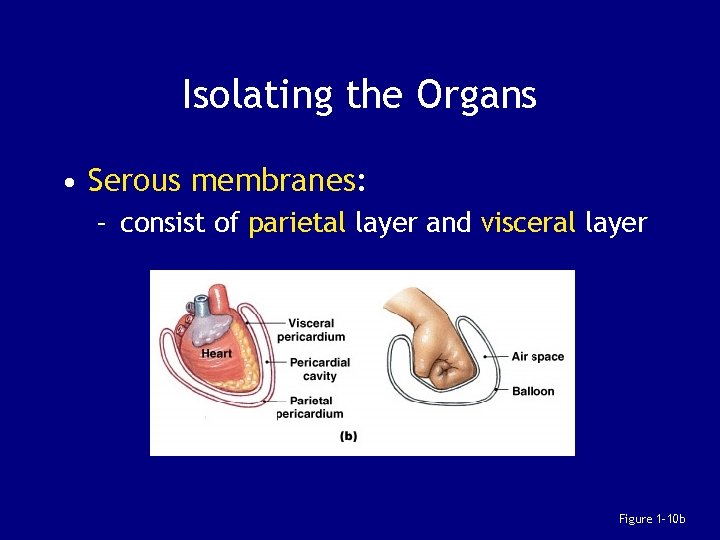
Isolating the Organs • Serous membranes: – consist of parietal layer and visceral layer Figure 1– 10 b
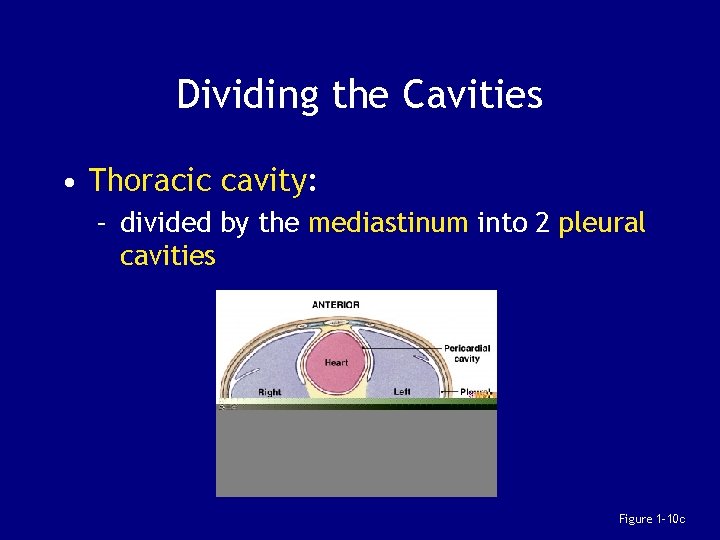
Dividing the Cavities • Thoracic cavity: – divided by the mediastinum into 2 pleural cavities Figure 1– 10 c
SUMMARY • Structure and function in anatomy and physiology • Vocabulary and anatomical terms • Levels of physical organization • Homeostasis and feedback • Systems integration and equilibrium • Dividing and describing the body • Locations and functions of major organ systems