
1 TYPES OF KNOWLEDGE What are differences in
- Slides: 12
1 TYPES OF KNOWLEDGE What are differences in factual, conceptual, procedural, and metacognitive knowledge? How can planning that utilizes different types of knowledge strengthen instruction?
2 Do You Remember Bloom’s Taxonomy? Rachael was looking through the materials Mrs. Watson left in a file cabinet when she retired. There were handouts and activities from a project called TAP Math – Teachers and Administrators Partnering for Mathematics Learning. One workshop focused on the revisions of Bloom’s Taxonomy led by Anderson and Karthwohl in the late 1990 s. As she read the notes Mrs. Watson had made on Power. Point handout pages, Rachael realized that the information was still relevant.
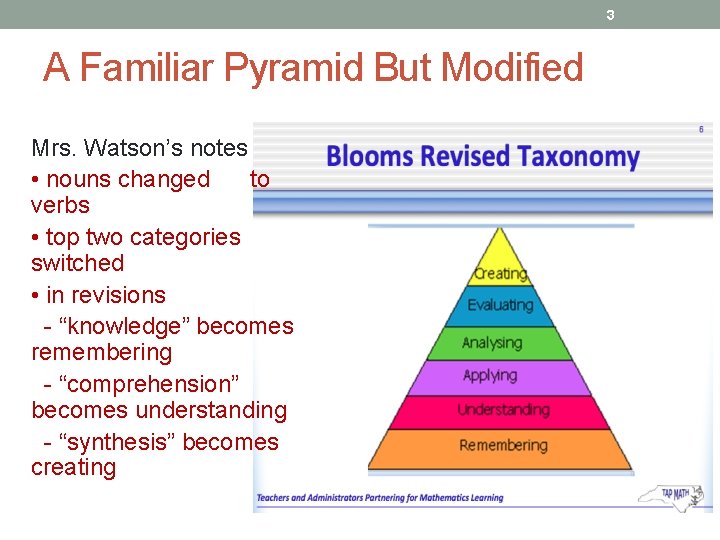
3 A Familiar Pyramid But Modified Mrs. Watson’s notes • nouns changed to verbs • top two categories switched • in revisions - “knowledge” becomes remembering - “comprehension” becomes understanding - “synthesis” becomes creating
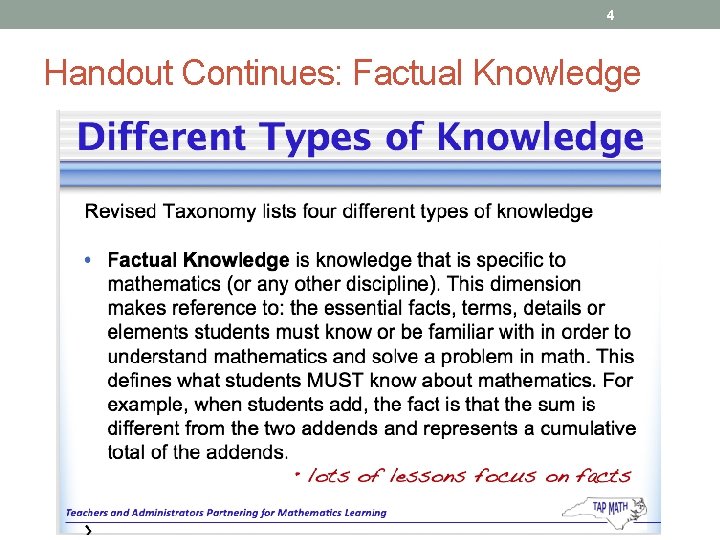
4 Handout Continues: Factual Knowledge
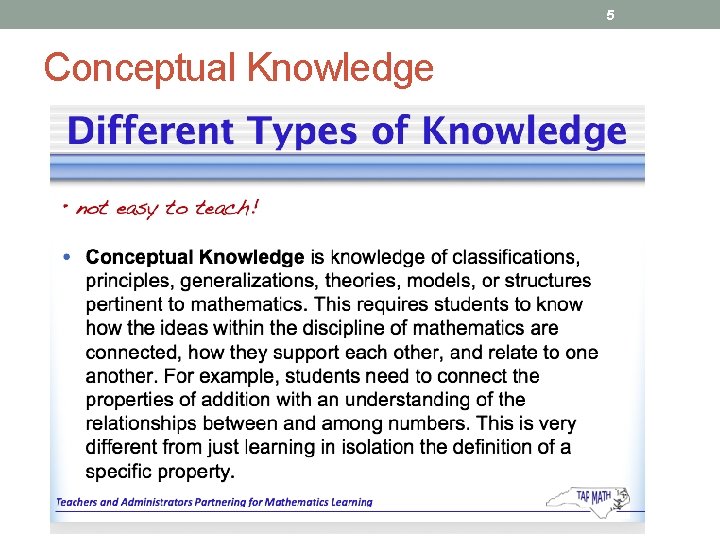
5 Conceptual Knowledge
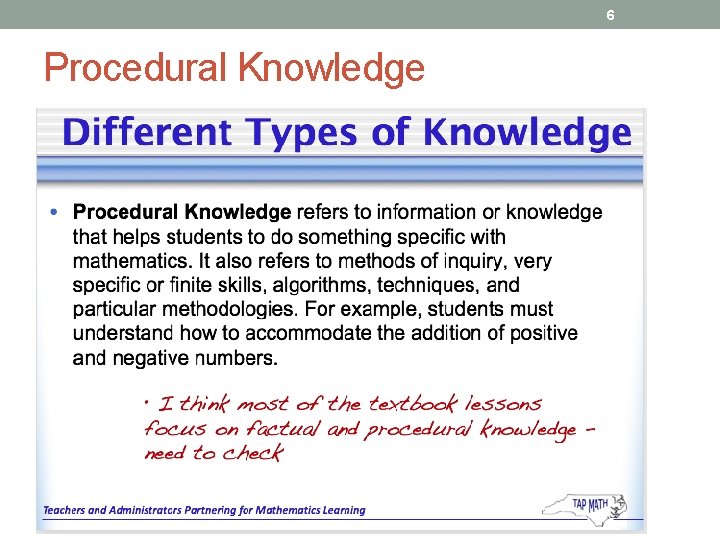
6 Procedural Knowledge
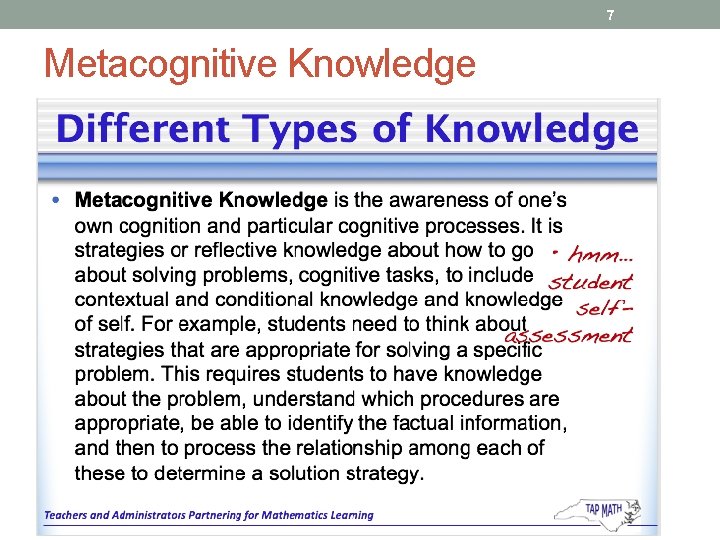
7 Metacognitive Knowledge
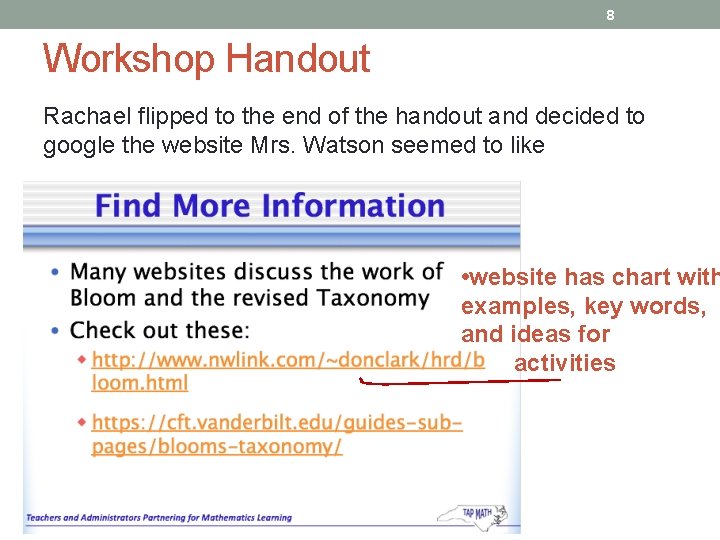
8 Workshop Handout Rachael flipped to the end of the handout and decided to google the website Mrs. Watson seemed to like • website has chart with examples, key words, and ideas for activities
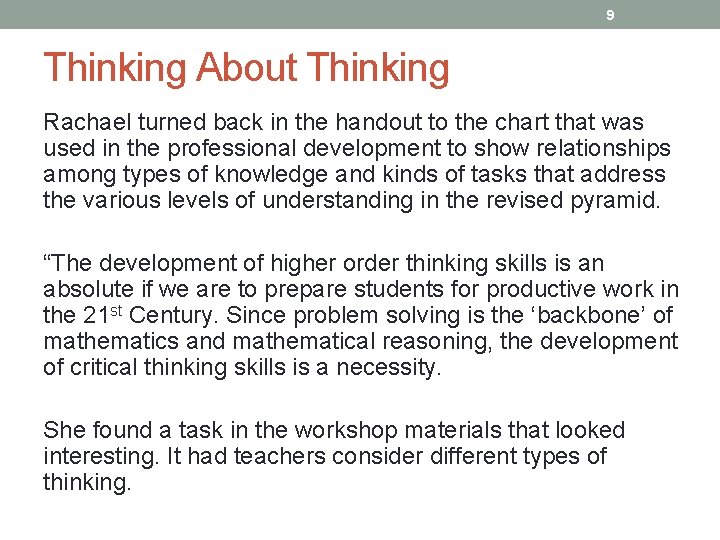
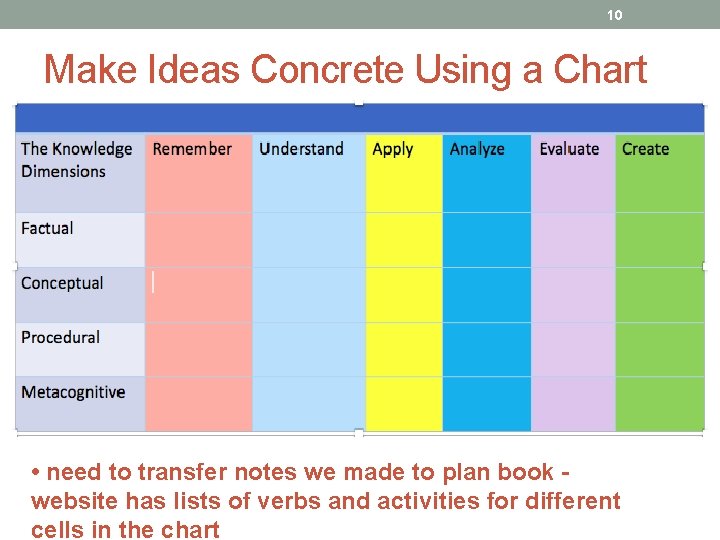
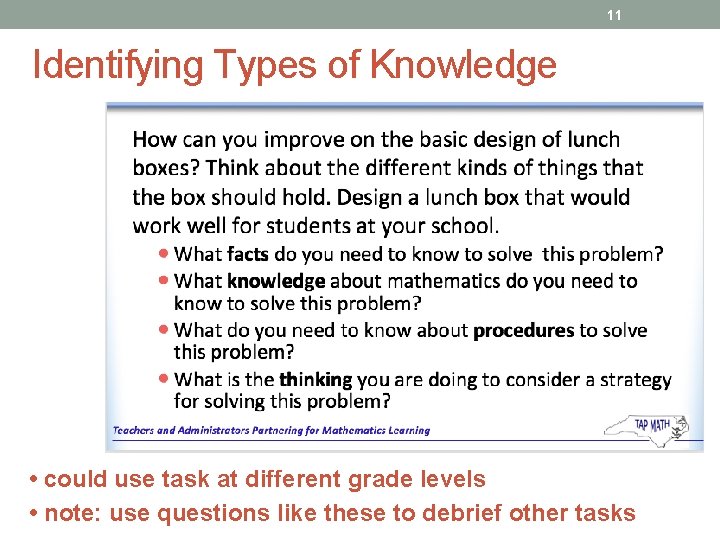
9 Thinking About Thinking Rachael turned back in the handout to the chart that was used in the professional development to show relationships among types of knowledge and kinds of tasks that address the various levels of understanding in the revised pyramid. “The development of higher order thinking skills is an absolute if we are to prepare students for productive work in the 21 st Century. Since problem solving is the ‘backbone’ of mathematics and mathematical reasoning, the development of critical thinking skills is a necessity. She found a task in the workshop materials that looked interesting. It had teachers consider different types of thinking.
10 Make Ideas Concrete Using a Chart • need to transfer notes we made to plan book website has lists of verbs and activities for different cells in the chart
11 Identifying Types of Knowledge • could use task at different grade levels • note: use questions like these to debrief other tasks
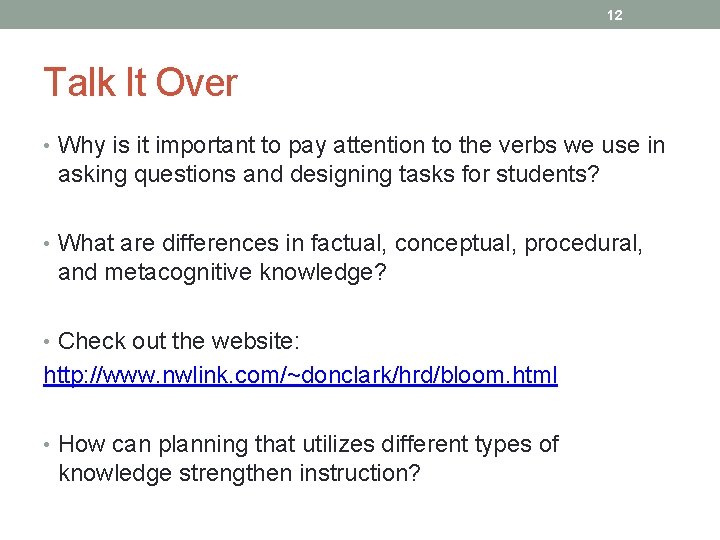
12 Talk It Over • Why is it important to pay attention to the verbs we use in asking questions and designing tasks for students? • What are differences in factual, conceptual, procedural, and metacognitive knowledge? • Check out the website: http: //www. nwlink. com/~donclark/hrd/bloom. html • How can planning that utilizes different types of knowledge strengthen instruction?