
1 Transformation Geometry Outcomes Locate axes of symmetry
- Slides: 12
1 Transformation Geometry – Outcomes Locate axes of symmetry. Locate centres of symmetry. Recognise objects under translations, central symmetries, and axial symmetries.
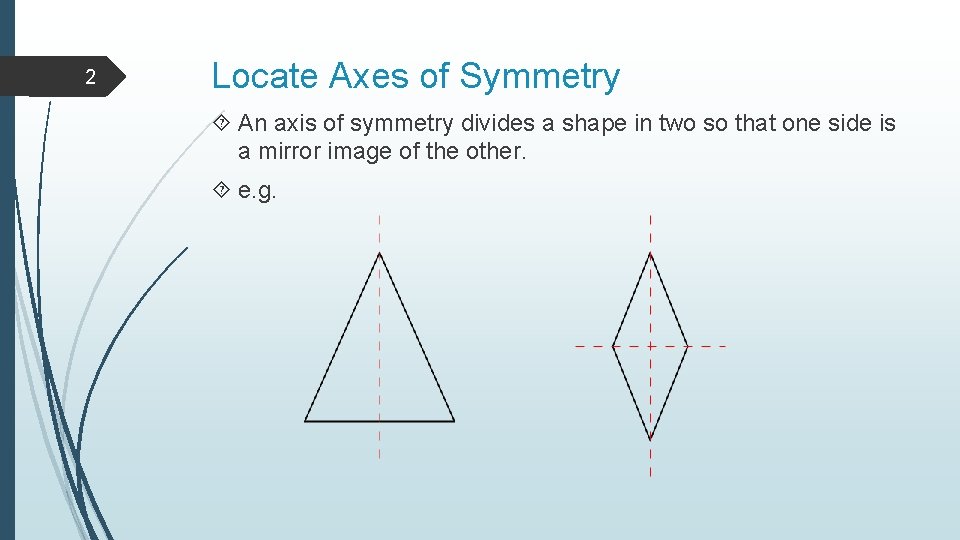
2 Locate Axes of Symmetry An axis of symmetry divides a shape in two so that one side is a mirror image of the other. e. g.
3 Locate Axes of Symmetry Sometimes we can find an axis of symmetry just by looking. To be sure, we can test by either: 1. Holding up a mirror on the axis – if the image matches the half it covers, it is an axis of symmetry. 2. Fold the shape along the axis – if the halves match exactly, it is an axis of symmetry.
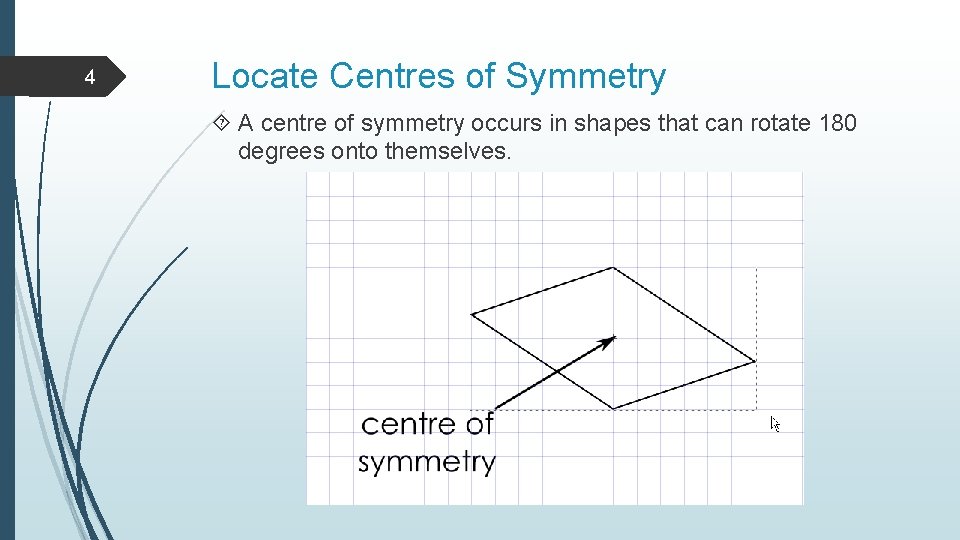
4 Locate Centres of Symmetry A centre of symmetry occurs in shapes that can rotate 180 degrees onto themselves.
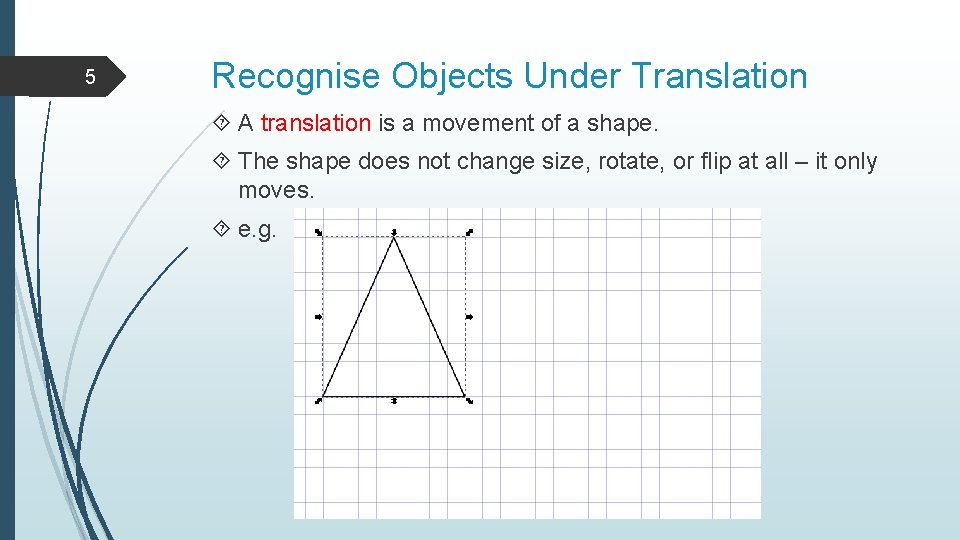
5 Recognise Objects Under Translation A translation is a movement of a shape. The shape does not change size, rotate, or flip at all – it only moves. e. g.
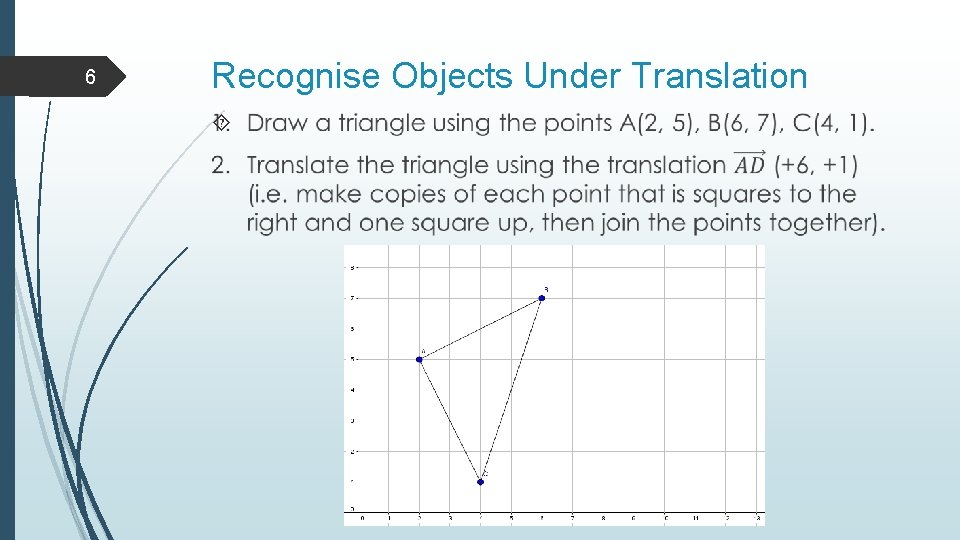
6 Recognise Objects Under Translation
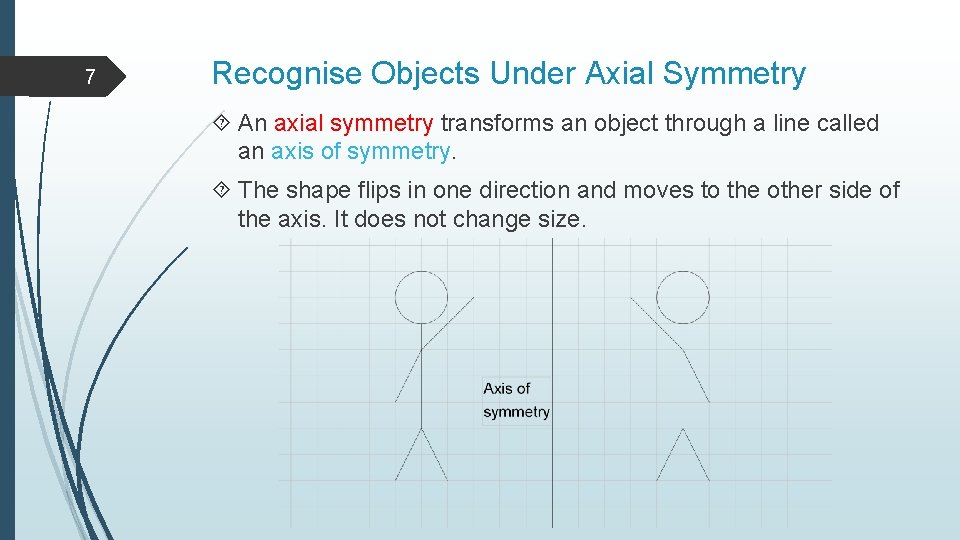
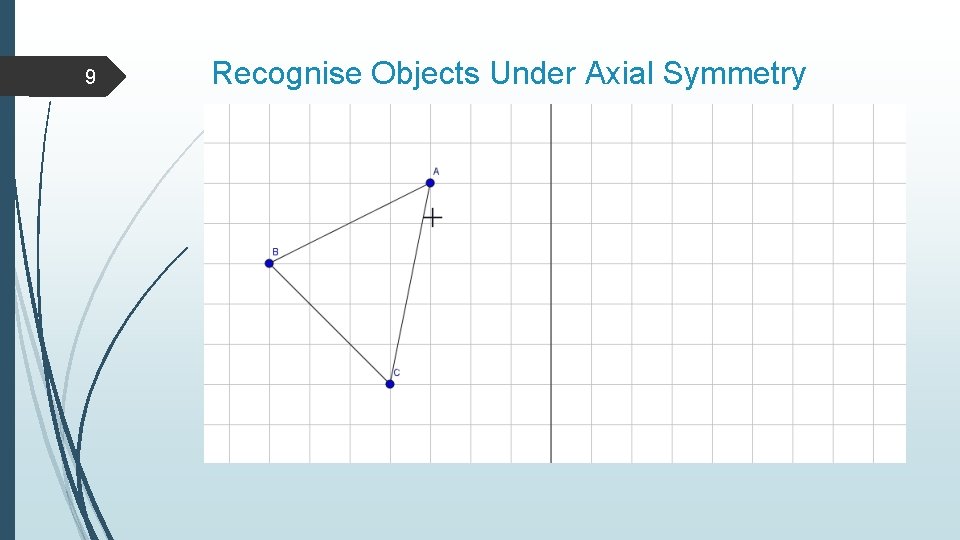
7 Recognise Objects Under Axial Symmetry An axial symmetry transforms an object through a line called an axis of symmetry. The shape flips in one direction and moves to the other side of the axis. It does not change size.
8 Recognise Objects Under Axial Symmetry 1. Draw rays from each vertex at right angles to the axis of symmetry. 2. Measure the distance from each vertex to the axis, then copy this distance on the other side. 3. Join the new points together.
9 Recognise Objects Under Axial Symmetry
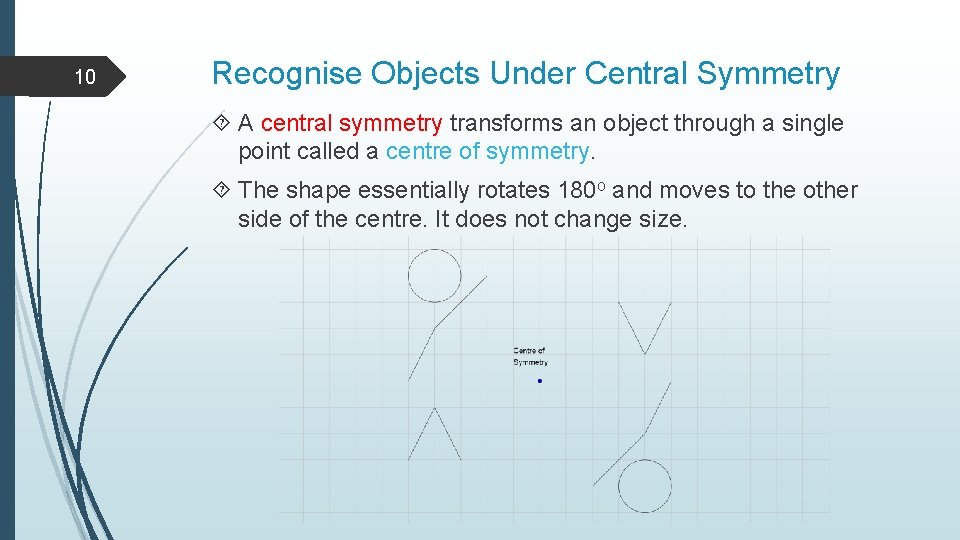
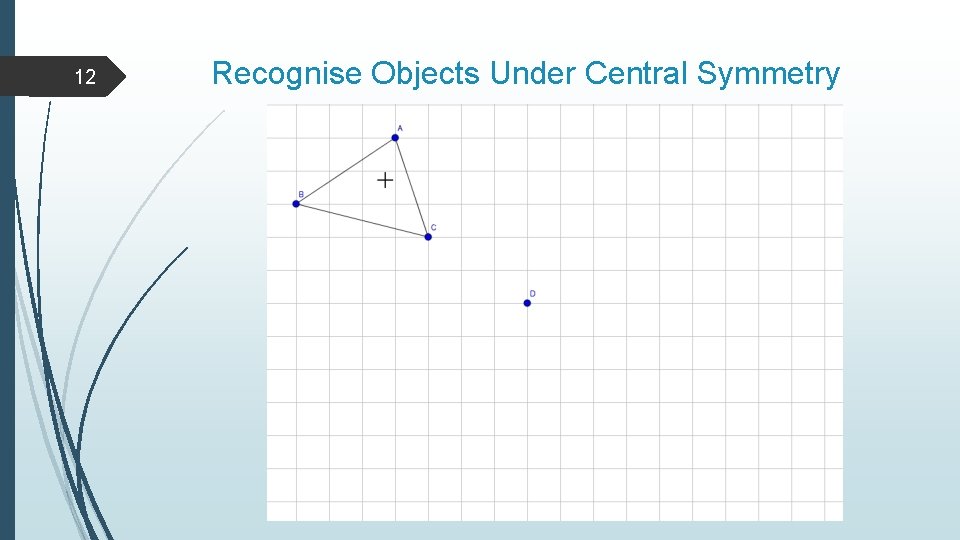
10 Recognise Objects Under Central Symmetry A central symmetry transforms an object through a single point called a centre of symmetry. The shape essentially rotates 180 o and moves to the other side of the centre. It does not change size.
11 Recognise Objects Under Central Symmetry 1. Draw rays from each vertex through the centre of symmetry. 2. Measure the distance from each vertex to the centre, then copy this distance on the other side. 3. Join the new points together.
12 Recognise Objects Under Central Symmetry