
1 To identify factors affecting personal development To

- Slides: 33
1
• To identify factors affecting personal development • To analyze various theories of psychosocial and intellectual development • To compare characteristics of different levels of maturity • To describe various methods of assessing developmental levels 2
CHRONOLOGICAL Year by year progression of age (by numbers) PHYSICAL Physical body development & growth EMOTIONAL Development of feelings about oneself & others INTELLECTUAL Pursuit of academic development & knowledge and application of that knowledge 3
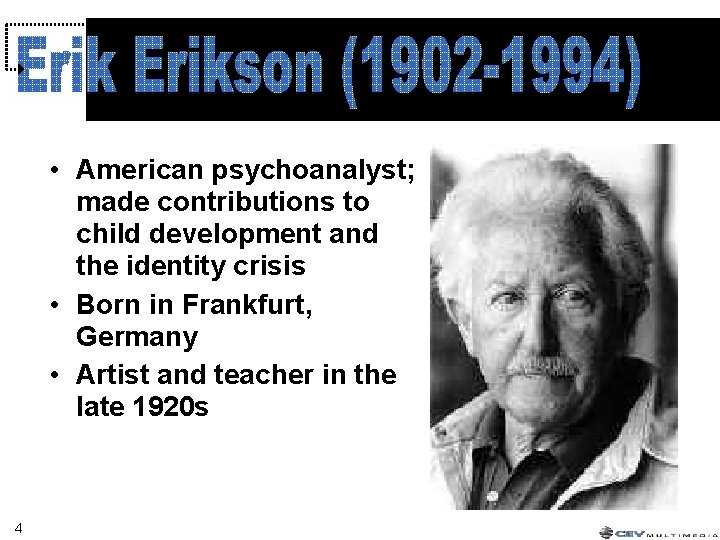
• American psychoanalyst; made contributions to child development and the identity crisis • Born in Frankfurt, Germany • Artist and teacher in the late 1920 s 4
• Immigrated to the US in 1933, joined Harvard Medical School, then moved to Yale University • Became interested in culture and society’s influential role on child development • Began to formulate his theories by studying groups of Native American children 5
• Developed eight stages of development in 1956 • Based stages of social and emotional development on many years of experience dealing with a wide range of people – from children to elderly and all social and economic levels 6
• Found each stage had to be satisfactorily met before moving onto the next stage • Example: the foundation and subsequent floors of a house must be stable before the next ones can be added 7
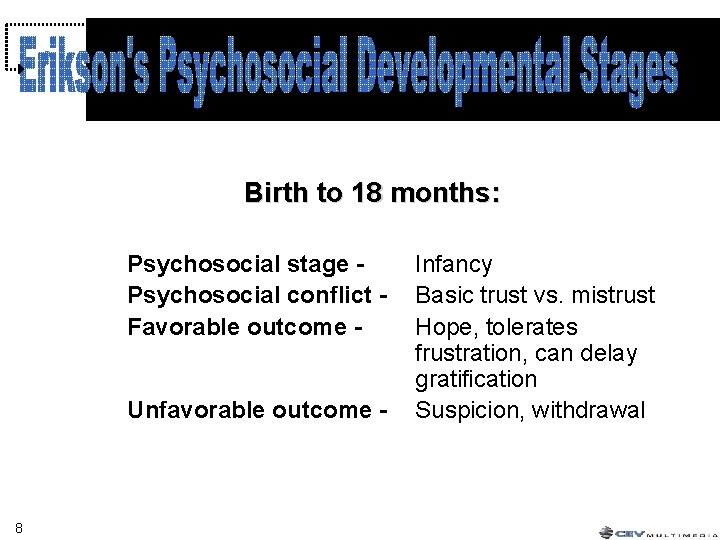
Birth to 18 months: Psychosocial stage Psychosocial conflict Favorable outcome Unfavorable outcome - 8 Infancy Basic trust vs. mistrust Hope, tolerates frustration, can delay gratification Suspicion, withdrawal
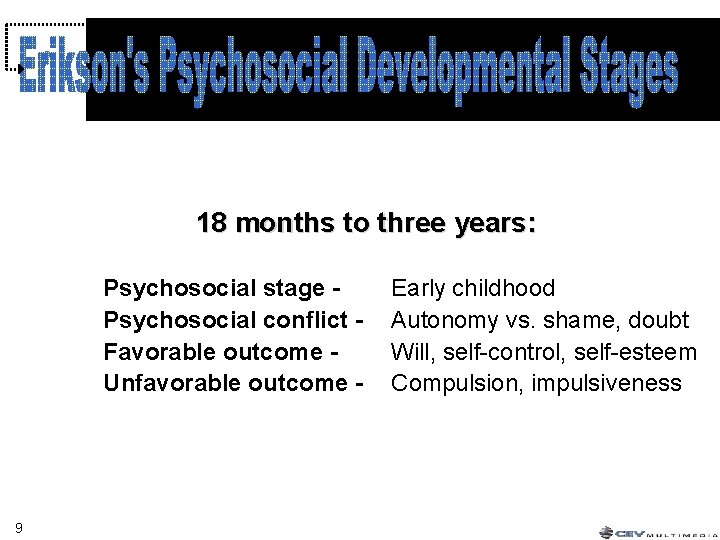
18 months to three years: Psychosocial stage Psychosocial conflict Favorable outcome Unfavorable outcome - 9 Early childhood Autonomy vs. shame, doubt Will, self-control, self-esteem Compulsion, impulsiveness
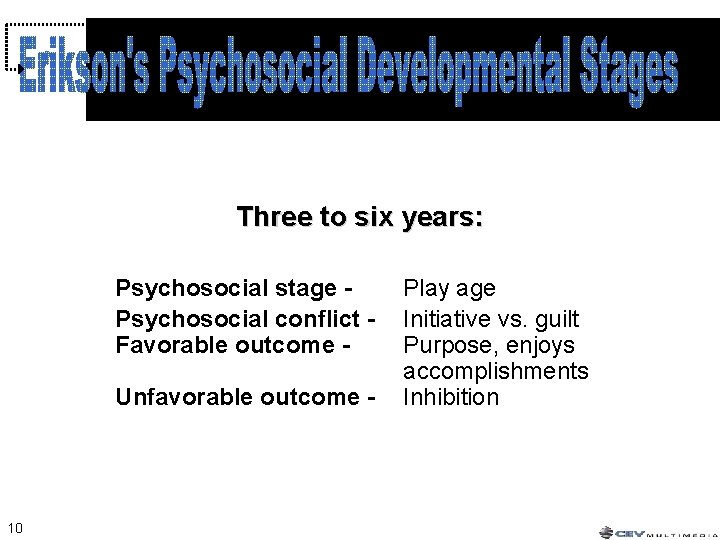
Three to six years: Psychosocial stage Psychosocial conflict Favorable outcome Unfavorable outcome - 10 Play age Initiative vs. guilt Purpose, enjoys accomplishments Inhibition
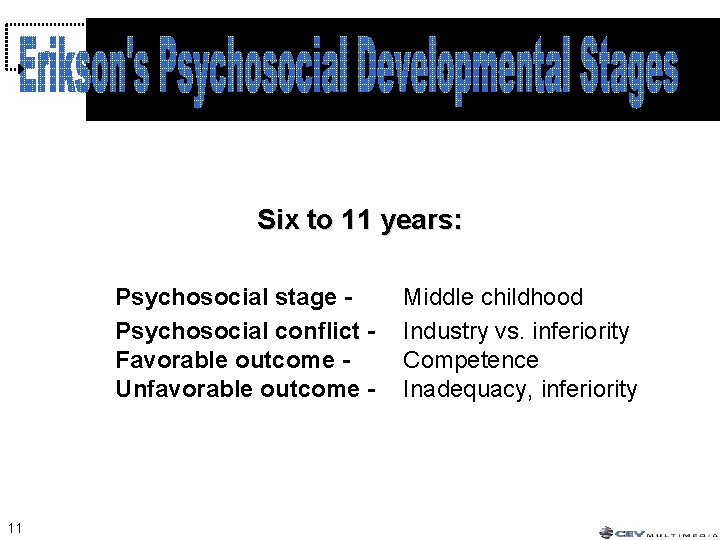
Six to 11 years: Psychosocial stage Psychosocial conflict Favorable outcome Unfavorable outcome - 11 Middle childhood Industry vs. inferiority Competence Inadequacy, inferiority
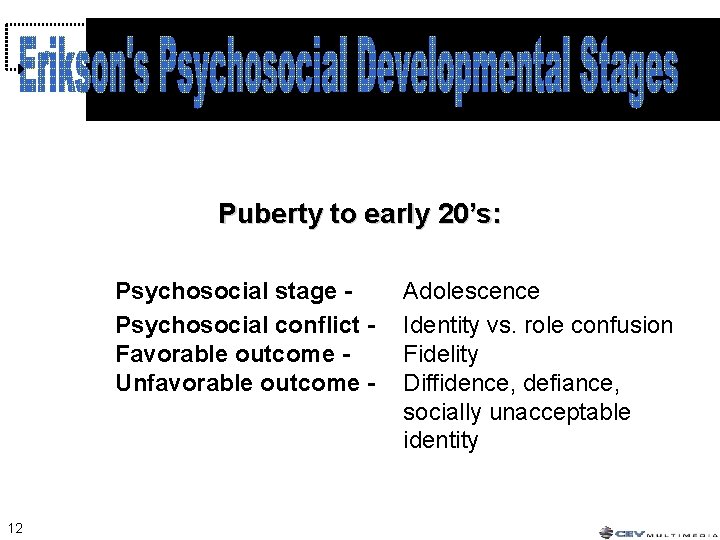
Puberty to early 20’s: Psychosocial stage Psychosocial conflict Favorable outcome Unfavorable outcome - 12 Adolescence Identity vs. role confusion Fidelity Diffidence, defiance, socially unacceptable identity
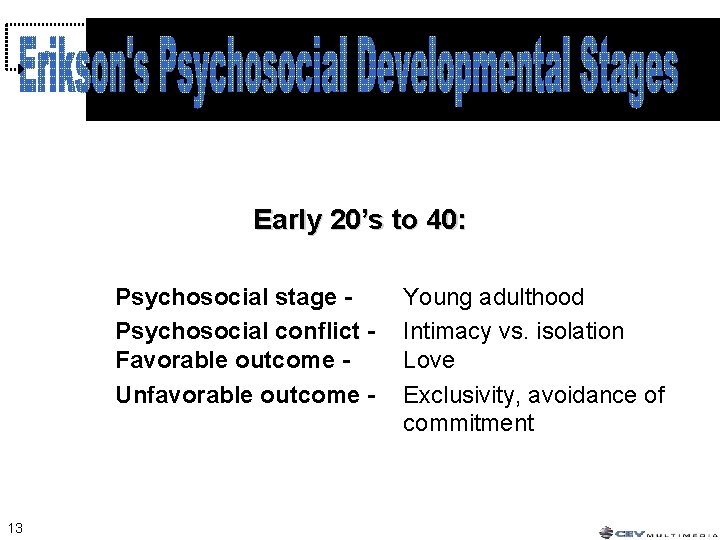
Early 20’s to 40: Psychosocial stage Psychosocial conflict Favorable outcome Unfavorable outcome - 13 Young adulthood Intimacy vs. isolation Love Exclusivity, avoidance of commitment
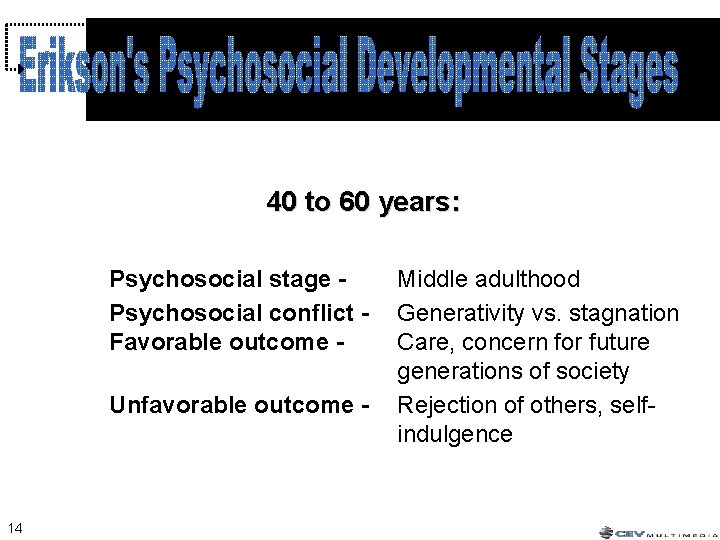
40 to 60 years: Psychosocial stage Psychosocial conflict Favorable outcome Unfavorable outcome - 14 Middle adulthood Generativity vs. stagnation Care, concern for future generations of society Rejection of others, selfindulgence
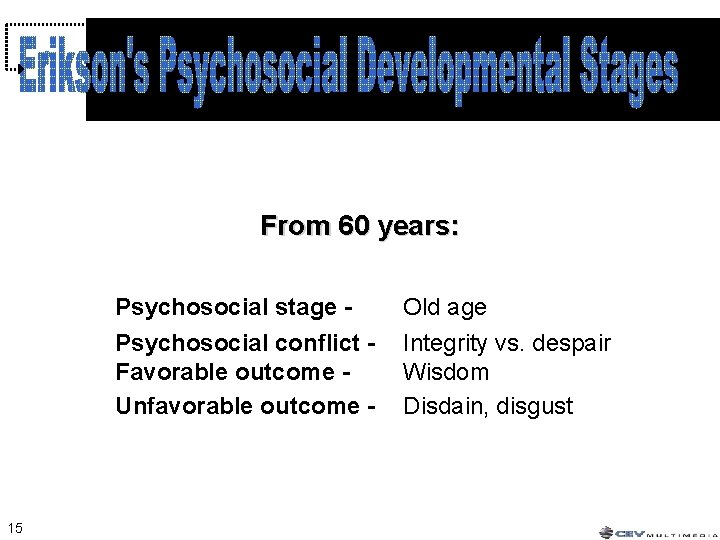
From 60 years: Psychosocial stage Psychosocial conflict Favorable outcome Unfavorable outcome - 15 Old age Integrity vs. despair Wisdom Disdain, disgust
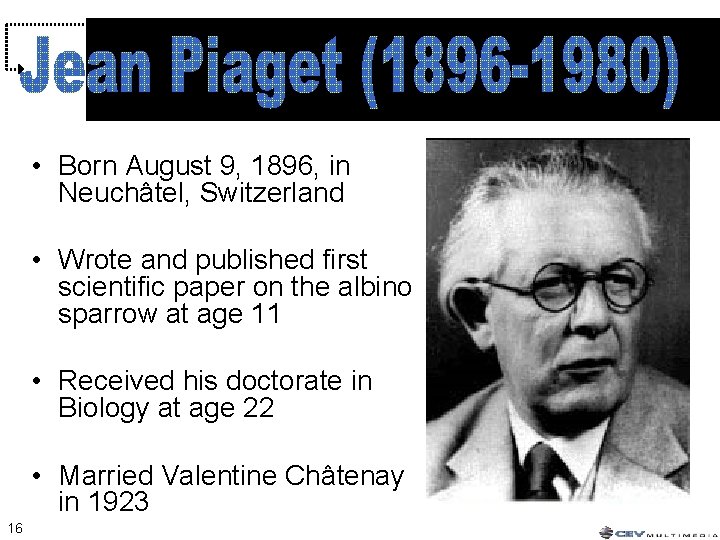
• Born August 9, 1896, in Neuchâtel, Switzerland • Wrote and published first scientific paper on the albino sparrow at age 11 • Received his doctorate in Biology at age 22 • Married Valentine Châtenay in 1923 16
• Three children: Jacqueline, Lucienne and Laurent • Piaget studied his children’s intellectual development • Through his research, Piaget identified four stages of children’s mental growth • His research in developmental psychology and genetic epistemology led to one unique goal: How does knowledge grow? 17
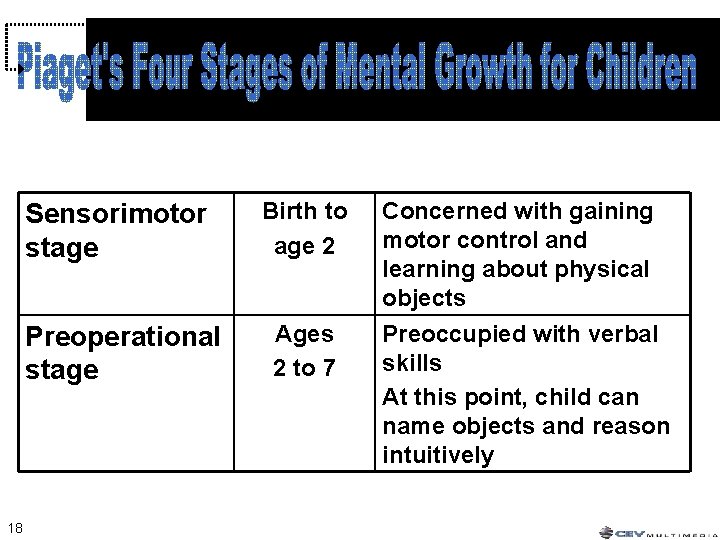
18 Sensorimotor stage Birth to age 2 Preoperational stage Ages 2 to 7 Concerned with gaining motor control and learning about physical objects Preoccupied with verbal skills At this point, child can name objects and reason intuitively
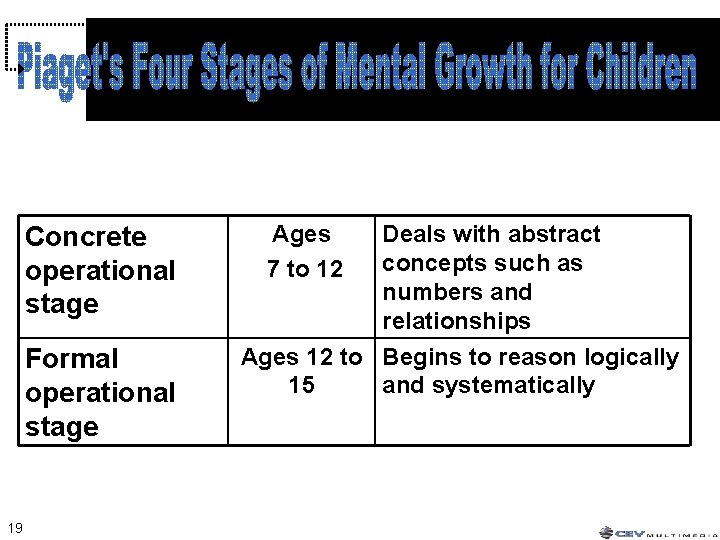
Concrete operational stage Formal operational stage 19 Ages 7 to 12 Deals with abstract concepts such as numbers and relationships Ages 12 to Begins to reason logically 15 and systematically
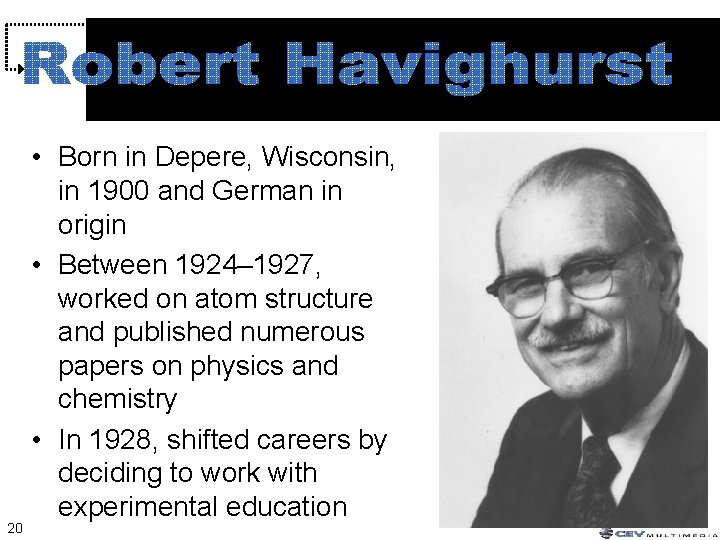
20 • Born in Depere, Wisconsin, in 1900 and German in origin • Between 1924– 1927, worked on atom structure and published numerous papers on physics and chemistry • In 1928, shifted careers by deciding to work with experimental education
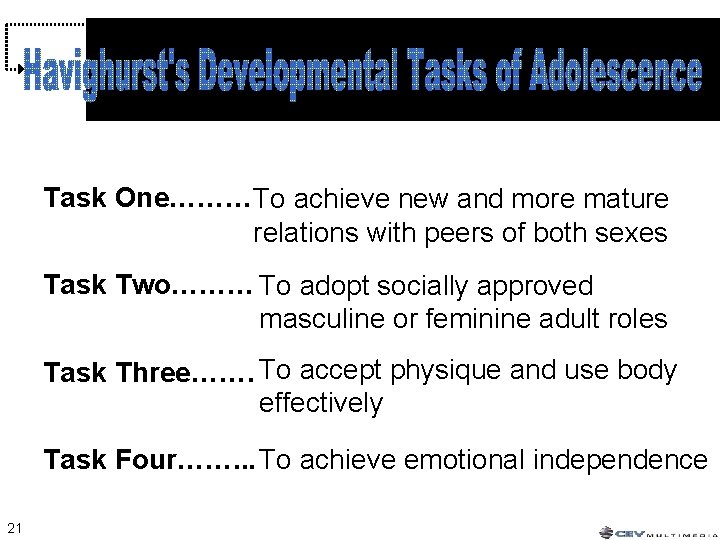
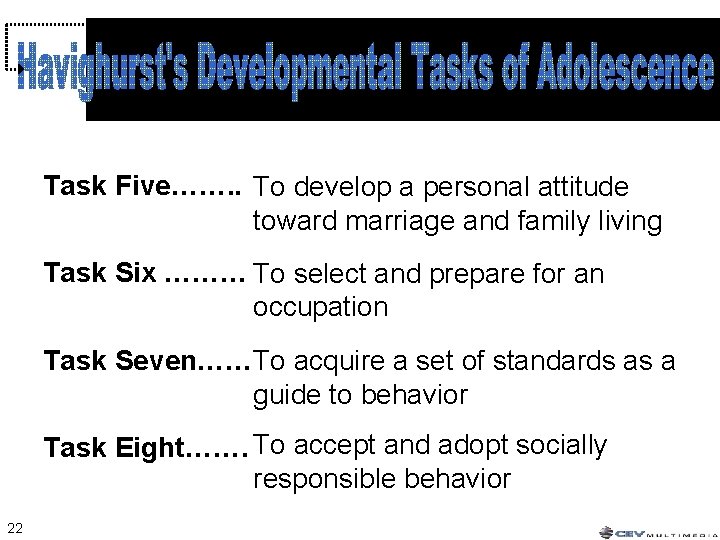
Task One………To achieve new and more mature relations with peers of both sexes Task Two……… To adopt socially approved masculine or feminine adult roles Task Three……. To accept physique and use body effectively Task Four……. . . To achieve emotional independence 21
Task Five……. . To develop a personal attitude toward marriage and family living Task Six ……… To select and prepare for an occupation Task Seven……To acquire a set of standards as a guide to behavior Task Eight……. To accept and adopt socially responsible behavior 22
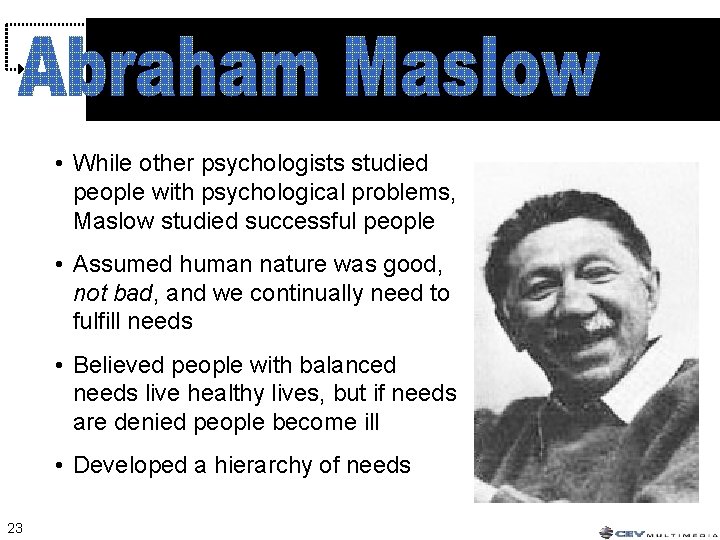
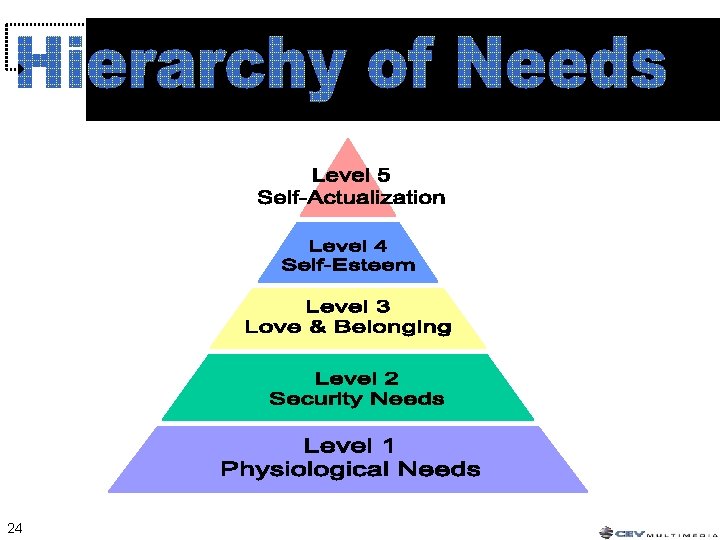
• While other psychologists studied people with psychological problems, Maslow studied successful people • Assumed human nature was good, not bad, and we continually need to fulfill needs • Believed people with balanced needs live healthy lives, but if needs are denied people become ill • Developed a hierarchy of needs 23
24
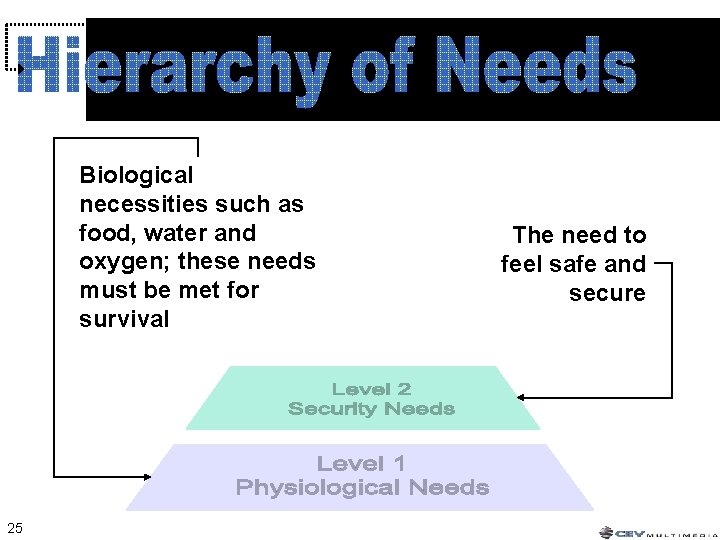
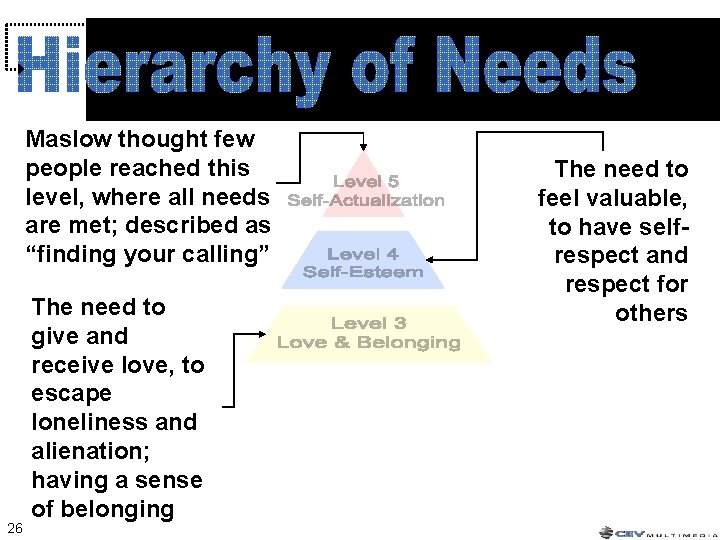
Biological necessities such as food, water and oxygen; these needs must be met for survival 25 The need to feel safe and secure
Maslow thought few people reached this level, where all needs are met; described as “finding your calling” 26 The need to give and receive love, to escape loneliness and alienation; having a sense of belonging The need to feel valuable, to have selfrespect and respect for others
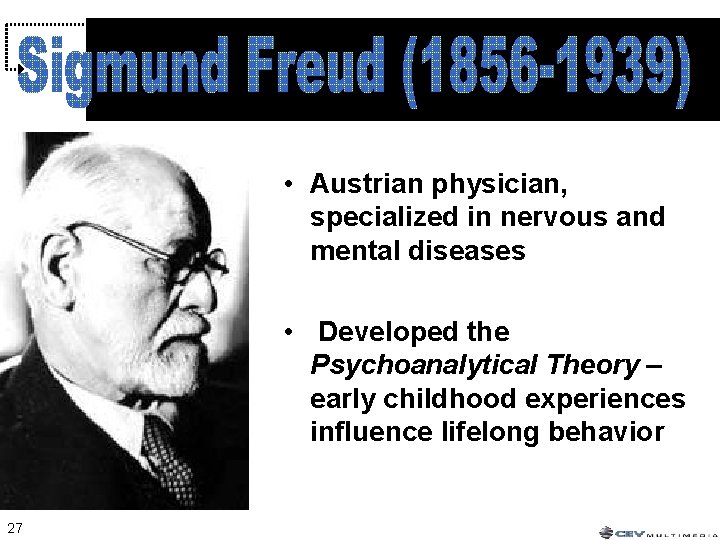
• Austrian physician, specialized in nervous and mental diseases • Developed the Psychoanalytical Theory – early childhood experiences influence lifelong behavior 27
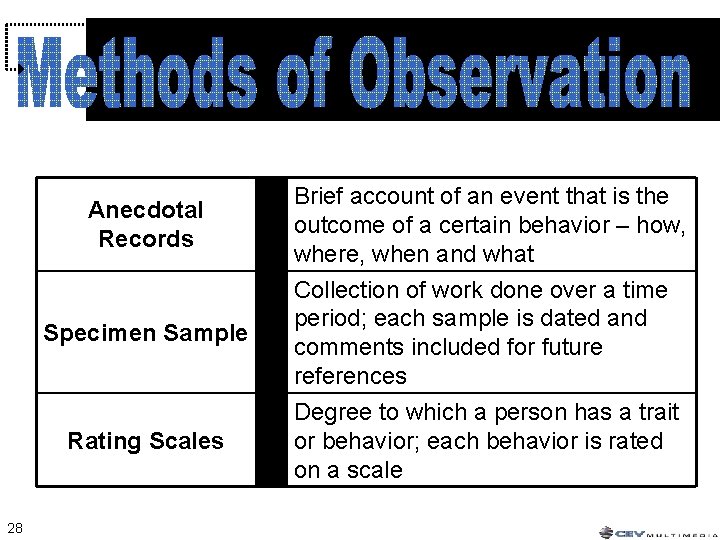
Anecdotal Records Specimen Sample Rating Scales 28 Brief account of an event that is the outcome of a certain behavior – how, where, when and what Collection of work done over a time period; each sample is dated and comments included for future references Degree to which a person has a trait or behavior; each behavior is rated on a scale
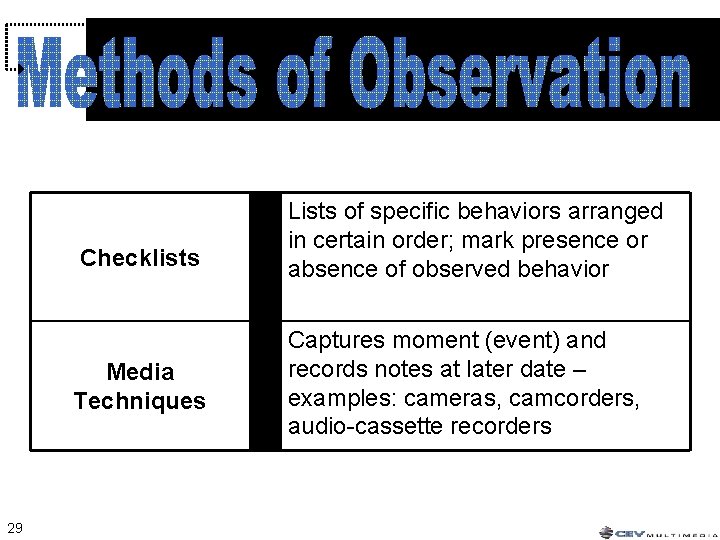
Checklists Media Techniques 29 Lists of specific behaviors arranged in certain order; mark presence or absence of observed behavior Captures moment (event) and records notes at later date – examples: cameras, camcorders, audio-cassette recorders
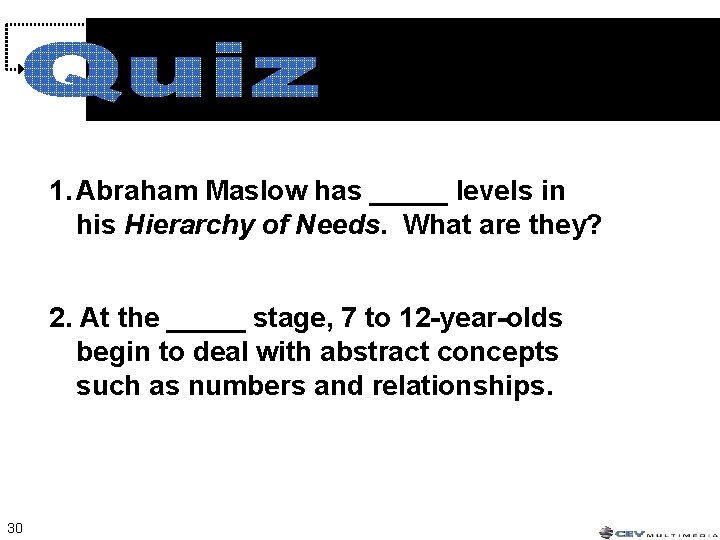
1. Abraham Maslow has _____ levels in his Hierarchy of Needs. What are they? 2. At the _____ stage, 7 to 12 -year-olds begin to deal with abstract concepts such as numbers and relationships. 30
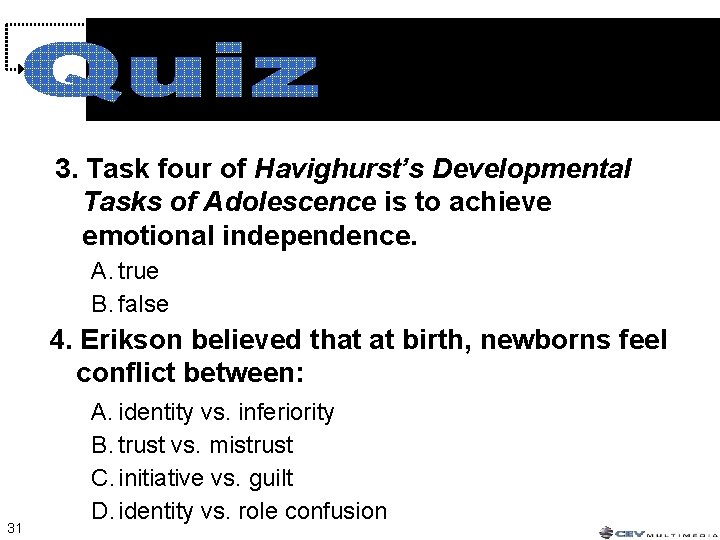
3. Task four of Havighurst’s Developmental Tasks of Adolescence is to achieve emotional independence. A. true B. false 4. Erikson believed that at birth, newborns feel conflict between: 31 A. identity vs. inferiority B. trust vs. mistrust C. initiative vs. guilt D. identity vs. role confusion
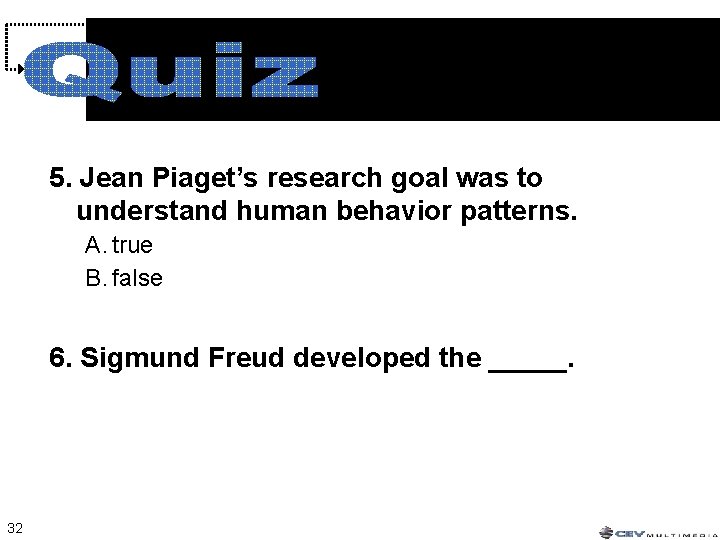
5. Jean Piaget’s research goal was to understand human behavior patterns. A. true B. false 6. Sigmund Freud developed the _____. 32
The Curriculum Center for Family and Consumer Sciences Texas Tech University http: //www. hs. ttu. edu/ccfcs Child Development Institute. 2002. http: //childdevelopmentinfo. com/development/erickson. shtml Dowling, Mike. , "The Electronic Passport Homework to Abraham Maslow. ” 2002. http: //www. mrdowling. com/602 -maslow. html The Jean Piaget Society. 2002 Production Coordinators http: //www. piaget. org/biography/biog. html Treena Aston Allison Mangold Graphics Coordinator Leah Richardson Production Manager Geoff Scott Executive Producer G. W. Davis 33 © MMVII CEV Multimedia, Ltd.