
1 The way to innovation A Professional Development

- Slides: 19
1 The way to innovation A Professional Development Program to Enhance Teachers as Researchers Maysa Qutob
2
3 Content • Description • Objectives • Outcomes • Models • Implantation • Challenges • Effectiveness
4 Description • Based on the needs analysis, English language teachers lack research skills. • Teachers gain a lot of benefits when engaged in research such as improving their teaching practices, changing situations, and recognizing practices within context. (Hollingsworth, 1995 as cited in Villegas-Reimers 2003; Borg, 2010)
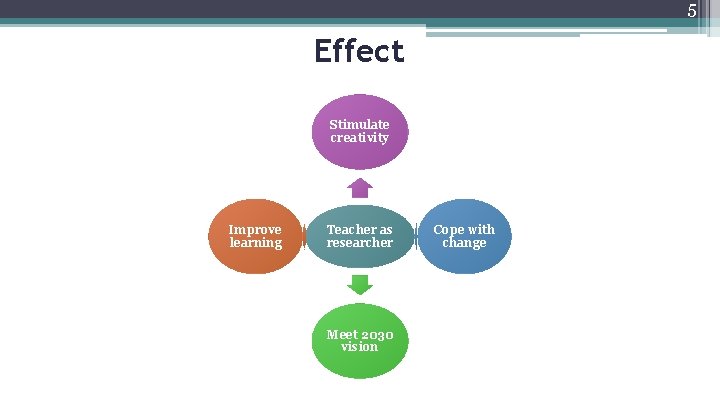
5 Effect Stimulate creativity Improve learning Teacher as researcher Meet 2030 vision Cope with change
6 Objective • To develop English teaching and learning process through preparing 20 English teachers from all sections in Abayan School to be researchers. • To have teachers be the producers of knowledge as they put theories into practice and continuously study and evaluate the whole process.
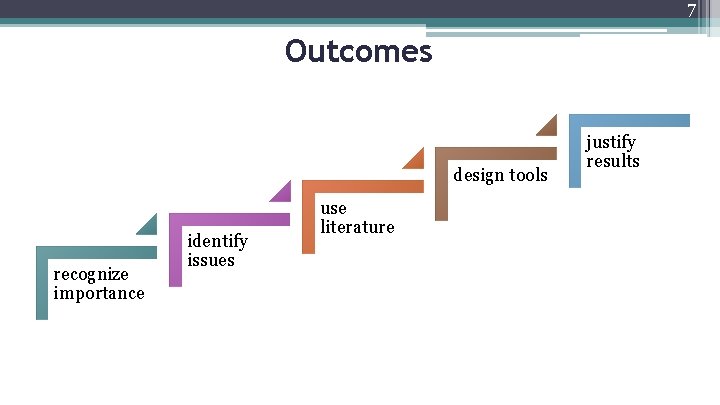
7 Outcomes design tools recognize importance identify issues use literature justify results
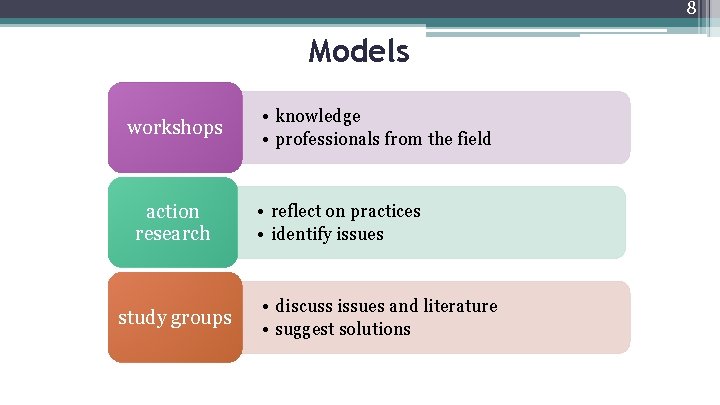
8 Models workshops action research study groups • knowledge • professionals from the field • reflect on practices • identify issues • discuss issues and literature • suggest solutions
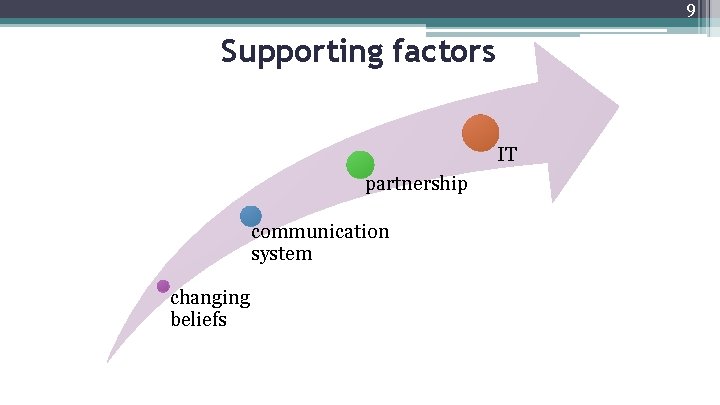
9 Supporting factors IT partnership communication system changing beliefs
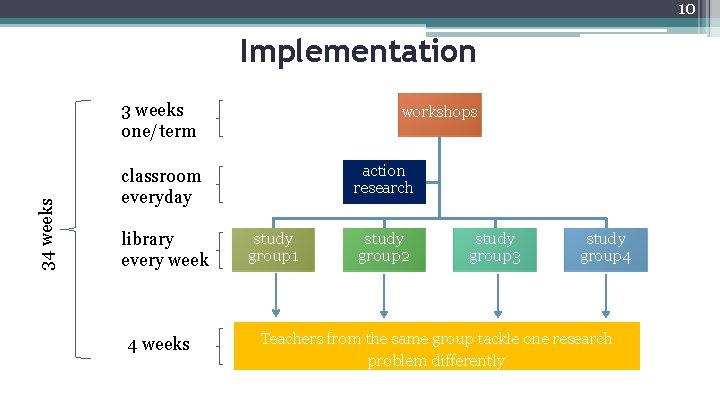
10 Implementation 34 weeks 3 weeks one/term workshops action research classroom everyday library every week 4 weeks study group 1 study group 2 study group 3 study group 4 Teachers from the same group tackle one research problem differently
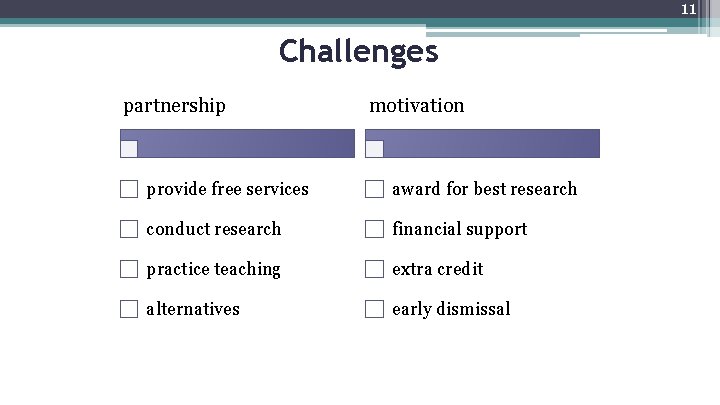
11 Challenges partnership motivation provide free services award for best research conduct research financial support practice teaching extra credit alternatives early dismissal
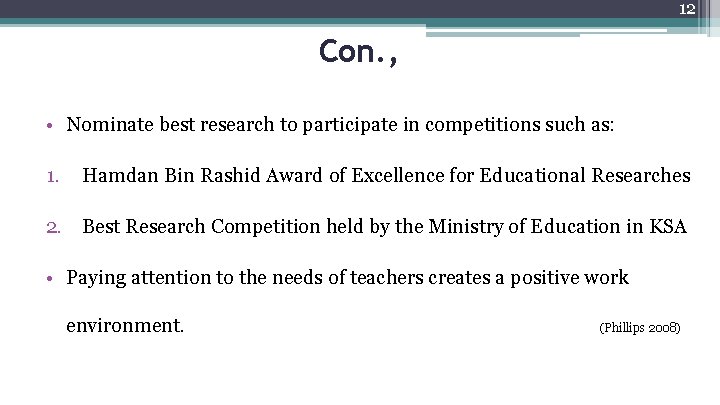
12 Con. , • Nominate best research to participate in competitions such as: 1. Hamdan Bin Rashid Award of Excellence for Educational Researches 2. Best Research Competition held by the Ministry of Education in KSA • Paying attention to the needs of teachers creates a positive work environment. (Phillips 2008)
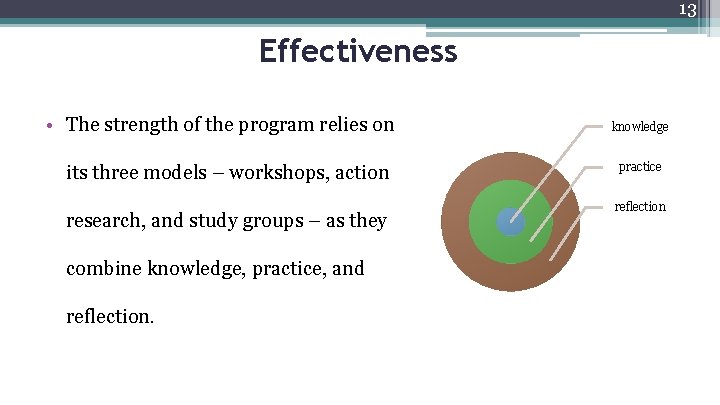
13 Effectiveness • The strength of the program relies on its three models – workshops, action research, and study groups – as they combine knowledge, practice, and reflection. knowledge practice reflection
14 Con. , • It follows Reid’s quadrants of teacher learning, as it is structured and organised. (Fraser, Kennedy, Reid & Mckinney 2007) • It contributes to effective professional development as it is held in schools, encourages active collaboration, and focuses on the teaching and learning process. (Li and Chan, 2007)
15 Action research • Allows teachers to reflect, collaborate, and generate knowledge (Lock & Riley 2009; Kiely & Davis 2010; Koshy 2010; Soekh 2010 as cited in Banegas et al. , 2013) • Depends on research skills, such as data collection and encourages teachers to experiment in their own classrooms (Villegas-Reimers, 2003) • Enhances teachers as researchers and allows them to become knowledge creators (Stoke, 2001)
16 Study group • Teachers are engaged in discussion and reflection, which creates an efficient professional development environment for learning and sharing both knowledge and experiences. (Stanley 2011)
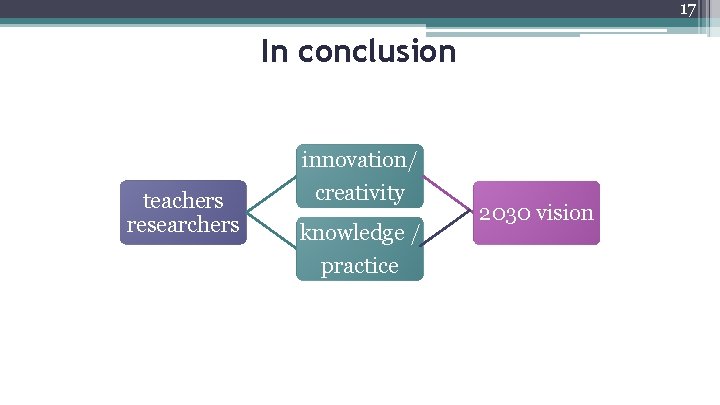
17 In conclusion teachers researchers innovation/ creativity knowledge / practice 2030 vision
18 A classroom is where you start your journey as a teacher and there you enrich it as a researcher Maysa Qutob
19 References • • Banegas, D. , Pavese, A. , Velázquez, A. , & Vélez, S. M. (2013). Teacher professional development through collaborative action research: Impact on foreign English-language teaching and learning. Educational Action Research, 21(2), 185 -201. Borg, S. (2010). Language teacher research engagement. Language Teaching, 43(4), 391 -429. doi: 10. 1017/S 0261444810000170 Fraser, C. , Kennedy, A. , Reid, L. , & Mckinney, S. (2007). Teachers’ continuing professional development: contested concepts, understandings and models. Journal of in-service education, 33(2), 153 -169. Li, B. , & Chan, S. (2007). Coaching as a means for enhancing English-language teachers’ professional development: a case study. Journal of In-Service Education, 33(3), 341 -358. Phillips, P. (2008). Professional Development as a Critical Component of Continuing Teacher Quality. Australian Journal of Teacher Education, 33(1), n 1. Stanley, A. M. (2011). Professional development within collaborative teacher study groups: Pitfalls and promises. Arts Education Policy Review, 112(2), 71 -78. Stokes, L. (2001). Lessons from an inquiring school: Forms of inquiry and conditions for teacher learning. In A. Lieberman & L. Miller (Eds. ), Teachers caught in the action: Professional development that matters (141 -158). New York: Teachers College Press. Villegas-Reimers, E. (2003). Teacher professional development: An international review of the literature. Paris: International Institute for Educational Planning.