
1 THE STRUCTURE AND FUNCTION OF MACROMOLECULES Polymer

- Slides: 19
1
THE STRUCTURE AND FUNCTION OF MACROMOLECULES Polymer principles And Macromolecules Copyright © 2002 Pearson Education, Inc. , publishing as Benjamin Cummings
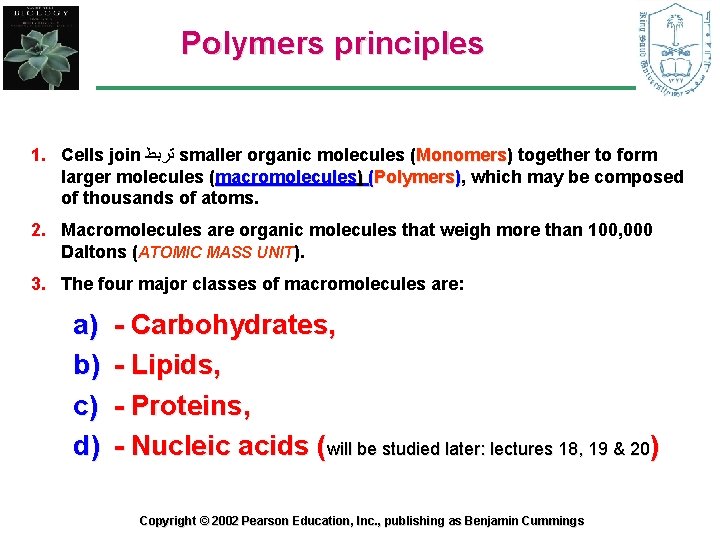
Polymers principles 1. Cells join ﺗﺮﺑﻂ smaller organic molecules (Monomers) Monomers together to form larger molecules (macromolecules) (Polymers), which may be composed of thousands of atoms. 2. Macromolecules are organic molecules that weigh more than 100, 000 Daltons (ATOMIC MASS UNIT). 3. The four major classes of macromolecules are: a) b) c) d) - Carbohydrates, - Lipids, - Proteins, - Nucleic acids (will be studied later: lectures 18, 19 & 20) Copyright © 2002 Pearson Education, Inc. , publishing as Benjamin Cummings
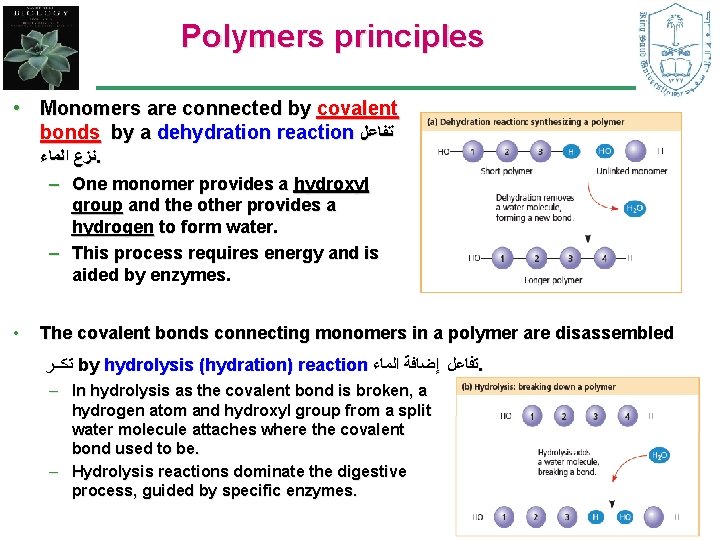
Polymers principles • Monomers are connected by covalent bonds by a dehydration reaction ﺗﻔﺎﻋﻞ ﻧﺰﻉ ﺍﻟﻤﺎﺀ. – One monomer provides a hydroxyl group and the other provides a hydrogen to form water. – This process requires energy and is aided by enzymes. • The covalent bonds connecting monomers in a polymer are disassembled ﺗﻛــﺮ by hydrolysis (hydration) reaction ﺗﻔﺎﻋﻞ ﺇﺿﺎﻓﺔ ﺍﻟﻤﺎﺀ. – In hydrolysis as the covalent bond is broken, a hydrogen atom and hydroxyl group from a split water molecule attaches where the covalent bond used to be. – Hydrolysis reactions dominate the digestive process, guided by specific enzymes. 5
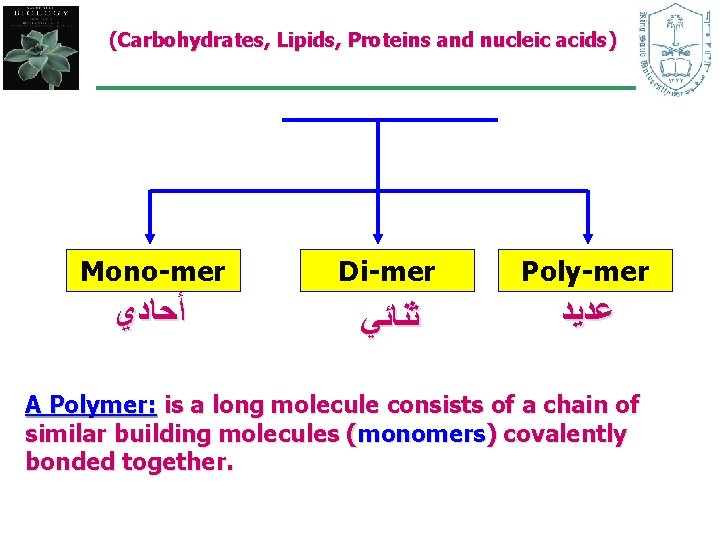
(Carbohydrates, Lipids, Proteins and nucleic acids) Mono-mer Di-mer Poly-mer ﺃﺤﺎﺩﻱ ﺛﻨﺎﺋﻲ ﻋﺪﻳﺪ A Polymer: is a long molecule consists of a chain of similar building molecules (monomers) covalently bonded together.
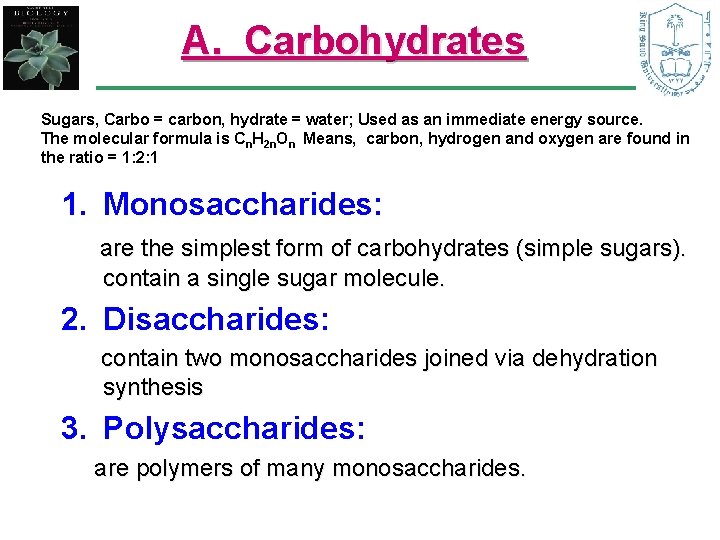
A. Carbohydrates Sugars, Carbo = carbon, hydrate = water; Used as an immediate energy source. The molecular formula is Cn. H 2 n. On Means, carbon, hydrogen and oxygen are found in the ratio = 1: 2: 1 1. Monosaccharides: are the simplest form of carbohydrates (simple sugars). contain a single sugar molecule. 2. Disaccharides: contain two monosaccharides joined via dehydration synthesis 3. Polysaccharides: are polymers of many monosaccharides.
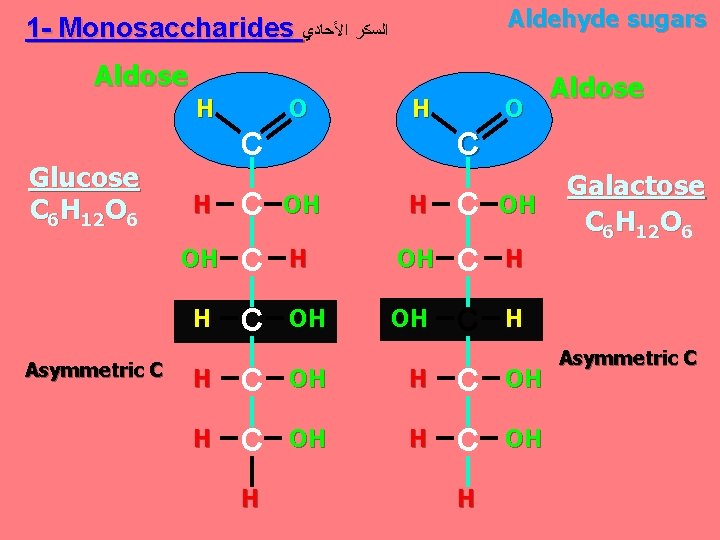
Aldehyde sugars 1 - Monosaccharides ﺍﻟﺴﻜﺮ ﺍﻷﺤﺎﺩﻱ Aldose H Glucose C 6 H 12 O 6 Asymmetric C O H C O C H C OH OH C H H C OH H Aldose H Galactose C 6 H 12 O 6 Asymmetric C
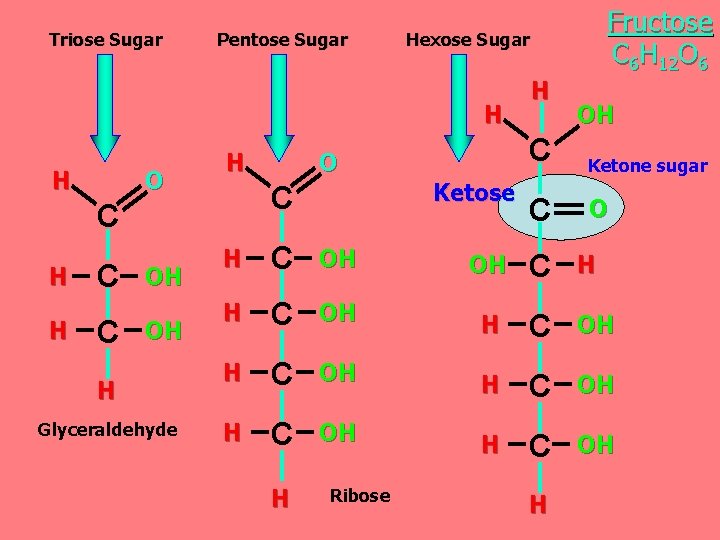
Triose Sugar Pentose Sugar Hexose Sugar H H O H C H H C C OH OH H Glyceraldehyde O Ketose C Fructose C 6 H 12 O 6 H OH C Ketone sugar C O H C OH OH C H H C OH H C OH H Ribose H
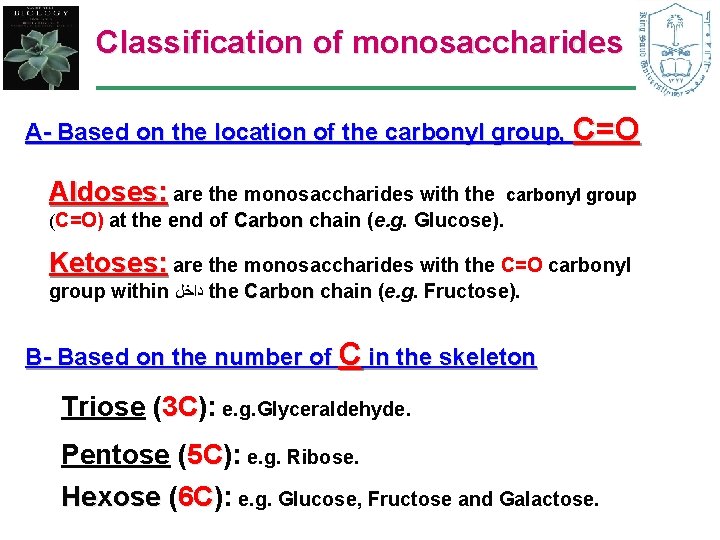
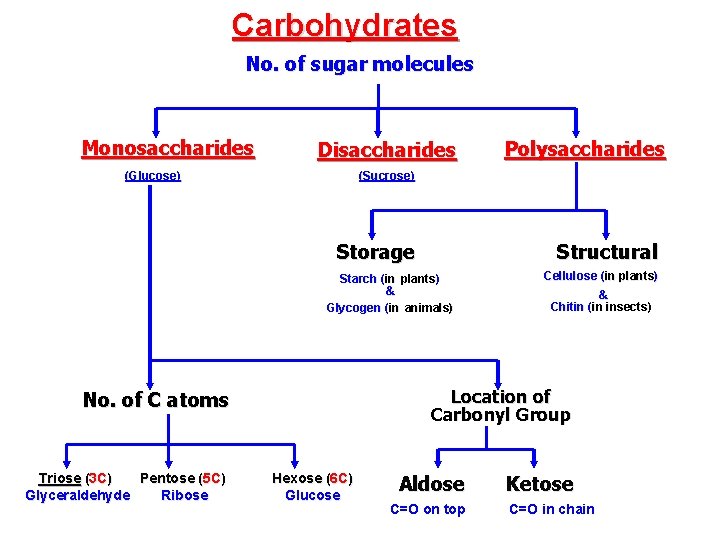
Classification of monosaccharides A- Based on the location of the carbonyl group, C=O Aldoses: are the monosaccharides with the carbonyl group (C=O) at the end of Carbon chain (e. g. Glucose). Ketoses: are the monosaccharides with the C=O carbonyl group within ﺩﺍﺧﻞ the Carbon chain (e. g. Fructose). B- Based on the number of C in the skeleton Triose (3 C): 3 C e. g. Glyceraldehyde. Pentose (5 C): 5 C e. g. Ribose. Hexose (6 C): 6 C e. g. Glucose, Fructose and Galactose.
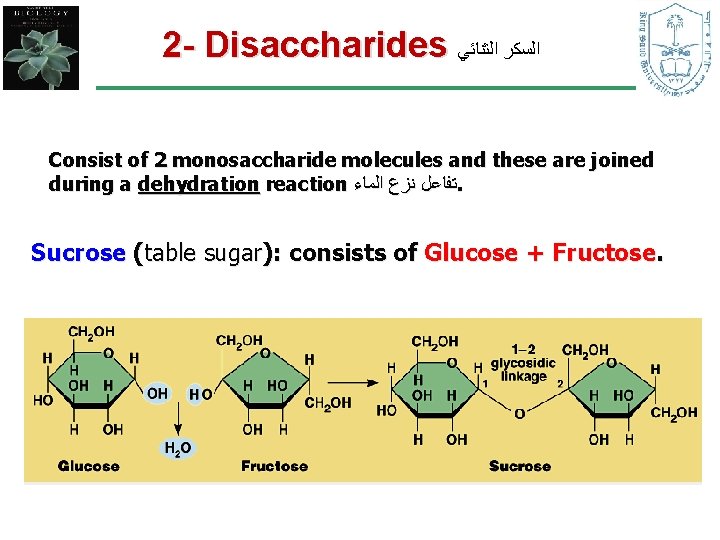
2 - Disaccharides ﺍﻟﺴﻜﺮ ﺍﻟﺜﻨﺎﺋﻲ Consist of 2 monosaccharide molecules and these are joined during a dehydration reaction ﺗﻔﺎﻋﻞ ﻧﺰﻉ ﺍﻟﻤﺎﺀ. Sucrose (table sugar): consists of Glucose + Fructose.
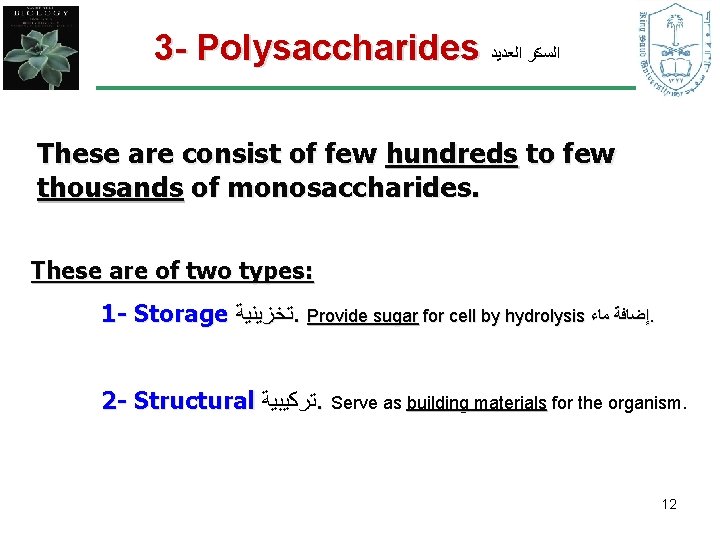
3 - Polysaccharides ﺍﻟﺴﻜﺮ ﺍﻟﻌﺪﻳﺪ These are consist of few hundreds to few thousands of monosaccharides. These are of two types: 1 - Storage ﺗﺨﺰﻳﻨﻴﺔ. Provide sugar for cell by hydrolysis ﺇﺿﺎﻓﺔ ﻣﺎﺀ. 2 - Structural ﺗﺮﻛﻴﺒﻴﺔ. Serve as building materials for the organism. 12
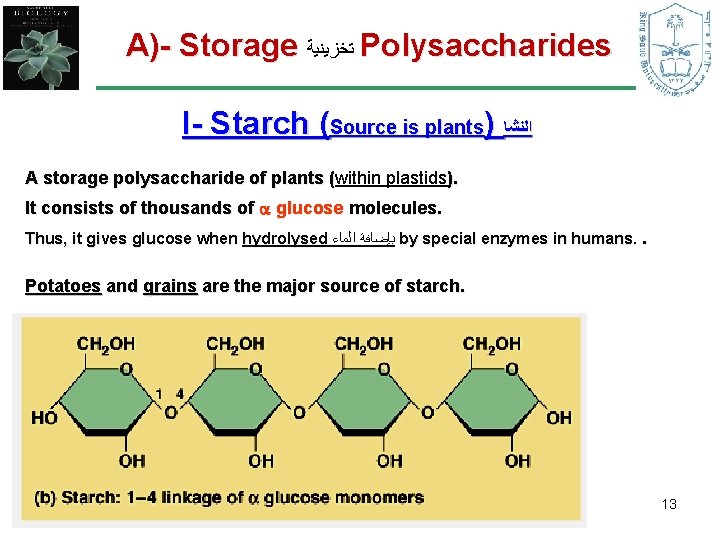
A)- Storage ﺗﺨﺰﻳﻨﻴﺔ Polysaccharides I- Starch (Source is plants) ﺍﻟﻨﺸﺎ A storage polysaccharide of plants (within plastids). ( It consists of thousands of glucose molecules. Thus, it gives glucose when hydrolysed ﺑﺈﺿﺎﻓﺔ ﺍﻟﻤﺎﺀ by special enzymes in humans. . Potatoes and grains are the major source of starch. 13
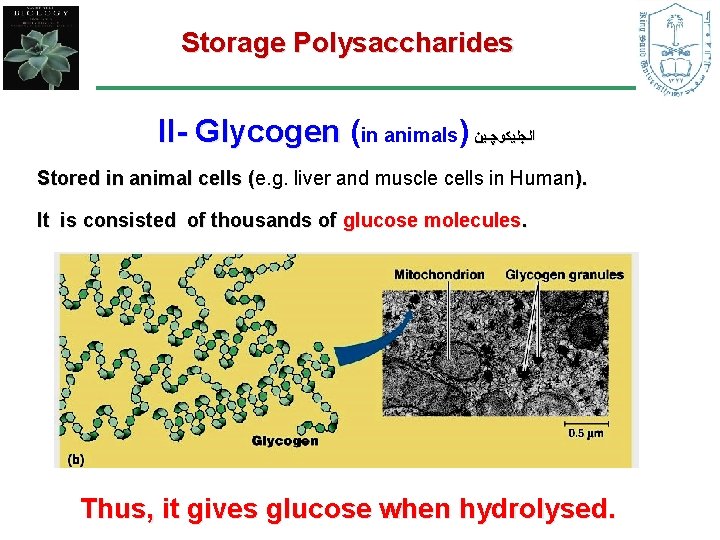
Storage Polysaccharides II- Glycogen (in animals) ﺍﻟﺠﻠﻴﻜﻮﭽـﻴﻦ Stored in animal cells (e. g. liver and muscle cells in Human). ( It is consisted of thousands of glucose molecules. Thus, it gives glucose when hydrolysed.
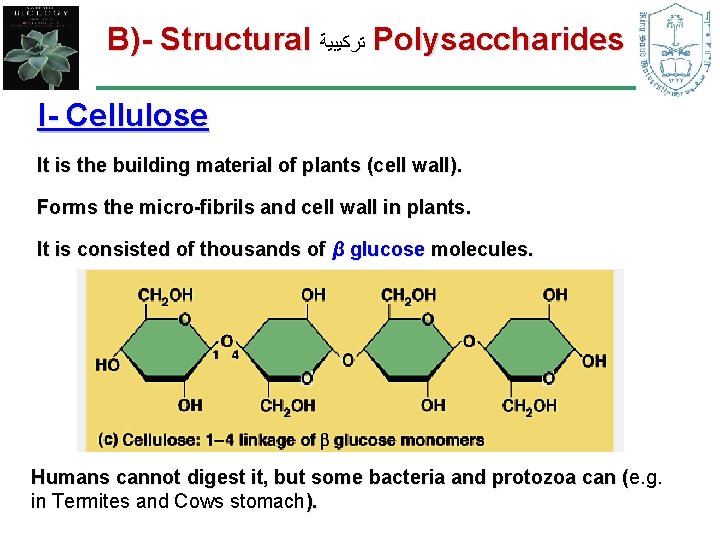
B)- Structural ﺗﺮﻛﻴﺒﻴﺔ Polysaccharides I- Cellulose It is the building material of plants (cell wall). Forms the micro-fibrils and cell wall in plants. It is consisted of thousands of β glucose molecules. Humans cannot digest it, but some bacteria and protozoa can (e. g. ( in Termites and Cows stomach).
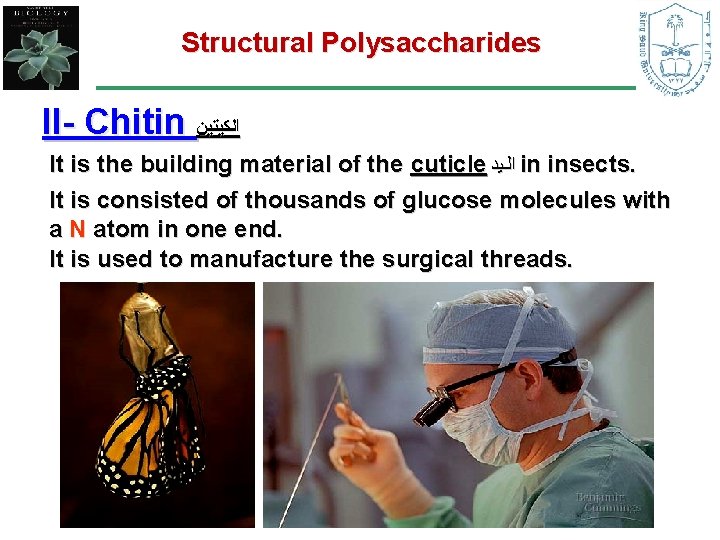
Structural Polysaccharides II- Chitin ﺍﻟﻜﻴﺘﻴﻦ It is the building material of the cuticle ﺍﻟـﻳﺪ in insects. It is consisted of thousands of glucose molecules with a N atom in one end. It is used to manufacture the surgical threads.
Carbohydrates No. of sugar molecules Monosaccharides Disaccharides (Glucose) (Sucrose) Storage Structural Starch (in plants) & Glycogen (in animals) Cellulose (in plants) & Chitin (in insects) Location of Carbonyl Group No. of C atoms Triose (3 C) Pentose (5 C) Glyceraldehyde Ribose Polysaccharides Hexose (6 C) Glucose Aldose C=O on top Ketose C=O in chain
College of Science, Zoology Department General Animal Biology (Zoo-145) Prof. Ashraf M. Ahmed aalii@ksu. edu. sa