
1 The role of estrogen in osteoporosis Advisor


- Slides: 29
1
The role of estrogen in osteoporosis Advisor: D. r mohiti By: zahra malekpour Dep of biochemistry 1394 2
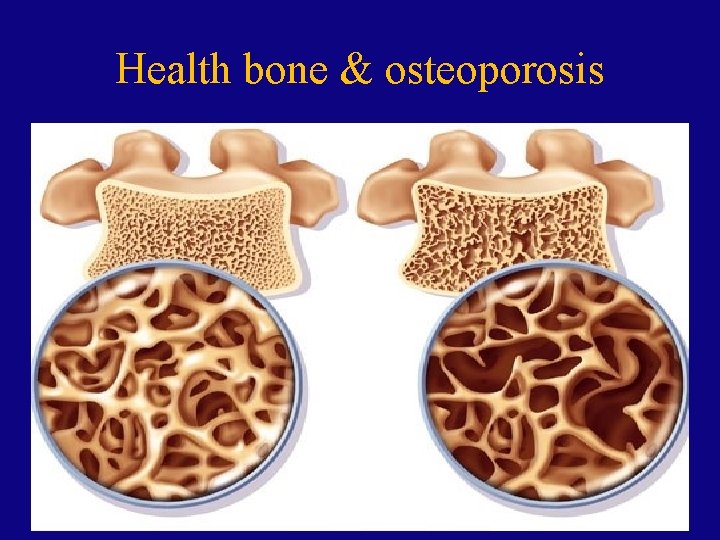
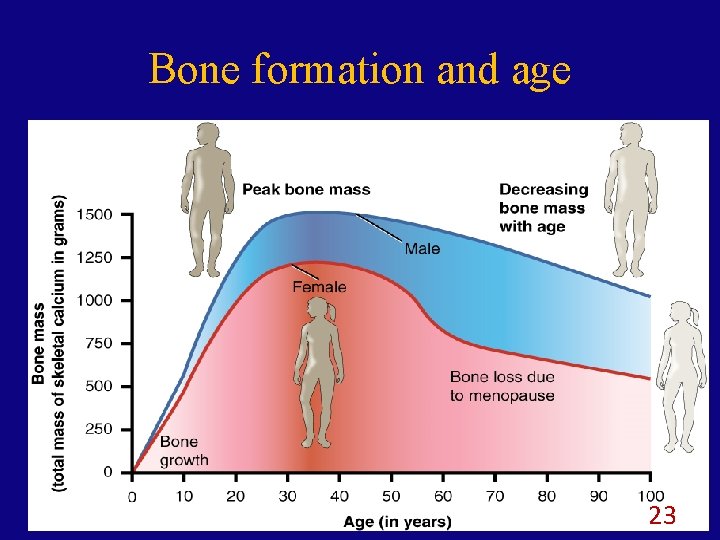
Introduction • Osteoporosis: Ø A metabolic bone disorder Ø low bone mass and increase in bone fragility Ø Bone mass is a determinant of bone strength. Ø bone formation peak is at the end of growth. Ø Sex hormones as estrogen have important role in pubertal skeleton growth. Ø Estrogen is a regulator bone metabolism. 3
Bone Formation • Bone compounds include: Ø support cells: osteoblasts and osteocytes Ø remodeling cells: osteoclasts Ø non-mineral matrix: collagen & proteins called osteoid • Ossification (osteogenesis): a) Synthesis of extracellular organic matrix (osteoid) b) Matrix mineralization leading to bone formation. c) Remodeling of bone by the process of resorption and reformation 4
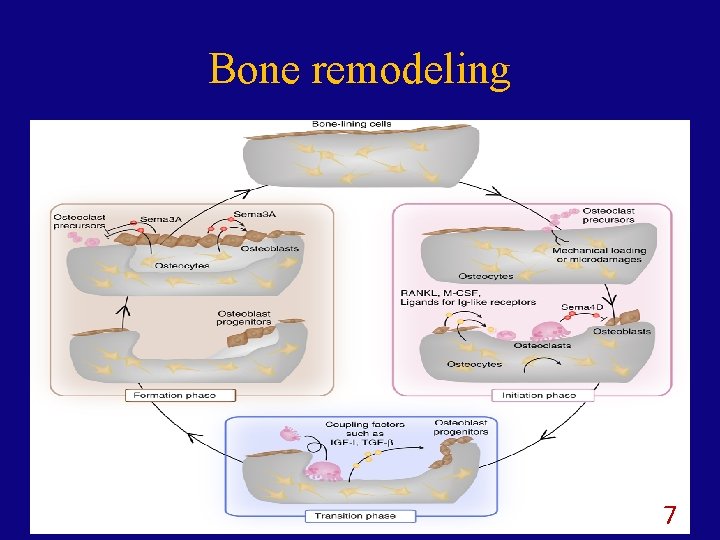
Bone remodeling • The process of osteoclasts resorb bone and osteoblasts form new bone. • Importance of bone remodeling: ØBone enabling to respond adapt to load induced strain. Øreplace old or damaged bone tissue. Ømaintenance calcium homeostasis. 5
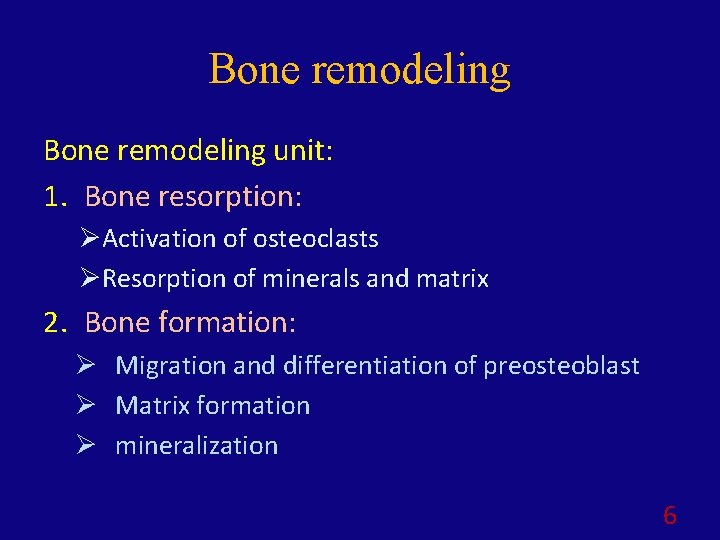
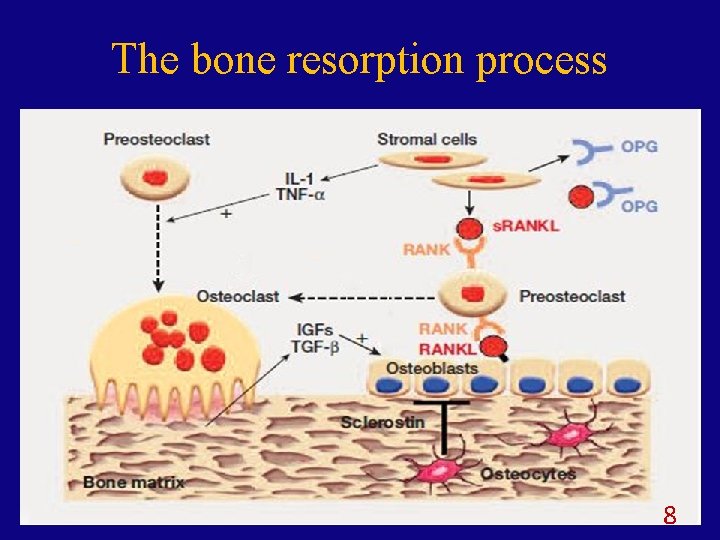
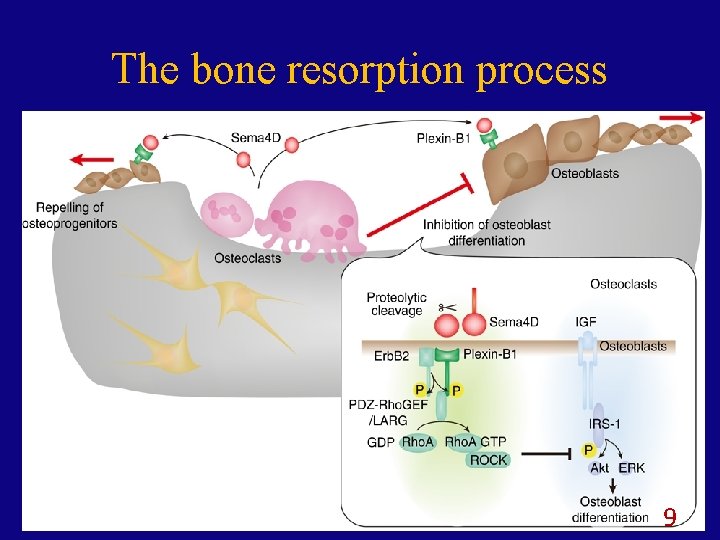
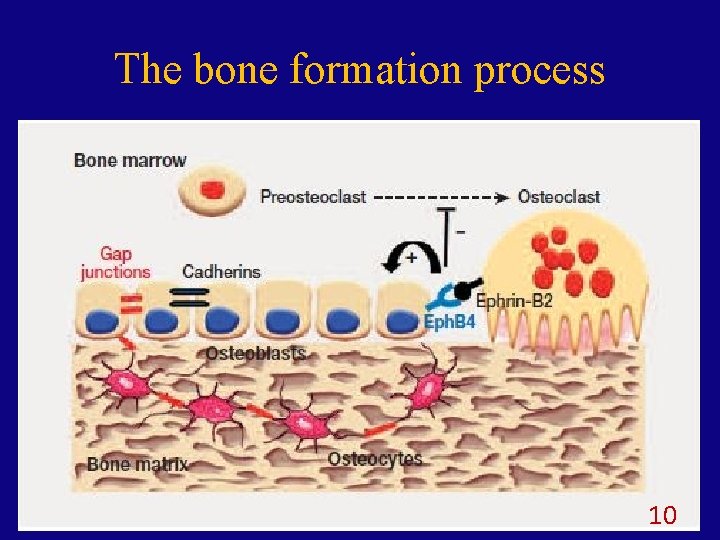
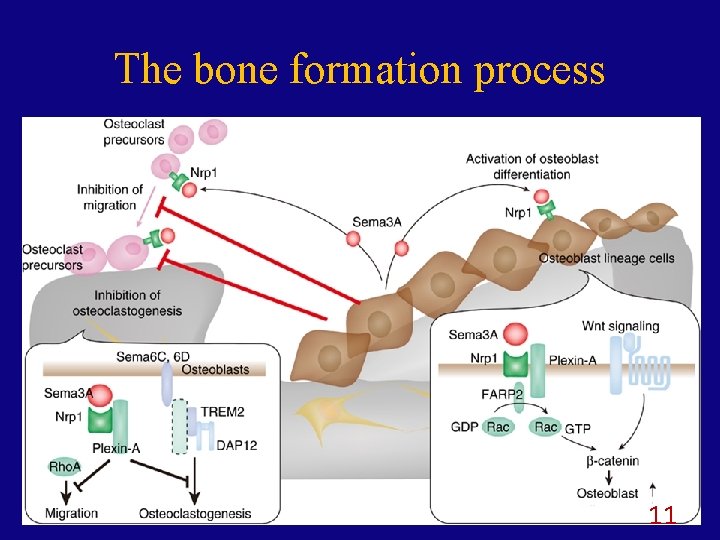
Bone remodeling unit: 1. Bone resorption: ØActivation of osteoclasts ØResorption of minerals and matrix 2. Bone formation: Ø Migration and differentiation of preosteoblast Ø Matrix formation Ø mineralization 6
Bone remodeling 7
The bone resorption process 8
The bone resorption process 9
The bone formation process 10
The bone formation process 11
The Role of estrogen In Bone remodeling 12
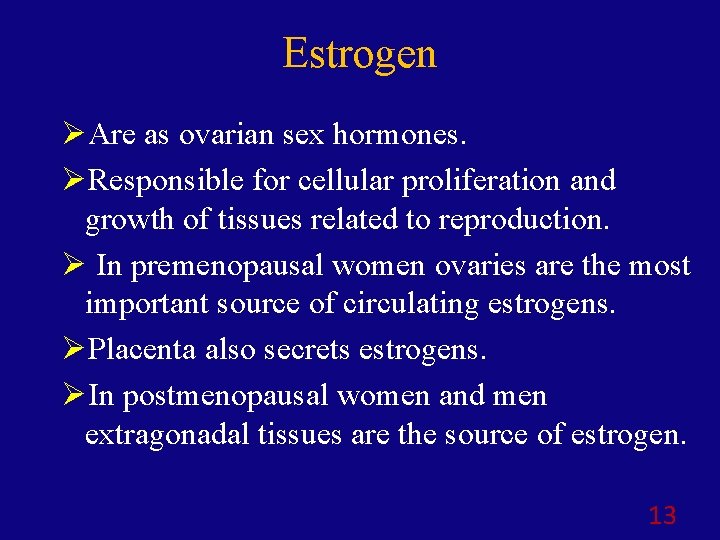
Estrogen ØAre as ovarian sex hormones. ØResponsible for cellular proliferation and growth of tissues related to reproduction. Ø In premenopausal women ovaries are the most important source of circulating estrogens. ØPlacenta also secrets estrogens. ØIn postmenopausal women and men extragonadal tissues are the source of estrogen. 13
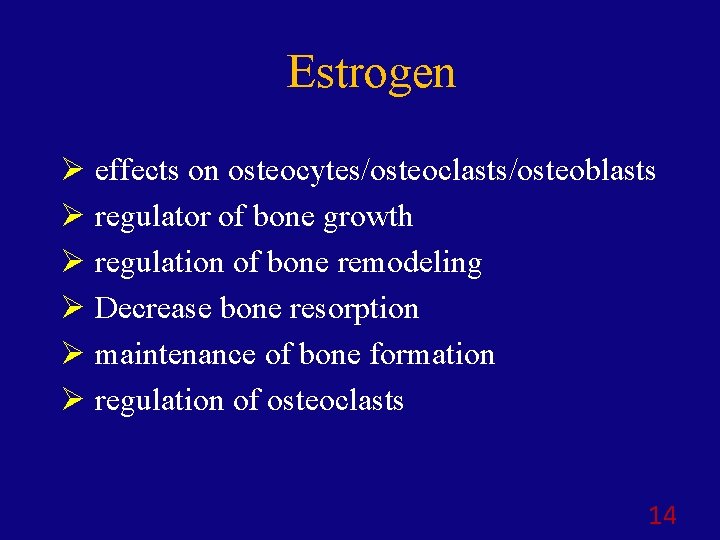
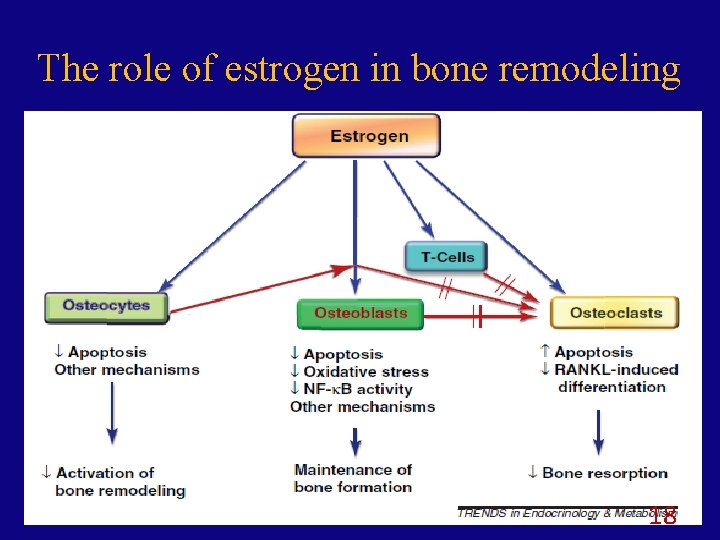
Estrogen Ø effects on osteocytes/osteoclasts/osteoblasts Ø regulator of bone growth Ø regulation of bone remodeling Ø Decrease bone resorption Ø maintenance of bone formation Ø regulation of osteoclasts 14
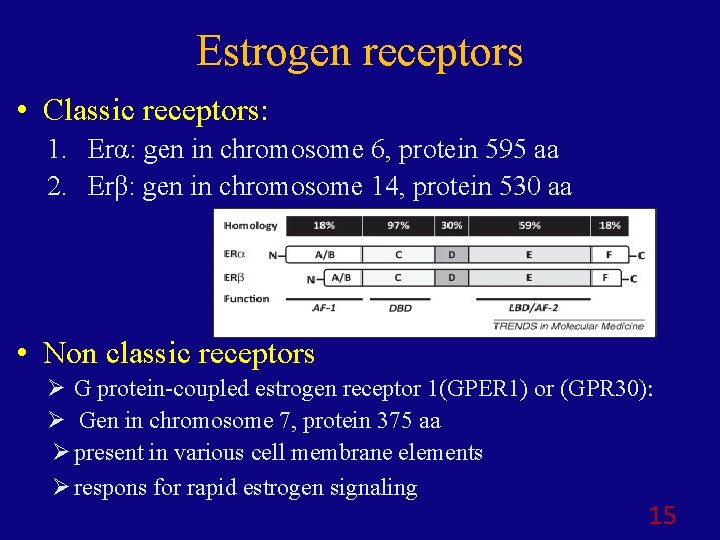
Estrogen receptors • Classic receptors: 1. Erα: gen in chromosome 6, protein 595 aa 2. Erβ: gen in chromosome 14, protein 530 aa • Non classic receptors Ø G protein-coupled estrogen receptor 1(GPER 1) or (GPR 30): Ø Gen in chromosome 7, protein 375 aa Ø present in various cell membrane elements Ø respons for rapid estrogen signaling 15
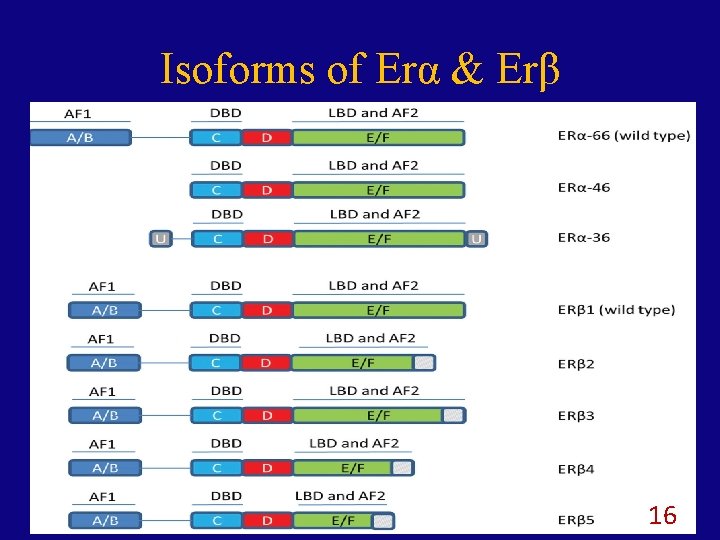
Isoforms of Erα & Erβ 16
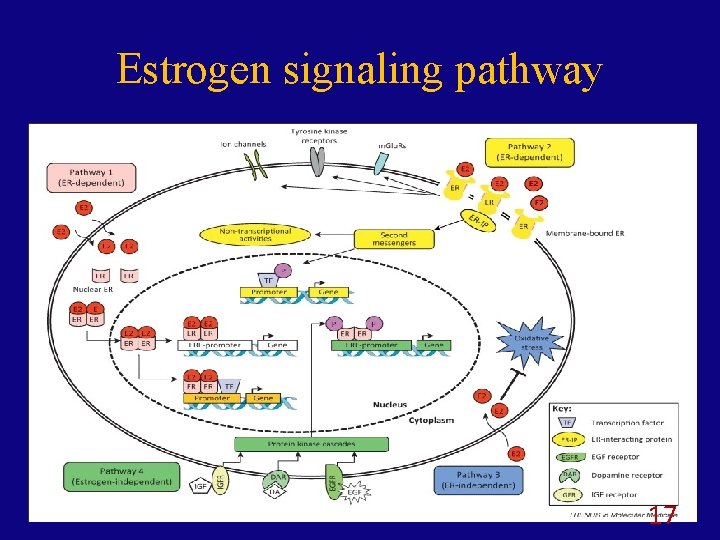
Estrogen signaling pathway 17
The role of estrogen in bone remodeling 18
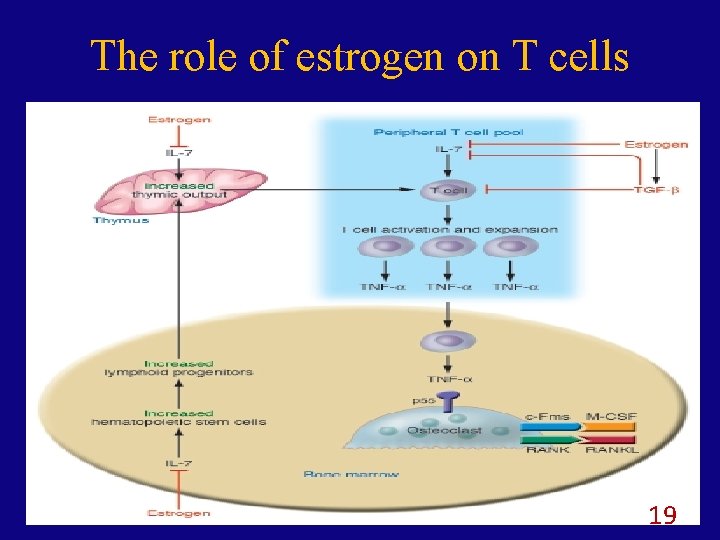
The role of estrogen on T cells 19
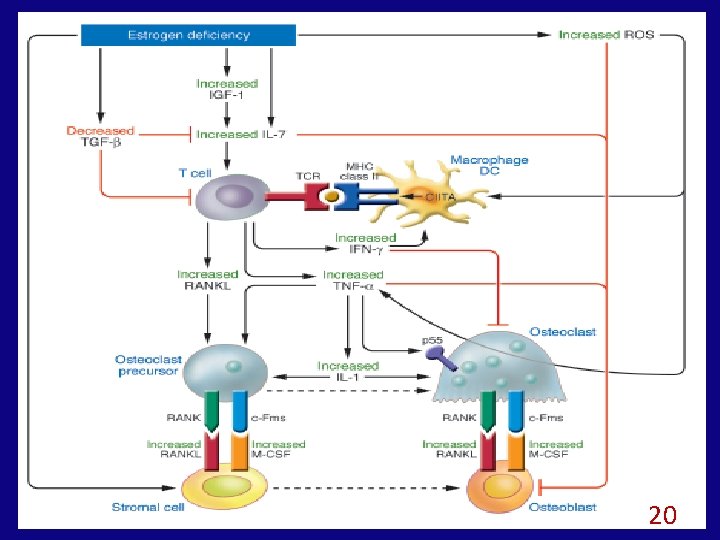
20
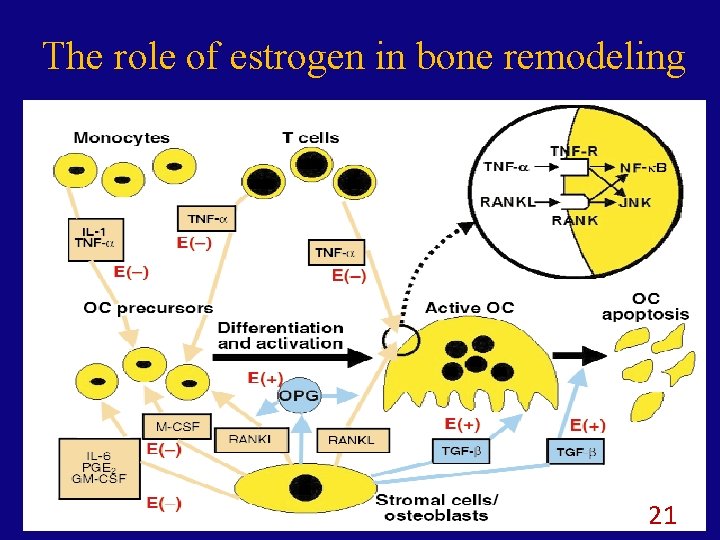
The role of estrogen in bone remodeling 21
Health bone & osteoporosis 22
Bone formation and age 23
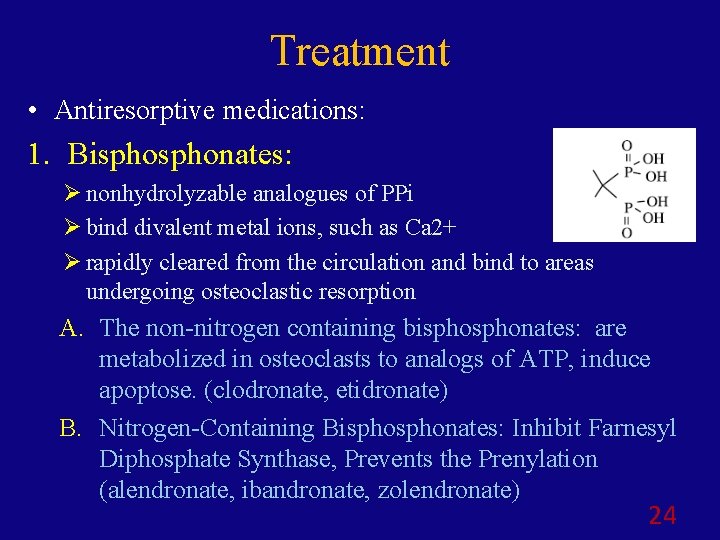
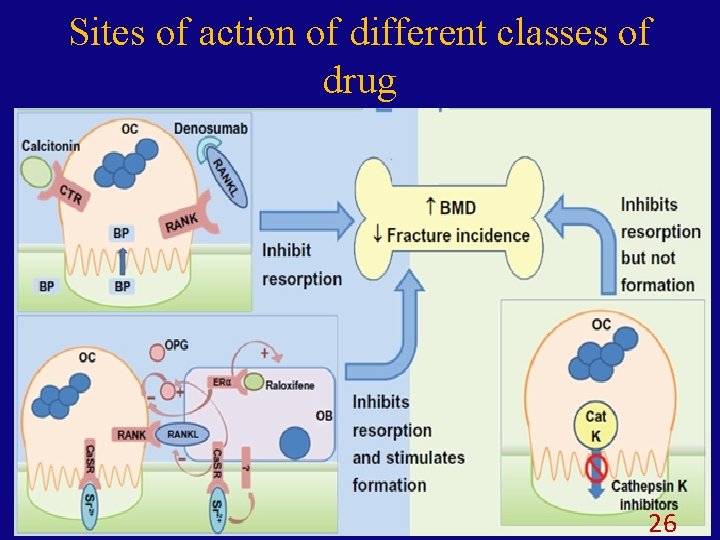
Treatment • Antiresorptive medications: 1. Bisphonates: Ø nonhydrolyzable analogues of PPi Ø bind divalent metal ions, such as Ca 2+ Ø rapidly cleared from the circulation and bind to areas undergoing osteoclastic resorption A. The non-nitrogen containing bisphonates: are metabolized in osteoclasts to analogs of ATP, induce apoptose. (clodronate, etidronate) B. Nitrogen-Containing Bisphonates: Inhibit Farnesyl Diphosphate Synthase, Prevents the Prenylation (alendronate, ibandronate, zolendronate) 24
Treatment 2. Denosumab ØHuman monoclonal antibody ØAgainst RANKL 3. selective estrogen receptor modulators(SERM) (Act as agonist/antagonist of estrogen) Øchemical structure Ørelative level of corepressors and coactivators Øtype of ER-dependent regulatory sequences; ERE or other transcription factor binding sites. ØERα/ERβ ratio varies between tissues 25
Sites of action of different classes of drug 26
Reference • Khosla S, Jo Oursler M, G. Monroe D. Estrogen and the skeleton. Trends in Endocrinology and Metabolism. 2012; 23(11): 576 -581. • Weitzmann M. N, Pacifici R. Estrogen deficiency and bone loss: an inflammatory tale. J. Clin. Invest. 2006; 116: 1186– 1194. • Vrtacniv P, Ostanek B, Mencej-Bedrac S, Marc J. The many faces of estrogen signaling. Biochemia Medica 2014; 24(3): 329– 42. • Cui J, Shen Y, and Li R. Estrogen synthesis and signaling pathways during aging: from periphery to brain. Trends in Molecular Medicine. 2013; 19(3): 197 -209. • Manolagas S. C, Obrien CH. A. and Almeida M. The role of estrogen androgen receptors in bone health and disease. Nat. Rev. Endocrinol. 2013; 9: 699– 712. 27
Reference • Singh D, Sanyal s, and Chattopadhyay N. The role of estrogen in bone growth and formation: changes at puberty. Cell Health and Cytoskeleton. 2011; 3: 1– 12 • Galea G, Price J, Lanyon L. Estrogen receptors’ roles in the control of mechanically adaptive bone (re)modeling. Nature(Bone. KEy Reports 2). 2013; 413: 1 -7. • Roelofs AJ, Thompson k, Gordon SH, et al. Molecular Mechanisms of Action of Bisphonates: Current Status. Clin Cancer Res. 2006; 12: 6222 s-6230 s. • Das S and Crockett JC. Osteoporosis – a current view of pharmacological prevention and treatment. Drug Design, Development and Therapy. 2013; 7: 435– 448 28
than ks 29