
1 The Question 1 2 3 4 5
- Slides: 7
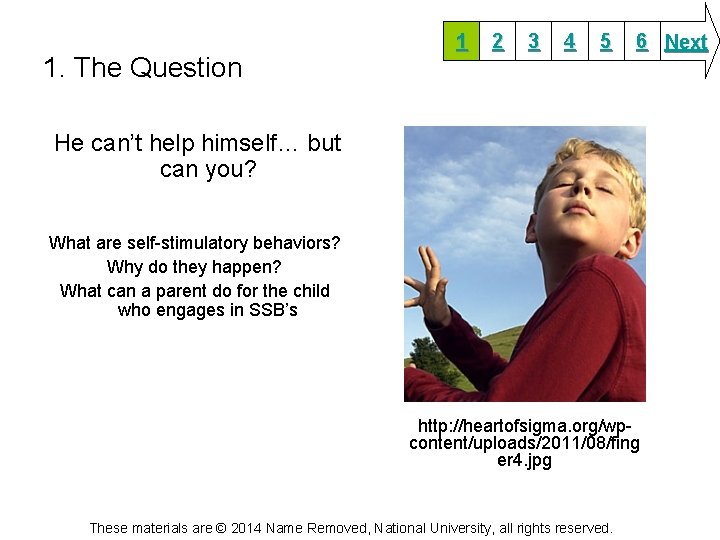
1. The Question 1 2 3 4 5 6 Next He can’t help himself… but can you? What are self-stimulatory behaviors? Why do they happen? What can a parent do for the child who engages in SSB’s http: //heartofsigma. org/wpcontent/uploads/2011/08/fing er 4. jpg These materials are © 2014 Name Removed, National University, all rights reserved.
2. Information Sources 1 2 3 4 5 The Autism Research Institute offers information on questions such as those. Find info under “Symptoms and Behavior” and “Treating Autism” SSB’s are almost always a symptom of Autism, and exist to help their brain organize sensory input. While the function of these behaviors is something desirable, the way in which it is displayed may not be “socially acceptable” or pleasant to the people around them. Additionally, sometimes SSB’s can become self-injurious. Autism. com These materials are © 2014 Name Removed, National University, all rights reserved. 6 Next
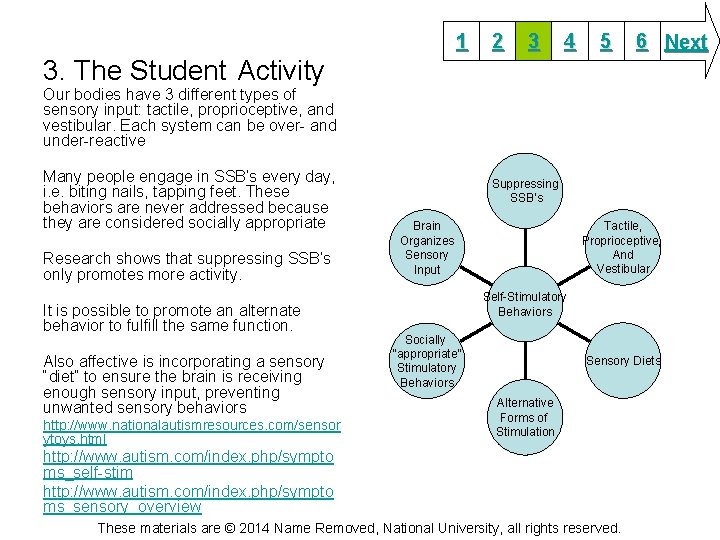
1 2 3 4 5 6 Next 3. The Student Activity Our bodies have 3 different types of sensory input: tactile, proprioceptive, and vestibular. Each system can be over- and under-reactive Many people engage in SSB’s every day, i. e. biting nails, tapping feet. These behaviors are never addressed because they are considered socially appropriate Research shows that suppressing SSB’s only promotes more activity. It is possible to promote an alternate behavior to fulfill the same function. Also affective is incorporating a sensory “diet” to ensure the brain is receiving enough sensory input, preventing unwanted sensory behaviors http: //www. nationalautismresources. com/sensor ytoys. html Suppressing SSB’s Tactile, Proprioceptive, And Vestibular Brain Organizes Sensory Input Self-Stimulatory Behaviors Socially “appropriate” Stimulatory Behaviors Sensory Diets Alternative Forms of Stimulation http: //www. autism. com/index. php/sympto ms_self-stim http: //www. autism. com/index. php/sympto ms_sensory_overview These materials are © 2014 Name Removed, National University, all rights reserved.
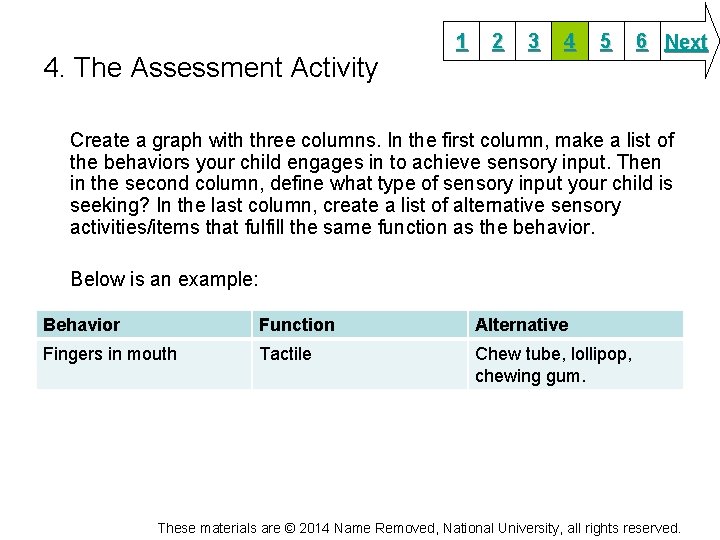
4. The Assessment Activity 1 2 3 4 5 6 Next Create a graph with three columns. In the first column, make a list of the behaviors your child engages in to achieve sensory input. Then in the second column, define what type of sensory input your child is seeking? In the last column, create a list of alternative sensory activities/items that fulfill the same function as the behavior. Below is an example: Behavior Function Alternative Fingers in mouth Tactile Chew tube, lollipop, chewing gum. These materials are © 2014 Name Removed, National University, all rights reserved.
5. Enrichment Activities 1 2 3 4 5 6 Next The following are excellent sites about: • • • Autism Research Institute: Autism and sensory Integration National Autism Resources: Sensory toys Autism Speaks: Parental Support Autism Research Journal: Research SPD Foundation: Sensory Activities for the home These materials are © 2014 Name Removed, National University, all rights reserved.
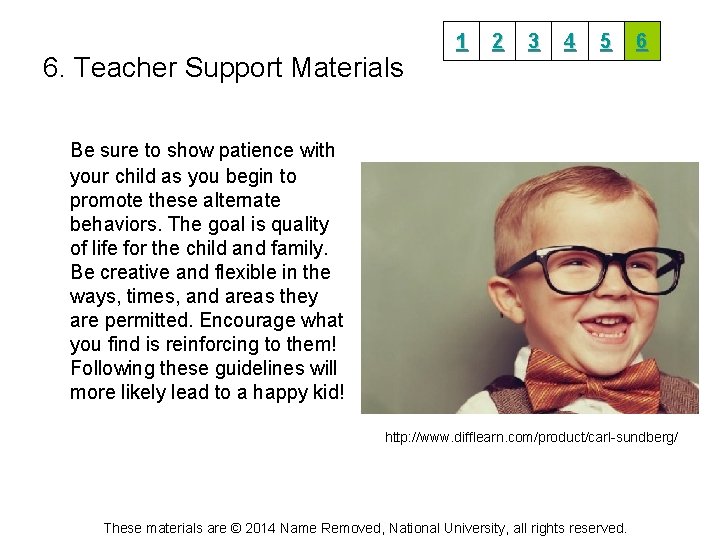
6. Teacher Support Materials 1 2 3 4 5 6 Be sure to show patience with your child as you begin to promote these alternate behaviors. The goal is quality of life for the child and family. Be creative and flexible in the ways, times, and areas they are permitted. Encourage what you find is reinforcing to them! Following these guidelines will more likely lead to a happy kid! http: //www. difflearn. com/product/carl-sundberg/ These materials are © 2014 Name Removed, National University, all rights reserved.
References • http: //www. autism. com/index. php/symptoms_se nsory_overview • http: //www. autism. com/index. php/symptoms_se nsory_king • http: //www. autism. com/index. php/symptoms_self -stim