
1 The Presidents Roles Chief of State Chief







- Slides: 23
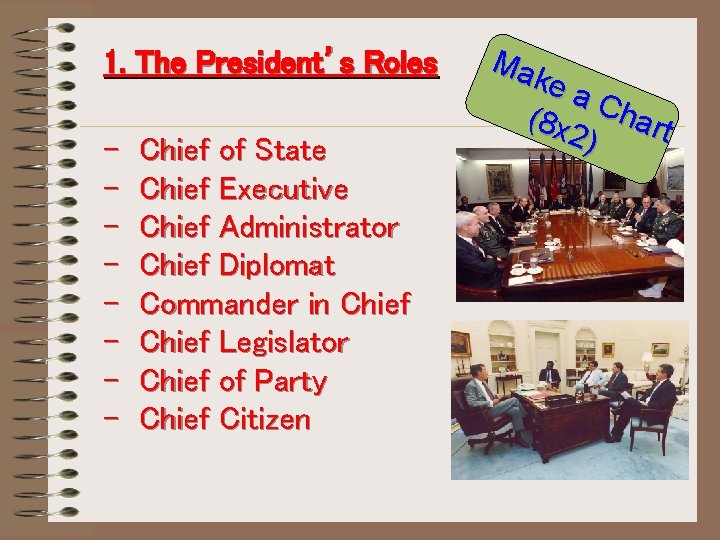
1. The President’s Roles - Chief of State Chief Executive Chief Administrator Chief Diplomat Commander in Chief Legislator Chief of Party Chief Citizen Ma ke a. C har (8 x t 2)
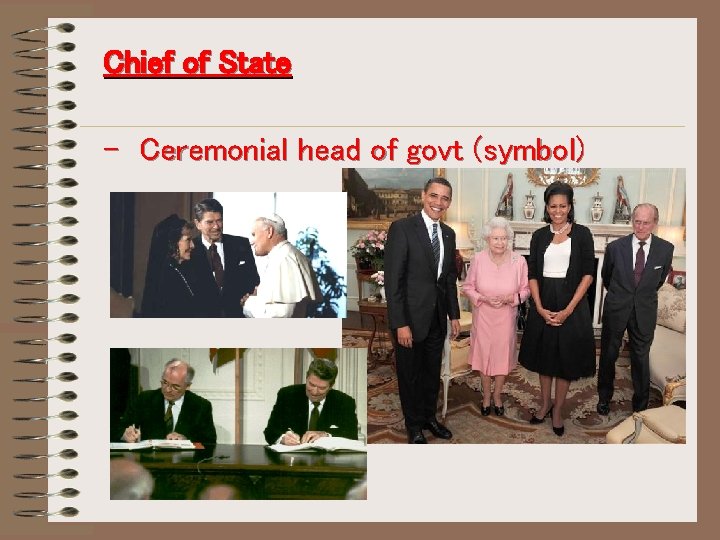
Chief of State - Ceremonial head of govt (symbol)
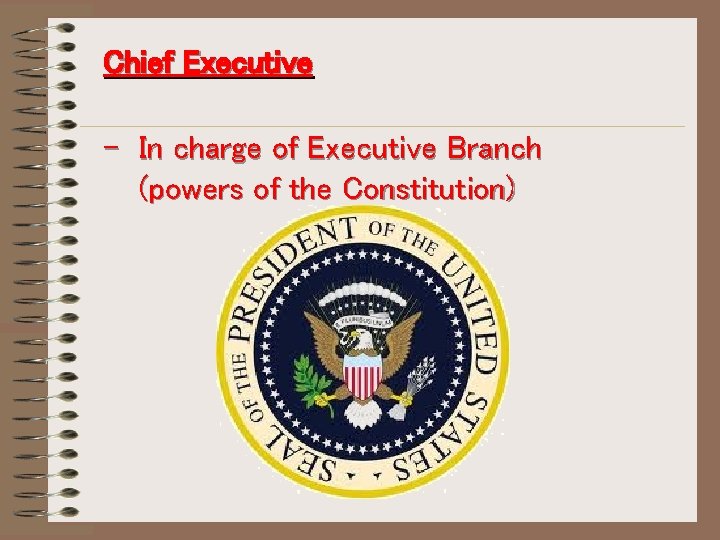
Chief Executive - In charge of Executive Branch (powers of the Constitution)
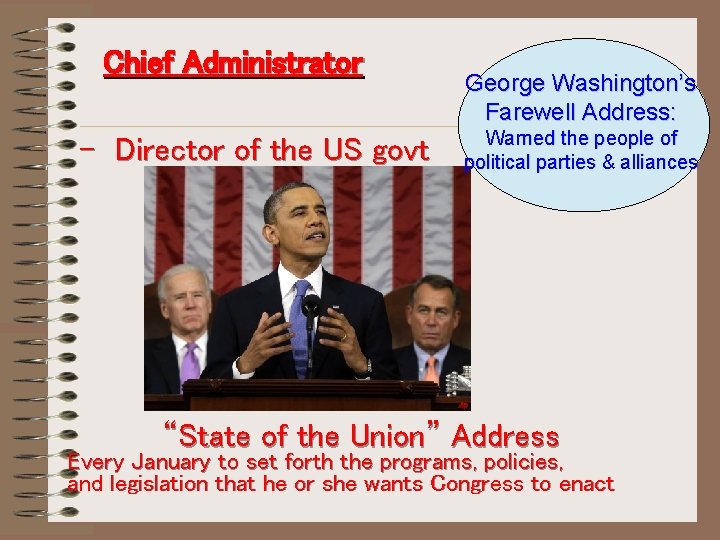
Chief Administrator - Director of the US govt George Washington’s Farewell Address: Warned the people of political parties & alliances “State of the Union” Address Every January to set forth the programs, policies, and legislation that he or she wants Congress to enact
State of the Union in 2 minutes! http: //www. bloomberg. com/news/videos/2015 -01 -21/obama-s-2015 -state-ofthe-union-in-two-minutes
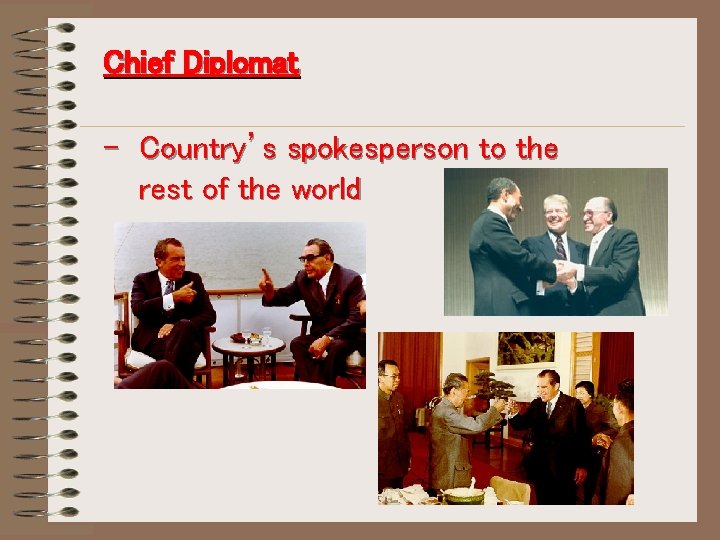
Chief Diplomat - Country’s spokesperson to the rest of the world
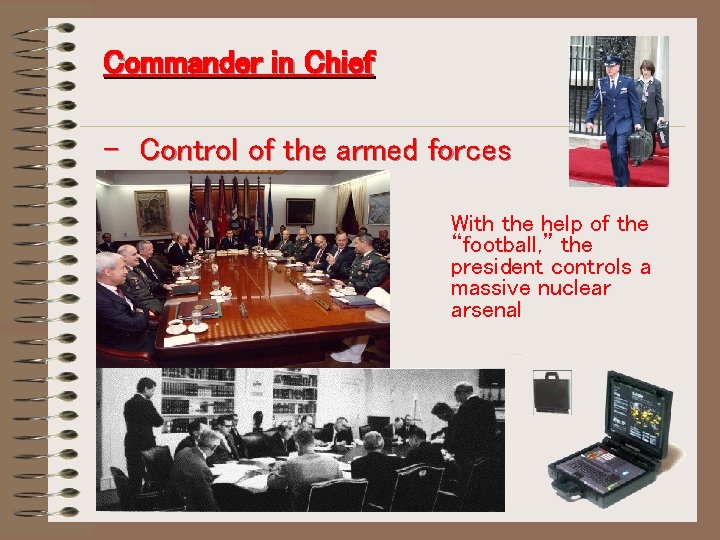
Commander in Chief - Control of the armed forces With the help of the “football, ” the president controls a massive nuclear arsenal
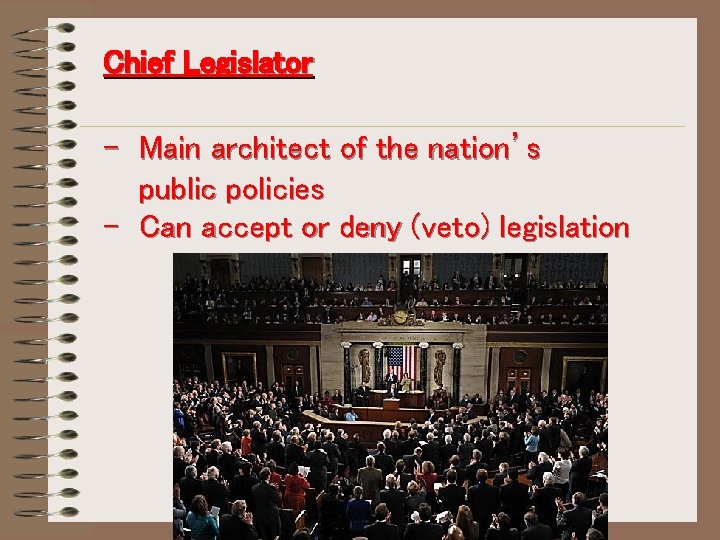
Chief Legislator - Main architect of the nation’s public policies - Can accept or deny (veto) legislation
Chief of the Party - Leader of their political party
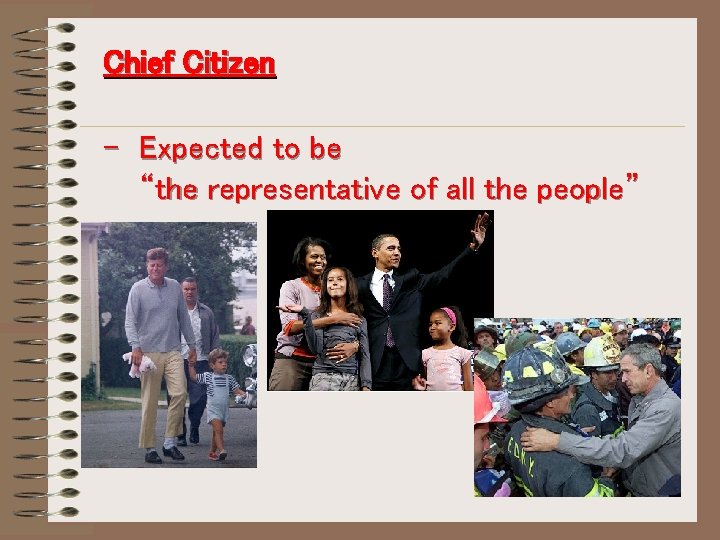
Chief Citizen - Expected to be “the representative of all the people”
2. Qualifications for President Be “a natural born citizen. ” Be at least 35 years of age Have lived in the US for at least 14 years Informal qualifications below Tradition / Unwritten Requirements: - Historically …. Male White (all but one) Protestant (all but one) Most have gone to college Most from well to do families in large states
3. President’s Term - Precedent / tradition of two terms FDR served 4 terms 22 nd Amendment (1947)= Limitation of 2 terms or a total of 10 years
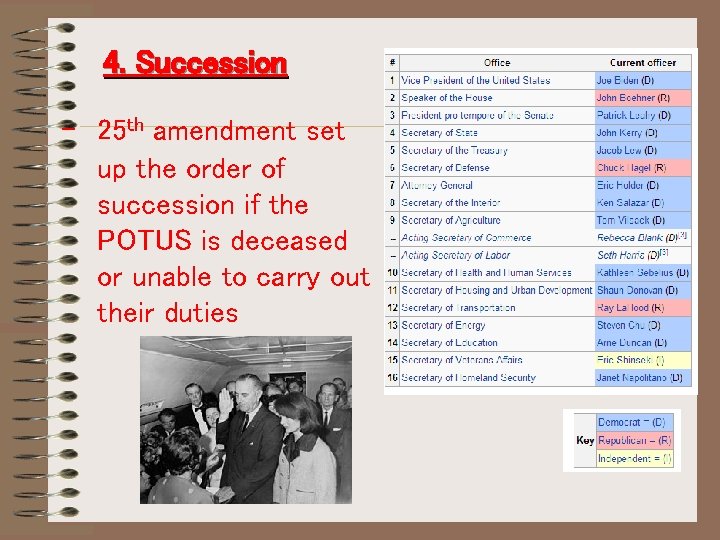
4. Succession - 25 th amendment set up the order of succession if the POTUS is deceased or unable to carry out their duties
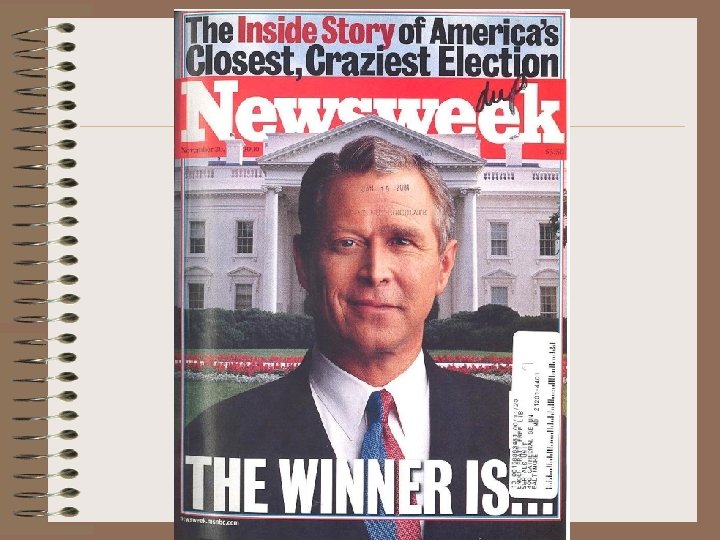
5. Electoral College - Winner takes all system - 1. ) win the popular vote of a state & get all the electoral points from that state - 2. ) # of points from states = # of HOR & # of Senators - 3. ) need 270 points to win the presidency - **Issues: Bush v. Gore 2000 - Can win the popular vote of the nation but not the electoral - If no one wins the majority of the electoral college the decision goes to the HOR
http: //www. cnn. com/election/2012/ecalculator#? battleground http: //www. youtube. com/watch? v=W 9 H 3 gvn. N 468
6. Removal of a President - Impeachment - Step 1: The HOR investigates & drafts articles of impeachment for “high crimes or misdemeanors” - Step 2: The Senate tries the case. - 2/3 rds Senate vote of guilty = removal
- Only 2 presidents have been impeached: - Andrew Johnson & Bill Clinton (neither removed) - What about Nixon? ? d e h Im p c a e d e h Quit Im c a pe
Checks & Balances: Executive Branch • Executive Legislative • Veto laws • Can propose laws • Can call special sessions of Congress • Negotiates foreign treaties • Executive Judicial • Nominates judges • Can grant pardons to federal offenders
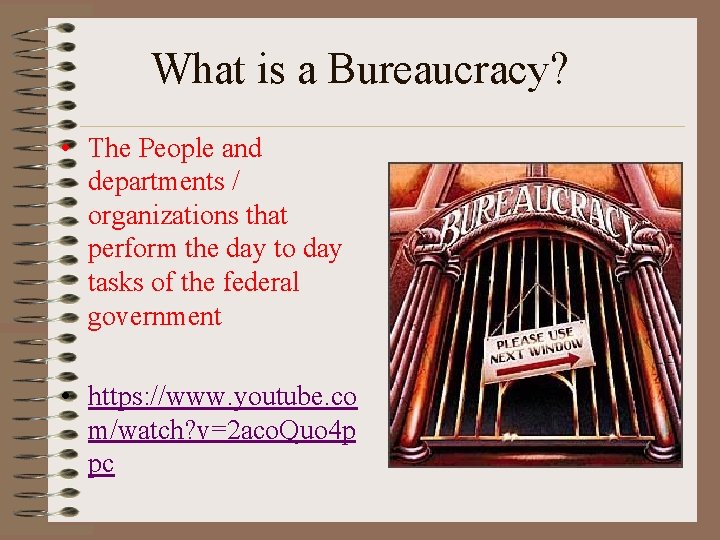
What is a Bureaucracy? • The People and departments / organizations that perform the day to day tasks of the federal government • https: //www. youtube. co m/watch? v=2 aco. Quo 4 p pc
Department of Homeland Security