
1 The norwegian economy A short story about
1 The norwegian economy A short story about equality, trust and natural resources Joakim Prestmo Reseach department, Statistics Norway 1
Outline • Where do we stand to day? • How did we get there? • Some important aspects of the Norwegian economy • Economic trends in Norway and internationally 2
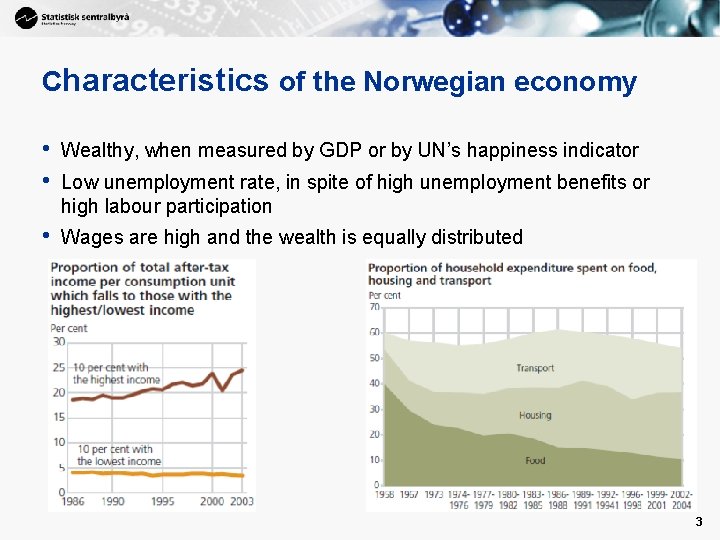
Characteristics of the Norwegian economy • • Wealthy, when measured by GDP or by UN’s happiness indicator • Wages are high and the wealth is equally distributed Low unemployment rate, in spite of high unemployment benefits or high labour participation 3
Success factors for the rapid economic growth • Resource endowment • Collaboration, trust and equality • Knowledge and technology • Coordinated market economy • The lucky element → This has given us high productivity and wage growth For an in-depth study – Larsen, Erling Røed (2001): “The Norwegian Economy 1900 – 2000: From Rags to Riches”, Economic Survey 4/01. 22 -37 4
Resources • Climate and geography – Mountains, rivers and Gulf stream – Electricity – The fjords and fertile soil – fish, timber and meat • Oil – Increasing oil prices in the sixties and seventies made it possible to exploit oil from the North Sea. 5
Collaboration, trust and equality • Success by working together – Centralized wage bargaining (LO – NHO) – Sharing profits (wage differential, sponsorship, bonus schemes) – “Protestant work ethic” – its expected that individuals should do its duty • Equality between gender and individuals – Same opportunities – Female labour w Increasing labour force and improving equality • High degree of trust – We have great trust in each other w You are expected to keep your promises w Fewer contracts or law suits 6
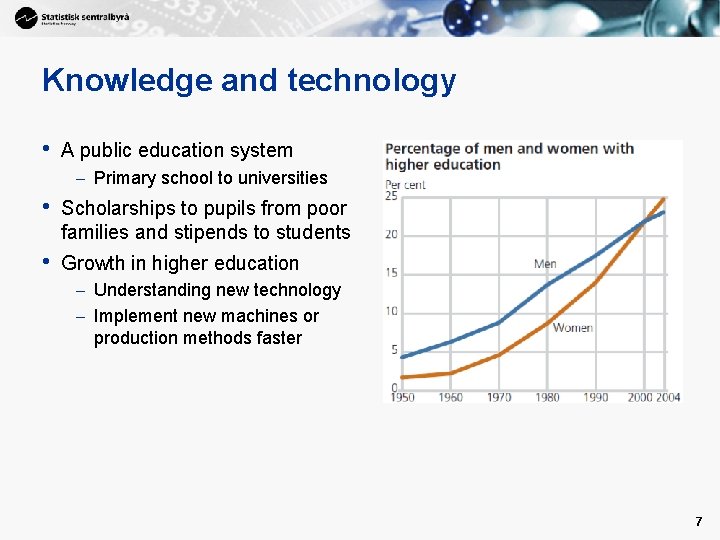
Knowledge and technology • A public education system – Primary school to universities • Scholarships to pupils from poor families and stipends to students • Growth in higher education – Understanding new technology – Implement new machines or production methods faster 7
Politics and its influence on growth • Government intervene in most part of the economy – Large bureaucracy – Public corporations w Important parts of the economy: Infrastructure, Oil, electricity, telecom, transport, w New technology: Innovation centres (green tech, export) w Important for the equality: Educational system, health care • Taxes and subsidies – Tax things you dislike (tobacco etc) – Subsidy thing you like (new tech, green tech, fish farms etc) 8
Lucky? • Nice and friendly neighbours – Industrial countries, peaceful and similar culture and language • Rich neighbours • Resource endowment – Agriculture and black gold • No long standing conflicts or disruptions 9
How is it today? • Scandinavian Welfare model • Oil rent and fiscal policy guidelines • Economic activity 10
The Scandinavian Welfare Model • Social security net – Public disability insurance – Social security benefits – High unemployment benefits w If you fulfil some criteria's you get 60 percent of your wage, if you get unemployed • • Public health insurance Birth leave – Woman's can choose between 43 weeks full paid or 53 weeks with 80 percent pay – Also birth leave for men. Five of these weeks are reserved males • Free education (includes universities) 11
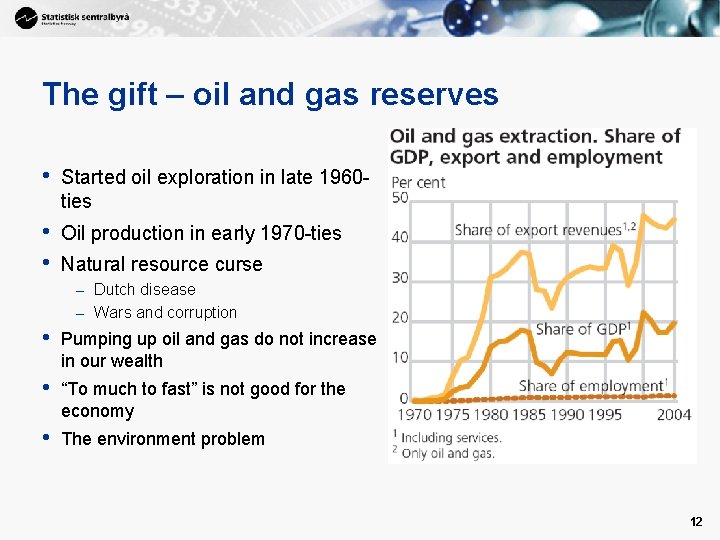
The gift – oil and gas reserves • Started oil exploration in late 1960 ties • • Oil production in early 1970 -ties Natural resource curse – Dutch disease – Wars and corruption • Pumping up oil and gas do not increase in our wealth • “To much to fast” is not good for the economy • The environment problem 12
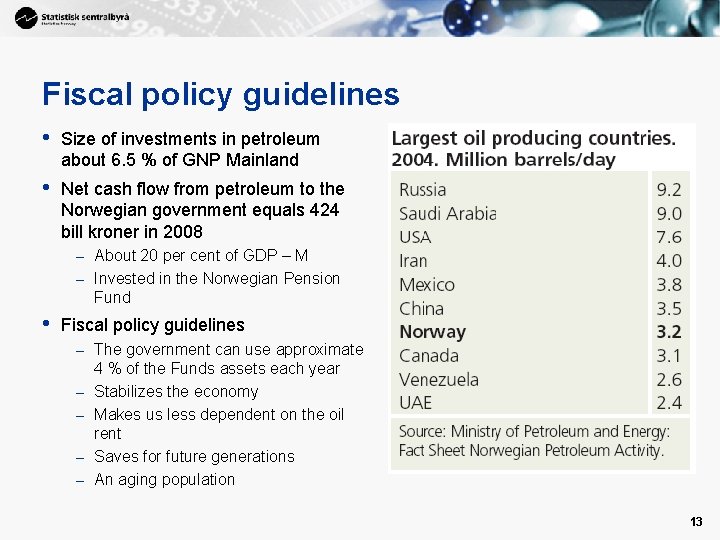
Fiscal policy guidelines • Size of investments in petroleum about 6. 5 % of GNP Mainland • Net cash flow from petroleum to the Norwegian government equals 424 bill kroner in 2008 – About 20 per cent of GDP – M – Invested in the Norwegian Pension Fund • Fiscal policy guidelines – The government can use approximate – – 4 % of the Funds assets each year Stabilizes the economy Makes us less dependent on the oil rent Saves for future generations An aging population 13
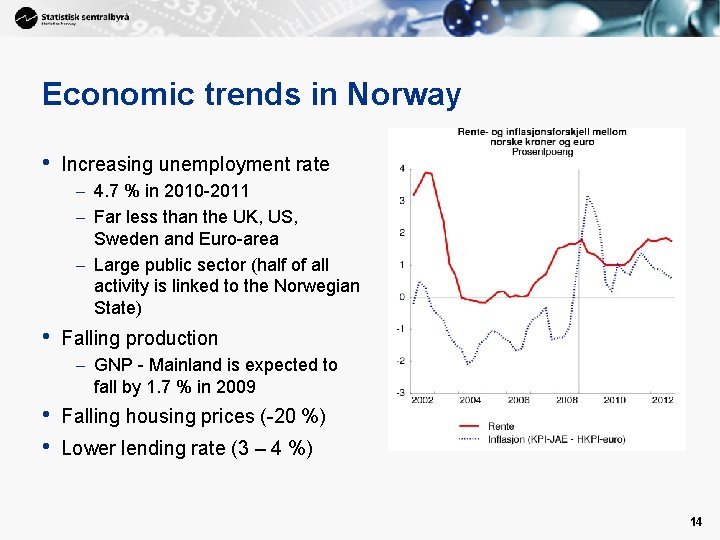
Economic trends in Norway • Increasing unemployment rate – 4. 7 % in 2010 -2011 – Far less than the UK, US, Sweden and Euro-area – Large public sector (half of all activity is linked to the Norwegian State) • Falling production – GNP - Mainland is expected to fall by 1. 7 % in 2009 • • Falling housing prices (-20 %) Lower lending rate (3 – 4 %) 14
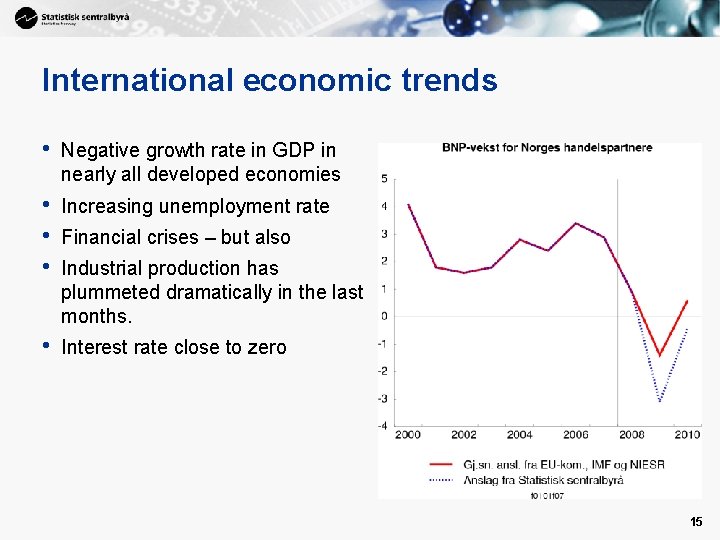
International economic trends • Negative growth rate in GDP in nearly all developed economies • • • Increasing unemployment rate • Interest rate close to zero Financial crises – but also Industrial production has plummeted dramatically in the last months. 15
- Slides: 15