
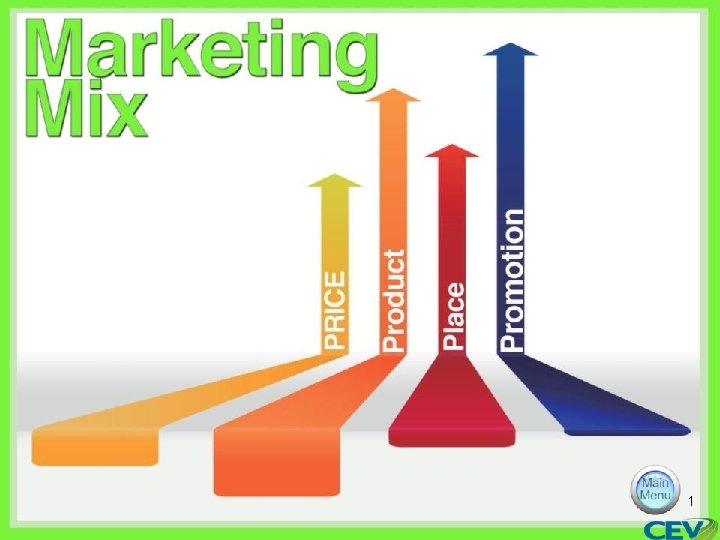
1 The Marketing Mix Defines the key management
- Slides: 32
1
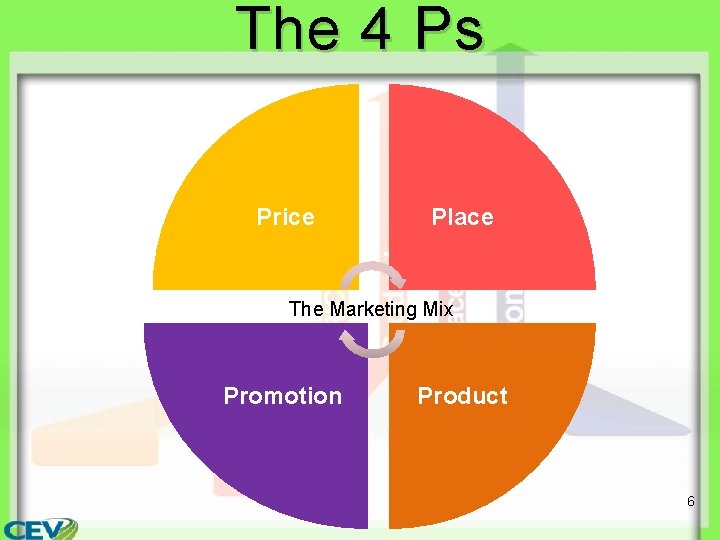
The Marketing Mix • Defines the key management decisions needed to be successful in marketing • Includes four basic marketing strategies, known as the “ 4 Ps” – price – product – place – promotion 2
The Marketing Mix • Must be customer driven • Should relate directly to a company’s target market • Includes four interrelated concepts and tactics • Refers to the variables a company can control 3
“The Mix” • Represents the idea that four significant marketing concepts (the 4 Ps) must be strategically coordinated and work together in order to create cohesive business decisions Business Buzz: The “marketing mix” concept was first developed by Neil H. Borden in 1964 after he published an article describing the role of marketing as a “mixer of ingredients” 4
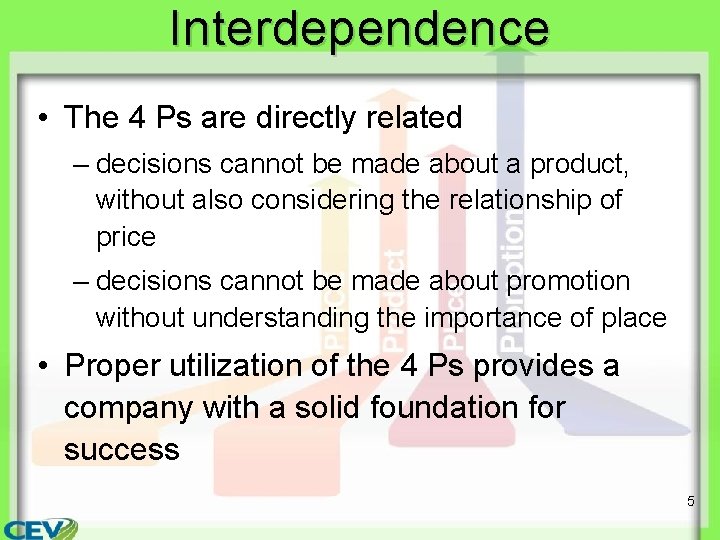
Interdependence • The 4 Ps are directly related – decisions cannot be made about a product, without also considering the relationship of price – decisions cannot be made about promotion without understanding the importance of place • Proper utilization of the 4 Ps provides a company with a solid foundation for success 5
The 4 Ps Price Place The Marketing Mix Promotion Product 6
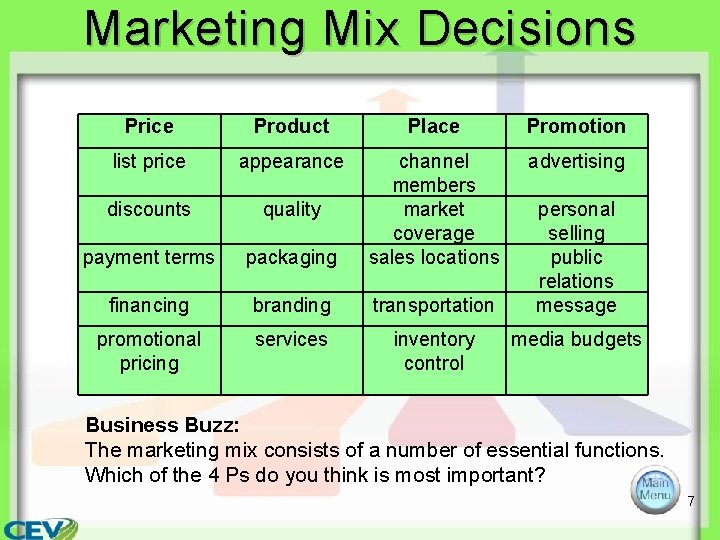
Marketing Mix Decisions Price Product Place Promotion list price appearance advertising discounts quality payment terms packaging channel members market coverage sales locations financing branding transportation promotional pricing services inventory control personal selling public relations message media budgets Business Buzz: The marketing mix consists of a number of essential functions. Which of the 4 Ps do you think is most important? 7
8
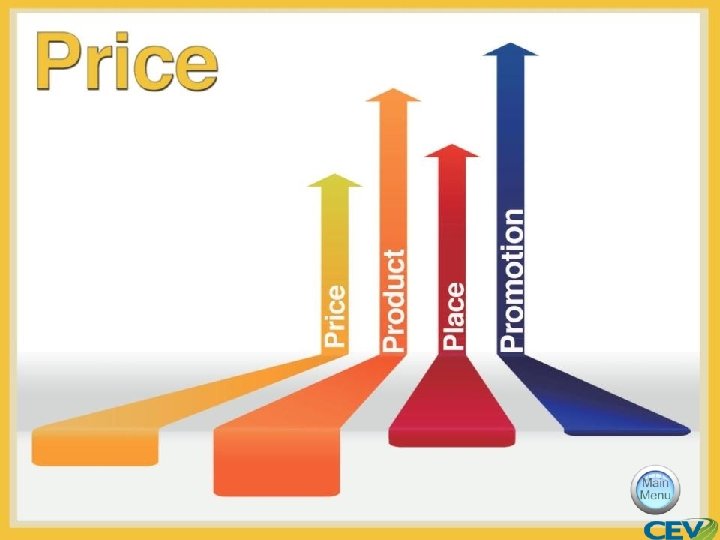
Price • Includes a wide range of functions and strategies, including: – creating a sales price or price list – calculating mark-up percentage – using promotional pricing techniques – understanding pricing laws and discrimination – determining discounts, credit terms and available payment methods, such as: § cash and credit options § credit card machines § financing and payment plans 9
Basic Pricing Decisions • • • Determining a suggested retail price Implementing a pricing strategy Creating volume discounts Generating seasonal pricing Producing bundle prices 10
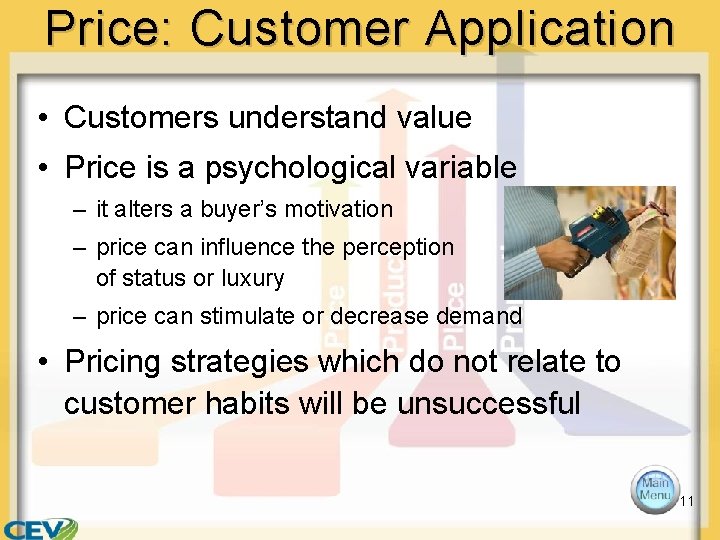
Price: Customer Application • Customers understand value • Price is a psychological variable – it alters a buyer’s motivation – price can influence the perception of status or luxury – price can stimulate or decrease demand • Pricing strategies which do not relate to customer habits will be unsuccessful 11
12
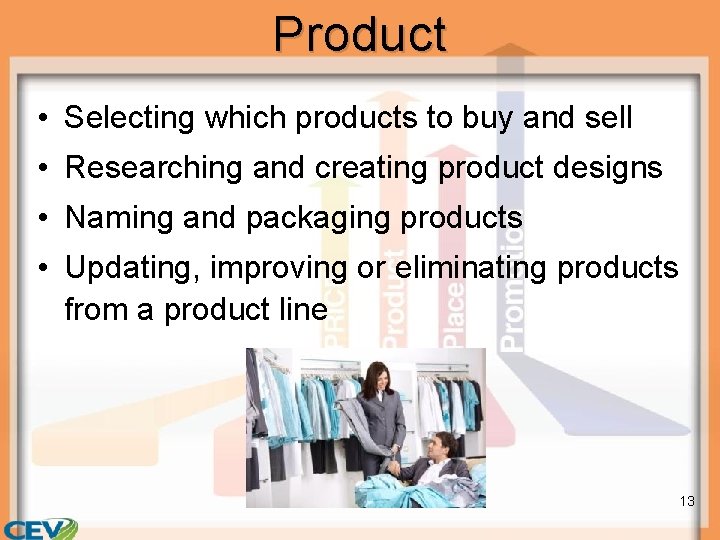
Product • Selecting which products to buy and sell • Researching and creating product designs • Naming and packaging products • Updating, improving or eliminating products from a product line 13
Product • Developing new uses or new target markets for a product • Examining the product life cycle • Adding features to an old product 14
Basic Product Decisions • • Brand or product name Styling Quality Safety Packaging Repairs and support Accessories and services 15
Product: Customer Application • Customers buy benefits – not products • Products must satisfy a customer want or need • Consumers are often heavily influenced by brand name or packaging • Extended services or warranties can create customer loyalty • New and improved products often have a high success rate 16
17
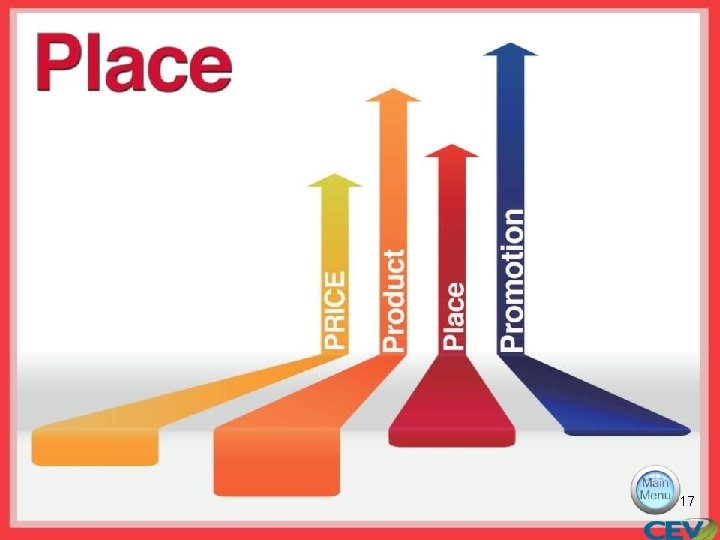
Place • Is also described as “distribution” • Refers to introduction of the product to consumers and determining appropriate transportation or delivery methods – using semi-trucks or airfreight carriers – utilizing intermediaries or wholesalers in the distribution process • Includes whether or not products should be sold online or internationally 18
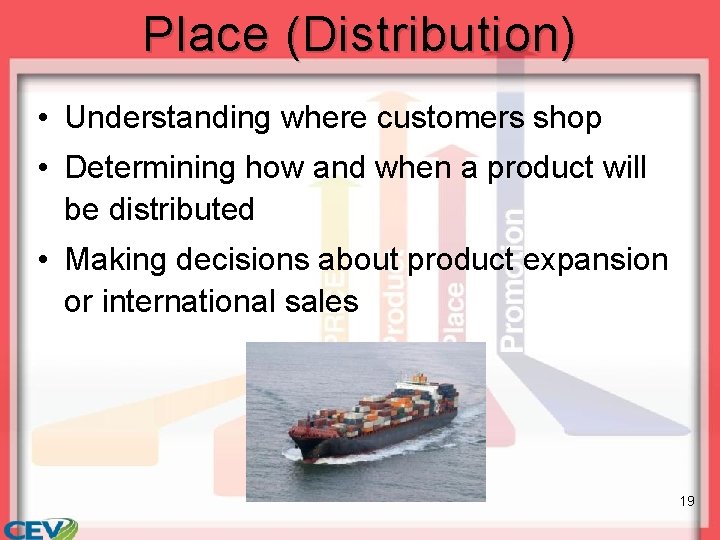
Place (Distribution) • Understanding where customers shop • Determining how and when a product will be distributed • Making decisions about product expansion or international sales 19
Place (Distribution) • Determining which retail outlets will carry specific products • Selecting the shelf space or display style which is most effective • Researching where a store should be located 20
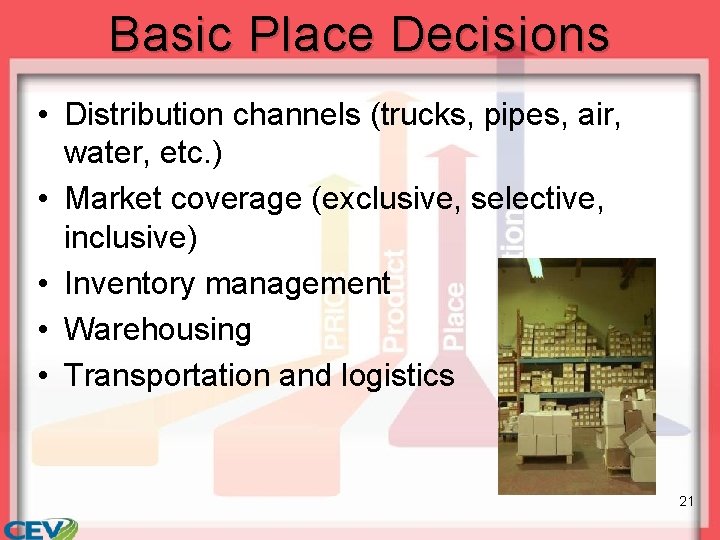
Basic Place Decisions • Distribution channels (trucks, pipes, air, water, etc. ) • Market coverage (exclusive, selective, inclusive) • Inventory management • Warehousing • Transportation and logistics 21
Place: Customer Application • Products should arrive on-time in order to meet customer needs • Inventory shortage may drive customers away • A store’s location may impact buying decisions • Some customers are prone to specific product outlets, such as the Internet 22
23
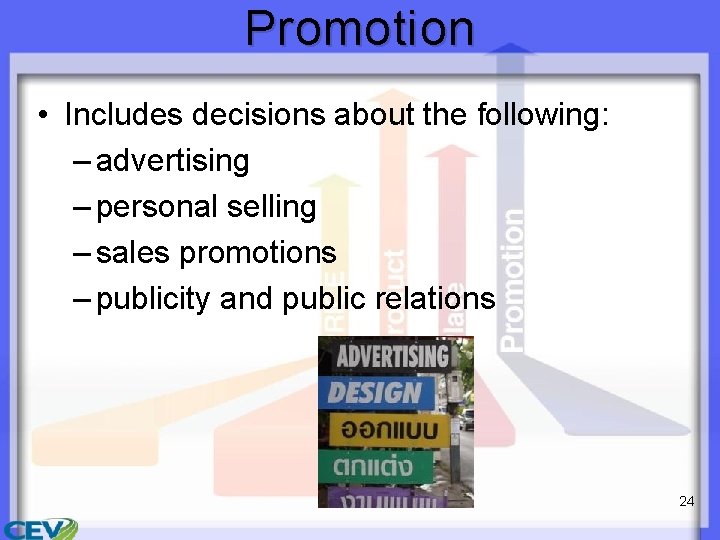
Promotion • Includes decisions about the following: – advertising – personal selling – sales promotions – publicity and public relations 24
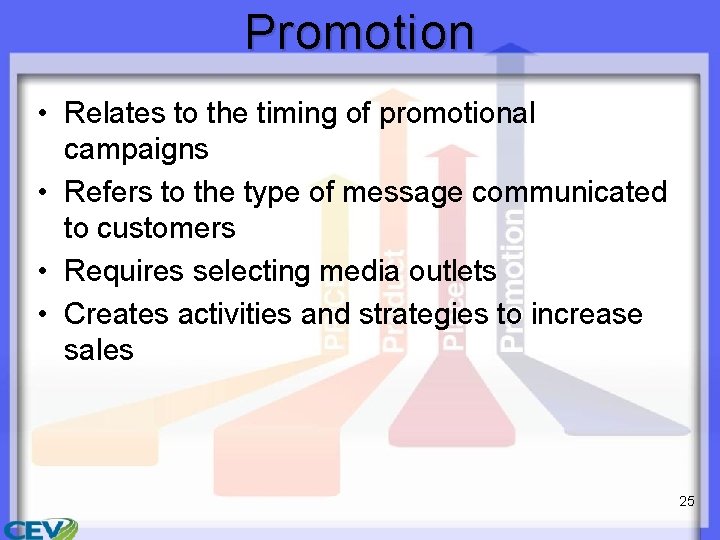
Promotion • Relates to the timing of promotional campaigns • Refers to the type of message communicated to customers • Requires selecting media outlets • Creates activities and strategies to increase sales 25
Basic Promotion Decisions • Selecting advertising media • Creating personal sales force tactics • Designing sales promotions and special offers • Maintaining effective media and public relations • Establishing a marketing communication budget 26
Promotion: Customer Application • Brand awareness is the first step toward product sales • Public relations and advertising have a direct impact on customer loyalty • Promotion stimulates a need and desire to buy • Special offers or campaigns often yield higher sales results 27
28
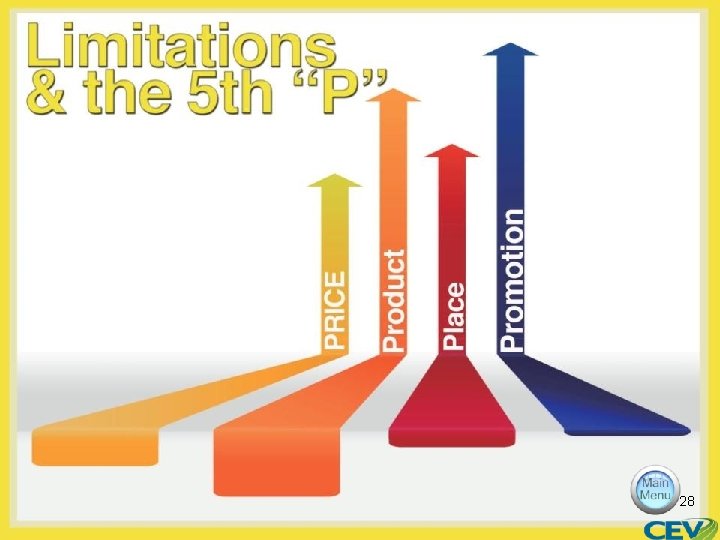
Limitations of the 4 Ps • The marketing mix specifically applies to companies with physical products and often limits Internet and service-based organizations • By grouping marketing decisions into four broad categories, it is difficult to distinguish between specific activities such as financing, branding, shipping, etc. • Some industry professionals have attempted to expand the concept by 29 adding a “fifth P”
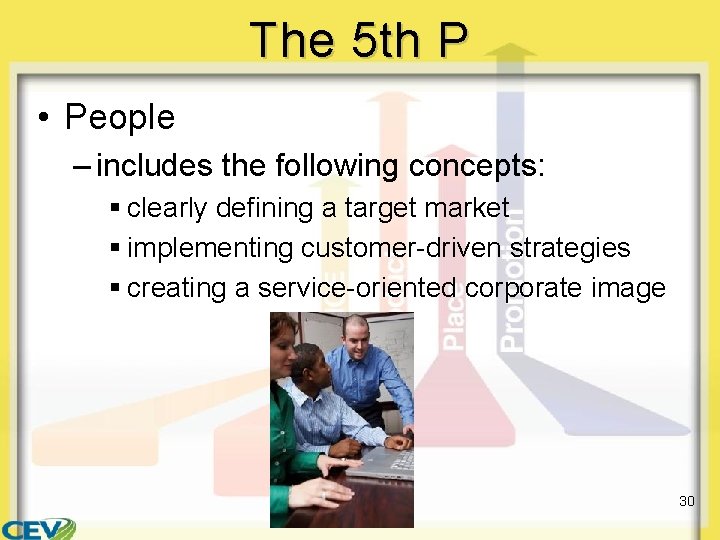
The 5 th P • People – includes the following concepts: § clearly defining a target market § implementing customer-driven strategies § creating a service-oriented corporate image 30
Impact of the 5 th P • People determine a company’s level of success • Customers often provide helpful and needed suggestions • Word-of-mouth is the most powerful form of buying suggestion • Directing decisions toward the right market is critical 31
Importance of the Internet • Marketing mix decisions may directly relate to a company’s online presence • Leveraging full power of the Internet may be a key business strategy • The Internet can be used to change, optimize and enhance marketing strategies • Online services can be easily adapted to meet changing trends 32