
1 The Greek Letters Lecture 6 2 Example
- Slides: 20
1 The Greek Letters Lecture 6
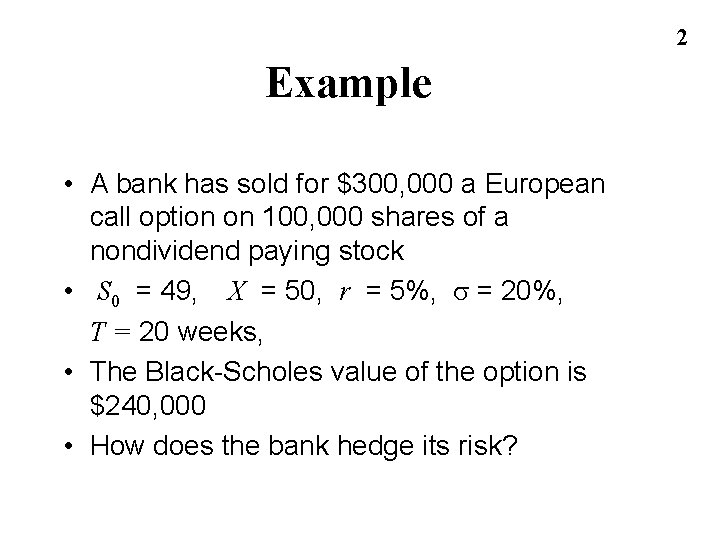
2 Example • A bank has sold for $300, 000 a European call option on 100, 000 shares of a nondividend paying stock • S 0 = 49, X = 50, r = 5%, s = 20%, T = 20 weeks, • The Black-Scholes value of the option is $240, 000 • How does the bank hedge its risk?
Naked & Covered Positions Naked position Take no action Covered position Buy 100, 000 shares today Both strategies leave the bank exposed to significant risk 3
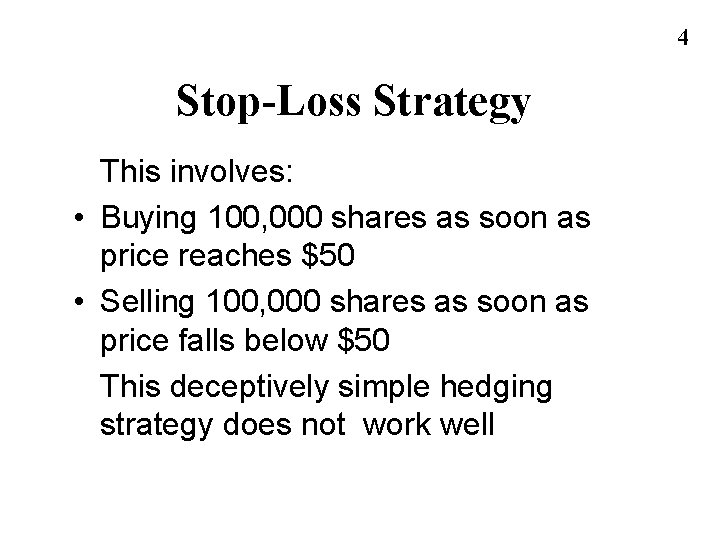
4 Stop-Loss Strategy This involves: • Buying 100, 000 shares as soon as price reaches $50 • Selling 100, 000 shares as soon as price falls below $50 This deceptively simple hedging strategy does not work well
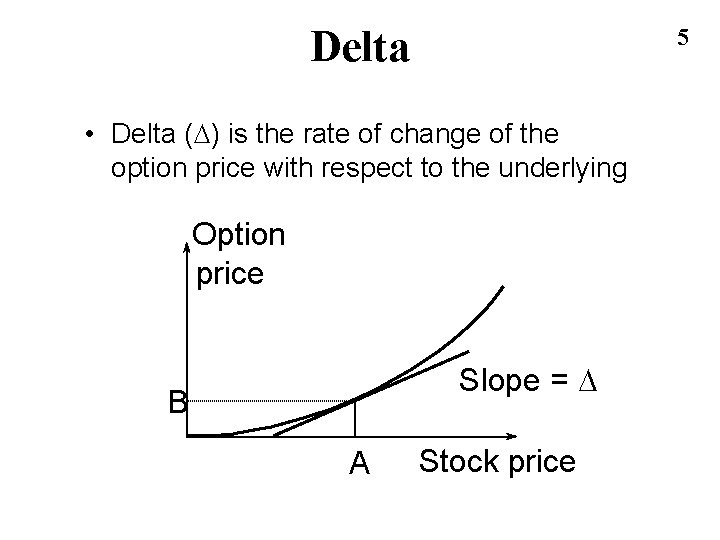
Delta 5 • Delta (D) is the rate of change of the option price with respect to the underlying Option price Slope = D B A Stock price
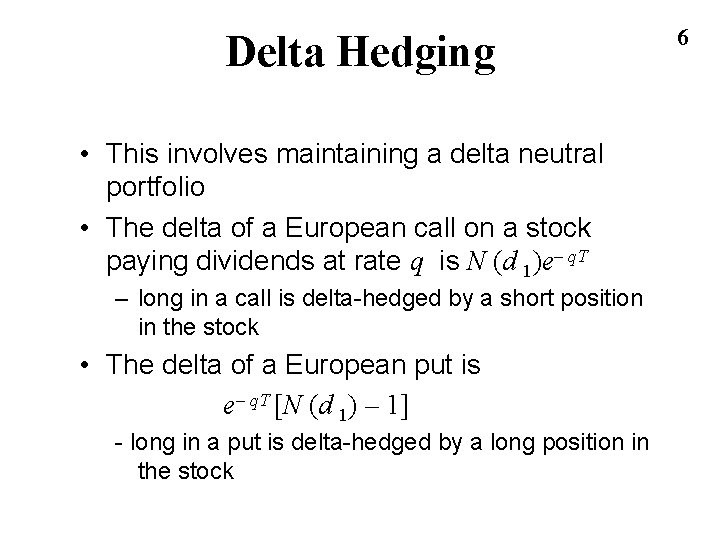
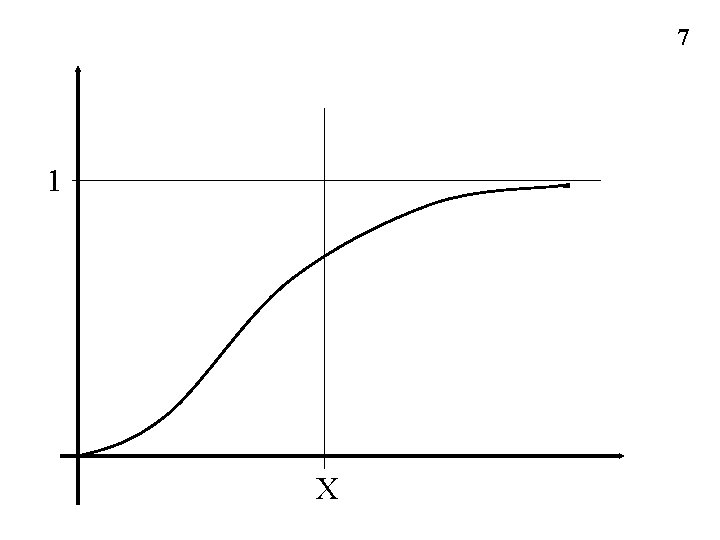
Delta Hedging • This involves maintaining a delta neutral portfolio • The delta of a European call on a stock paying dividends at rate q is N (d 1)e– q. T – long in a call is delta-hedged by a short position in the stock • The delta of a European put is e– q. T [N (d 1) – 1] - long in a put is delta-hedged by a long position in the stock 6
7 1 X
Delta Hedging continued • The hedge position must be frequently rebalanced • Delta hedging a written option involves a “buy high, sell low” trading rule • see delta_hedging. xls 8
Delta Hedging continued • delta_hedging is then equivalent to create a long position in the option synthetically • this means that you can create a new way of managing money that replicates the non-linear pay-off of an option 9
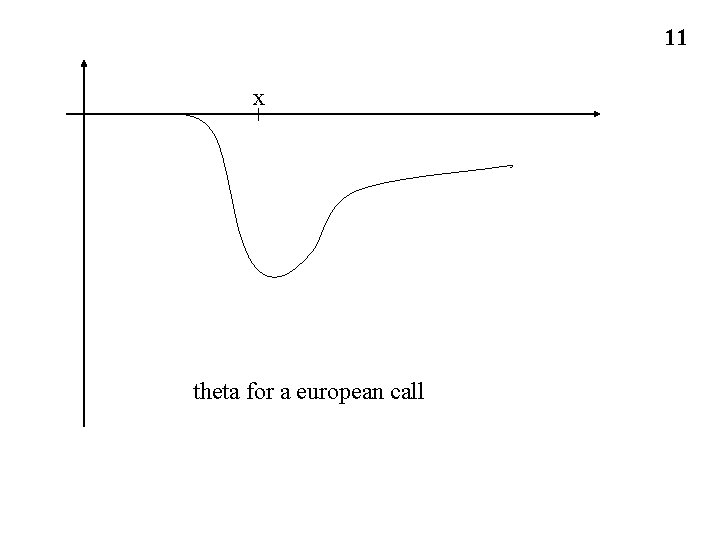
10 Theta • Theta (Q) of a derivative (or portfolio of derivatives) is the rate of change of the value with respect to the passage of time • (almost) always negative
11 x theta for a european call
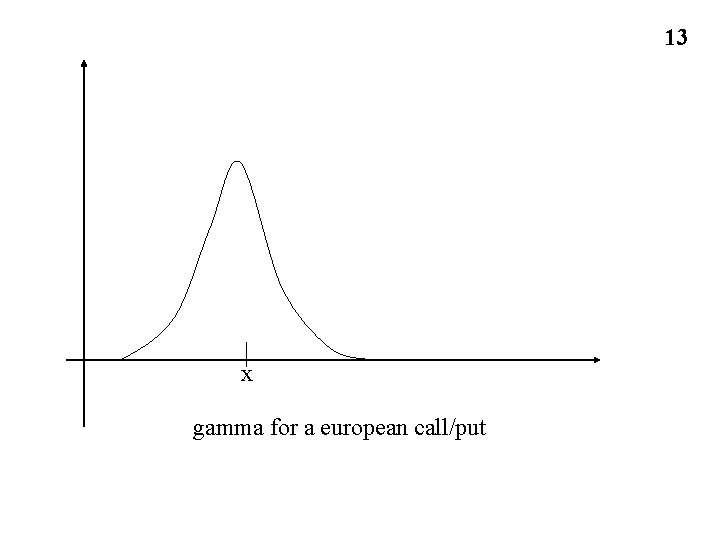
Gamma • Gamma (G) is the rate of change of delta (D) with respect to the price of the underlying asset • See Figure for the variation of G with respect to the stock price for a call or put option 12
13 x gamma for a european call/put
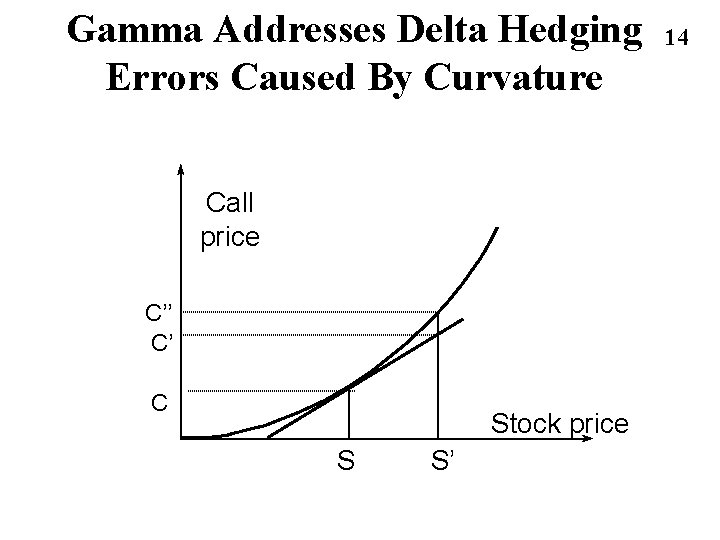
Gamma Addresses Delta Hedging Errors Caused By Curvature Call price C’’ C’ C Stock price S S’ 14
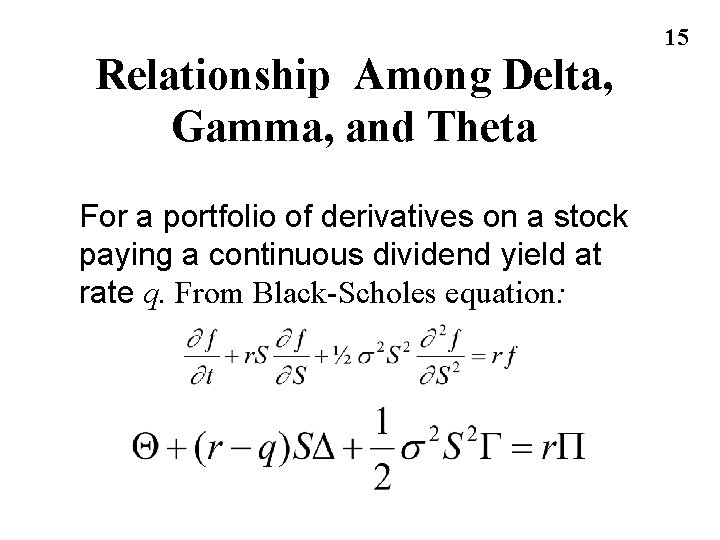
Relationship Among Delta, Gamma, and Theta For a portfolio of derivatives on a stock paying a continuous dividend yield at rate q. From Black-Scholes equation: 15
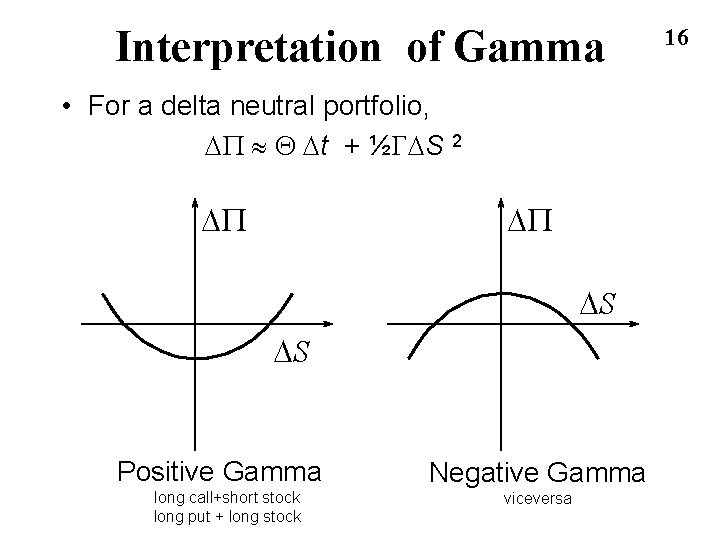
Interpretation of Gamma • For a delta neutral portfolio, DP » Q Dt + ½GDS 2 DP DP DS DS Positive Gamma long call+short stock long put + long stock Negative Gamma viceversa 16
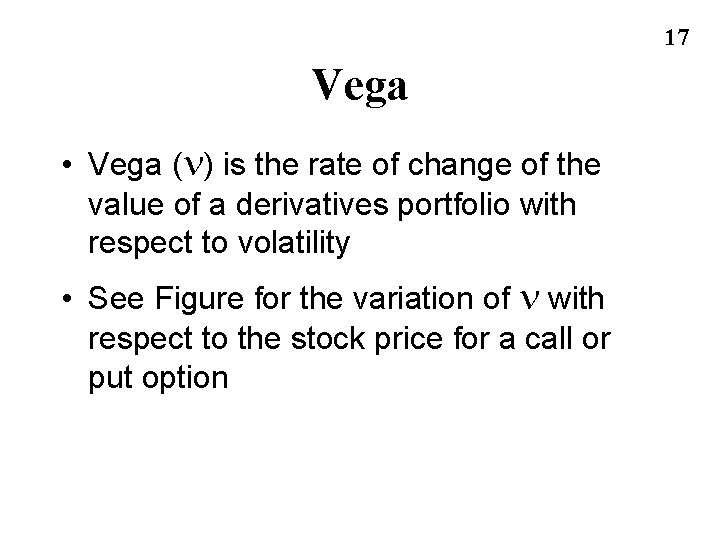
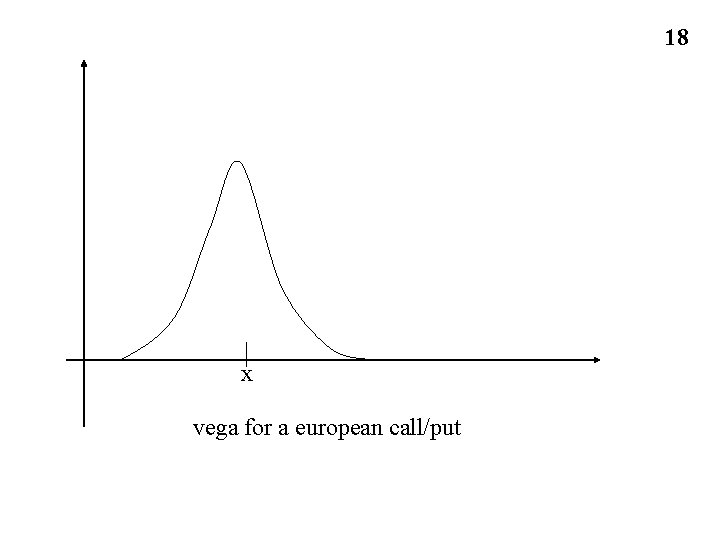
17 Vega • Vega (n) is the rate of change of the value of a derivatives portfolio with respect to volatility • See Figure for the variation of n with respect to the stock price for a call or put option
18 x vega for a european call/put
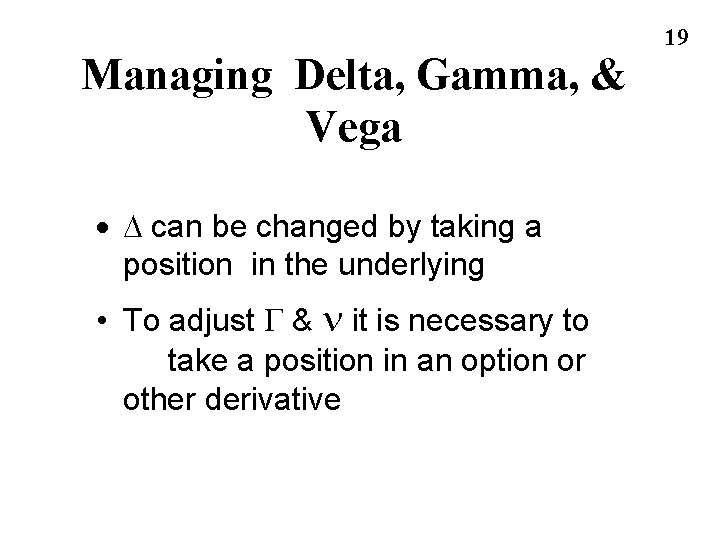
Managing Delta, Gamma, & Vega · D can be changed by taking a position in the underlying • To adjust G & n it is necessary to take a position in an option or other derivative 19
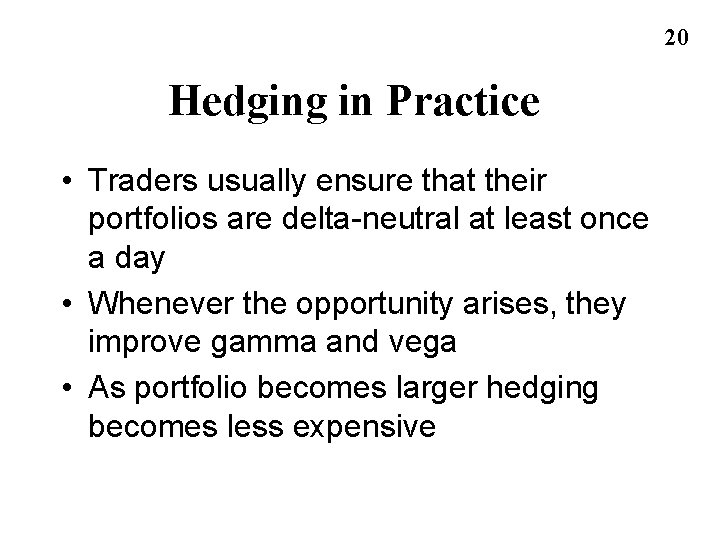
20 Hedging in Practice • Traders usually ensure that their portfolios are delta-neutral at least once a day • Whenever the opportunity arises, they improve gamma and vega • As portfolio becomes larger hedging becomes less expensive