
1 THE DIGESTIVE SYSTEM Chapter 14 2 Overview
- Slides: 38
1 THE DIGESTIVE SYSTEM Chapter 14
2 Overview • The main functions of the digestive system are… • To take in food (ingestion). • To physically and chemically break down food into nutrient molecules (digestion). • To absorb nutrient molecules into the bloodstream (absorption). • To rid the body of indigestible material (defecation).
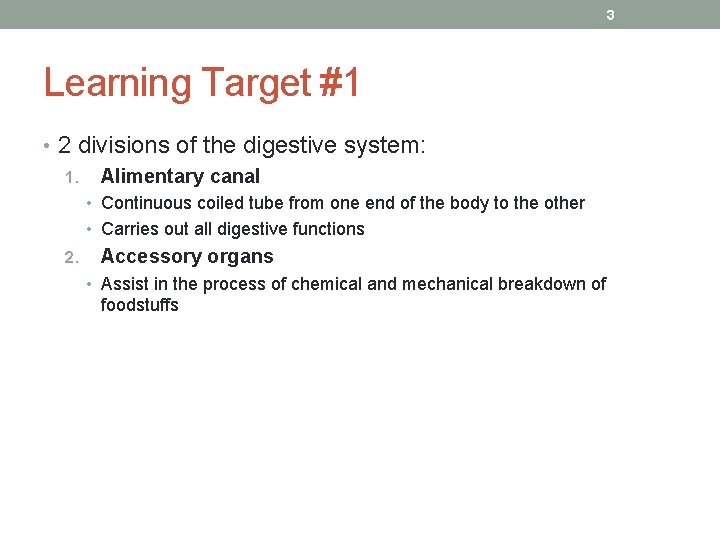
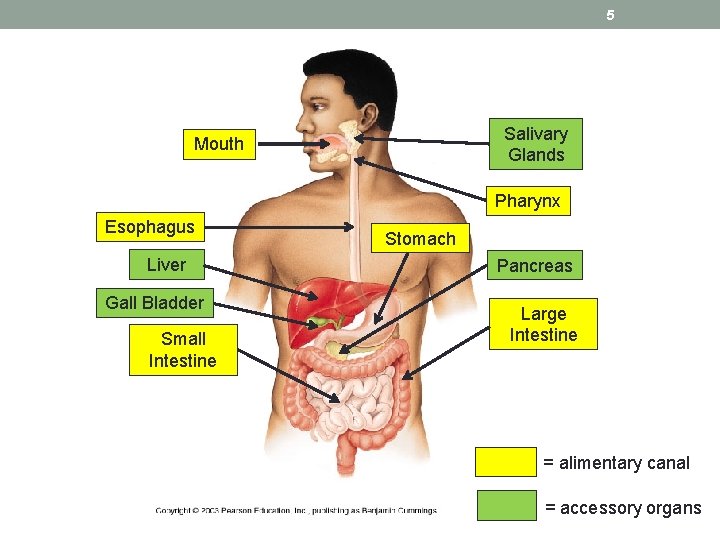
3 Learning Target #1 • 2 divisions of the digestive system: 1. Alimentary canal • Continuous coiled tube from one end of the body to the other • Carries out all digestive functions 2. Accessory organs • Assist in the process of chemical and mechanical breakdown of foodstuffs
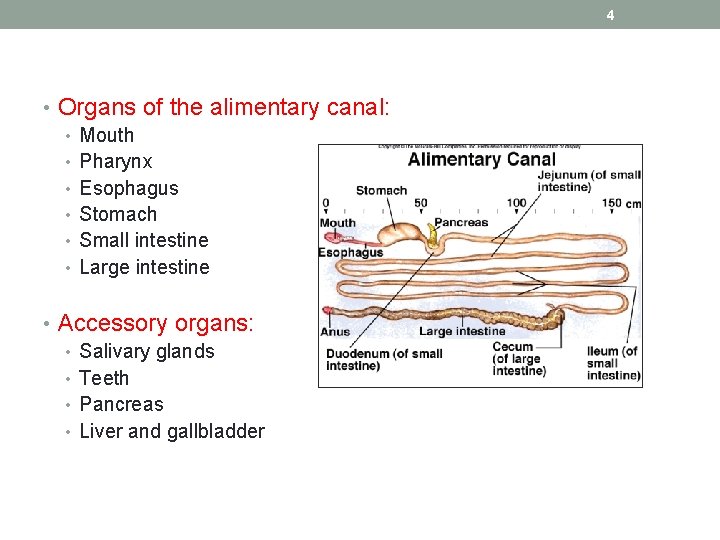
4 • Organs of the alimentary canal: • Mouth • Pharynx • Esophagus • Stomach • Small intestine • Large intestine • Accessory organs: • Salivary glands • Teeth • Pancreas • Liver and gallbladder
5 Salivary Glands Mouth Pharynx Esophagus Liver Gall Bladder Small Intestine Stomach Pancreas Large Intestine = alimentary canal = accessory organs
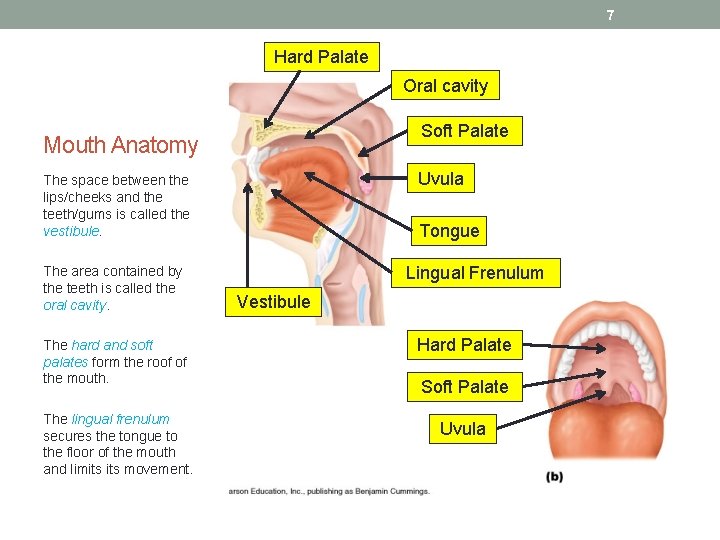
6 Learning Target #2 Mouth Functions Anatomy • Chewing of food • Lips (labia) (mastication) • Mixing of masticated food with saliva • Initiation of swallowing by the tongue • Sense of taste • Cheeks • Hard and soft palates • Uvula • Vestibule • Oral cavity • Tongue • Lingual frenulum
7 Hard Palate Oral cavity Soft Palate Mouth Anatomy Uvula The space between the lips/cheeks and the teeth/gums is called the vestibule. The area contained by the teeth is called the oral cavity. The hard and soft palates form the roof of the mouth. The lingual frenulum secures the tongue to the floor of the mouth and limits movement. Tongue Lingual Frenulum Vestibule Hard Palate Soft Palate Uvula
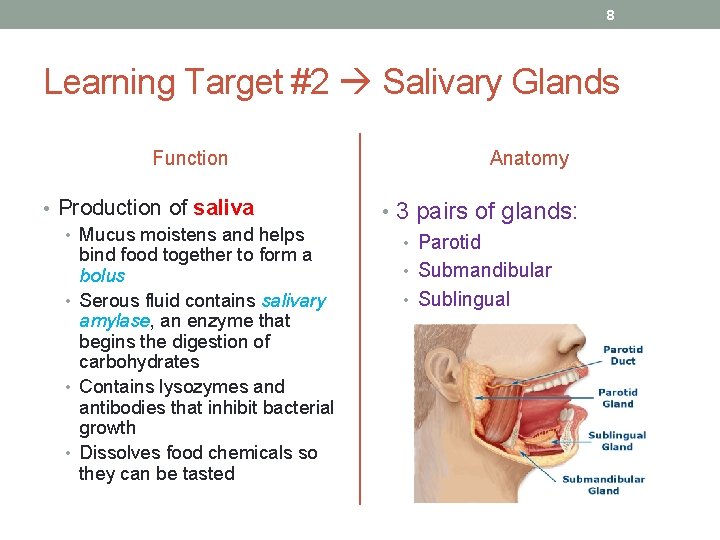
8 Learning Target #2 Salivary Glands Function • Production of saliva • Mucus moistens and helps bind food together to form a bolus • Serous fluid contains salivary amylase, an enzyme that begins the digestion of carbohydrates • Contains lysozymes and antibodies that inhibit bacterial growth • Dissolves food chemicals so they can be tasted Anatomy • 3 pairs of glands: • Parotid • Submandibular • Sublingual
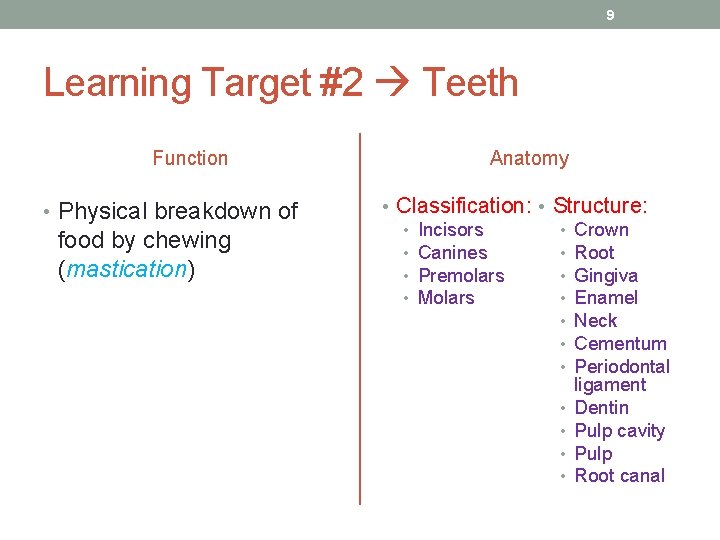
9 Learning Target #2 Teeth Function • Physical breakdown of food by chewing (mastication) Anatomy • Classification: • Structure: • Incisors • Crown • Canines • Root • Premolars • Gingiva • Molars • Enamel • Neck • Cementum • Periodontal ligament • Dentin • Pulp cavity • Pulp • Root canal
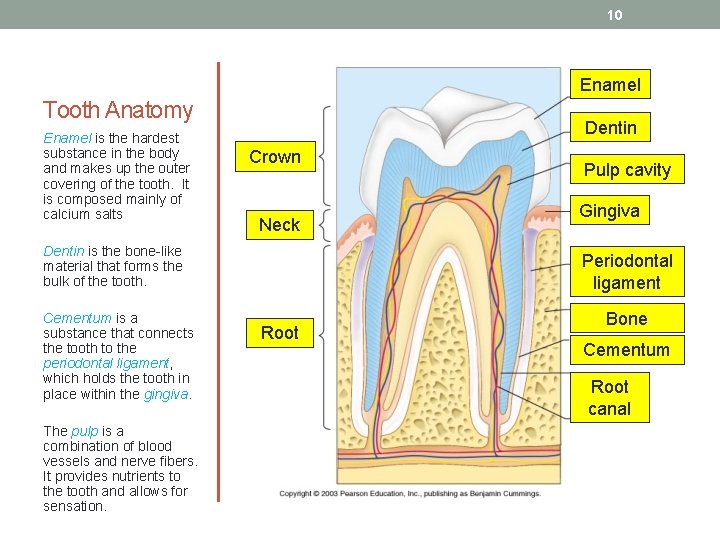
10 Enamel Tooth Anatomy Enamel is the hardest substance in the body and makes up the outer covering of the tooth. It is composed mainly of calcium salts Dentin Crown Neck Dentin is the bone-like material that forms the bulk of the tooth. Cementum is a substance that connects the tooth to the periodontal ligament, which holds the tooth in place within the gingiva. The pulp is a combination of blood vessels and nerve fibers. It provides nutrients to the tooth and allows for sensation. Pulp cavity Gingiva Periodontal ligament Root Bone Cementum Root canal
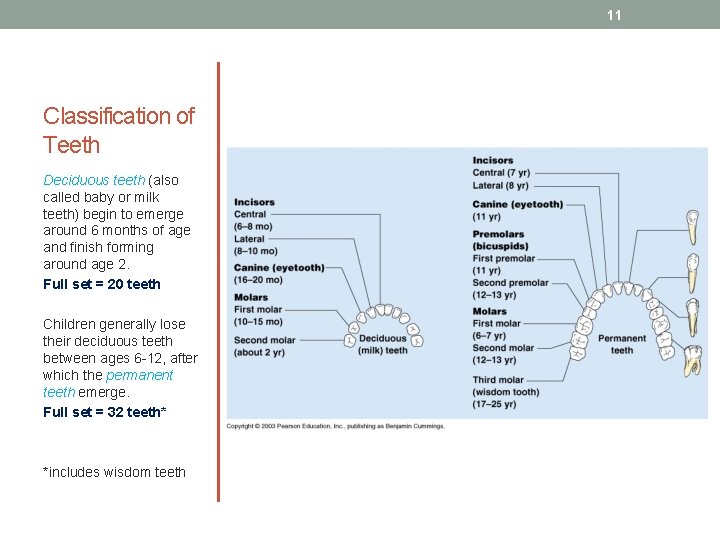
11 Classification of Teeth Deciduous teeth (also called baby or milk teeth) begin to emerge around 6 months of age and finish forming around age 2. Full set = 20 teeth Children generally lose their deciduous teeth between ages 6 -12, after which the permanent teeth emerge. Full set = 32 teeth* *includes wisdom teeth
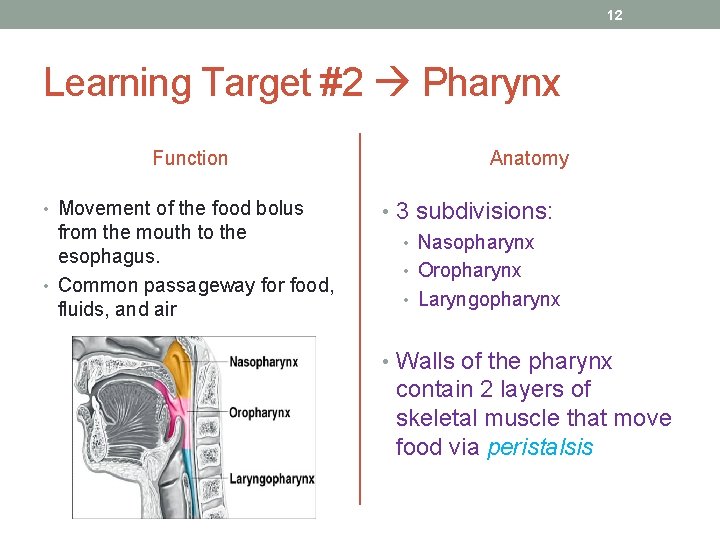
12 Learning Target #2 Pharynx Function • Movement of the food bolus from the mouth to the esophagus. • Common passageway for food, fluids, and air Anatomy • 3 subdivisions: • Nasopharynx • Oropharynx • Laryngopharynx • Walls of the pharynx contain 2 layers of skeletal muscle that move food via peristalsis
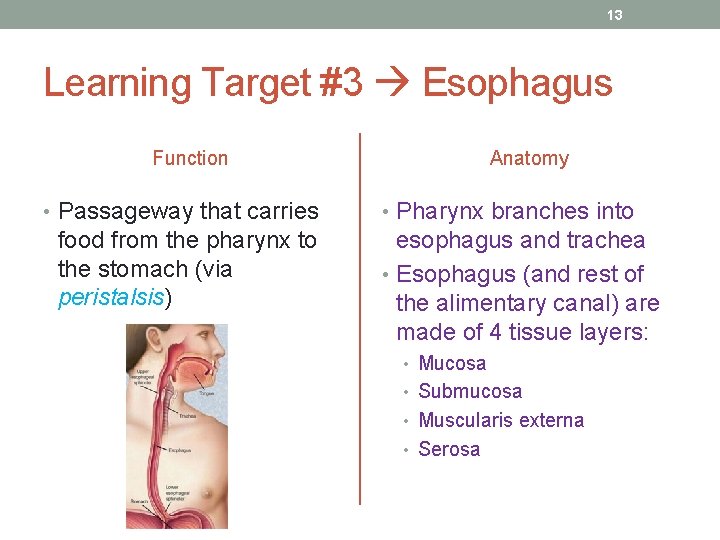
13 Learning Target #3 Esophagus Function • Passageway that carries food from the pharynx to the stomach (via peristalsis) Anatomy • Pharynx branches into esophagus and trachea • Esophagus (and rest of the alimentary canal) are made of 4 tissue layers: • Mucosa • Submucosa • Muscularis externa • Serosa
14 Learning Target #3 Esophagus • Tissue Layers of the Esophagus (and the rest of the alimentary canal): 1. Mucosa • Inner, moist layer responsible for most secretion and absorption • Made mostly of epithelial tissue (stratified squamous in esophagus, simple columnar in rest of canal) • Also includes a small amount of connective tissue (called the lamina propria) and smooth muscle 2. Submucosa • Found beneath the mucosa • Made of dense irregular connective tissue and contains blood vessels, nerve endings, lymph nodules, and lymphatic vessels.
15 Learning Target #3 Esophagus 3. Muscularis externa • Found beneath the submucosa • Made of 2 layers of smooth muscle (inner circular layer and outer longitudinal layer) 4. Serosa • Outermost layer • Made of a single layer of cells, called the visceral peritoneum, that produces serous fluid • Is continuous with the parietal peritoneum that lines the abdominopelvic cavity via the mesentery
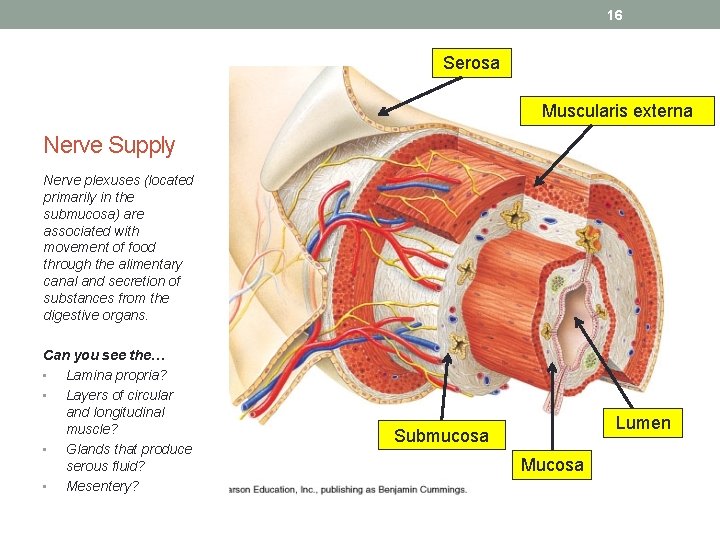
16 Serosa Muscularis externa Nerve Supply Nerve plexuses (located primarily in the submucosa) are associated with movement of food through the alimentary canal and secretion of substances from the digestive organs. Can you see the… • Lamina propria? • Layers of circular and longitudinal muscle? • Glands that produce serous fluid? • Mesentery? Lumen Submucosa Mucosa
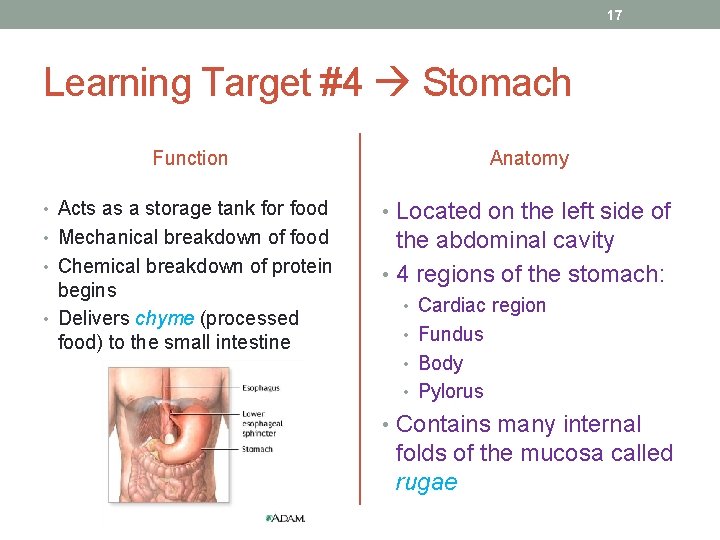
17 Learning Target #4 Stomach Function Anatomy • Acts as a storage tank for food • Located on the left side of • Mechanical breakdown of food the abdominal cavity • 4 regions of the stomach: • Chemical breakdown of protein begins • Delivers chyme (processed food) to the small intestine • Cardiac region • Fundus • Body • Pylorus • Contains many internal folds of the mucosa called rugae
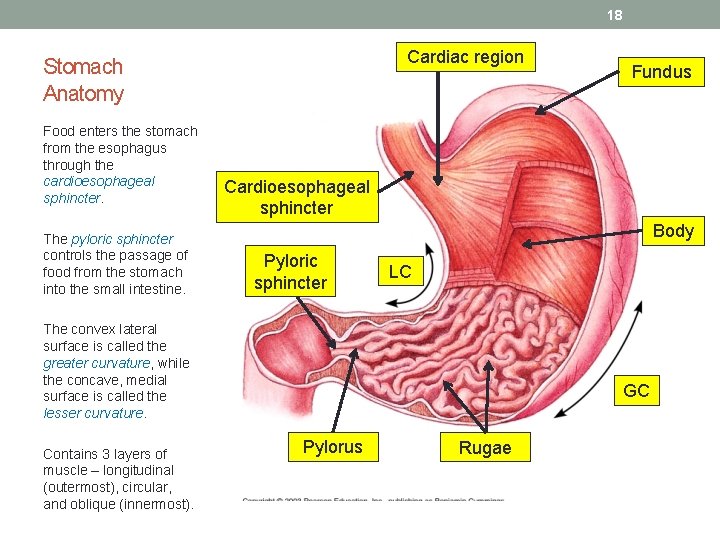
18 Cardiac region Stomach Anatomy Food enters the stomach from the esophagus through the cardioesophageal sphincter. The pyloric sphincter controls the passage of food from the stomach into the small intestine. Cardioesophageal sphincter Body Pyloric sphincter LC The convex lateral surface is called the greater curvature, while the concave, medial surface is called the lesser curvature. Contains 3 layers of muscle – longitudinal (outermost), circular, and oblique (innermost). Fundus GC Pylorus Rugae
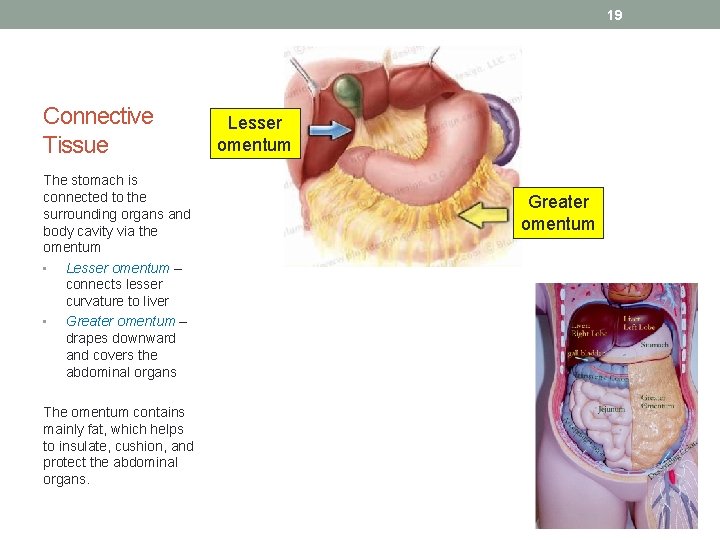
19 Connective Tissue The stomach is connected to the surrounding organs and body cavity via the omentum • Lesser omentum – connects lesser curvature to liver • Greater omentum – drapes downward and covers the abdominal organs The omentum contains mainly fat, which helps to insulate, cushion, and protect the abdominal organs. Lesser omentum Greater omentum
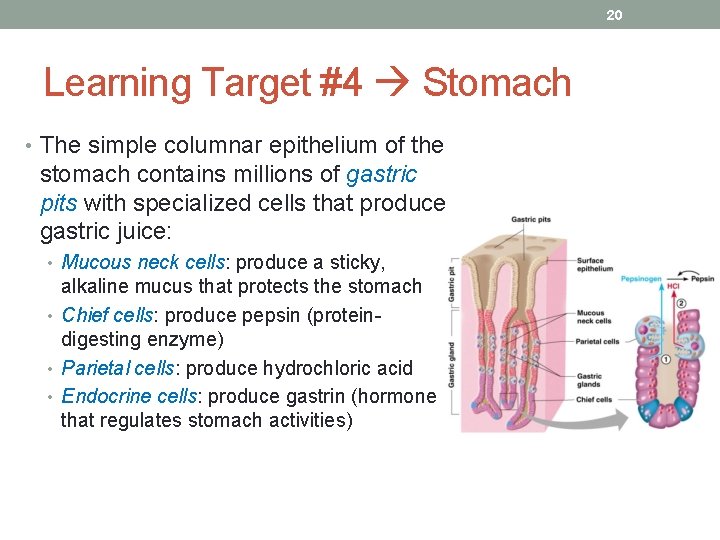
20 Learning Target #4 Stomach • The simple columnar epithelium of the stomach contains millions of gastric pits with specialized cells that produce gastric juice: • Mucous neck cells: produce a sticky, alkaline mucus that protects the stomach • Chief cells: produce pepsin (proteindigesting enzyme) • Parietal cells: produce hydrochloric acid • Endocrine cells: produce gastrin (hormone that regulates stomach activities)
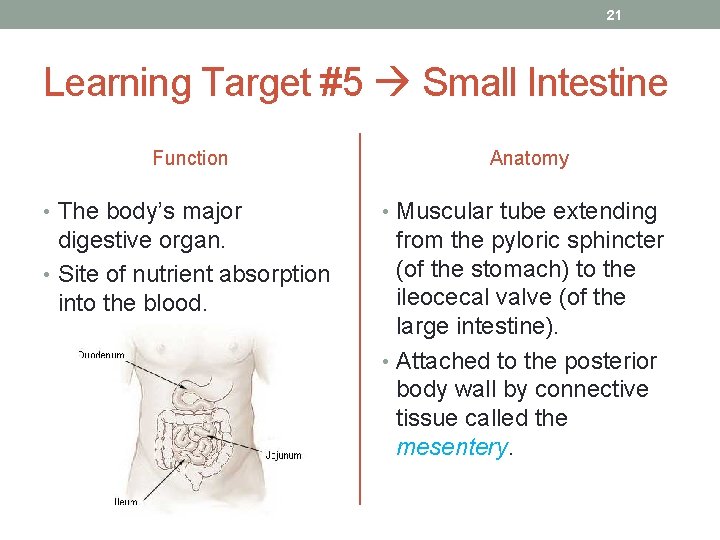
21 Learning Target #5 Small Intestine Function Anatomy • The body’s major • Muscular tube extending digestive organ. • Site of nutrient absorption into the blood. from the pyloric sphincter (of the stomach) to the ileocecal valve (of the large intestine). • Attached to the posterior body wall by connective tissue called the mesentery.
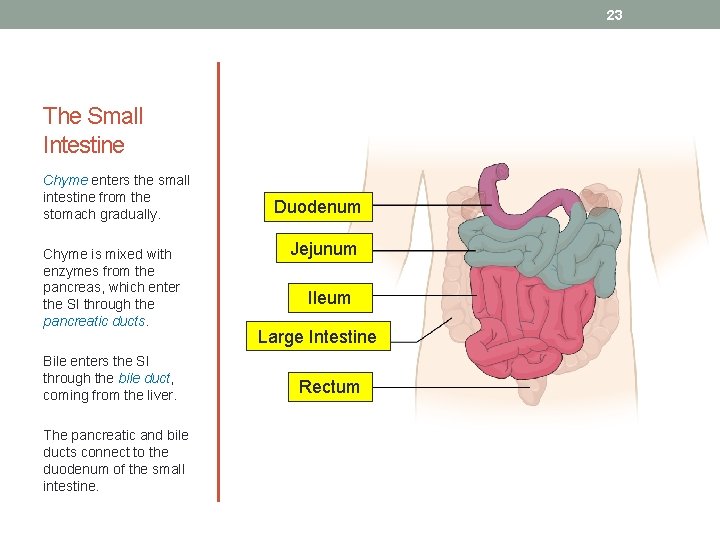
22 Learning Target #5 Small Intestine • The small intestine has 3 subdivisions: • Duodenum • First section (~ 10 inches long) • Connects to the pyloric sphincter of the stomach • Curves around the pancreas • Jejunum • Middle section (~ 8 feet long) • Ileum • Last section (~ 12 feet long) • Connects to ileocecal valve of the large intestine
23 The Small Intestine Chyme enters the small intestine from the stomach gradually. Chyme is mixed with enzymes from the pancreas, which enter the SI through the pancreatic ducts. Bile enters the SI through the bile duct, coming from the liver. The pancreatic and bile ducts connect to the duodenum of the small intestine. Duodenum Jejunum Ileum Large Intestine Rectum
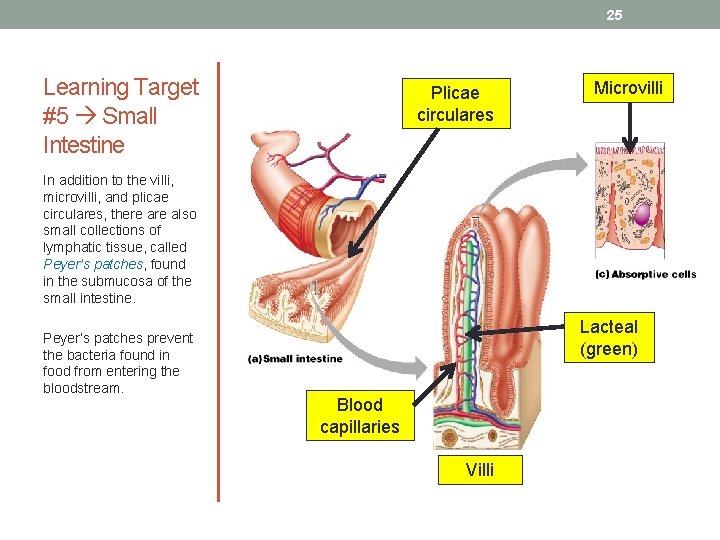
24 Learning Target #5 Small Intestine • The small intestine maximizes its surface area for absorption through… • Microvilli • Small projections of the plasma membrane of each individual epithelial cell • Give the cell a “fuzzy” appearance known as the “brush border” • Villi • Finger-like structures formed by the mucosa (inner-most layer) • Each villus contains a capillary and lymphatic bed called a lacteal, which is where absorption of nutrients into the blood stream actually occurs • Plicae Circulares • Deep folds of the mucosa and submucosa to further increase surface area
25 Learning Target #5 Small Intestine Plicae circulares Microvilli In addition to the villi, microvilli, and plicae circulares, there also small collections of lymphatic tissue, called Peyer’s patches, found in the submucosa of the small intestine. Peyer’s patches prevent the bacteria found in food from entering the bloodstream. Lacteal (green) Blood capillaries Villi
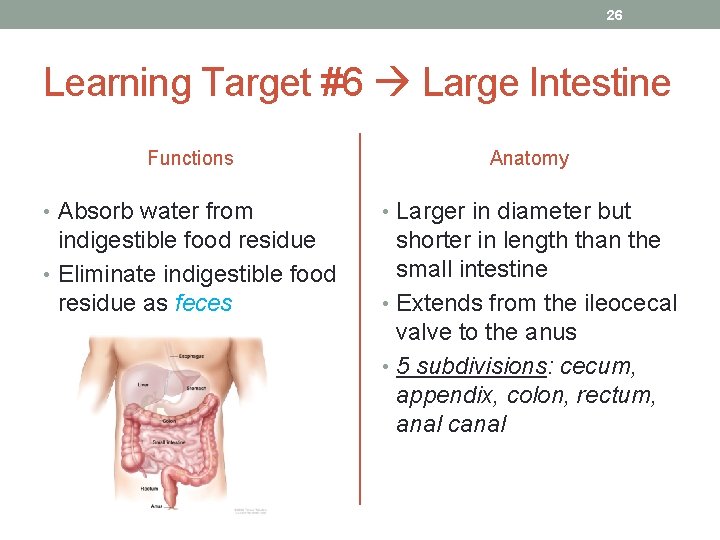
26 Learning Target #6 Large Intestine Functions Anatomy • Absorb water from • Larger in diameter but indigestible food residue • Eliminate indigestible food residue as feces shorter in length than the small intestine • Extends from the ileocecal valve to the anus • 5 subdivisions: cecum, appendix, colon, rectum, anal canal
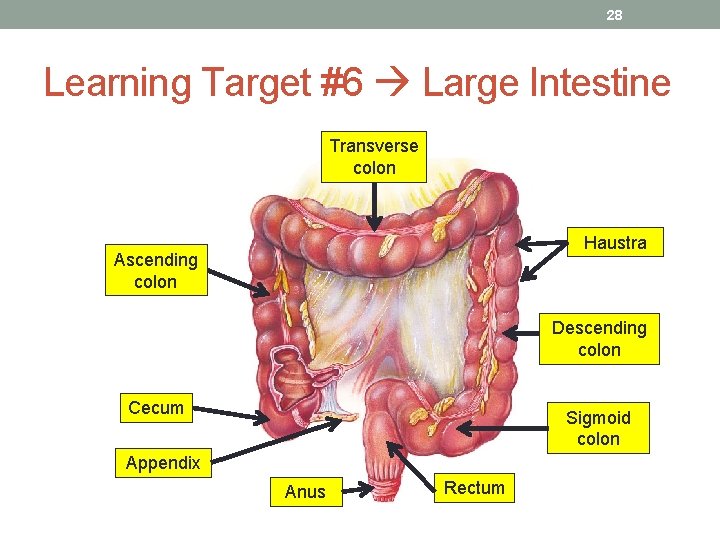
27 Learning Target #6 Large Intestine • Subdivisions of the large intestine: • Cecum: sac-like first part of the large intestine • Appendix: hangs from the cecum, accumulation of lymphatic tissue • Colon: majority of the large intestine, divided into regions: • Ascending colon • Transverse colon • Descending colon • Sigmoid colon • Rectum: stores feces prior to defecation • Anus: contains two sphincters to control the release of feces during defecation
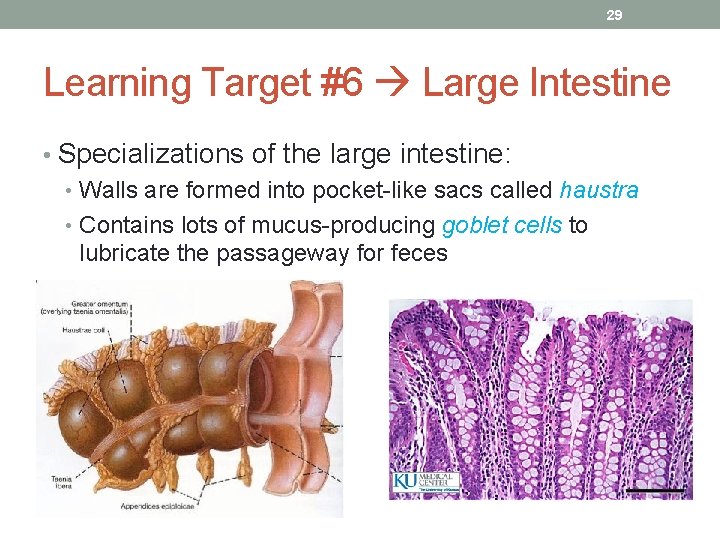
28 Learning Target #6 Large Intestine Transverse colon Haustra Ascending colon Descending colon Cecum Sigmoid colon Appendix Anus Rectum
29 Learning Target #6 Large Intestine • Specializations of the large intestine: • Walls are formed into pocket-like sacs called haustra • Contains lots of mucus-producing goblet cells to lubricate the passageway for feces
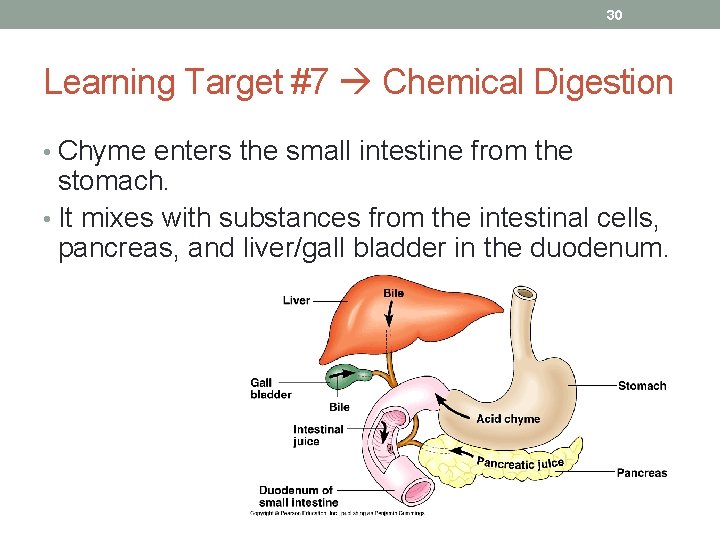
30 Learning Target #7 Chemical Digestion • Chyme enters the small intestine from the stomach. • It mixes with substances from the intestinal cells, pancreas, and liver/gall bladder in the duodenum.
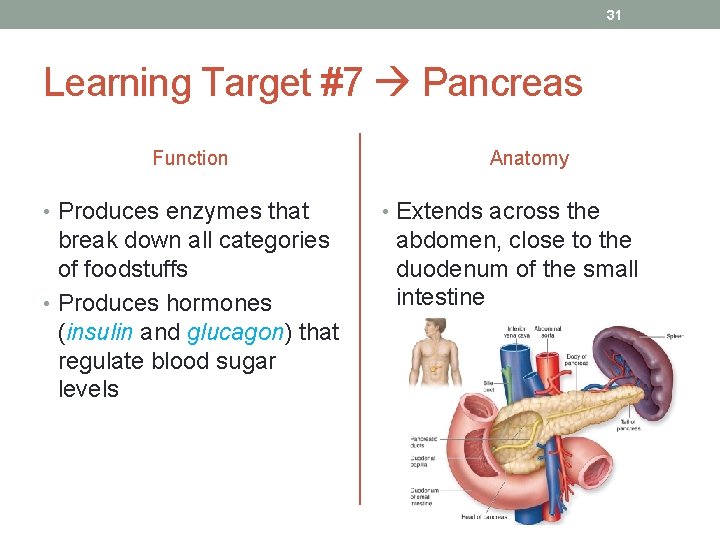
31 Learning Target #7 Pancreas Function • Produces enzymes that break down all categories of foodstuffs • Produces hormones (insulin and glucagon) that regulate blood sugar levels Anatomy • Extends across the abdomen, close to the duodenum of the small intestine
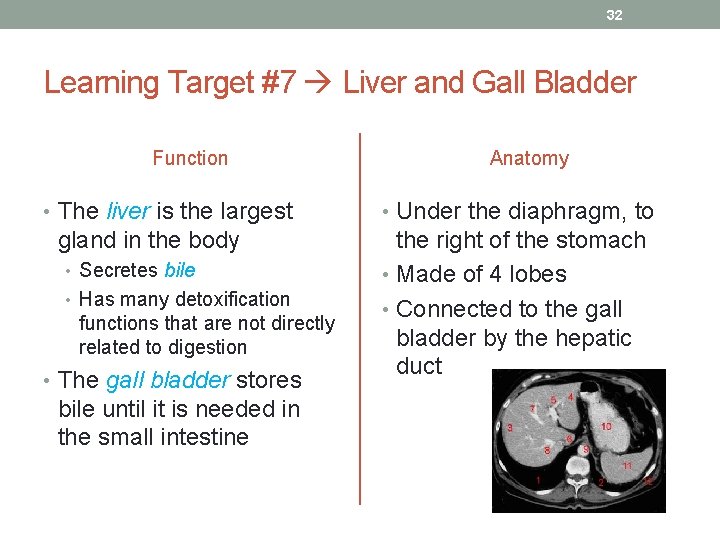
32 Learning Target #7 Liver and Gall Bladder Function • The liver is the largest gland in the body • Secretes bile • Has many detoxification functions that are not directly related to digestion • The gall bladder stores bile until it is needed in the small intestine Anatomy • Under the diaphragm, to the right of the stomach • Made of 4 lobes • Connected to the gall bladder by the hepatic duct
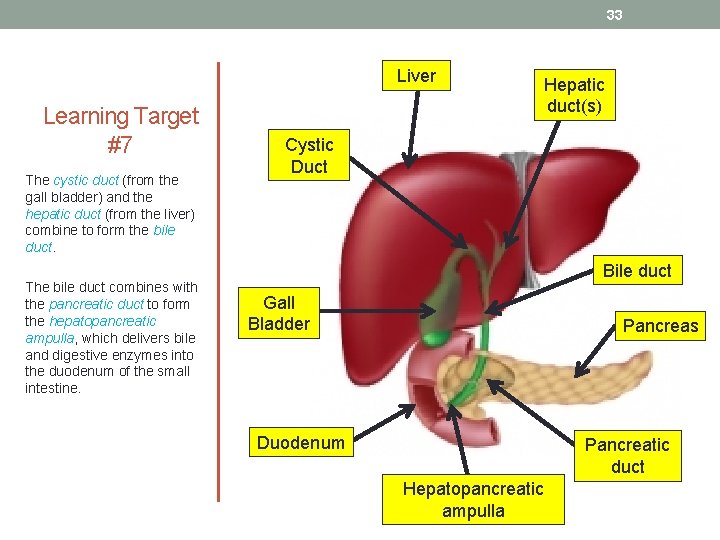
33 Liver Learning Target #7 The cystic duct (from the gall bladder) and the hepatic duct (from the liver) combine to form the bile duct. The bile duct combines with the pancreatic duct to form the hepatopancreatic ampulla, which delivers bile and digestive enzymes into the duodenum of the small intestine. Hepatic duct(s) Cystic Duct Bile duct Gall Bladder Pancreas Duodenum Pancreatic duct Hepatopancreatic ampulla
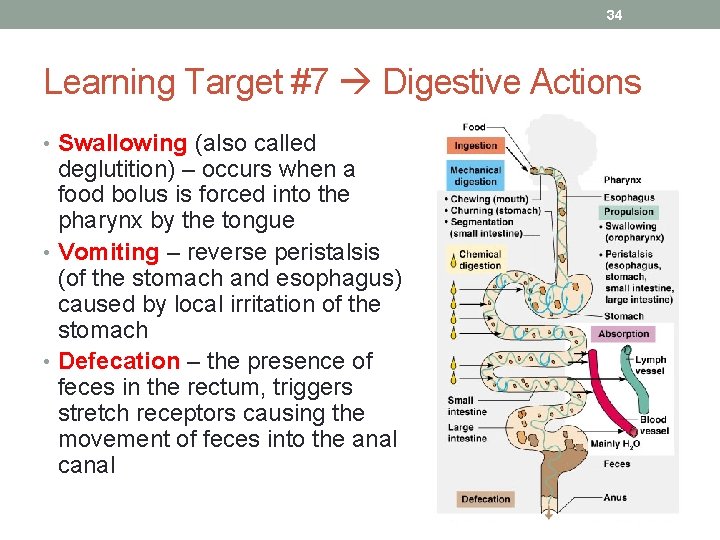
34 Learning Target #7 Digestive Actions • Swallowing (also called deglutition) – occurs when a food bolus is forced into the pharynx by the tongue • Vomiting – reverse peristalsis (of the stomach and esophagus) caused by local irritation of the stomach • Defecation – the presence of feces in the rectum, triggers stretch receptors causing the movement of feces into the anal canal
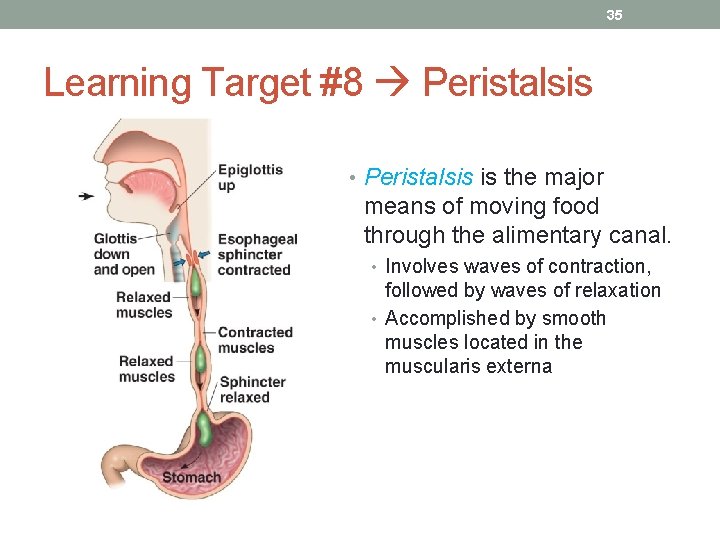
35 Learning Target #8 Peristalsis • Peristalsis is the major means of moving food through the alimentary canal. • Involves waves of contraction, followed by waves of relaxation • Accomplished by smooth muscles located in the muscularis externa
36 Learning Target #8 Hormones • Hormones trigger digestive activities: • Acting on the stomach: • Gastrin – triggered by food in the stomach; stimulates the release of gastric juices and movement of chyme into the small intestine • Acting on the small intestine: • Secretin – triggered by chyme in the duodenum; stimulates the output of pancreatic enzymes and bile • Secreted by the pancreas: • Insulin – hormone that causes the liver, muscle, and fat tissue to take up glucose from the blood when glucose levels are high • Glucagons – hormone that causes the liver, muscle, and fat tissue to release glucose into the blood when glucose levels are low
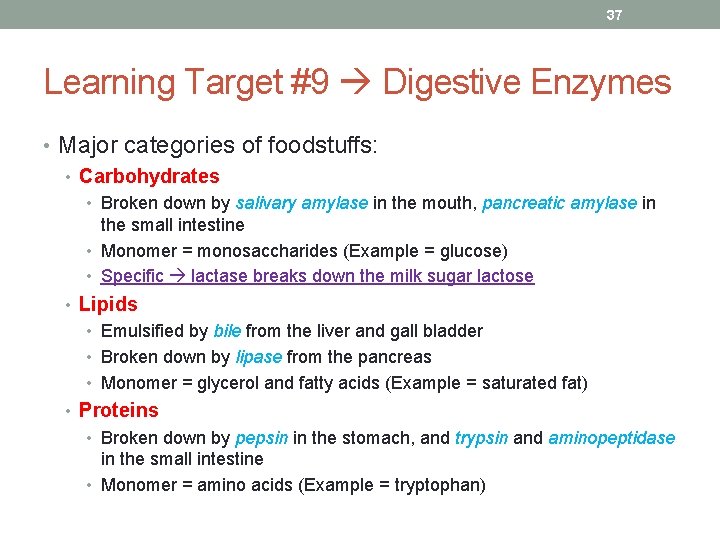
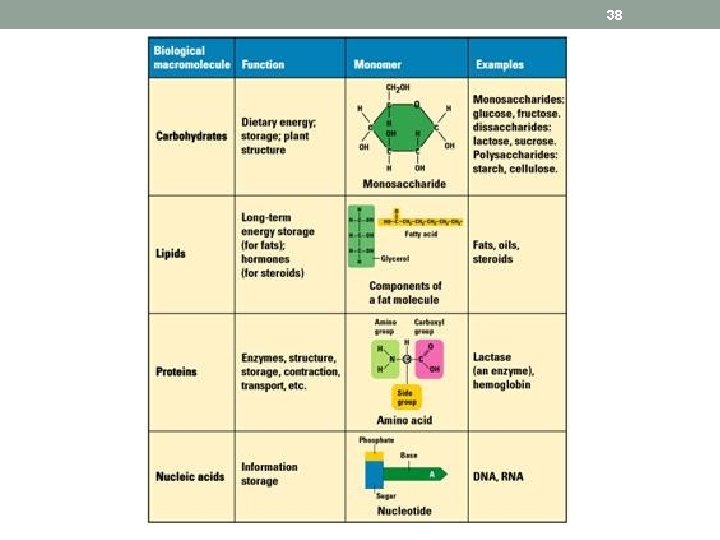
37 Learning Target #9 Digestive Enzymes • Major categories of foodstuffs: • Carbohydrates • Broken down by salivary amylase in the mouth, pancreatic amylase in the small intestine • Monomer = monosaccharides (Example = glucose) • Specific lactase breaks down the milk sugar lactose • Lipids • Emulsified by bile from the liver and gall bladder • Broken down by lipase from the pancreas • Monomer = glycerol and fatty acids (Example = saturated fat) • Proteins • Broken down by pepsin in the stomach, and trypsin and aminopeptidase in the small intestine • Monomer = amino acids (Example = tryptophan)
38