
1 The center of Earth is called the

- Slides: 18
• 1. The center of Earth is called the core. It is divided into two parts, a solid inner core and an outer core made up of melted liquid metal. • 2. The middle layer of Earth is called the mantle. It is made up of hot, dense rock called magma. • 3. The outer layer of Earth is the crust. This is the rocky shell that forms the surface of Earth.
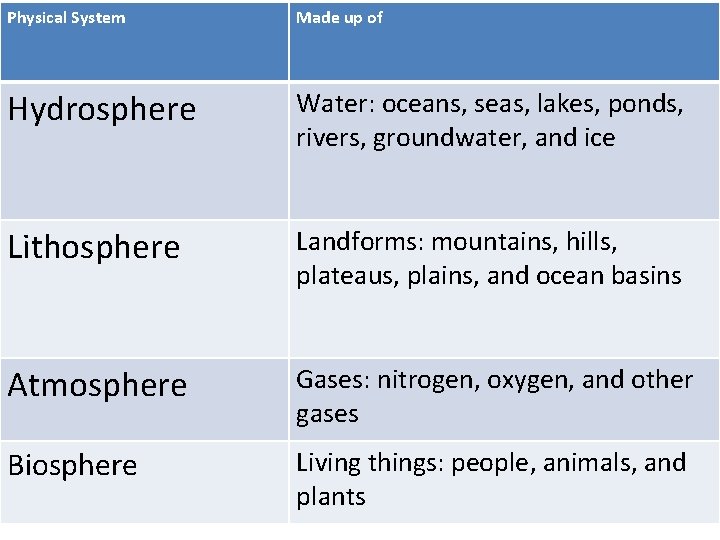
Physical System Made up of Hydrosphere Water: oceans, seas, lakes, ponds, rivers, groundwater, and ice Lithosphere Landforms: mountains, hills, plateaus, plains, and ocean basins Atmosphere Gases: nitrogen, oxygen, and other gases Biosphere Living things: people, animals, and plants
Factors that Influence Climate • 1. Elevation: The atmosphere is thinner at higher elevations so the air holds less heat. • 2. Wind and Ocean Currents: The movement of air and water helps to balance the temperature on Earth. • 3. Weather: Weather conditions that occur in an area over a long period of time determine the region’s climate. • 4. Landforms: Landforms and land masses change the strength, speed, and direction of wind and ocean currents and affect precipitation.
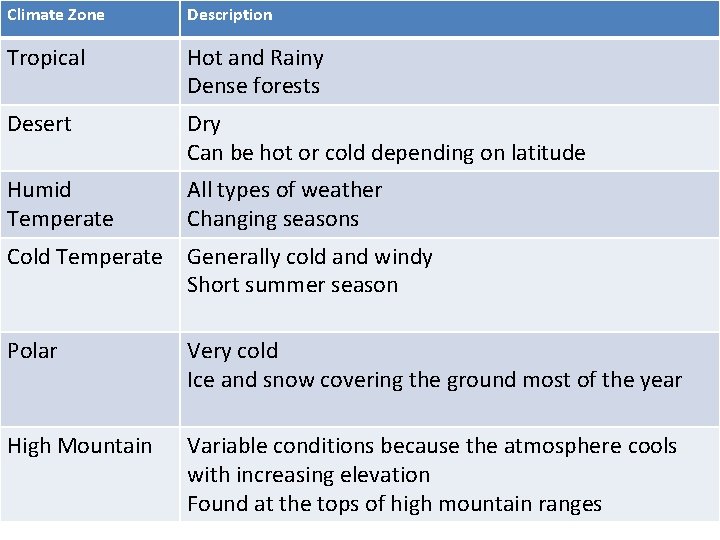
Climate Zone Description Tropical Hot and Rainy Dense forests Desert Dry Can be hot or cold depending on latitude Humid Temperate All types of weather Changing seasons Cold Temperate Generally cold and windy Short summer season Polar Very cold Ice and snow covering the ground most of the year High Mountain Variable conditions because the atmosphere cools with increasing elevation Found at the tops of high mountain ranges
BELLWORK • LOOK AT THE PICTURES ON PAGE 53. • IN JOURNAL: TELL WHAT CAUSED THE EVENTS HAPPENING IN THE PICTURES.
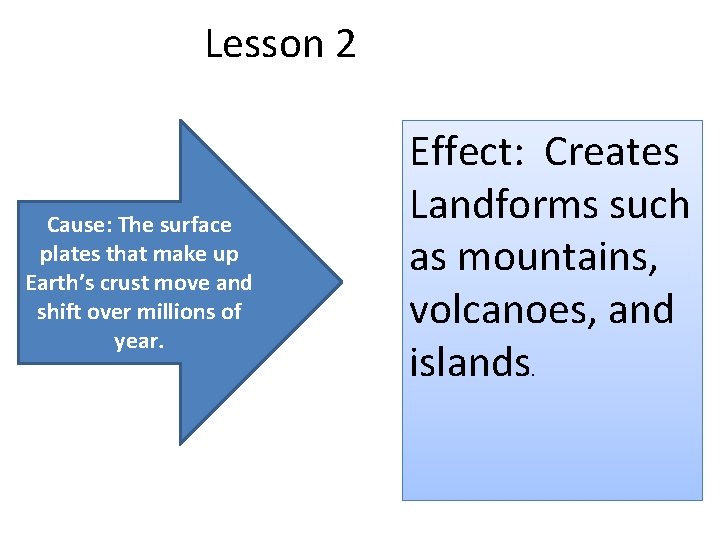
Lesson 2 Cause: The surface plates that make up Earth’s crust move and shift over millions of year. Effect: Creates Landforms such as mountains, volcanoes, and islands.
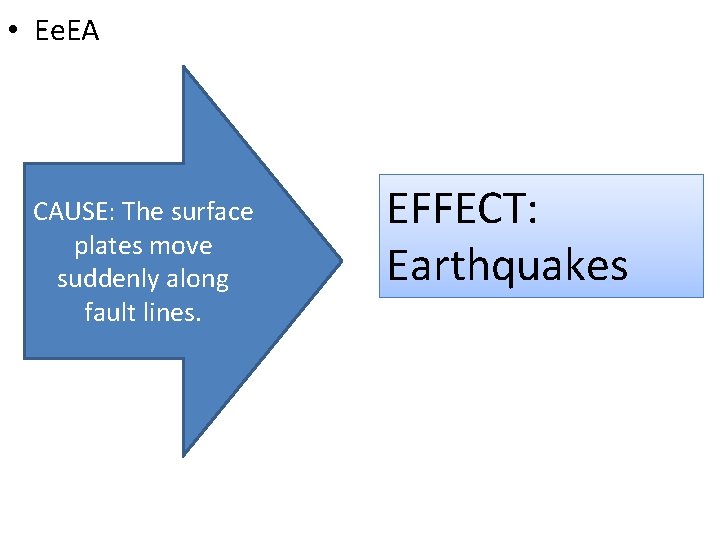
• Ee. EA CAUSE: The surface plates move suddenly along fault lines. EFFECT: Earthquakes
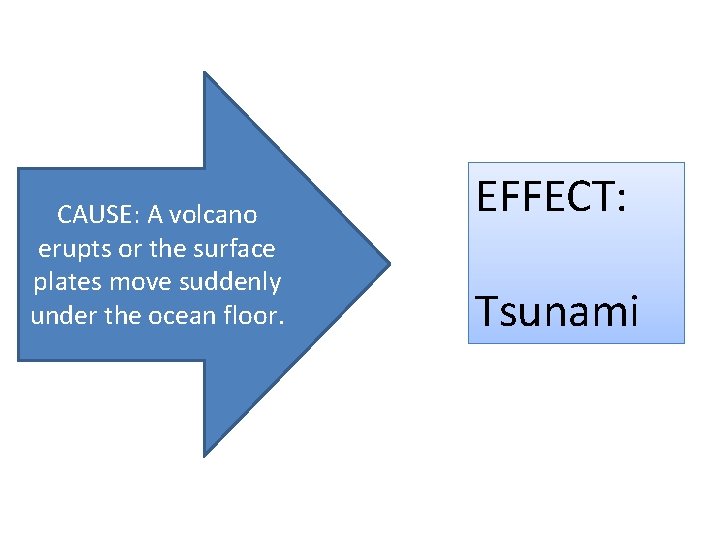
CAUSE: A volcano erupts or the surface plates move suddenly under the ocean floor. EFFECT: Tsunami
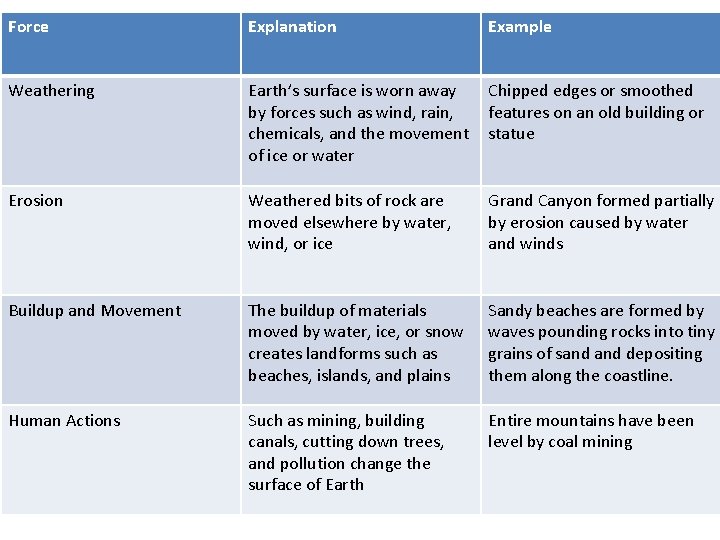
Force Explanation Example Weathering Earth’s surface is worn away by forces such as wind, rain, chemicals, and the movement of ice or water Chipped edges or smoothed features on an old building or statue Erosion Weathered bits of rock are moved elsewhere by water, wind, or ice Grand Canyon formed partially by erosion caused by water and winds Buildup and Movement The buildup of materials moved by water, ice, or snow creates landforms such as beaches, islands, and plains Sandy beaches are formed by waves pounding rocks into tiny grains of sand depositing them along the coastline. Human Actions Such as mining, building canals, cutting down trees, and pollution change the surface of Earth Entire mountains have been level by coal mining
Chapter 2, Lesson 3 Land Water
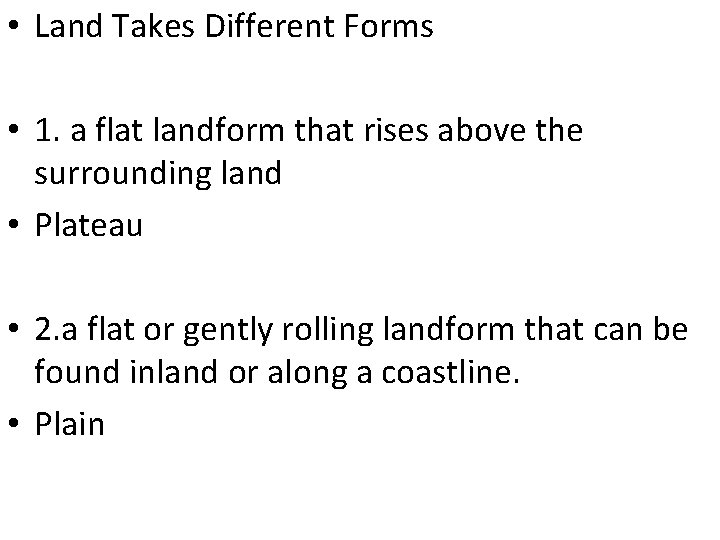
• Land Takes Different Forms • 1. a flat landform that rises above the surrounding land • Plateau • 2. a flat or gently rolling landform that can be found inland or along a coastline. • Plain
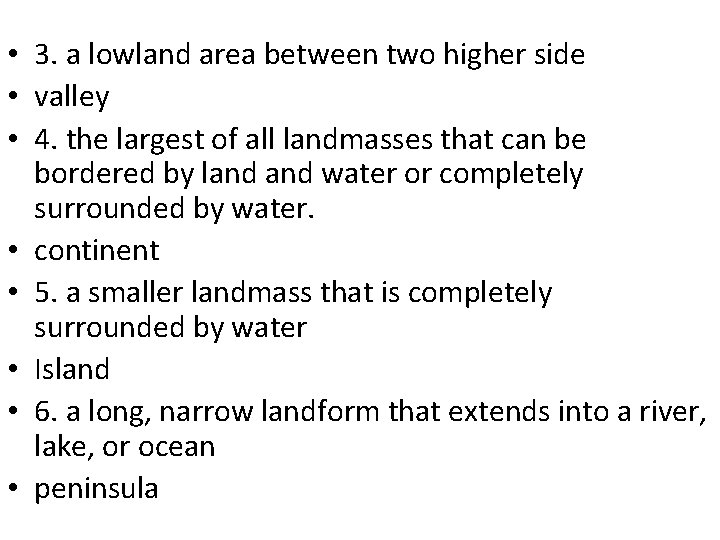
• 3. a lowland area between two higher side • valley • 4. the largest of all landmasses that can be bordered by land water or completely surrounded by water. • continent • 5. a smaller landmass that is completely surrounded by water • Island • 6. a long, narrow landform that extends into a river, lake, or ocean • peninsula
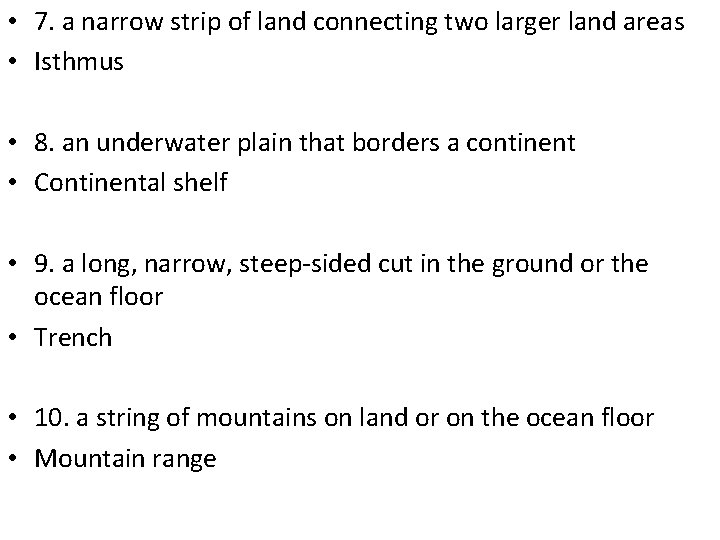
• 7. a narrow strip of land connecting two larger land areas • Isthmus • 8. an underwater plain that borders a continent • Continental shelf • 9. a long, narrow, steep-sided cut in the ground or the ocean floor • Trench • 10. a string of mountains on land or on the ocean floor • Mountain range
• 1. The water on Earth’s surface is mainly freshwater. • False • About 97% of Earth’s water is saltwater. • 2. Plants and animals can’t live in salt water. • False • Salt water supports a huge variety of plant and animal life.
• 3. Desalination is a process that makes salt water safe to drink. • True • 4. Most freshwater on Earth is found in lakes, rivers, ponds, swamps, marshes, and underground. • False • Most of Earth’s freshwater is frozen in Arctic and Antarctica ice caps.
• 5. Groundwater contained inside Earth’s crust is an important source of drinking water. • True • 6. The world’s four huge oceans are all connected to form one enormous global ocean. • True • 7. A coastal area where ocean water is completely surrounded by land is called a bay. • False • A bay is a coastal are where ocean water is partially surrounded by land.
• 8. A gulf is a larger area of ocean waters surrounded by continents and islands. • True • 9. Most rivers begin at an ocean or lake and flow toward higher ground. • False • Rivers begin at a source where water feeds into them and flow into another source of water, such as a lake, another river, or an ocean. • 10. A delta is an area where sand, silt, clay, or gravel is deposited at the mouth of a river. • True
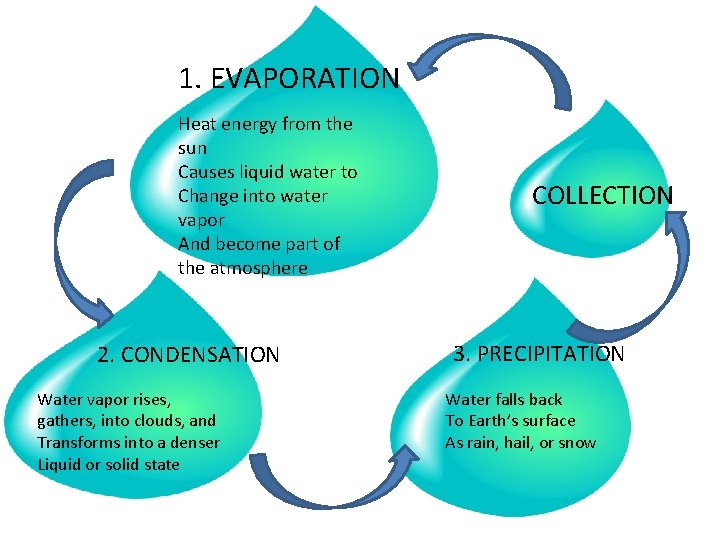
1. EVAPORATION Heat energy from the sun Causes liquid water to Change into water vapor And become part of the atmosphere 2. CONDENSATION Water vapor rises, gathers, into clouds, and Transforms into a denser Liquid or solid state COLLECTION 3. PRECIPITATION Water falls back To Earth’s surface As rain, hail, or snow