
1 The Cell Cycle Mitosis Packet 33 Chapter
- Slides: 27
1 The Cell Cycle “Mitosis” Packet #33 Chapter #13 Wednesday, December 22, 2021
2 Introduction Cell Cycle An ordered sequence of events in the life of a dividing eukaryotic cell and is a type of asexual reproduction. The contents of the parent’s cell nucleus is duplicated an orderly separation of the cell’s contents is separated into two new, identical nuclei. Two daughter cells are produced the parent cell. Wednesday, December 22, 2021
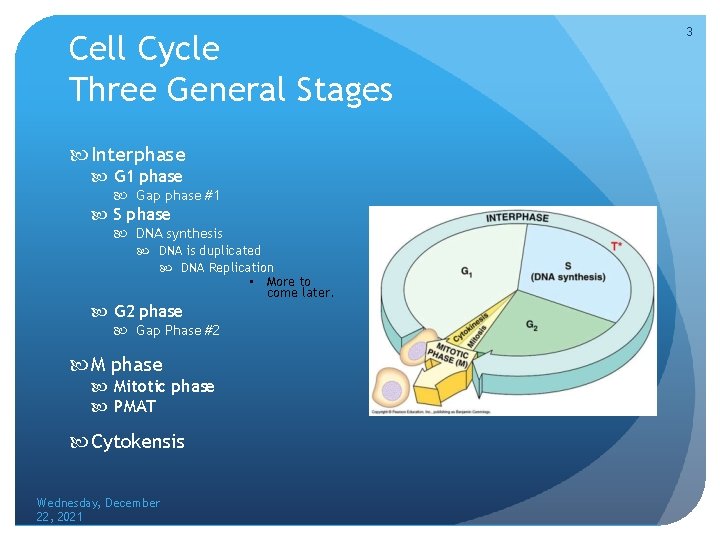
Cell Cycle Three General Stages Interphase G 1 phase Gap phase #1 S phase DNA synthesis DNA is duplicated DNA Replication • More to come later. G 2 phase Gap Phase #2 M phase Mitotic phase PMAT Cytokensis Wednesday, December 22, 2021 3
4 Interphase 12/22/2021
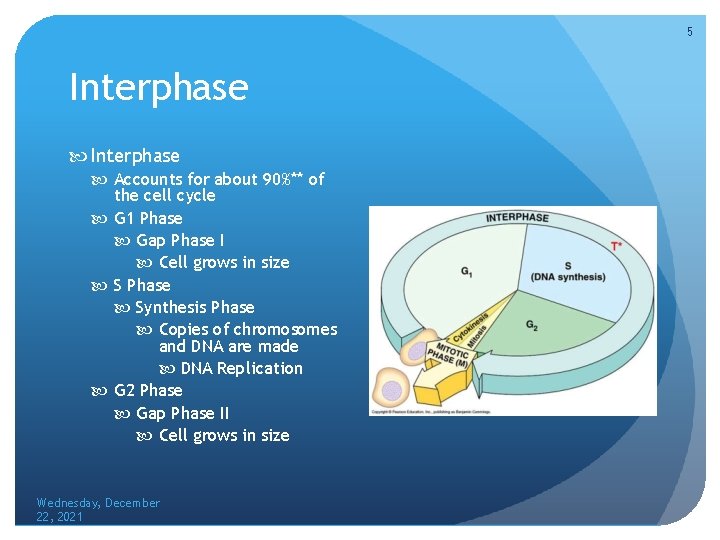
5 Interphase Accounts for about 90%** of the cell cycle G 1 Phase Gap Phase I Cell grows in size S Phase Synthesis Phase Copies of chromosomes and DNA are made DNA Replication G 2 Phase Gap Phase II Cell grows in size Wednesday, December 22, 2021
6 Mitotic Phase 12/22/2021
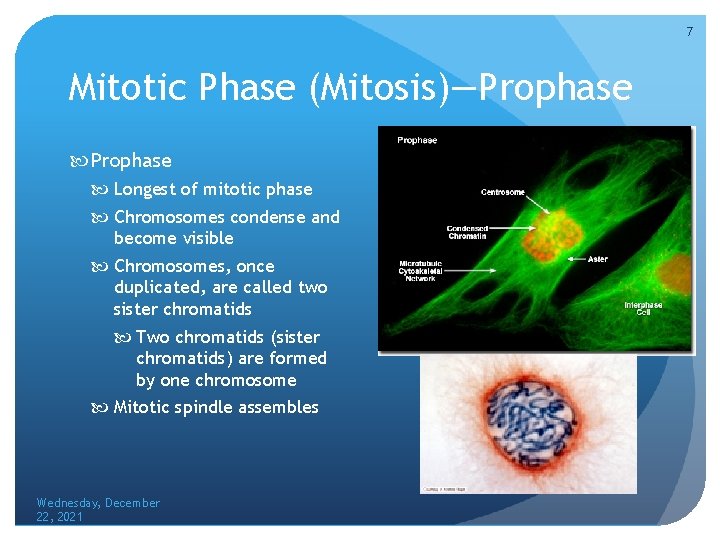
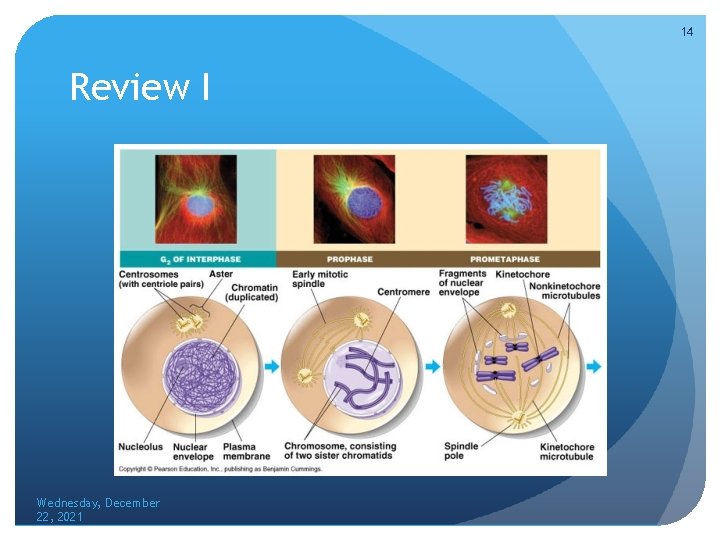
7 Mitotic Phase (Mitosis)—Prophase Longest of mitotic phase Chromosomes condense and become visible Chromosomes, once duplicated, are called two sister chromatids Two chromatids (sister chromatids) are formed by one chromosome Mitotic spindle assembles Wednesday, December 22, 2021
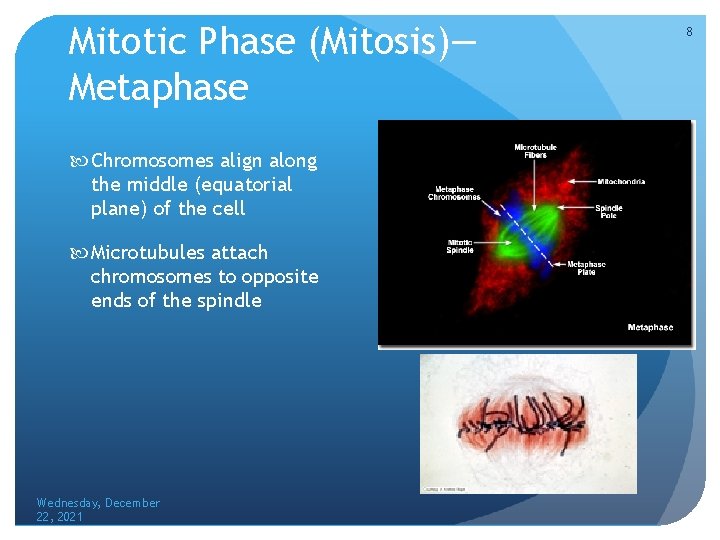
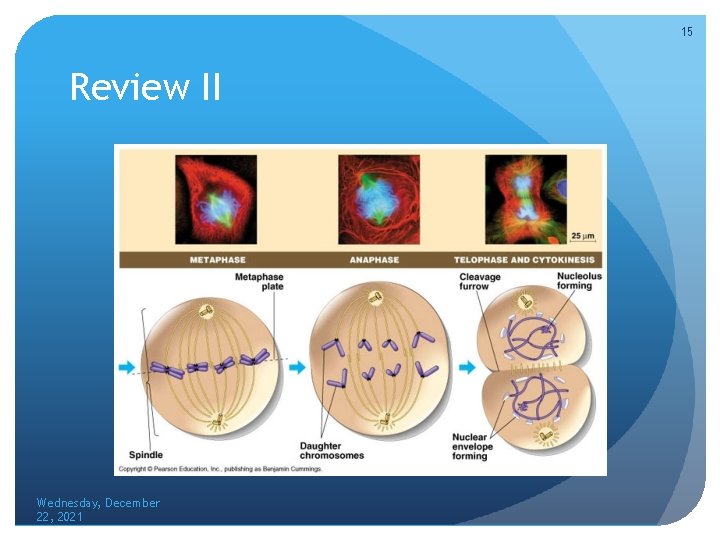
Mitotic Phase (Mitosis)— Metaphase Chromosomes align along the middle (equatorial plane) of the cell Microtubules attach chromosomes to opposite ends of the spindle Wednesday, December 22, 2021 8
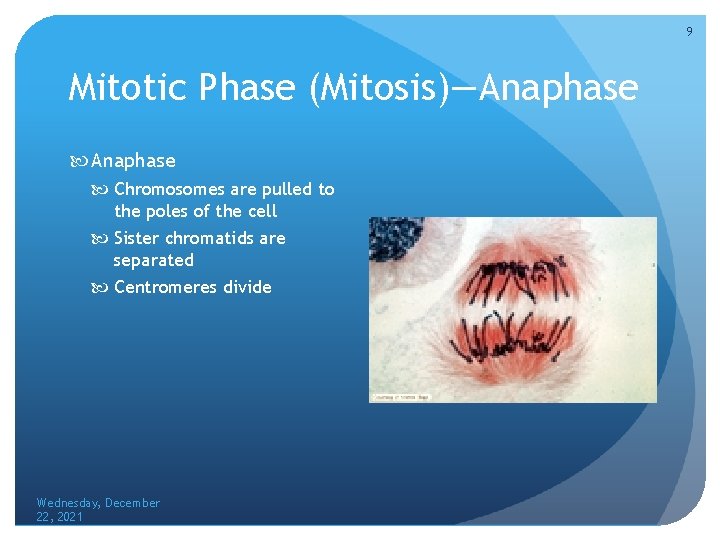
9 Mitotic Phase (Mitosis)—Anaphase Chromosomes are pulled to the poles of the cell Sister chromatids are separated Centromeres divide Wednesday, December 22, 2021
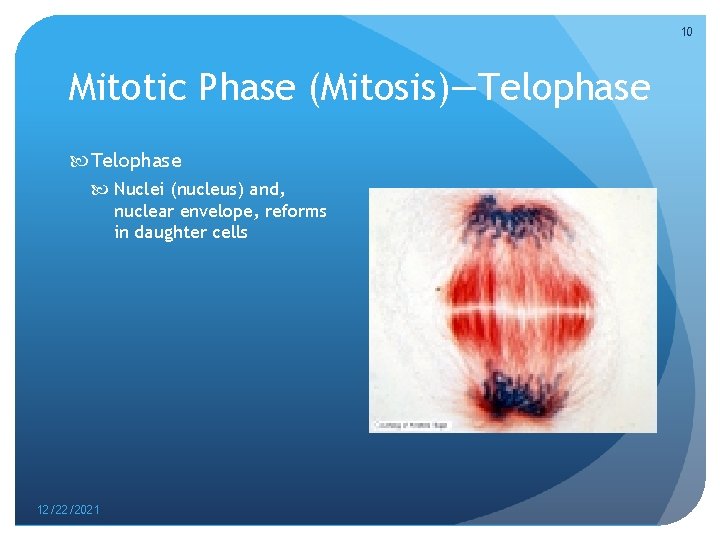
10 Mitotic Phase (Mitosis)—Telophase Nuclei (nucleus) and, nuclear envelope, reforms in daughter cells 12/22/2021
11 Cell Cycle—Cytokinesis 12/22/2021
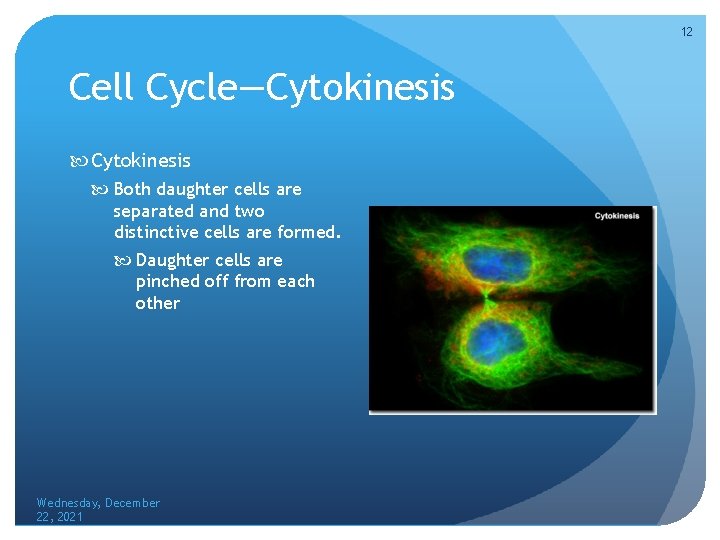
12 Cell Cycle—Cytokinesis Both daughter cells are separated and two distinctive cells are formed. Daughter cells are pinched off from each other Wednesday, December 22, 2021
13 Review 12/22/2021
14 Review I Wednesday, December 22, 2021
15 Review II Wednesday, December 22, 2021
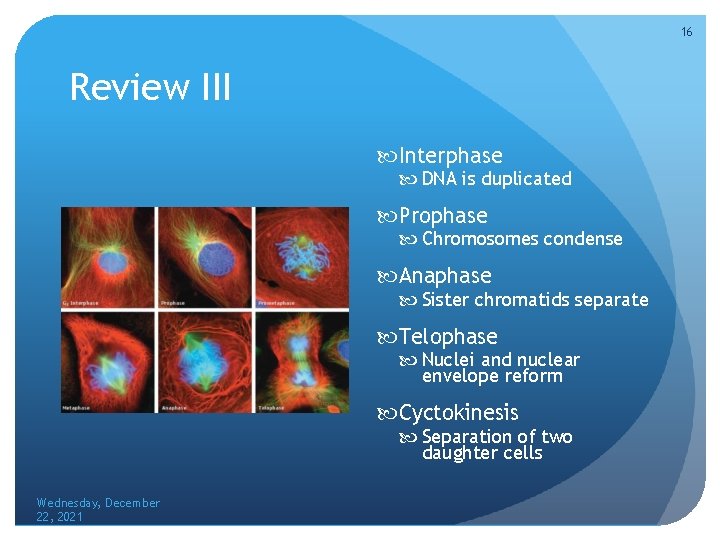
16 Review III Interphase DNA is duplicated Prophase Chromosomes condense Anaphase Sister chromatids separate Telophase Nuclei and nuclear envelope reform Cyctokinesis Separation of two daughter cells Wednesday, December 22, 2021
17 Review IV One cell division resulting in two daughter cells Chromosome number, per nucleus, remains the same Haploid results in haploid Diploid results in diploid No crossing over More on this in meiosis Wednesday, December 22, 2021
18 Control of the Cell Cycle 12/22/2021
19 Control I The steps of the cell cycle must occur in sequence and before the process can proceed to the next step, a checkpoint must be passed. There are checkpoints for Cell size Determination of whether DNA replication is complete These checkpoints are also regulated by various means Growth factors MPF M phase promoting factor Signals from other cells Protein kinases Cyclin-dependent protein kinases (Cdks) 12/22/2021
20 p 53 Gene During the S phase, if the DNA is damaged, the p 53 gene becomes activated and produces the p 53 protein. The p 53 gene protein stimulates transcription of the gene (p 21 gene) that codes for a Cdk inhibitor protein. The p 53 gene protein behaves as a transcription factor. The Cdk inhibitor protein (p 21 inhibitor protein) binds onto the S phase cyclin-Cdk complex and inactivates them. Stopping the cell cycle. 12/22/2021
21 Signals from Other Cells Unicellular organisms, such as bacteria and yeasts, grow and divide as fast as they can. Depends on the amount of nutrients available Specialized eukaryotic cells, of a multicellular organism, must have their proliferation controlled so that individual cells only divide when necessary. They divide to allow growth or to replace damaged/old cells. 12/22/2021
22 Signals from Other Cells II Retinoblastoma protein (Rb protein) is ONE example of a protein that keeps these cells from dividing however they want. Binds onto a gene and prevents transcription. Growth factors are used to override the “brakes. ” Once they have bound to the enzyme linked receptors, tyrosine kinase receptors, a pathway is initiated to allow the cells to replicate Allowing the removal of the Rb protein. 12/22/2021
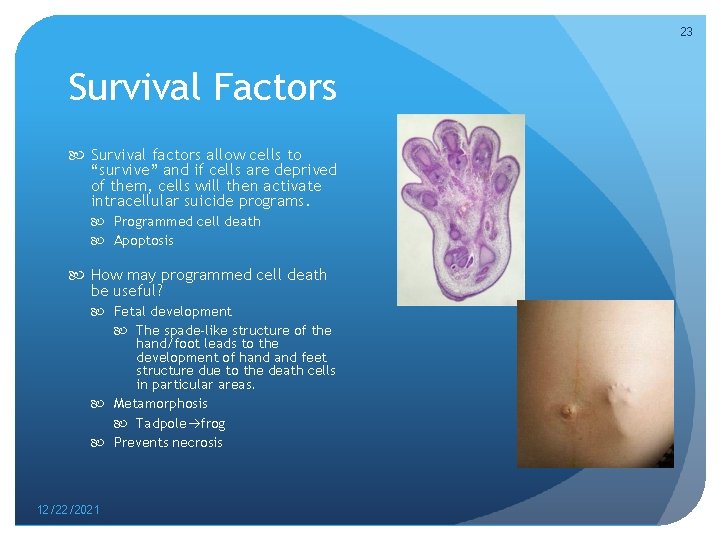
23 Survival Factors Survival factors allow cells to “survive” and if cells are deprived of them, cells will then activate intracellular suicide programs. Programmed cell death Apoptosis How may programmed cell death be useful? Fetal development The spade-like structure of the hand/foot leads to the development of hand feet structure due to the death cells in particular areas. Metamorphosis Tadpole frog Prevents necrosis 12/22/2021
24 Apoptosis occurs because of a series of enzymatic reactions carried out by proteases. 12/22/2021
25 Cancer Cells 12/22/2021
26 Cancer Cells Cancer cells develop because of mutations that directly/indirectly impact the “proliferation control system. ” Faulty control system 12/22/2021
27 Cancer Cells II Proliferation genes code for proteins that promote cell division. Anti-proliferation genes, such as the p 53 gene, code for proteins that stop cell division. Cdk MPF Mutation in the proliferation genes, the genes that promote cell division, causes the cell to divide “nonstop”--hence a cancer growth or tumor is formed Mutant proliferation genes are called oncogenes Cancer promoting genes. Wednesday, December 22, 2021