
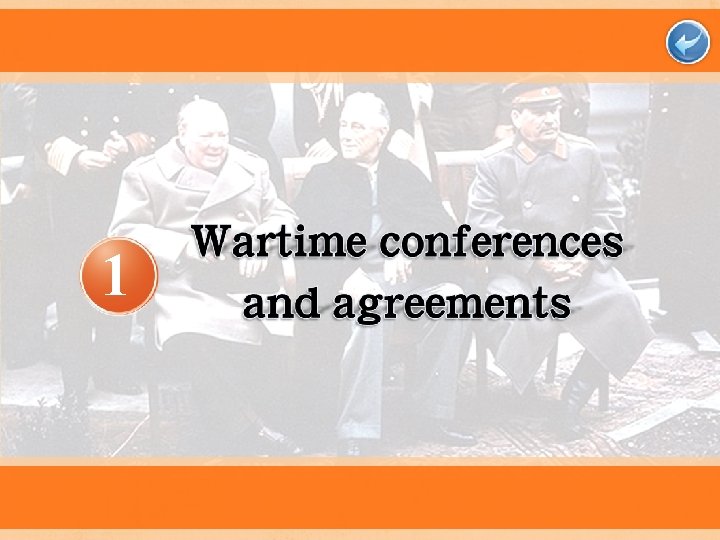
1 The Big Three at the Yalta Conference
1
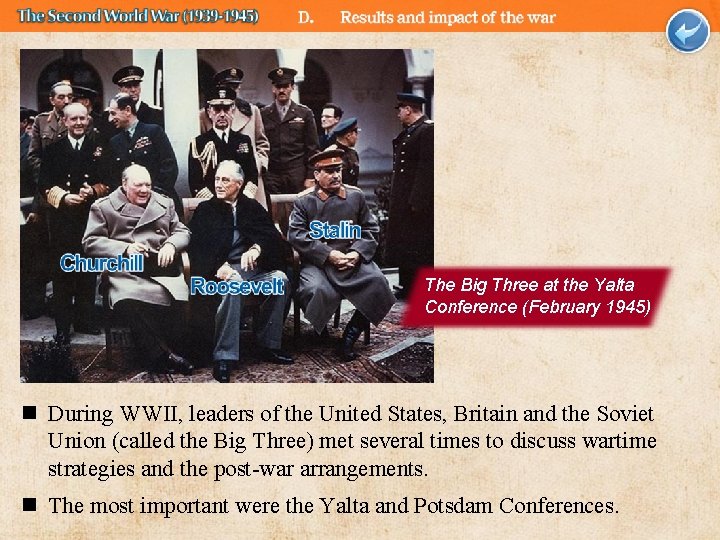
The Big Three at the Yalta Conference (February 1945) n During WWII, leaders of the United States, Britain and the Soviet Union (called the Big Three) met several times to discuss wartime strategies and the post-war arrangements. n The most important were the Yalta and Potsdam Conferences.
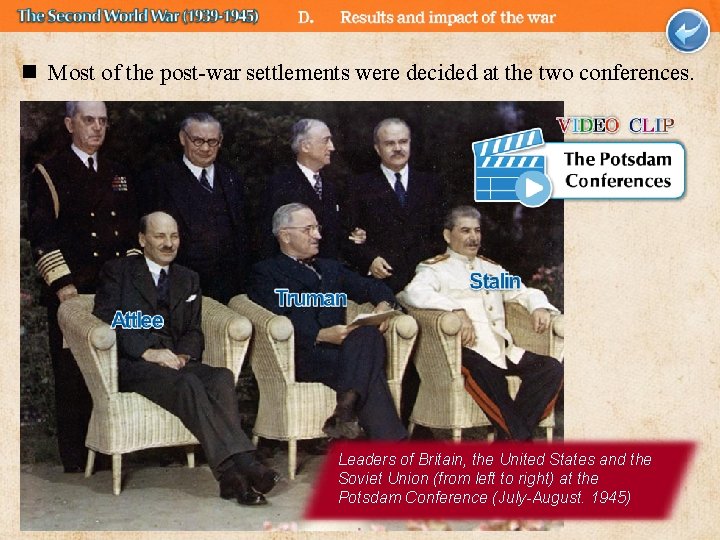
n Most of the post-war settlements were decided at the two conferences. Leaders of Britain, the United States and the Soviet Union (from left to right) at the Potsdam Conference (July-August. 1945)
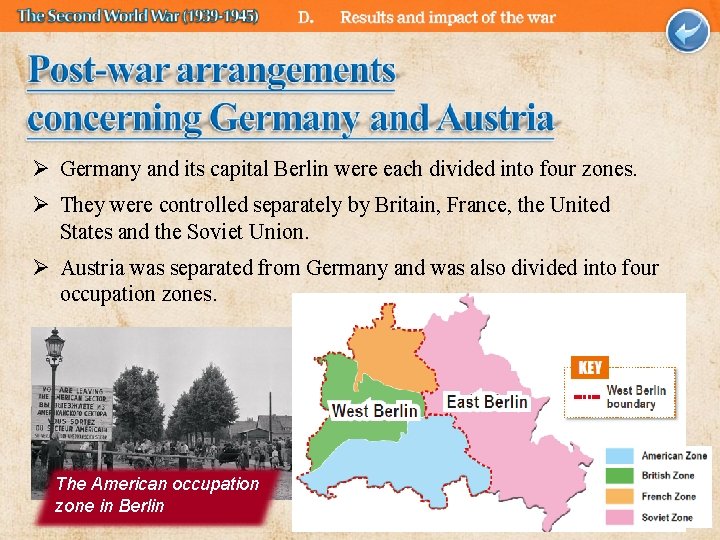
Ø Germany and its capital Berlin were each divided into four zones. Ø They were controlled separately by Britain, France, the United States and the Soviet Union. Ø Austria was separated from Germany and was also divided into four occupation zones. The American occupation zone in Berlin
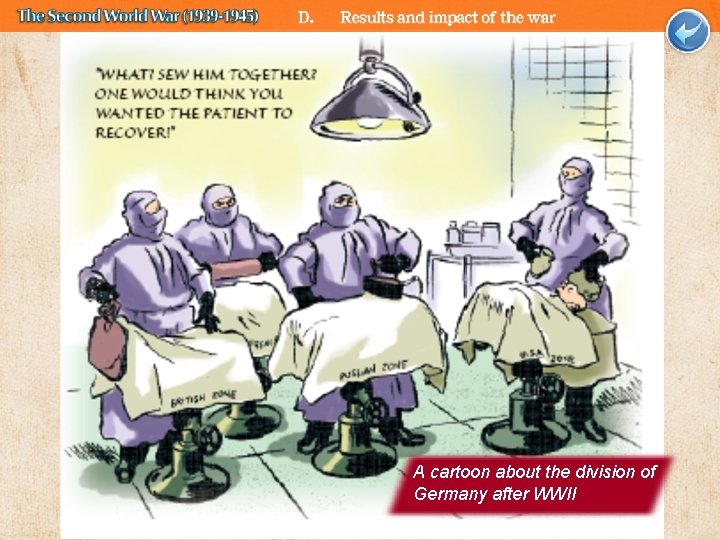
A cartoon about the division of Germany after WWII
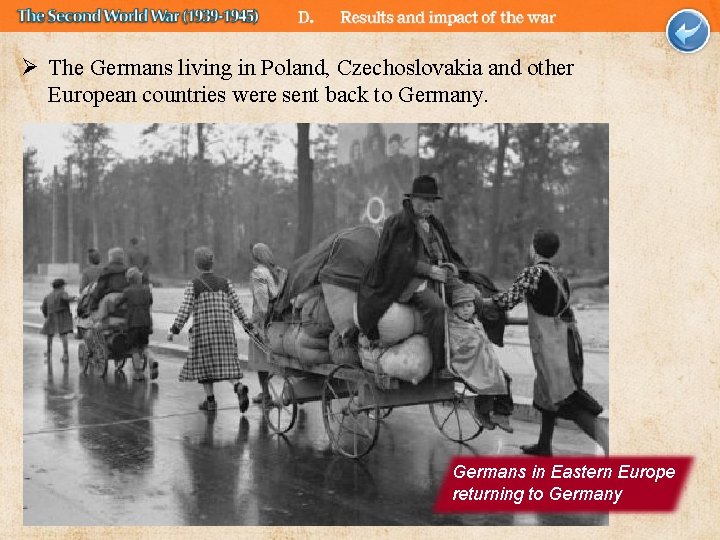
Ø The Germans living in Poland, Czechoslovakia and other European countries were sent back to Germany. Germans in Eastern Europe returning to Germany
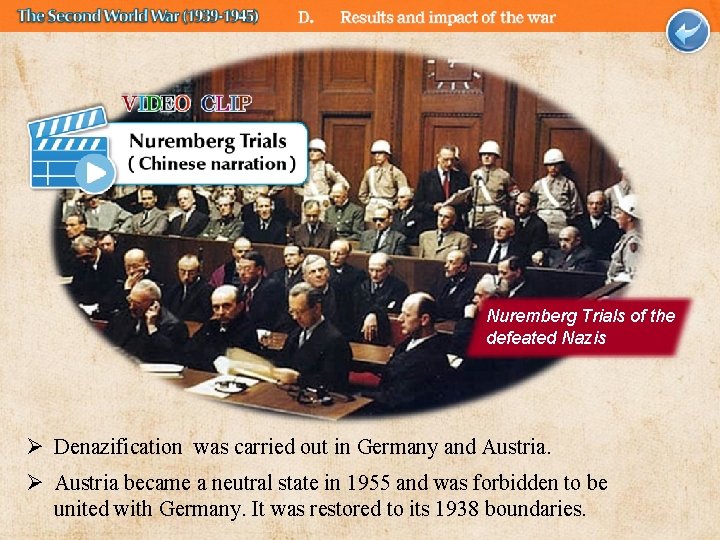
Nuremberg Trials of the defeated Nazis Ø Denazification was carried out in Germany and Austria. Ø Austria became a neutral state in 1955 and was forbidden to be united with Germany. It was restored to its 1938 boundaries.
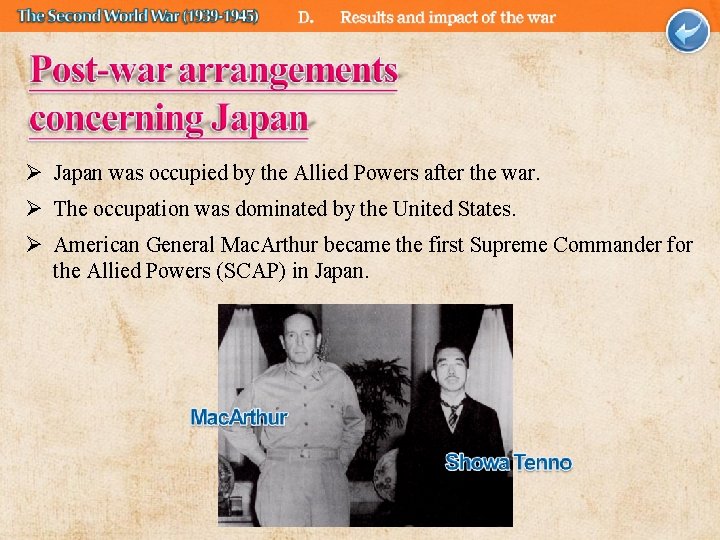
Ø Japan was occupied by the Allied Powers after the war. Ø The occupation was dominated by the United States. Ø American General Mac. Arthur became the first Supreme Commander for the Allied Powers (SCAP) in Japan.
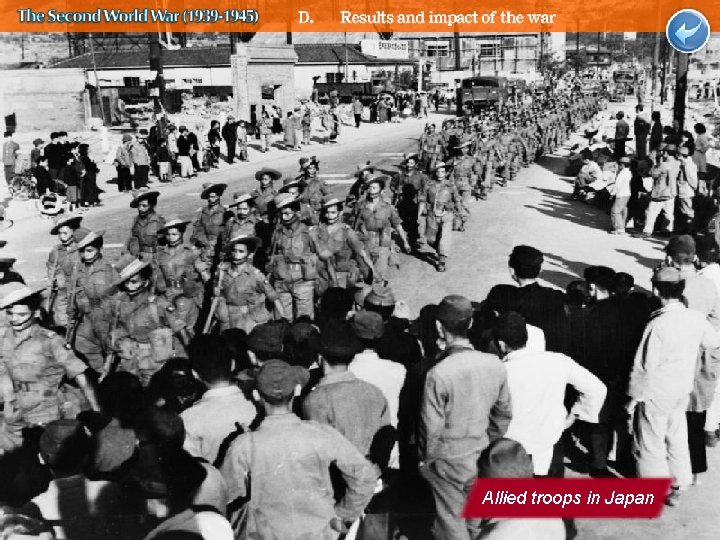
Allied troops in Japan
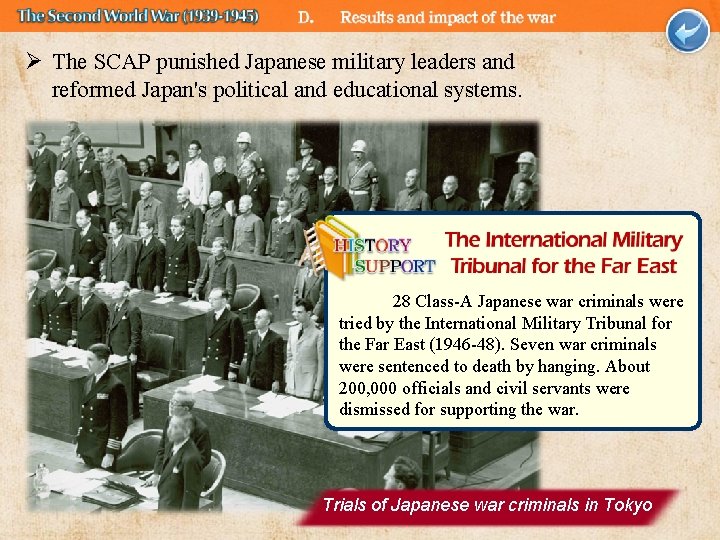
Ø The SCAP punished Japanese military leaders and reformed Japan's political and educational systems. 28 Class-A Japanese war criminals were tried by the International Military Tribunal for the Far East (1946 -48). Seven war criminals were sentenced to death by hanging. About 200, 000 officials and civil servants were dismissed for supporting the war. Trials of Japanese war criminals in Tokyo
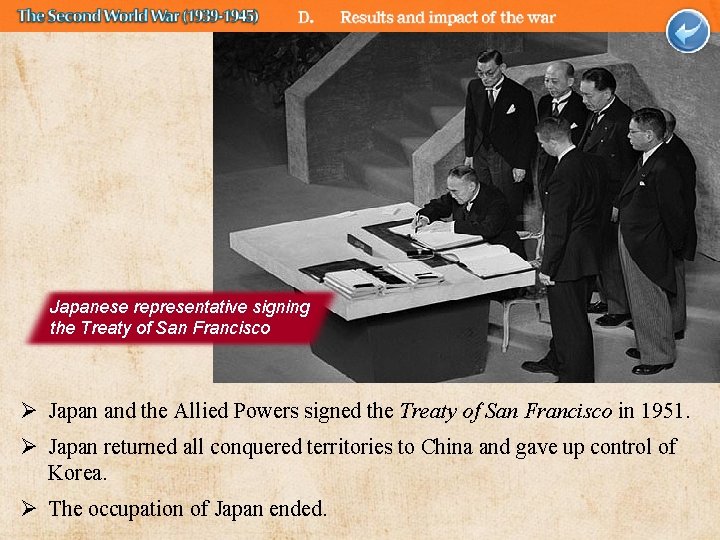
Japanese representative signing the Treaty of San Francisco Ø Japan and the Allied Powers signed the Treaty of San Francisco in 1951. Ø Japan returned all conquered territories to China and gave up control of Korea. Ø The occupation of Japan ended.
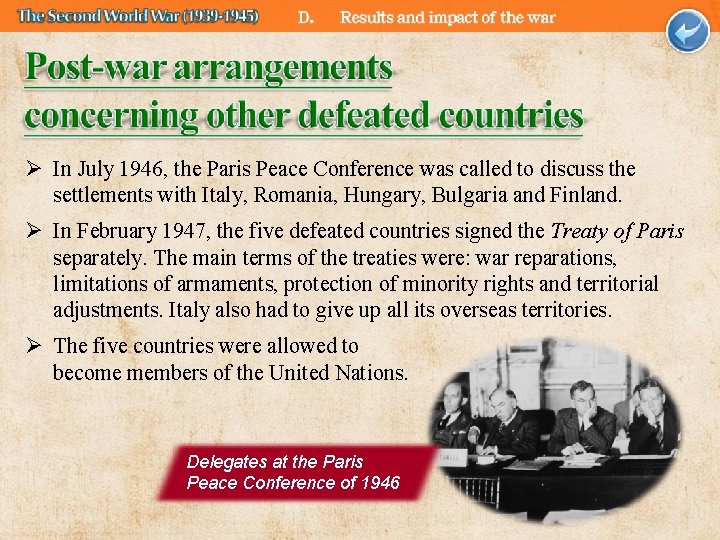
Ø In July 1946, the Paris Peace Conference was called to discuss the settlements with Italy, Romania, Hungary, Bulgaria and Finland. Ø In February 1947, the five defeated countries signed the Treaty of Paris separately. The main terms of the treaties were: war reparations, limitations of armaments, protection of minority rights and territorial adjustments. Italy also had to give up all its overseas territories. Ø The five countries were allowed to become members of the United Nations. Delegates at the Paris Peace Conference of 1946
- Slides: 12