
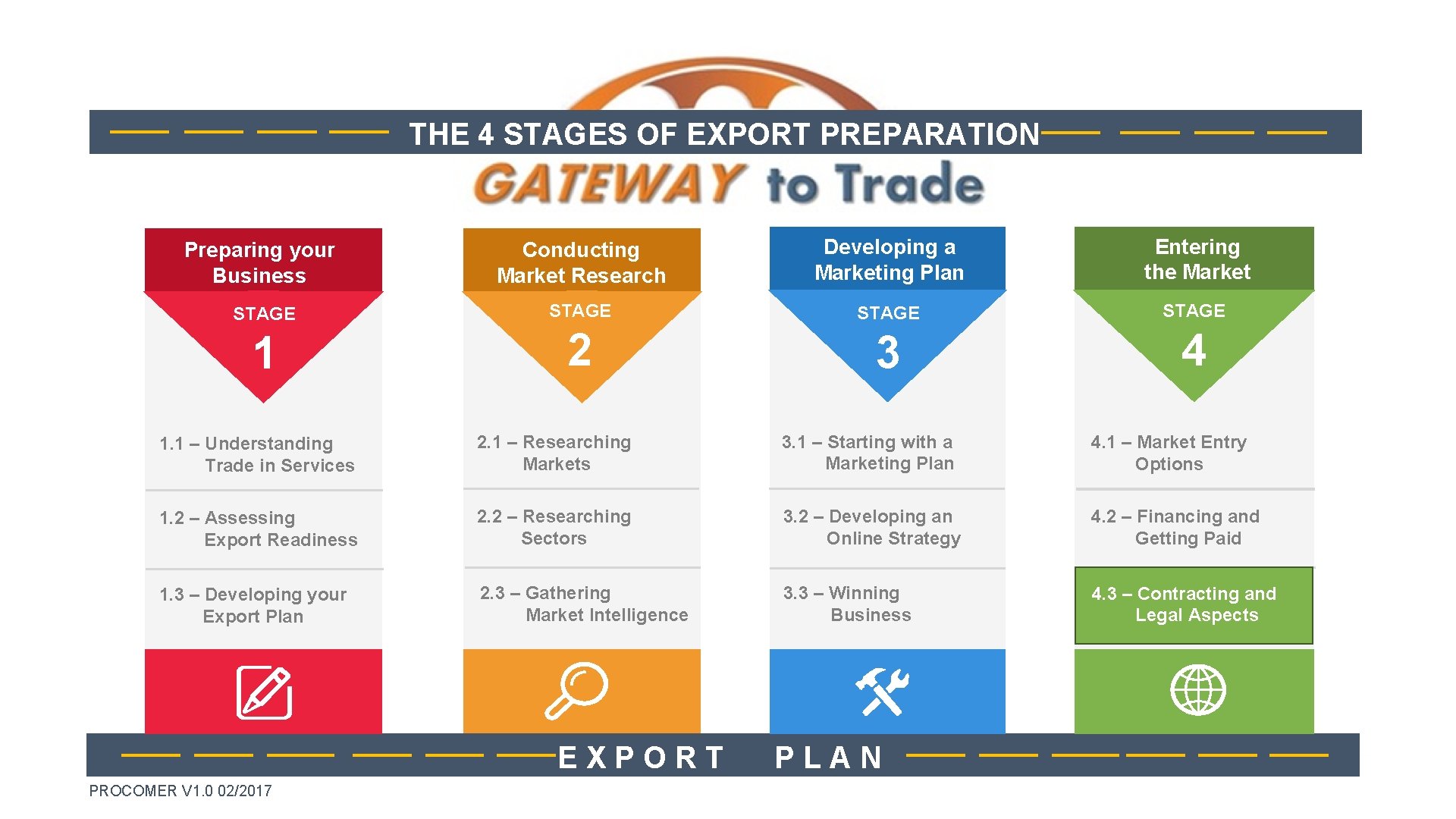
1 THE 4 STAGES OF EXPORT PREPARATION Preparing




- Slides: 25
1 THE 4 STAGES OF EXPORT PREPARATION Preparing your Business Conducting Market Research Developing a Marketing Plan Entering the Market STAGE 1 2 3 4 1. 1 – Understanding Trade in Services 2. 1 – Researching Markets 3. 1 – Starting with a Marketing Plan 4. 1 – Market Entry Options 1. 2 – Assessing Export Readiness 2. 2 – Researching Sectors 3. 2 – Developing an Online Strategy 4. 2 – Financing and Getting Paid 1. 3 – Developing your Export Plan 2. 3 – Gathering Market Intelligence 3. 3 – Winning Business 4. 3 – Contracting and Legal Aspects EXPORT PROCOMER V 1. 0 02/2017 PLAN
4. 3 Contracting & Legal Aspects 4. 1. 1 International Trade Law 4. 1. 2 Intellectual Property 4. 1. 3 Contracting Considerations 2
3 INTERNATIONAL TRADE LAW Rules Governing Commercial Relationships
4 International business crosses borders, also legal jurisdictions. Regulatory and legal issues and considerations underpin every element of global business.
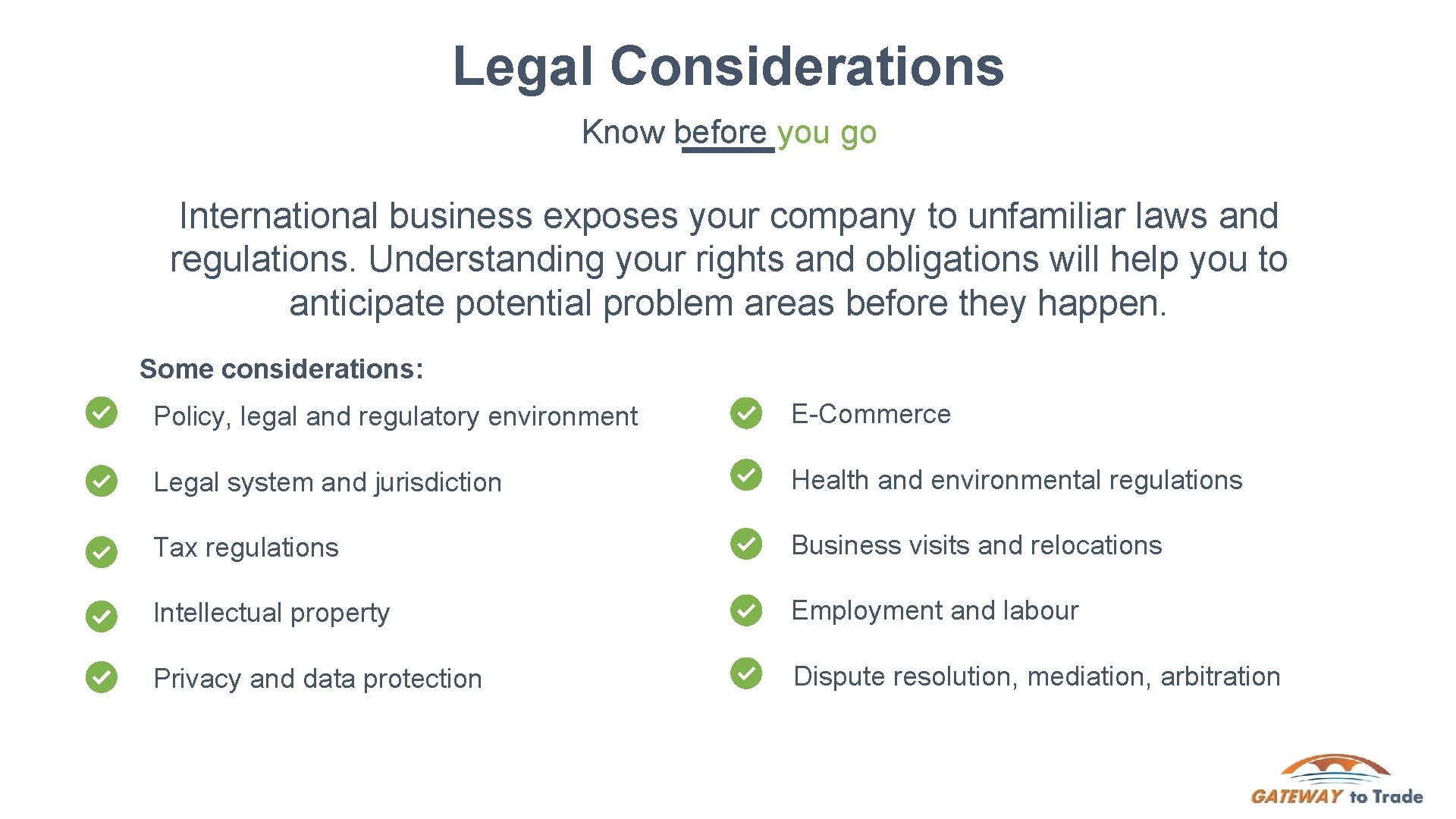
Legal Considerations Know before you go International business exposes your company to unfamiliar laws and regulations. Understanding your rights and obligations will help you to anticipate potential problem areas before they happen. Some considerations: Policy, legal and regulatory environment E-Commerce Legal system and jurisdiction Health and environmental regulations Tax regulations Business visits and relocations Intellectual property Employment and labour Privacy and data protection Dispute resolution, mediation, arbitration v 5
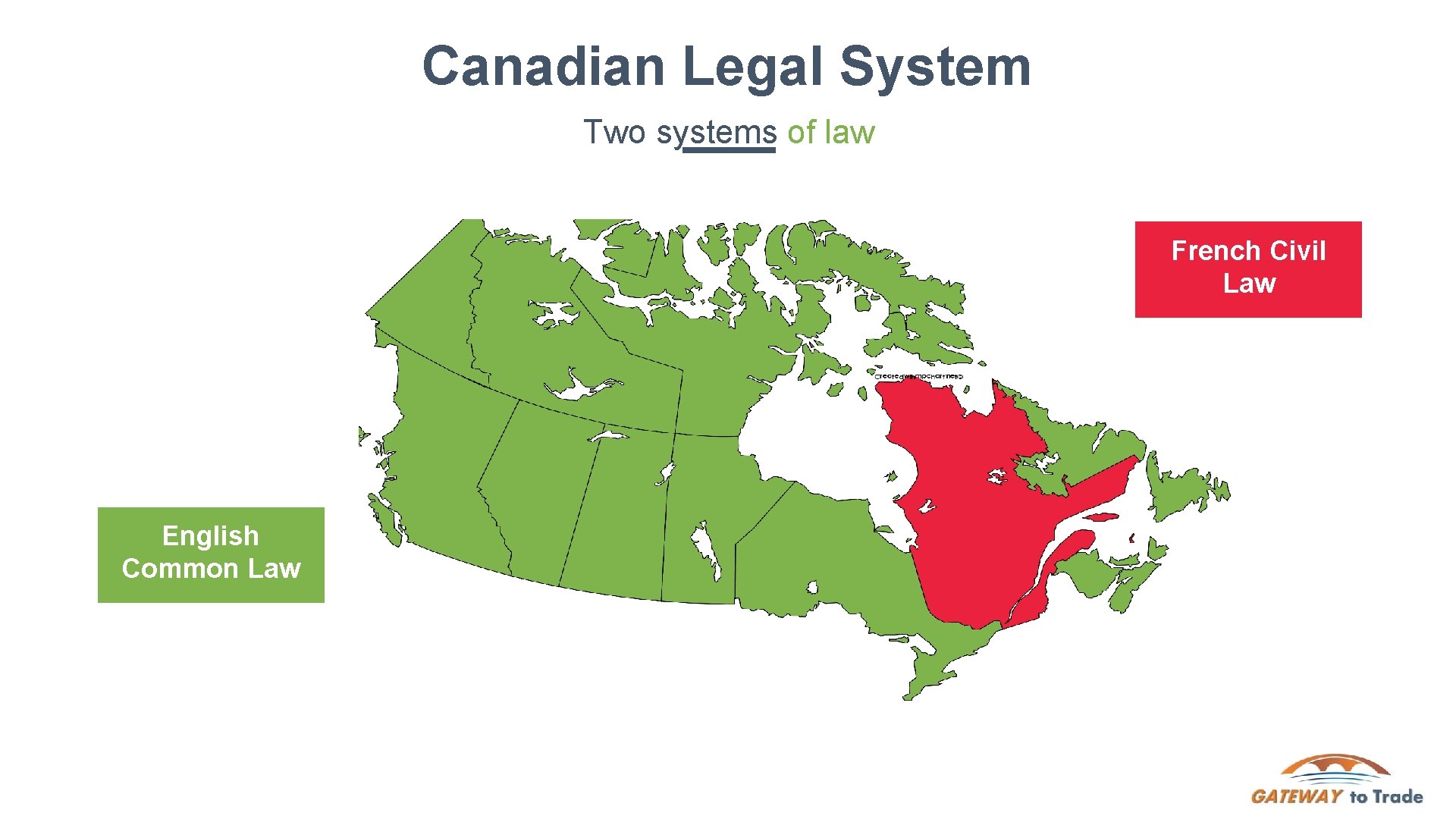
Canadian Legal System 6 Two systems of law French Civil Law English Common Law
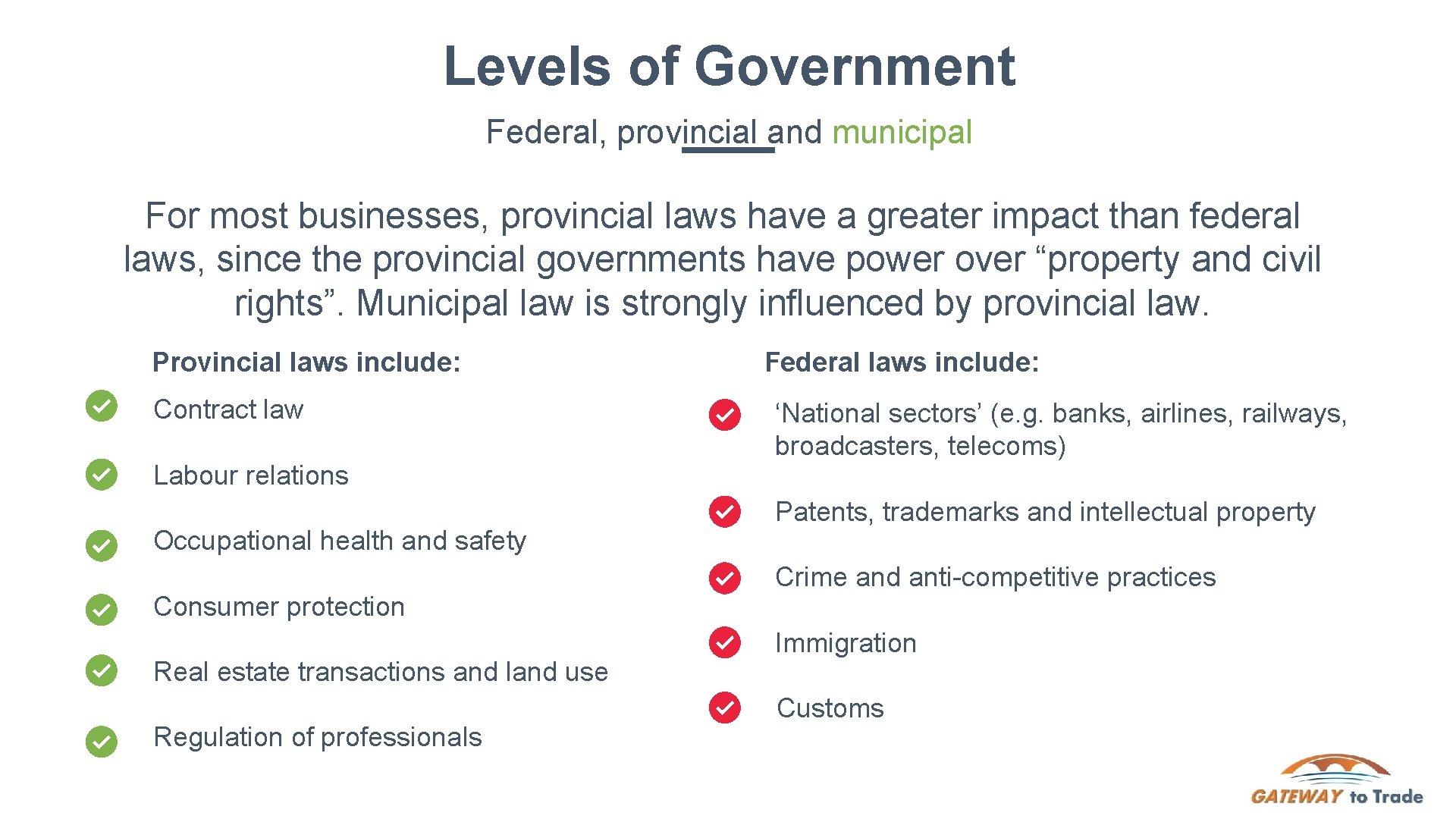
Levels of Government Federal, provincial and municipal For most businesses, provincial laws have a greater impact than federal laws, since the provincial governments have power over “property and civil rights”. Municipal law is strongly influenced by provincial law. Provincial laws include: Federal laws include: Contract law ‘National sectors’ (e. g. banks, airlines, railways, broadcasters, telecoms) Labour relations Patents, trademarks and intellectual property Occupational health and safety Crime and anti-competitive practices Consumer protection Immigration Real estate transactions and land use Customs Regulation of professionals v 7
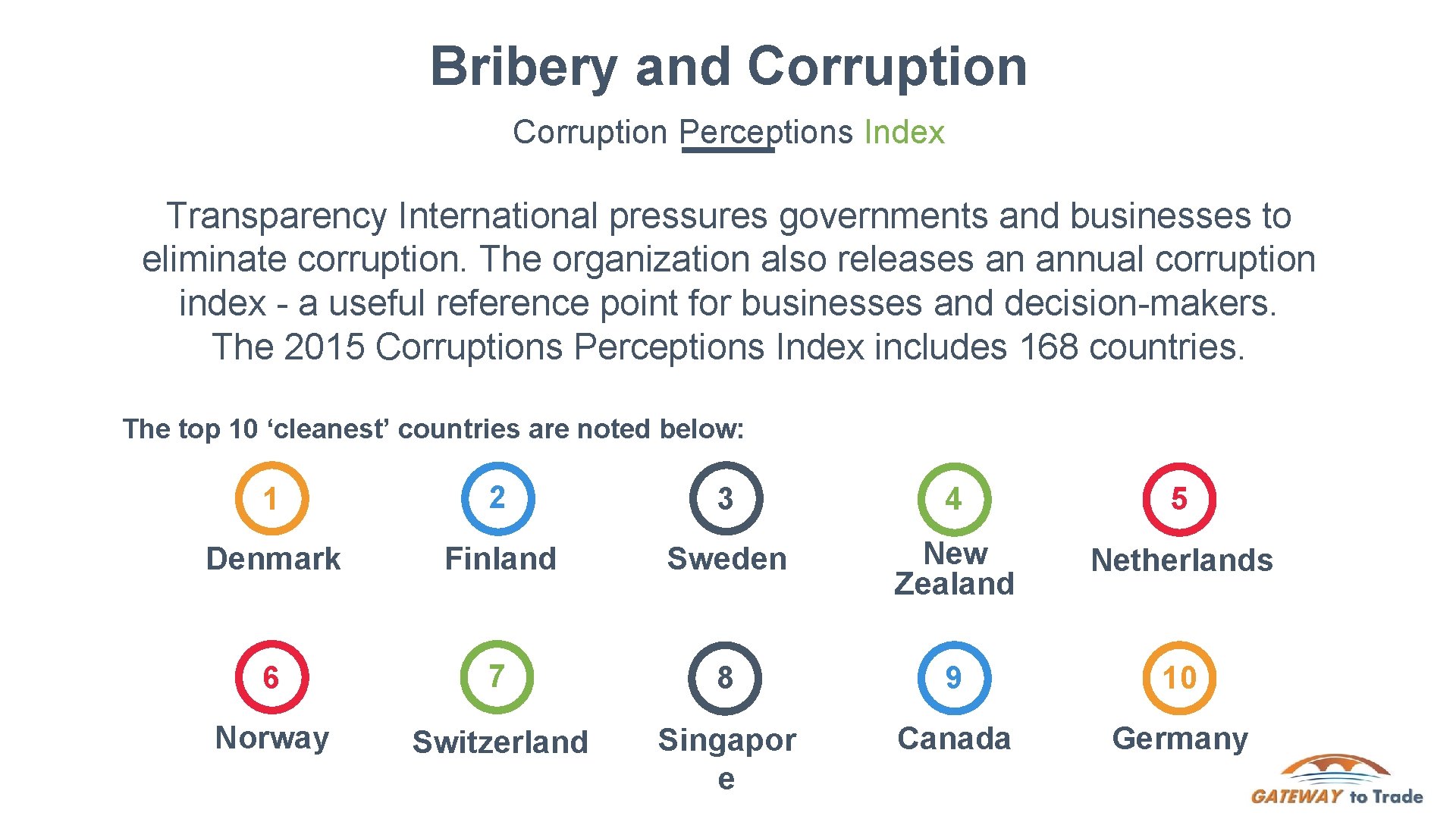
Bribery and Corruption 8 Corruption Perceptions Index Transparency International pressures governments and businesses to eliminate corruption. The organization also releases an annual corruption index - a useful reference point for businesses and decision-makers. The 2015 Corruptions Perceptions Index includes 168 countries. The top 10 ‘cleanest’ countries are noted below: 1 2 3 4 5 Denmark Finland Sweden New Zealand Netherlands 6 7 8 9 10 Norway Switzerland Singapor ve Canada Germany
Things You Should Know! Know before you go: How to research legal systems and jurisdictions; International trade agreements and rules; Business requirements, e. g. permits, licenses; Importing/exporting requirements; How to seek professional assistance when needed: legal, taxation, customs; Legal processes for resolving business disputes; v 9
10 INTELLECTUAL PROPERTY Protecting Your Rights
11 Intellectual property refers to creations of the mind.
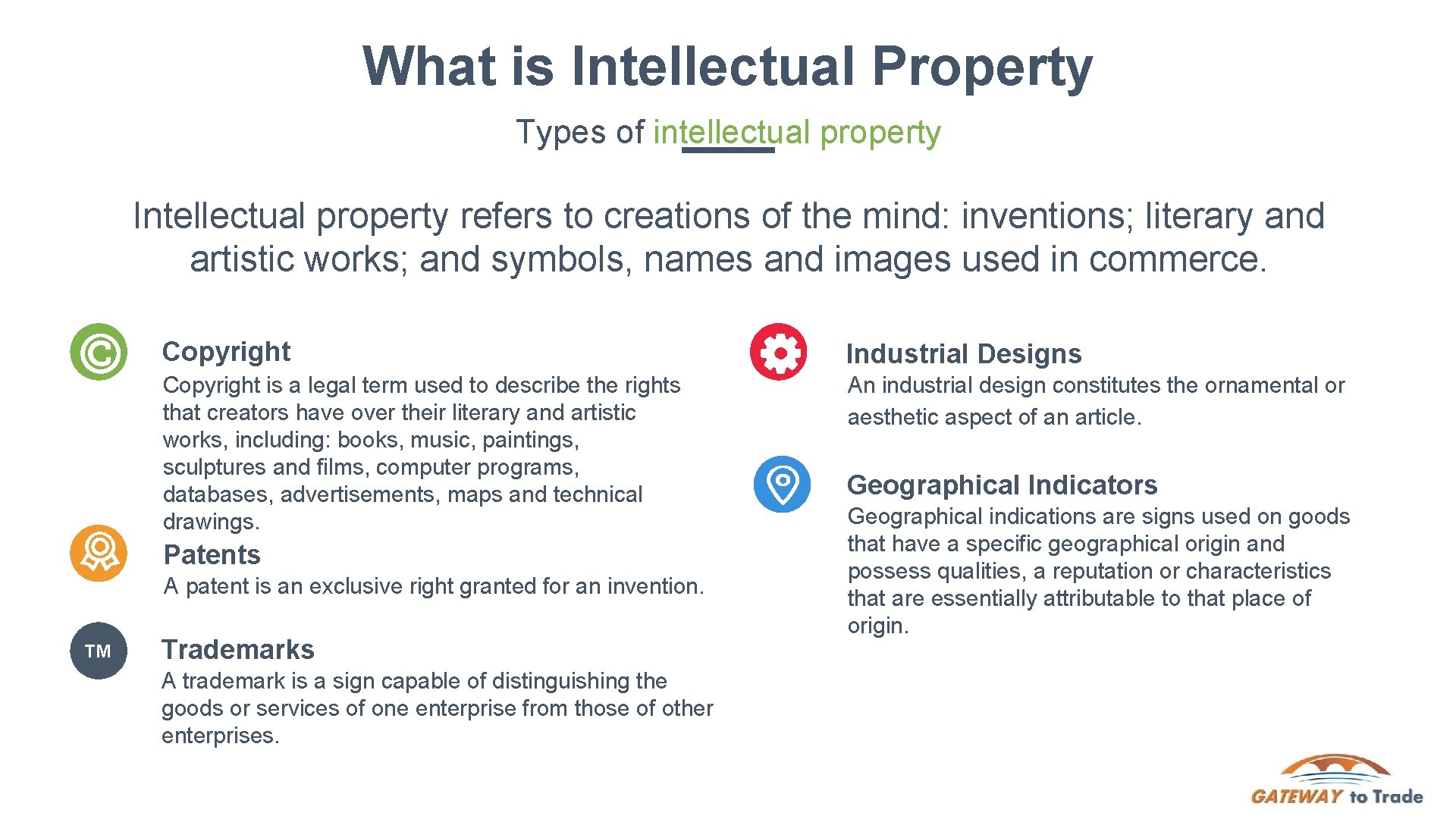
What is Intellectual Property Types of intellectual property Intellectual property refers to creations of the mind: inventions; literary and artistic works; and symbols, names and images used in commerce. Copyright Industrial Designs Copyright is a legal term used to describe the rights that creators have over their literary and artistic works, including: books, music, paintings, sculptures and films, computer programs, databases, advertisements, maps and technical drawings. An industrial design constitutes the ornamental or aesthetic aspect of an article. Geographical Indicators Geographical indications are signs used on goods that have a specific geographical origin and possess qualities, a reputation or characteristics that are essentially attributable to that place of origin. Patents A patent is an exclusive right granted for an invention. TM Trademarks A trademark is a sign capable of distinguishing the goods or services of one enterprise from those of other enterprises. v 12
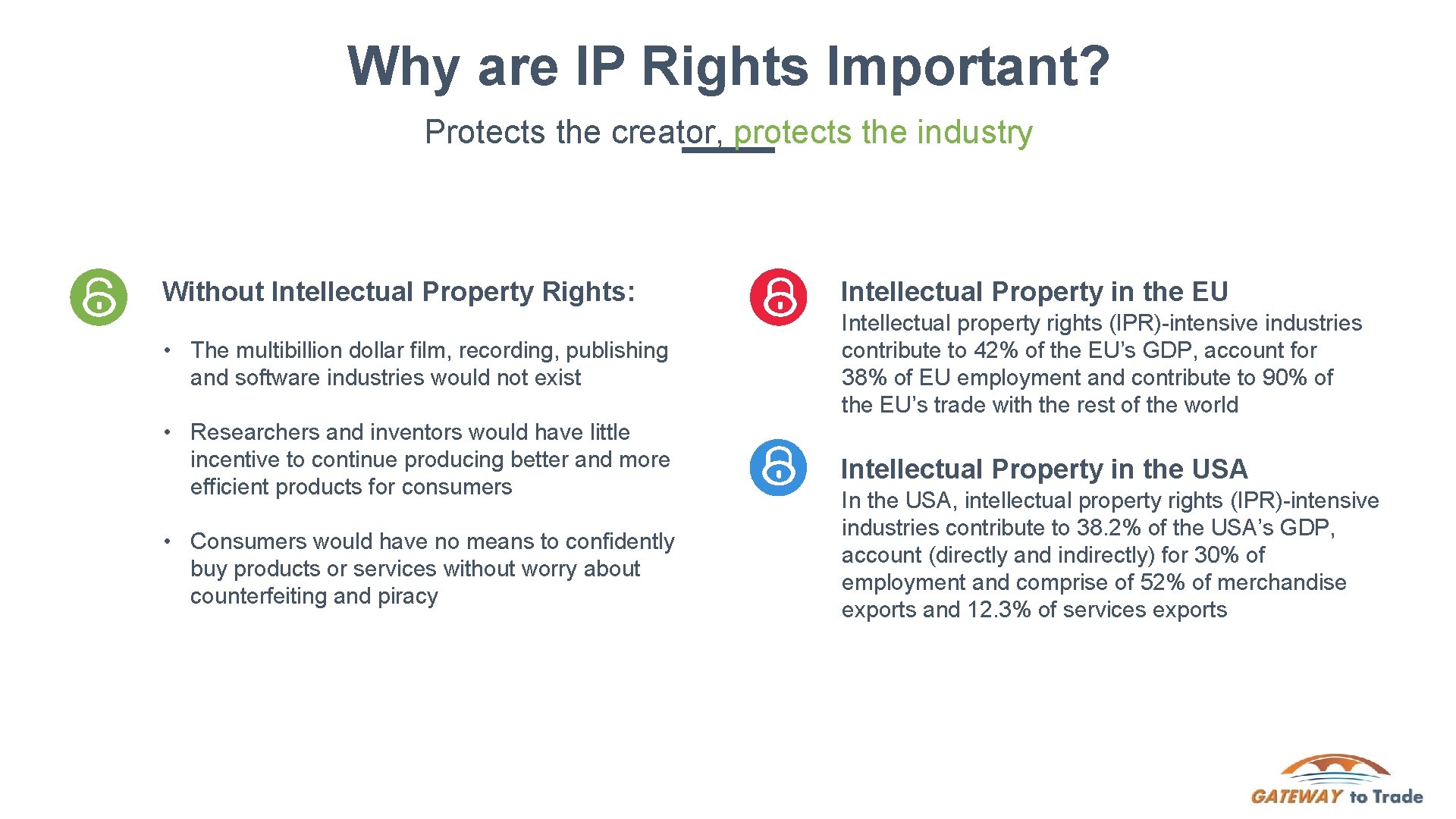
Why are IP Rights Important? Protects the creator, protects the industry Without Intellectual Property Rights: Intellectual Property in the EU • The multibillion dollar film, recording, publishing and software industries would not exist Intellectual property rights (IPR)-intensive industries contribute to 42% of the EU’s GDP, account for 38% of EU employment and contribute to 90% of the EU’s trade with the rest of the world • Researchers and inventors would have little incentive to continue producing better and more efficient products for consumers Intellectual Property in the USA In the USA, intellectual property rights (IPR)-intensive industries contribute to 38. 2% of the USA’s GDP, account (directly and indirectly) for 30% of employment and comprise of 52% of merchandise exports and 12. 3% of services exports • Consumers would have no means to confidently buy products or services without worry about counterfeiting and piracy v 13
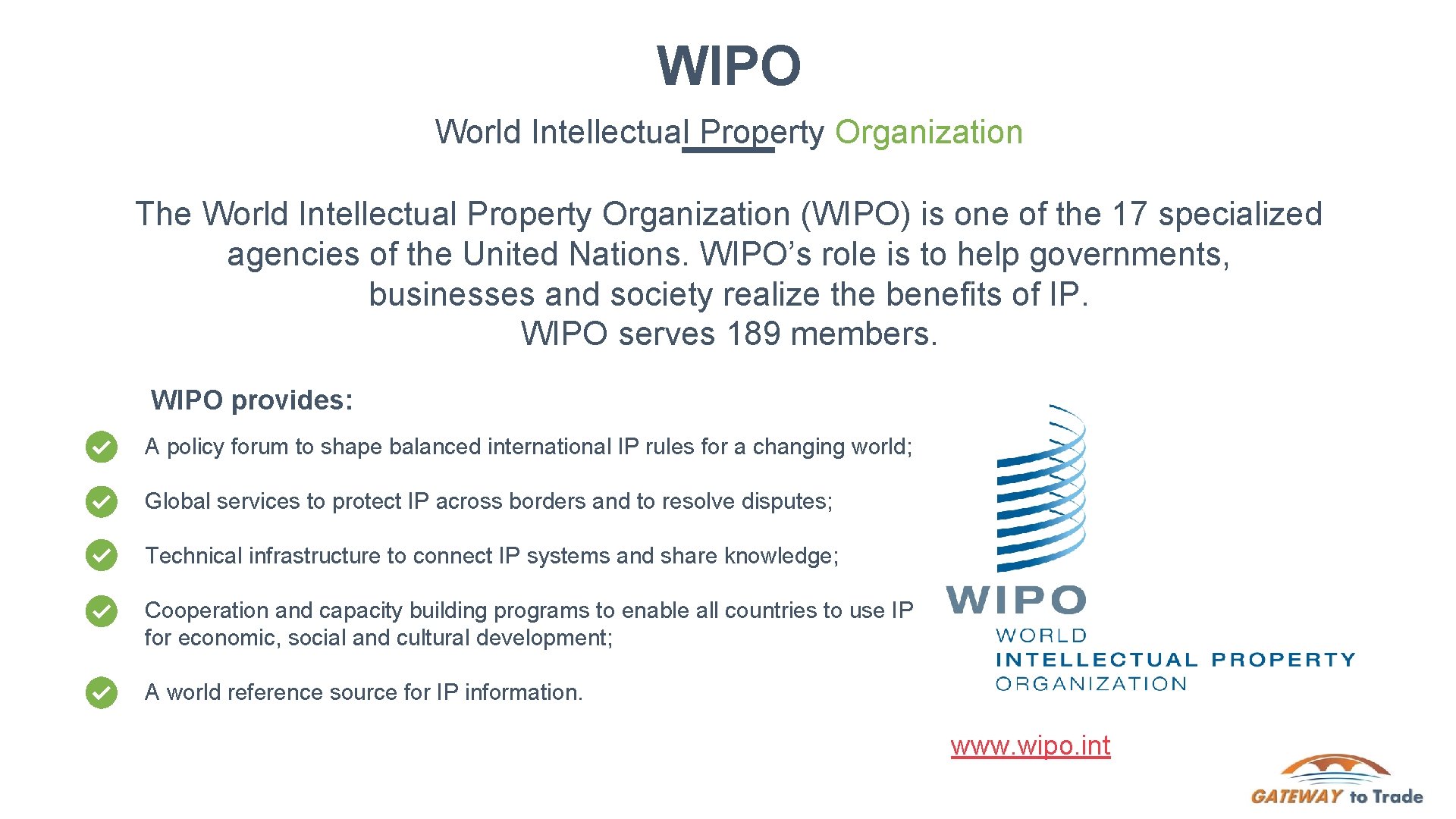
WIPO 14 World Intellectual Property Organization The World Intellectual Property Organization (WIPO) is one of the 17 specialized agencies of the United Nations. WIPO’s role is to help governments, businesses and society realize the benefits of IP. WIPO serves 189 members. WIPO provides: A policy forum to shape balanced international IP rules for a changing world; Global services to protect IP across borders and to resolve disputes; Technical infrastructure to connect IP systems and share knowledge; Cooperation and capacity building programs to enable all countries to use IP for economic, social and cultural development; A world reference source for IP information. www. wipo. int v
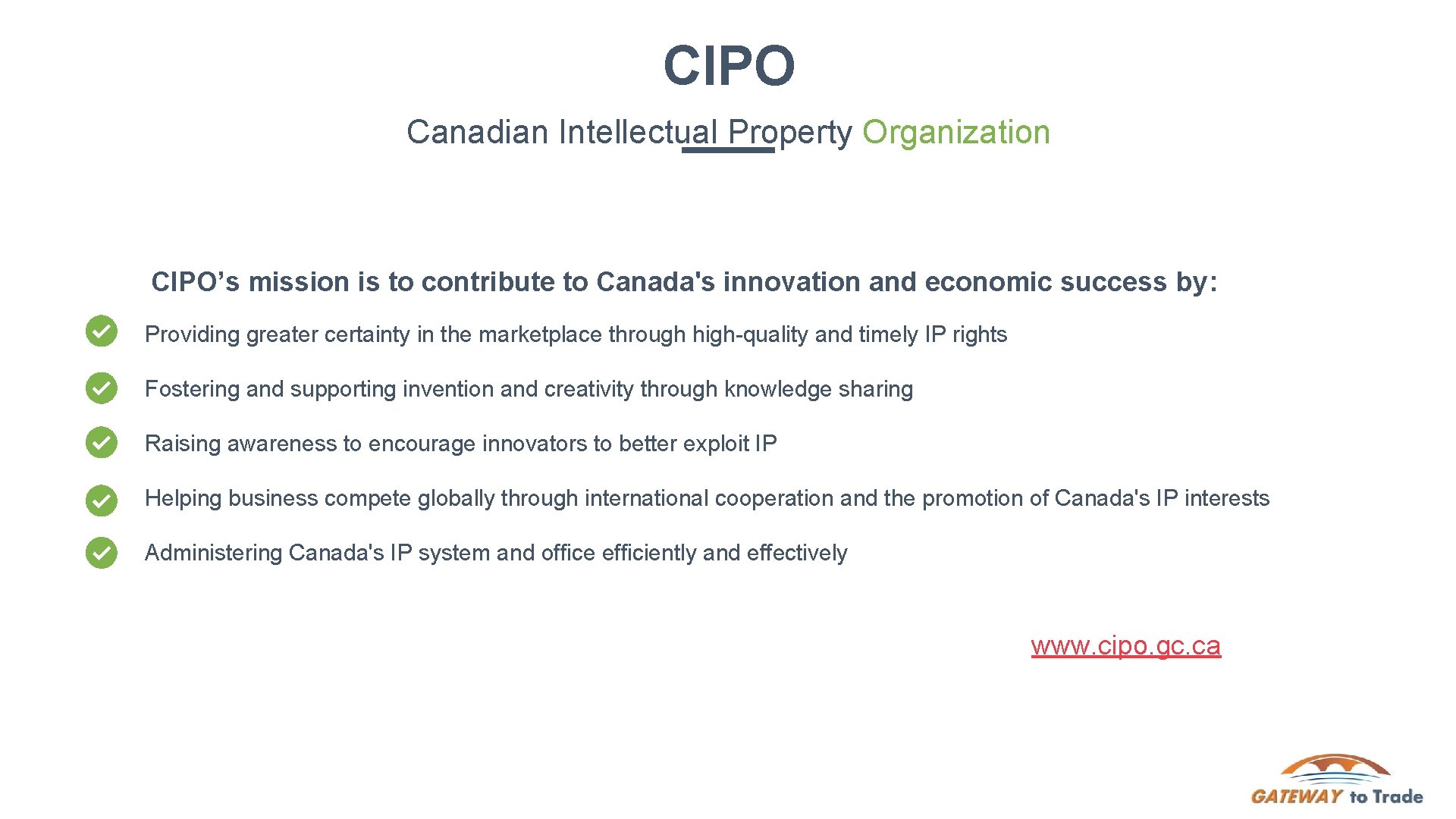
CIPO 15 Canadian Intellectual Property Organization CIPO’s mission is to contribute to Canada's innovation and economic success by: Providing greater certainty in the marketplace through high-quality and timely IP rights Fostering and supporting invention and creativity through knowledge sharing Raising awareness to encourage innovators to better exploit IP Helping business compete globally through international cooperation and the promotion of Canada's IP interests Administering Canada's IP system and office efficiently and effectively www. cipo. gc. ca v
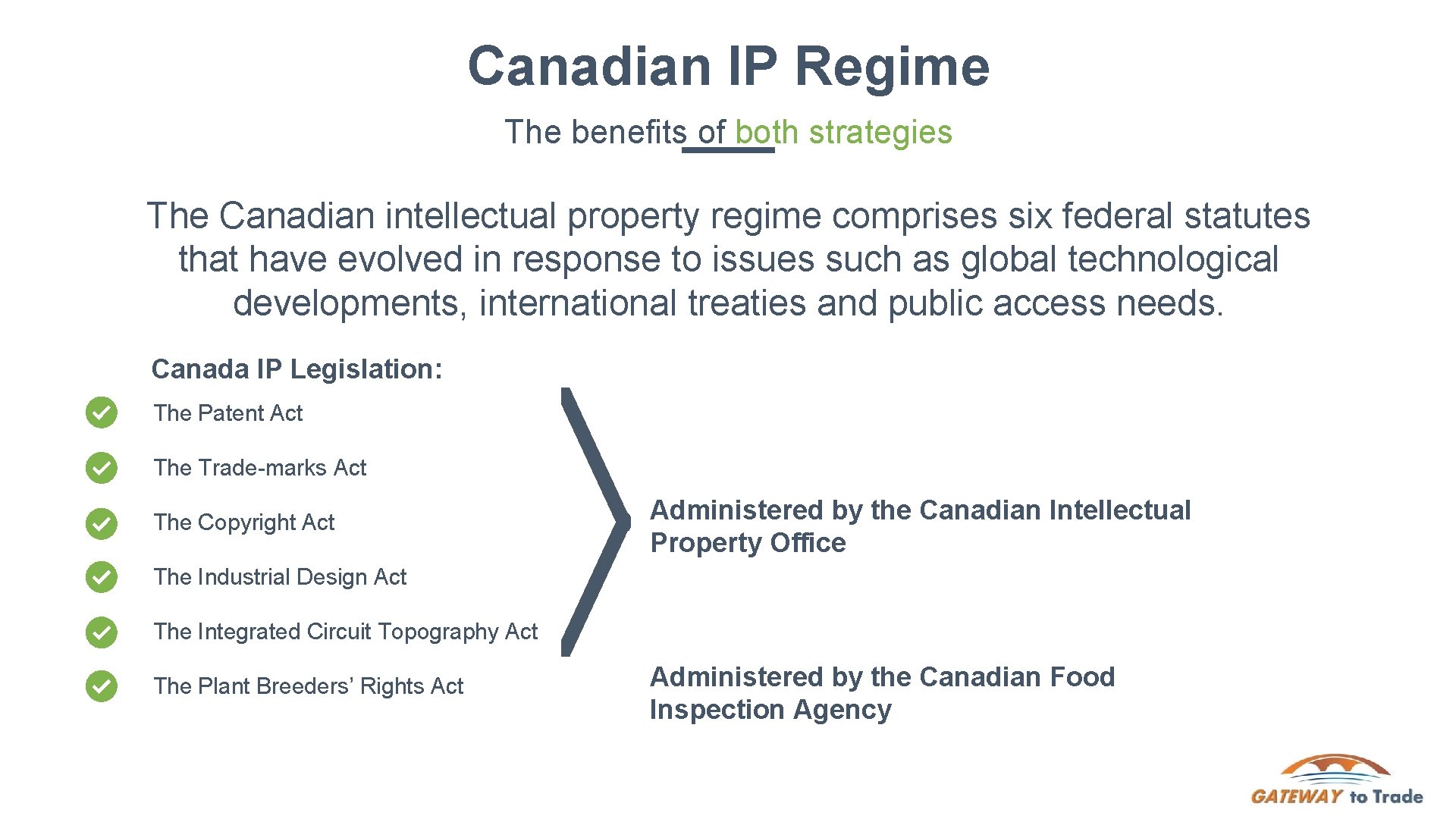
Canadian IP Regime The benefits of both strategies The Canadian intellectual property regime comprises six federal statutes that have evolved in response to issues such as global technological developments, international treaties and public access needs. Canada IP Legislation: The Patent Act The Trade-marks Act The Copyright Act Administered by the Canadian Intellectual Property Office The Industrial Design Act The Integrated Circuit Topography Act The Plant Breeders’ Rights Act Administered by the Canadian Food Inspection Agency v 16
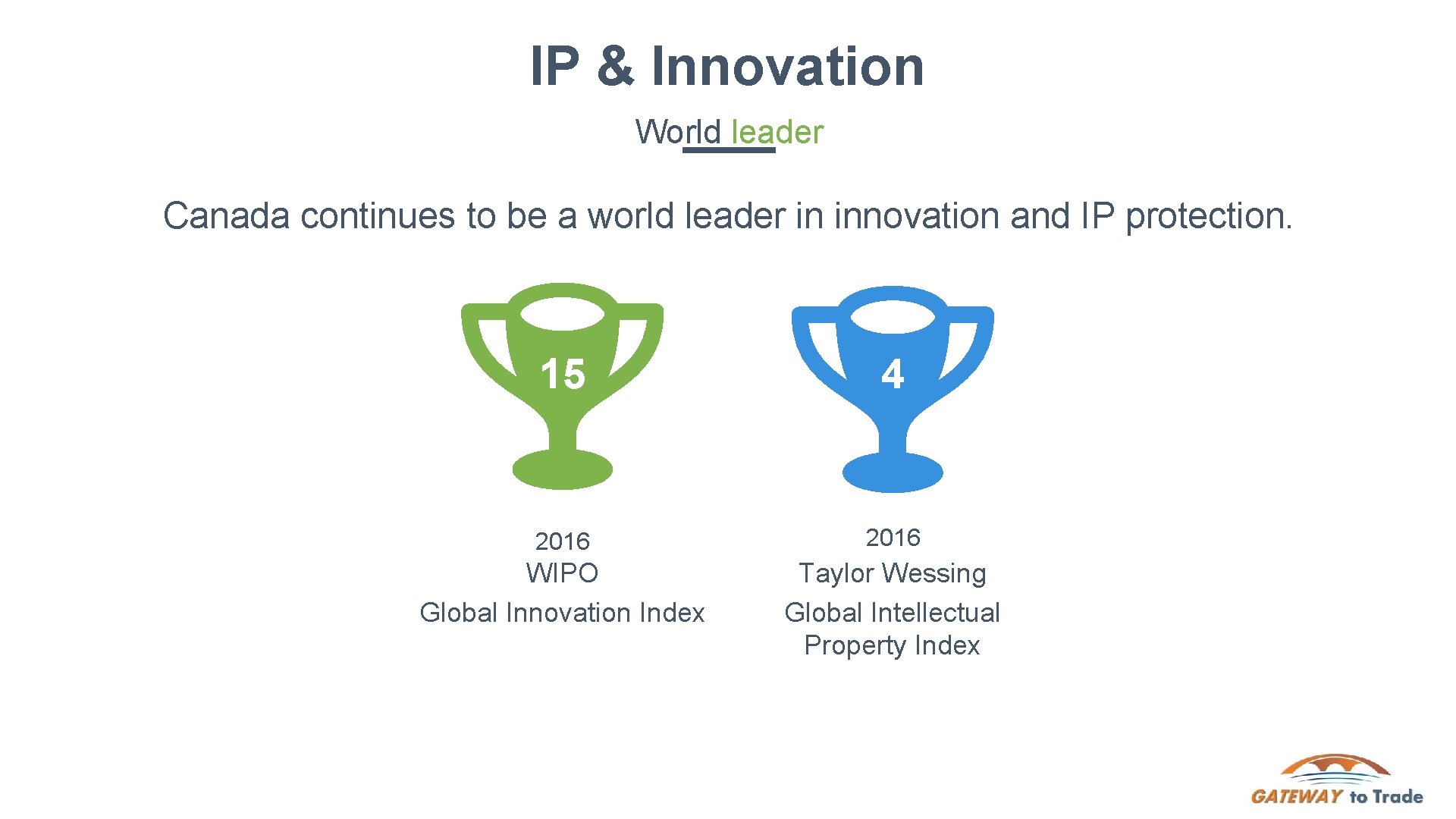
IP & Innovation World leader Canada continues to be a world leader in innovation and IP protection. 15 4 2016 WIPO Global Innovation Index Taylor Wessing Global Intellectual Property Index 17
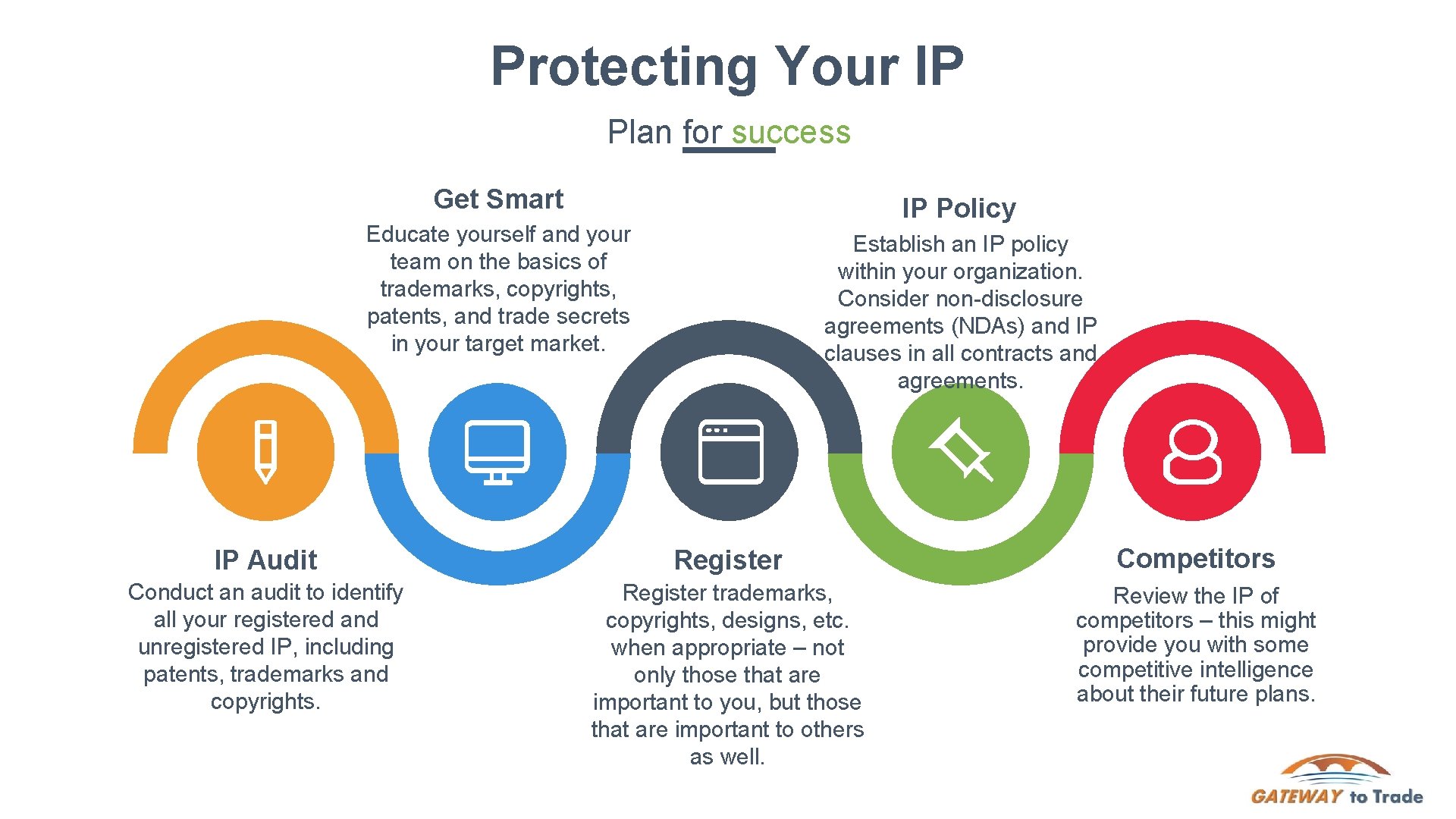
Protecting Your IP 18 Plan for success Get Smart IP Policy Educate yourself and your team on the basics of trademarks, copyrights, patents, and trade secrets in your target market. Establish an IP policy within your organization. Consider non-disclosure agreements (NDAs) and IP clauses in all contracts and agreements. IP Audit Register Competitors Conduct an audit to identify all your registered and unregistered IP, including patents, trademarks and copyrights. Register trademarks, copyrights, designs, etc. when appropriate – not only those that are important to you, but those that are important to others as well. Review the IP of competitors – this might provide you with some competitive intelligence about their future plans.
19 CONTRACTING CONSIDERATIONS
20 A contract is one or more legal obligations between two or more parties, consisting of an offer and acceptance in exchange for ‘consideration’ usually in the form of payment.
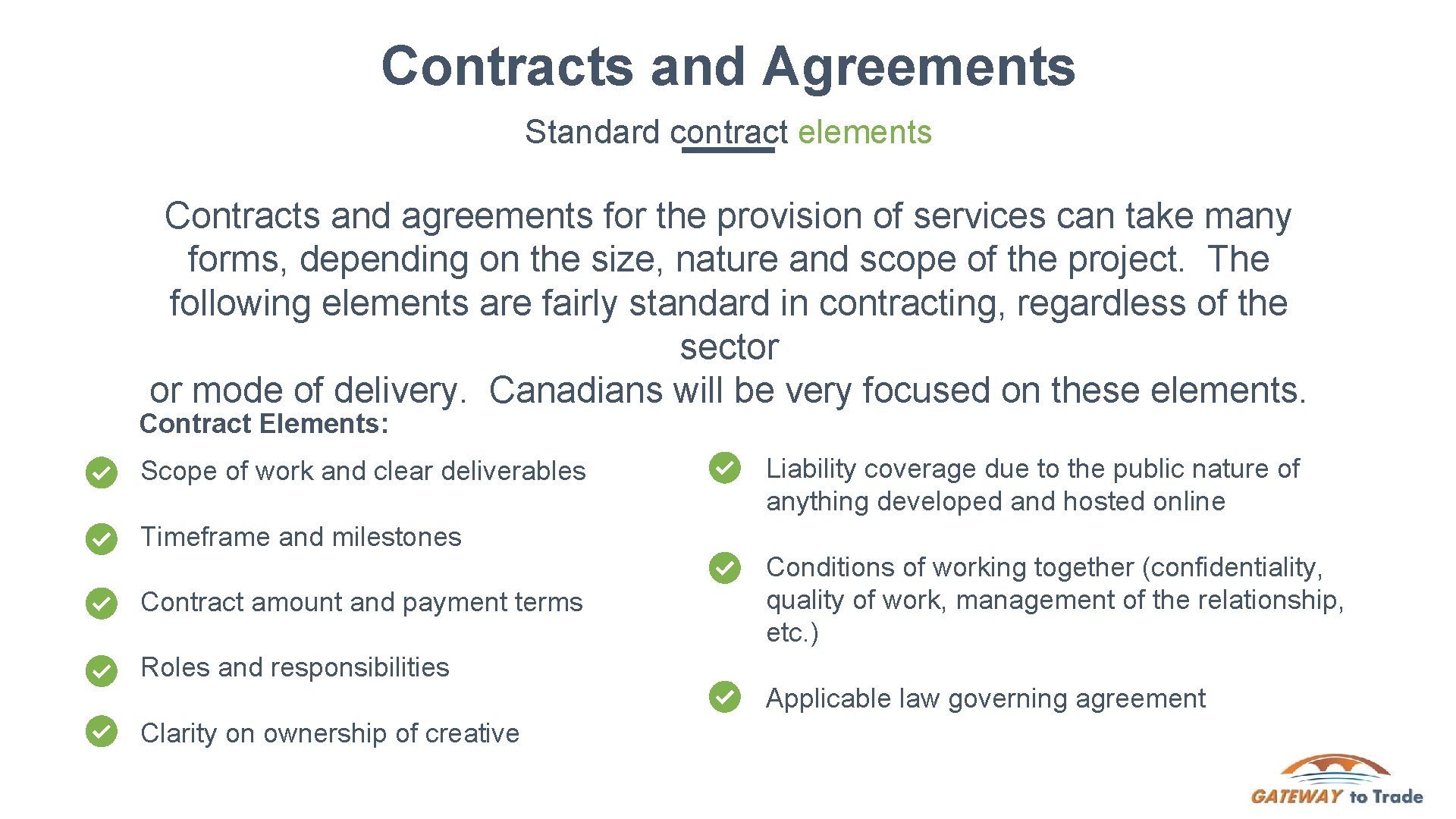
Contracts and Agreements Standard contract elements Contracts and agreements for the provision of services can take many forms, depending on the size, nature and scope of the project. The following elements are fairly standard in contracting, regardless of the sector or mode of delivery. Canadians will be very focused on these elements. Contract Elements: Liability coverage due to the public nature of anything developed and hosted online Scope of work and clear deliverables Timeframe and milestones Conditions of working together (confidentiality, quality of work, management of the relationship, etc. ) Contract amount and payment terms Roles and responsibilities Applicable law governing agreement Clarity on ownership of creative v 21
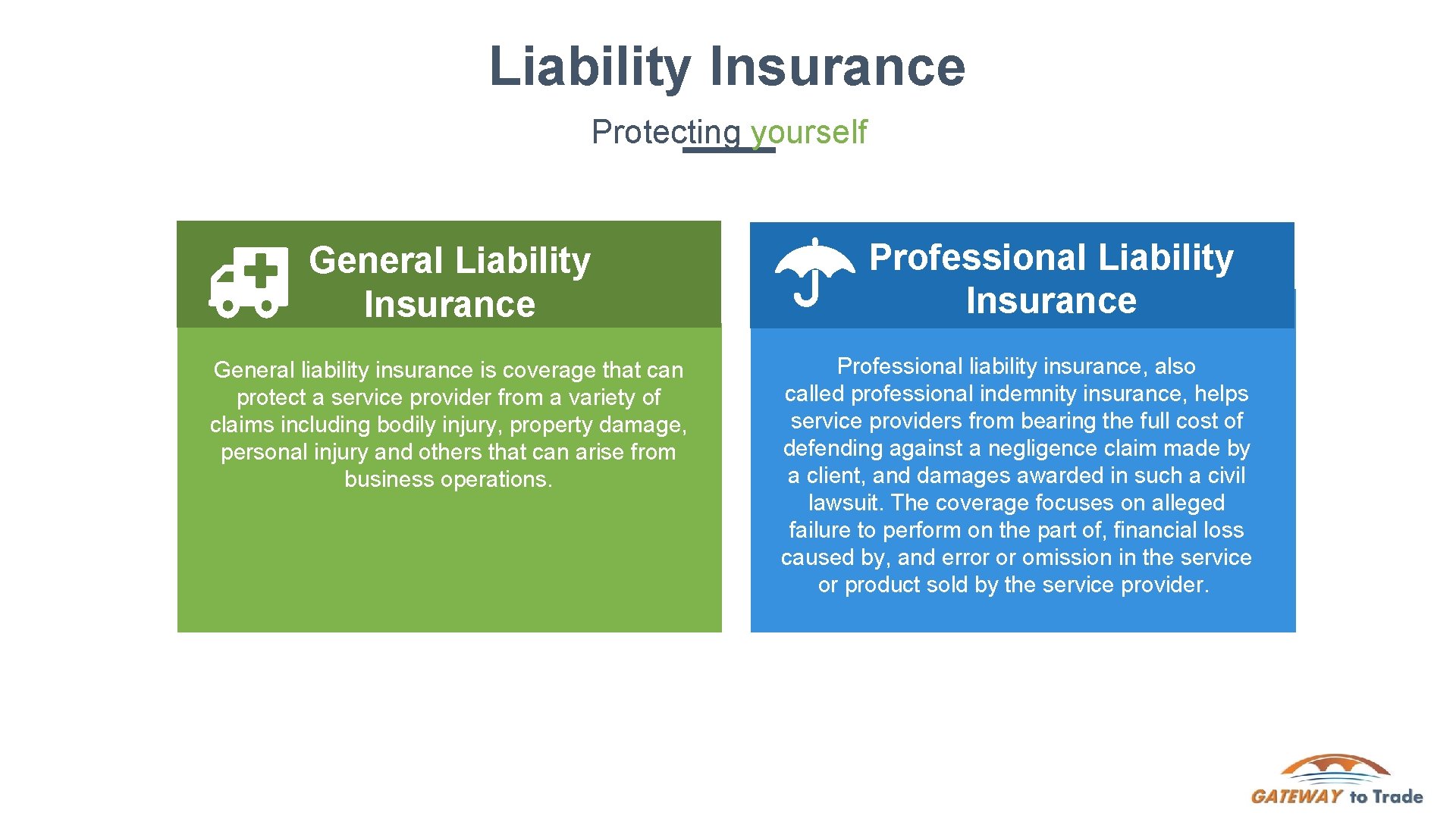
Liability Insurance Protecting yourself General Liability Insurance General liability insurance is coverage that can protect a service provider from a variety of claims including bodily injury, property damage, personal injury and others that can arise from business operations. Professional Liability Insurance Professional liability insurance, also called professional indemnity insurance, helps service providers from bearing the full cost of defending against a negligence claim made by a client, and damages awarded in such a civil lawsuit. The coverage focuses on alleged failure to perform on the part of, financial loss caused by, and error or omission in the service or product sold by the service provider. 22
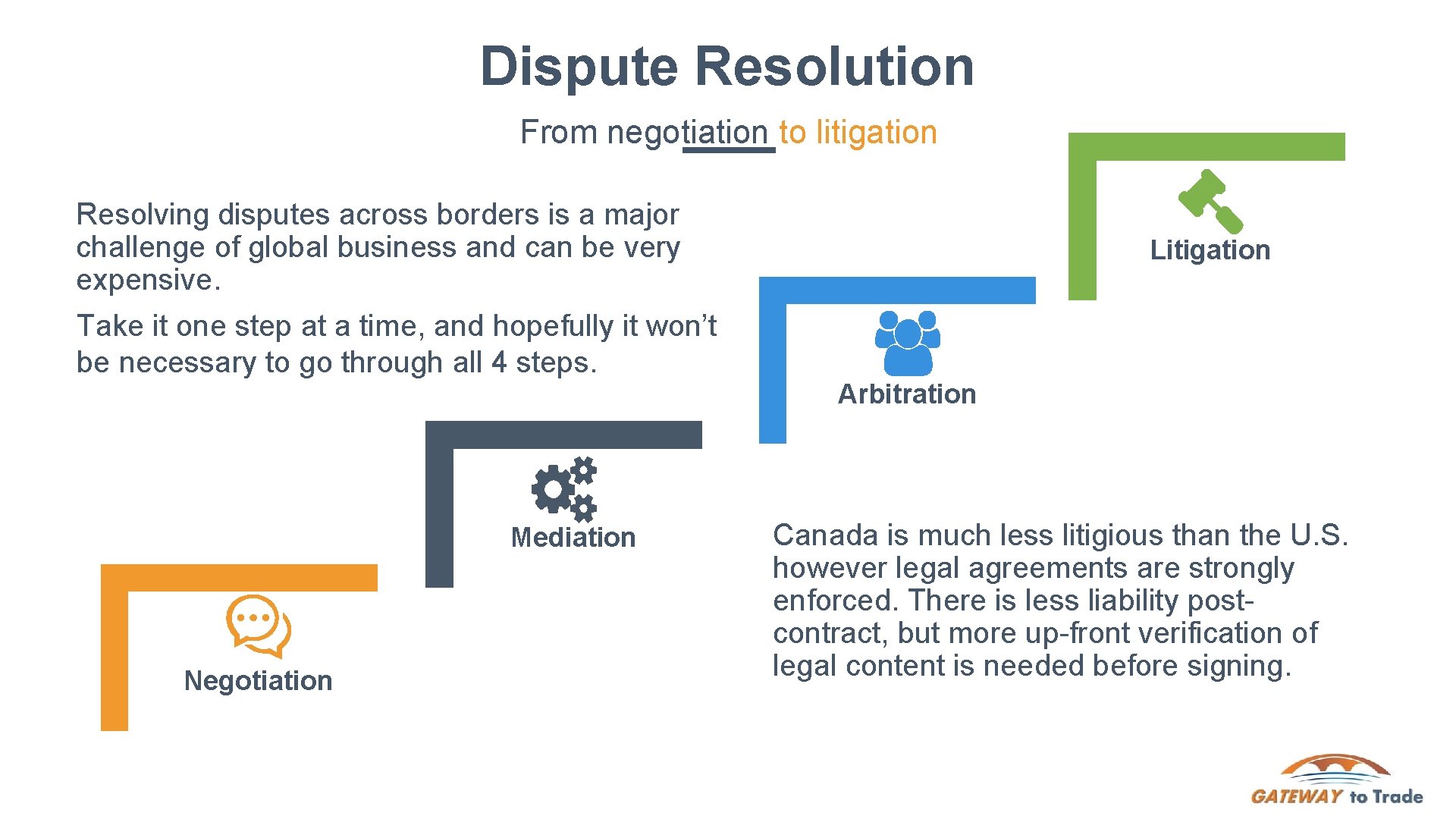
Dispute Resolution 23 From negotiation to litigation Resolving disputes across borders is a major challenge of global business and can be very expensive. Take it one step at a time, and hopefully it won’t be necessary to go through all 4 steps. Mediation Negotiation Litigation Arbitration Canada is much less litigious than the U. S. however legal agreements are strongly enforced. There is less liability postcontract, but more up-front verification of legal content is needed before signing.
SUMMARY 4. 3 Contracting and Legal Aspects Start by considering the types of legal issues that are likely to arise in your particular sector, and as you pursue specific opportunities. Familiarize yourself with the various legal systems that may apply. Develop a plan to protect your intellectual property. When ready to set up a contract, start with a Memorandum of Understanding (MOU) to outline the important elements of the contract. 24
Group Discussion and Action Plan What was the most interesting thing you learned in this module? List 3 or more action items. Update your Export Plan. 25