
1 Structure of Plasma membrane Twolayered structure lipid
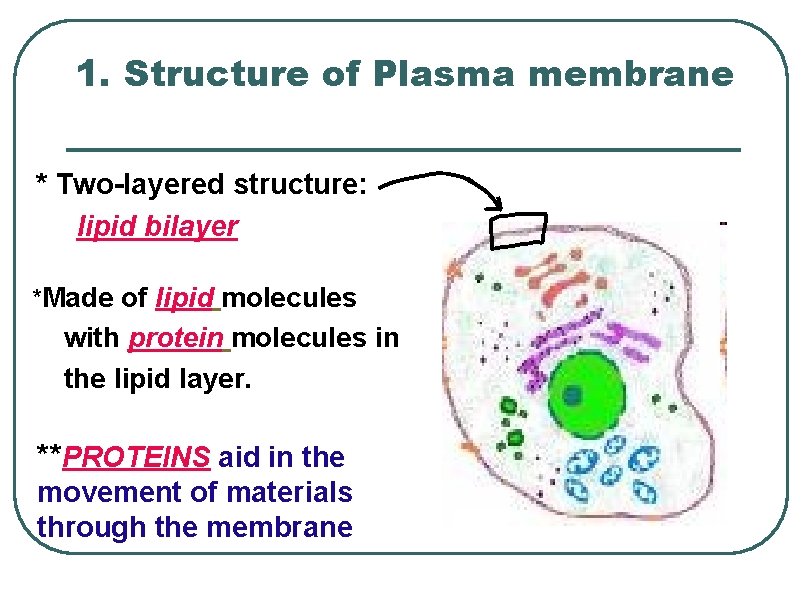
1. Structure of Plasma membrane * Two-layered structure: lipid bilayer *Made of lipid molecules with protein molecules in the lipid layer. **PROTEINS aid in the movement of materials through the membrane

extracellular fluid (watery environment) phospholipid hydrophilic heads hydrophobic tails bilayer hydrophilic heads cytoplasm (watery environment)

Polar Head Non-Polar Tails tails (hydrophobic) head (hydrophilic)
* Bilayer can be considered a liquid l FLUID MOSAIC MODEL: plasma membrane : made up of molecules that are free to flow among one another. l Kinds and arrangements of proteins + lipids vary from one membrane to another and give each type of membrane specific permeability properties.
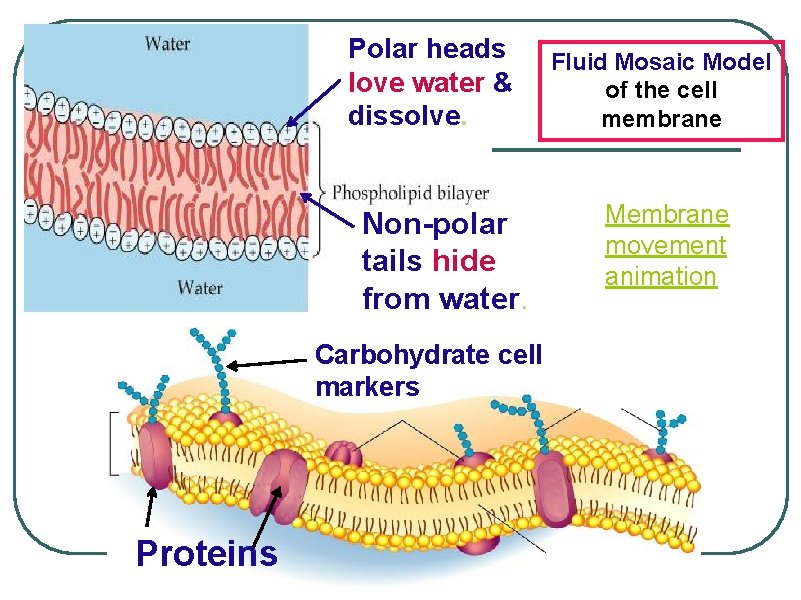
Polar heads love water & dissolve. Non-polar tails hide from water. Carbohydrate cell markers Proteins Fluid Mosaic Model of the cell membrane Membrane movement animation
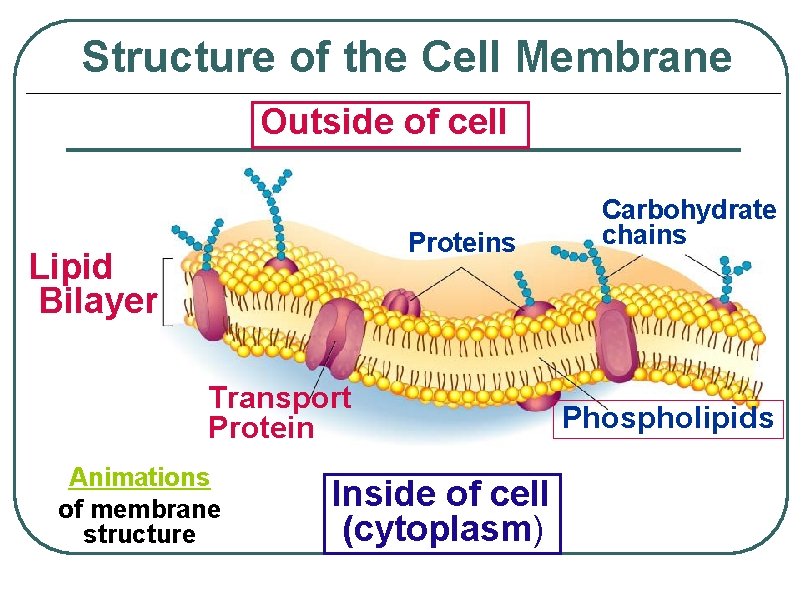
Structure of the Cell Membrane Outside of cell Proteins Lipid Bilayer Transport Protein Animations of membrane structure Go to Section: Inside of cell (cytoplasm) Carbohydrate chains Phospholipids
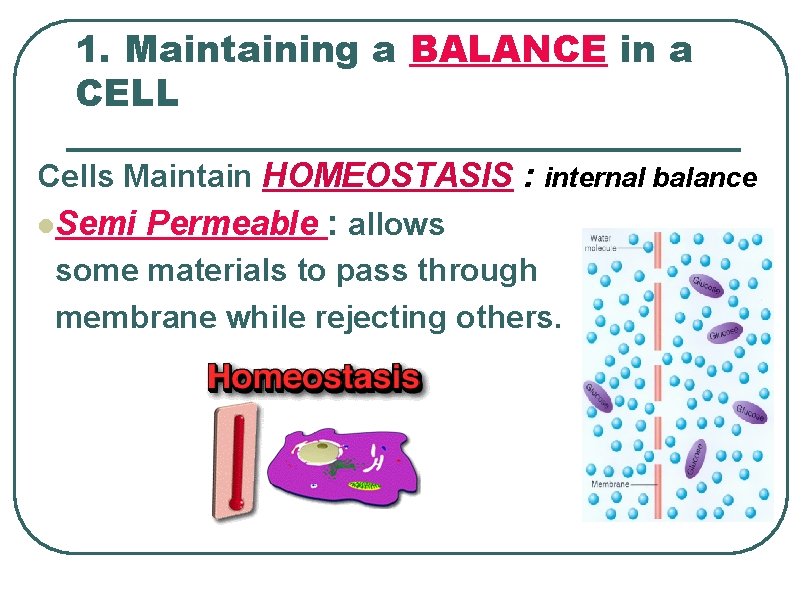
1. Maintaining a BALANCE in a CELL Cells Maintain HOMEOSTASIS : internal balance l. Semi Permeable : allows some materials to pass through membrane while rejecting others.
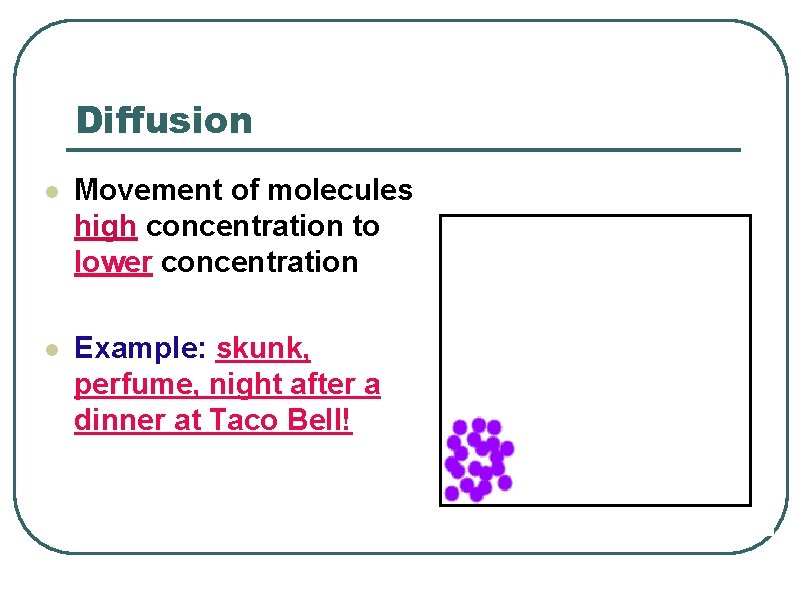
Diffusion l Movement of molecules high concentration to lower concentration l Example: skunk, perfume, night after a dinner at Taco Bell!
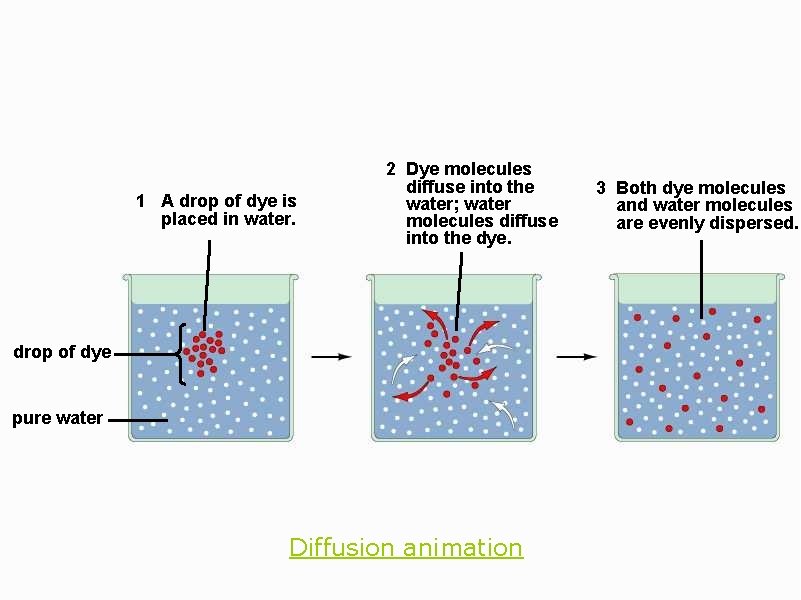
1 A drop of dye is placed in water. 2 Dye molecules diffuse into the water; water molecules diffuse into the dye. drop of dye pure water Diffusion animation 3 Both dye molecules and water molecules are evenly dispersed.
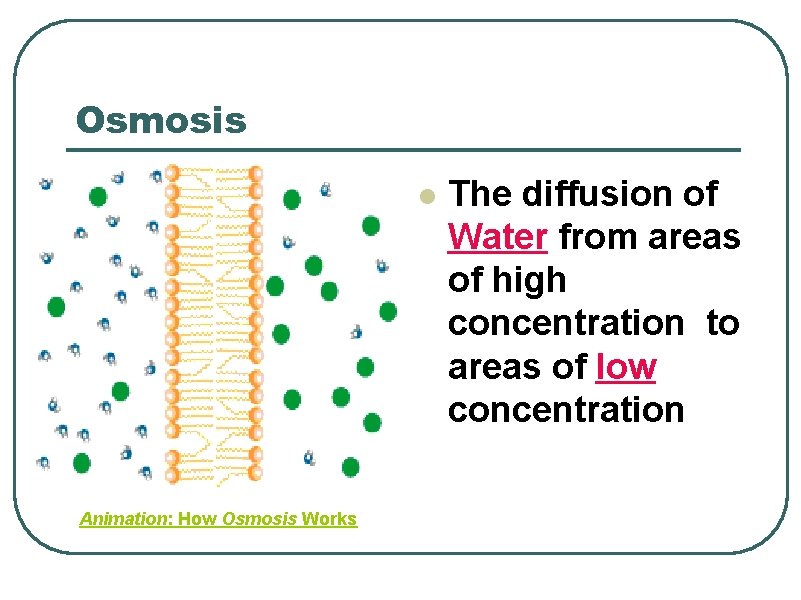
Osmosis l Animation: How Osmosis Works The diffusion of Water from areas of high concentration to areas of low concentration
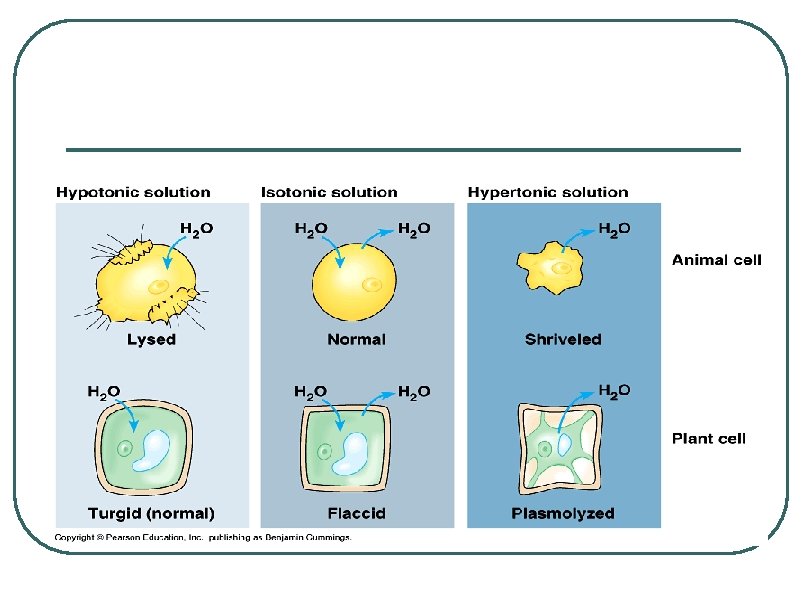
Transport across membranes Passive transport of water by Osmosis • • • a. Isotonic b. Hypertonic c. Hypotonic
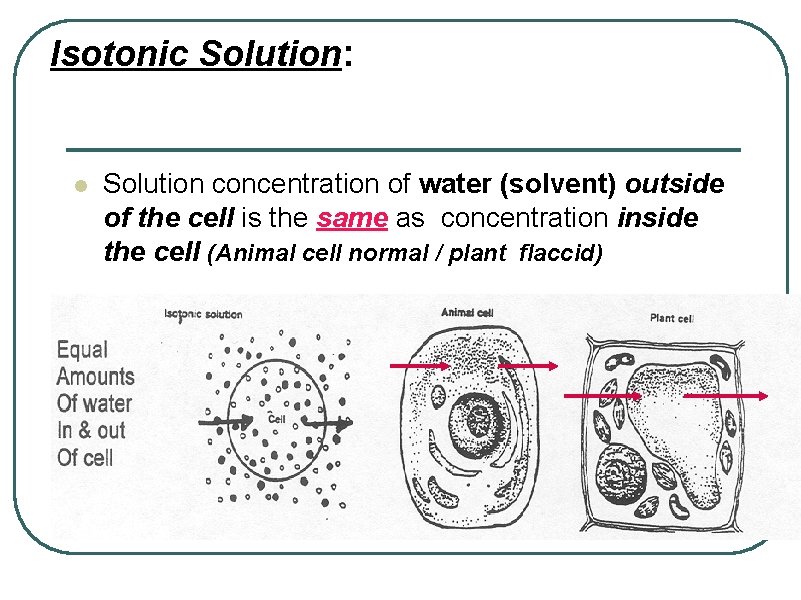
Isotonic Solution: l Solution concentration of water (solvent) outside of the cell is the same as concentration inside the cell (Animal cell normal / plant flaccid)
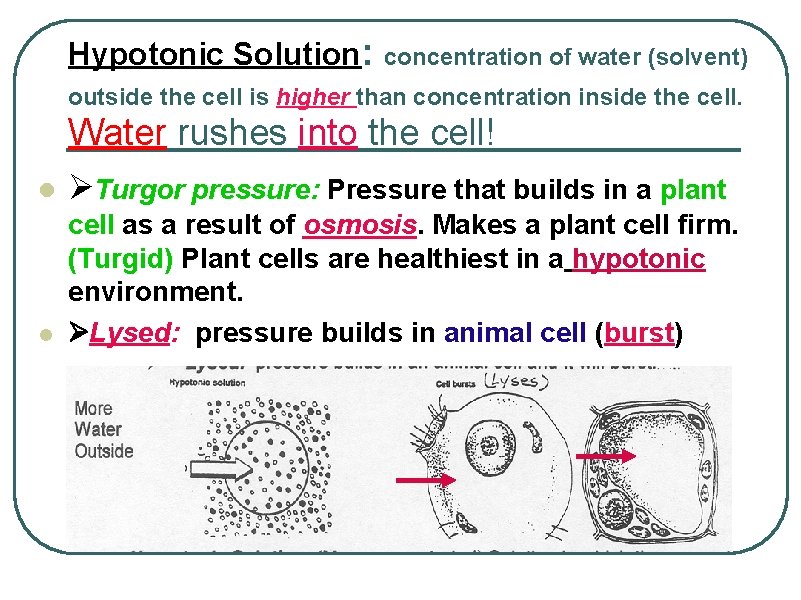
Hypotonic Solution: concentration of water (solvent) outside the cell is higher than concentration inside the cell. Water rushes into the cell! l ØTurgor pressure: Pressure that builds in a plant l cell as a result of osmosis. Makes a plant cell firm. (Turgid) Plant cells are healthiest in a hypotonic environment. ØLysed: pressure builds in animal cell (burst)
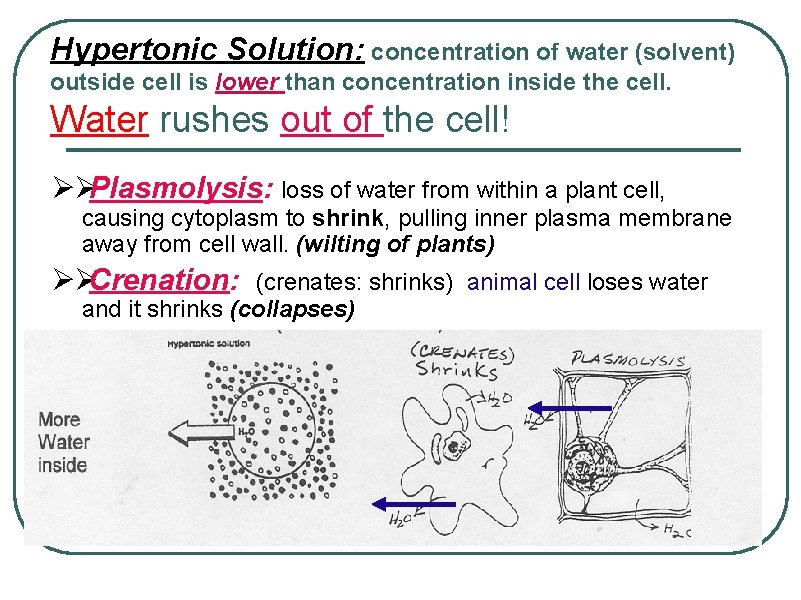
Hypertonic Solution: concentration of water (solvent) outside cell is lower than concentration inside the cell. Water rushes out of the cell! ØØPlasmolysis: loss of water from within a plant cell, causing cytoplasm to shrink, pulling inner plasma membrane away from cell wall. (wilting of plants) ØØCrenation: (crenates: shrinks) animal cell loses water and it shrinks (collapses)
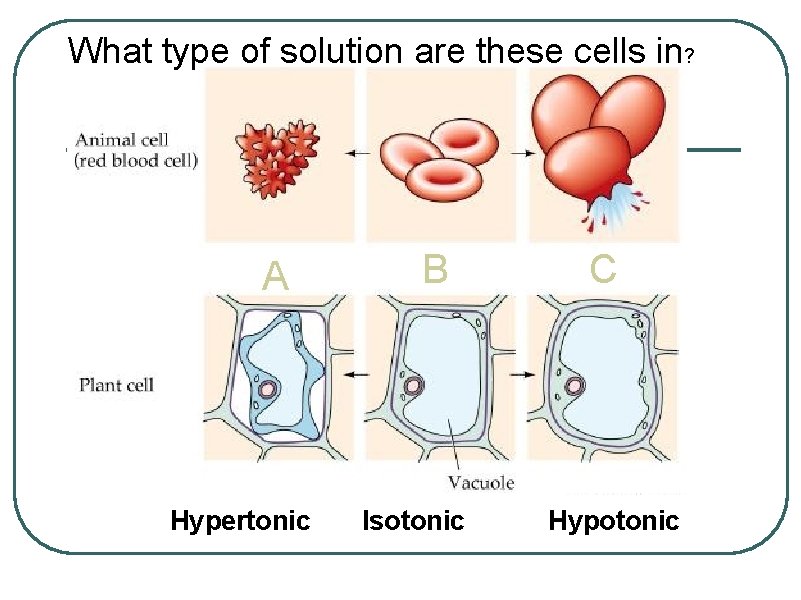
What type of solution are these cells in? A Hypertonic B Isotonic C Hypotonic
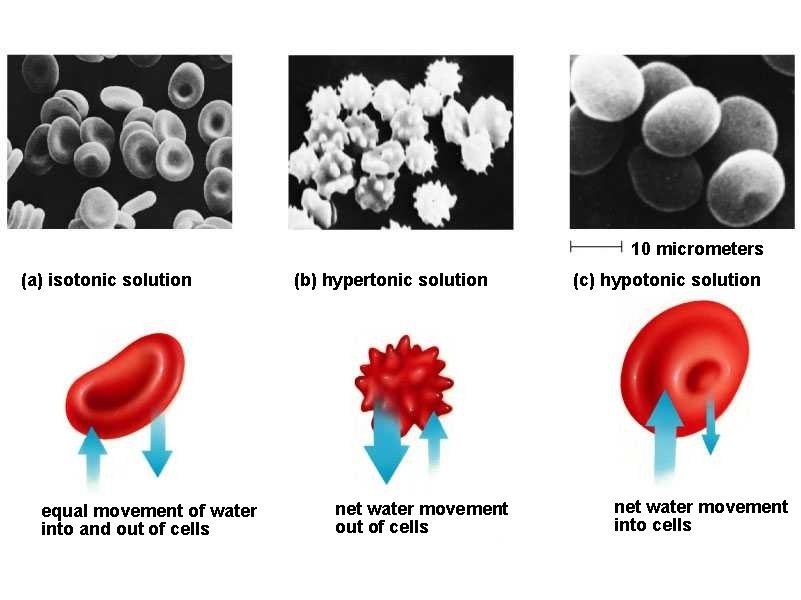
10 micrometers (a) isotonic solution equal movement of water into and out of cells (b) hypertonic solution net water movement out of cells (c) hypotonic solution net water movement into cells
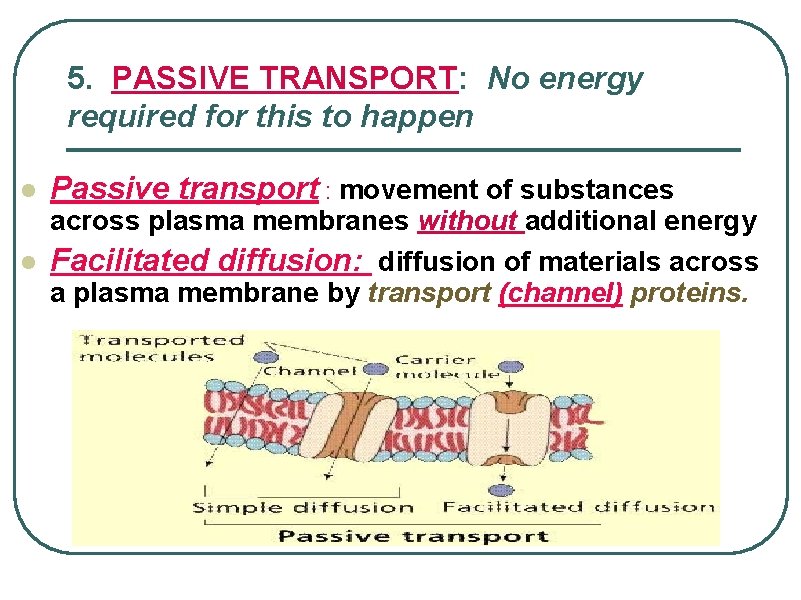
5. PASSIVE TRANSPORT: No energy required for this to happen l Passive transport : movement of substances across plasma membranes without additional energy l Facilitated diffusion: diffusion of materials across a plasma membrane by transport (channel) proteins.
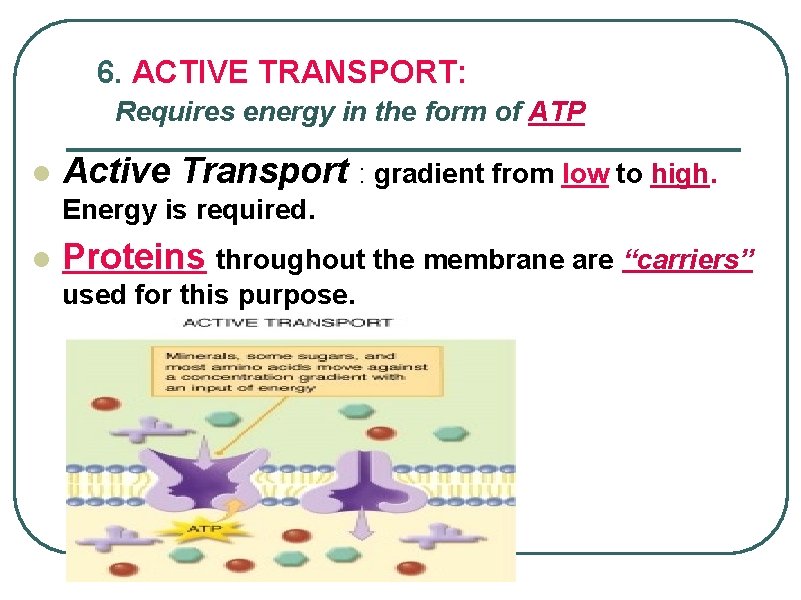
6. ACTIVE TRANSPORT: Requires energy in the form of ATP l Active Transport : gradient from low to high. Energy is required. l Proteins throughout the membrane are “carriers” used for this purpose.
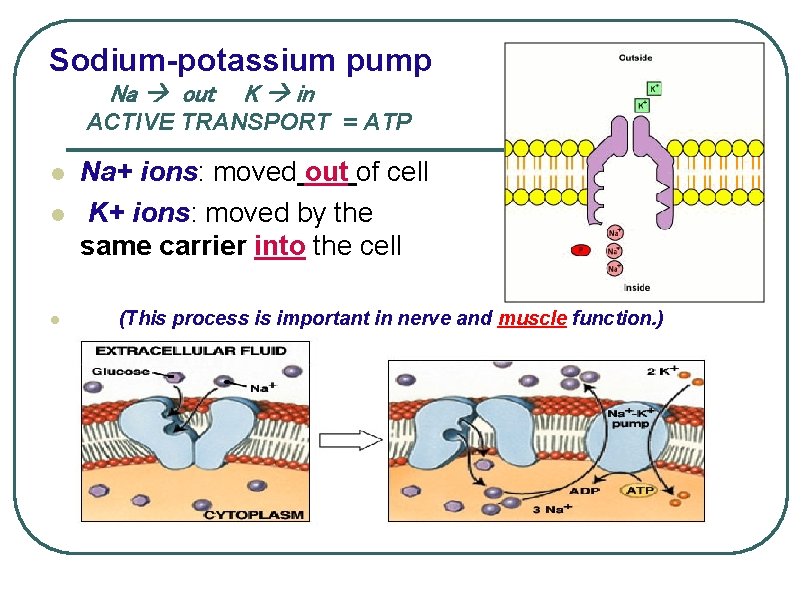
Sodium-potassium pump Na out K in ACTIVE TRANSPORT = ATP l l l Na+ ions: moved out of cell K+ ions: moved by the same carrier into the cell (This process is important in nerve and muscle function. )
Animation of transport across a membrane l http: //www. youtube. com/watch? v=2 UPq. L m-u. Dn. I
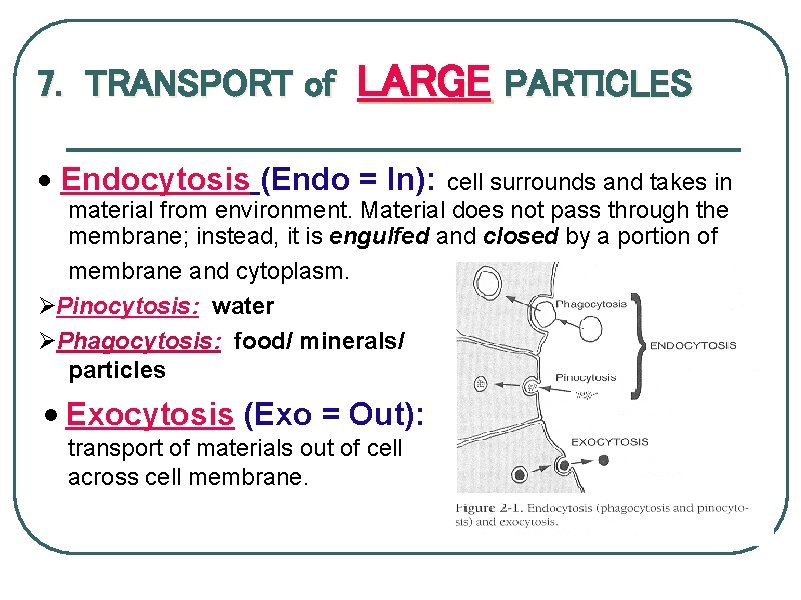
7. TRANSPORT of LARGE PARTICLES · Endocytosis (Endo = In): cell surrounds and takes in material from environment. Material does not pass through the membrane; instead, it is engulfed and closed by a portion of membrane and cytoplasm. ØPinocytosis: water ØPhagocytosis: food/ minerals/ large particles · Exocytosis (Exo = Out): transport of materials out of cell across cell membrane.
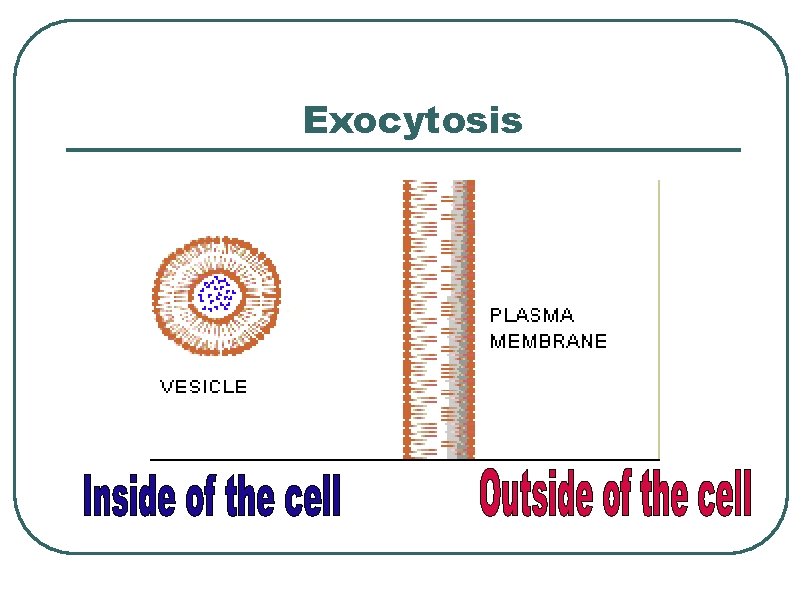
Exocytosis
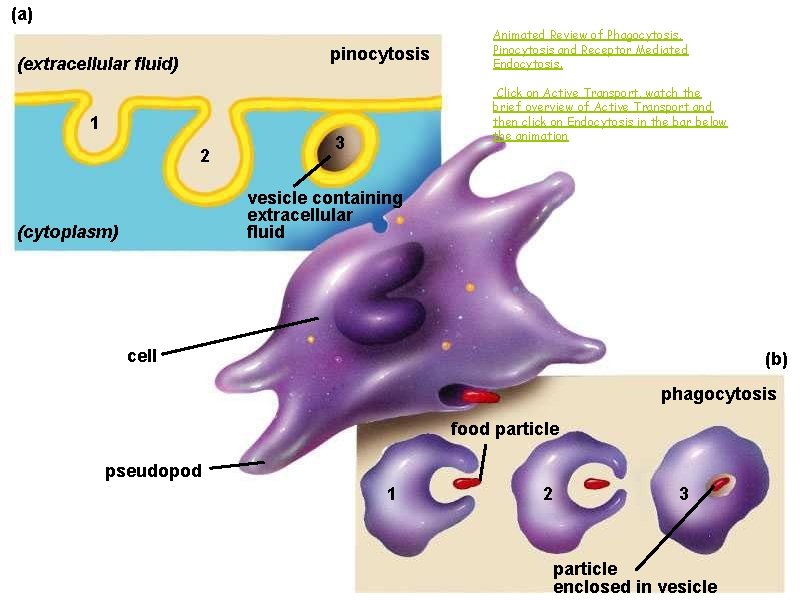
(a) pinocytosis (extracellular fluid) 1 2 Animated Review of Phagocytosis, Pinocytosis and Receptor Mediated Endocytosis. Click on Active Transport, watch the brief overview of Active Transport and then click on Endocytosis in the bar below the animation 3 vesicle containing extracellular fluid (cytoplasm) cell (b) phagocytosis food particle pseudopod 1 2 3 particle enclosed in vesicle
- Slides: 24