
1 st SUVLPR 09 Beijing Ensemble Classification Methods
1 st SU-VLPR’ 09, Beijing Ensemble Classification Methods: Bagging, Boosting, and Random Forests Zhuowen Tu Lab of Neuro Imaging, Department of Neurology Department of Computer Science University of California, Los Angeles Some slides are due to Robert Schapire and Pier Luca Lnzi SCR© 1
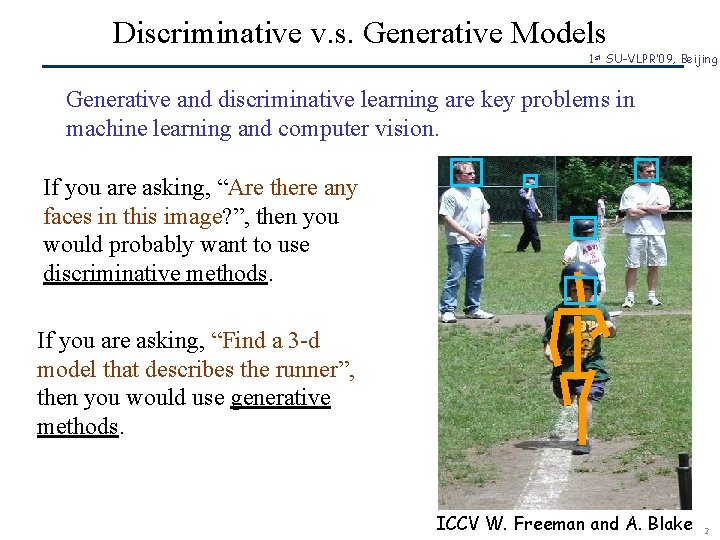
Discriminative v. s. Generative Models 1 st SU-VLPR’ 09, Beijing Generative and discriminative learning are key problems in machine learning and computer vision. If you are asking, “Are there any faces in this image? ”, then you would probably want to use discriminative methods. If you are asking, “Find a 3 -d model that describes the runner”, then you would use generative methods. SCR© ICCV W. Freeman and A. Blake 2

Discriminative v. s. Generative Models 1 st SU-VLPR’ 09, Beijing Discriminative models, either explicitly or implicitly, study the posterior distribution directly. Generative approaches model the likelihood and prior separately. SCR© 3
Some Literature 1 st SU-VLPR’ 09, Beijing Discriminative Approaches: Perceptron and Neural networks (Rosenblatt 1958, Windrow and Hoff 1960, Hopfiled 1982, Rumelhart and Mc. Clelland 1986, Lecun et al. 1998) Nearest neighborhood classifier (Hart 1968) Fisher linear discriminant analysis(Fisher) Support Vector Machine (Vapnik 1995) Bagging, Boosting, … (Breiman 1994, Freund and Schapire 1995, Friedman et al. 1998, ) … Generative Approaches: PCA, TCA, ICA (Karhunen and Loeve 1947, H´erault et al. 1980, Frey and Jojic 1999) MRFs, Particle Filtering (Ising, Geman and Geman 1994, Isard and Blake 1996) Maximum Entropy Model (Della Pietra et al. 1997, Zhu et al. 1997, Hinton 2002) Deep Nets (Hinton et al. 2006) …. SCR© 4
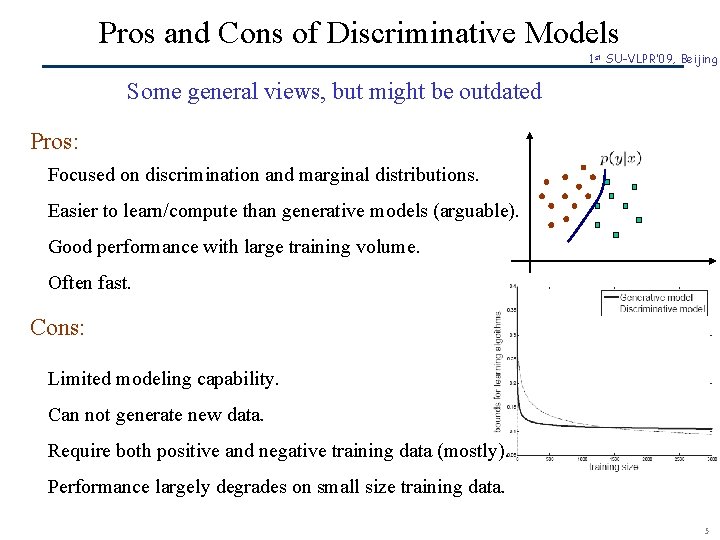
Pros and Cons of Discriminative Models 1 st SU-VLPR’ 09, Beijing Some general views, but might be outdated Pros: Focused on discrimination and marginal distributions. Easier to learn/compute than generative models (arguable). Good performance with large training volume. Often fast. Cons: Limited modeling capability. Can not generate new data. Require both positive and negative training data (mostly). Performance largely degrades on small size training data. SCR© 5
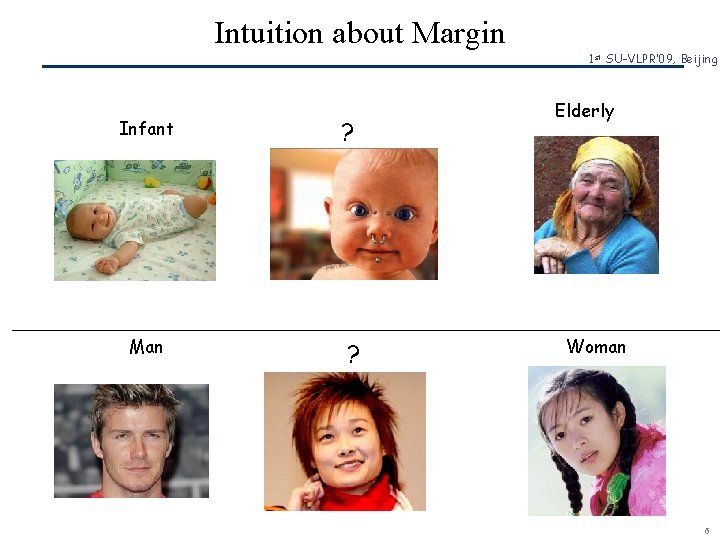
Intuition about Margin 1 st SU-VLPR’ 09, Beijing Infant Man SCR© ? ? Elderly Woman 6
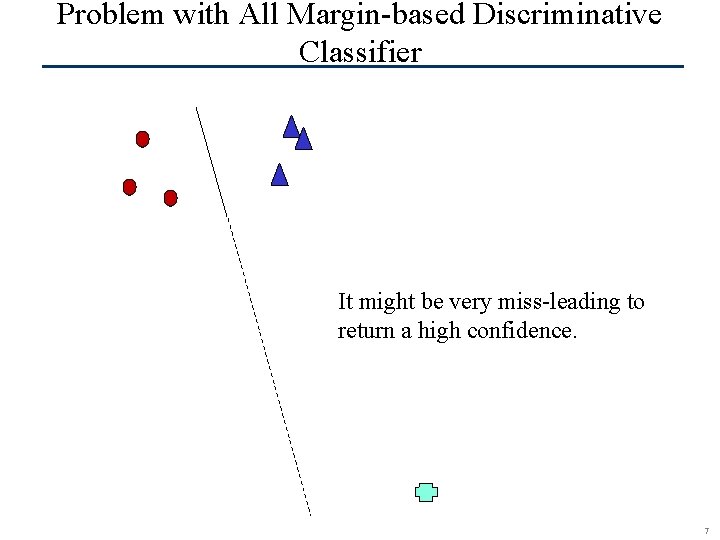
Problem with All Margin-based Discriminative Classifier It might be very miss-leading to return a high confidence. SCR© 7
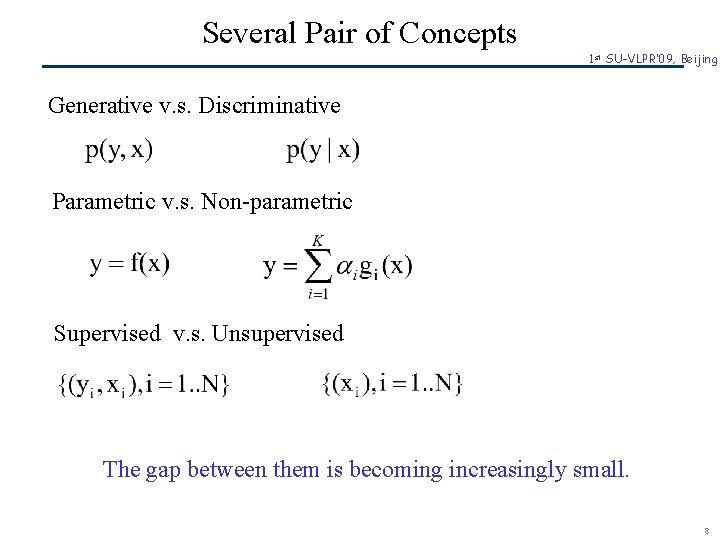
Several Pair of Concepts 1 st SU-VLPR’ 09, Beijing Generative v. s. Discriminative Parametric v. s. Non-parametric Supervised v. s. Unsupervised The gap between them is becoming increasingly small. SCR© 8
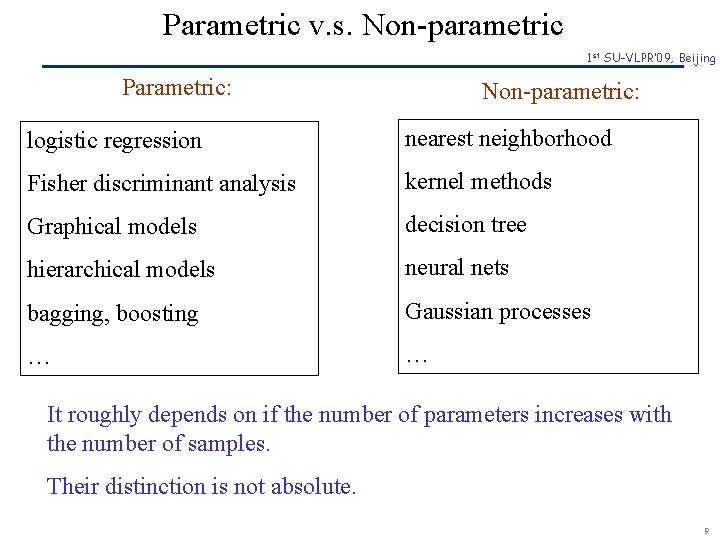
Parametric v. s. Non-parametric 1 st SU-VLPR’ 09, Beijing Parametric: Non-parametric: logistic regression nearest neighborhood Fisher discriminant analysis kernel methods Graphical models decision tree hierarchical models neural nets bagging, boosting Gaussian processes … … It roughly depends on if the number of parameters increases with the number of samples. Their distinction is not absolute. SCR© 9
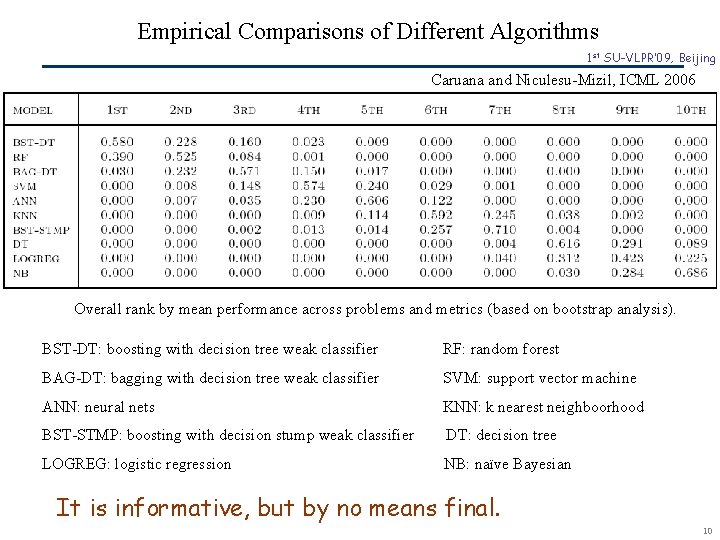
Empirical Comparisons of Different Algorithms 1 st SU-VLPR’ 09, Beijing Caruana and Niculesu-Mizil, ICML 2006 Overall rank by mean performance across problems and metrics (based on bootstrap analysis). BST-DT: boosting with decision tree weak classifier RF: random forest BAG-DT: bagging with decision tree weak classifier SVM: support vector machine ANN: neural nets KNN: k nearest neighboorhood BST-STMP: boosting with decision stump weak classifier DT: decision tree LOGREG: logistic regression NB: naïve Bayesian It is informative, but by no means final. SCR© 10
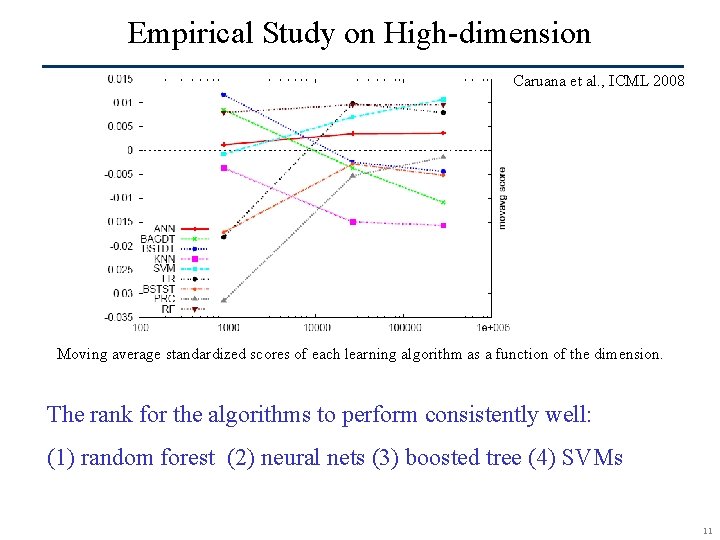
Empirical Study on High-dimension Caruana et al. , ICML 2008 Moving average standardized scores of each learning algorithm as a function of the dimension. The rank for the algorithms to perform consistently well: (1) random forest (2) neural nets (3) boosted tree (4) SVMs SCR© 11
Ensemble Methods Bagging (Breiman 1994, …) Boosting (Freund and Schapire 1995, Friedman et al. 1998, …) Random forests (Breiman 2001, …) Predict class label for unseen data by aggregating a set of predictions (classifiers learned from the training data). SCR© 12
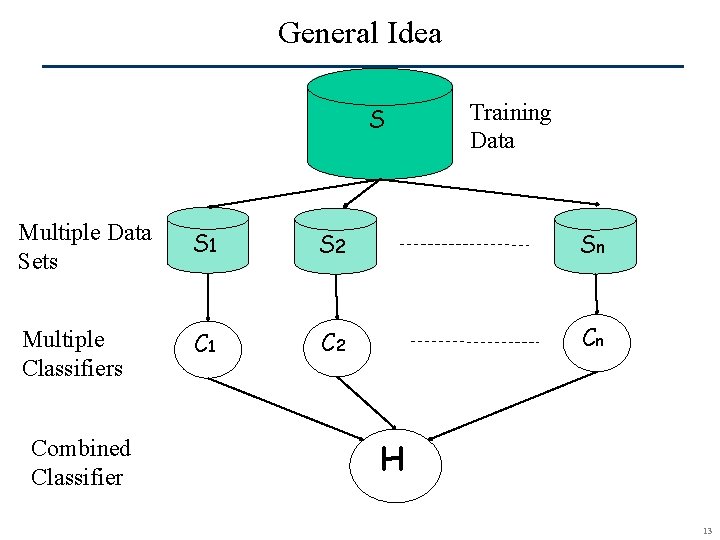
General Idea S Training Data Multiple Data Sets S 1 S 2 Sn Multiple Classifiers C 1 C 2 Cn Combined Classifier SCR© H 13
Build Ensemble Classifiers • Basic idea: Build different “experts”, and let them vote • Advantages: Improve predictive performance Other types of classifiers can be directly included Easy to implement No too much parameter tuning • Disadvantages: The combined classifier is not so transparent (black box) Not a compact representation SCR© 14
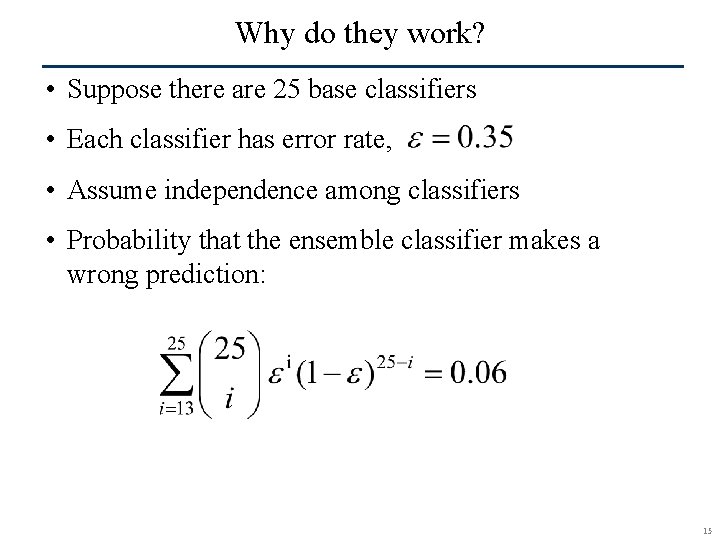
Why do they work? • Suppose there are 25 base classifiers • Each classifier has error rate, • Assume independence among classifiers • Probability that the ensemble classifier makes a wrong prediction: SCR© 15
Bagging • Training o Given a dataset S, at each iteration i, a training set Si is sampled with replacement from S (i. e. bootstraping) o A classifier Ci is learned for each Si • Classification: given an unseen sample X, o Each classifier Ci returns its class prediction o The bagged classifier H counts the votes and assigns the class with the most votes to X • Regression: can be applied to the prediction of continuous values by taking the average value of each prediction. SCR© 16
Bagging • Bagging works because it reduces variance by voting/averaging o In some pathological hypothetical situations the overall error might increase o Usually, the more classifiers the better • Problem: we only have one dataset. • Solution: generate new ones of size n by bootstrapping, i. e. sampling it with replacement • Can help a lot if data is noisy. SCR© 17
Bias-variance Decomposition • Used to analyze how much selection of any specific training set affects performance • Assume infinitely many classifiers, built from different training sets • For any learning scheme, o Bias = expected error of the combined classifier on new data o Variance = expected error due to the particular training set used • Total expected error ~ bias + variance SCR© 18
When does Bagging work? • Learning algorithm is unstable: if small changes to the training set cause large changes in the learned classifier. • If the learning algorithm is unstable, then Bagging almost always improves performance • Some candidates: Decision tree, decision stump, regression tree, linear regression, SVMs SCR© 19
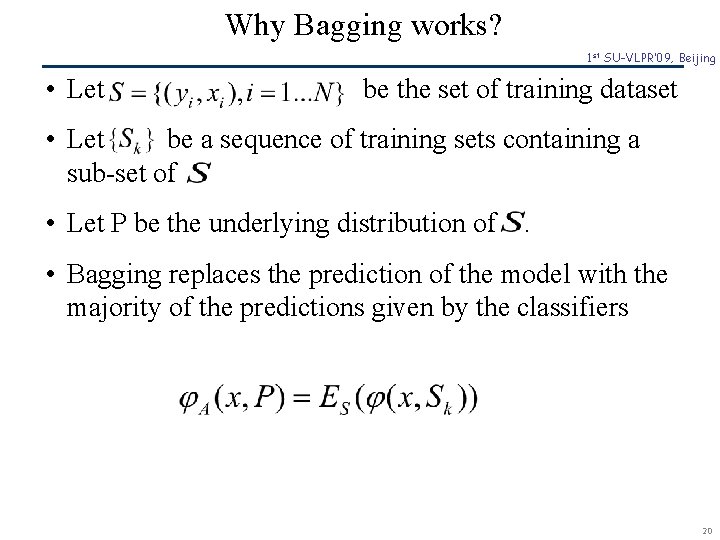
Why Bagging works? 1 st SU-VLPR’ 09, Beijing • Let be the set of training dataset • Let be a sequence of training sets containing a sub-set of • Let P be the underlying distribution of. • Bagging replaces the prediction of the model with the majority of the predictions given by the classifiers SCR© 20
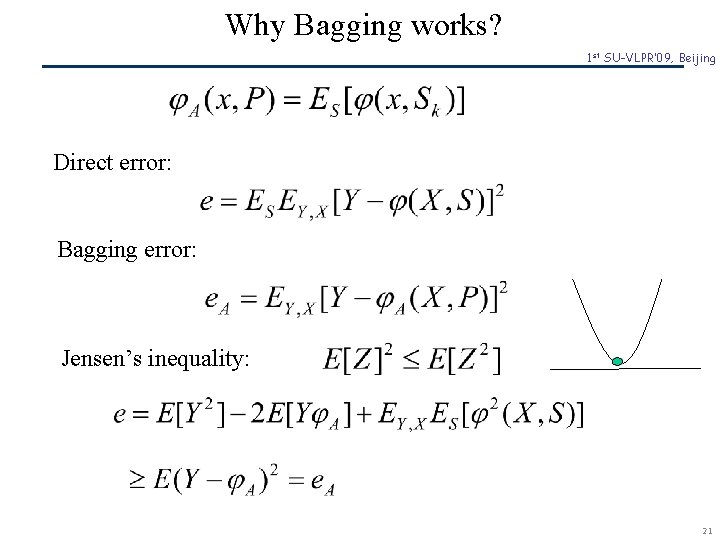
Why Bagging works? 1 st SU-VLPR’ 09, Beijing Direct error: Bagging error: Jensen’s inequality: SCR© 21
Randomization • Can randomize learning algorithms instead of inputs • Some algorithms already have random component: e. g. random initialization • Most algorithms can be randomized o Pick from the N best options at random instead of always picking the best one o Split rule in decision tree • Random projection in k. NN (Freund and Dasgupta 08) SCR© 22
Ensemble Methods Bagging (Breiman 1994, …) Boosting (Freund and Schapire 1995, Friedman et al. 1998, …) Random forests (Breiman 2001, …) SCR© 23
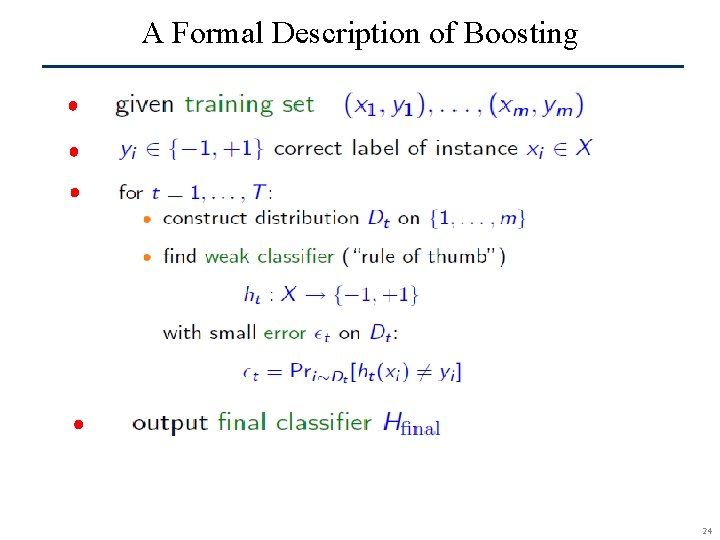
A Formal Description of Boosting SCR© 24
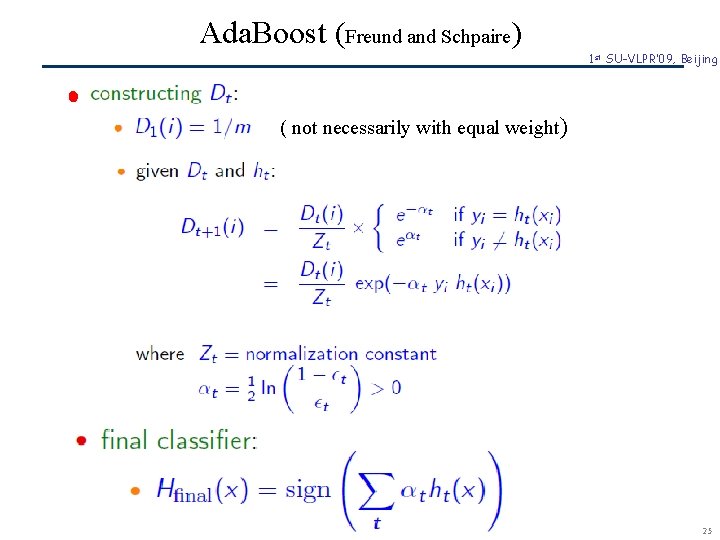
Ada. Boost (Freund and Schpaire) 1 st SU-VLPR’ 09, Beijing ( not necessarily with equal weight) SCR© 25
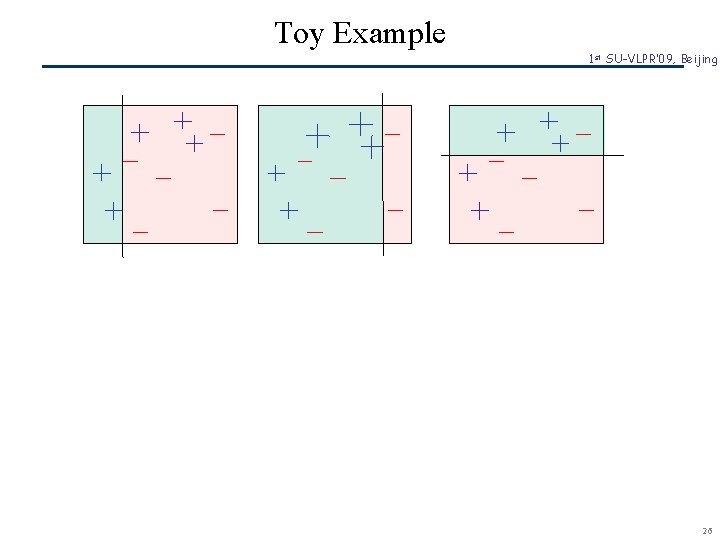
Toy Example 1 st SU-VLPR’ 09, Beijing SCR© 26
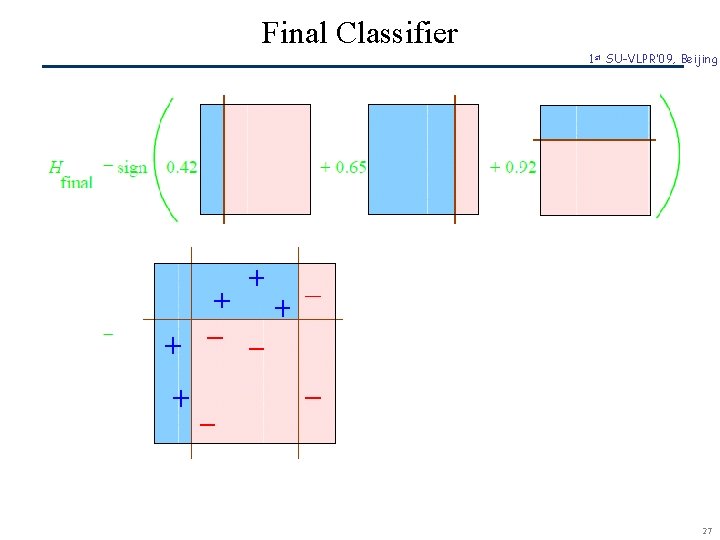
Final Classifier 1 st SU-VLPR’ 09, Beijing SCR© 27
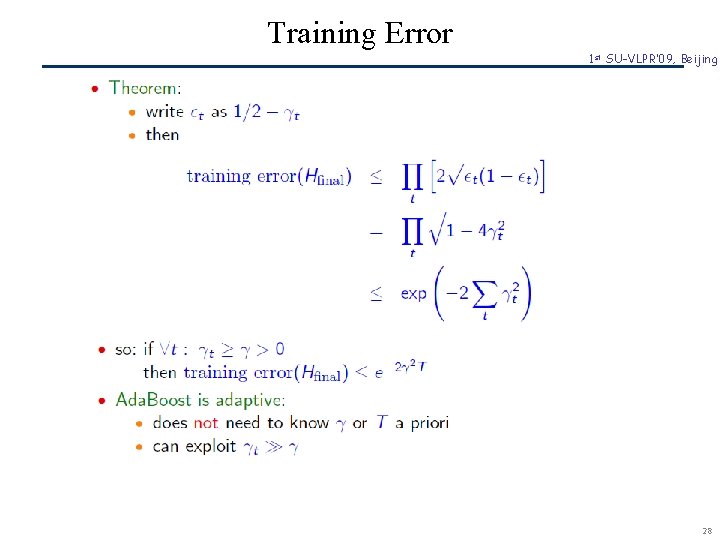
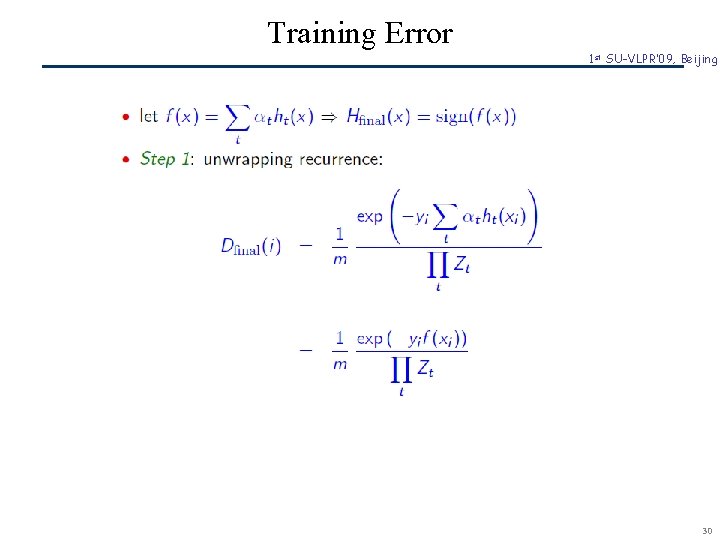
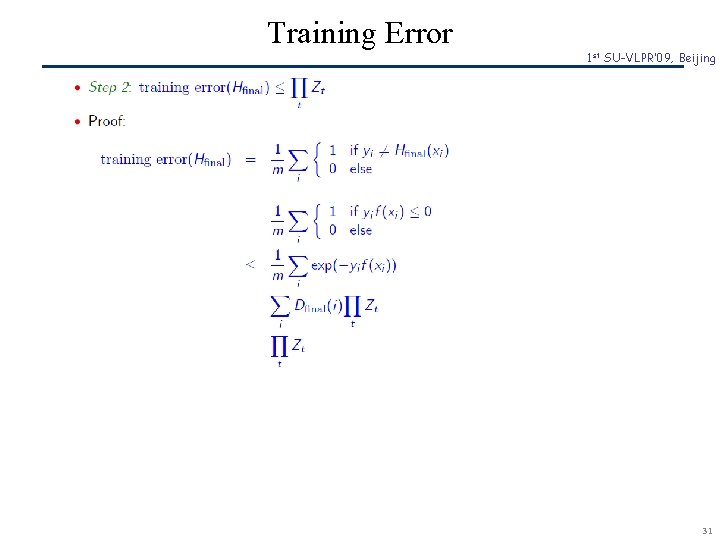
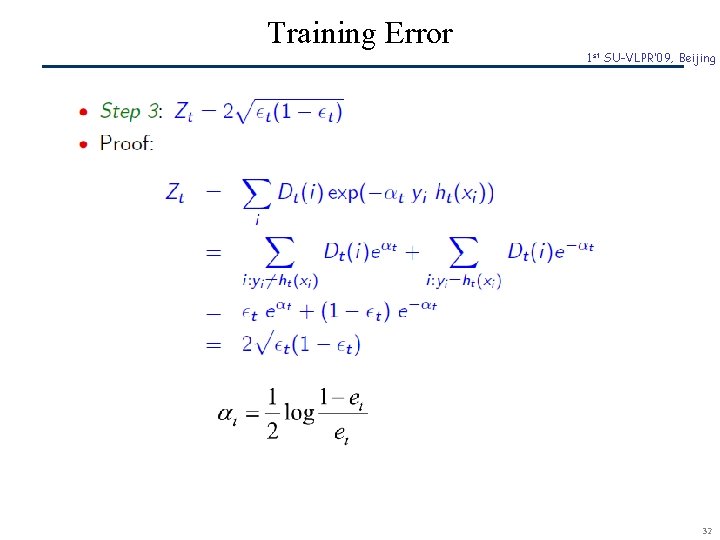
Training Error 1 st SU-VLPR’ 09, Beijing SCR© 28
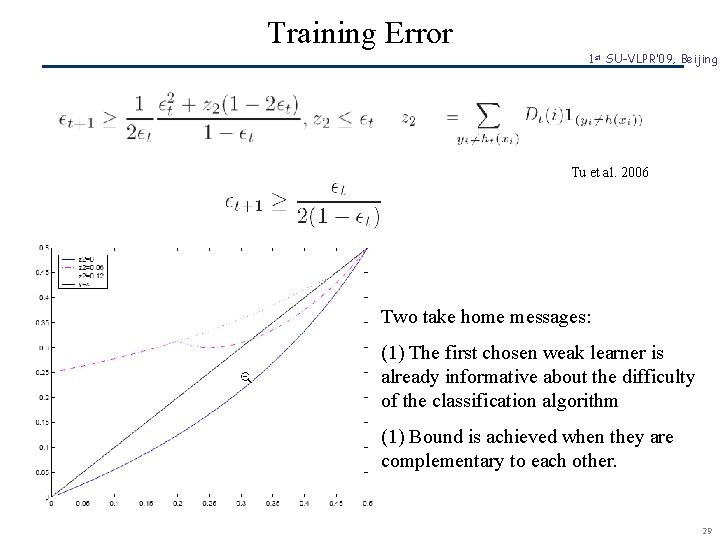
Training Error 1 st SU-VLPR’ 09, Beijing Tu et al. 2006 Two take home messages: (1) The first chosen weak learner is already informative about the difficulty of the classification algorithm (1) Bound is achieved when they are complementary to each other. SCR© 29
Training Error 1 st SU-VLPR’ 09, Beijing SCR© 30
Training Error SCR© 1 st SU-VLPR’ 09, Beijing 31
Training Error SCR© 1 st SU-VLPR’ 09, Beijing 32
Test Error? SCR© 1 st SU-VLPR’ 09, Beijing 33
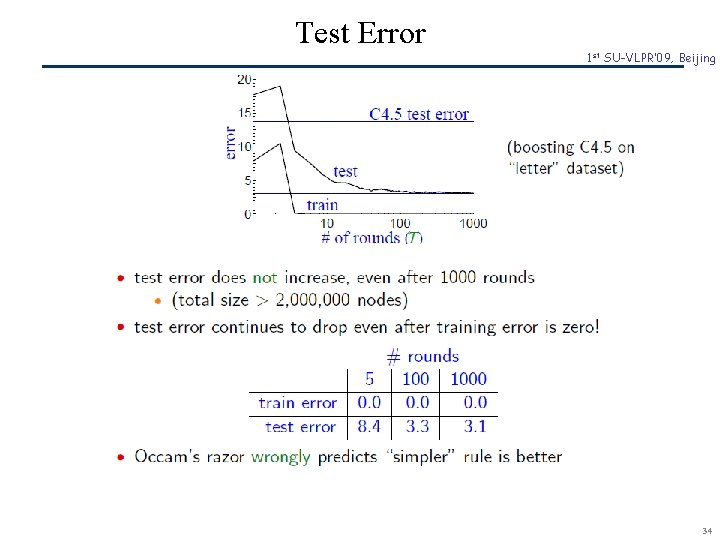
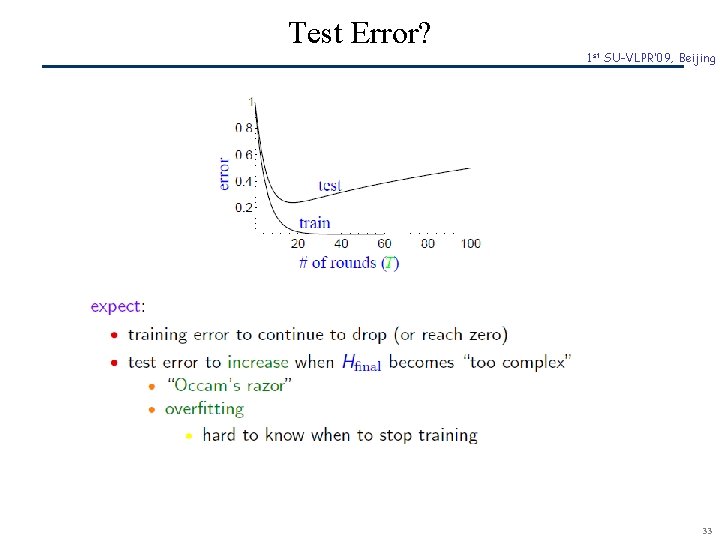
Test Error SCR© 1 st SU-VLPR’ 09, Beijing 34
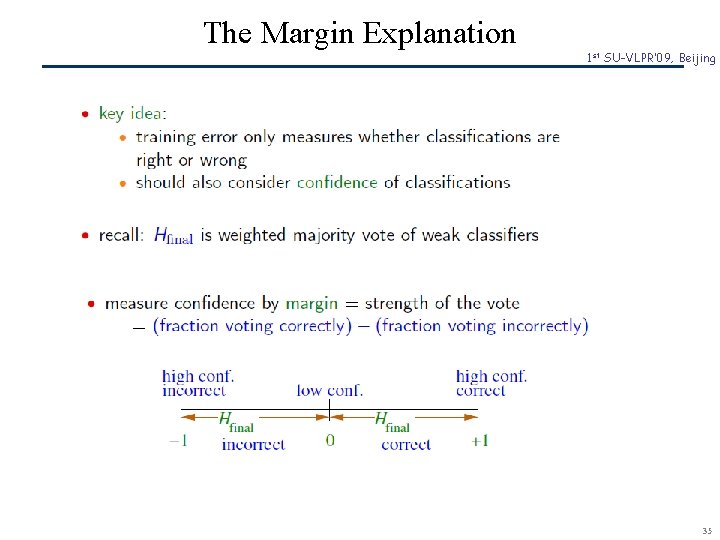
The Margin Explanation SCR© 1 st SU-VLPR’ 09, Beijing 35
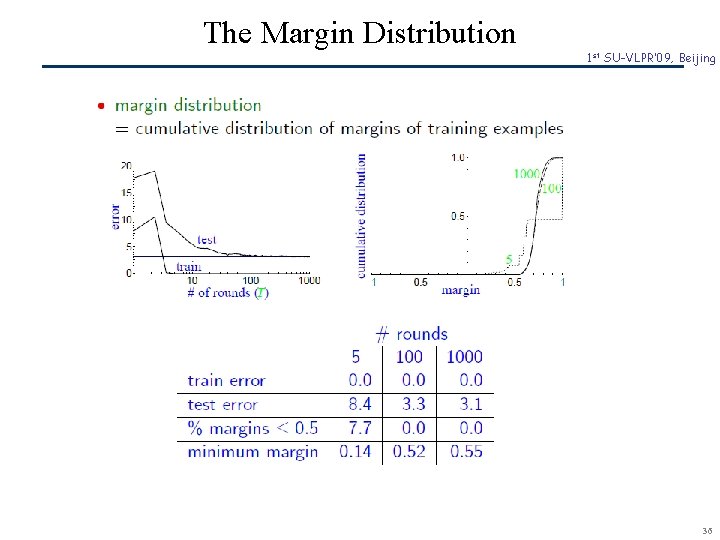
The Margin Distribution SCR© 1 st SU-VLPR’ 09, Beijing 36
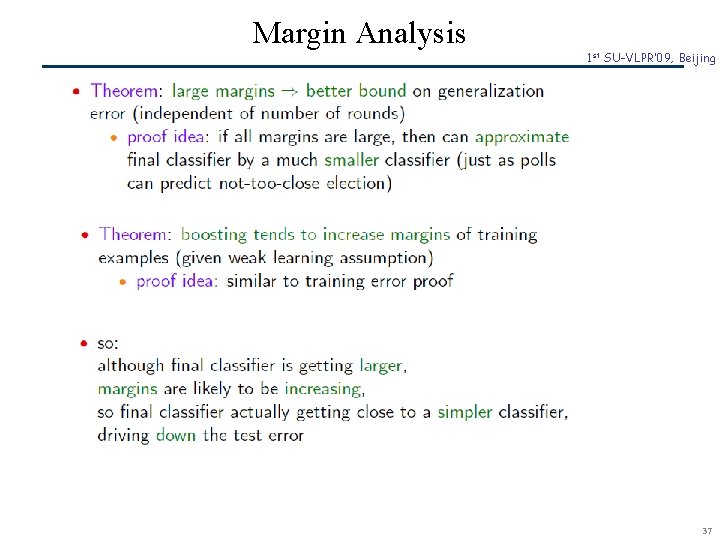
Margin Analysis SCR© 1 st SU-VLPR’ 09, Beijing 37
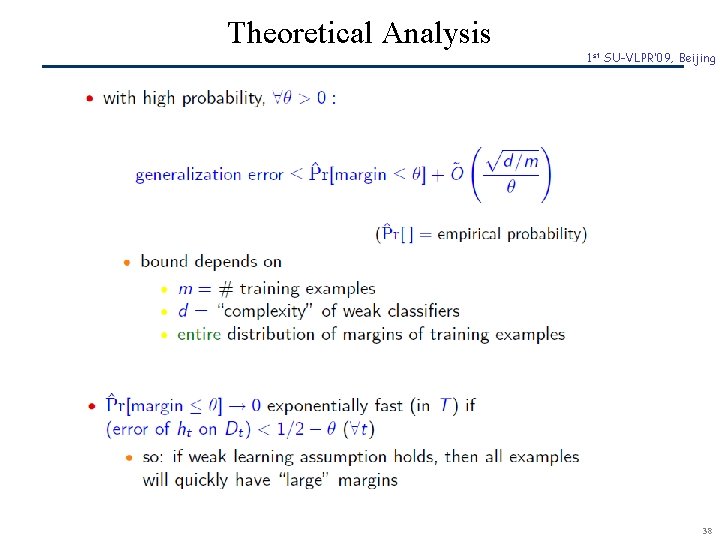
Theoretical Analysis SCR© 1 st SU-VLPR’ 09, Beijing 38
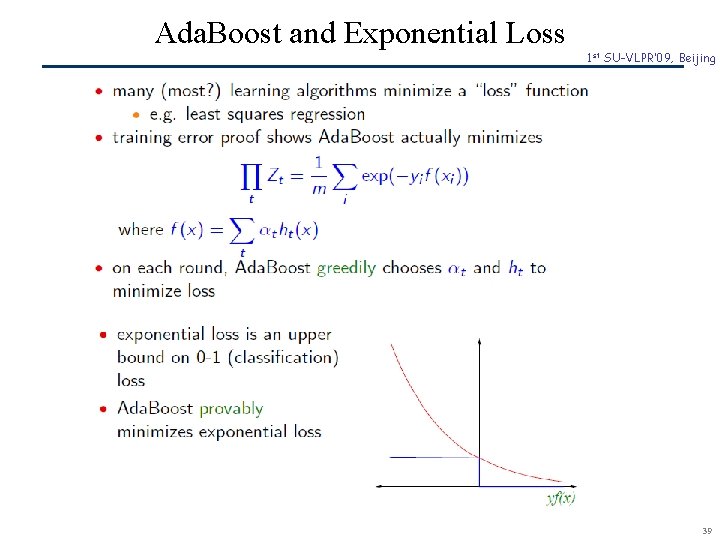
Ada. Boost and Exponential Loss SCR© 1 st SU-VLPR’ 09, Beijing 39
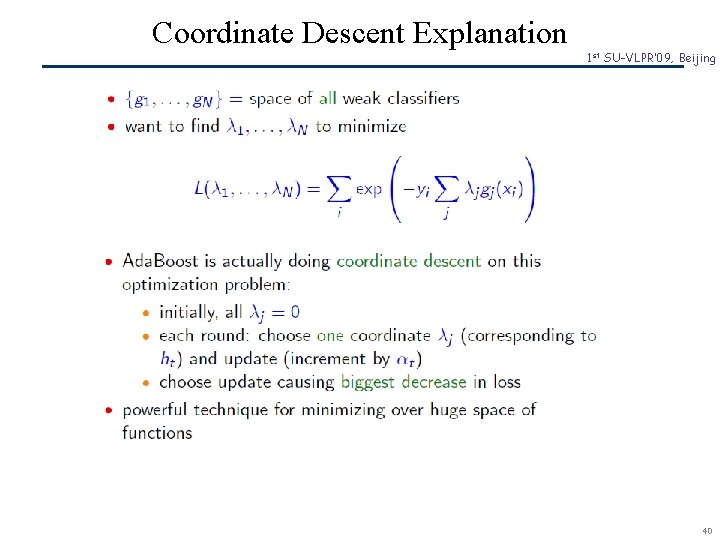
Coordinate Descent Explanation SCR© 1 st SU-VLPR’ 09, Beijing 40
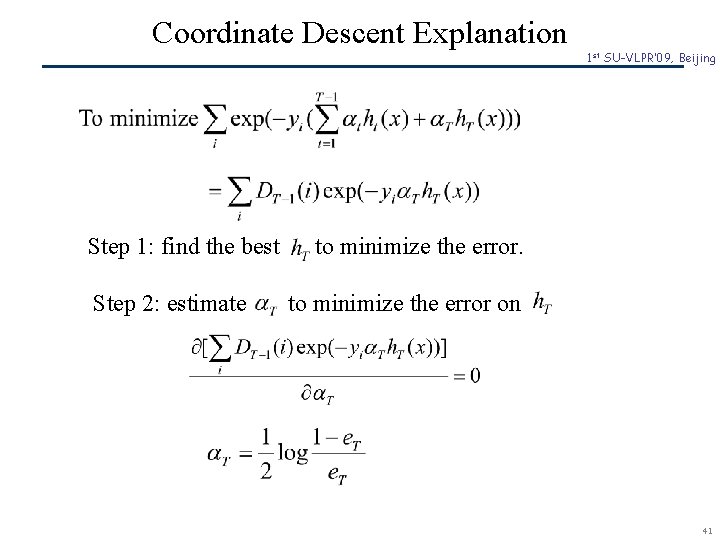
Coordinate Descent Explanation Step 1: find the best Step 2: estimate SCR© 1 st SU-VLPR’ 09, Beijing to minimize the error on 41
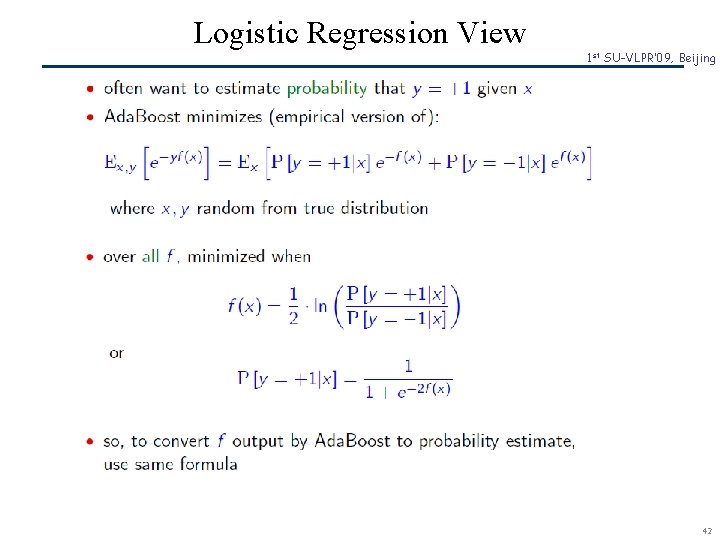
Logistic Regression View SCR© 1 st SU-VLPR’ 09, Beijing 42
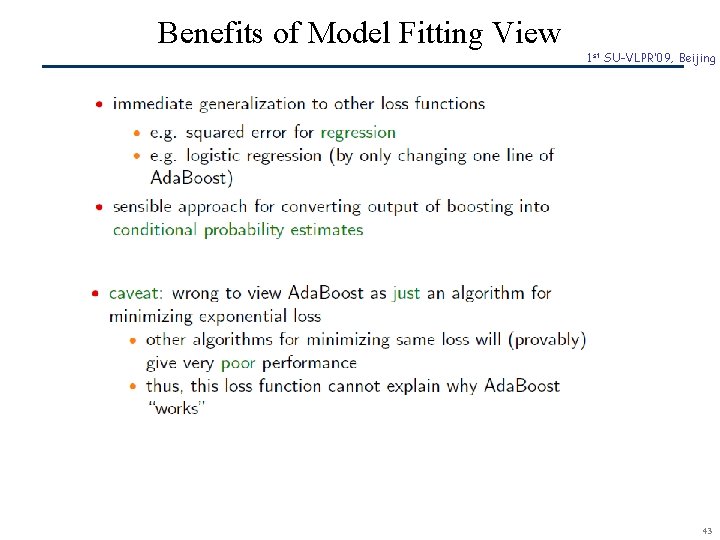
Benefits of Model Fitting View SCR© 1 st SU-VLPR’ 09, Beijing 43
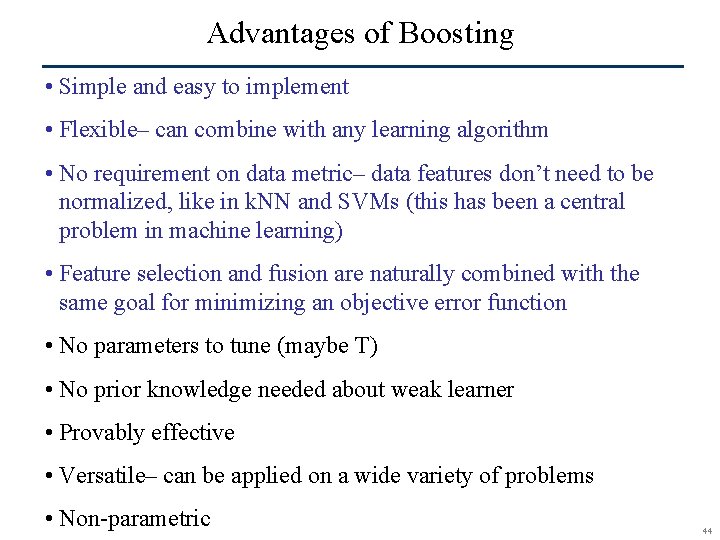
Advantages of Boosting • Simple and easy to implement • Flexible– can combine with any learning algorithm • No requirement on data metric– data features don’t need to be normalized, like in k. NN and SVMs (this has been a central problem in machine learning) • Feature selection and fusion are naturally combined with the same goal for minimizing an objective error function • No parameters to tune (maybe T) • No prior knowledge needed about weak learner • Provably effective • Versatile– can be applied on a wide variety of problems SCR© • Non-parametric 44
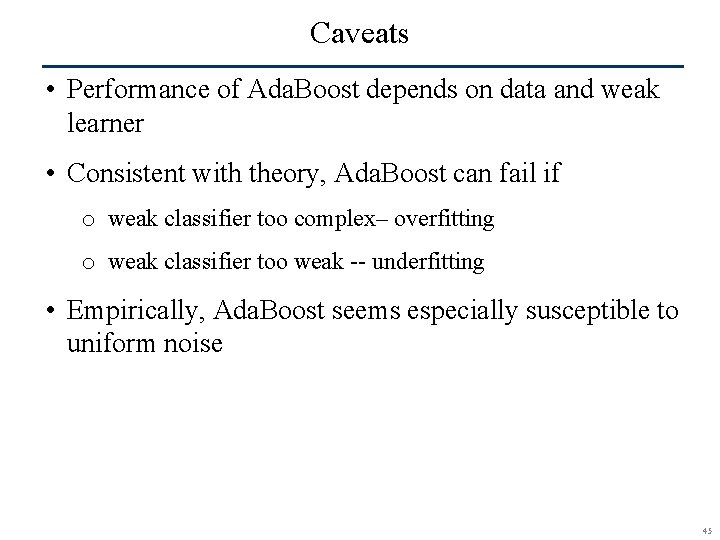
Caveats • Performance of Ada. Boost depends on data and weak learner • Consistent with theory, Ada. Boost can fail if o weak classifier too complex– overfitting o weak classifier too weak -- underfitting • Empirically, Ada. Boost seems especially susceptible to uniform noise SCR© 45
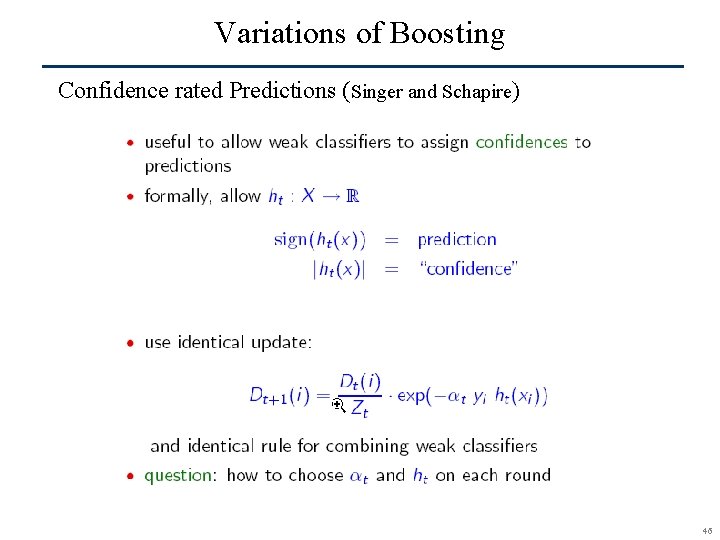
Variations of Boosting Confidence rated Predictions (Singer and Schapire) SCR© 46
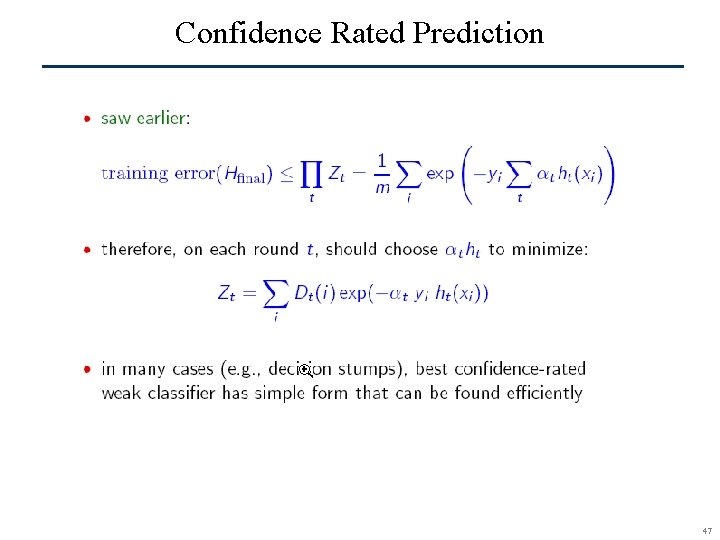
Confidence Rated Prediction SCR© 47
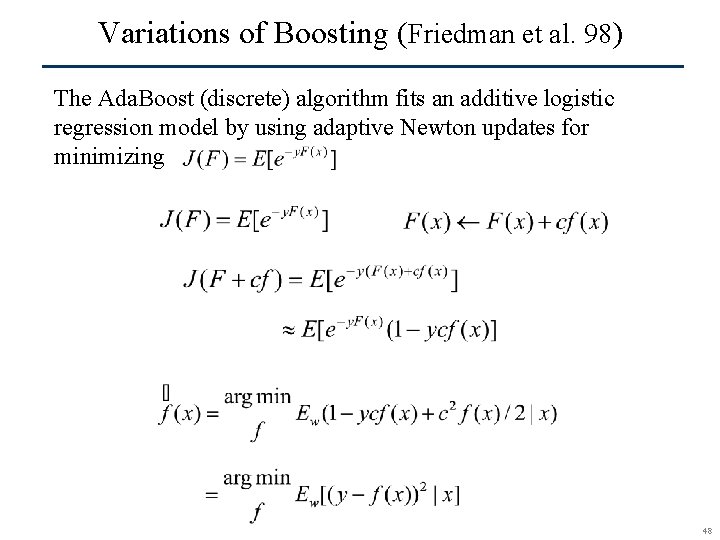
Variations of Boosting (Friedman et al. 98) The Ada. Boost (discrete) algorithm fits an additive logistic regression model by using adaptive Newton updates for minimizing SCR© 48
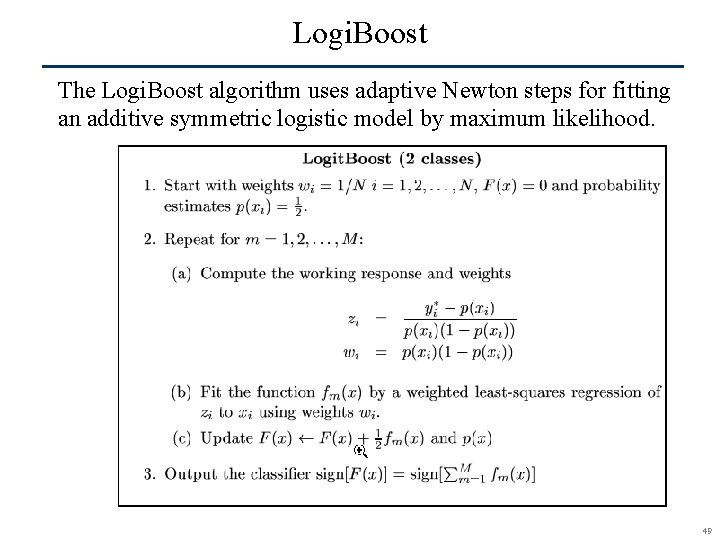
Logi. Boost The Logi. Boost algorithm uses adaptive Newton steps for fitting an additive symmetric logistic model by maximum likelihood. SCR© 49
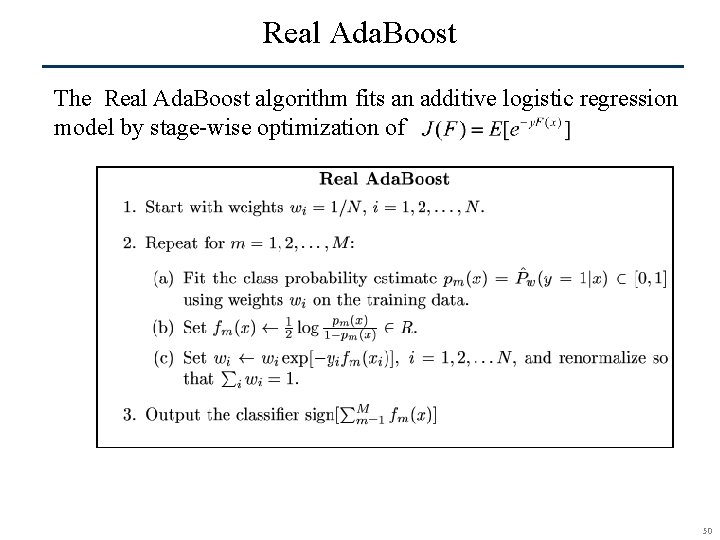
Real Ada. Boost The Real Ada. Boost algorithm fits an additive logistic regression model by stage-wise optimization of SCR© 50
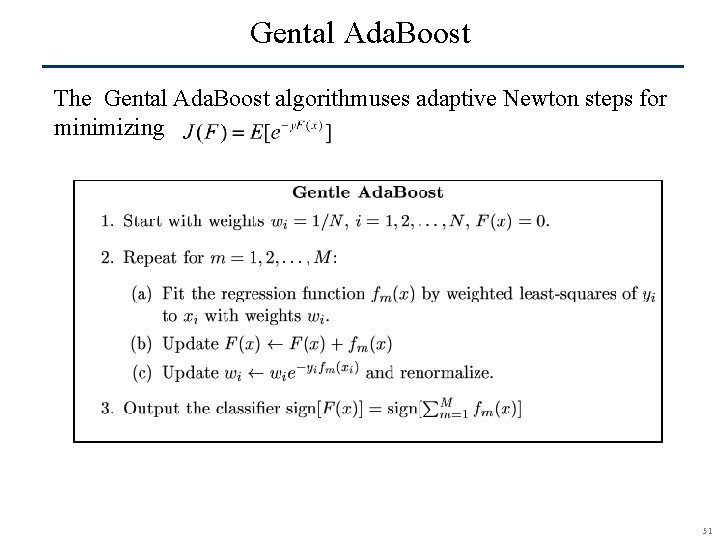
Gental Ada. Boost The Gental Ada. Boost algorithmuses adaptive Newton steps for minimizing SCR© 51
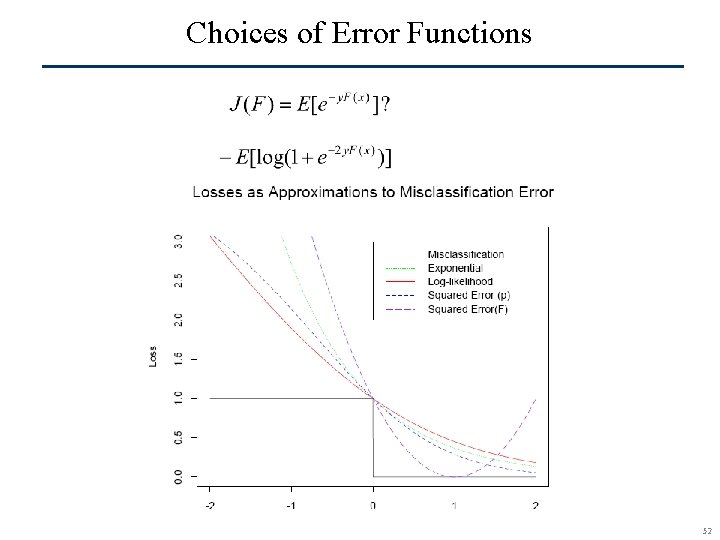
Choices of Error Functions SCR© 52
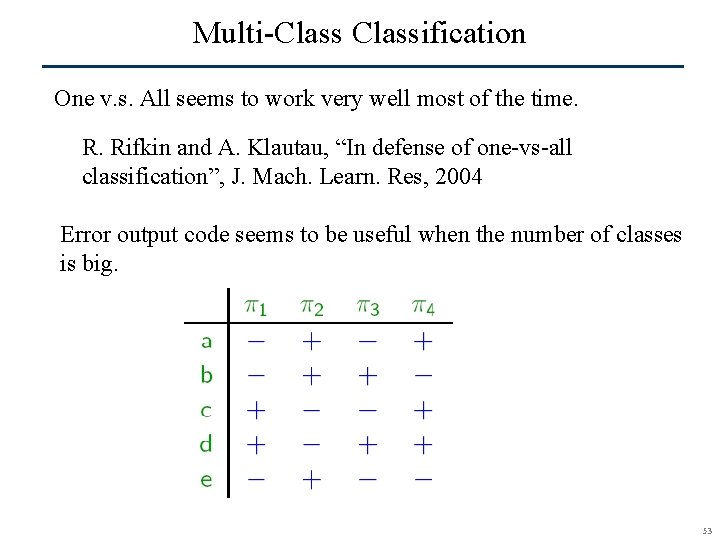
Multi-Classification One v. s. All seems to work very well most of the time. R. Rifkin and A. Klautau, “In defense of one-vs-all classification”, J. Mach. Learn. Res, 2004 Error output code seems to be useful when the number of classes is big. SCR© 53
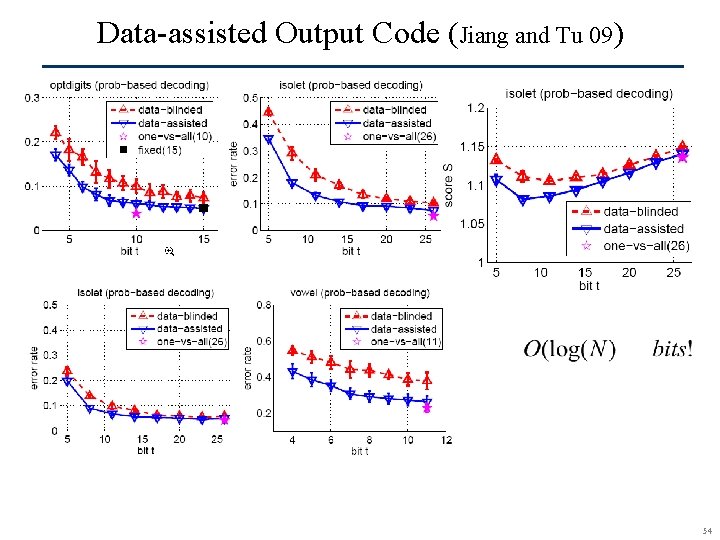
Data-assisted Output Code (Jiang and Tu 09) SCR© 54
Ensemble Methods Bagging (Breiman 1994, …) Boosting (Freund and Schapire 1995, Friedman et al. 1998, …) Random forests (Breiman 2001, …) SCR© 55
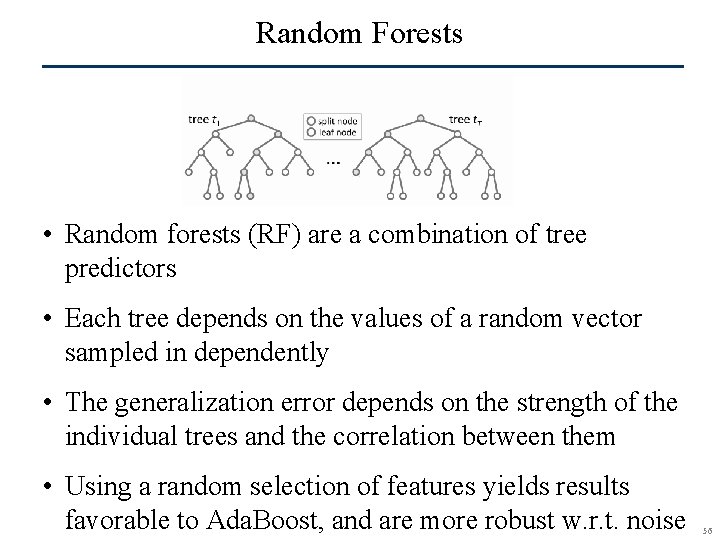
Random Forests • Random forests (RF) are a combination of tree predictors • Each tree depends on the values of a random vector sampled in dependently • The generalization error depends on the strength of the individual trees and the correlation between them SCR© • Using a random selection of features yields results favorable to Ada. Boost, and are more robust w. r. t. noise 56
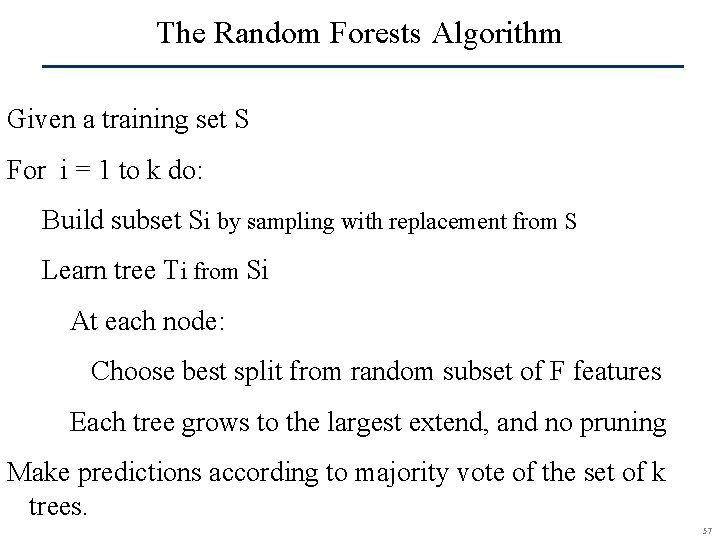
The Random Forests Algorithm Given a training set S For i = 1 to k do: Build subset Si by sampling with replacement from S Learn tree Ti from Si At each node: Choose best split from random subset of F features Each tree grows to the largest extend, and no pruning Make predictions according to majority vote of the set of k trees. SCR© 57
Features of Random Forests • It is unexcelled in accuracy among current algorithms. • It runs efficiently on large data bases. • It can handle thousands of input variables without variable deletion. • It gives estimates of what variables are important in the classification. • It generates an internal unbiased estimate of the generalization error as the forest building progresses. • It has an effective method for estimating missing data and maintains accuracy when a large proportion of the data are missing. SCR© • It has methods for balancing error in class population unbalanced data sets. 58
Features of Random Forests • Generated forests can be saved for future use on other data. • Prototypes are computed that give information about the relation between the variables and the classification. • It computes proximities between pairs of cases that can be used in clustering, locating outliers, or (by scaling) give interesting views of the data. • The capabilities of the above can be extended to unlabeled data, leading to unsupervised clustering, data views and outlier detection. • It offers an experimental method for detecting variable interactions. SCR© 59
Compared with Boosting Pros: • It is more robust. • It is faster to train (no reweighting, each split is on a small subset of data and feature). • Can handle missing/partial data. • Is easier to extend to online version. Cons: • The feature selection process is not explicit. • Feature fusion is also less obvious. • Has weaker performance on small size training data. SCR© 60
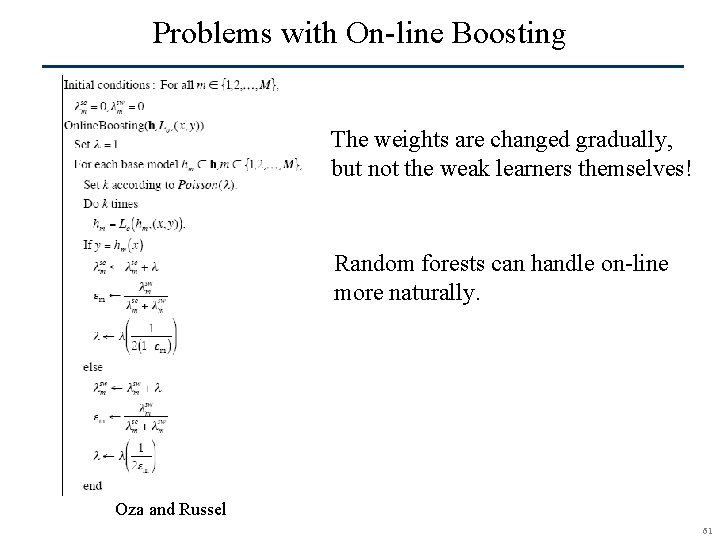
Problems with On-line Boosting The weights are changed gradually, but not the weak learners themselves! Random forests can handle on-line more naturally. Oza and Russel SCR© 61
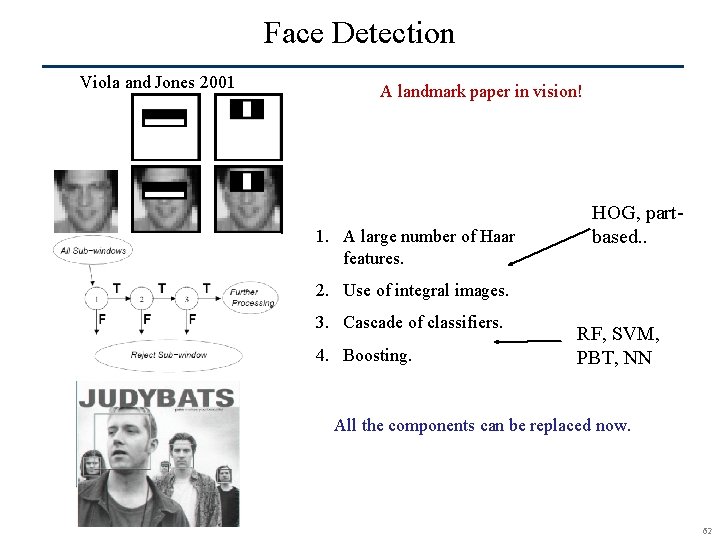
Face Detection Viola and Jones 2001 A landmark paper in vision! 1. A large number of Haar features. HOG, partbased. . 2. Use of integral images. 3. Cascade of classifiers. 4. Boosting. RF, SVM, PBT, NN All the components can be replaced now. SCR© 62
Empirical Observatations • Boosting-decision tree (C 4. 5) often works very well. • 2~3 level decision tree has a good balance between effectiveness and efficiency. • Random Forests requires less training time. • They both can be used in regression. • One-vs-all works well in most cases in multi-classification. • They both are implicit and not so compact. SCR© 63
Ensemble Methods • Random forests (also true for many machine learning algorithms) is an example of a tool that is useful in doing analyses of scientific data. • But the cleverest algorithms are no substitute for human intelligence and knowledge of the data in the problem. • Take the output of random forests not as absolute truth, but as smart computer generated guesses that may be helpful in leading to a deeper understanding of the problem. Leo Brieman SCR© 64
- Slides: 64