
1 st Response Full Course Aims and objectives
1 st Response Full Course
Aims and objectives The aim of 1 st Response is to ensure Girlguiding/Scouting members are kept as safe as possible while they are in our care. Objectives: ▪To provide members (over the age of 14) with simple first aid information which is relevant to their role. ▪To help members build confidence and skills in coping with emergency and first aid situations. ▪To equip members with the knowledge needed to manage these emergencies.
Session 1 By the end of the session participants will have had the opportunity to 1. Find key policies and guidelines relating to 1 st response on the website 2. Explore contents of the emergency file 3. Discuss their role in relation to duty of care for other people’s children including giving medication 4. Explain how to manage and report an incident 5. List basic first aid equipment 6. State the principles of first aid and the role of a first aider 7. Explain what to do when you arrive at an incident
Key topics • Policy • Duty of Care • Giving medication
What to do in the case of an accident or incident • Stay calm. • Keep everyone safe • Call the emergency services if appropriate.
For Girlguiding: in case of a serious emergency you must then do the following. • Tell your home contact what has happened. • Call your Commissioner • Call Girlguiding's insurance service on 0845 260 1053 or out-of-office hours 07508 032997. • Call Girlguiding's emergency PR line on 020 7592 1733 or the out-of-office hours PR line on 07990 553 940. • Do not admit liability. • Get witnesses' names and addresses.
For Scouting: in the event of an accident: • Alert the appropriate emergency services, if required. • Alert your District Commissioner or their designate • Alert the emergency contact of those individuals involved. • If you are abroad, alert any agencies that you are required to by the insurers. • In the event of a serious accident, incident or loss of life: Contact the Duty Media Officer on 020 8433 7100
Accident books • A record should be kept of all accidents that occur. • Follow the Data Protection Act. • Accident records including Notification of Accident or Incident forms, Accident record books, health forms from events and witness statements need to be kept securely together in line with the data protection policy for 7 years unless the member is under 18 in which case they need to be held until the member’s 21 st birthday.
First aid kit • Contents of a first aid kit Link it to your risk assessment
Principles of first aid Preserve life: ▪ Airway ▪ Breathing Prevent deterioration: ▪ Stop bleeding ▪ Treat shock ▪ Treat other injuries Promote recovery: ▪ Reassure ▪ Relieve pain ▪ Handle with care ▪ Protect from harm
Arrival at an incident 1. 2. 3. 4. 5. 6. Assess the situation quickly and calmly Protect all from danger Prevent infection Comfort and reassure: Arrange for the right kind of help Inform parents/ carers
Infection control If possible, wear disposable gloves or improvise with polythene bags or consider whether the casualty can help by, for example, applying pressure to bleeding. Remember: Wash hands Clean Surfaces (bleach with water 1: 10) Resuscitation face shield Cover minor wounds Dispose of soiled items appropriately
Record keeping Complete reports to include: • Details of the incident • Location • Date and time of incident • Who was involved • What was done • Who was notified
Session 2 Emergency life support By the end of the session participants will have the opportunity to 1. Complete a primary survey using DR ABC 2. Manage a casualty who is choking 3. Place the casualty in the recovery position 4. Perform basic life support 5. Manage external bleeding
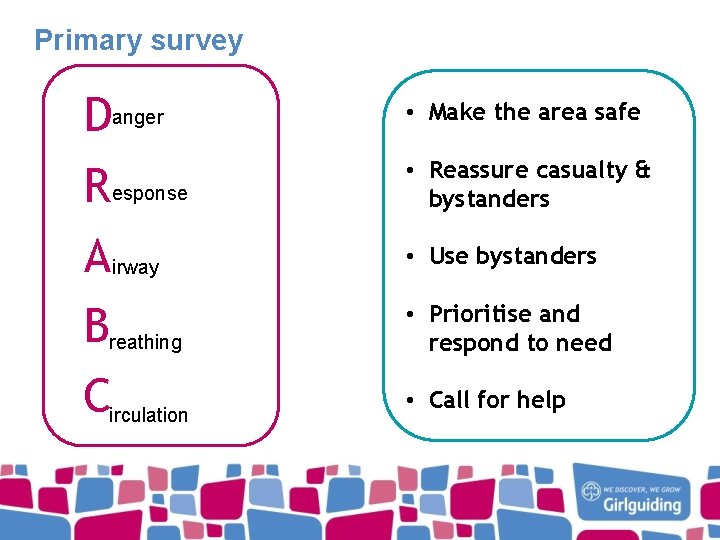
Primary survey Danger R esponse Airway Breathing Circulation • Make the area safe • Reassure casualty & bystanders • Use bystanders • Prioritise and respond to need • Call for help
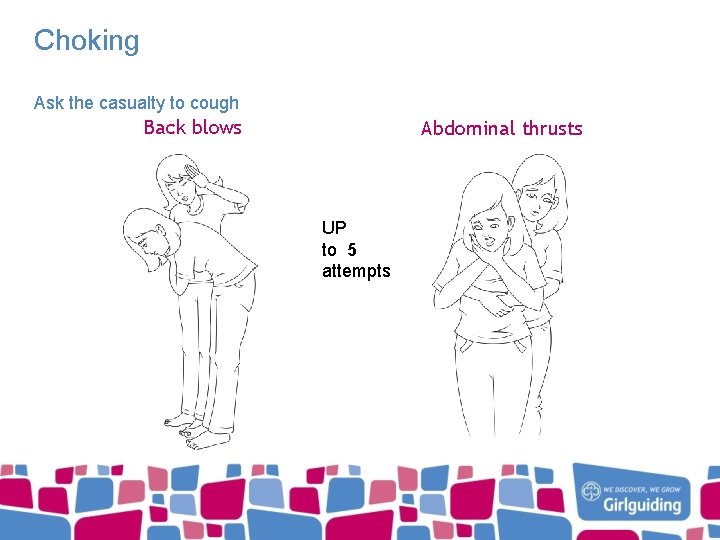
Choking Ask the casualty to cough Back blows Abdominal thrusts UP to 5 attempts
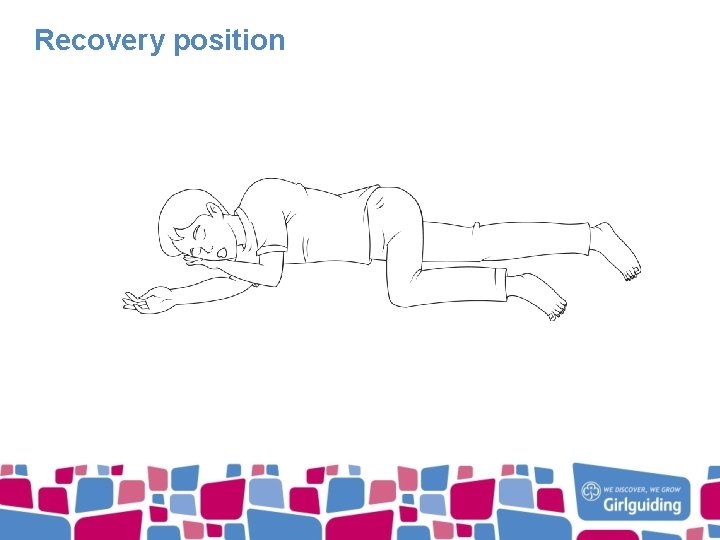
Recovery position
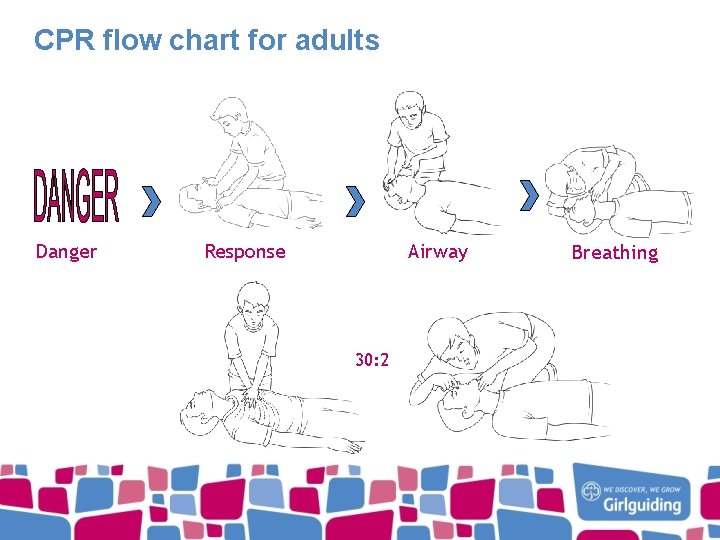
CPR flow chart for adults Danger Response Airway 30: 2 Breathing
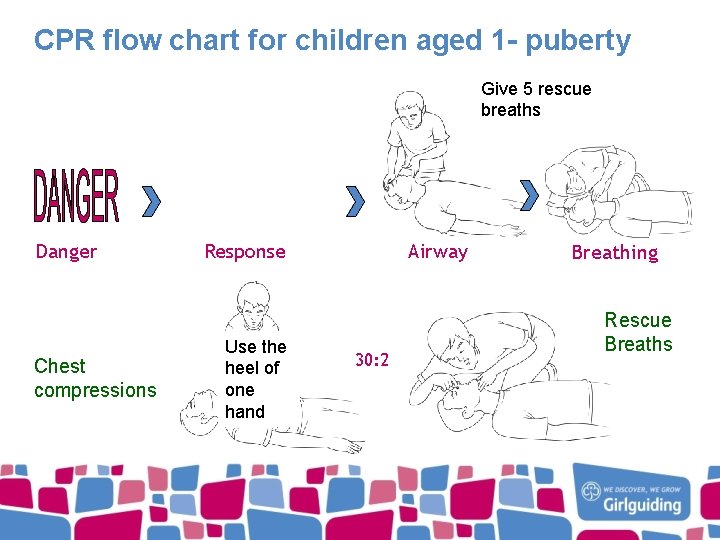
CPR flow chart for children aged 1 - puberty Give 5 rescue breaths Danger Chest compressions Response Use the heel of one hand Airway 30: 2 Breathing Rescue Breaths
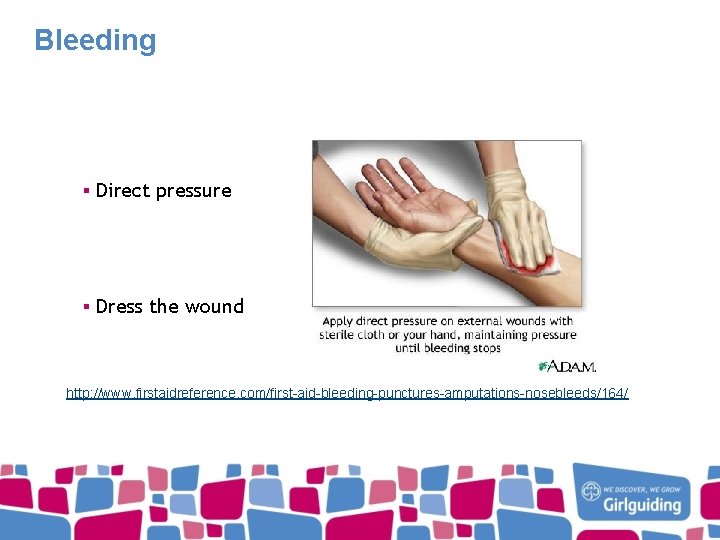
Bleeding ▪ Direct pressure ▪ Dress the wound http: //www. firstaidreference. com/first-aid-bleeding-punctures-amputations-nosebleeds/164/
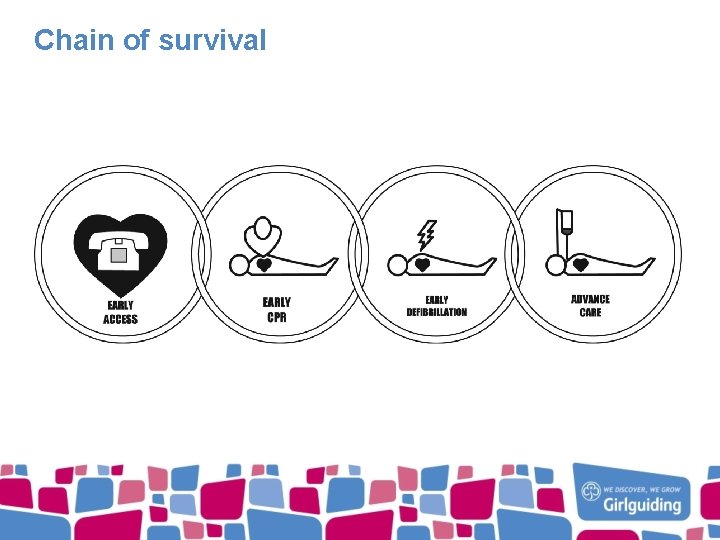
Chain of survival
Session 3 Identifying and managing life threatening injuries By the end of the session participants will have the opportunity to 1. Identify injury 2. Assess levels of responsiveness 3. Discuss the signs, symptoms and initial treatment for all causes of unresponsiveness
Levels of responsiveness A lert V oice P ain Unresponsive (will talk but may be drowsy) (responds to simple command e. g. ‘open your eyes’ or to simple questions) (will react e. g. make a noise when you shake their shoulders ) (there is no response at all)
Causes of unresponsiveness ▪ Fainting ▪ Asphyxia/hypoxia/near drowning ▪ Imbalance of heat ▪ Asthma ▪ Shock ▪ Anaphylaxis ▪ Heart attack/Angina pectoris ▪ Poisoning ▪ Stroke ▪ Seizures including epilepsy ▪ Head Injuries ▪ Diabetic emergencies
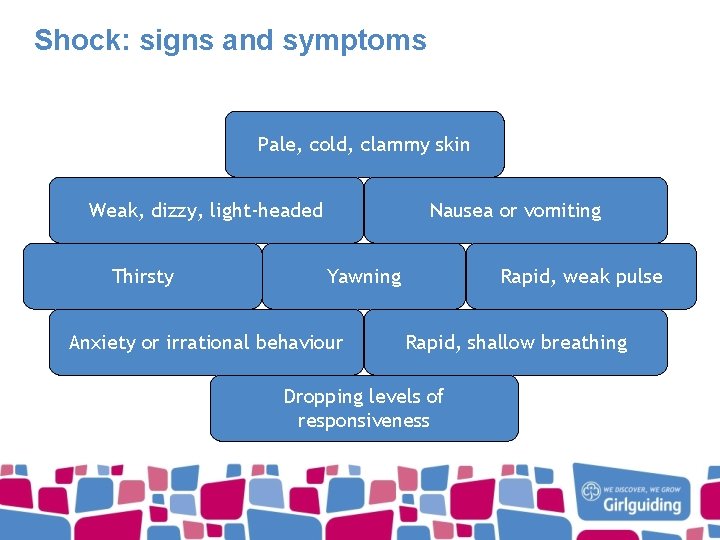
Shock: signs and symptoms Pale, cold, clammy skin Weak, dizzy, light-headed Thirsty Nausea or vomiting Yawning Anxiety or irrational behaviour Rapid, weak pulse Rapid, shallow breathing Dropping levels of responsiveness
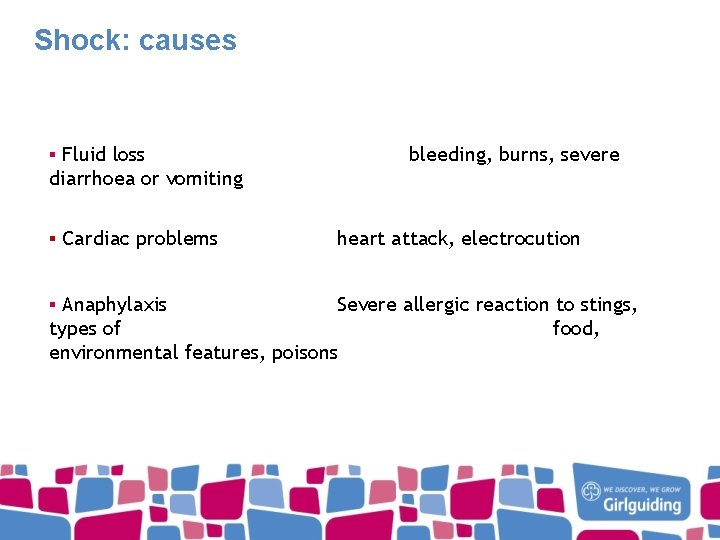
Shock: causes ▪ Fluid loss diarrhoea or vomiting ▪ Cardiac problems bleeding, burns, severe heart attack, electrocution ▪ Anaphylaxis Severe allergic reaction to stings, types of food, environmental features, poisons
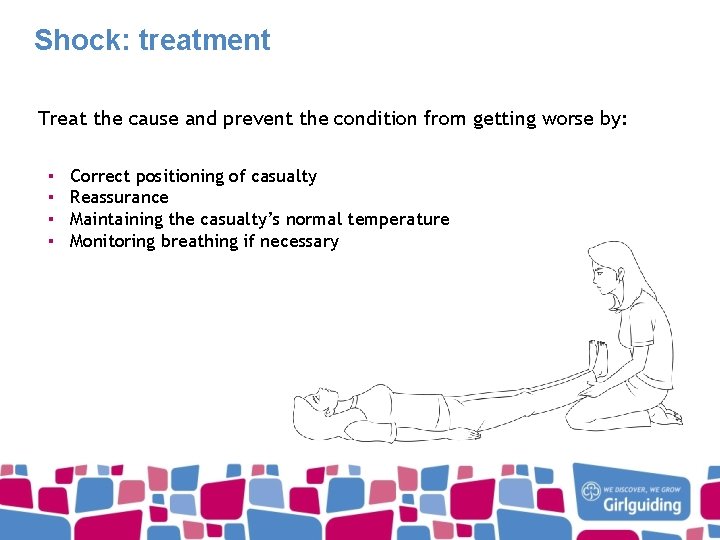
Shock: treatment Treat the cause and prevent the condition from getting worse by: ▪ ▪ Correct positioning of casualty Reassurance Maintaining the casualty’s normal temperature Monitoring breathing if necessary
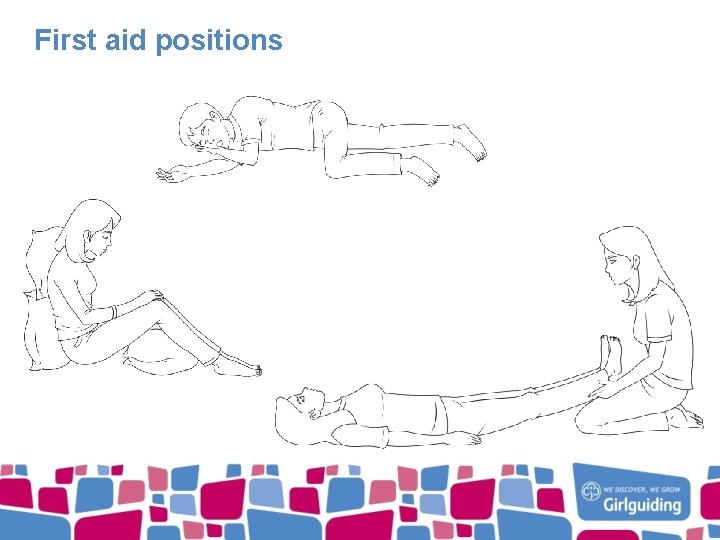
First aid positions
Session 4 Other injuries and conditions By the end of the session participants will have the opportunity to 1. Discuss the signs, symptoms and initial treatment for BONE AND MUSCLE injuries 2. Discuss the signs, symptoms and initial treatment for SKIN injuries 3. Discuss the signs, symptoms and initial treatment for injuries involving the HEAD 4. Discuss the signs, symptoms and initial treatment for key ailments 5. Explore additional opportunities for Training in relation to subject
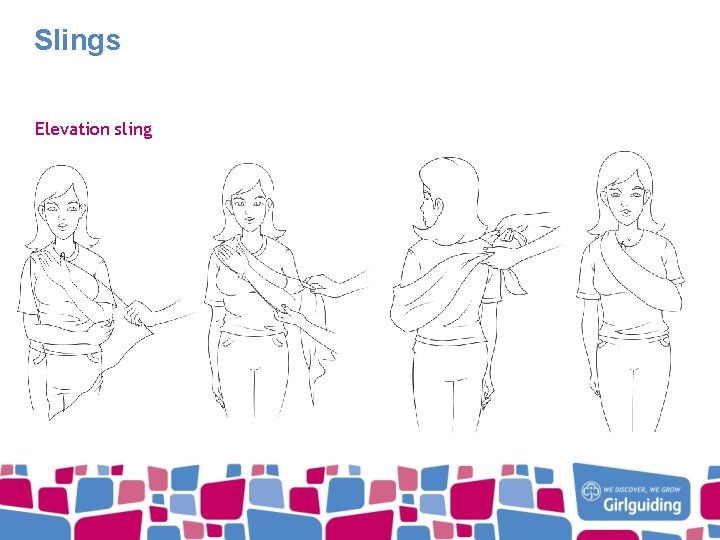
Slings Elevation sling
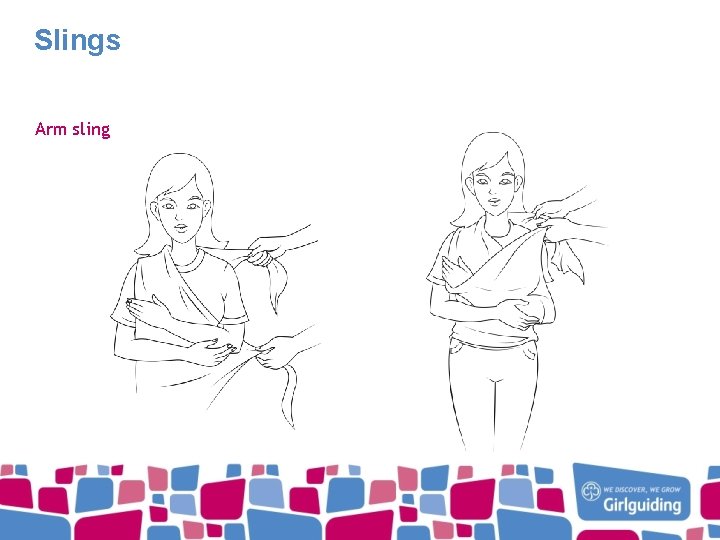
Slings Arm sling
- Slides: 31