
1 Separating Mixtures Learning Outcomes Define filtration evaporation
- Slides: 9
1 Separating Mixtures – Learning Outcomes Define filtration, evaporation, distillation, paper chromatography. Separate mixtures using filtration, evaporation, distillation, paper chromatography.
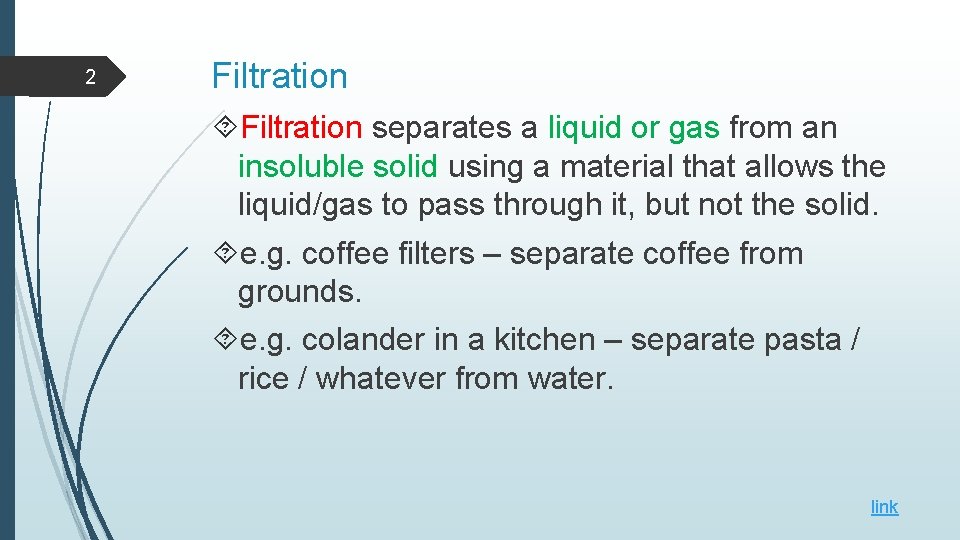
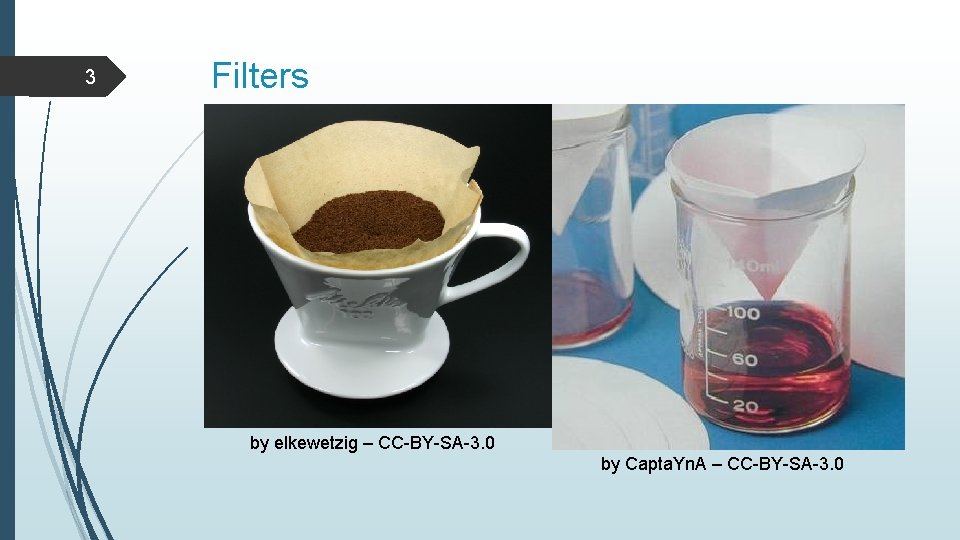
2 Filtration separates a liquid or gas from an insoluble solid using a material that allows the liquid/gas to pass through it, but not the solid. e. g. coffee filters – separate coffee from grounds. e. g. colander in a kitchen – separate pasta / rice / whatever from water. link
3 Filters by elkewetzig – CC-BY-SA-3. 0 by Capta. Yn. A – CC-BY-SA-3. 0
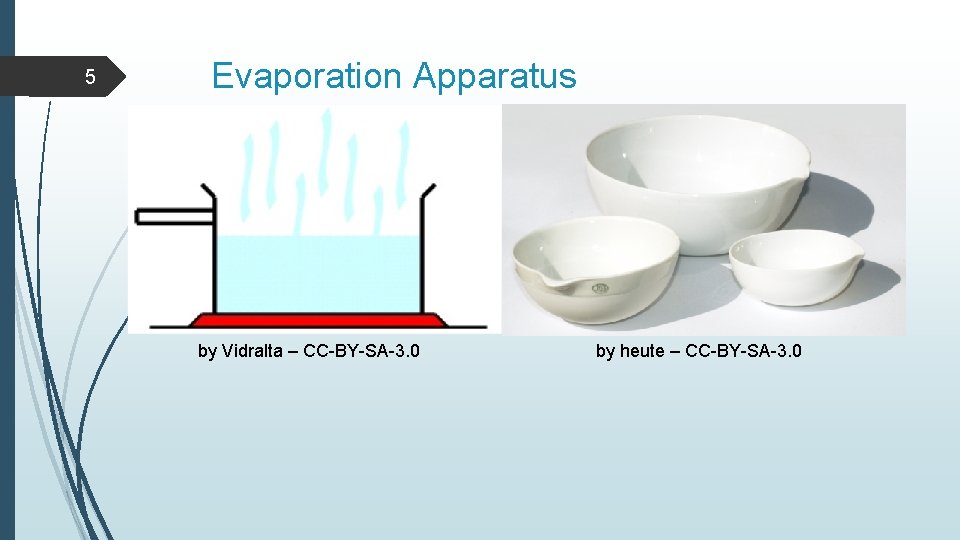
4 Evaporation separates a liquid and a dissolved solid by evaporating away the liquid, leaving the solid behind. Note that you usually lose the liquid. e. g. sweating cools us down by using body heat to evaporate the sweat. e. g. salt is produced in some countries by evaporating seawater. link
5 Evaporation Apparatus by Vidralta – CC-BY-SA-3. 0 by heute – CC-BY-SA-3. 0
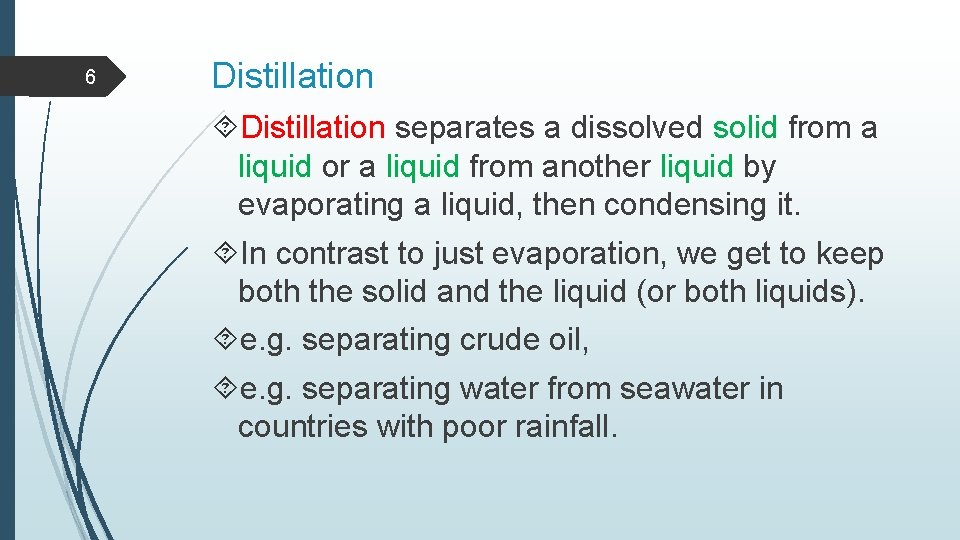
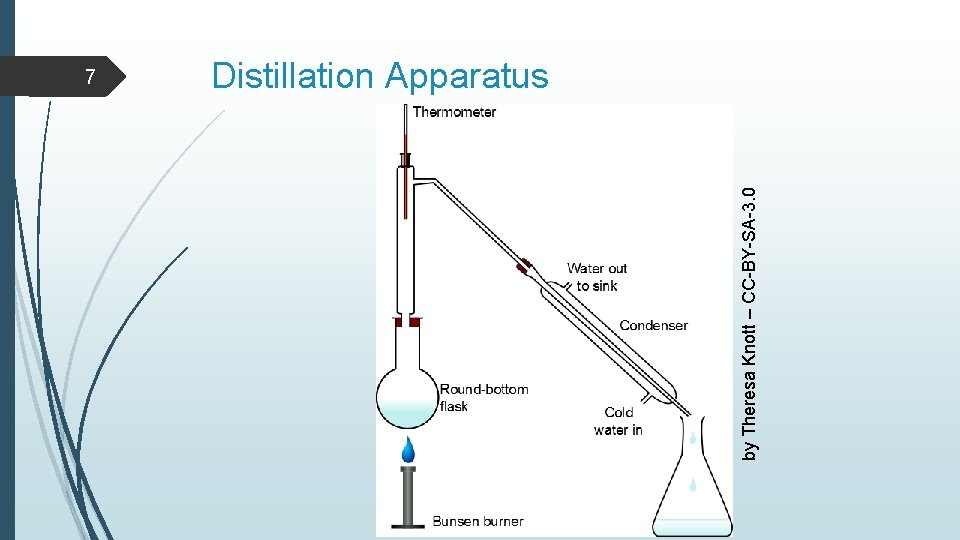
6 Distillation separates a dissolved solid from a liquid or a liquid from another liquid by evaporating a liquid, then condensing it. In contrast to just evaporation, we get to keep both the solid and the liquid (or both liquids). e. g. separating crude oil, e. g. separating water from seawater in countries with poor rainfall.
by Theresa Knott – CC-BY-SA-3. 0 7 Distillation Apparatus
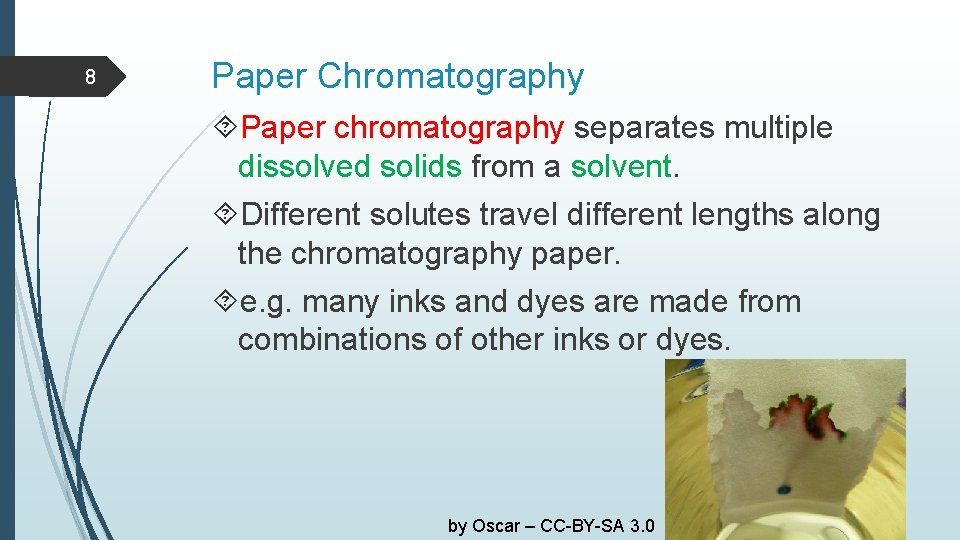
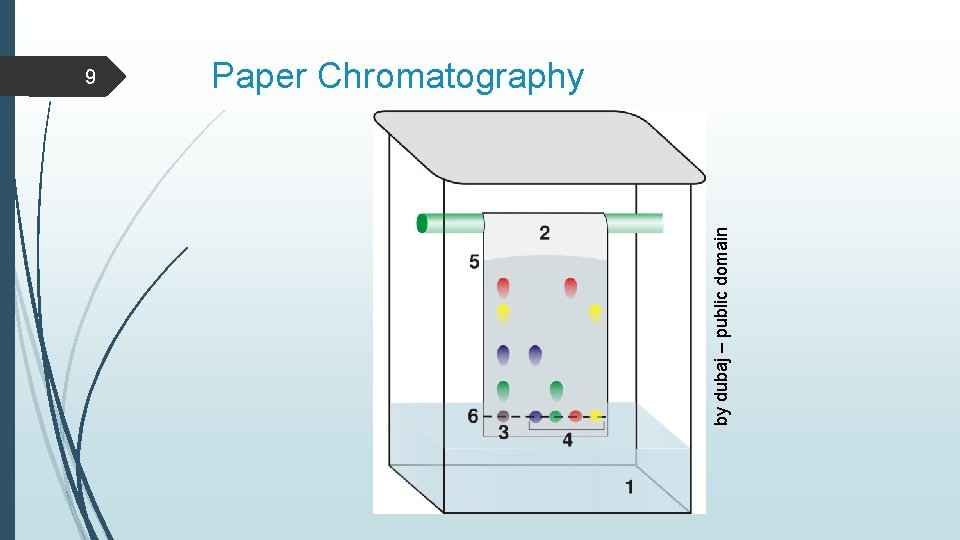
8 Paper Chromatography Paper chromatography separates multiple dissolved solids from a solvent. Different solutes travel different lengths along the chromatography paper. e. g. many inks and dyes are made from combinations of other inks or dyes. by Oscar – CC-BY-SA 3. 0
by dubaj – public domain 9 Paper Chromatography