
1 SD 2011 Sounding rocket measurements of decameter
- Slides: 11
1 SD 2011 Sounding rocket measurements of decameter structures in the cusp K. Oksavik 1, J. Moen 1, 2 , D. A. Lorentzen 1, F. Sigernes 1, T. Abe 3, Y. Saito 3, and M. Lester 4 1) UNIS, Longyearbyen, Norway 2) Department of Physics, Univ. Oslo, Norway 3) ISAS, Japan Aerospace Exploration Agency, Japan 4) Department of Physics & Astronomy, Univ. Leicester, UK
2 ICI-2 Sounding Rocket • Launched at 10: 35: 10 UT on 05 December 2008 • Rocket instrumentation: – Four-Needle Langmuir Probe (4 -NLP): • Absolute Ne – Electric Field Wave Experiment (EFW): • E-field (AC and DC) – Low Energy Particle spectrometer (LEP-ESA): • Electrons 0. 01 -10 ke. V • Ground optics, EISCAT and Super. DARN Photo: Martin Langteigen
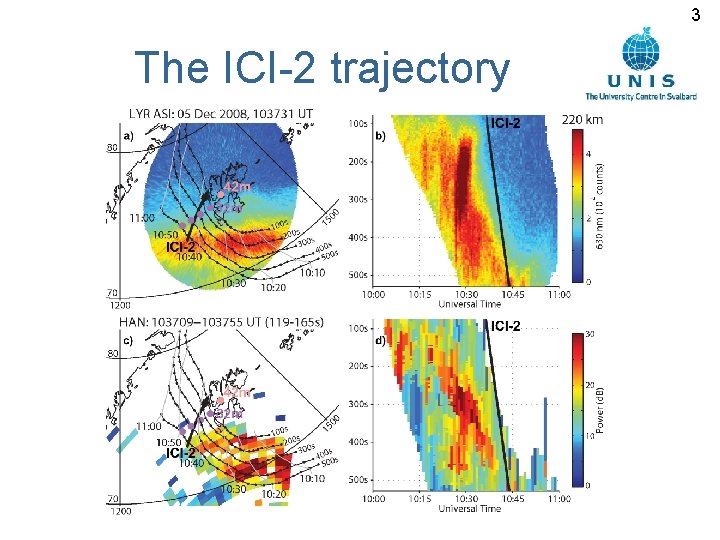
3 The ICI-2 trajectory
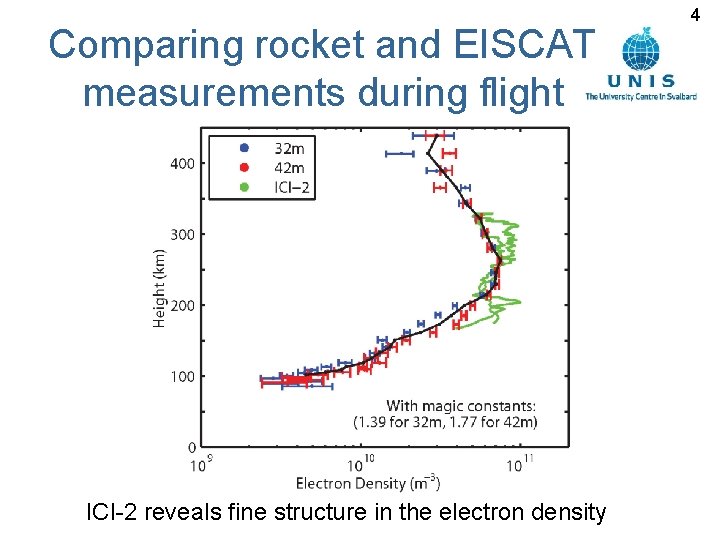
Comparing rocket and EISCAT measurements during flight ICI-2 reveals fine structure in the electron density 4
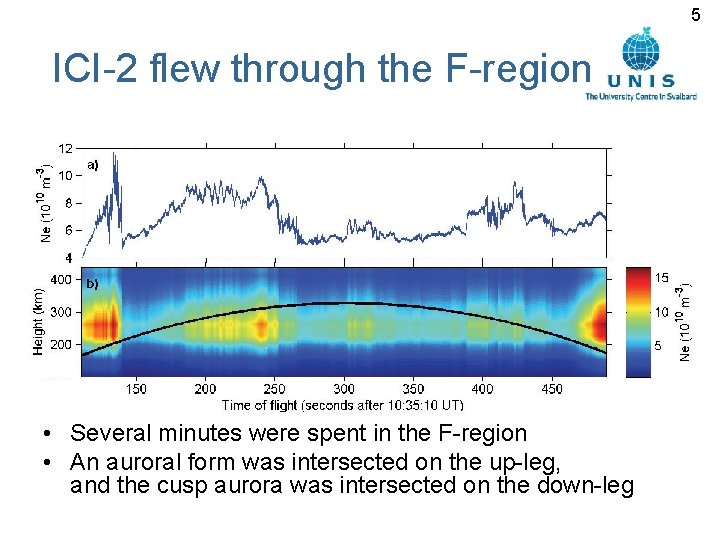
5 ICI-2 flew through the F-region • Several minutes were spent in the F-region • An auroral form was intersected on the up-leg, and the cusp aurora was intersected on the down-leg
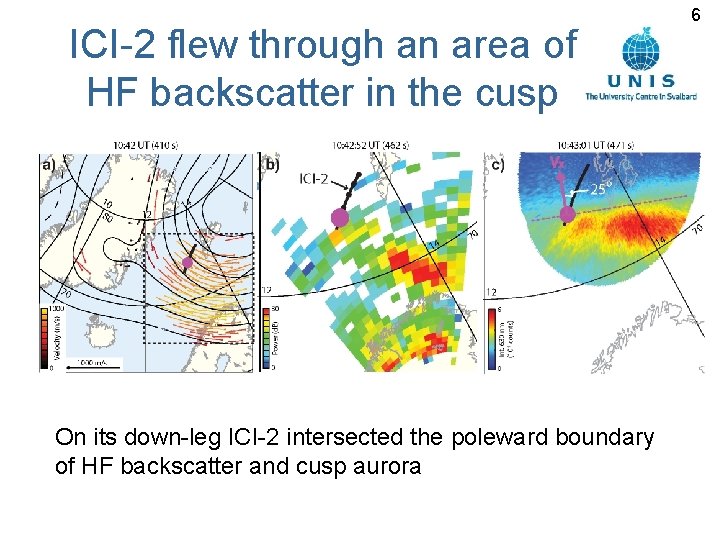
ICI-2 flew through an area of HF backscatter in the cusp On its down-leg ICI-2 intersected the poleward boundary of HF backscatter and cusp aurora 6
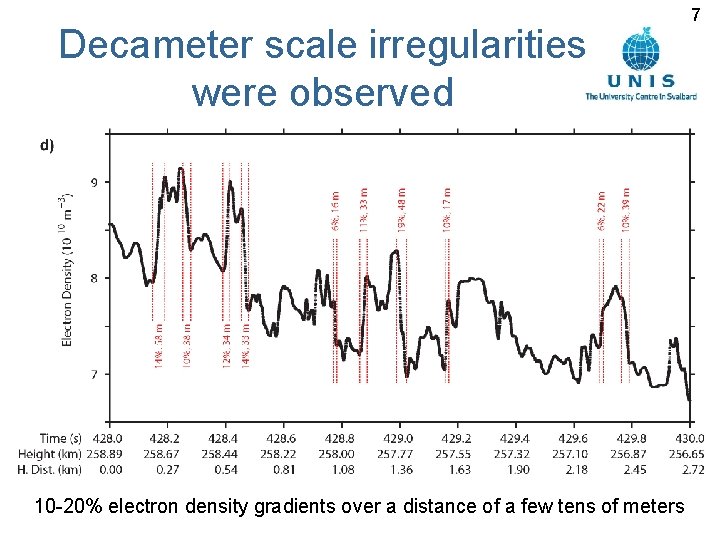
Decameter scale irregularities were observed 10 -20% electron density gradients over a distance of a few tens of meters 7
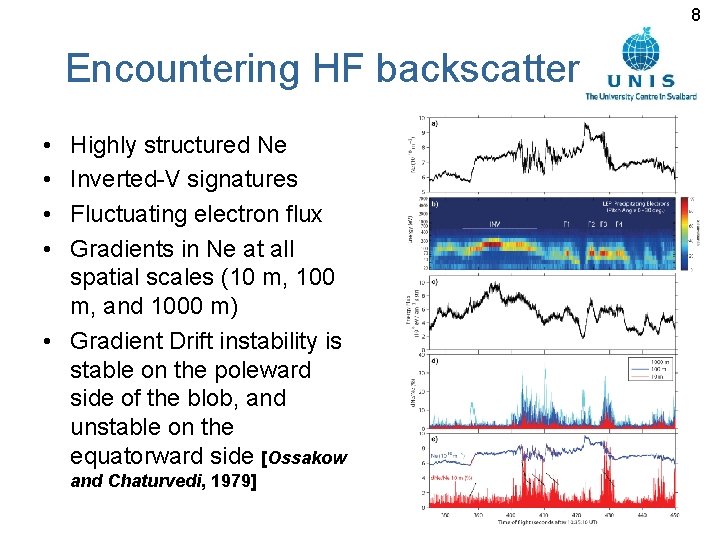
8 Encountering HF backscatter • • Highly structured Ne Inverted-V signatures Fluctuating electron flux Gradients in Ne at all spatial scales (10 m, 100 m, and 1000 m) • Gradient Drift instability is stable on the poleward side of the blob, and unstable on the equatorward side [Ossakow and Chaturvedi, 1979]
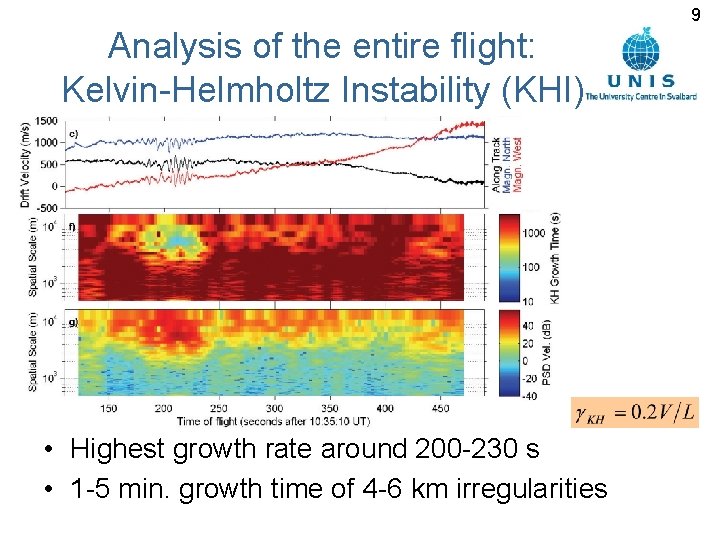
9 Analysis of the entire flight: Kelvin-Helmholtz Instability (KHI) • Highest growth rate around 200 -230 s • 1 -5 min. growth time of 4 -6 km irregularities
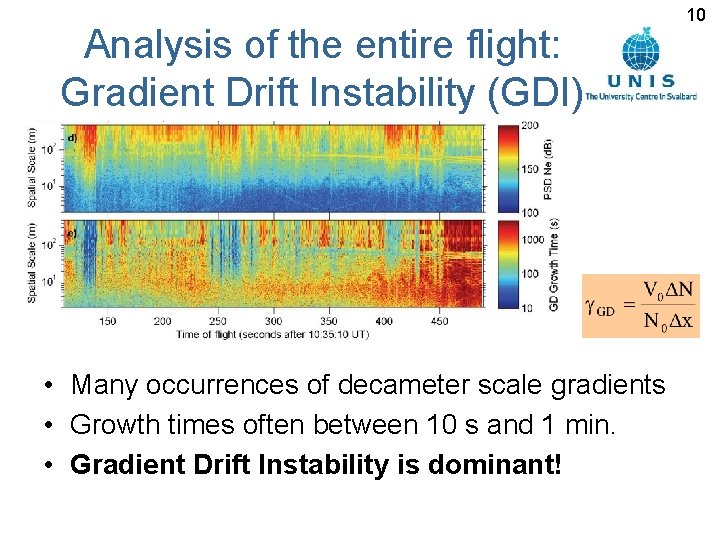
Analysis of the entire flight: Gradient Drift Instability (GDI) • Many occurrences of decameter scale gradients • Growth times often between 10 s and 1 min. • Gradient Drift Instability is dominant! 10
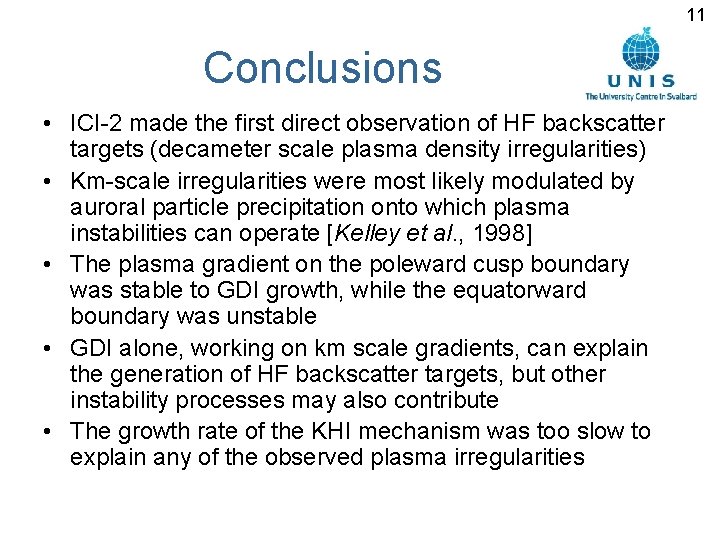
11 Conclusions • ICI-2 made the first direct observation of HF backscatter targets (decameter scale plasma density irregularities) • Km-scale irregularities were most likely modulated by auroral particle precipitation onto which plasma instabilities can operate [Kelley et al. , 1998] • The plasma gradient on the poleward cusp boundary was stable to GDI growth, while the equatorward boundary was unstable • GDI alone, working on km scale gradients, can explain the generation of HF backscatter targets, but other instability processes may also contribute • The growth rate of the KHI mechanism was too slow to explain any of the observed plasma irregularities