
1 RNA vs DNA RNA The sugar is
- Slides: 20
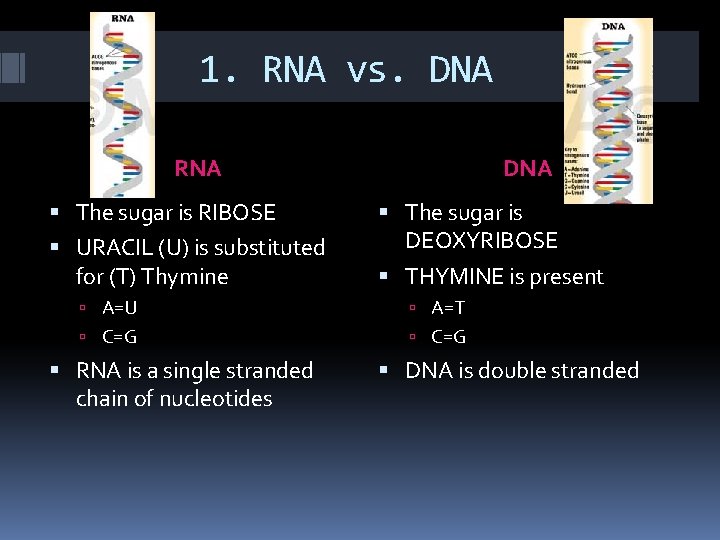
1. RNA vs. DNA RNA The sugar is RIBOSE URACIL (U) is substituted for (T) Thymine DNA The sugar is DEOXYRIBOSE THYMINE is present A=U A=T C=G RNA is a single stranded chain of nucleotides DNA is double stranded
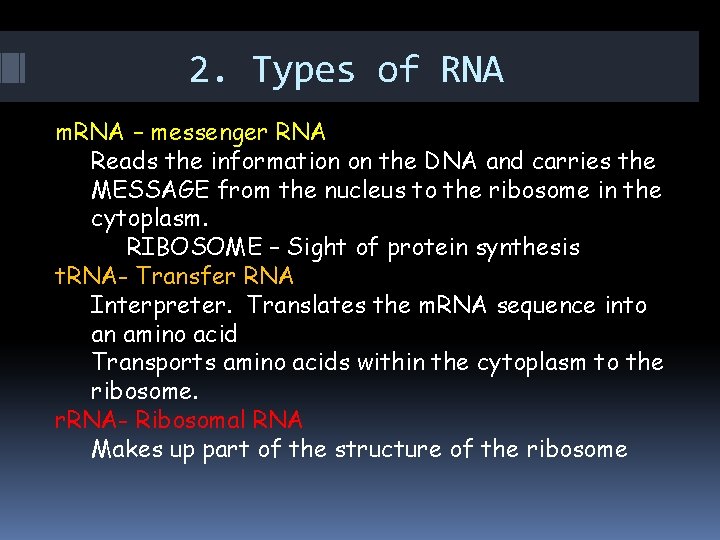
2. Types of RNA m. RNA – messenger RNA Reads the information on the DNA and carries the MESSAGE from the nucleus to the ribosome in the cytoplasm. RIBOSOME – Sight of protein synthesis t. RNA- Transfer RNA Interpreter. Translates the m. RNA sequence into an amino acid Transports amino acids within the cytoplasm to the ribosome. r. RNA- Ribosomal RNA Makes up part of the structure of the ribosome
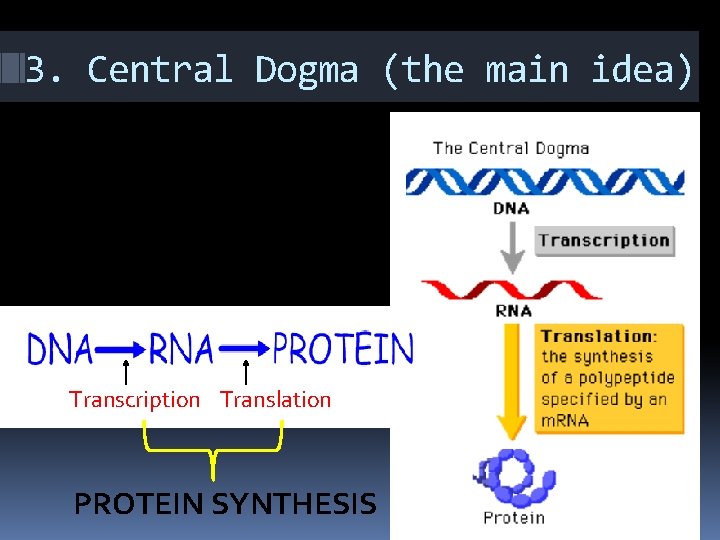
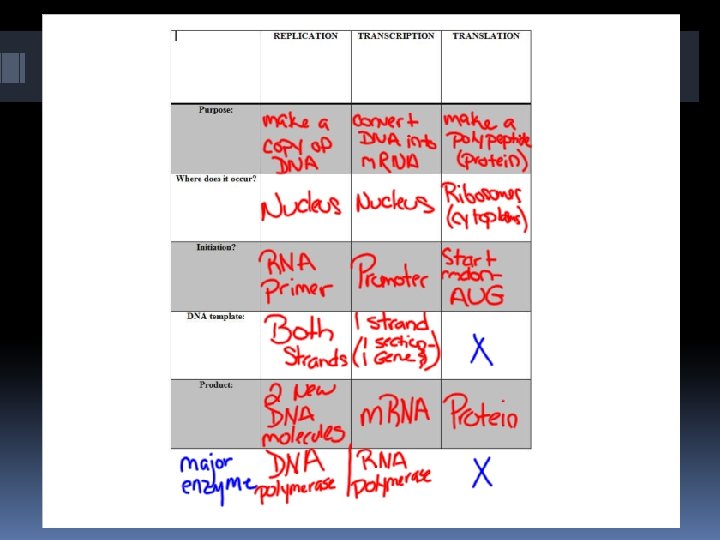
3. Central Dogma (the main idea) Transcription Translation PROTEIN SYNTHESIS
Links Transcription transcription 2
Link
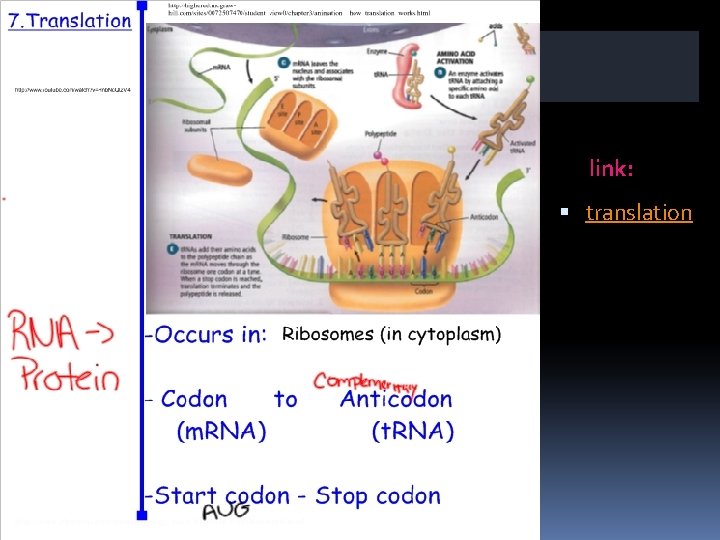
link: translation
http: //www. wiley. com/college /boyer/0470003790/animations /translation. htm
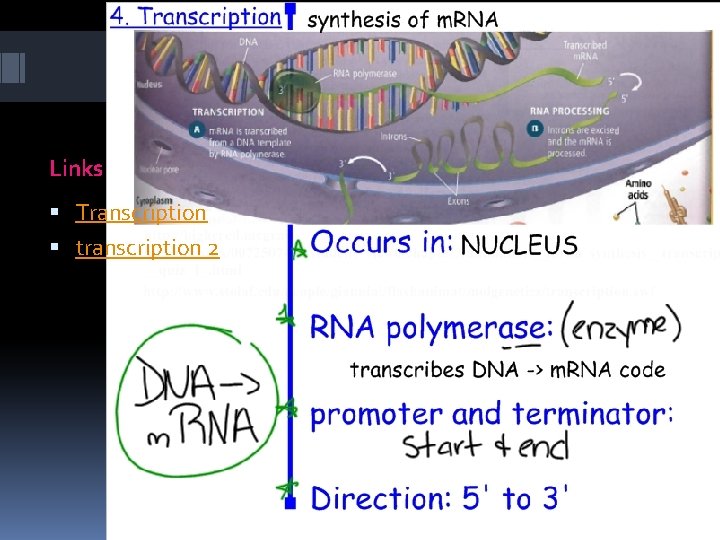
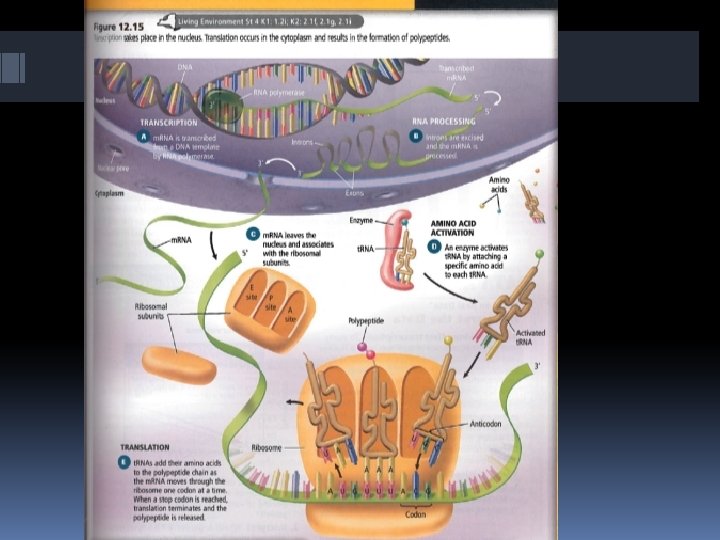
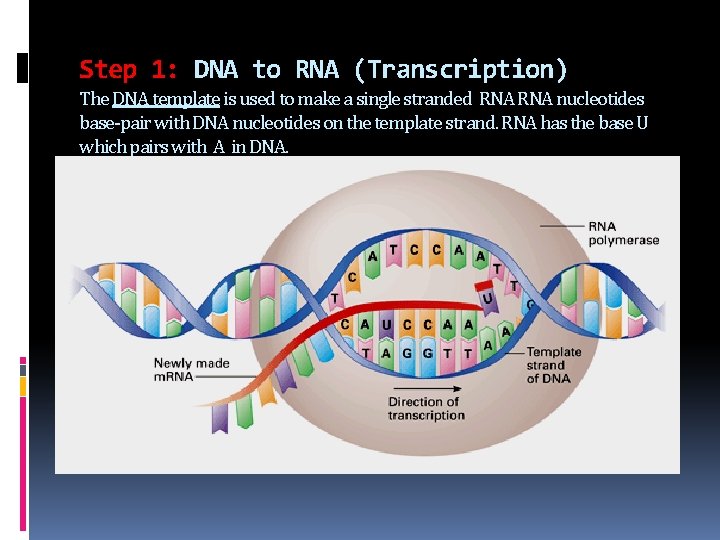
Step 1: DNA to RNA (Transcription) The DNA template is used to make a single stranded RNA nucleotides base-pair with DNA nucleotides on the template strand. RNA has the base U which pairs with A in DNA.
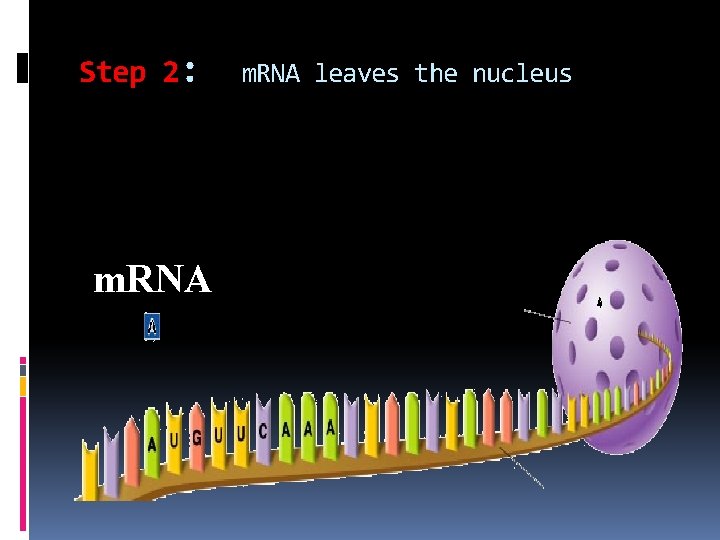
Step 2: m. RNA leaves the nucleus
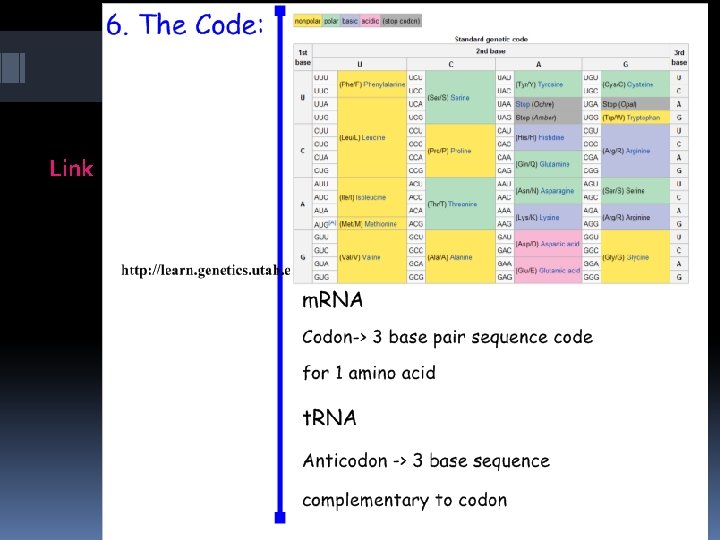
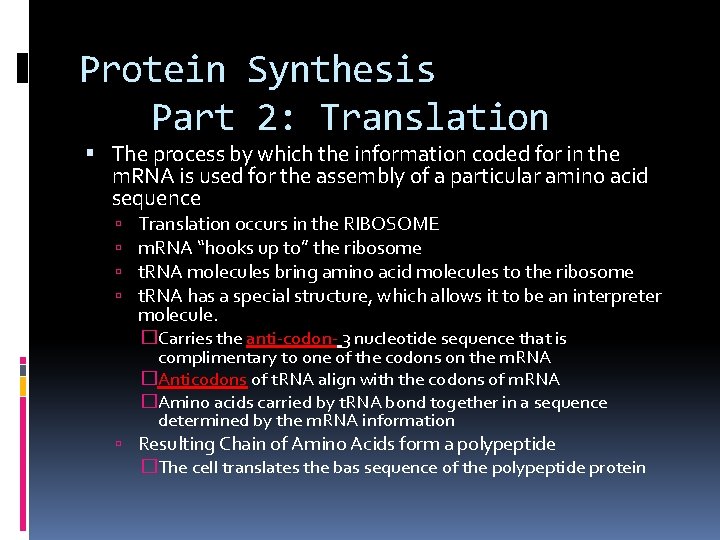
Protein Synthesis Part 2: Translation The process by which the information coded for in the m. RNA is used for the assembly of a particular amino acid sequence Translation occurs in the RIBOSOME m. RNA “hooks up to” the ribosome t. RNA molecules bring amino acid molecules to the ribosome t. RNA has a special structure, which allows it to be an interpreter molecule. �Carries the anti-codon- 3 nucleotide sequence that is complimentary to one of the codons on the m. RNA �Anticodons of t. RNA align with the codons of m. RNA �Amino acids carried by t. RNA bond together in a sequence determined by the m. RNA information Resulting Chain of Amino Acids form a polypeptide �The cell translates the bas sequence of the polypeptide protein
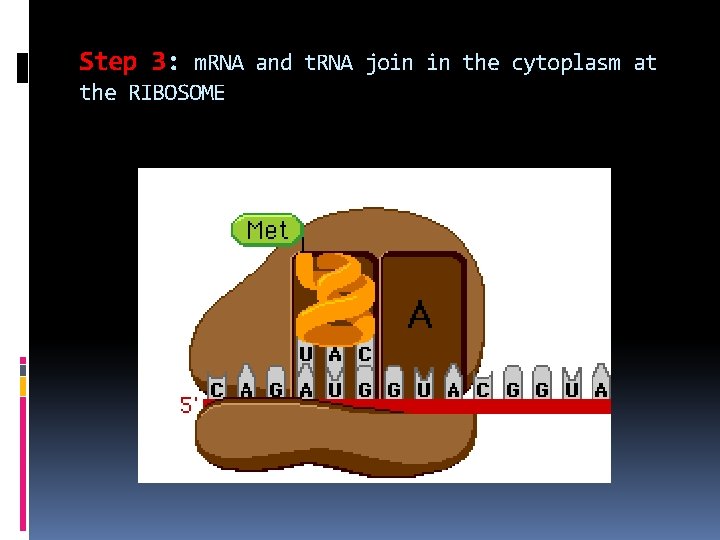
Step 3: m. RNA and t. RNA join in the cytoplasm at the RIBOSOME
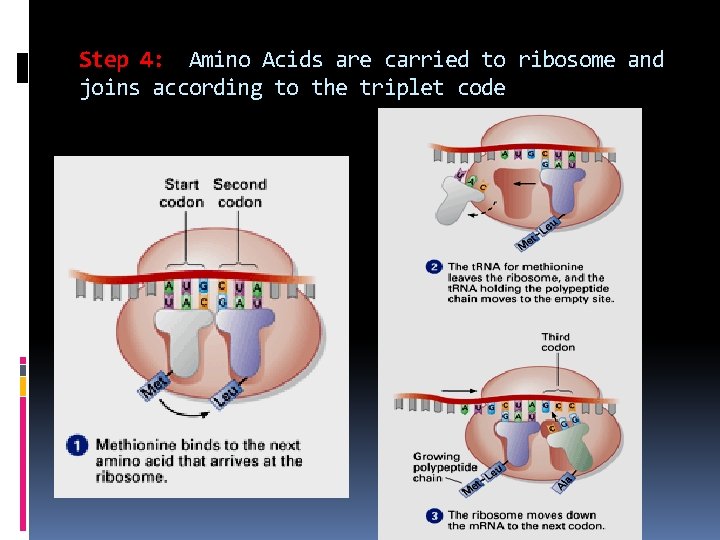
Step 4: Amino Acids are carried to ribosome and joins according to the triplet code
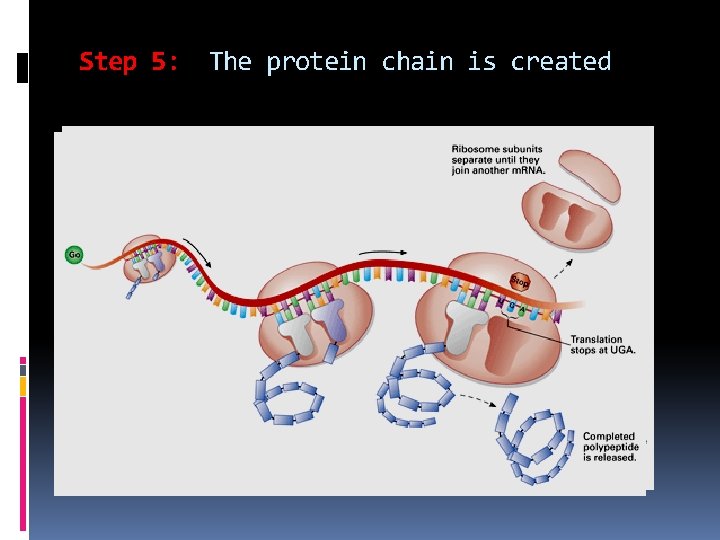
Step 5: The protein chain is created