
1 Resuscitation in cardiac arrest after cardiac surgery


- Slides: 41
1
Resuscitation in cardiac arrest after cardiac surgery �Dr. Mohsen Ziyaeifard � Associated Professor �Cardiac Anesthetist � 1395 2
�European Association for Cardio-Thoracic Surgery (EACTS) 2010 �Standards for Resuscitation After Cardiac Surgery (Critical Care Nurse. 2015; 35[2]: 30 -38) 3
Introduction � The incidence of cardiac arrest after cardiac surgery is around 0. 7 -2. 9% � Relatively good outcome with 17– 79% of patients suffering a cardiac arrest surviving to hospital discharge � The reason for this superior survival is the high incidence of reversible causes for the arrest : ü VF in 25 -50% of case ü Major bleeding ü Tamponade 4
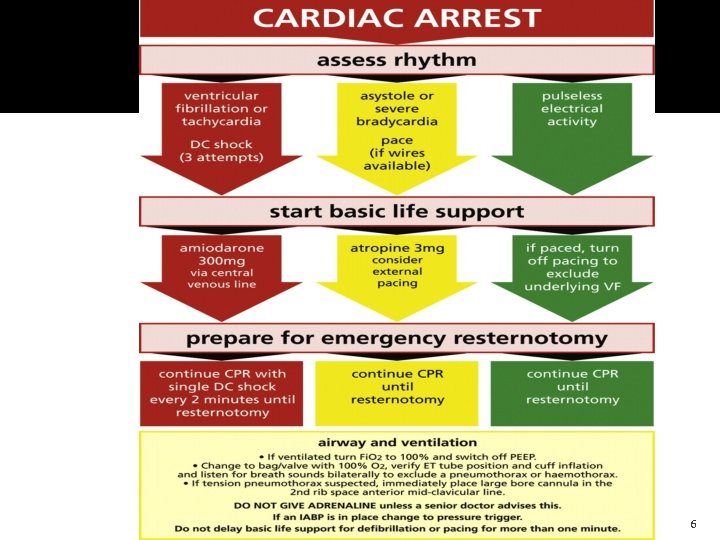
Proposed protocol for cardiac surgical patients in ICU � We recommend that this protocol should be used in the ICU. It is not recommended for use outside of this setting. � 1. Cardioversion � � 2. Identification of arrest and initiation of basic life support in the ICU 3. Doubtful diagnosis of cardiac arrest � � 4. Basic life support: external cardiac massage 5. Basic life support: airway � � 6. Infusions and syringe drivers 7. Administration of adrenaline (epinephrine) � � 8. Cardiac arrest in patients with an intra-aortic balloon pump 9. Management of the cardiac arrest 5
6
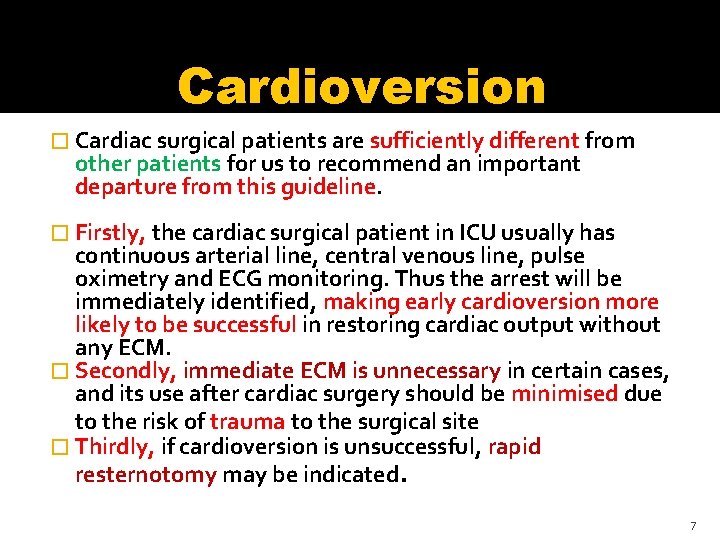
Cardioversion � Cardiac surgical patients are sufficiently different from other patients for us to recommend an important departure from this guideline. � Firstly, the cardiac surgical patient in ICU usually has continuous arterial line, central venous line, pulse oximetry and ECG monitoring. Thus the arrest will be immediately identified, making early cardioversion more likely to be successful in restoring cardiac output without any ECM � Secondly, immediate ECM is unnecessary in certain cases, and its use after cardiac surgery should be minimised due to the risk of trauma to the surgical site � Thirdly, if cardioversion is unsuccessful, rapid resternotomy may be indicated. 7
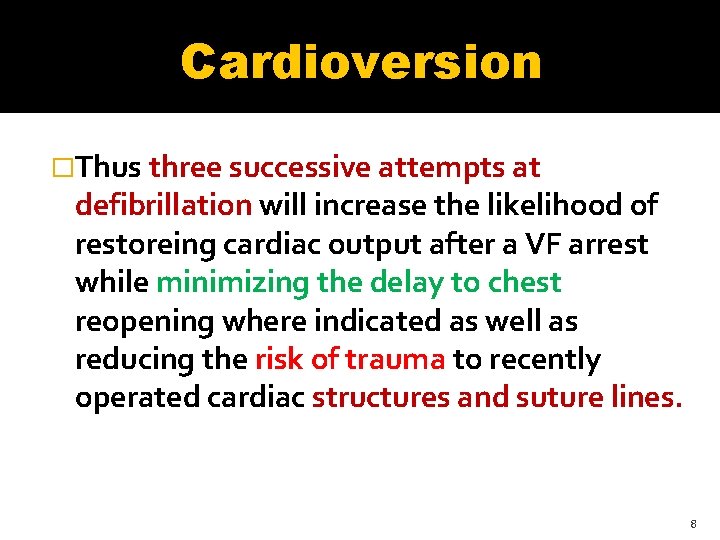
Cardioversion �Thus three successive attempts at defibrillation will increase the likelihood of restoreing cardiac output after a VF arrest while minimizing the delay to chest reopening where indicated as well as reducing the risk of trauma to recently operated cardiac structures and suture lines. 8
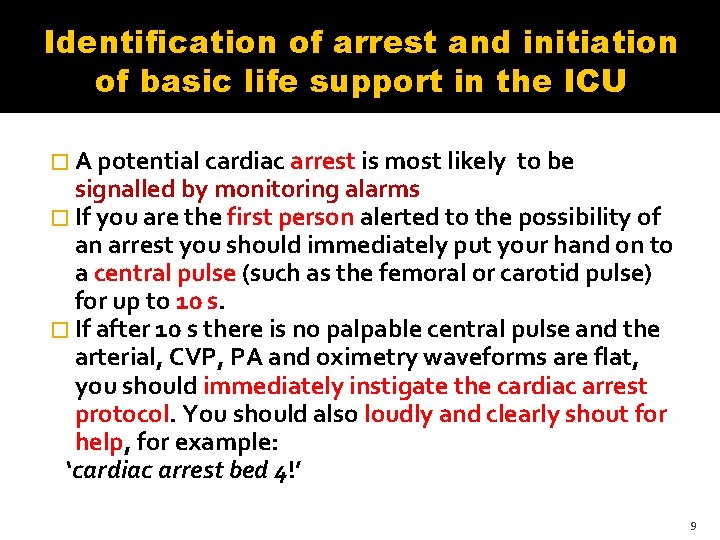
Identification of arrest and initiation of basic life support in the ICU � A potential cardiac arrest is most likely to be signalled by monitoring alarms � If you are the first person alerted to the possibility of an arrest you should immediately put your hand on to a central pulse (such as the femoral or carotid pulse) for up to 10 s. � If after 10 s there is no palpable central pulse and the arterial, CVP, PA and oximetry waveforms are flat, you should immediately instigate the cardiac arrest protocol. You should also loudly and clearly shout for help, for example: ‘cardiac arrest bed 4!’ 9
Doubtful diagnosis of cardiac arrest �If in doubt feel for a central pulse for 10 s and look at all traces �If the ECG shows VF or asystole, call cardiac arrest immediately �If arterial and other pressure waveforms are pulseless then call cardiac arrest immediately 10
Basic life support External Cardiac Massage � If you have witnessed the change of rhythm to VF or pulseless VT then ECM may be delayed until three shocks have been given if a defibrillator is rapidly available (within 1 min) � If not, ECM should be immediately initiated � You should aim for the ‘systolic’ impulse over 60 mm. Hg for optimal cerebral perfusion. � Inability to achieve an acceptable compression-generated blood pressure may indicate that the cause of the arrest warrants immediate emergency resternotomy (massive bleeding or tamponade or tension pneumothorax) and chest reopening should be expediteed. 11
Basic life support airway � Immediately turn the oxygen up to 100%. � For ventilated patients, PEEP should be removed, and if you are happy to do so, the ventilator should be disconnected and a bag/valve used. Listen for breath sounds both sides and equal chest movement to identify a pneumothorax or a haemothorax if present. � If you suspect a tension pneumothorax, place a large bore needle into the 2 nd intercostal space, anterior mid-clavicular line, followed either by a chest drain or opening of the pleura at resternotomy. � If you are happy with the airway and breathing, the patient may be reconnected to the ventilator 12
Infusions and syringe drivers �In an established cardiac arrest all infusions and syringe drivers should be stopped. �If there is concern about awareness then it is acceptable to continue the sedative infusions. Other infusions can be restarted as required by the clinical situation 13
Administration of adrenaline (epinephrine) �When arrest follows cardiac surgery, the chances of rapidly restoring cardiac output are good, and routine use of adrenaline in the arrest may result in dangerous subsequent hypertension. �Administration of adrenaline to be delayed until reversible causes of arrest are excluded. 14
Administration of adrenaline (epinephrine) � Adrenaline may be useful in the impending arrest or peri-arrest situation and may also be safely used in smaller doses such as 100– 300 mcg boluses. � Neither adrenaline nor vasopressin should be given during the cardiac arrest unless directed by a senior clinician experienced in their use. 15
Cardiac arrest in patients with an intra-aortic balloon pump �VF or asystolic arrest is normally easy to recognize, but in PEA or in asystole with an active pacemaker, the ECG may continue to trigger the IABP and the arterial waveform may remain pulsatile even in the absence of cardiac output. 16
Cardiac arrest in patientswith an intraaorticballoon pump �Cardiac arrest can be confirmed by the loss of the cardiac component of the IABP pressure trace. �In an arrest, ECG recordings are either absent or highly variable and subject to artifact from chest compression and other activity 17
Cardiac arrest in patients with an intra-aortic balloon pump � ECG trigger for the IABP is therefore not helpful. � Once cardiac arrest is established, the IABP should therefore be set to pressure trigger, with 1: 1 counterpulsation at maximal augmentation. This will allow augmentation of cardiac massage and improved cardiopulmonary resuscitation , without interference from the ECG trace. � In cardiac arrest with an IABP in place, it should be set to pressure trigger. 18
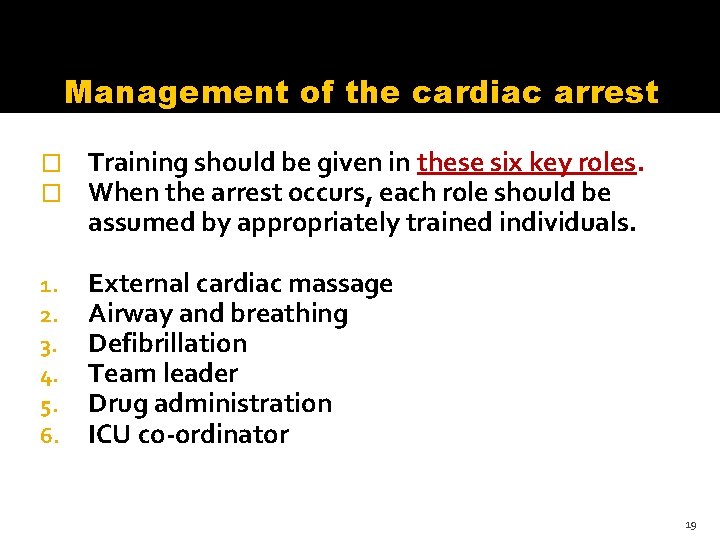
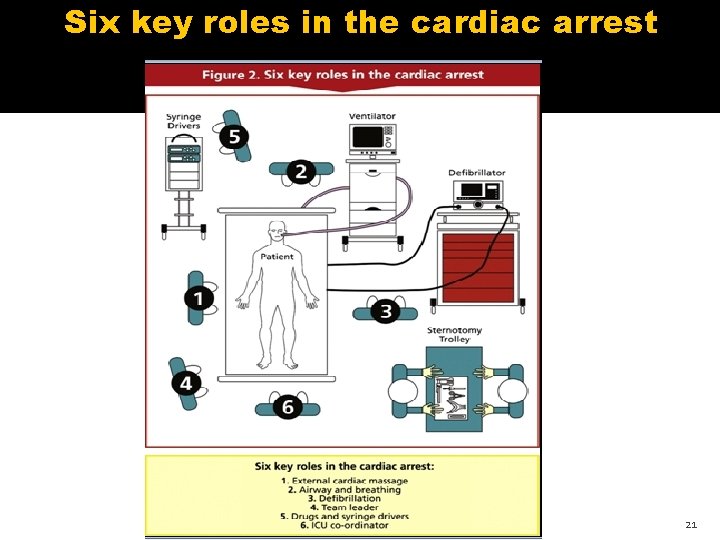
Management of the cardiac arrest � � Training should be given in these six key roles. When the arrest occurs, each role should be assumed by appropriately trained individuals. 1. 2. 3. 4. 5. 6. External cardiac massage Airway and breathing Defibrillation Team leader Drug administration ICU co-ordinator 19
20
Six key roles in the cardiac arrest 21
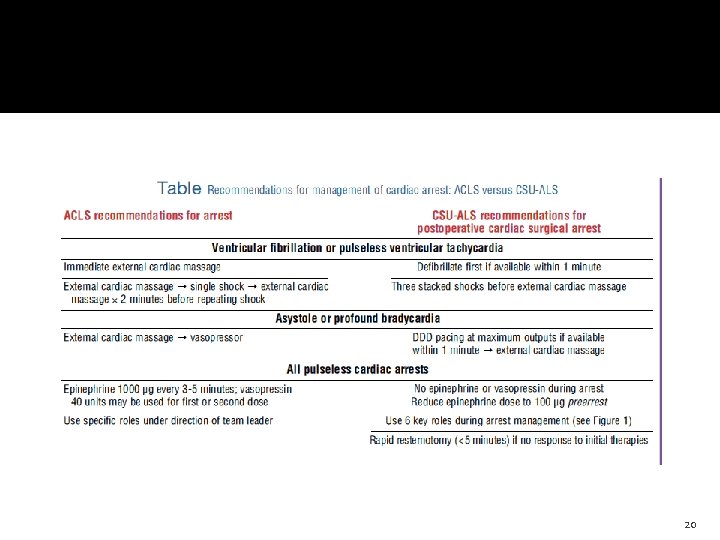
Ventricular fibrillation or pulseless ventricular tachycardia � The use of a precordial thump in cardiac arrest A precordial thump may be performed if within 10 s of the onset of VF or pulseless VT. � This should not delay cardioversion by defibrillation. 22
Immediate ECM versus immediate defibrillation or pacing � In an arrest after cardiac surgery, external cardiac massage can be deferred, deferred a short duration of CPR (1 -3 minutes) before � defibrillation of ventricular tachycardia or fibrillation (VT/VF) has not been shown to improve outcomes. � until initial defibrillation or pacing (as appropriate) have been attempted, provided this can be done in less than 1 min. 23
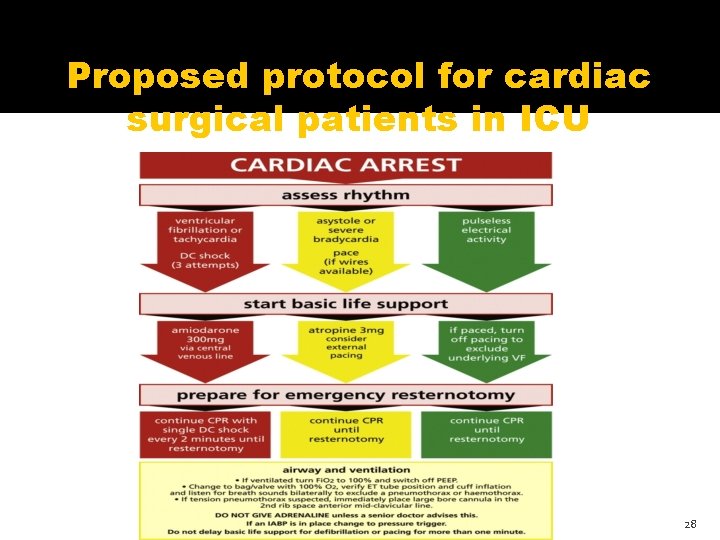
Number of attempts at defibrillation before resternotomy � In ventricular fibrillation or pulseless ventricular tachycardia 3 sequential shocks should be given without intervening CPR. � In VF or pulseless VT, emergency resternotomy should be performed after 3 failed attempts at defibrillation. � After 3 failed attempts at cardioversion for ventricular fibrillation/pulseless VT, a bolus of 300 mg of intravenous amiodarone should be given via the central line. 24
Cardiac arrest with ‘non -shockable’ rhythm � � � The initial arrest rhythm will be only amenable to defibrillation in 30– 50% of patients The remainder have other rhythms, which cannot be treated by defibrillation. Of these, predominant rhythms that may be amenable to pacing are severe bradycardia or asystole For asystole or severe bradycardia, connect the epicardial pacing wires and set to DDD at 100 bpm at the maximum atrial and ventricular output voltages In the absence of epicardial pacing wires, pacing can be achieved using external pacing pads If the rhythm is pulseless electrical activity and a pacemaker is connected and functioning, then briefly turn the pacemaker off to exclude underlying ventricular fibrillation 25
Atropine �For patients with asystole or extreme bradycardia atropine should be given via the central line at a dose of 3 mg 26
Emergency resternotomy after non-VF/VT arrest The ERC guidelines ask clinicians to consider the following as causes of the arrest: � hypoxia, hypovolaemia, hypo/hyperkalaemia, hypothermia, tension pneumothorax, thrombo-embolism, tamponade and toxins, the so-called four ‘H's and four ‘T's. � In contrast, cardiac surgical patients who have a non-VF/VT arrest with this rhythm may have tamponade, tension pneumothorax or severe hypovolaemia. � Prompt treatment is associated with an excellent outcome. Thus delays to resternotomy should be minimized � In non-shockable cardiac arrest which does not resolve after atropine and pacing, emergency resternotomy should be immediately performed � 27
Proposed protocol for cardiac surgical patients in ICU 28
� Conduct of emergency resternotomy Internal versus external cardiac massage � Hallmark studies, have repeatedly demonstrated that external compressions are a poor substitute for internal massage, consistently delivering cerebral perfusion pressures that are 3 - to 4 -fold less than those of internal compressions and rarely exceed the 15 mm Hg end point required for neurological survival. Internal cardiac massage is superior to external cardiac massage. In patients with a recent sternotomy in whom resuscitative efforts are likely to last more than 5– 10 min, emergency resternotomy is indicated. For neurologically intact recovery 29
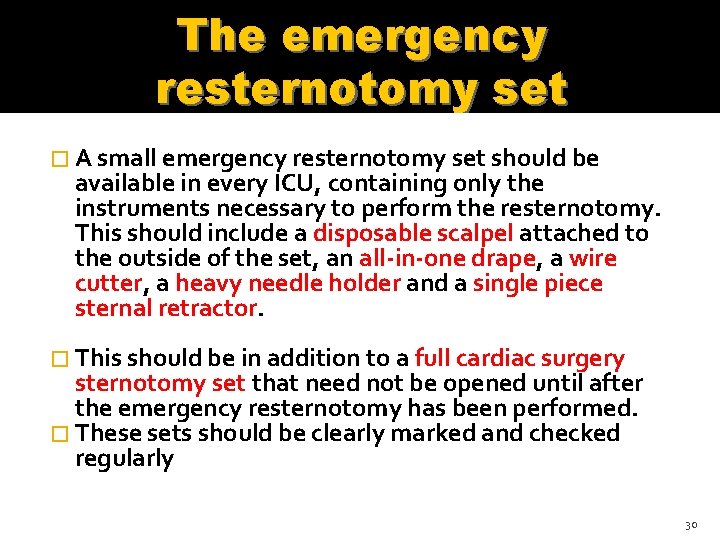
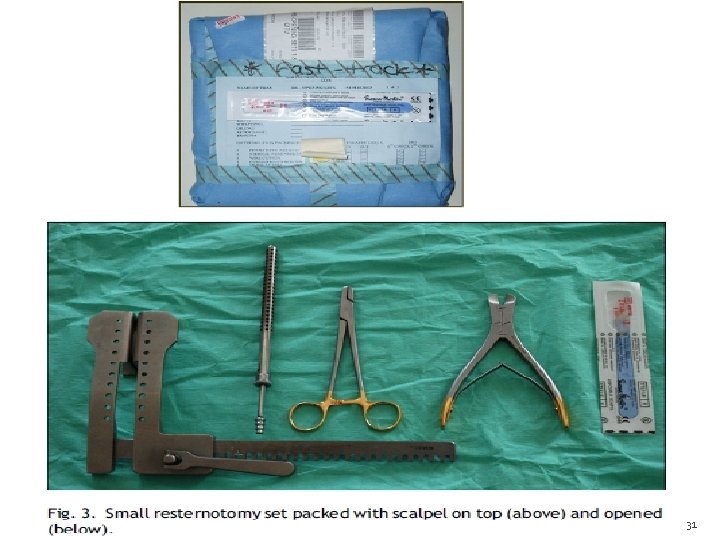
The emergency resternotomy set � A small emergency resternotomy set should be available in every ICU, containing only the instruments necessary to perform the resternotomy. This should include a disposable scalpel attached to the outside of the set, an all-in-one drape, a wire cutter, a heavy needle holder and a single piece sternal retractor � This should be in addition to a full cardiac surgery sternotomy set that need not be opened until after the emergency resternotomy has been performed. � These sets should be clearly marked and checked regularly 30
31
Preparation for emergency resternotomy � Cardiac arrests in the ICU are often promptly attended by more staff members than needed simply to manage basic life support, defibrillation, airway, and decision making. � Two to three staff members should put on a gown and gloves as soon as a cardiac arrest is called, and prepare the emergency resternotomy set , because 20 – 50% of cardiac arrests after cardiac surgery result in emergency resternotomy � Hand washing is not necessary prior to closed-sleeve donning of gloves 32
Personnel performing emergency resternotomy �Emergency resternotomy may be required in 0. 8 -2. 7% of all patients undergoing cardiac surgery. �This ensures better assistance for the surgeon and, in the unlikely situation that resternotomy is required and a surgeon is not immediately available, resternotomy by another member staff may be life saving. 33
Method of internal cardiac massage �This is potentially dangerous and personnel who may be required to perform this must have had prior training to do this safely. �Risks to the patient include avulsion of a bypass graft, with the left internal mammary artery being at particular risk. �Before attempting internal massage, inspect the heart to locate the internal mammary and any other grafts, carefully removing any blood clots. 34
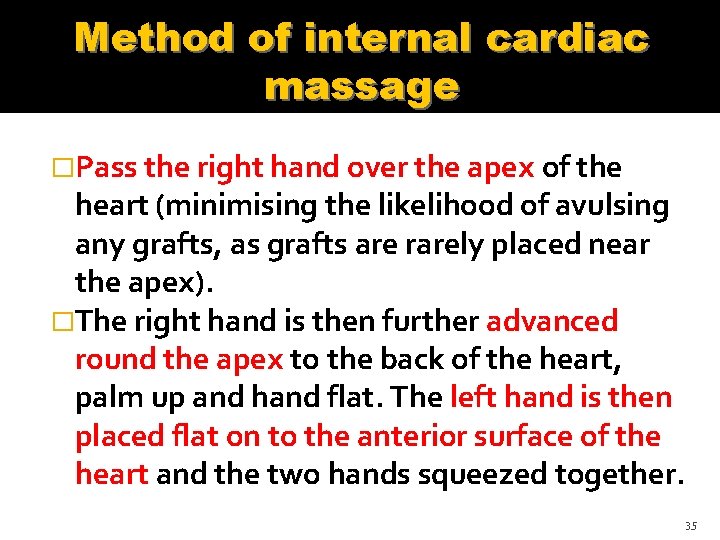
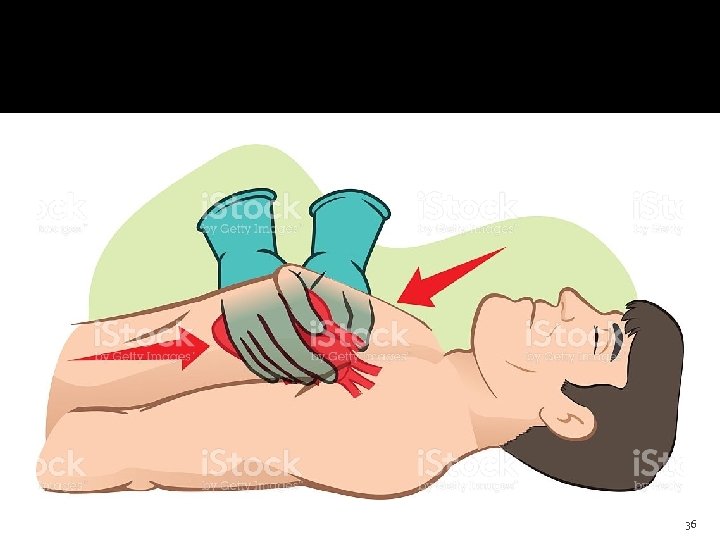
Method of internal cardiac massage �Pass the right hand over the apex of the heart (minimising the likelihood of avulsing any grafts, as grafts are rarely placed near the apex). �The right hand is then further advanced round the apex to the back of the heart, palm up and hand flat. The left hand is then placed flat on to the anterior surface of the heart and the two hands squeezed together. 35
36
Method of internal cardiac massage �If there is a mitral valve replacement or repair, care should be taken not to lift the apex by the right hand, as this can cause a posterior ventricular rupture. Squeeze your hands together at a rate of 100 per min and look at the arterial trace to verify adequate internal massage. You should try to obtain a systolic impulse of more than 60 mm. Hg for optimal cerebral perfusion. 37
How long after cardiac surgery is emergency resternotomy no longer indicated? � Emergency resternotomy should form an integral part of the cardiac arrest protocol up to the 10 th postoperative day � Beyond the 10 th postoperative day, a senior clinician should decide whether emergency resternotomy should still be performed. � Emergency resternotomy for internal cardiac massage should still be considered in preference to prolonged external cardiac massage even if a surgically reversible cause for the arrest is not suspected. 38
Should patients receive additional antibiotics after emergency resternotomy? �It is common practice to perform an antiseptic washout after emergency resternotomy and to give additional intravenous antibiotics. 39
Special considerations � There are many special considerations within cardiac surgery related to the specific operative procedures. The cases below serve as examples and every clinician should consider whether the patient that they are returning to the ICU may present a particular challenge should cardiac arrest occur, and if so, this should be clearly documented and discussed with the ICU staff � Transplant patients � Pediatric patients � ‘Open chest’ patients � Patients with a cardiac assist device � Patients undergoing non-sternotomy cardiac surgery 40
THANK YOU 41