
1 RESIDENTIAL SCHOOLS MODULE 05 The Mohawk Institute
- Slides: 20
1 RESIDENTIAL SCHOOLS MODULE 05
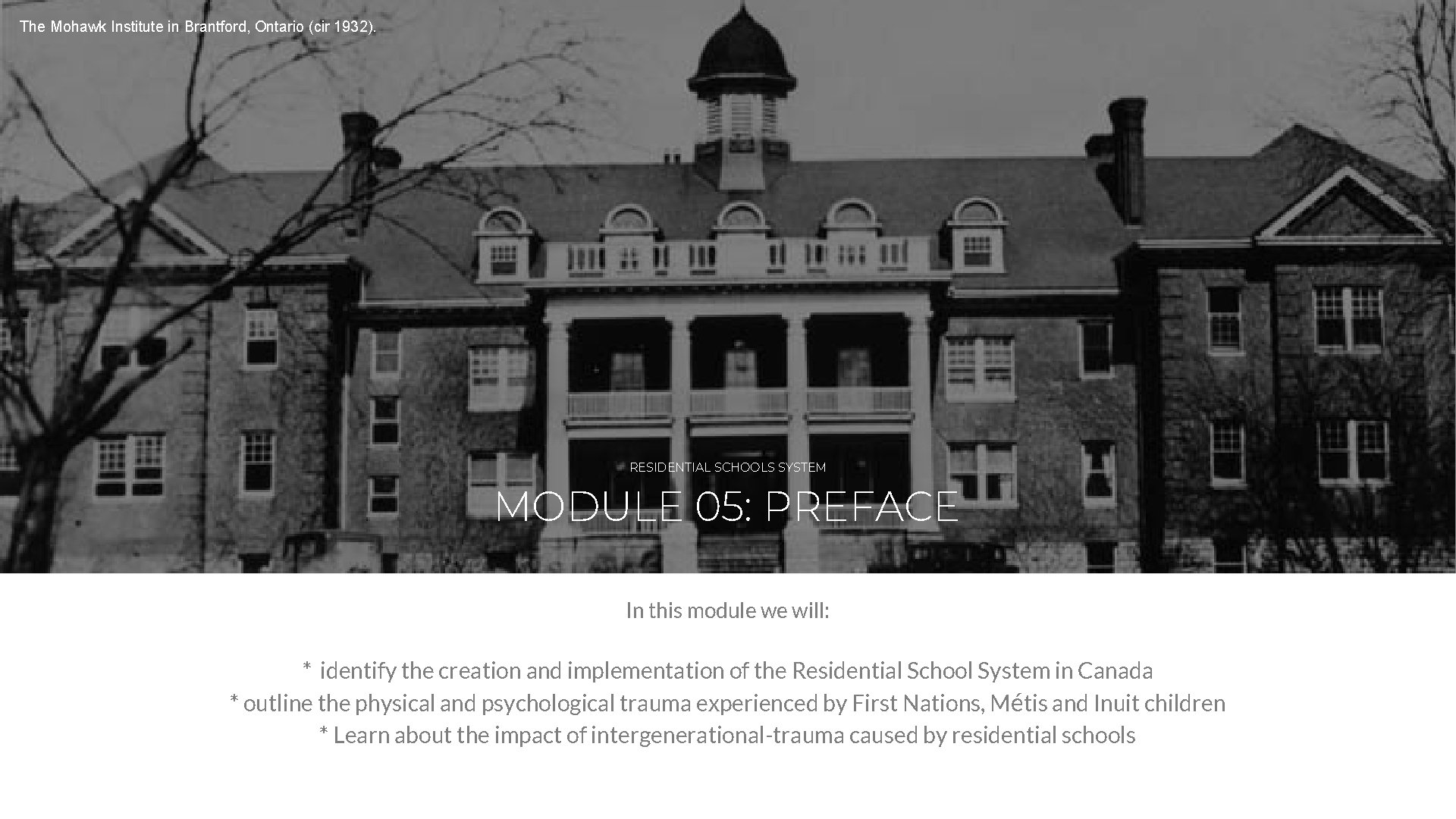
The Mohawk Institute in Brantford, Ontario (cir 1932). 2 RESIDENTIAL SCHOOLS SYSTEM MODULE 05: PREFACE In this module we will: * identify the creation and implementation of the Residential School System in Canada * outline the physical and psychological trauma experienced by First Nations, Métis and Inuit children * Learn about the impact of intergenerational-trauma caused by residential schools
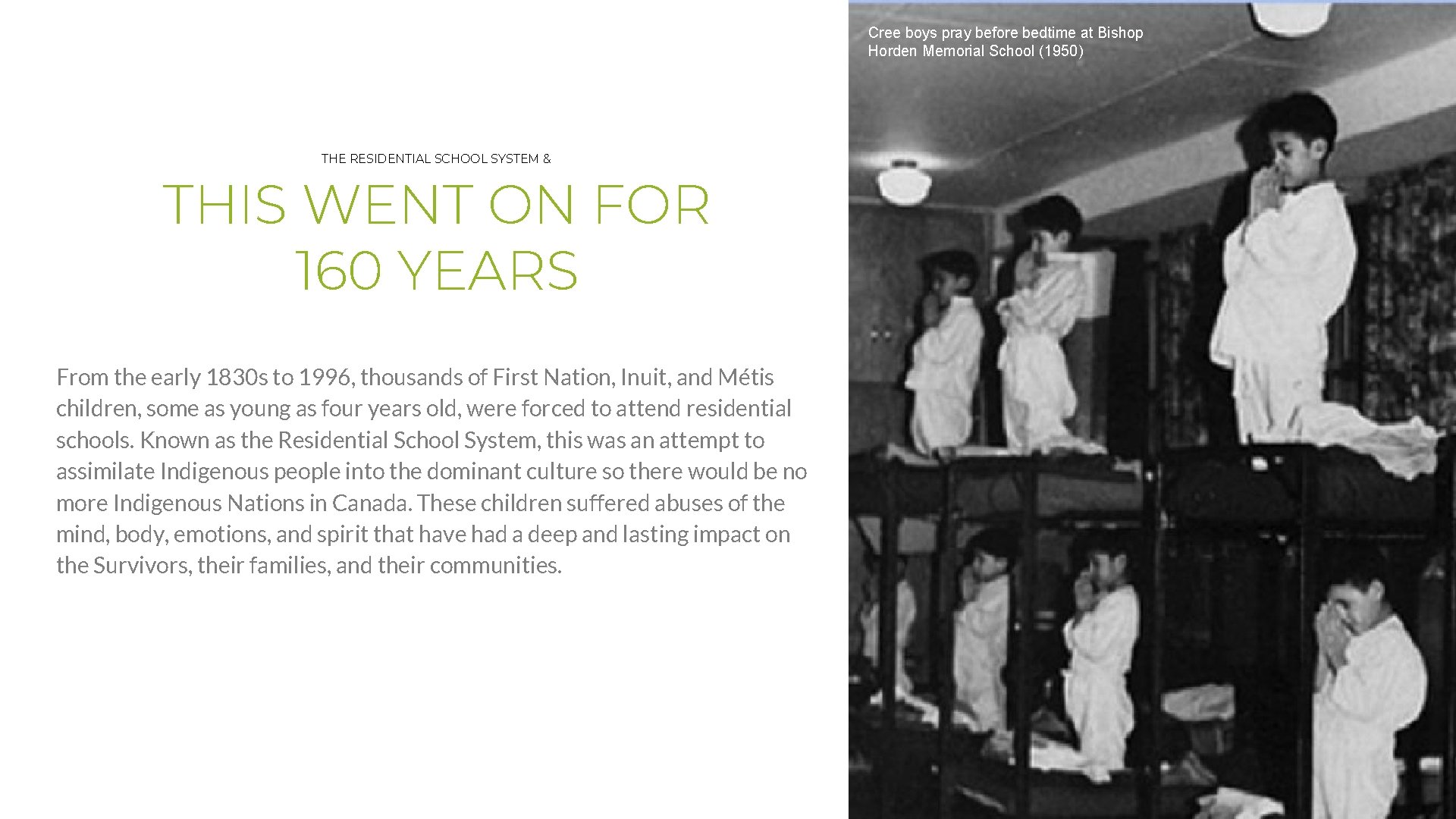
Cree boys pray before bedtime at Bishop Horden Memorial School (1950) THE RESIDENTIAL SCHOOL SYSTEM & THIS WENT ON FOR 160 YEARS From the early 1830 s to 1996, thousands of First Nation, Inuit, and Métis children, some as young as four years old, were forced to attend residential schools. Known as the Residential School System, this was an attempt to assimilate Indigenous people into the dominant culture so there would be no more Indigenous Nations in Canada. These children suffered abuses of the mind, body, emotions, and spirit that have had a deep and lasting impact on the Survivors, their families, and their communities. 3
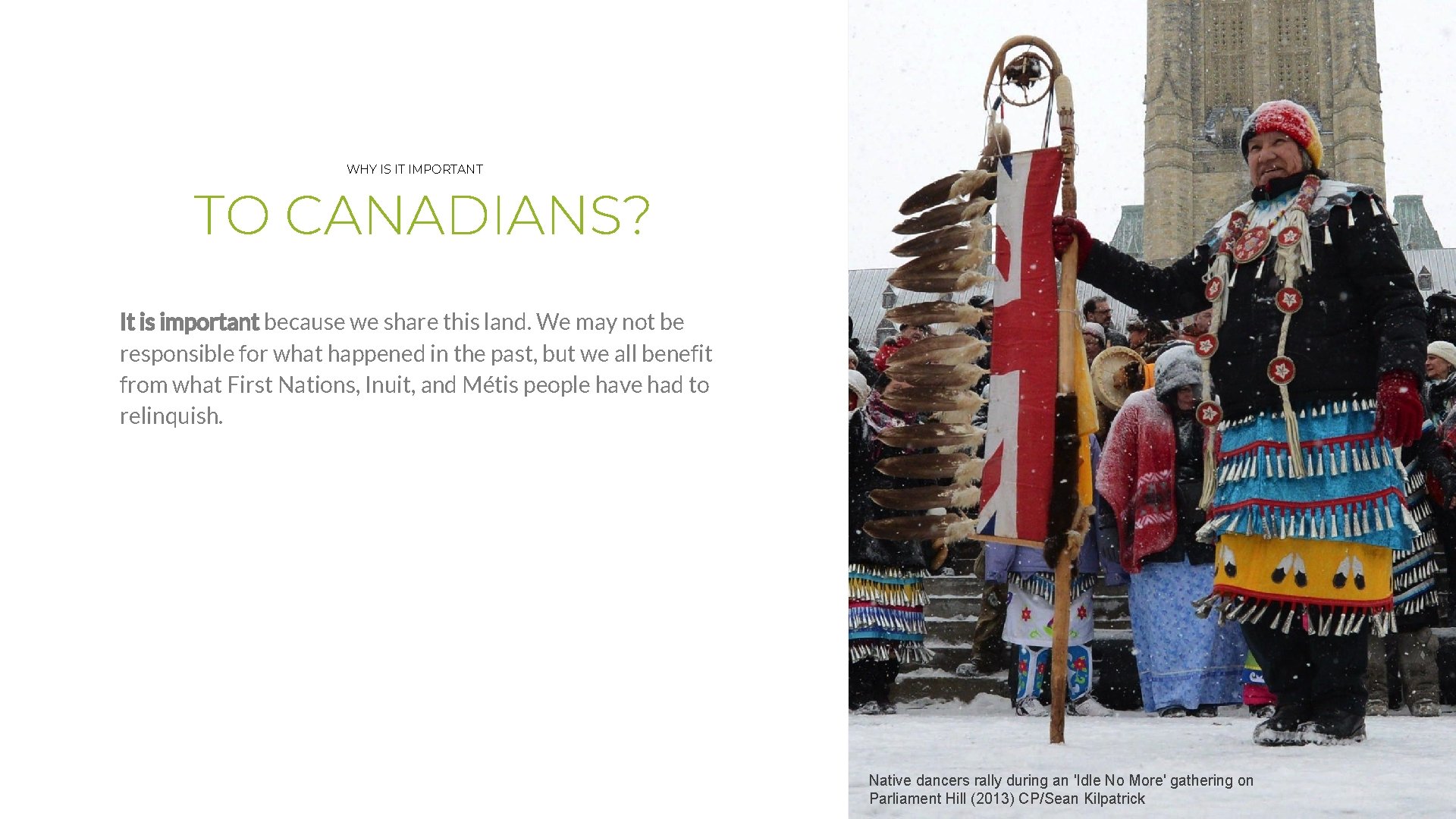
4 WHY IS IT IMPORTANT TO CANADIANS? It is important because we share this land. We may not be responsible for what happened in the past, but we all benefit from what First Nations, Inuit, and Métis people have had to relinquish. Native dancers rally during an 'Idle No More' gathering on Parliament Hill (2013) CP/Sean Kilpatrick
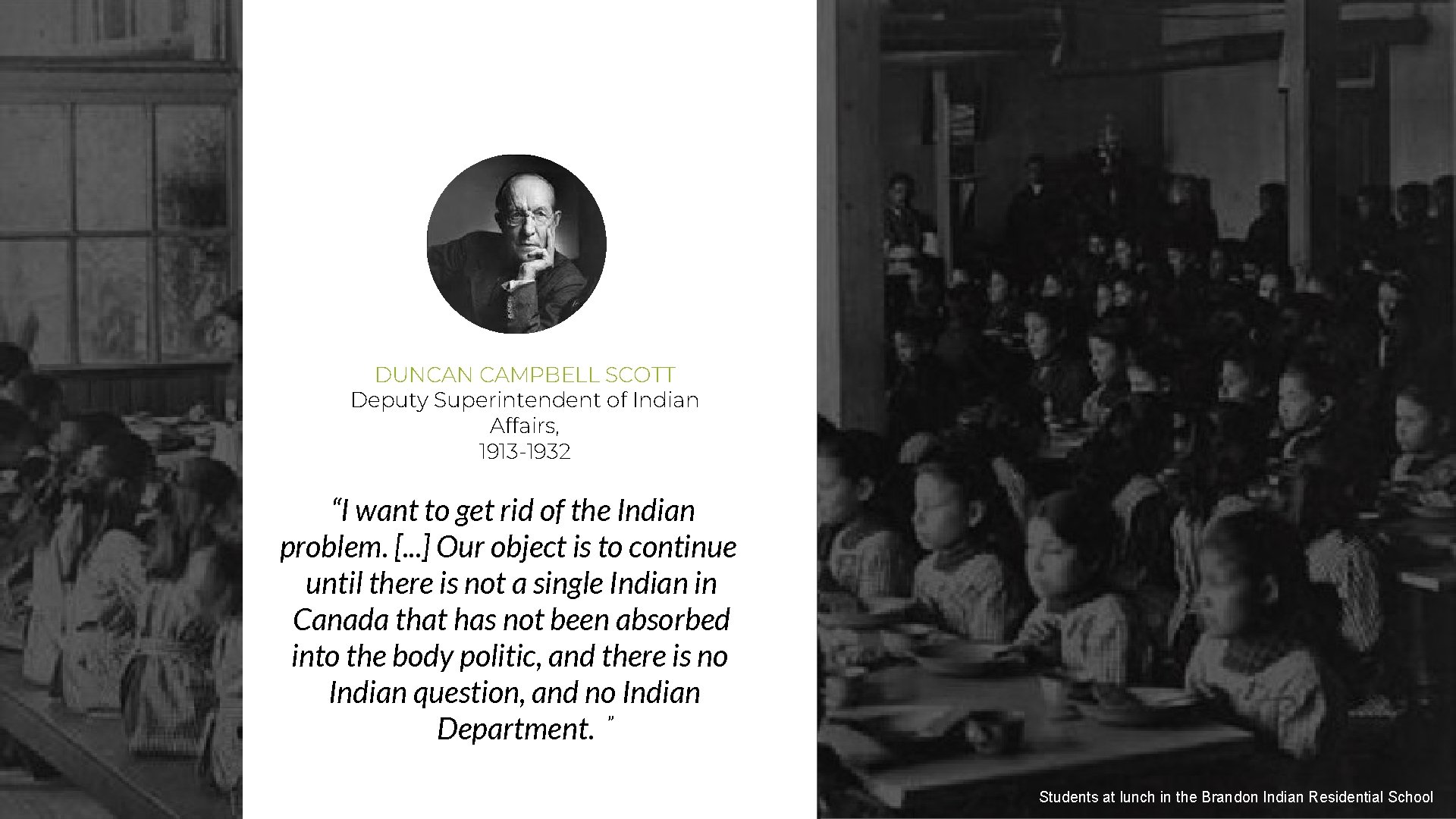
5 DUNCAN CAMPBELL SCOTT Deputy Superintendent of Indian Affairs, 1913 -1932 “I want to get rid of the Indian problem. [. . . ] Our object is to continue until there is not a single Indian in Canada that has not been absorbed into the body politic, and there is no Indian question, and no Indian Department. ” Students at lunch in the Brandon Indian Residential School
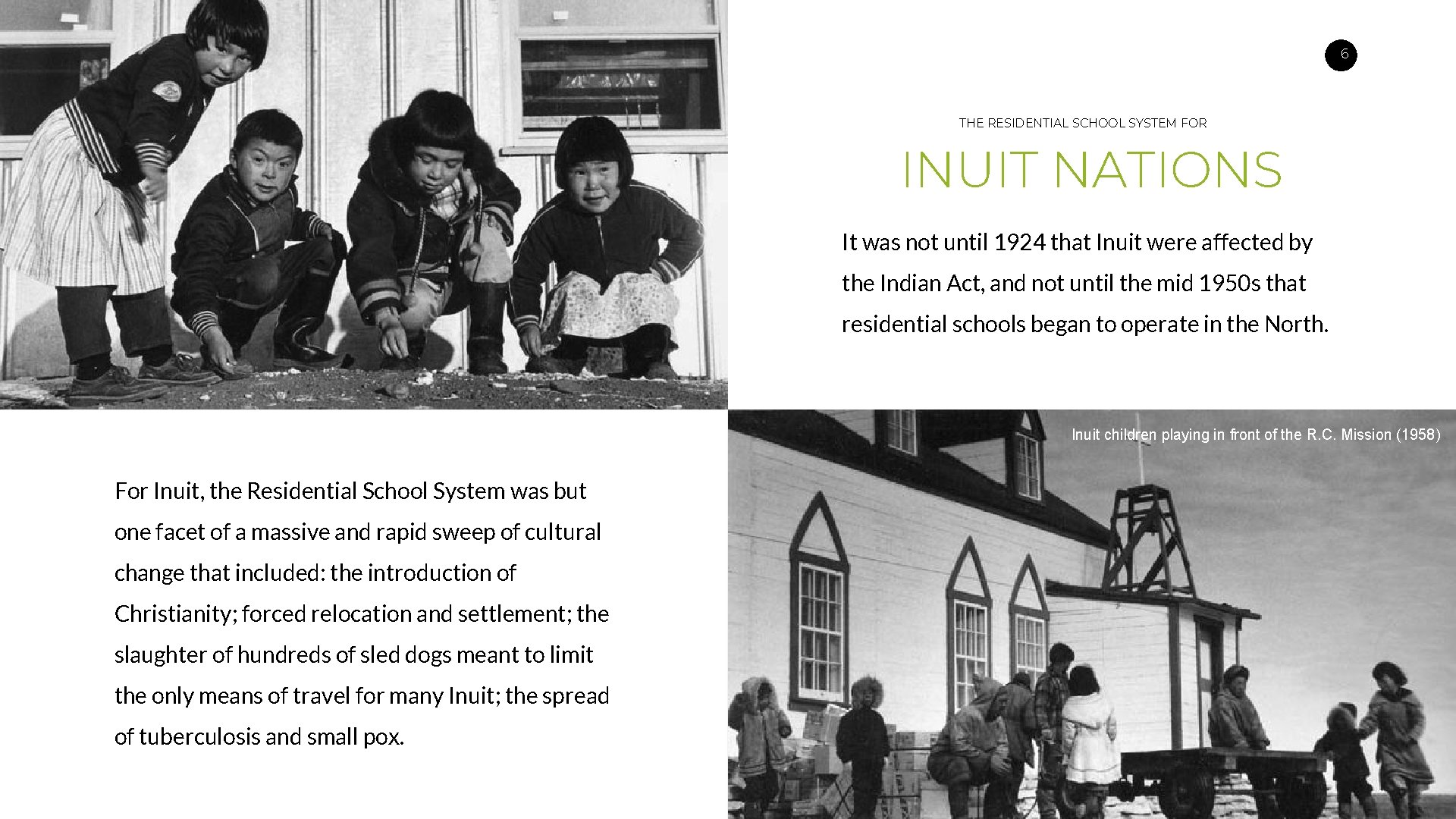
6 THE RESIDENTIAL SCHOOL SYSTEM FOR INUIT NATIONS It was not until 1924 that Inuit were affected by the Indian Act, and not until the mid 1950 s that residential schools began to operate in the North. Inuit children playing in front of the R. C. Mission (1958) For Inuit, the Residential School System was but one facet of a massive and rapid sweep of cultural change that included: the introduction of Christianity; forced relocation and settlement; the slaughter of hundreds of sled dogs meant to limit the only means of travel for many Inuit; the spread of tuberculosis and small pox.
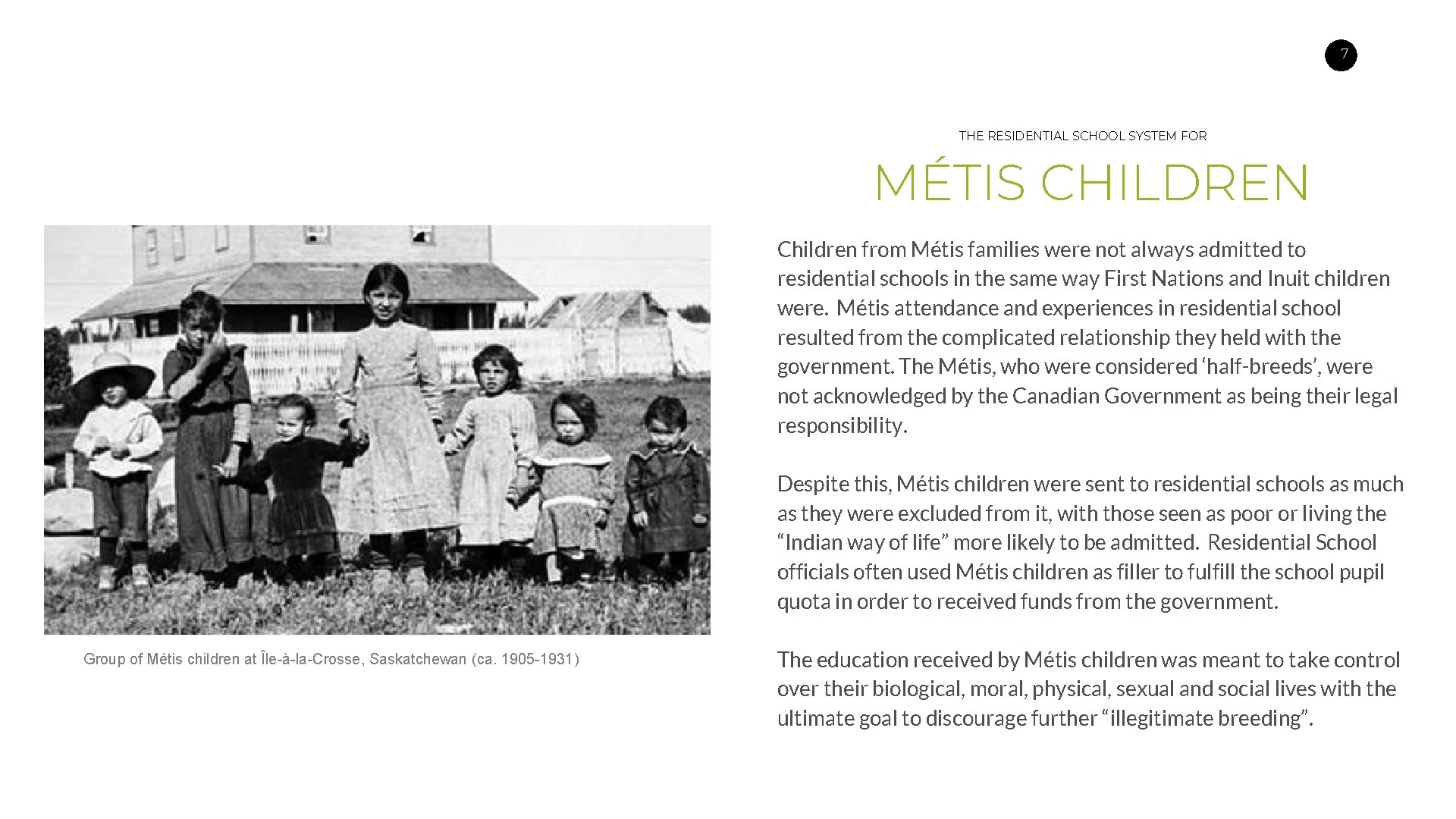
7 THE RESIDENTIAL SCHOOL SYSTEM FOR MÉTIS CHILDREN Group of Métis children at Île-à-la-Crosse, Saskatchewan (ca. 1905 -1931) Children from Métis families were not always admitted to residential schools in the same way First Nations and Inuit children were. Métis attendance and experiences in residential school resulted from the complicated relationship they held with the government. The Métis, who were considered ‘half-breeds’, were not acknowledged by the Canadian Government as being their legal responsibility. Despite this, Métis children were sent to residential schools as much as they were excluded from it, with those seen as poor or living the “Indian way of life” more likely to be admitted. Residential School officials often used Métis children as filler to fulfill the school pupil quota in order to received funds from the government. The education received by Métis children was meant to take control over their biological, moral, physical, sexual and social lives with the ultimate goal to discourage further “illegitimate breeding”.
8 “And I looked at my dad, I looked at my mom, I looked at my dad again. You know what? I hated them. I just absolutely hated my own parents. Not because I thought they abandoned me; I hated their brown faces. I hated them because they were Indians. ” -Mary Courchene, formerly a student at the residential schools at Fort Alexander in Manitoba and Lebret in Saskatchewan.
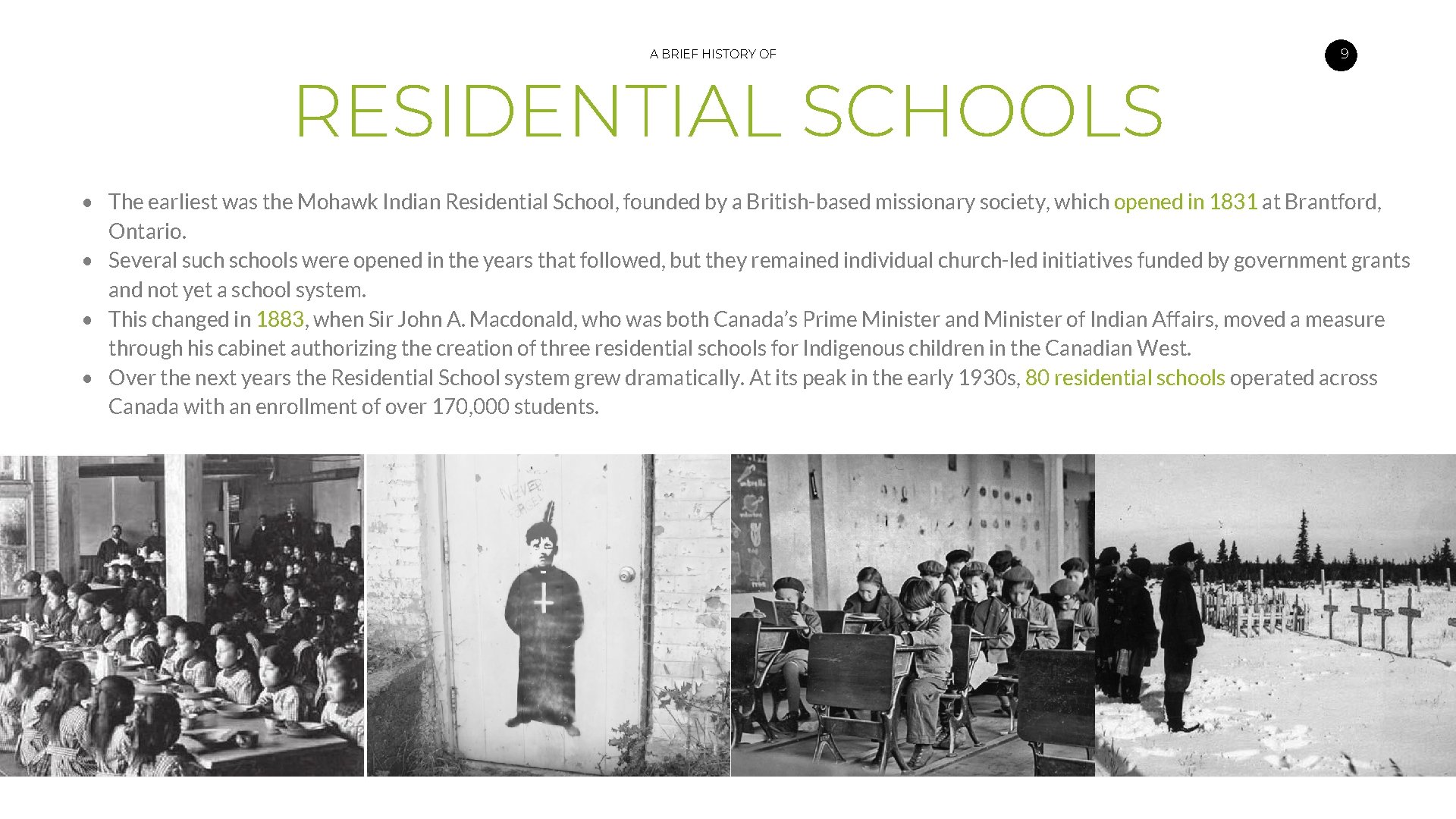
A BRIEF HISTORY OF RESIDENTIAL SCHOOLS 9 • The earliest was the Mohawk Indian Residential School, founded by a British-based missionary society, which opened in 1831 at Brantford, Ontario. • Several such schools were opened in the years that followed, but they remained individual church-led initiatives funded by government grants and not yet a school system. • This changed in 1883, when Sir John A. Macdonald, who was both Canada’s Prime Minister and Minister of Indian Affairs, moved a measure through his cabinet authorizing the creation of three residential schools for Indigenous children in the Canadian West. • Over the next years the Residential School system grew dramatically. At its peak in the early 1930 s, 80 residential schools operated across Canada with an enrollment of over 170, 000 students.
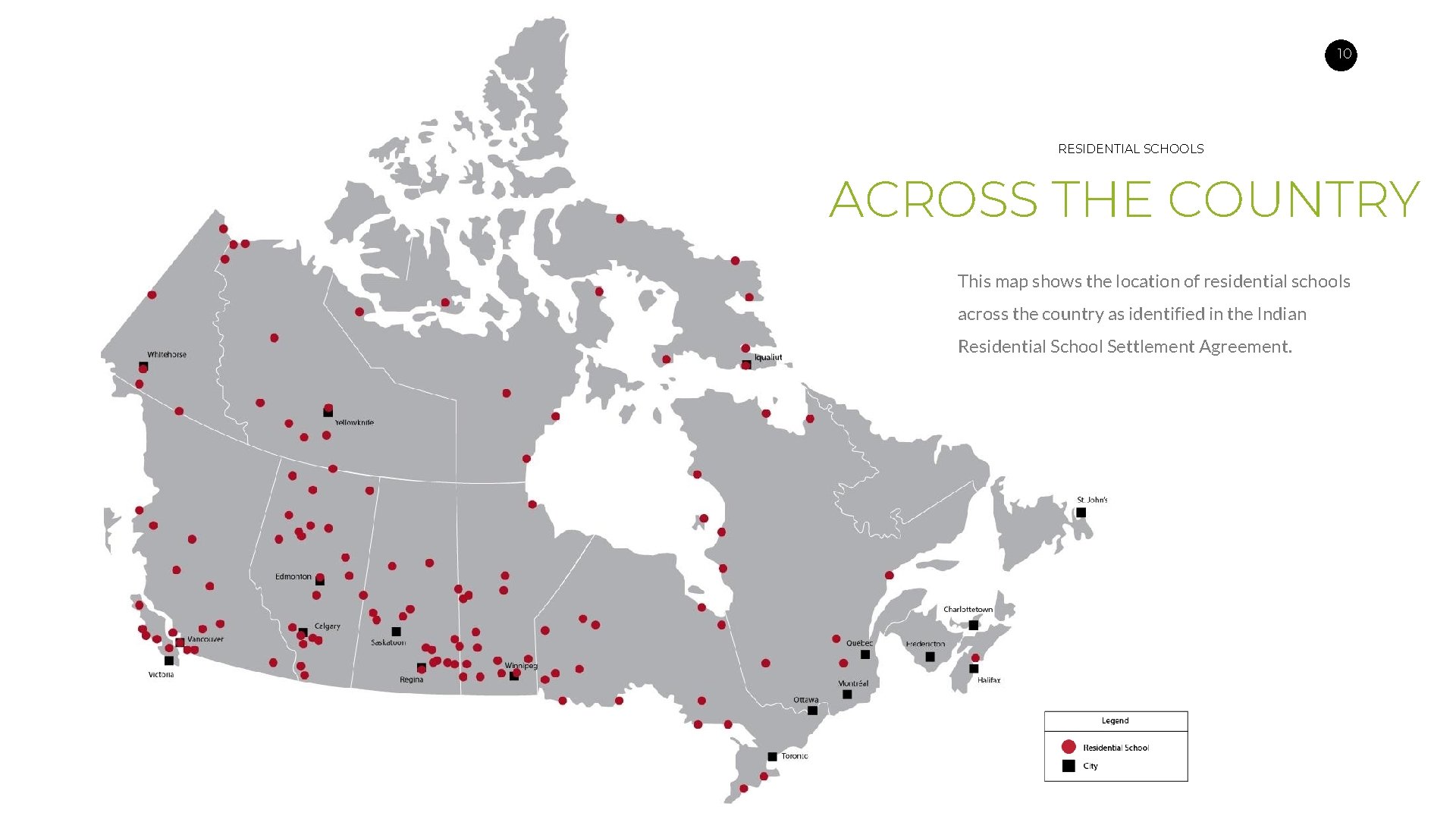
10 RESIDENTIAL SCHOOLS ACROSS THE COUNTRY This map shows the location of residential schools across the country as identified in the Indian Residential School Settlement Agreement.
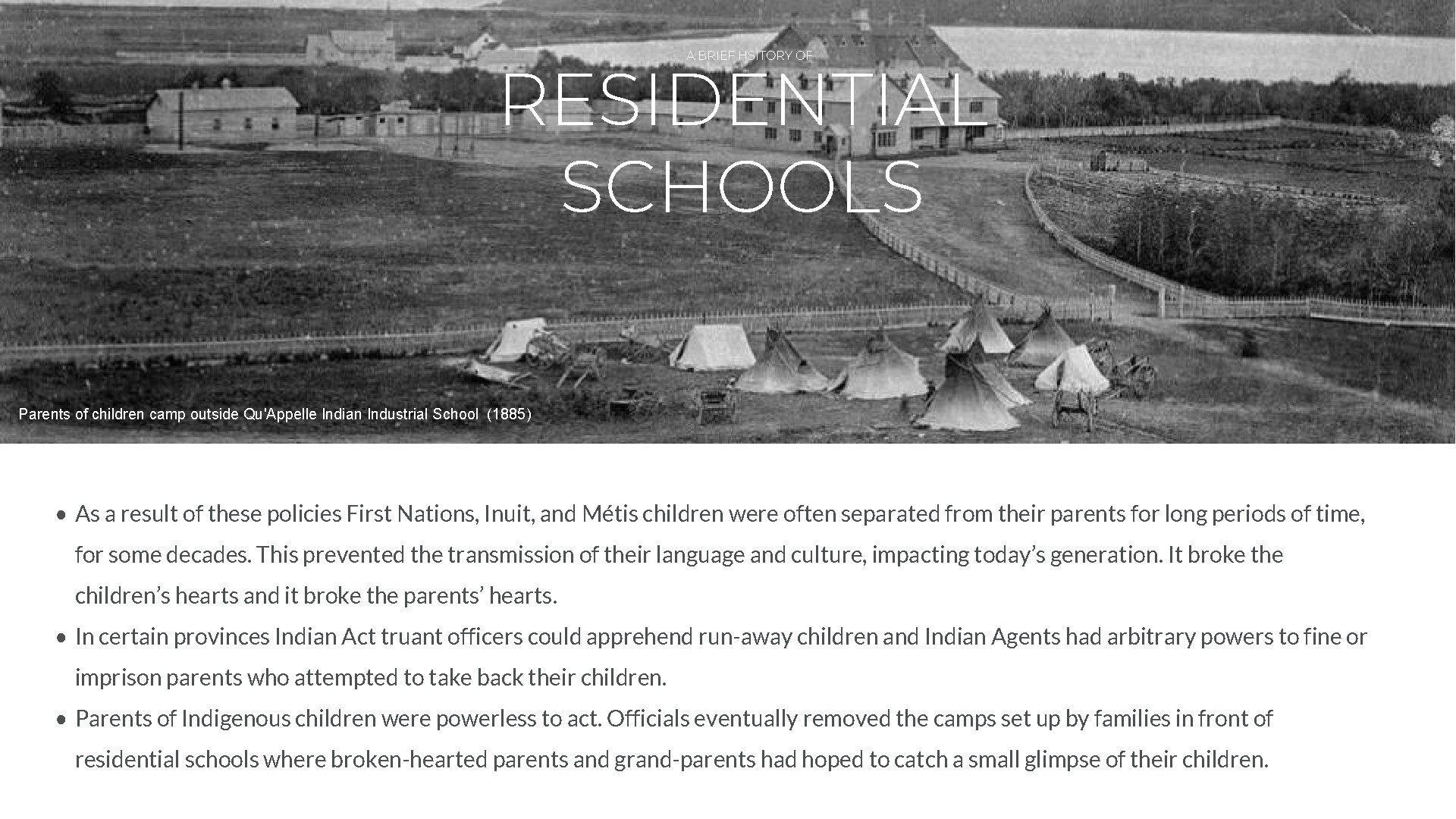
RESIDENTIAL SCHOOLS A BRIEF HSITORY OF 11 Parents of children camp outside Qu'Appelle Indian Industrial School (1885) • As a result of these policies First Nations, Inuit, and Métis children were often separated from their parents for long periods of time, for some decades. This prevented the transmission of their language and culture, impacting today’s generation. It broke the children’s hearts and it broke the parents’ hearts. • In certain provinces Indian Act truant officers could apprehend run-away children and Indian Agents had arbitrary powers to fine or imprison parents who attempted to take back their children. • Parents of Indigenous children were powerless to act. Officials eventually removed the camps set up by families in front of residential schools where broken-hearted parents and grand-parents had hoped to catch a small glimpse of their children.
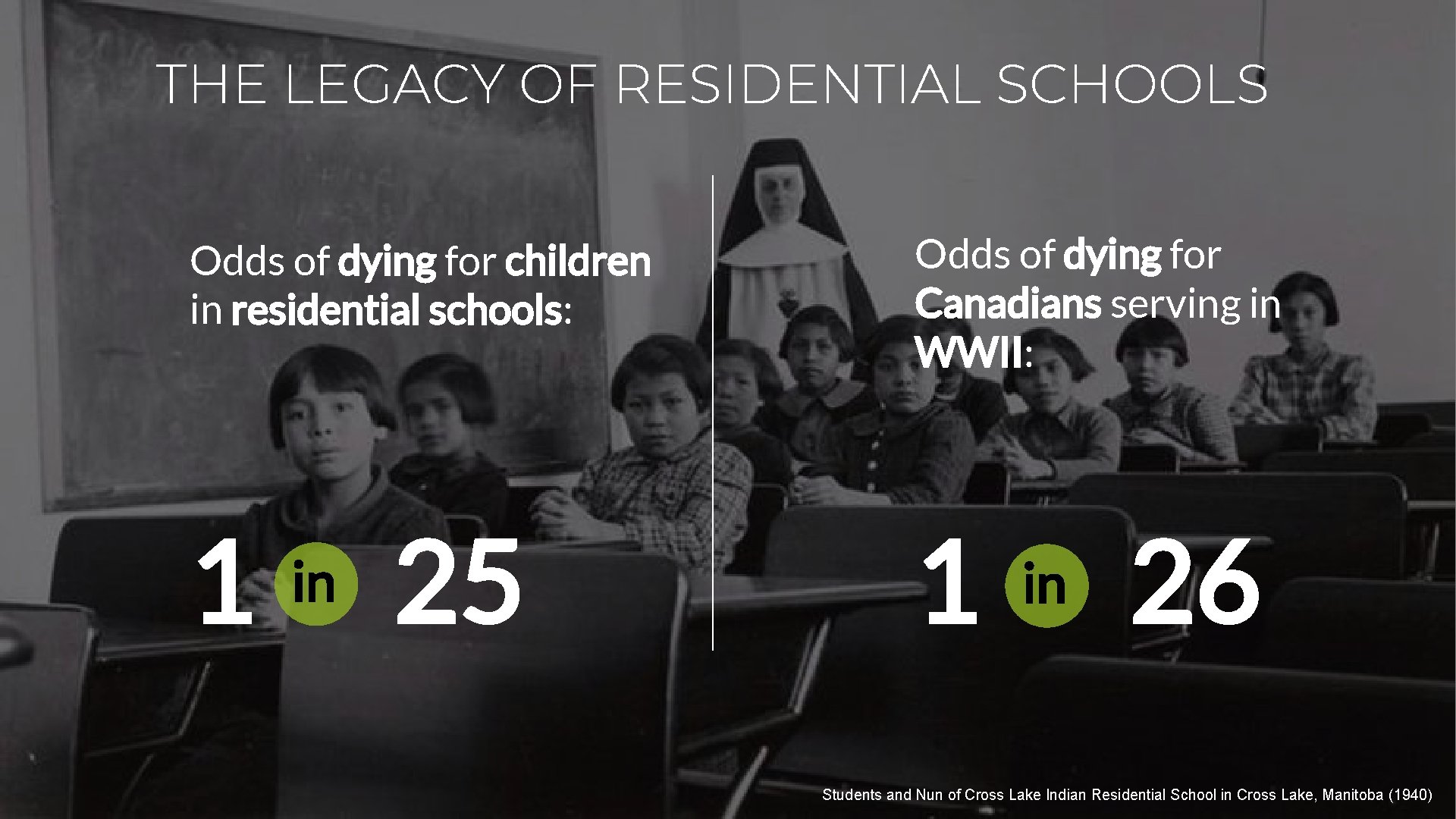
THE LEGACY OF RESIDENTIAL SCHOOLS Odds of dying for children in residential schools: 1 in 25 12 Odds of dying for Canadians serving in WWII: 1 in 26 Students and Nun of Cross Lake Indian Residential School in Cross Lake, Manitoba (1940)
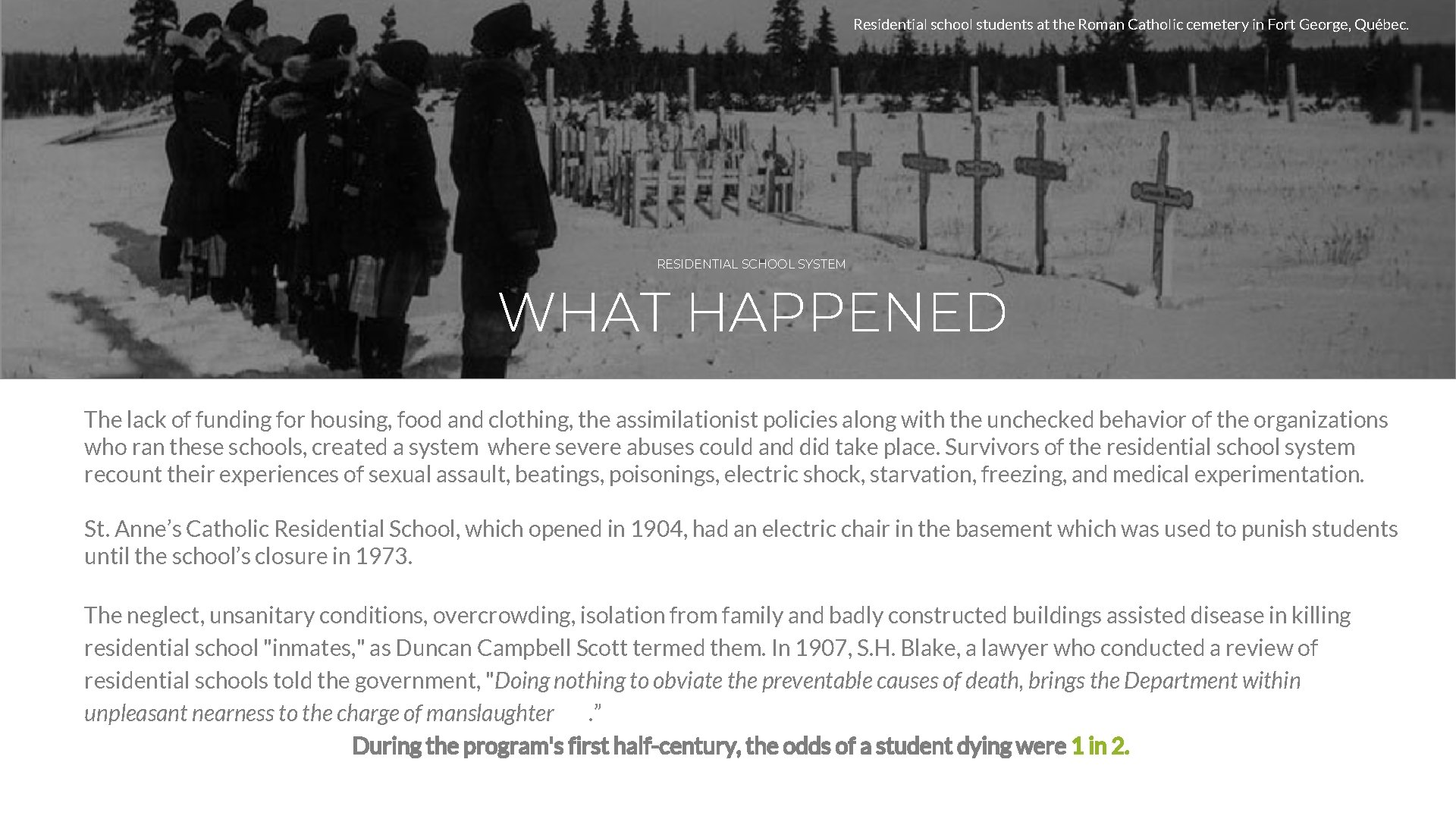
Residential school students at the Roman Catholic cemetery in Fort George, Québec. 13 RESIDENTIAL SCHOOL SYSTEM WHAT HAPPENED The lack of funding for housing, food and clothing, the assimilationist policies along with the unchecked behavior of the organizations who ran these schools, created a system where severe abuses could and did take place. Survivors of the residential school system recount their experiences of sexual assault, beatings, poisonings, electric shock, starvation, freezing, and medical experimentation. St. Anne’s Catholic Residential School, which opened in 1904, had an electric chair in the basement which was used to punish students until the school’s closure in 1973. The neglect, unsanitary conditions, overcrowding, isolation from family and badly constructed buildings assisted disease in killing residential school "inmates, " as Duncan Campbell Scott termed them. In 1907, S. H. Blake, a lawyer who conducted a review of residential schools told the government, "Doing nothing to obviate the preventable causes of death, brings the Department within unpleasant nearness to the charge of manslaughter. ” During the program's first half-century, the odds of a student dying were 1 in 2.
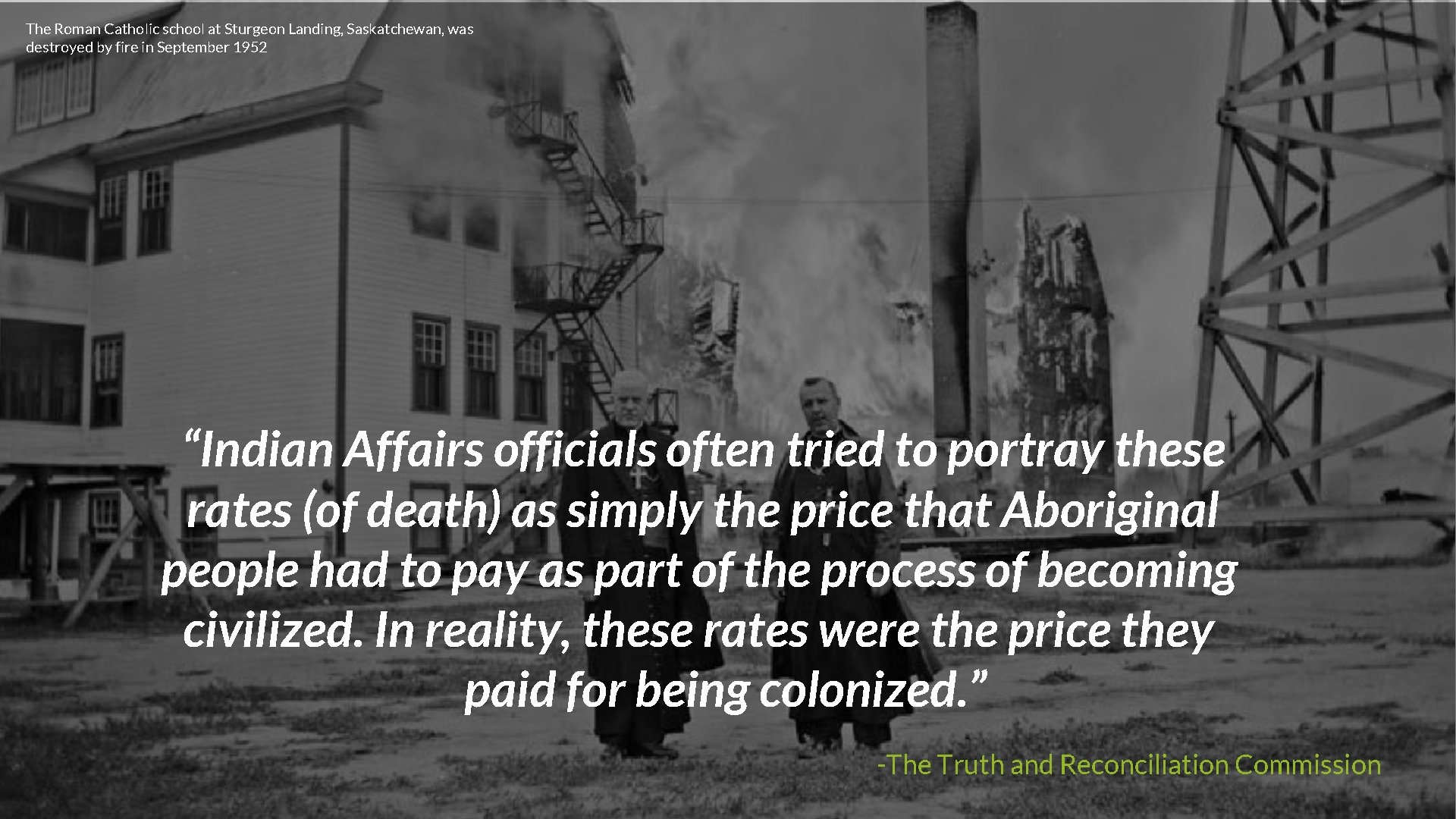
The Roman Catholic school at Sturgeon Landing, Saskatchewan, was destroyed by fire in September 1952 14 “Indian Affairs officials often tried to portray these rates (of death) as simply the price that Aboriginal people had to pay as part of the process of becoming civilized. In reality, these rates were the price they paid for being colonized. ” -The Truth and Reconciliation Commission
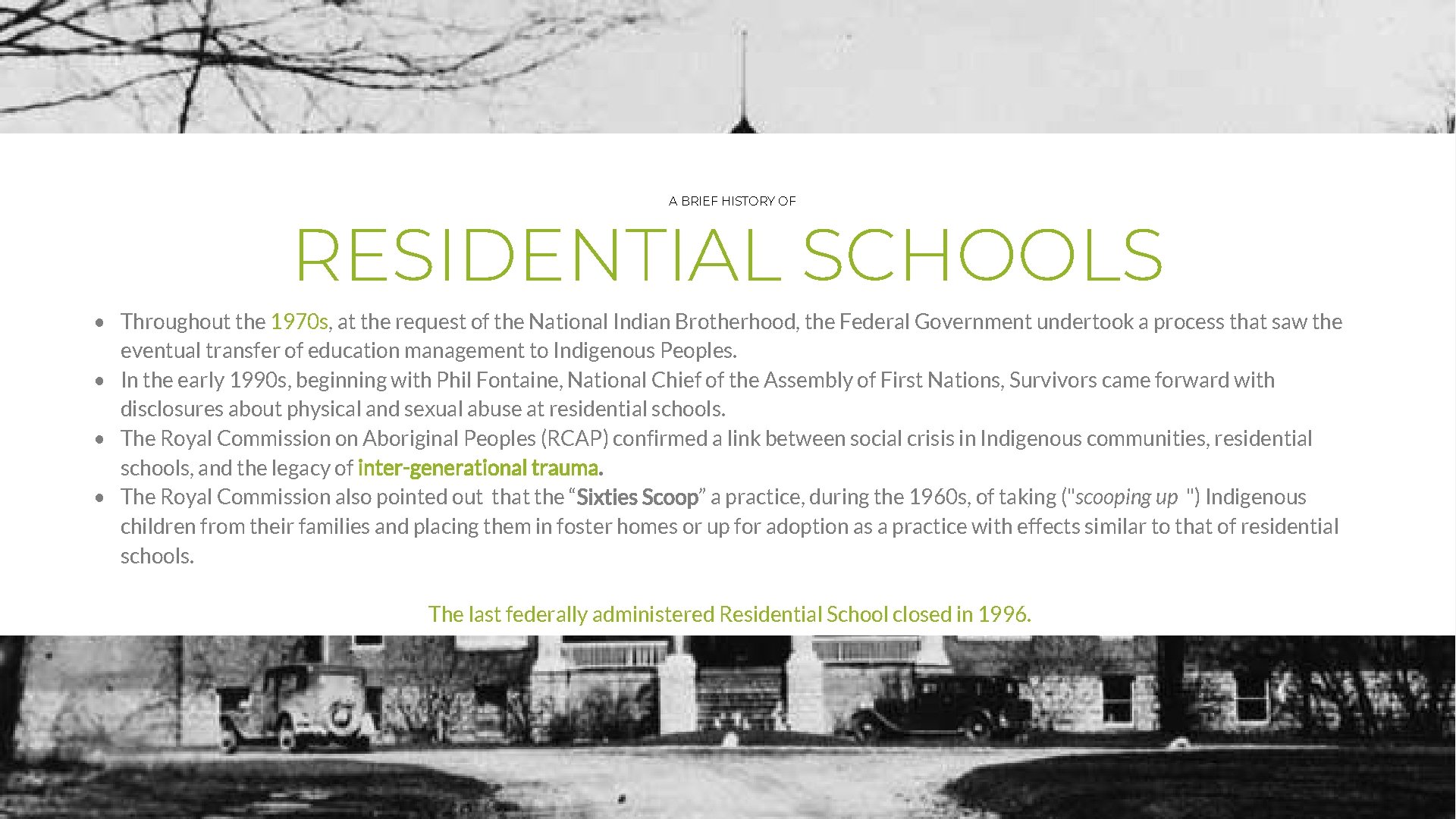
15 A BRIEF HISTORY OF RESIDENTIAL SCHOOLS • Throughout the 1970 s, at the request of the National Indian Brotherhood, the Federal Government undertook a process that saw the eventual transfer of education management to Indigenous Peoples. • In the early 1990 s, beginning with Phil Fontaine, National Chief of the Assembly of First Nations, Survivors came forward with disclosures about physical and sexual abuse at residential schools. • The Royal Commission on Aboriginal Peoples (RCAP) confirmed a link between social crisis in Indigenous communities, residential schools, and the legacy of inter-generational trauma. • The Royal Commission also pointed out that the “Sixties Scoop” a practice, during the 1960 s, of taking ("scooping up ") Indigenous children from their families and placing them in foster homes or up for adoption as a practice with effects similar to that of residential schools. The last federally administered Residential School closed in 1996.
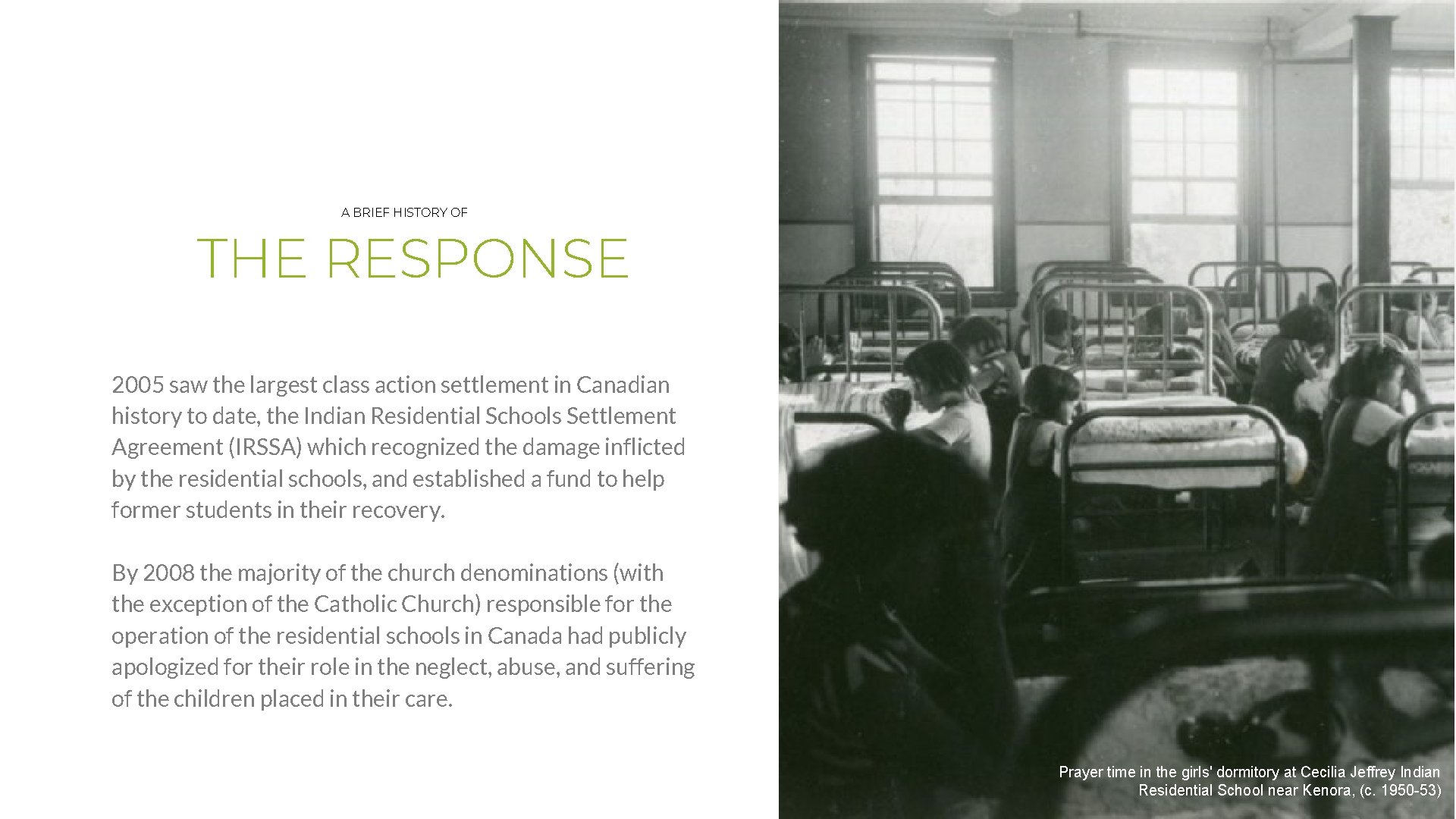
16 A BRIEF HISTORY OF THE RESPONSE 2005 saw the largest class action settlement in Canadian history to date, the Indian Residential Schools Settlement Agreement (IRSSA) which recognized the damage inflicted by the residential schools, and established a fund to help former students in their recovery. By 2008 the majority of the church denominations (with the exception of the Catholic Church) responsible for the operation of the residential schools in Canada had publicly apologized for their role in the neglect, abuse, and suffering of the children placed in their care. Prayer time in the girls' dormitory at Cecilia Jeffrey Indian Native dancers rally during an 'Idle No More' gathering on Residential School near Kenora, (c. 1950 -53) Parliament Hill (2013) CP/Sean Kilpatrick
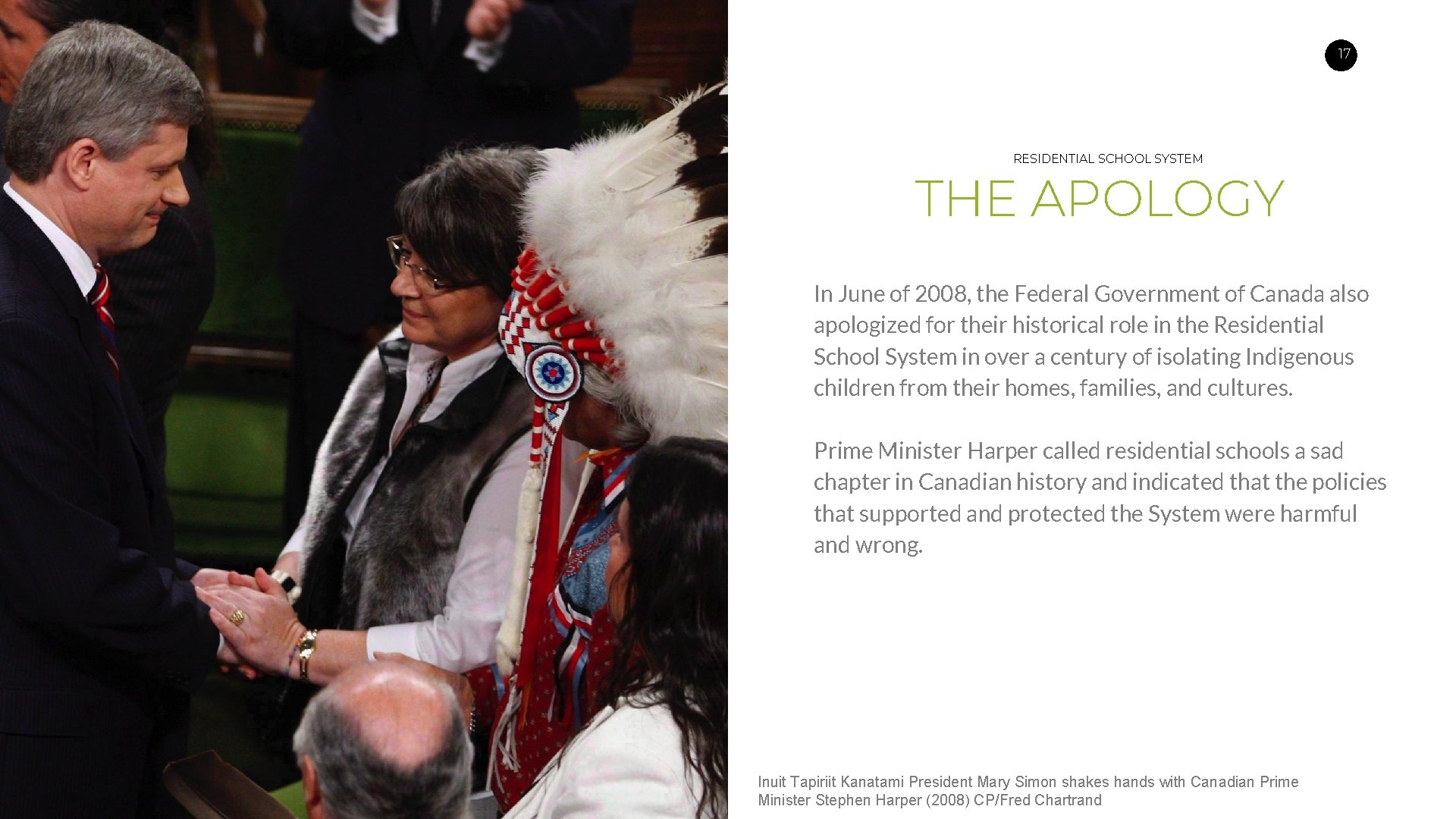
17 RESIDENTIAL SCHOOL SYSTEM THE APOLOGY In June of 2008, the Federal Government of Canada also apologized for their historical role in the Residential School System in over a century of isolating Indigenous children from their homes, families, and cultures. Prime Minister Harper called residential schools a sad chapter in Canadian history and indicated that the policies that supported and protected the System were harmful and wrong. Inuit Tapiriit Kanatami President Mary Simon shakes hands with Canadian Prime Minister Stephen Harper (2008) CP/Fred Chartrand
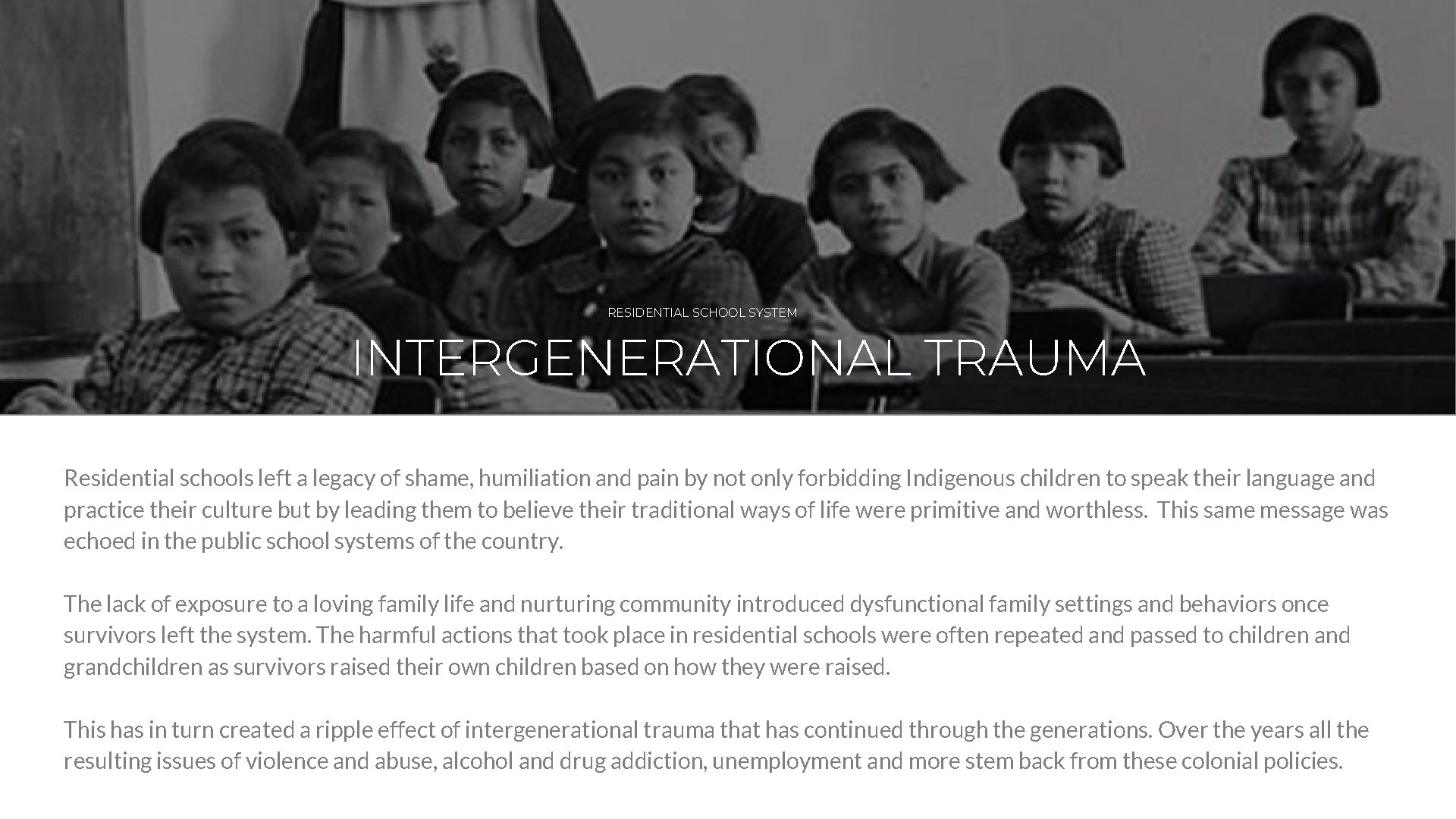
18 RESIDENTIAL SCHOOL SYSTEM INTERGENERATIONAL TRAUMA Residential schools left a legacy of shame, humiliation and pain by not only forbidding Indigenous children to speak their language and practice their culture but by leading them to believe their traditional ways of life were primitive and worthless. This same message was echoed in the public school systems of the country. The lack of exposure to a loving family life and nurturing community introduced dysfunctional family settings and behaviors once survivors left the system. The harmful actions that took place in residential schools were often repeated and passed to children and grandchildren as survivors raised their own children based on how they were raised. This has in turn created a ripple effect of intergenerational trauma that has continued through the generations. Over the years all the resulting issues of violence and abuse, alcohol and drug addiction, unemployment and more stem back from these colonial policies.
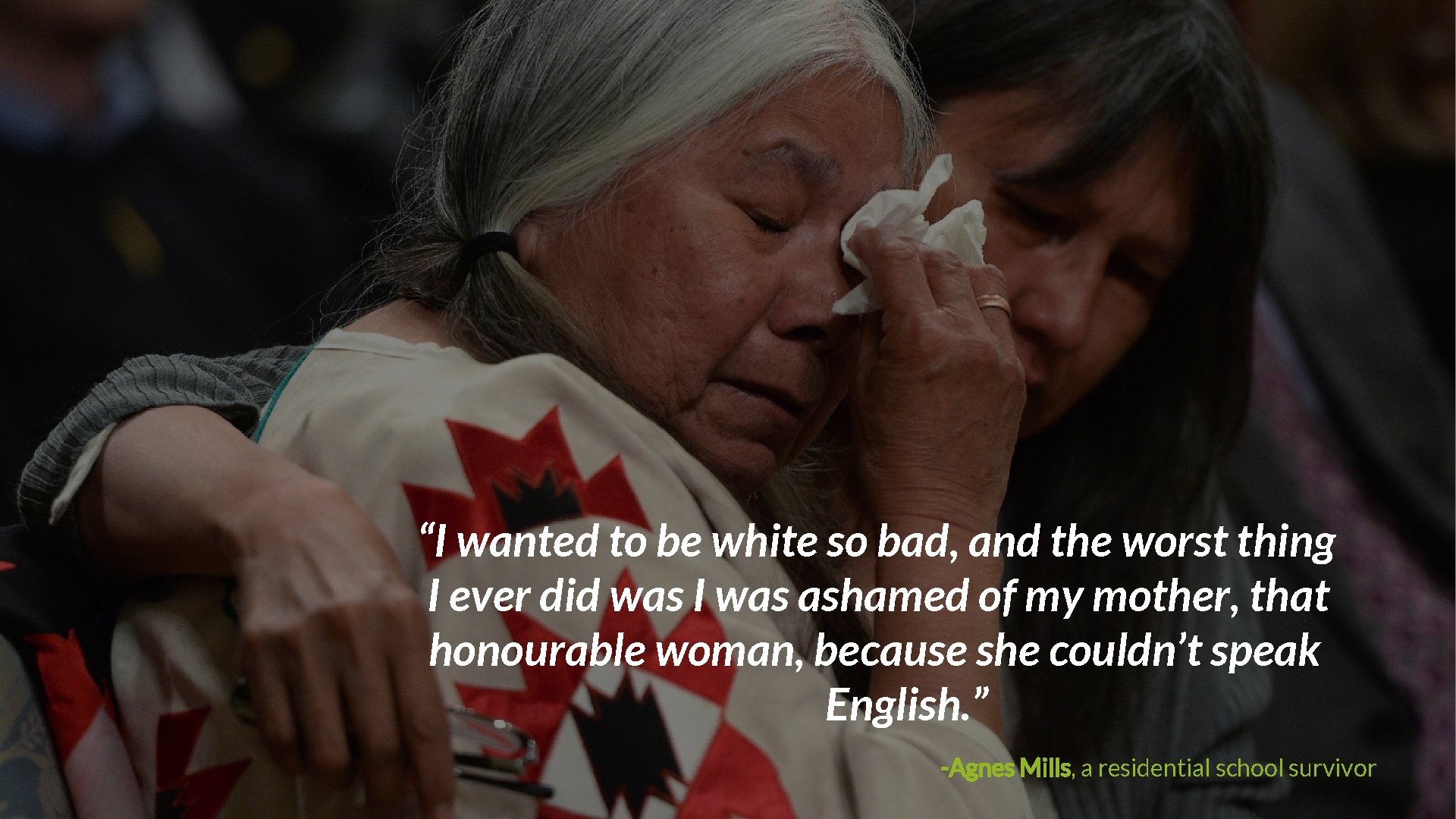
19 “I wanted to be white so bad, and the worst thing I ever did was I was ashamed of my mother, that honourable woman, because she couldn’t speak English. ” -Agnes Mills, a residential school survivor
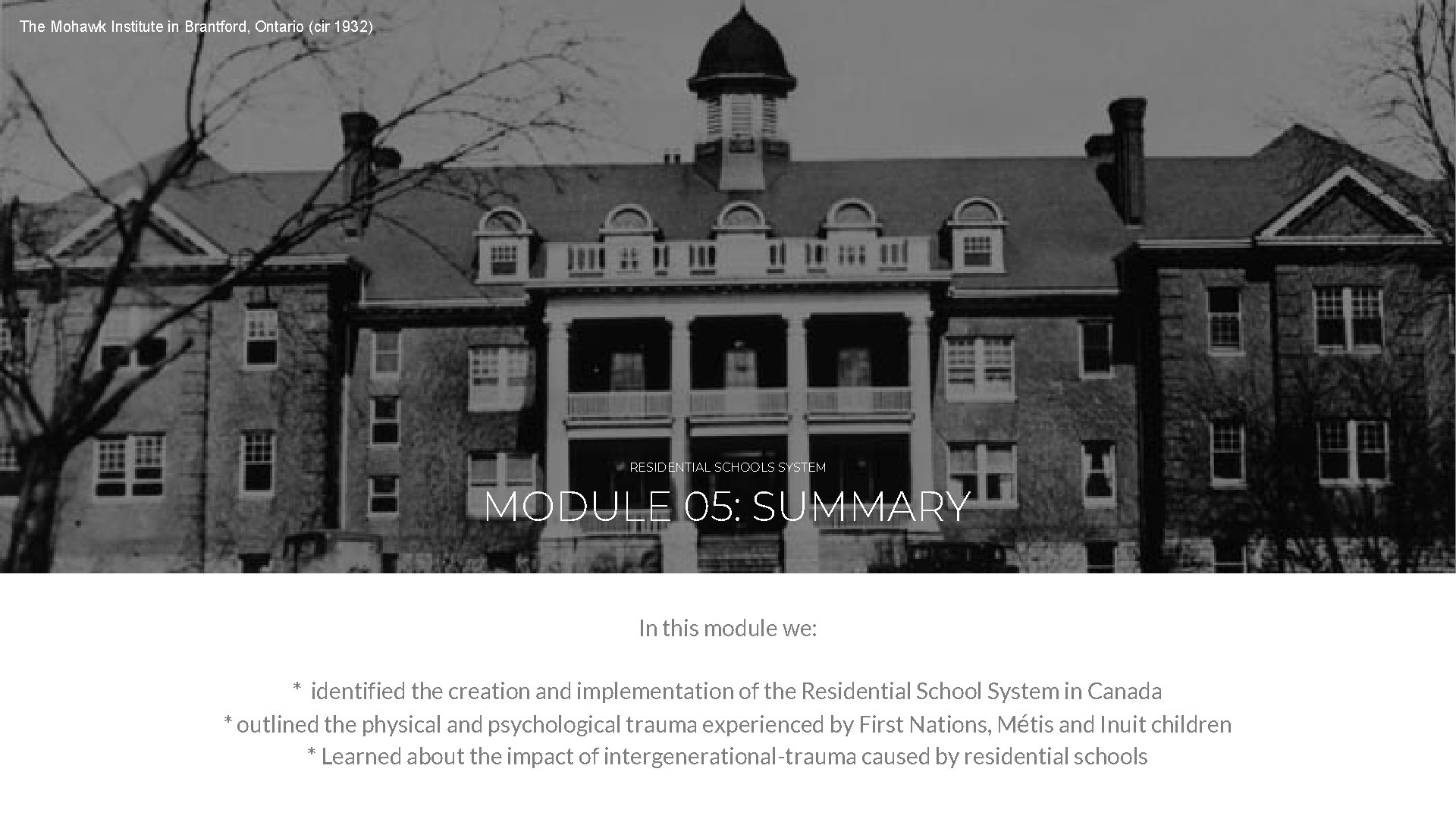
The Mohawk Institute in Brantford, Ontario (cir 1932) 20 RESIDENTIAL SCHOOLS SYSTEM MODULE 05: SUMMARY In this module we: * identified the creation and implementation of the Residential School System in Canada * outlined the physical and psychological trauma experienced by First Nations, Métis and Inuit children * Learned about the impact of intergenerational-trauma caused by residential schools