
1 Renewable Energy OVERVIEW AND HOW TO MAKE
1 Renewable Energy OVERVIEW AND HOW TO MAKE IT HAPPEN?
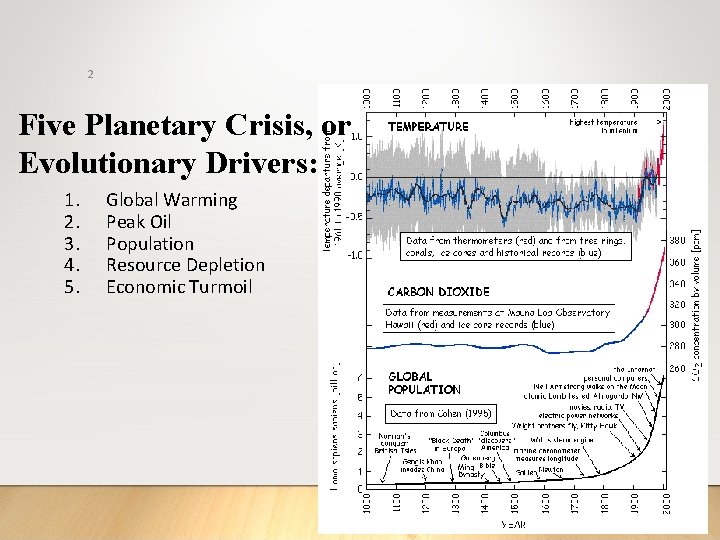
2 Five Planetary Crisis, or Evolutionary Drivers: 1. 2. 3. 4. 5. Global Warming Peak Oil Population Resource Depletion Economic Turmoil
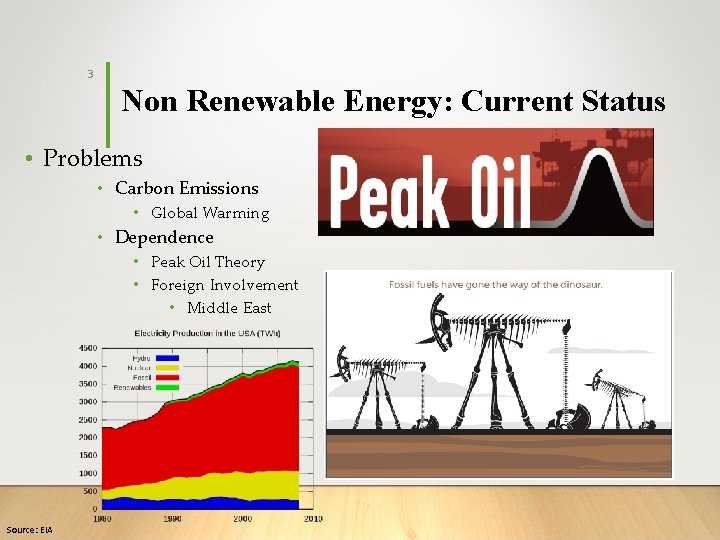
3 Non Renewable Energy: Current Status • Problems • Carbon Emissions • Global Warming • Dependence • Peak Oil Theory • Foreign Involvement • Middle East Source: EIA
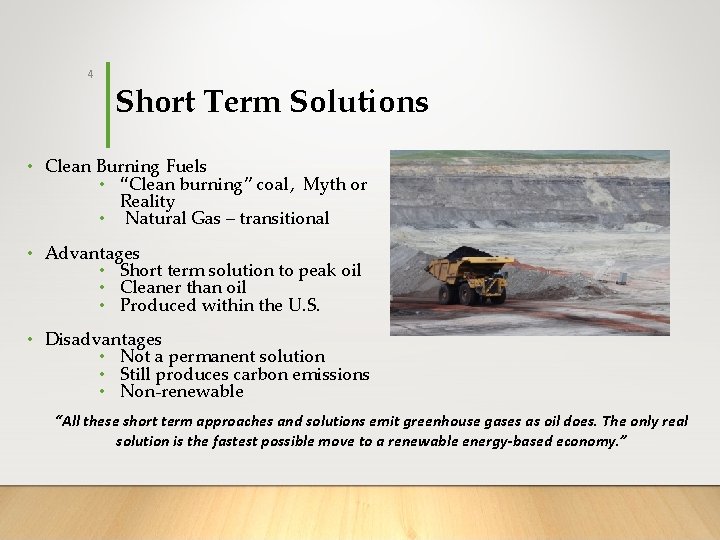
4 Short Term Solutions • Clean Burning Fuels • “Clean burning” coal, Myth or Reality • Natural Gas – transitional • Advantages • Short term solution to peak oil • Cleaner than oil • Produced within the U. S. • Disadvantages • Not a permanent solution • Still produces carbon emissions • Non-renewable “All these short term approaches and solutions emit greenhouse gases as oil does. The only real solution is the fastest possible move to a renewable energy-based economy. ”

5 Long Term Solutions Energy Conservation Energy Efficiency Renewable Energy • Wind • Solar • Biomass • Geothermal • Hydropower • Ocean Power
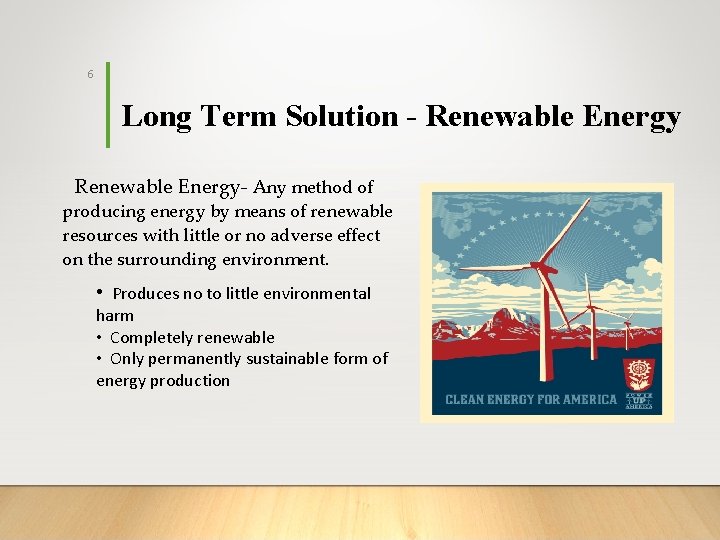
6 Long Term Solution - Renewable Energy- Any method of producing energy by means of renewable resources with little or no adverse effect on the surrounding environment. • Produces no to little environmental harm • Completely renewable • Only permanently sustainable form of energy production
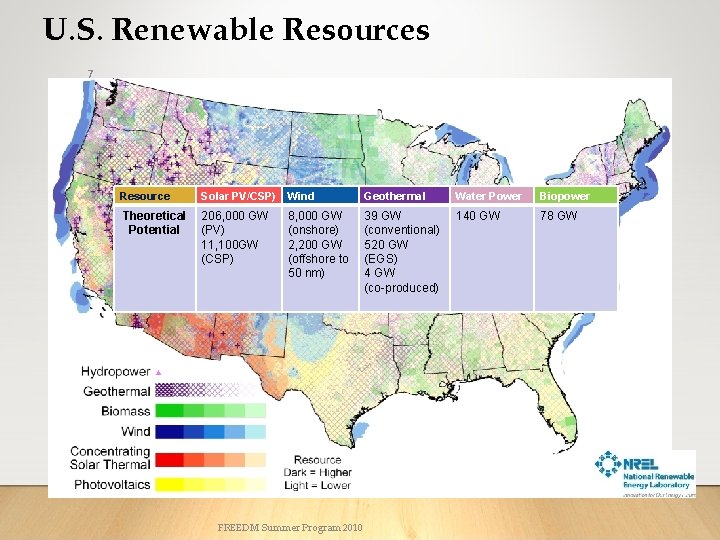
U. S. Renewable Resources 7 Resource Solar PV/CSP) Wind Geothermal Water Power Biopower Theoretical Potential 206, 000 GW (PV) 11, 100 GW (CSP) 8, 000 GW (onshore) 2, 200 GW (offshore to 50 nm) 39 GW (conventional) 520 GW (EGS) 4 GW (co-produced) 140 GW 78 GW FREEDM Summer Program 2010
8 Renewable Energy - A Brief History • Earlier times • Windmills, River Water Mills, Dams • Early-Mid Twentieth Century • Early development of efficient wind and passive solar technologies • 1970’s(Oil Embargo) • After significant stagnation in this sector, large amounts of investment are allocated to renewable energy • 1980’s • Ronald Reagan suspends significant funding to renewable energy • 1990 - Current Times • Investment and interest in renewable energy increase at incredible rates. The industry is growing at a rate of roughly 25% per year domestic and internationally
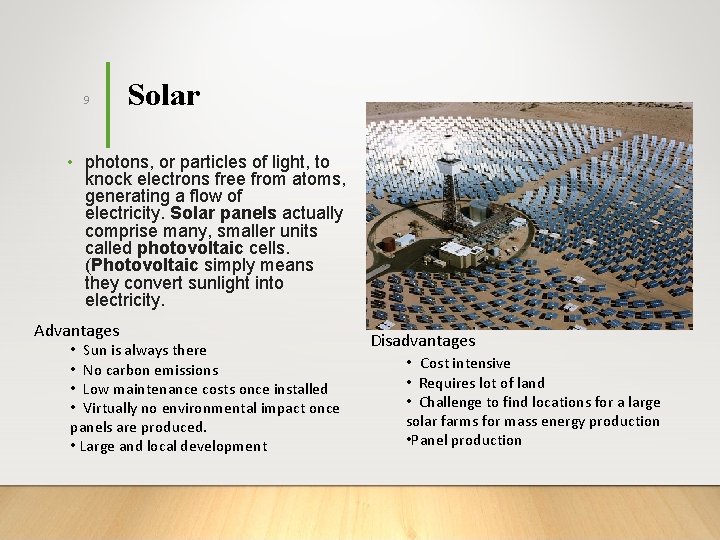
9 Solar • photons, or particles of light, to knock electrons free from atoms, generating a flow of electricity. Solar panels actually comprise many, smaller units called photovoltaic cells. (Photovoltaic simply means they convert sunlight into electricity. Advantages • Sun is always there • No carbon emissions • Low maintenance costs once installed • Virtually no environmental impact once panels are produced. • Large and local development Disadvantages • Cost intensive • Requires lot of land • Challenge to find locations for a large solar farms for mass energy production • Panel production

10 Wind Process • Giant turbines resembling fans are installed in areas of high air flow. Those turbines are then spun by the air flow. The energy produced by their movement is then transmitted to the local power grid. Advantages • Completely renewable • No carbon emissions • Low maintenance costs once installed • Virtually no environmental impact • Large and Localized development Disadvantages • Economically feasible areas for turbine farms are low • Visually unappealing • Unreliable flow of energy • Lack of transmission grids
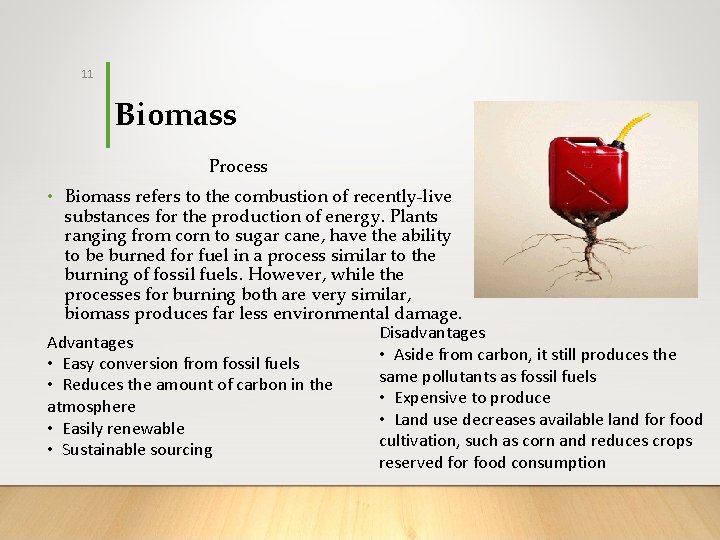
11 Biomass Process • Biomass refers to the combustion of recently-live substances for the production of energy. Plants ranging from corn to sugar cane, have the ability to be burned for fuel in a process similar to the burning of fossil fuels. However, while the processes for burning both are very similar, biomass produces far less environmental damage. Disadvantages Advantages • Aside from carbon, it still produces the • Easy conversion from fossil fuels same pollutants as fossil fuels • Reduces the amount of carbon in the • Expensive to produce atmosphere • Land use decreases available land for food • Easily renewable cultivation, such as corn and reduces crops • Sustainable sourcing reserved for food consumption

12 Geothermal Process • Energy, originating from the creation of the planet, decay of radioactive particles, and the absorption of sunrays, is trapped below the earth’s surface. By drilling into the earth’s crust and using one of multiple techniques, it is possible to extract that energy in the form of hot water Advantages • Completely renewable • Requires very little land area • Creates no pollution • Extremely efficient for space heating Disadvantages • High start up costs • Inefficient for electricity generation • Applicable development limited by geography
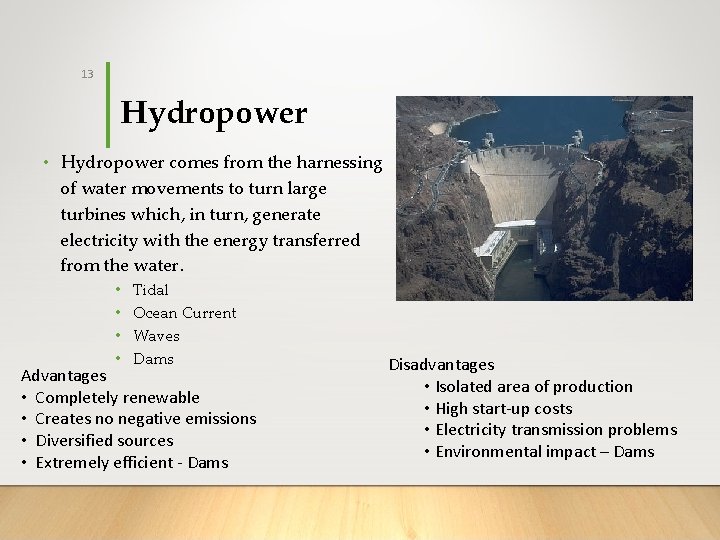
13 Hydropower • Hydropower comes from the harnessing of water movements to turn large turbines which, in turn, generate electricity with the energy transferred from the water. • • Tidal Ocean Current Waves Dams Advantages • Completely renewable • Creates no negative emissions • Diversified sources • Extremely efficient - Dams Disadvantages • Isolated area of production • High start-up costs • Electricity transmission problems • Environmental impact – Dams
14 Comparison of Potential of Different Renewable Energy Sources • Solar: 170, 000 TW • Wind: 1200 TW • Ocean Waves: 1 TW • Tidal Energy: 3 TW • Biomass Production: 76 TW • Gulf Stream Heat Engine: 2100 TW • Geothermal Heat Flow: 30 TW • Current Human Energy Consumption: ~14 TW
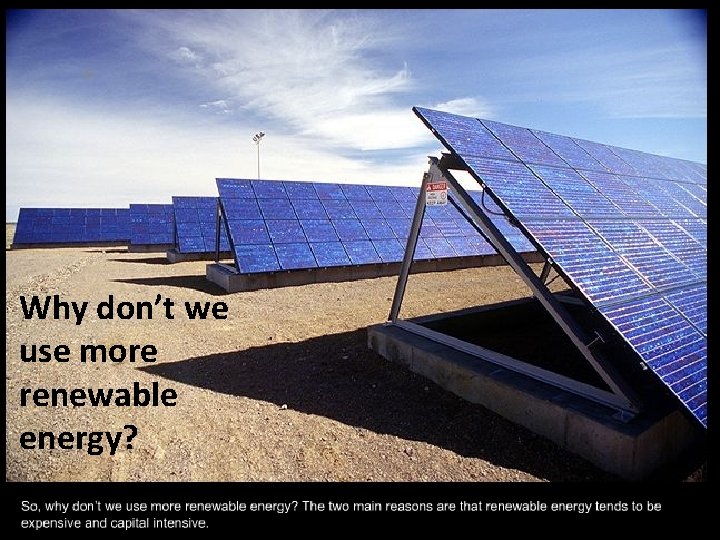
15 Why don’t we use more renewable energy?
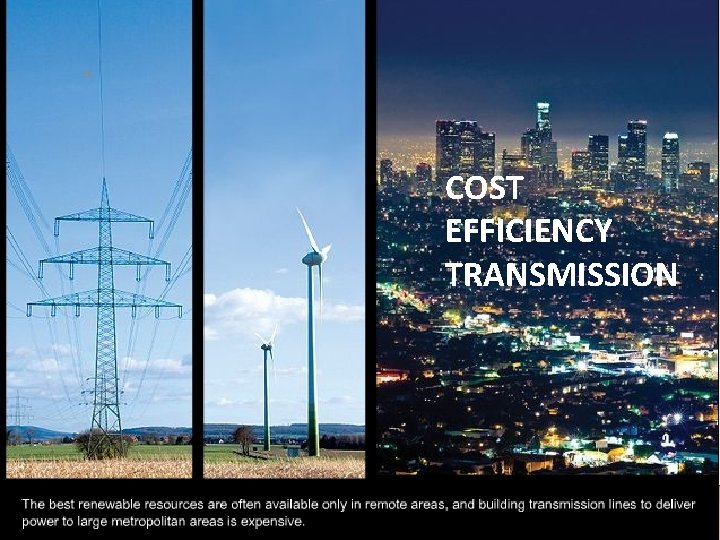
16 COST EFFICIENCY TRANSMISSION
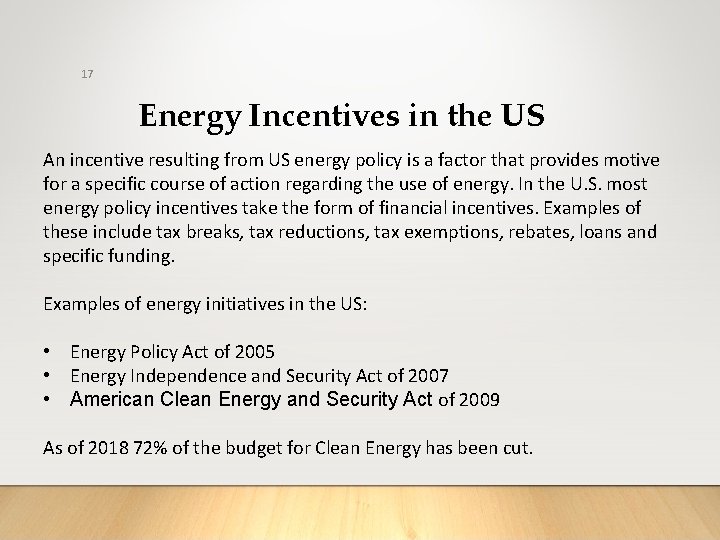
17 Energy Incentives in the US An incentive resulting from US energy policy is a factor that provides motive for a specific course of action regarding the use of energy. In the U. S. most energy policy incentives take the form of financial incentives. Examples of these include tax breaks, tax reductions, tax exemptions, rebates, loans and specific funding. Examples of energy initiatives in the US: • Energy Policy Act of 2005 • Energy Independence and Security Act of 2007 • American Clean Energy and Security Act of 2009 As of 2018 72% of the budget for Clean Energy has been cut.
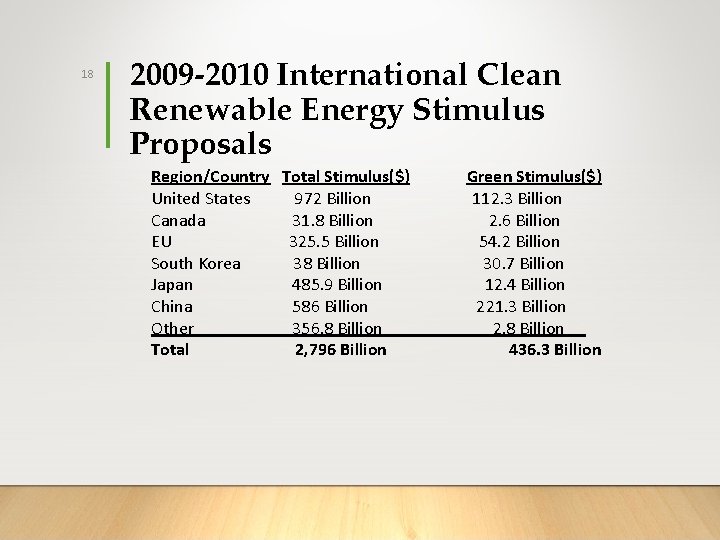
18 2009 -2010 International Clean Renewable Energy Stimulus Proposals Region/Country Total Stimulus($) United States 972 Billion Canada 31. 8 Billion EU 325. 5 Billion South Korea 38 Billion Japan 485. 9 Billion China 586 Billion Other 356. 8 Billion Total 2, 796 Billion Green Stimulus($) 112. 3 Billion 2. 6 Billion 54. 2 Billion 30. 7 Billion 12. 4 Billion 221. 3 Billion 2. 8 Billion 436. 3 Billion
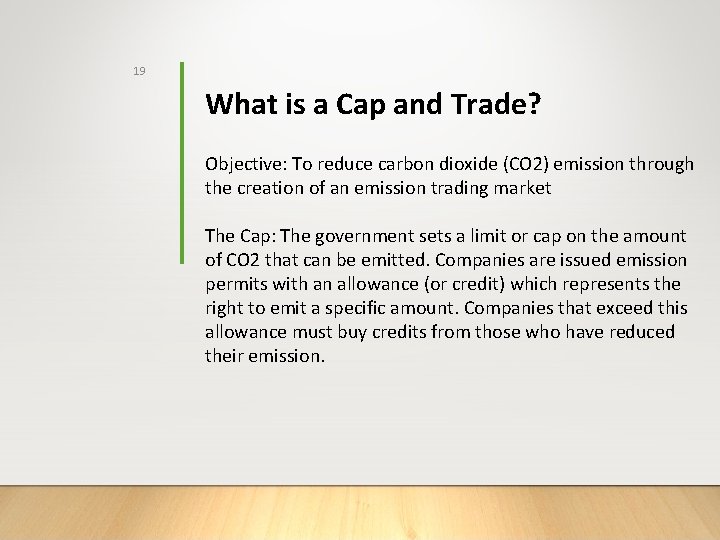
19 What is a Cap and Trade? Objective: To reduce carbon dioxide (CO 2) emission through the creation of an emission trading market The Cap: The government sets a limit or cap on the amount of CO 2 that can be emitted. Companies are issued emission permits with an allowance (or credit) which represents the right to emit a specific amount. Companies that exceed this allowance must buy credits from those who have reduced their emission.
20 What is a Cap and Trade? The Trade: The transfer of allowances is referred to as a trade. In effect, the buyer is paying for polluting, while the seller is rewarded for reducing their emissions. Thus, in theory pollution reduction is achieved at the lowest possible cost to society. Over time allowances are retired, thus the limits become stricter, allowing less and less emissions, until the desired reduction target is met.
21 What is a Carbon Tax? Objective: To reduce carbon dioxide (CO 2) emission through the creation of a tax on the carbon content of fuels The Tax: The carbon content of every form of fossil fuel is precisely known. Thus a carbon tax presents few if any problems of documentation or measurement. We already have an existing tax collection system so administering a carbon tax should be simple. The tax can be easily changed to allow less and less emissions, until the desired reduction target is met.
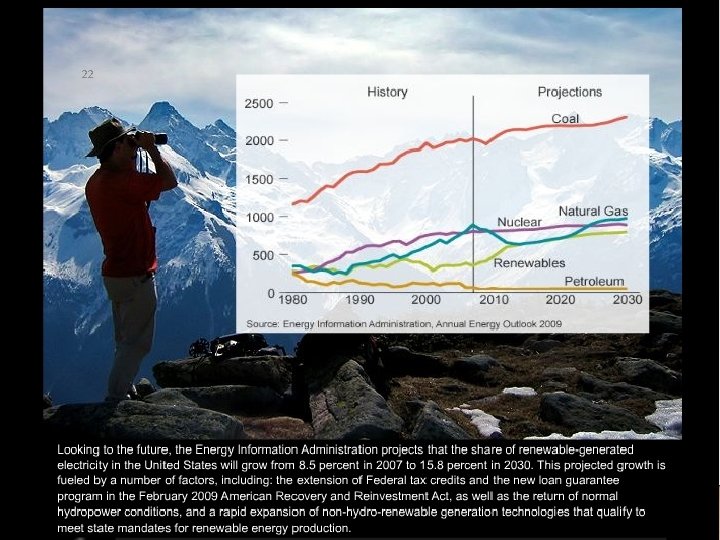
22
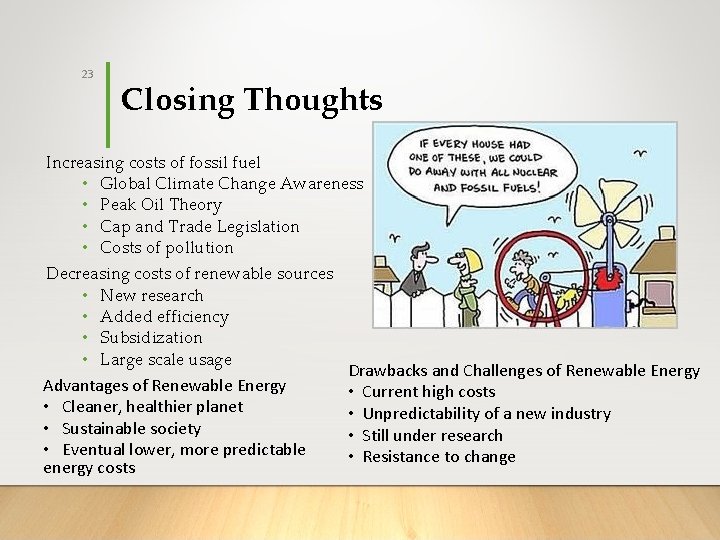
23 Closing Thoughts Increasing costs of fossil fuel • Global Climate Change Awareness • Peak Oil Theory • Cap and Trade Legislation • Costs of pollution Decreasing costs of renewable sources • New research • Added efficiency • Subsidization • Large scale usage Advantages of Renewable Energy • Cleaner, healthier planet • Sustainable society • Eventual lower, more predictable energy costs Drawbacks and Challenges of Renewable Energy • Current high costs • Unpredictability of a new industry • Still under research • Resistance to change
- Slides: 23