
1 Reflection in Teaching Strategies Syllabus oriented Vs
1
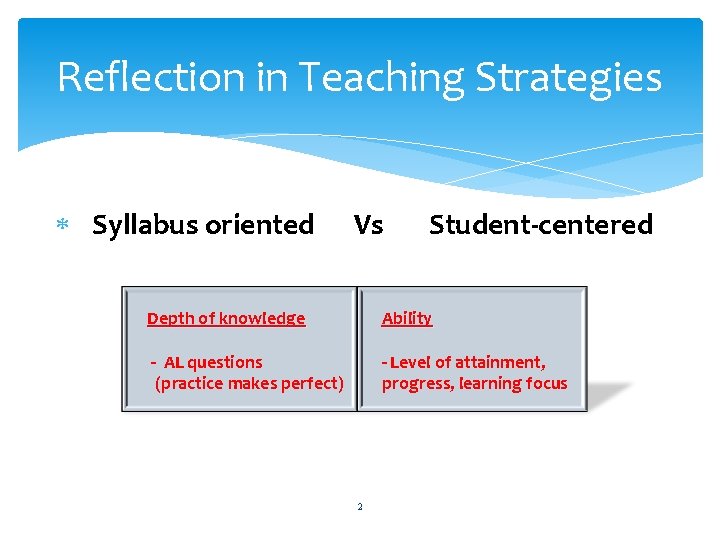
Reflection in Teaching Strategies Syllabus oriented Vs Student-centered Depth of knowledge Ability - AL questions (practice makes perfect) - Level of attainment, progress, learning focus 2
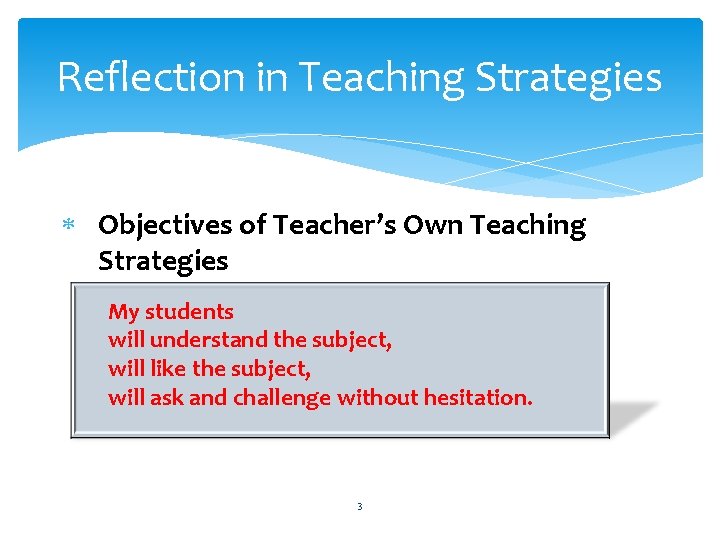
Reflection in Teaching Strategies Objectives of Teacher’s Own Teaching Strategies My students will understand the subject, will like the subject, will ask and challenge without hesitation. 3
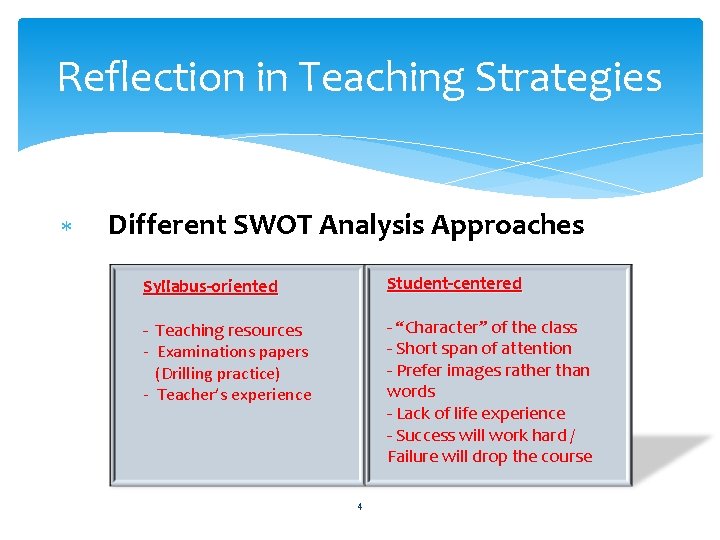
Reflection in Teaching Strategies Different SWOT Analysis Approaches Syllabus-oriented Student-centered - Teaching resources - Examinations papers (Drilling practice) - Teacher’s experience - “Character” of the class - Short span of attention - Prefer images rather than words - Lack of life experience - Success will work hard / Failure will drop the course 4
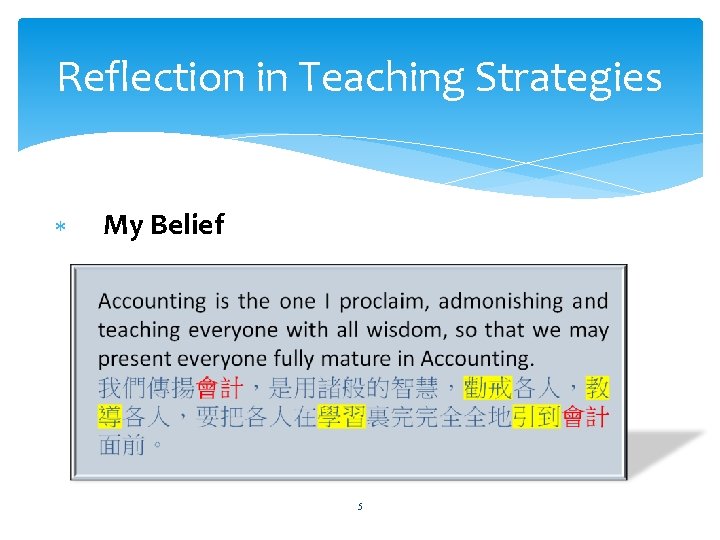
Reflection in Teaching Strategies My Belief 5
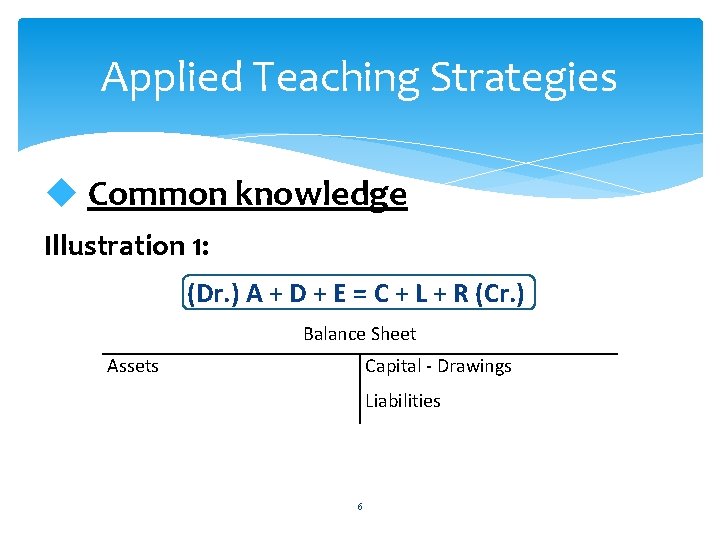
Applied Teaching Strategies u Common knowledge Illustration 1: (Dr. ) A + D + E = C + L + R (Cr. ) Balance Sheet Assets Capital - Drawings Liabilities 6
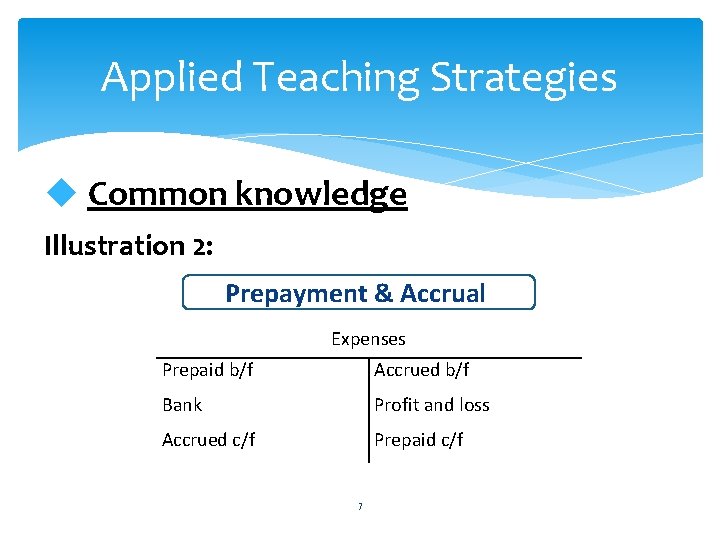
Applied Teaching Strategies u Common knowledge Illustration 2: Prepayment & Accrual Expenses Prepaid b/f Accrued b/f Bank Profit and loss Accrued c/f Prepaid c/f 7
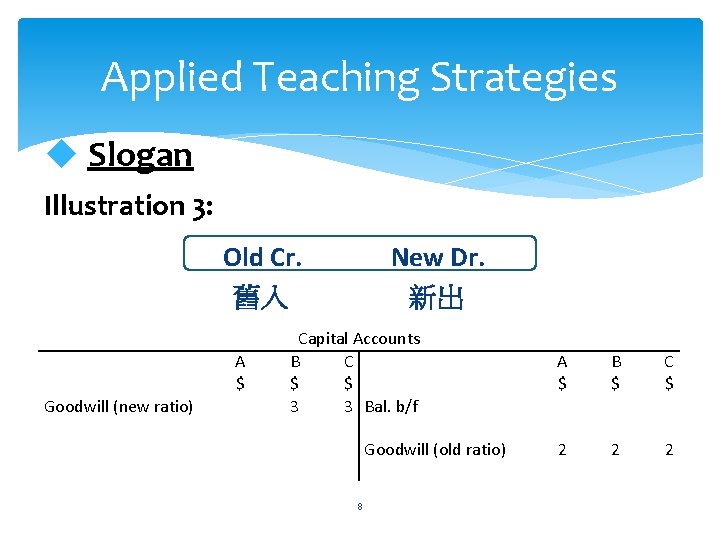
Applied Teaching Strategies u Slogan Illustration 3: Old Cr. 舊入 A $ Goodwill (new ratio) New Dr. 新出 Capital Accounts B C $ $ 3 3 Bal. b/f Goodwill (old ratio) 8 A $ B $ C $ 2 2 2
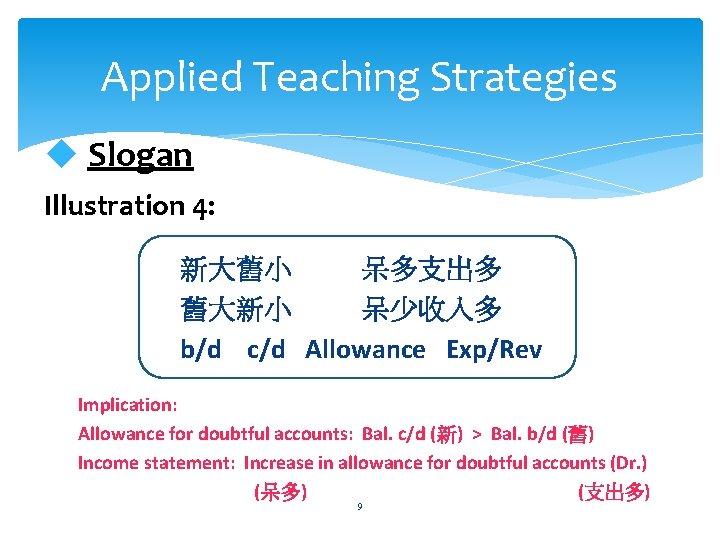
Applied Teaching Strategies u Slogan Illustration 4: 新大舊小 呆多支出多 舊大新小 呆少收入多 b/d c/d Allowance Exp/Rev Implication: Allowance for doubtful accounts: Bal. c/d (新) > Bal. b/d (舊) Income statement: Increase in allowance for doubtful accounts (Dr. ) (呆多) (支出多) 9
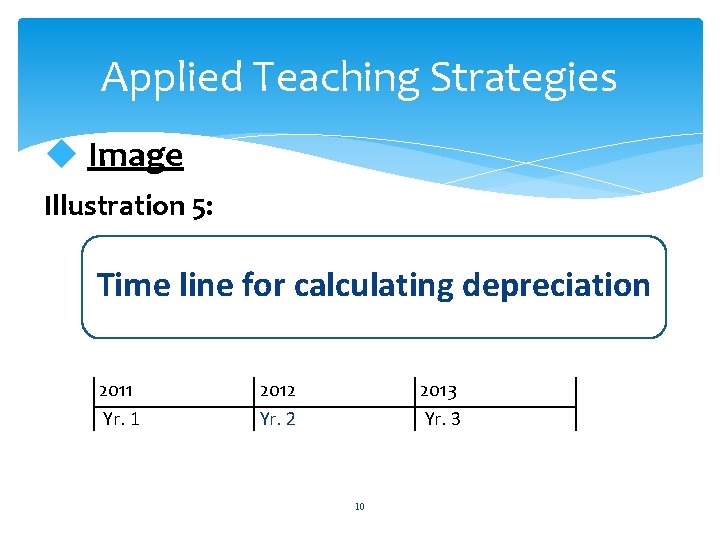
Applied Teaching Strategies u Image Illustration 5: Time line for calculating depreciation 2011 Yr. 1 2012 Yr. 2 2013 Yr. 3 10
Applied Teaching Strategies u Position Ranking By individual (ranking) / Class (average marks) ü Positive reinforcement ü Performance analysis & feedback 11
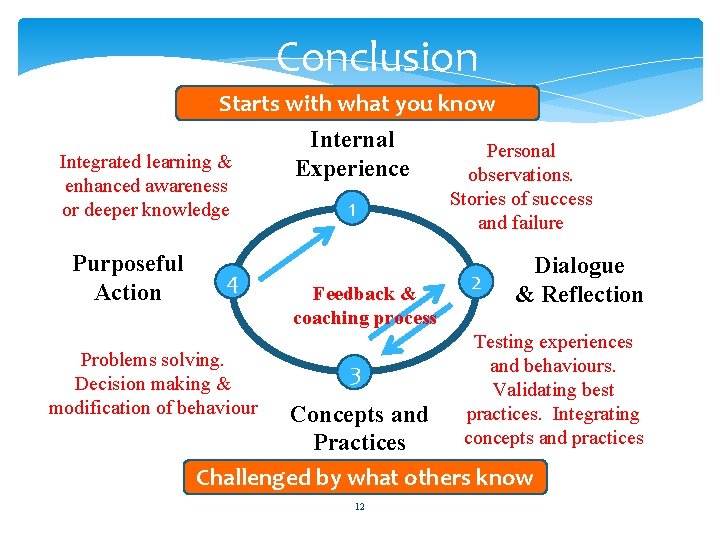
Conclusion Starts with what you know Internal Personal Integrated learning & Experience observations. enhanced awareness or deeper knowledge Purposeful Action 4 Problems solving. Decision making & modification of behaviour 1 Feedback & coaching process 3 Stories of success and failure 2 Dialogue & Reflection Testing experiences and behaviours. Validating best practices. Integrating concepts and practices Concepts and Practices Challenged by what others know 12
Conclusion Final words: Smart students can develop his interests and careers in Accounting; Lower-ability students can find it easy to know and involve in Accounting. 13
Thank you! 14
- Slides: 14